
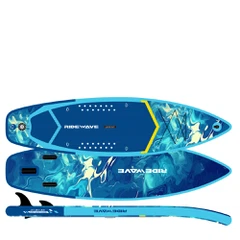

Many Polish sports retailers, outdoor distributors and global water sports brand owners struggle to source reliable low MOQ inflatable SUP suppliers that deliver private label paddle boards with short production windows. Traditional inflatable stand up paddle board factories often lock buyers into large minimum order quantities and 45+ day lead times, forcing wholesalers to tie up heavy capital in inventory before knowing local market demand. If you want to add inflatable SUP boards to your product portfolio without massive stock risk, working with a manufacturer that supports small trial orders, regional custom graphics and predictable shipping schedules can protect your cash flow and speed up market testing. Before you finalize your sourcing plan, it helps to understand the full production workflow behind custom boards; you can read our earlier article, How Custom Paddle Boards Are Made: From Design To Production, to learn how raw materials, drop-stitch construction and quality checks shape your final wholesale SUP products. At RIDEWAVE, we focus on supporting mid-sized European retailers and international B2B buyers by balancing low-volume ordering options, stable product quality and fast turnaround, rather than pushing customers into oversized bulk orders that do not fit their retail timeline. This guide breaks down the practical benefits, hidden risks and real-world examples of sourcing small-batch private label inflatable SUP for Poland and broader EU, AU, US and Canadian outdoor markets.
Why Do Polish SUP Retailers Prefer Low MOQ Inflatable SUP Suppliers in 2026?
Polish outdoor retail buyers are shifting away from large bulk inflatable SUP orders primarily because local consumer demand for stand-up paddleboarding has become segmented and seasonal. Lakeside tourism regions in Poland see sharp sales peaks between May and September, while winter months bring drastically lower foot traffic for water sports gear. When retailers commit to hundreds of boards in one shipment, they risk tying up working capital in slow-moving inventory that may sit in warehouses through the off-season. Many Polish shop owners also run multi-category outdoor stores; they want to test 2–3 new private label SUP designs before committing to bigger production runs, without taking on unsellable stock. Supply chain disruptions over the past several years have also taught EU retailers that rigid high-MOQ contracts leave little room to react to shifting trends, shipping delays or unexpected import cost changes. A flexible supplier offering low MOQ inflatable SUP gives Polish merchants the freedom to test colourways, graphic styles and board sizes with minimal financial exposure.

Retailers in Poland also face unique regulatory and logistics considerations. Smaller trial shipments are easier to manage for EU product compliance checks, customs clearance and local warehousing limits. This does not mean small orders compromise build quality. Many buyers mistakenly believe low minimum orders equate to cheaper raw materials or weaker drop-stitch construction, but this assumption is not always true. Factories that streamline sample workflows and shared production runs can maintain consistent quality even for small batches. RIDEWAVE has observed this market shift firsthand, as more Polish B2B partners reach out to source test inventory rather than place full container loads at the start of each selling season.
• Seasonal demand volatility in Polish lake and coastal water sports market
• Restricted warehouse capacity for many small and mid-sized Polish retail outlets
• Pressure to diversify product lines without overcommitting company cash flow
• Growing consumer appetite for unique, locally tailored private label inflatable SUP designs
What Makes Low MOQ Private Label SUP a Hot Product for European Sports Retail Expansion?
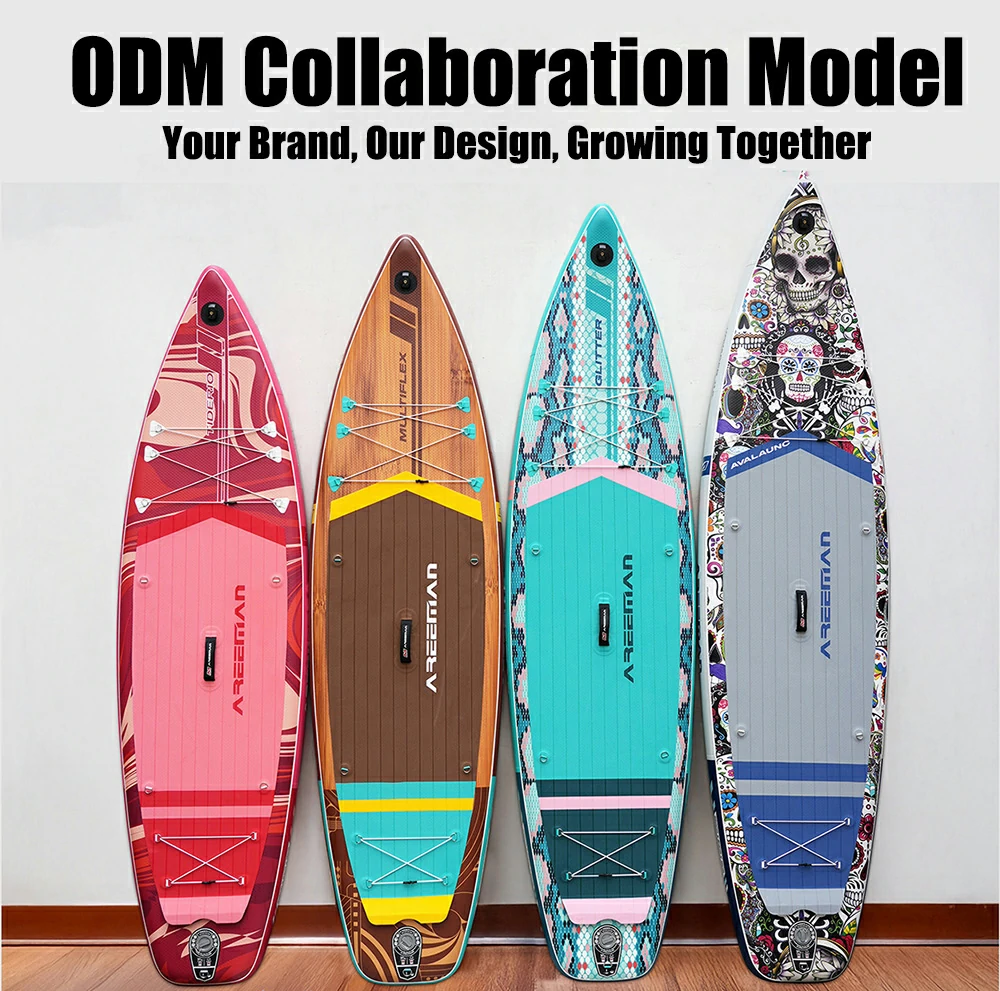
European sports retailers are constantly searching for differentiated merchandise that sets their store apart from mass-market online sellers, and private label inflatable SUP has emerged as one of the most scalable categories for line extension. Generic white-label paddle boards sold by large marketplaces face brutal price competition, squeezing profit margins for every retailer. When you add your own branding, custom artwork and tailored sizing to inflatable SUP boards, you create exclusive products that competitors cannot match. This exclusivity protects your profit margin, builds brand loyalty with your end customers and helps your shop stand out in both physical retail spaces and local e-commerce listings.
Many European outdoor merchants hesitate to launch custom water sports goods because they assume customisation requires massive orders. This outdated mindset holds back retailers from testing niche customer segments, such as family-friendly recreational SUP, lightweight touring boards or compact youth-sized iSUP models. If you want to craft designs that resonate with your local audience, there is no better starting point than learning core merchandising principles, covered in our previous blog post, How To Design A Paddle Board That Sells.
Low MOQ production unlocks this opportunity. Instead of committing thousands of euros to one single board design, distributors can roll out several limited-run styles to test local preferences. For retailers operating across multiple EU countries, this flexibility is invaluable. A graphic that sells well in Spain may not perform in Poland, and small batch private label SUP production lets you adapt artwork and colourways without carrying unsold inventory.
RIDEWAVE works with many European brand owners to refine customisation options beyond simple logo printing. Custom deck pad textures, fin configurations, carry handle placement and accessory bundle matching are all available for small batch orders. These small product tweaks are the exact details that help retailers turn standard wholesale inflatable SUP into high-margin exclusive retail goods.
• Exclusive branding reduces direct price competition against Amazon and large online marketplaces
• Small batch runs allow retailers to test multiple custom graphics and board styles at once
• Custom features, such as deck pads and fin setups, raise perceived value and retail price points
• Private label inflatable SUP fits well inside existing outdoor and camping retail assortments
How Can B2B Distributors Avoid Inventory Risks With Small-Batch Inflatable SUP Orders?
Inventory risk is one of the biggest ongoing headaches for wholesalers and retailers selling inflatable SUP. Large container orders lock up capital, warehouse space and sales planning for months. If consumer tastes shift, weather is poor during peak season or competing brands launch new promotions, your stock can sit unsold for a full year or longer. Small-batch low MOQ inflatable SUP sourcing creates a leaner supply chain model, letting buyers test demand before committing to larger investments.
This does not mean small orders eliminate risk entirely. Smart B2B buyers still set clear sales KPIs, limit SKU count for initial trials and keep close communication with their factory about reorder timelines. Many distributors split their strategy: they reserve a small budget for 2–3 test SKUs of private label SUP, then scale production only after seeing steady sell-through data from retail stores or web shops.
Below is a simple comparison table you can share with your finance and buying team to evaluate small batch sourcing against full container wholesale orders.
| Comparison Item | Small Batch / Low MOQ Inflatable SUP | Full Container Bulk Inflatable SUP Order |
|---|---|---|
| Minimum Capital Commitment | Low, limited trial budget | High, large upfront payment |
| Warehouse Storage Requirement | Minimal, fits small retail backrooms | Requires dedicated large warehouse space |
| Market Testing Ability | Test multiple sizes, graphics, SKUs | Limited to few designs due to high cost |
| Overstock Risk | Low, easy to stop production if sales lag | High risk of leftover off-season inventory |
| Reorder Lead Time | Flexible, quick repeat runs | Long planning cycles, fixed production schedules |
| Best Fit Buyer | New entrants, brand line expansion, multi-store retailers | Established large retailers with proven steady demand |
• Use limited SKUs in your first small batch test to avoid spreading your budget too thin
• Track sell-through rates weekly for new SUP models before approving bigger reorders
• Negotiate flexible reorder windows with your manufacturer to ramp up production fast when demand spikes
• Keep open communication with your supplier about seasonal demand forecasts for water sports products
RIDEWAVE's B2B clients often use this lean inventory framework. They start small, collect real retail feedback from end buyers, then expand successful styles rather than guessing market trends ahead of time. This approach is especially useful for EU merchants who manage cross-border logistics and fluctuating import duties.
What Are the Core Advantages of RIDEWAVE as a Poland-Focused Inflatable SUP Manufacturer
When B2B buyers in Poland and wider EU compare factories for low MOQ inflatable SUP, they often look past sticker price and evaluate consistent quality, EU-ready documentation, and order flexibility. Many generic inflatable goods factories can print logos, yet they lack deep familiarity with Polish retail season timelines, local customer preferences, and the certification requirements required to place private label inflatable SUP on EU shop shelves. This is where RIDEWAVE stands apart as a manufacturer focused on supporting Polish retailers and pan-European distributors.
First, our flexible minimum order framework is built specifically for retail testing. For standard recreational inflatable SUP boards, RIDEWAVE accepts small trial orders without forcing customers to combine dozens of unrelated product categories to hit MOQ thresholds. We know Polish retailers usually want to test 1 or 2 board models first, rather than bundling SUPs with kayaks or air tracks just to qualify for custom printing.
Second, we maintain stable drop-stitch material quality across both small batches and bulk orders. A common complaint from European buyers is that factory quality drops sharply once you move from sample production to low-volume runs. At RIDEWAVE, the same raw material specifications, pressure testing standards and QC checklists apply to every SUP order, whether the shipment is 50 boards or a full container. All finished boards pass air retention testing and visual inspection before packing. We also prepare all required documentation, including test reports and declarations of conformity, to simplify EU customs clearance and Polish retail compliance checks.
Third, our production scheduling prioritizes faster turnaround for EU small orders, supporting the short selling window for Polish lake season. Many Asian factories treat low MOQ orders as low priority and push them to the back of production queues. RIDEWAVE reserves dedicated production slots for small-batch private label SUP, so your trial shipment will not be delayed behind large bulk orders.
• Low MOQ trial orders without forced product bundling for Polish retail testing
• Consistent drop-stitch construction and unified QC standards for small and large inflatable SUP runs
• Pre-prepared EU compliance documentation to streamline Polish customs and retail requirements
• Reserved production slots for small batch orders to avoid queue delays during peak season
• Real-time production updates and technical guidance for private label SUP graphic and accessory design
How Does Fast Lead Time Help European SUP Wholesalers Win Off-Season and Peak Season Markets
For European wholesalers and retail distributors of inflatable SUP, timing often matters more than a marginal price cut. Water sports retail follows a strict seasonal rhythm across the EU, and Poland's short summer selling window leaves very little room for delays. If your shipment arrives weeks after the lakes and rivers open, you miss the peak buying period, discount your inventory to clear stock, and hurt your annual profit margin. This simple reality explains why fast lead time has become a top priority alongside low MOQ for buyers sourcing private label SUP.
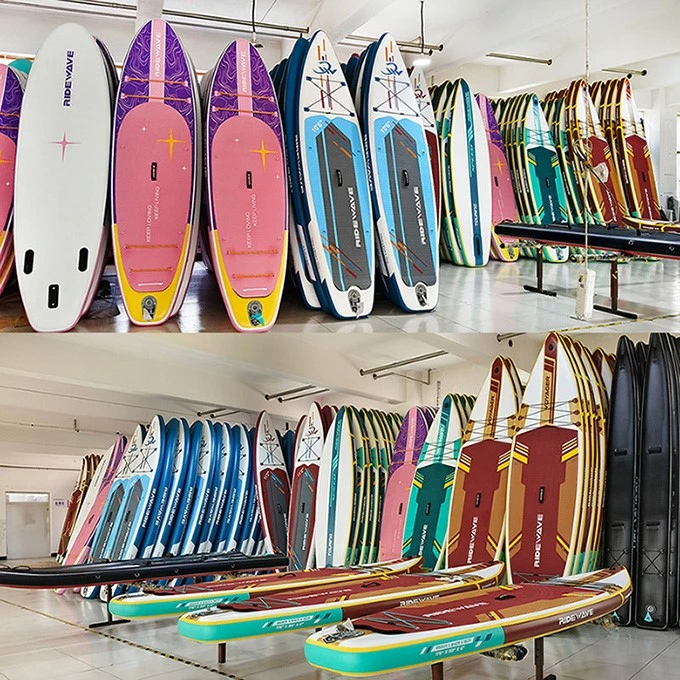
A factory with predictable, short production cycles gives buyers two major strategic advantages. First, you can place orders closer to the start of peak selling season, reducing the length of time capital sits locked in inventory before products reach shop floors. Instead of forecasting demand 6 months in advance and guessing consumer trends, retailers can wait for early spring market signals and then trigger production. Second, fast turnaround supports emergency restocks. When one SUP model suddenly sells out in Polish retail locations, a supplier with quick reorder capacity lets you replenish stock before competitors fill that local market gap.
Off-season planning also benefits from compressed lead times. Many retailers use autumn and winter to test new designs, adjust graphics and prepare next year's lineup. Shorter lead times mean you can receive prototype samples and small test batches before finalising your seasonal assortment. Slow factories force buyers to lock artwork, sizes and quantities months ahead, leaving no room to adjust based on customer feedback or emerging outdoor trends.
It is important to separate advertised lead times from real-world delivery performance. Some manufacturers quote fast production times on inquiry, yet their timeline excludes QC, packaging, documentation preparation or container booking. Always confirm whether lead time counts from artwork approval or raw material arrival. At RIDEWAVE, we clearly separate these milestones for European customers. For low MOQ inflatable SUP trial orders, our standard production lead time starts once the custom artwork is confirmed, and we include internal QC and compliance document preparation inside the quoted window.
• Shorter lead time lets buyers delay ordering until closer to peak season, lowering capital lock-up
• Quick reorder capability covers unexpected sell-outs in high-demand Polish lake regions
• Off-season small batches allow retailers to iterate new private label inflatable SUP designs for the next year
• Clarify whether factory lead times include QC, paperwork and packing to avoid hidden delays
What Private Label Customization Options Are Most Popular for Western Market SUP Retailers
Modern Western consumers, especially customers across Poland, the EU, North America and Australia, no longer settle for generic, one-size-fits-all inflatable SUP products. For B2B retailers and brand distributors, private label customization is no longer a luxury upgrade - it is a must-have strategy to build unique store identity, boost retail pricing power and reduce homogeneous price competition. Understanding which SUP customizations perform best in Western markets allows wholesalers to allocate trial MOQ budgets wisely and launch fast-selling product lines without unnecessary development costs.
Most high-conversion private label inflatable SUP customizations focus on end-user experience and regional market aesthetics, rather than meaningless over-customization that raises factory costs and delays delivery. To design marketable board styles that fit local consumer preferences, Western SUP resellers need systematic design logic instead of blind trial and error, which is fully explained in our in-depth industry guide, How To Design A Paddle Board That Sells.
After supporting hundreds of EU and American outdoor retailers with low MOQ SUP customization, RIDEWAVE has summarized the most popular, cost-effective and high-margin custom solutions that perfectly fit Western consumer habits:
Custom Printed Brand Graphics & Logos
Brand logo printing and exclusive surface graphics remain the most popular customization for small-batch wholesale SUP orders. Western buyers prefer minimalist, outdoor-style gradient patterns, lake and nature-themed prints, and low-saturation color schemes, which differ greatly from bright, exaggerated designs for Asian markets. This subtle visual differentiation helps retailers build high-end brand positioning with zero extra mold costs.
01
Size & Dimension Localization Tuning
Polish and European end users prioritize lightweight, portable inflatable SUP for lake recreation, family camping and short-distance touring. RIDEWAVE supports low-MOQ size adjustments, including slimmed-down youth sizes, compact travel sizes and reinforced adult all-round sizes, matching local mainstream usage scenarios.
02
Functional Accessory Customization
Western retail customers value complete, ready-to-use product bundles. Customizable items include branded paddles, printed backpacks, premium coil leashes and waterproof phone bags. Matching accessory sets greatly improve product grade and allow retailers to set higher package retail prices.
03
Deck Pad & Anti-Slip Texture Optimization
Different from basic factory default pads, Western market SUPs favor full-coverage non-slip EVA deck pads and tailored traction layouts. This small upgrade improves safety during water sports and effectively differentiates products from basic low-cost SUPs sold on mainstream e-commerce platforms.
04
All these customized items are available for low MOQ inflatable SUP trial orders at RIDEWAVE, without the high threshold of bulk order-only customization. Every customized detail follows Western retail market trends, helping B2B buyers avoid unusable customized designs that waste procurement budgets.
What Key Factors Should B2B Buyers Evaluate Before Cooperating With an Inflatable SUP Factory
Selecting the right inflatable SUP manufacturer is one of the highest-impact decisions for outdoor wholesalers and brand owners. A poor factory partnership can trigger delayed shipments, inconsistent quality, failed EU compliance checks and costly product returns. Before signing contracts or paying deposits, B2B buyers need a structured checklist to audit suppliers rather than relying only on price quotations. Our prior article outlines critical due diligence questions you should ask any iSUP producer: 10 Questions Every B2B Buyer Should Ask Before Placing An Inflatable SUP Factory Order.
Price alone should never be your primary evaluation metric. Many new buyers gravitate toward the lowest quote, only to discover downgraded drop-stitch fabric, thinner PVC, weak glue seams or incomplete certification documents after receiving goods. When comparing low MOQ inflatable SUP suppliers, evaluate these core dimensions together: material grade, internal QC workflow, compliance documentation, MOQ rules, lead time transparency and after-sales responsibility.
Material construction is foundational. Reliable private label inflatable SUP boards use high-density drop-stitch core and multi-layer reinforced PVC. You can request material test reports, sample cross-sections and air retention test data. Cheap alternatives often lose pressure within a few hours and suffer seam peeling after limited use, leading to customer complaints and damage to your retail brand reputation.
Compliance paperwork matters heavily for Poland and wider EU markets. Confirm whether the factory can supply CE declarations, product test reports and supporting files required for customs clearance and in-store sales. Missing or non-compliant documents can hold shipments at EU border checkpoints, resulting in storage fees and missed selling seasons.
You also need to clarify the real minimum order policy. Some factories advertise low MOQ online but add hidden requirements: mandatory extra charges for custom printing, compulsory accessory purchases or forced mixed SKU bundling. Ask if the quoted MOQ applies to standalone inflatable SUP boards, and whether graphic setup fees are one-time or recurring for repeat orders.
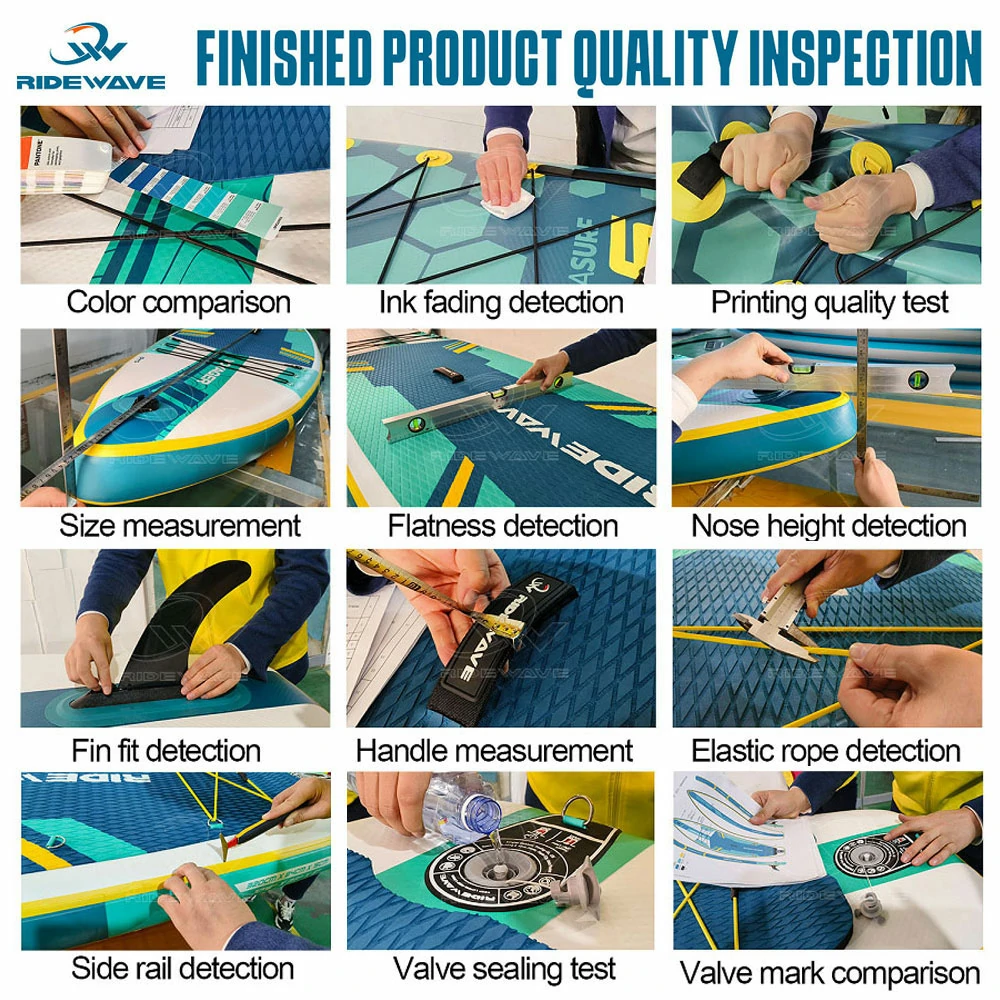
Quality control procedures deserve close inspection. Ask whether QC occurs after raw material cutting, after gluing, before packing, and if every board undergoes pressure holding testing. Factories with spot-only inspections carry higher defect risks, especially on small batch production runs.
• Audit raw material specifications and request independent test reports for drop-stitch and PVC
• Verify full EU compliance documentation including CE declarations before deposit payment
• Confirm no hidden fees, mandatory bundles or recurring graphic charges for private label SUP
• Inspect full-stage QC procedures, especially air pressure retention testing for each board
• Negotiate clear after-sales terms covering manufacturing defects for wholesale orders
RIDEWAVE recommends buyers request pre-production samples first, even for small test orders. Samples let you verify build quality, print accuracy and board weight before mass production starts. This simple step reduces the chance of costly surprises once full batch manufacturing begins.
How Did RIDEWAVE Help a Polish Sports Retail Brand Achieve Fast Product Expansion With Low MOQ Orders
The theoretical benefits of low MOQ inflatable SUP become far easier to evaluate when paired with a real wholesale partnership case. This example features SportPoint Poland, a mid-sized brick-and-mortar outdoor retailer with 3 physical stores across central Poland. Before reaching out to RIDEWAVE, their management team wanted to add private label inflatable SUP to their summer lineup, but faced two major roadblocks.
First, the large-scale inflatable board manufacturers they contacted required minimum orders starting at 200 units per design, with lead times stretching to 45 days or longer. SportPoint only planned to test two new SUP models for the upcoming lake season. Committing to 400 boards in total would tie up over 28,000 EUR of working capital, and there was no guarantee the new designs would resonate with Polish weekend lake users. Second, most factories refused custom deck pad layout and localised graphic adjustments unless customers placed full container orders. Their ideal design included muted forest and lake artwork tailored for Polish outdoor consumers, which was not available from generic white-label suppliers.
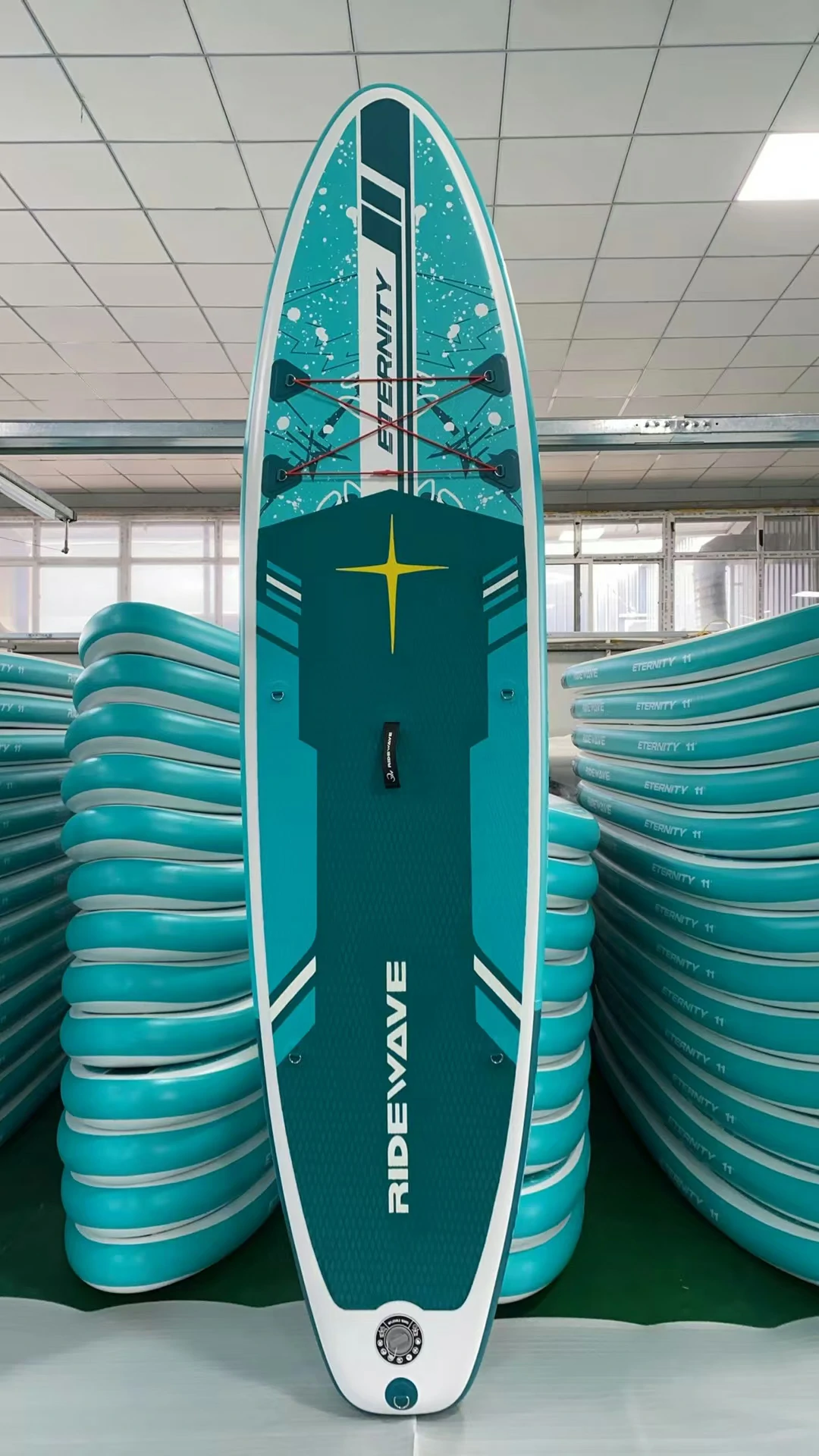
After initial discussions, RIDEWAVE proposed a small-batch trial plan: a low MOQ inflatable SUP run of 50 units per design, for a total of 100 boards. The agreement included custom printed private label graphics, modified deck pad traction layout and a matching branded backpack accessory bundle. We locked in a 18-day production lead time after artwork approval, plus full EU compliance documents ready for Polish customs clearance. We also shared production photos and QC check records at three key stages: raw material cutting, seam bonding and final air retention testing before packing.
SportPoint received the shipment 3 weeks before the start of Poland's May lake season. They placed the new private label SUP boards in-store alongside camping gear and kayaks, with targeted social media promotion focused on local lake communities. Within 30 days, 65% of the trial inventory sold through. Customer feedback highlighted the lightweight build, stable performance on inland lakes and the exclusive local graphic style that competitors did not carry.
Based on this positive sales data, SportPoint submitted a repeat order before the end of peak season. This follow-up order increased quantity and added one extra family-sized inflatable SUP model. They avoided the risk of overstock and proved the product fit before scaling investment.
The partnership continues today. SportPoint uses RIDEWAVE's flexible small batch programme every winter to test one or two new SUP concepts, refining colourways and sizing ahead of each summer selling window.
• Client background: Polish multi-store outdoor retailer wanting to test private label inflatable SUP without heavy capital risk
• Original barriers: high MOQ requirements, long lead times, no access to custom graphics for small orders
• RIDEWAVE solution: 50 units per model trial order, custom artwork, adjusted deck pads and complete EU certification paperwork
• Measurable outcome: 65% sell-through rate within the first 30 days of Polish summer season, followed by scaled repeat orders
How Can Global Sports Merchants Build a Profitable SUP Product Line in 2026 and Beyond
The global market for inflatable SUP has matured substantially. The era of easy profit on generic, unbranded paddle boards is gone. For B2B sports merchants, distributors and brand owners across Poland, EU, USA, Canada and Australia, building a sustainable, profitable private label inflatable SUP portfolio requires a planned, lean sourcing strategy rather than speculative bulk purchasing.
The most successful wholesalers no longer treat SUP as a one-off seasonal add-on. They build product lines layered by use case, price tier and target end-user. A balanced portfolio usually includes entry-level recreational boards for casual lake users, mid-range all-round inflatable SUP with upgraded deck pads and accessories, plus a small selection of premium touring or family-sized models. This tiered structure lets retailers capture buyers at different budget levels while protecting overall profit margins. Low MOQ sourcing is the foundation of this strategy, because it allows you to test each tier before committing large budgets.
Start by analysing your existing customer base and local geographic conditions. Retailers near lakes and calm inland waterways will see stronger demand for recreational and family SUP. Coastal shops, by contrast, may sell more rigid touring or beginner surf-style inflatable paddle boards. Australian and North American markets also have distinct seasonal timelines and consumer preferences that differ from EU buyers. Matching your SKU selection to local water environments prevents you from stocking boards that do not fit the way your customers recreate.
Prioritise quality consistency and regulatory compliance as you scale. Many new merchants chase low upfront prices only to suffer brand damage when defective units reach consumers. Even when ordering small batches, stick to verified factories with repeatable QC systems, complete test reports and EU, US or AU product certifications, depending on your sales territory.
Build flexible reorder rules into your supply chain plan. Once a SKU proves strong sell-through, work with your manufacturer to shorten production windows for repeat orders. Keep communication open year-round, not only during pre-season ordering cycles. Share sales trends, customer reviews and market feedback so your factory can help adjust graphics, board weight or accessory bundles ahead of the next selling season.
Do not overlook marketing assets when launching your private label inflatable SUP line. Request factory-supplied lifestyle photos, product spec sheets and technical descriptions for your web shop, marketplaces and in-store displays. High-quality product documentation reduces customer service questions and helps your retail team explain board features to shoppers.
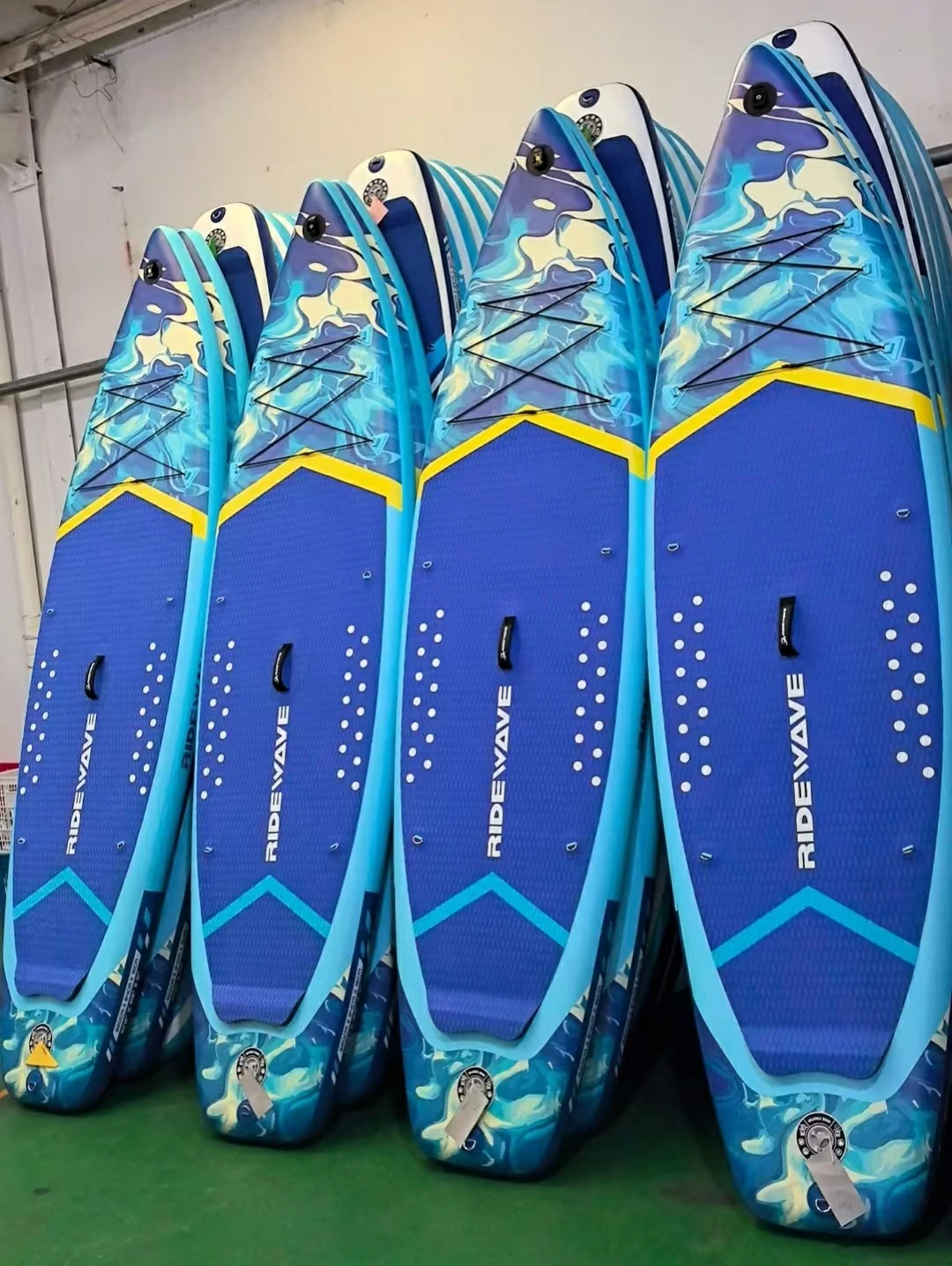
RIDEWAVE recommends merchants maintain a limited SKU count at launch. Trying to launch 8 to 10 new inflatable SUP models at once spreads inventory budget too thin and complicates warehousing, marketing and stock tracking. Begin with 2–3 carefully selected trial SKUs. Scale only those styles that deliver consistent sell-through and positive customer feedback. This lean product development approach works for brand-new market entrants and established sports retailers adding water sports categories.
• Build tiered inflatable SUP product portfolios separated by price point and usage scenario
• Align your SKU selection with local water conditions and regional seasonal demand patterns
• Keep compliance and consistent QC as non-negotiable requirements, even for small trial orders
• Start with 2–3 test SKUs, scale gradually based on real retail sell-through data
• Collect product media and specification documents from your manufacturer to support retail marketing
Related Articles
OEM & ODM SUP Solutions: Why Brands Choose Professional Manufacturers
The Rise Of Customizable Paddle Boards: Shape, Design, And Brand Identity
How To Choose The Right SUP Paddle Board Manufacturer
How Custom Paddle Boards Are Made: From Design To Production