

How Can Dutch Water Sports Retailers Boost Revenue With Inflatable Paddle Board Product Lines?
Dutch water sports retailers can grow profits with inflatable SUP lines by stepping away from low-cost commodity price wars, building tiered product bundles matched to local lake, canal and rental demand, and locking in compliant, stable manufacturing partnerships that cut hidden after-sales and compliance risks. The Netherlands' dense network of inland waterways, rising staycation spending, and fast-growing cold-water outdoor trend create a steady, year-round market for inflatable stand up paddle boards, but many local wholesalers and retailers still struggle because they only stock basic entry-level models and fail to leverage accessories, custom branding and seasonal expansion.

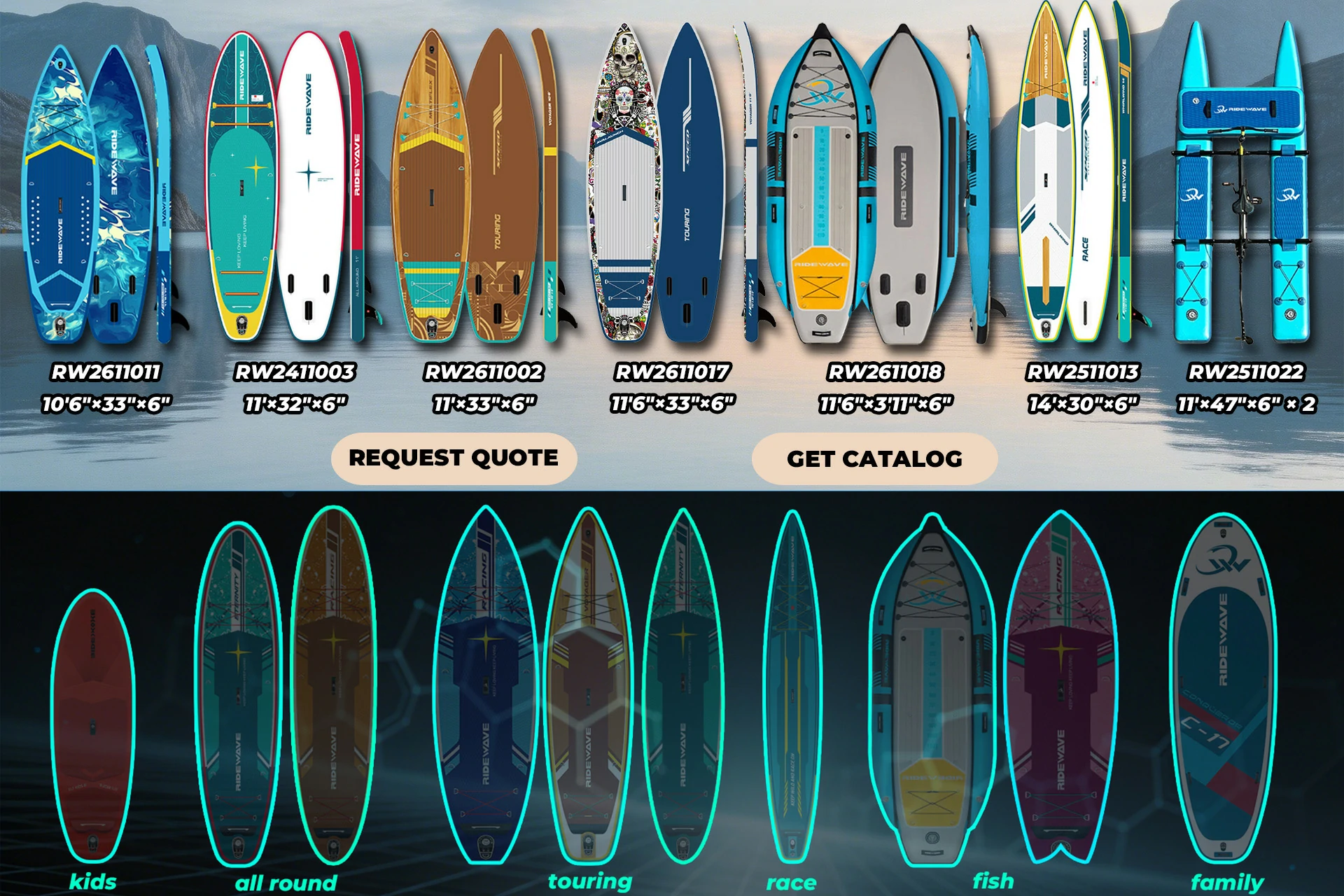
As an inflatable SUP manufacturer serving distributors, retailers and brand owners across Europe, North America, Australia and New Zealand, RIDEWAVE has supported dozens of B2B partners to build sustainable iSUP catalogs. A well-planned inflatable paddle board product portfolio does not rely purely on summer impulse buys; it combines all-round recreational boards, fishing SUP, yoga SUP and touring SUP, paired with high-margin accessory kits, optional white-label or custom artwork programs. If you want to build unique branded boards for your store, How Custom Paddle Boards Are Made: From Design To Production walks you through every production phase from concept to finished goods.
Many B2B buyers overlook that a winning blow up paddle board range is built around customer segmentation: casual family paddlers, fitness enthusiasts, rental fleet operators and advanced touring users each have different budget and durability requirements. Retailers who simply import cheap one-size-fits-all boards often face high return rates, poor online reviews and thin gross margins. With careful product tiering, EU safety compliance planning and flexible order sizing, Dutch water sports shops can turn inflatable SUP from a seasonal summer add-on into a core revenue pillar that performs across spring, summer, autumn and winter.
Why Is the Netherlands One of Europe's Fastest-Growing iSUP Markets Right Now?
The Netherlands stands out as a high-potential territory for inflatable SUP wholesale and retail growth, thanks to its unique geographic layout, shifting consumer travel habits and the rising popularity of year-round cold-water outdoor activities. With thousands of kilometres of interconnected canals, lakes and shallow inland waterways across Friesland, the Kaag Lakes and Amsterdam's urban water network, local paddlers have easy access to launch points close to residential areas, campsites and holiday parks. Unlike rigid hard boards that demand roof racks, storage space and complicated transport, inflatable stand up paddle boards match Dutch consumer preferences perfectly: lightweight, compact after deflation and simple to carry in a car boot or even on public transport.
Post-pandemic outdoor spending has not faded in the Benelux region. Local water sports enthusiasts continue to prioritise domestic getaways over expensive overseas trips, a trend that keeps demand steady for inflatable paddle board gear sold at local specialist retailers rather than large generalist marketplaces. Many Dutch water sports businesses also operate rental fleets at lakeside and canal locations, and rental operators prefer durable iSUP models that can withstand repeated use, minor scrapes and easy on-site repair. This dual demand - retail sales for private owners plus bulk orders for rental stock - creates two separate revenue streams for retailers that stock quality blow up paddle board options.
European outdoor safety and sustainability trends also shape buyer behaviour in the Netherlands. Modern Dutch consumers and commercial rental operators check product certifications, material quality and supply chain transparency before committing to a purchase. Generic low-cost inflatable SUP imported from anonymous suppliers often fail to meet updated EU product safety rules, which creates a gap for trusted manufacturers like RIDEWAVE to support B2B partners with properly tested, fully documented boards. Retailers who build their catalog around certified inflatable SUP models can differentiate themselves from mass-market competitors on Amazon and big-box stores, rather than competing only on the lowest price tag.
Water sports culture is also expanding beyond summer-only use. The global cold water exposure trend has reached the Netherlands, where groups now run autumn and winter SUP sessions paired with ice bath recovery routines. Retailers who treat inflatable paddle board products as a seasonal summer-only item leave significant revenue on the table. By pairing iSUP lines with complementary cold-weather gear, shops can keep selling and renting through cooler months and reduce seasonal inventory pressure.

• Dutch inland waterways deliver countless accessible launch spots for casual and serious SUP users
• Domestic staycation culture keeps local water sports demand consistent year after year
• Dual demand: private retail buyers + commercial rental fleet operators both need robust inflatable SUP
• Cold-water outdoor trends break the traditional summer-only limitation for SUP revenue
• EU safety compliance rules create an opening for specialist retailers to beat generic marketplace sellers
What Product Mix Actually Protects Your Margin in a Crowded Dutch Market?
Competing on price with mass-market entry-level inflatable SUP listings on Amazon and Decathlon is a losing strategy for Dutch water sports retailers. These low-cost inflatable stand up paddle boards dominate the bottom price tier, with razor-thin gross margins, frequent quality complaints and high return rates. The most successful retailers build tiered product portfolios, grouping inflatable paddle board models, accessories and bundled kits to capture buyers across multiple customer segments while preserving healthy profit margins.

A solid three-tier structure splits your catalog into entry loss-leader units, mid-range core profit drivers and premium specialist models. The entry tier serves only as a gateway product for first-time paddlers, with limited stock to avoid tying up capital in low-margin inventory. The mid-range segment is where your business makes most of its revenue; family all-round iSUP, SUP yoga and compact fishing blow up paddle board variants deliver balanced durability and perceived value for casual enthusiasts and weekend groups. The premium tier targets touring paddlers, heavy-use rental fleets and dedicated water sports fans, featuring reinforced rails, thicker PVC construction and custom graphic options.
Accessory bundles are often overlooked but deliver higher gross profit percentages than the boards themselves. Paddles, adjustable fins, removable seats, waterproof dry bags, SUP leashes, safety vests and wheeled backpacks complement every inflatable SUP sale. Bundling these items together creates a perceived discount for shoppers while lifting average order value for your store. RIDEWAVE works with B2B buyers to match custom accessory kits to each SUP model, so retailers can offer pre-packaged sets without sourcing parts from multiple separate suppliers.
The table below breaks down the three-tier product strategy, with target retail price points, estimated gross margin ranges and ideal use cases tailored for Dutch water sports retail operations.
| Product Tier | Retail Price Range (EUR) | Estimated Gross Margin | Target Customer & Use Case |
|---|---|---|---|
| Entry-Level | €199 – €299 | 18% – 25% | First-time casual paddlers; limited stock only, avoid large bulk orders |
| Mid-Range Core | €349 – €599 | 38% – 52% | Families, SUP yoga practitioners, weekend lake users; primary profit driver |
| Premium Specialist | €649+ | 45% – 60% |
Touring paddlers, commercial rental fleets, fishing SUP enthusiasts |
When building out your product selection, avoid stocking every available variation. Focus on 3 to 5 core inflatable paddle board SKUs that fit local water conditions. Shallow lakes and narrow Dutch canals favour shorter, more manoeuvrable all-round iSUP models, while longer touring boards suit wider open water sections. You can also explore custom artwork options to make your tiered lineup unique, and How Custom Paddle Boards Are Made: From Design To Production explains how factory customisation works for B2B buyers planning private label ranges.
• Avoid head-to-head price competition with big-box and marketplace entry inflatable SUP
• Use a three-tier catalog structure to separate low-margin gateway products from high-profit core lines
• Mid-range inflatable stand up paddle boards and bundled accessories create the bulk of sustainable store revenue
• Match your board dimensions and features to Dutch canal and lake water characteristics
• Pre-built accessory kits reduce your supplier management workload and raise average order value
How Do Dutch SUP Buyers Actually Choose Between Amazon, Decathlon and a Local Water Sports Shop?
Dutch shoppers searching for inflatable SUP gear do not always pick the lowest price. Many buyers compare Amazon listings, Decathlon's mass-market inflatable stand up paddle boards, and local specialist water sports retailers using a completely different set of decision criteria. Marketplace and big-box stores win purely on upfront price, but local retailers can compete and capture loyal customers by leaning into hands-on experience, local waterway knowledge, reliable aftercare and community-focused services that generic sellers cannot match.

For first-time buyers browsing inflatable paddle board options, the biggest fear is purchasing a board that fails to fit their skill level, storage space or local water conditions. Amazon product descriptions rely on stock photos and generic specs. Decathlon carries solid entry-level iSUP, yet their staff rarely hold deep local knowledge about Friesland lakes, narrow canal navigation or rental fleet durability needs. Local water sports retailers turn this weakness into their strongest selling point. In-store customers can touch, test and compare blow up paddle board materials, ask staff about which model works best on nearby canals, and get practical guidance on storage, repair and safety rules specific to Dutch inland waters.
Rental operators and repeat enthusiasts shopping for bulk inflatable SUP stock care far more about long-term reliability and after-sales support than a small difference in unit price. A cheap board that delaminates after a few months of heavy use creates costly downtime, refund claims and damage to a rental business's reputation. Specialist retailers who partner with manufacturers like RIDEWAVE can offer documented quality checks, spare valve stock and clear warranty terms. This level of support is almost impossible to source from anonymous marketplace vendors.
Trust is another deciding factor. Dutch consumers pay close attention to product safety documentation, CE marking and GPSR compliance when buying water sports equipment. Many discounted inflatable paddle board units sold online lack full test reports or an EU-based responsible person, creating legal risk for anyone reselling those products. Local retailers who source certified inflatable SUP can openly display compliance files, reassuring both private buyers and commercial fleet operators.
Local community building creates recurring revenue that pure online sellers cannot replicate. Retailers can host guided SUP tours, beginner workshops, cold-water paddling meetups and maintenance clinics. These events bring foot traffic back to the store, encourage accessory add-on sales and build word-of-mouth referrals. A customer who joins a local SUP group will keep returning to your shop for replacement parts, new gear and upgrades, instead of jumping back to Amazon for their next purchase.
• Marketplace and big-box retailers compete mainly on upfront price for basic inflatable SUP
• Local shops win by offering hands-on testing and tailored advice for Dutch canals and lakes
• Rental fleet buyers prioritise long-term durability, spare parts and warranty over the cheapest unit cost
• Full EU safety documentation helps specialist retailers build trust and avoid compliance liabilities
• In-store events and SUP community activities drive repeat purchases and organic referrals
Should You Buy White-Label, Co-Branded or Fully Custom iSUPs for Your Dutch Store?
Choosing the right branding model for your inflatable SUP lineup is one of the highest-impact decisions for Dutch B2B buyers. White-label, co-branded, and fully custom inflatable stand up paddle boards each carry different MOQ, lead time, cost and brand ownership tradeoffs. Picking the wrong option can lock up your working capital, delay your retail launch, or leave you with a product that cannot stand out from generic marketplace inflatable paddle board listings.
White-label iSUP is the lowest-risk starting point for retailers testing the SUP category for the first time. You select existing proven RIDEWAVE board shapes, material specs and colourways from the factory catalog, and resell the boards under your own store brand. The artwork and moulds are already developed, so MOQ requirements are modest and production timelines are short. This option is ideal if you want to add blow up paddle board inventory quickly, without heavy upfront investment in graphic design and tooling.
Co-branded models sit in the middle of the spectrum. The board retains core RIDEWAVE engineering and construction, while adding your store logo, custom graphic accents or exclusive colour combinations. It creates a shared brand story, lets you leverage the manufacturer's product credibility, and still delivers a unique look that customers will not find on Amazon or mass retail sites. Co-branding works well for retailers that already have loyal local customers and want to differentiate their inflatable SUP range without the full expense of a complete custom mould and artwork run.
Fully custom inflatable paddle board solutions give you full creative control: custom board dimensions, rail profiles, PVC thickness, full deck printing, custom backpacks, paddles and accessory kits. This option unlocks maximum market differentiation, but it comes with higher MOQ, longer lead times and larger design and sampling costs. Fully custom builds are best suited for established retailers, brand owners and larger rental operators who already have consistent sales volume and clear customer demand. If you want to understand every manufacturing stage of a fully custom build, How Custom Paddle Boards Are Made: From Design To Production walks through the complete workflow from concept art to finished sample approval.

The table below compares the three sourcing models side-by-side to simplify your planning for Dutch inflatable SUP retail.
| Sourcing Model | Typical MOQ | Production Lead Time | Unit Cost Level | Brand & Design Control | Best Fit For Dutch Buyers |
|---|---|---|---|---|---|
| White-Label | 50–100 units | 25–35 days | Medium | Moderate: apply your logo on existing RIDEWAVE board designs | New retailers testing inflatable SUP category, limited capital |
| Co-Branded | 100–200 units | 35–45 days | Medium-High | Partial: custom logo & graphics on standard RIDEWAVE hull | Established local shops wanting unique products with lower risk |
| Fully Custom | 300+ units | 45–60 days | High | Full: custom shape, printing, accessories, packaging | Large retailers, brand owners, high-volume rental fleets |
Many Dutch buyers make the mistake of jumping straight to fully custom production for their first order. Customisation is powerful, but it only delivers ROI when you already know your customer demand and sales velocity. A safer roadmap is: start with white-label inflatable SUP to validate market demand, move to co-branding once sales stabilise, and only invest in fully custom board shapes once you have proven repeat orders and solid customer feedback.
RIDEWAVE's B2B team helps clients evaluate which branding model aligns with their budget, warehouse space and target launch timeline. We also provide sampling services so you can physically inspect material quality, print finish and board rigidity before committing to mass production.
• White-label inflatable SUP offers low MOQ and fast lead times for first-time category expansion
• Co-branded iSUP balances manufacturer quality assurance and exclusive visual differentiation
• Fully custom inflatable paddle board delivers maximum uniqueness but requires higher minimum orders and longer lead times
• Test demand with white label before committing capital to full custom mould and artwork projects
• Factory sampling removes uncertainty about material quality and print finish before bulk production
What Hidden Costs Do Dutch Retailers Miss When Sourcing iSUPs Overseas?
Many Dutch B2B buyers compare overseas inflatable SUP suppliers only using EXW unit pricing. This narrow view hides a long list of often-overlooked expenses that can erase your planned margin on inflatable stand up paddle boards. The landed cost - the total money spent to get a inflatable paddle board from the factory floor into your warehouse in the Netherlands - is the only true number to use for profit forecasting. If you ignore these hidden fees, your carefully calculated gross margin on blow up paddle board inventory can shrink dramatically before you even sell one unit.
The biggest hidden cost bucket is international logistics and customs. Sea freight rates fluctuate, and surcharges such as bunker adjustment factor, terminal handling and Rotterdam port fees add up quickly. Import duties and Dutch VAT apply to every container shipment entering the EU. Many first-time importers forget about these charges and only budget for the factory price. Quality failure is another major hidden expense. Cheap, untested inflatable SUP often suffer air valve leaks, PVC delamination and seam separation. Returns, customer complaints, warranty labour and lost brand reputation can destroy profitability for retailers that prioritise the lowest EXW quote.
EU compliance costs are also frequently underestimated. To legally resell iSUP in the Netherlands, you need product test reports, CE marking, GPSR documentation and registration through BUMID. Some manufacturers do not supply these complete files, forcing you to pay third-party labs to run tests and hire an EU authorised representative. This administrative cost is not one-time either; documentation needs updates when product materials or designs change.
Even smaller line items stack up: container loading inspection, inland transport in China, warehouse receiving checks, rework for printing defects, spare part inventory and waste handling for damaged boards. RIDEWAVE shares full cost breakdowns with its B2B clients upfront, so our partners can model complete landed costs instead of relying purely on factory quotes. Before finalising any PO with an overseas factory, 10 Questions Every B2B Buyer Should Ask Before Placing An Inflatable SUP Factory Order gives you a practical checklist to avoid costly sourcing mistakes.

This example clearly shows that a €220 factory price does not mean your actual cost is €220. When you price your retail offering, you must build your margin on the full landed cost, not the factory EXW price. Retailers who skip this step often set retail prices too low and discover they are barely breaking even after the goods arrive.
• EXW price alone cannot reflect your true cost for imported inflatable SUP inventory
• Sea freight, port fees, import duty and Dutch VAT add significant per-unit landed cost
• Poor quality cheap inflatable paddle board creates expensive after-sales and reputational losses
• EU GPSR, CE and BUMID compliance work carries recurring administrative costs
• Use the full landed cost calculation to set retail prices and protect your target gross margin
How Is the EU GPSR and Product Safety Regulation Changing What You Can Legally Sell?
All Dutch retailers stocking inflatable SUP must understand the EU General Product Safety Regulation (GPSR), which sets updated legal obligations for anyone importing and reselling inflatable stand up paddle boards within the European market. GPSR fully applies to recreational water sports gear, including every inflatable paddle board, iSUP accessory and bundled kit sold to consumers or rented out commercially. Many B2B sellers underestimate how strict these rules are, and non-compliance can lead to product seizures, fines, forced product recalls and permanent damage to your retail brand.

Under GPSR, every imported blow up paddle board placed on the EU market requires an EU-based responsible person. This party acts as the legal contact point for market surveillance authorities in the Netherlands and across Europe. Anonymous offshore manufacturers cannot fill this role. If your supplier fails to provide a valid EU responsible person declaration, you, as the importer or distributor, become legally accountable for product safety issues. RIDEWAVE supports B2B partners by supplying complete GPSR documentation, test certificates and declaration of conformity for all inflatable SUP models, removing much of the administrative burden from retailers.
Beyond GPSR, Dutch resellers must comply with BUMID registration requirements. BUMID is the Dutch national product registration system for consumer goods, and water sports equipment falls within its scope. Before you sell or rent imported inflatable paddle board products in the Netherlands, your product information needs to be registered in this national database. CE marking remains mandatory as well, backed by laboratory test reports verifying the structural integrity of the board, air chamber safety, seam tensile strength and buoyancy performance.
Product labelling rules also became tighter under the updated framework. Each inflatable SUP must carry permanent, readable marking showing the manufacturer name, batch code, model number, country of origin, safety warnings and the EU responsible person contact details. Simple adhesive stickers are not enough; labels must withstand water, UV exposure and repeated use. For rental fleets, this requirement is equally important, since inspectors can audit rental equipment just like retail stock.
One common misconception: certificates from third-party labs alone do not guarantee full compliance. The documents must match the exact model, material thickness and construction of the iSUP you receive. A certificate for a different board variant cannot cover your inventory. Before you confirm a bulk order, verify that your factory can produce matching test records, batch traceability files and labelling assets.
• GPSR imposes strict legal duties on all importers and distributors selling inflatable SUP in the EU and Netherlands
• An EU-based responsible person is mandatory for every batch of imported inflatable paddle board goods
• Dutch BUMID registration and CE testing are separate, non-negotiable requirements for water sports gear
• Permanent waterproof product labelling is required for retail and rental iSUP inventory
• Certificates must match your exact board model; mismatched documentation will not pass market surveillance checks
Can You Stretch SUP Revenue Into Autumn and Winter in the Netherlands?
Most Dutch retailers treat inflatable SUP as a purely summer product, leaving months of untapped revenue on the table. But modern cold-water outdoor culture in the Benelux region has proven that inflatable stand up paddle boards can generate steady sales and rental income through autumn and winter, as long as you adjust your product lineup, marketing messaging and customer service for low-temperature paddling. Inflatable paddle board demand does not disappear once the temperature drops; it simply shifts to a different group of enthusiasts and use cases.
Cold-water paddling communities across the Netherlands host regular sessions from September all the way through March. These groups prioritise durable iSUP models that resist cold-temperature PVC hardening, maintain air pressure in chilly weather and hold up against sharp submerged debris in autumn lakes. RIDEWAVE formulates the PVC material for its premium inflatable SUP range to retain flexibility in cold water, which reduces the risk of cracking or air leakage during off-season use. This is a key selling point for rental operators and dedicated cold-water paddlers, who avoid cheap blow up paddle board options that become brittle and unreliable in low temperatures.
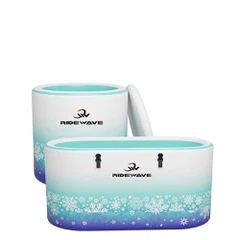
Cross-selling paired gear is the simplest way to boost off-season average order value. Bundle your inflatable SUP offers with wetsuits, drysuits, thermal gloves, booties, safety leashes and floating safety lines designed for cold water. Many cold-water paddlers also combine winter SUP with ice bath recovery routines. Adding inflatable ice bath units to your catalog creates a natural complementary product that appeals to exactly the same customer base. You can market combined packages: winter SUP + ice bath recovery bundles for fitness groups and outdoor clubs.
Rental businesses benefit the most from year-round inflatable paddle board availability. While casual family rentals drop sharply in cold months, dedicated cold-water paddlers, fitness coaches and photography groups still book regular sessions. You can adjust your rental pricing structure: lower weekday rates, offer monthly memberships for off-season paddling, and run small guided winter SUP workshops. These activities keep your lake or canal location active and maintain steady cash flow when summer tourists are gone.
You should also update your in-store and online content to reflect winter use. Instead of only posting sunny summer lake photos, share content about cold-water safety, how to store your inflatable SUP during winter, and maintenance tips for PVC boards after paddling in cold water. Educating buyers reduces winter-related product damage complaints and positions your shop as the local expert for all-year-round SUP gear.

• Inflatable SUP revenue can extend to autumn and winter by targeting cold-water paddling communities
• Cold-resistant PVC construction prevents cracking and air leaks for off-season iSUP use
• Cross-sell thermal water gear and inflatable ice baths alongside your inflatable paddle board inventory
• Off-season rental packages and guided workshops maintain cash flow when casual summer demand fades
• Winter-focused educational content builds authority and reduces customer damage claims
What Can You Learn From RIDEWAVE's Real-World Dutch B2B Partner Case Study?
Case studies from existing Dutch B2B partners demonstrate how a well-planned inflatable SUP portfolio can transform a traditional water sports shop from a seasonal summer-only retailer into a year-round profitable business. One RIDEWAVE partner, a family-run water sports store located near the Kaag Lakes, faced common industry pain points before restructuring their inflatable stand up paddle boards catalog. Their old strategy relied heavily on cheap entry-level inflatable paddle board stock, thin profit margins, heavy summer inventory pressure and almost zero sales from September to April.

The retailer partnered with RIDEWAVE to rebuild their iSUP lineup using the three-tier product strategy covered earlier. They cut the volume of low-margin entry-level blow up paddle board inventory and invested in mid-range all-round, yoga and fishing inflatable SUP models as their core SKUs. They added a small white-label line with their own store logo, bundled high-margin accessory kits, and later introduced inflatable ice bath products to capture the cold-water outdoor audience. RIDEWAVE supplied full EU compliance documentation, batch traceability and spare valve and fin parts to support their retail and rental fleet operations.
Within 12 months, the business saw measurable improvements. Their average order value rose by 37%, gross margin on SUP products increased from 22% to 41%, and off-season autumn and winter sales grew to account for 28% of total annual inflatable paddle board revenue. The rental side of their business also benefited: the durable RIDEWAVE inflatable SUP models reduced board replacement frequency and cut warranty-related service hours. The store also launched monthly cold-water paddling meetups, which brought new community members into the shop and created repeat accessory sales.
This case reveals several actionable lessons for every Dutch water sports retailer considering expanding their inflatable SUP category. First, heavy investment in low-cost entry boards traps your capital and limits profit potential. Second, white-label sourcing is a low-risk way to build your own brand identity without jumping immediately into expensive fully custom production. Third, compliance documents, spare parts and consistent factory quality are not optional extras - they form the foundation of sustainable long-term B2B partnerships. Finally, complementary products and community events unlock off-season revenue that most competitors ignore.
This partner did not rely on massive marketing budgets or risky large-batch custom orders. They simply restructured their product selection, prioritised quality compliant iSUP, and leveraged RIDEWAVE's B2B support system. The same framework can be adapted for small retail shops, lakeside rental operators and larger regional distributors across the Netherlands.
• A Dutch RIDEWAVE partner shifted away from low-margin entry inflatable SUP to build stable year-round profits
• Adopting three-tier product lineup + white-label branding lifted average order value and gross margins significantly
• Full EU compliance files and spare parts support reduce operational stress for retail and rental fleet operators
• Adding cold-water gear and community events turned autumn and winter into viable revenue seasons
• The strategy works for small retailers, lakeside rental businesses and regional distributors of inflatable paddle board
What Is the Right Order Planning & Inventory Strategy for Your inflatable SUP Business?
Poor inventory planning is one of the biggest reasons Dutch water sports retailers leave profits on the table with inflatable SUP. Many buyers place one large annual container order, trying to cover the full year demand for inflatable stand up paddle boards. This approach locks up large working capital, creates high warehousing fees, and leaves you exposed if demand shifts or new trends emerge. A smarter inventory strategy for inflatable paddle board stock combines phased ordering, demand forecasting, safety stock rules and SKU rationalisation to balance availability and financial risk.
Start by forecasting demand based on historical sales data, local water sports trends and your marketing calendar. For new retailers without sales history, begin with small test orders of iSUP to validate customer preference. Prioritise your 3 to 5 core SKUs - mid-range all-round, yoga and fishing blow up paddle board models - rather than stocking dozens of variants that will sit untouched in storage. Keep entry-level inflatable SUP quantities limited, as these models tie up capital with low margins.
Phased container ordering works well for most Dutch B2B partners. Instead of importing one full 20GP container once per year, split purchases into two or three smaller shipments. The first shipment arrives before spring to capture early paddling season buyers. The second batch lands in mid-summer to refill fast-selling mid-range inflatable paddle board inventory. A smaller third restock can arrive in early autumn, targeted at cold-water enthusiasts and winter rental bookings. RIDEWAVE supports flexible batch production schedules for B2B clients, so you are not forced to commit to huge one-time orders.
Safety stock prevents stockouts for your best-selling inflatable SUP SKUs. Calculate safety stock for core models based on your lead time, sales velocity and the risk of shipping delays. For rental fleet operators, you should also maintain a small buffer of spare boards and replacement parts such as valves, fins and repair kits. Even a minor stockout of your top-selling iSUP can cost you in-store sales, rental reservations and customer goodwill.

You also need a clear inventory rotation plan. Inflatable paddle board materials degrade slowly over time from UV exposure and temperature cycling. Rotate older stock to sell or rent first, and keep warehouse storage areas cool and away from direct sunlight. Track batch numbers from RIDEWAVE to monitor shelf life and quickly identify any production lots with quality issues.
• A single large annual container order traps capital and increases risk for inflatable SUP retailers
• New market entrants should start with small test orders of core iSUP SKUs before scaling up
• Split your annual purchase into 2–3 phased shipments to match seasonal demand in the Netherlands
• Maintain safety stock for top-selling inflatable paddle board models plus spare repair components
• Track batch codes and rotate inventory to protect board material quality and avoid aged stock waste
Final Checklist Before You Launch Your inflatable SUP Wholesale & Retail Line
Launching a new inflatable SUP retail or rental line in the Netherlands requires careful pre-launch verification. Skipping even one critical check can lead to compliance penalties, delayed shipments, poor customer reviews or unsold inflatable stand up paddle boards sitting in your warehouse. This practical checklist covers all the key steps you need to complete before receiving your first shipment of inflatable paddle board inventory, and it works for small retail shops, lakeside rental operators and regional distributors alike.
Start by validating your product selection. Confirm your 3–5 core iSUP SKUs match local waterways in the Netherlands: short, manoeuvrable all-round models for narrow canals and shallow lakes, longer touring options for open water, plus yoga or fishing variants to capture niche buyers. Limit low-margin entry-level blow up paddle board stock to a small test quantity only. Review your accessory bundles and ensure every kit pairs naturally with your selected inflatable SUP models, with spare valves, fins and repair kits ready for after-sales support.
Next, verify your full EU compliance package. Confirm that RIDEWAVE provides CE test reports, GPSR documentation, EU responsible person declaration and batch traceability records matching your exact inflatable paddle board models. Complete BUMID registration for all SKUs you plan to sell or rent in the Netherlands. Inspect the permanent waterproof labels printed directly onto each board, confirming they include manufacturer data, batch code, safety warnings and EU responsible person contact details. Without fully matched documentation, your shipment can be detained at Rotterdam port.
Plan your logistics and warehousing ahead of vessel arrival. Confirm shipping timelines, port handling arrangements and inland transport to your warehouse. Prepare dry, cool, UV-protected storage space for inflatable SUP bags, and set up your inventory tracking system to log batch numbers and SKU levels. Create a receiving inspection process so your team can check for printing defects, air chamber leaks and seam integrity immediately when goods arrive.
Prepare your sales and customer support systems. Write clear product descriptions for your website and in-store displays, highlighting Dutch-focused selling points: compact transport, cold-resistant PVC, EU certification and suitability for local canals. Train your staff on board features, basic repair techniques and safety rules for SUP on Dutch inland waters. Prepare warranty workflows, return policies and spare parts ordering channels with RIDEWAVE before your first customer purchase or rental booking.
Finally, build your launch marketing plan. Schedule content for both summer peak season and off-season cold-water paddling. Plan in-store demos, lake test events and community meetups to drive initial foot traffic. Prepare bundled promotion offers for inflatable SUP plus accessories, and consider early-bird pricing for pre-orders to forecast demand before your full container lands.
• Validate your core inflatable SUP SKU selection to fit Dutch canal and lake conditions
• Confirm complete, model-matched EU compliance documents and BUMID registration
• Prepare warehouse space, receiving inspection process and batch tracking for incoming iSUP stock
• Train your team on product specs, repair basics and local water safety guidance
• Build marketing assets for both peak summer and cold-water off-season SUP sales
Related Articles
OEM Vs ODM: Which Inflatable SUP Model Is Right For Your Brand?
Low MOQ Paddle Board Manufacturers For Small Brands
Top Inflatable SUP Factories For Private Label Brands