

1. Introduction: Why Choosing the Right SUP Paddle Board Manufacturer Matters
Selecting the right SUP Paddle Board manufacturer is a critical decision for distributors, wholesalers, and retailers in the global water sports market. A reliable manufacturer not only guarantees product quality but also ensures timely delivery, scalable production, and compliance with international safety standards. With the increasing popularity of inflatable paddle boards in North America, Europe, and Australia, B2B buyers must evaluate suppliers carefully to minimize risks and maximize profit potential.
Choosing a manufacturer with proven expertise, such as RIDEWAVE, offers distinct advantages. Ridewave's years of experience in producing high-quality inflatable SUPs provide distributors with confidence in product consistency, innovative designs, and flexible customization options. Whether you need large-volume orders or personalized designs for niche markets, selecting the right partner is key to sustaining business growth.
Key Takeaways for Buyers:
Prioritize manufacturers with international certifications (CE, ISO, ASTM)
Assess production capacity and quality control measures
Evaluate flexibility for custom branding and design
2. Understanding the SUP Market Landscape
The global SUP Paddle Board market is experiencing steady growth, driven by recreational tourism, health-conscious lifestyles, and adventure sports trends. Inflatable paddle boards have become particularly attractive to distributors because of their portability, durability, and ease of storage.
Market Segmentation:
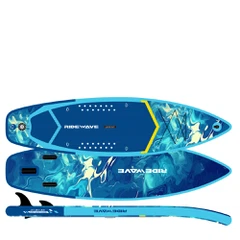
Recreational Paddle Boards: Ideal for casual users and rental businesses.
Performance / Touring Boards: Designed for long-distance paddling and advanced riders.
Specialty Boards: Yoga, fishing, and all-around boards catering to niche markets.
Global Supply Chain Considerations:
Asian manufacturers, especially in China, dominate production due to advanced technology, cost efficiency, and scale.
Local European or North American manufacturers may offer faster shipping and lower tariffs but often come at higher unit costs.
Reliable B2B suppliers, like RIDEWAVE, combine manufacturing efficiency with international compliance, ensuring consistent product quality and timely delivery.
3. Key Factors to Evaluate SUP Paddle Board Manufacturers
When selecting a SUP Paddle Board manufacturer, B2B buyers should evaluate multiple criteria to ensure long-term partnership success.
Competitive advantage
The company conducted a competitive advantage analysis to identify its strengths and weaknesses compared to its rivals.
Production Quality & Certifications:
●ISO, CE, ASTM, and EN standards ensure products meet international safety requirements.
●Materials testing: high-density PVC, drop-stitch technology, and reinforced valves.
01
Research & Development Capabilities:
●Ability to innovate board shapes, graphics, and multi-functional features.
●Support for OEM and ODM requests, from logo placement to full custom designs.
02
Quality Control Processes:
●Multi-stage QC: incoming material inspection (IQC), in-process inspection (IPQC), and final product inspection (OQC).
●Collaboration with third-party laboratories (SGS, Intertek) for compliance verification.
03
Supply Chain & Delivery Reliability:
●Transparent production timelines and scalable capacity.
●Logistics support for global shipping, including container loading and customs documentation.
04
Customer Support & After-Sales Service:
●Warranty and replacement policies for distributors and wholesalers.
●Spare parts and accessory availability for long-term sales support.
05
4. Ridewave's Approach to Custom SUP Paddle Boards
RIDEWAVE stands out in the market due to its flexible customization capabilities, supporting distributors and wholesalers with tailored solutions. Custom options help B2B buyers differentiate their offerings and respond to niche consumer demands.
Honor and qualification
Official certification, professional after sales service.

Full OEM & ODM Support:
Ridewave can implement client logos, unique graphics, and color schemes on boards.

Product Variants for Multiple Markets:
From yoga paddle boards to fishing or touring boards, customization extends across product lines.

Packaging & Branding: Customized packaging options, including full-color printed boxes, instructional manuals, and accessory kits, enhance retail appeal.

Material & Performance Adjustments:
Adjust board thickness, volume, and fin configurations to meet local market preferences.

Design-to-Production Workflow:
3D prototypes, AI-assisted layouts, and detailed production planning ensure accurate translation of client designs.
By offering such flexibility, Ridewave allows distributors to maintain a competitive edge while managing cost-effectively.
5. Quality Assurance & International Compliance
For B2B buyers, consistent product quality and adherence to international standards are non-negotiable. Ridewave implements comprehensive QA/QC practices to ensure every SUP Paddle Board meets stringent criteria.
• Multi-Stage Quality Control:


• Third-Party Verification: Ridewave collaborates with SGS, Intertek, TÜV, and BSCI auditors to certify product compliance.
• Durability & Performance Testing: Pressure, inflation cycles, weight capacity, and drop-stitch integrity are tested for real-world performance.
• Documentation & Traceability: Every batch includes material certificates, test reports, and serial tracking for accountability.
• Continuous Improvement: Ridewave integrates feedback from distributors and international buyers into production updates.
These processes reduce returns, enhance distributor confidence, and support brand reputation in competitive markets.
6. Conducting Supplier Due Diligence for B2B Buyers
Before committing to a long-term partnership, distributors should perform thorough supplier due diligence to verify reliability and capability.
• Initial Supplier Screening: Evaluate potential manufacturers through trade shows (Outdoor Retailer, Paddle Expo) and verified B2B platforms.
• Factory Audits: Either on-site or via video inspections, focus on production capacity, equipment condition, and workforce skill.
• Sample Testing: Request prototypes or sample boards, assess build quality, materials, and performance.
• Financial & Legal Checks: Verify business licenses, insurance coverage, and compliance with export regulations.
• References & Case Studies: Speak with existing distributors to understand delivery performance, service quality, and responsiveness.
Ridewave supports this process by providing transparent production records, sample access, and certifications, helping buyers make informed, low-risk decisions.
7. Future Trends in the SUP Paddle Board Manufacturing Industry
The SUP Paddle Board industry is evolving rapidly as consumer expectations and environmental standards continue to rise. For distributors and wholesalers, understanding these trends can help identify manufacturers that are capable of long-term collaboration and product innovation.
Manufacturers that invest in technology, sustainability, and efficient production systems are more likely to maintain consistent quality and supply reliability. Companies such as RIDEWAVE have adapted to these changes by improving production processes and expanding product development capabilities.
Key Trends Shaping the Paddle Board Industry
• Eco-Friendly Materials
Sustainability is becoming an important purchasing factor in outdoor sports equipment. Manufacturers are gradually introducing recyclable PVC, environmentally friendly adhesives, and packaging solutions that reduce environmental impact.
• Advanced Drop-Stitch Technology
High-density drop-stitch cores allow inflatable paddle boards to achieve greater rigidity and durability. This innovation makes inflatable paddle boards closer to the performance of hard boards while maintaining portability.
• Automation in Manufacturing
Factories are increasingly adopting automated cutting, digital pattern positioning, and precision heat welding systems. These improvements increase production consistency and reduce defects.
• Smart Product Design
Some manufacturers are experimenting with integrated accessories such as action camera mounts, improved cargo systems, and multi-functional deck layouts designed for fishing or touring.
• Global Distribution Support
Manufacturers are expanding logistics services, including optimized container loading, export documentation, and international shipping coordination for distributors.
For B2B buyers, partnering with manufacturers that follow these trends ensures access to competitive and future-ready products.
8. Conclusion: A Practical Checklist for Choosing the Right Paddle Board Manufacturer
Selecting the right SUP Paddle Board manufacturer requires more than comparing prices. Distributors and wholesalers should evaluate long-term reliability, manufacturing quality, and the ability to support brand development.
A trusted manufacturing partner can help businesses scale faster, reduce operational risks, and create unique products that stand out in competitive markets.
Practical Evaluation Checklist for B2B Buyers
• Verify Certifications and Compliance
Check for internationally recognized certifications such as CE, ISO, BSCI, or TÜV.
• Evaluate Manufacturing Capacity
Ensure the supplier can handle seasonal demand and large-volume orders.
• Inspect Quality Control Systems
Look for clear QC procedures, testing reports, and traceability documentation.
• Assess Customization Capabilities
Manufacturers offering custom paddle board solutions allow brands to differentiate in crowded markets.
• Review Logistics and Delivery Support
Reliable shipping arrangements and transparent lead times reduce supply chain disruptions.
• Request Samples Before Bulk Orders
Testing sample boards provides valuable insight into material quality and build consistency.
Manufacturers like RIDEWAVE illustrate how professional factories combine quality production, flexible customization, and global supply support to serve distributors effectively. However, each buyer should conduct independent evaluation to ensure the supplier aligns with their business goals.
By following a structured selection process, distributors can confidently choose the right manufacturing partner and build a sustainable paddle board business.