
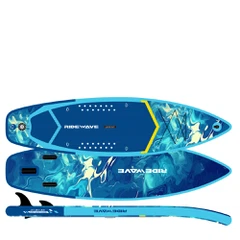

In 2026, inflatable SUP has solidified its position as the highest-margin, fastest-turnover water sports category for European physical retailers, especially in Poland's rapidly expanding inland water recreation market. Unlike rigid hardboards that face high shipping costs, large storage thresholds, and low consumer renewal rates, drop-stitch inflatable SUP boards feature portability, low after-sales risk, and wide scenario adaptability, perfectly matching the consumption habits of family outdoor enthusiasts and casual paddlers across Central Europe. For B2B distributors, wholesalers, and sports gear brand operators looking to expand new product lines, selecting market-verified best-selling inflatable SUP models is the core key to improving store profitability and reducing inventory backlog.

Working as a professional custom inflatable SUP manufacturer with long-term EU market service experience, RIDEWAVE has summarized field-tested product selection rules tailored for Polish local water environments, consumer groups, and retail sales logic. Every market-ready SUP product on our shelves strictly follows the complete production and quality control system introduced in How Custom Paddle Boards Are Made: From Design To Production, ensuring every batch of wholesale SUP goods meets EU CE safety standards, REACH environmental protection regulations, and long-term outdoor durability requirements.
This comprehensive B2B buying guide focuses exclusively on Poland's inland lake, slow river, and suburban water recreation scenarios, sorting out the most salable recreational inflatable SUP, touring SUP, junior SUP, and fitness SUP product lines. We combine real wholesale sales data, EU supply chain trends, and 2026 global outdoor sports consumption hotspots to help global B2B buyers accurately avoid low-profit, high-return-risk SUP styles, build a high-efficiency premium product portfolio, and achieve stable repeated order growth in the fiercely competitive European water sports market.
Why is Poland a fast-growing inflatable SUP retail market for watersports distributors?
The Central European outdoor recreation boom has put Poland firmly on the radar for inflatable SUP wholesalers looking for untapped retail growth. Unlike Western European markets where SUP retail has saturated major cities, Poland holds thousands of natural lakes, slow low-gradient rivers and inland canals that create year-round demand for portable water gear. Many Polish consumers avoid hard SUP boards because most households lack garage storage and vehicle roof racks, making drop-stitch inflatable SUP the default buying choice for first-time paddlers.

For local watersports shop owners, inflatable SUP wholesale delivers attractive gross margins compared to kayaks or wake equipment. Consumer behaviour also shifts toward affordable outdoor activities; post-pandemic, many Polish families prioritise low-cost day trips close to home rather than expensive overseas holidays. This trend lifts foot traffic in physical watersports stores and pushes retailers to refresh their inflatable SUP product lineup every 1–2 seasons to keep up with new buyer expectations.
Distributors new to the Polish market often overlook regional climate factors. Poland's paddling season stretches from late April through October, with cooler spring and autumn water temperatures. Boards sold here need materials that resist cold cracking and minor abrasion from rocky lake shorelines, a detail many generic Asian SUP factories ignore. Working with manufacturers familiar with Central European conditions reduces warranty claims and unhappy end customers.
Market data also shows smaller regional retailers are the biggest sales channel, not large chain sporting goods stores. Independent watersports shops rely on suppliers that can ship mixed container orders, provide CE and REACH documentation and respond quickly to after-sales enquiries. This creates clear opportunities for reliable custom inflatable SUP manufacturers such as RIDEWAVE to partner with importers building local brand presence across Poland.
Many buyers also wonder how product design impacts retail sell-through, a topic explored in How To Design A Paddle Board That Sells. Product lines built around local water conditions consistently outperform generic boards designed for tropical coastal markets.
What key features make an inflatable SUP sell consistently in Polish inland water environments?
When selecting inflatable SUP models for Polish shops, B2B buyers should prioritise practical features tailored to lakes, shallow rivers and stony shorelines, rather than chasing trendy performance specs built for ocean surf. Polish casual paddlers value stability above raw speed; most end users are families and beginners who want to stay upright while bringing pets, coolers or small children onto the board.
Wide deck shape is one of the highest-impact selling features. Boards with a width between 32 inches and 34 inches deliver great initial stability and dominate the Polish recreational segment. Too narrow, and beginners struggle; too wide, and paddling fatigue rises for longer trips. Drop-stitch fabric thickness also matters. A 6-inch board works for calm lakes, while 8-inch inflatable SUP boards handle heavier loads and small river obstacles better.
Rail reinforcement is another non-negotiable detail for Central European waters. Polish lake and river banks often have sharp stones, submerged branches and rough gravel. Lightweight boards without reinforced rails easily develop pinholes, leading to returns and negative customer reviews. RIDEWAVE adds extra welded rail strips on its recreational drop-stitch inflatable SUP lines specifically to reduce abrasion damage on rocky shorelines.
EVA deck pad design directly affects retail conversion. Polish buyers prefer full-length, non-slip textured EVA, covering nearly the whole deck. Partial pads save factory cost but create slippery zones when the board gets wet. D-ring layout is also important. Multiple D-rings allow end users to attach dry bags, seats and safety leashes - accessories that shops can upsell alongside the main inflatable SUP wholesale orders.
Cold-resistant PVC compound is often overlooked but critical. Many retailers sell boards in spring and autumn when water and air temperatures drop close to freezing. Standard PVC turns brittle under low temperatures and increases seam failure risk. Boards formulated for Central Europe retain flexibility even at cooler temperatures and cut long-term warranty work for shop owners.

Weight is also a retail selling point. Polish customers frequently carry boards from car parks down to lakesides. Overly heavy boards discourage solo users and female paddlers. Balancing material durability and board weight is a core design task for manufacturers building boards for this market.
Which inflatable SUP categories deliver the highest turnover for Polish watersports shops?
For Polish watersports retailers building a balanced product portfolio, not every inflatable SUP category generates equal sales velocity or profit. Wholesalers often make the mistake of loading containers with high-performance niche boards that look impressive in catalogs yet sit unused on shop floors, tying up capital for months. The most successful stores split their inventory across four core inflatable SUP boards categories, prioritising high-turnover mainstream models while reserving limited shelf space for specialty SKUs.
All-round inflatable SUP consistently ranks as the top seller for inland Polish waters. These versatile boards serve first-time buyers, family groups, pet owners and casual weekend paddlers exploring lakes and slow canals. They are simple to inflate, easy to transport and accommodate multiple riders, making them the natural "first board" most shoppers ask for. Most shop owners keep 60% to 70% of their inflatable SUP wholesale stock within this category to maintain steady cash flow.
Junior or kids inflatable SUP represents another fast-moving segment, with strong repeat and cross-selling potential. Polish families frequently buy adult and child boards together for lake day trips. Smaller youth boards carry lower unit costs, attractive retail markups and lightweight construction suitable for younger paddlers aged 6–14. Shops that stock matching family bundles often see larger basket values than retailers selling only adult-sized boards.
Touring inflatable SUP targets intermediate users ready for longer canal and river expeditions. These boards feature narrower profiles, extra cargo D-rings and improved tracking, drawing customers willing to pay for upgraded performance. While turnover is slower than all-round variants, touring models deliver stronger gross margins and help stores capture mid-to-high tier buyers who may later upgrade to premium accessories.
SUP yoga boards sit in the specialty tier. Their extra-wide platform creates a stable floating yoga mat for fitness enthusiasts on calm lakes. Demand is smaller compared to all-round boards, but the audience is loyal and willing to spend more. Retailers should limit yoga SUP stock to 10% or less of total SUP inventory, as sales are seasonal and audience-specific. Whitewater SUP belongs to a far narrower niche and only works for shops located near mountain river systems.

How can B2B buyers balance SUP product cost, durability and customer return rates?
Every B2B buyer sourcing inflatable SUP faces the same core trade-off: cut unit price to boost margin, or invest in better materials to lower field failure and return rates. Many new wholesalers fall for ultra-low-cost inflatable SUP boards at first glance, thinking these SKUs will bring quick profits. In practice, thin raw PVC, poor seam welding and cheap drop-stitch fabric create hidden losses. A single batch with high leakage complaints can erode an entire season's profit, damage a retailer's local reputation and drain manpower for after-sales support.

Durability does not automatically mean the highest possible price point. Smart sourcing targets a balanced mid-tier specification for mainstream drop-stitch inflatable SUP, matching material grade to the end user's real usage scenario rather than blindly upgrading every component. For Polish lake and canal use, cold-resistant PVC and reinforced rails are non-negotiable upgrades, while over-engineered racing-grade drop-stitch is unnecessary and simply raises landed cost without lifting retail sell-through.
Return rates are driven by three most common failure modes for imported inflatable SUP wholesale stock: seam air leakage, punctures on rocky shorelines, and defective valves. Cheap factories often skip double heat-weld testing to shorten production cycles. RIDEWAVE runs full air retention testing for every finished board before packing, holding each inflatable SUP under pressure for 48 hours to spot micro-leaks before goods leave the factory. This pre-shipment quality check adds modest production expense, yet drastically reduces warranty returns once products arrive at EU retailers.
Buyers should calculate total cost of ownership instead of comparing only FOB unit prices. Total landed cost includes sea freight, EU import duties, inspection fees, expected after-sales labour and replacement product shipments. A board with a 6% return rate may look cheap per unit, but after accounting for replacement shipments and customer compensation, it can end up less profitable than a slightly more expensive board with under 2% returns.
Another practical lever to control risk is sample testing before full container orders. B2B buyers should send samples out to Polish field testers, using them on stony lake shores through spring and autumn to check material flexibility in low temperatures. Lab certification documents such as CE and REACH are essential, yet real-world field testing reveals weaknesses paperwork cannot catch.
Many B2B buyers miss critical factory qualification questions that separate reliable suppliers from risky vendors. Readers can review the checklist in 10 Questions Every B2B Buyer Should Ask Before Placing An Inflatable SUP Factory Order to structure supplier evaluation before committing capital to large SUP purchases.
What factory and supply chain factors matter most when sourcing inflatable SUP for EU retail?
For B2B buyers importing inflatable SUP into the EU market, product specification is only half of the sourcing equation. Stable supply chains and factory compliance determine whether your shipment arrives on time, clears customs smoothly and can keep up with seasonal retail spikes across Poland and Central Europe. Many wholesalers focus purely on board performance during supplier vetting, ignoring logistics, documentation and production capacity, only to face delayed shipments or customs holds just before the spring paddling selling season.
EU compliance documentation sits at the top of this checklist. Any batch of inflatable SUP boards sold inside Poland must carry valid CE declarations, REACH chemical test reports and product safety files. Customs officers in Poland routinely audit imported watersport goods; incomplete paperwork can trigger detention, fines or even full cargo rejection. Factories that only provide generic certificates, not batch-specific test records, create major risks for importers. Reliable manufacturers such as RIDEWAVE prepare batch-wise compliance documents for every EU shipment and update test reports to match latest REACH restriction changes.
Lead time flexibility is another critical supply chain factor. The Polish SUP selling window is short, concentrated between April and October. Retailers must receive inventory before late March to stock shop floors and launch pre-season marketing. If a factory runs over schedule, distributors miss the entire peak sales window, tying capital up in inventory that arrives long after summer demand fades. Good suppliers separate raw material stock for recurring EU orders and offer partial shipment options, so buyers can receive small pre-season samples and core bulk cargo separately.
Minimum order quantity (MOQ) terms directly affect new distributors and retailers testing multiple drop-stitch inflatable SUP models. High rigid MOQs force buyers to commit large capital to a single SKU, which is risky for retailers exploring the Polish market for the first time. Flexible MOQ and mixed container options let wholesalers combine all-round, junior and touring SUP in one 20ft or 40ft container, testing demand for several product lines without overstocking one single design.
After-sales spare parts support is often overlooked until issues emerge. Even high-quality inflatable SUP wholesale orders need spare valves, repair patches and replacement fins. Factories that include spare parts inside every container reduce retailer after-sales workload. Without spare component supply, shops must turn away customers with simple repairs, hurting brand loyalty and repeat business.

Warehousing and freight coordination also influence landed cost. Some manufacturers work closely with freight forwarders familiar with EU watersport cargo routes, which helps avoid unnecessary surcharges and simplify customs filing. Buyers should confirm whether the supplier can assist with product labelling requirements for the Polish market, including language safety warnings and traceability markings required under EU product safety rules.
How do successful Polish watersports retailers build a profitable SUP product portfolio?
Building a profitable inflatable SUP portfolio is not simply filling shelf space with as many models as possible. Top-performing Polish watersports retailers design their inventory around customer journey mapping, balancing entry-level traffic drivers, mid-range profit generators and limited premium SKUs for high-value buyers. Many shop owners fall into the trap of purchasing too many premium niche inflatable SUP boards that appeal only to a tiny audience, leaving core beginner customers without affordable, reliable options to start their paddling journey.

The standard high-profit portfolio structure for Polish inland water retail follows a tiered model. Tier one consists of entry-level all-round inflatable SUP as traffic builders. These boards carry approachable price points, strong stability and reliable basic features. Their primary job is to draw first-time shoppers into the store and create sales conversations. Tier two holds upgraded mid-tier drop-stitch inflatable SUP models, with reinforced rails, cold-resistant PVC and full EVA deck pads. This tier delivers the largest share of gross profit and is where most customers upgrade once they test the entry-level options. Tier three includes limited premium stock: touring boards and SUP yoga platforms, reserved for experienced paddlers willing to invest extra for specialised performance.
Cross-selling and bundle strategy is another powerful lever Polish retailers deploy to lift average order value. Bundles commonly pair a core inflatable SUP wholesale board with adjustable paddles, safety leashes, dry storage bags and hand pumps. Instead of selling accessories separately, pre-packaged bundles simplify purchasing decisions for family buyers and increase total basket size. Retailers can also upsell repair kits, waterproof phone cases and seats after the initial sale, creating recurring accessory revenue long after the main board transaction.
Inventory rotation planning must align closely with Poland's short paddling season. Smart retailers split purchases into pre-season bulk orders and smaller restock shipments. Pre-season stock arrives before March to capture early spring buyers. Restock orders are scheduled for June, replenishing fast-selling all-round and junior SUPs before the peak July-August holiday period. Holding excess inventory past September is risky, as cold autumn months slow retail sales and tie cash into stock that will not move until the following spring.
To illustrate how this portfolio strategy works in practice, we share a real cooperation case between RIDEWAVE and a multi-store Polish watersports retailer. This retailer operated four physical shops across western Poland and previously sourced generic SUP boards from an Asian supplier. Their old inventory suffered frequent seam leaks, inconsistent quality and unreliable delivery timelines, hurting customer reviews and limiting seasonal revenue growth.
Working together, RIDEWAVE helped the brand rebuild their inflatable SUP lineup with a tiered mix: 65% all-round beginner boards, 20% junior family models, 12% touring boards and 3% yoga SUP. We recommended cold-resistant PVC and welded rail reinforcement tailored for Polish lakes and stony shorelines. The buyer placed a mixed container order instead of separate single-model shipments. Within 8 months after goods landed, their SUP category revenue rose by 41%, and product return rate dropped below 1.8%. Based on these results, the retailer expanded their order volume in the next buying cycle and added premium touring variants to capture more intermediate paddlers.
What common inflatable SUP sourcing mistakes should EU B2B buyers avoid?
Even experienced wholesalers and watersports brand owners make costly missteps when sourcing inflatable SUP for Poland and other Central European markets. Many of these errors stem from over-reliance on product photos and price lists, without validating real-world performance, factory capacity or EU regulatory requirements. Recognising these pitfalls before placing orders protects your capital, preserves retail reputation and keeps inflatable SUP boards selling steadily across your shop network.
The first widespread mistake is prioritising the lowest FOB price above total landed cost. Budget buyers often select ultra-cheap drop-stitch inflatable SUP assuming larger profit margins, ignoring weaker raw materials, incomplete certification and higher failure rates. As we touched on in earlier sections, cheap boards create cascading costs: warranty replacements, customer refunds, negative online reviews and labour spent resolving complaints. In extreme scenarios, non-compliant products can get detained at Polish border customs, resulting in cargo seizure and lost investment.
A second frequent error is ordering oversized single-SKU containers without market testing. New entrants to Poland sometimes place full 40ft containers of one model, based only on online trend reports rather than local lake trials. If that specific board fails to resonate with Polish family paddlers, retailers end up with slow-moving stock that locks capital for 12 months or longer. Mixed container orders solve this issue by allowing merchants to test multiple styles in a single shipment before committing to large bulk runs.
Many B2B buyers also overlook climate adaptation requirements. They source boards engineered for warm tropical waters, where standard PVC performs adequately. These same boards become brittle in Poland's cool spring and autumn air, leading to seam cracks and punctures when dragged over stony lake shorelines. Skipping cold resistance testing is a quiet, recurring issue that only reveals itself once products reach end consumers.
Another sourcing blind spot is neglecting spare parts and after-sales support. Some importers negotiate rock-bottom pricing but forget to contract for spare valves, fins and repair kits. When customers contact retail shops with simple air valve leaks or broken fins, retailers cannot resolve issues quickly. Unresolved minor faults turn into bad reviews and lost repeat buyers, even if the main inflatable SUP wholesale order had acceptable base quality.

Many buyers also underestimate lead time risks around seasonal peaks. They delay order placement, expecting factories to rush production in February or March to hit the Polish spring selling window. This timing almost always backfires. Global outdoor goods factories face heavy order congestion from December through March. Rush orders trigger premium production surcharges, higher freight costs and increased odds of quality shortcuts as factories race to meet tight deadlines.
Can custom inflatable SUP orders help distributors stand out in Poland's competitive
As more wholesalers import generic inflatable SUP boards into Poland, competition on basic product specs and low pricing becomes fierce. Many retailers find themselves trapped in price wars, unable to build loyal local customer bases or protect healthy profit margins. In this crowded marketplace, customised inflatable SUP solutions offer distributors a powerful way to differentiate their shop brand, reduce direct price competition and capture more value from family and recreational paddlers across Central Europe.

Customisation does not always mean full product redesign. For most Polish market entrants, entry-level custom work focuses on branding and visual adjustments rather than changing board shape or core material structure. Popular options include custom printed logos, tailored graphic colour schemes, custom packaging boxes and branded accessory kits. This level of OEM customisation carries lower MOQ requirements and shorter lead times, letting new importers launch unique branded drop-stitch inflatable SUP without heavy upfront investment.
Deeper ODM customisation unlocks product tweaks built specifically for Polish inland water scenarios. Distributors can work with manufacturers to adjust rail reinforcement, refine cold-resistant PVC formulations or modify D-ring layouts to match local consumer preferences. For example, RIDEWAVE has collaborated with Polish partners to adjust the placement of D-rings, making it simpler for end users to attach seats and dry bags for all-day lake trips. These small, market-focused changes create tangible advantages that generic imported boards cannot match.
Private label SUP products bring another key benefit: control over retail pricing. When selling unbranded generic inflatable SUP wholesale stock, competitors can source identical boards from multiple factories and match or undercut your price. With your own private label, you own the product identity. Shoppers associate the board quality and design with your shop brand, not the factory. This reduces direct comparison shopping and stabilises gross margins over multiple selling seasons.
There are practical limits to custom orders that B2B buyers should understand. Full mould redesign, new fabric development or highly specialised shapes demand higher MOQs, longer production cycles and extra tooling fees. For most Polish retailers, starting with logo printing and custom packaging is the lowest-risk path. Once sales data proves strong demand, buyers can gradually move to material and structural ODM upgrades.
Custom SUP is not mandatory for success. Many profitable Polish retailers rely on standard ready-made models. But for distributors aiming to build lasting brand equity and escape commodity pricing pressure, private label and custom tweaks create sustainable competitive advantages.
Final recommendations for sourcing inflatable SUP for Polish watersports retail
When planning your inflatable SUP sourcing strategy for Poland, the core principle remains simple: build inventory around local end-user needs instead of chasing global product trends. The most successful importers and shop owners do not stock every available inflatable SUP boards model. They select a focused lineup built for inland lakes, gravel shorelines and cool spring and autumn weather, while balancing cash flow, profit margins and manageable risk.

Start your planning with market segmentation. Reserve roughly 60–70% of your purchasing budget for reliable all-round inflatable SUP as your core revenue driver. Add smaller volumes of junior family boards and mid-tier reinforced models, and limit premium specialty SKUs to a tiny portion of your inventory. This tiered mix works well for independent regional shops and multi-location retail chains operating across Poland.
Prioritise material specifications built for Central European climate: cold-resistant multi-layer PVC, welded rail reinforcement, full-length textured EVA deck pads and multi-point D-ring mounting systems. Before committing to bulk drop-stitch inflatable SUP orders, complete physical field testing on samples. Test boards in spring and autumn conditions, drag them across stony lakesides and verify air retention over multiple days. Lab certificates are essential, but real-world testing reveals weaknesses that documents cannot catch.
Protect your business by carefully reviewing supplier compliance and supply chain terms. Confirm every shipment includes batch-specific CE and REACH documentation, spare parts and clear lead-time agreements. Prefer suppliers offering mixed container options and predictable production timelines. As shown in our earlier RIDEWAVE retail case, flexible ordering and consistent quality drastically lower retail return rates and boost seasonal revenue.
Plan purchasing timelines around Poland's narrow paddling selling window. Submit bulk orders at least 3 to 4 months before late March, so inventory arrives in time for spring launch. Schedule smaller mid-season replenishment orders for June to refill fast-selling SKUs ahead of July and August holiday demand. Avoid heavy inventory purchases after August, as sales slow sharply once autumn temperatures drop.
Decide whether custom branding fits your business goals. If you are a new retailer testing the market, begin with ready-made stock first. Once you build steady sales and loyal customers, move to low-MOQ OEM custom logo and packaging upgrades to separate your brand from generic commodity inflatable SUP wholesale products. Larger established distributors can explore deeper ODM tweaks to refine board features for Polish lake users.
Keep learning and refining your product range each season. Track sell-through rates, customer feedback and return reasons after each selling cycle. Use this data to adjust next year's inventory mix, discontinue slow-moving SKUs and double down on high-demand models. This iterative approach keeps your product portfolio aligned with changing family recreation preferences across Poland.
Related Articles
Why Drop-Stitch Inflatable SUP Wins More Sales in Poland's Lake & River Watersports Market
Low MOQ Inflatable SUP Supplier For Polish Retailers: Private Label & Fast Lead Time
Poland Inflatable SUP Market Trends 2026: Bestselling Board Types For Retail & Rental Business
Maximize Your Spanish SUP Retail ROI: Smart Bulk Procurement & Inventory Management Strategies
Reliable EU Standard SUP Supplier For Spanish B2B: Compliance, OEM & Scalable Production