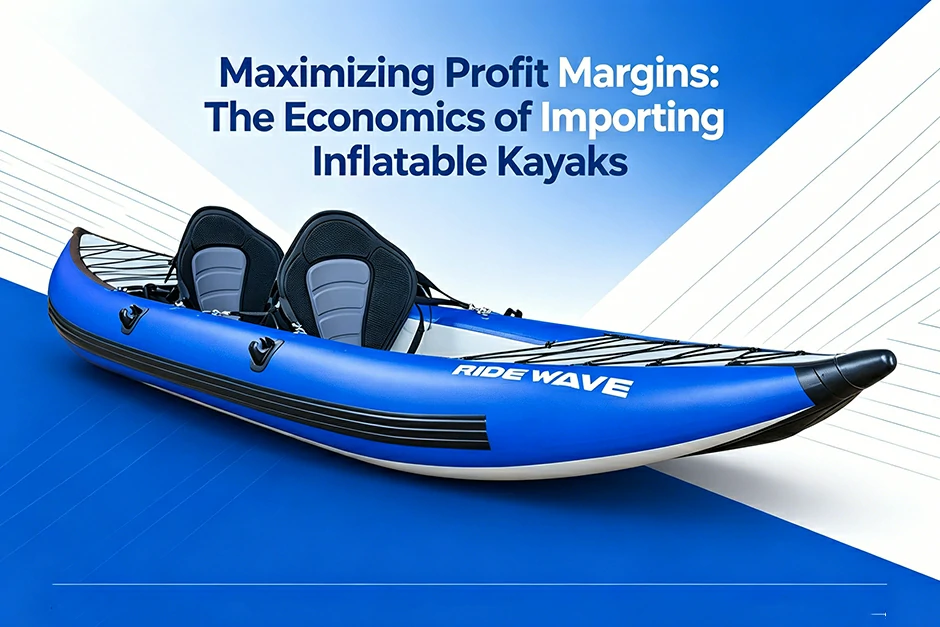

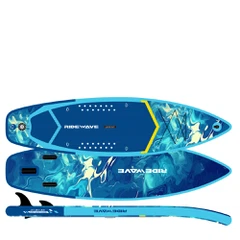

If you are a wholesaler, outdoor distributor or emerging brand owner looking to expand your summer product lineup, private label inflatable SUP is one of the most profitable watersport categories you can add this season. Many established outdoor merchants selling camping, hiking and fishing gear struggle to find a dependable manufacturer that balances flexible MOQ, consistent board quality, regional compliance support and custom branding. The biggest risk when sourcing wholesale inflatable paddle boards is partnering with a supplier who cuts corners once bulk production starts, leading to rejected shipments, customer complaints or costly customs delays. Working with a factory that fully understands the end-to-end build process makes all the difference, and you can learn more about production workflows in How Custom Paddle Boards Are Made: From Design To Production. RIDEWAVE works with B2B buyers across Poland, wider EU, North America and Australia to build custom private label SUP lines without forcing massive upfront inventory commitments. This guide breaks down market realities, sourcing pitfalls, certification rules and real distributor outcomes, so you can make confident buying decisions before signing any manufacturing contract.
Why is private label inflatable SUP a high-growth category for Polish & EU outdoor distributors?
For outdoor distributors operating in Poland and the broader European market, private label inflatable SUP delivers sustainable revenue growth because it lets wholesalers own their brand identity without building factory infrastructure. Generic white-label inflatable stand up paddle boards flood marketplaces, forcing sellers into brutal price wars that crush gross margins. When you launch your own branded iSUP, you create a unique selling proposition that big-box retailers and discount marketplace vendors cannot easily copy.

Watersport participation rates across Central Europe keep climbing. Polish consumers increasingly prioritise accessible outdoor activities for weekend trips to lakes, coastal getaways and family vacations. Unlike hard-shell paddle boards, portable wholesale inflatable paddle boards require minimal storage space for retail stock and end customers alike. This practical advantage makes private label SUP an easy add-on category for existing outdoor retailers who already stock camping gear, hiking apparel and fishing accessories.
• Brand differentiation protects your profit margin instead of competing only on unit price. • Compact inflatable construction reduces warehouse storage costs for distributors. • Season overlap extends selling windows beyond just peak summer months. • Bundle options with paddles, hand pumps and safety leashes lift average order value.
Many European wholesalers hesitate to launch custom board lines due to fears of high upfront investment and unreliable suppliers. This hesitation leaves a gap in the market for distributors willing to partner with experienced manufacturers like RIDEWAVE. We have worked with dozens of EU outdoor brands to launch scalable private label inflatable paddle board ranges tailored for regional lake and coastal use.
What market trends shape inflatable paddle board wholesale in North America, Australia and Europe in 2026?
Global demand for wholesale inflatable paddle boards keeps expanding across multiple continents, yet regional buyer behaviours and end-user priorities vary significantly for private label iSUP lines. A one-size-fits-all board design rarely delivers strong sales across all markets, which is a critical detail many new brand owners overlook when sourcing private label inflatable SUP.
European buyers, including distributors serving Poland and Central Europe, prioritise lightweight boards that fit small car trunks and apartment storage spaces. Local consumers mostly paddle on inland lakes and slow rivers, so balanced, stable all-around inflatable SUP models remain the top sellers. Safety documentation and compliance certifications are also non-negotiable, as EU customs authorities regularly audit inflatable watersport goods entering the bloc.
North American retail customers lean heavily toward full package bundles. Shoppers expect inflatable stand up paddle boards to ship with high-pressure pumps, adjustable paddles, safety leashes and repair kits included. Family-focused SKUs, such as kids' iSUP and multi-person boards, perform well in outdoor specialty shops and online marketplaces across the US and Canada.
Australian paddlers face harsher open-water and coastal conditions. Distributors targeting AU markets need heavy-duty, reinforced private label SUP built to withstand rough waves, UV exposure and sharp submerged rocks. Long touring styles stay popular, paired with durable deck padding and thick dropstitch material. Climate shifts also extend warm seasons in many parts of Australia, lengthening the selling cycle for watersport inventory.
• Rising consumer preference for compact, easy-to-transport inflatable SUP over rigid hard paddle boards.
• Growing demand for eco-conscious raw materials and low-VOC deck pads in EU and North America.
• Stronger interest in multi-use designs that support yoga, fishing and family recreation.
• Tightening import safety rules that force B2B buyers to verify factory certification before bulk orders.
• Increased retailer demand for smaller trial orders to test market response before large inventory commitments.

These shifting trends create both opportunity and risk for wholesalers. What sells in Australia may underperform in Poland, and designs optimised for US bundles may not resonate with European lake paddlers. RIDEWAVE works with distributors to adjust board specs and bundle contents according to each target territory, so your private label inflatable paddle board lineup aligns with local consumer expectations rather than relying on generic, universal designs.
What key specifications should B2B buyers prioritise when sourcing private label inflatable paddle boards?
When sourcing private label inflatable SUP, B2B buyers often jump straight to price negotiations before locking in core board specifications. This common shortcut creates expensive downstream issues, including high return rates, negative retail feedback and warranty claims that eat into your profit margin. The best practice is to define your target end user and primary usage scenario first, then build your private label iSUP around those requirements. This product-first mindset directly improves sales performance, as covered in How To Design A Paddle Board That Sells.

Dropstitch fabric quality sits at the centre of reliable inflatable stand up paddle boards. Low-grade dropstitch stretches unevenly under pressure, leading to bent board shape and unstable handling on the water. Thickness is another non-negotiable spec. Most popular all-around inflatable SUP models use 6-inch thickness for balanced rigidity and portability, while touring or heavy-load boards may move up to 8 inches. Rail reinforcement, deck pad texture and seam construction also affect durability and end-user satisfaction.
Material choices will shape your target market eligibility. Boards built with low-VOC glue and raw materials simplify compliance checks for EU and California markets. For Australia, UV-resistant outer layers reduce degradation under strong sunlight, extending product lifespans for coastal paddlers.
• Board length and width control stability: wider boards suit beginners and family users; longer boards deliver faster tracking for touring paddlers. • Dropstitch density determines stiffness, weight capacity and long-term air retention. • Deck pad grip and coverage impact safety, especially for yoga and beginner inflatable SUP buyers. • Accessory bundle selection changes perceived value and average order value for retail listings. • Colour and graphic design support brand identity and shelf visibility for your private label SUP.
Many buyers only compare dimensions on paper without testing physical samples. A board that looks good on a spec sheet may feel unbalanced once inflated. RIDEWAVE recommends pre-production sample testing before mass production, so your team can validate stiffness, weight and handling before committing to a full bulk run.
| SUP Board Type | Target Customer | Best Market | Core Spec Recommendation | Profit Margin Potential | Primary Private Label Use Case |
|---|---|---|---|---|---|
| All-around Inflatable SUP | Entry-level casual users | Poland, EU, USA | 10'6", 6" thickness, dropstitch | Medium-High | Retail shop, online marketplace |
| Touring Inflatable SUP | Intermediate paddlers | Australia, Western Europe | 12', 6" thickness, reinforced rail | High | Outdoor specialty stores |
| Kids Inflatable SUP | Family buyers | North America, Germany | 7'–8', 4" thickness | Medium | Bundle sales with camping gear |
| Yoga Inflatable SUP | Fitness outdoor crowd | USA, Canada | 10', 6" thickness, non-slip deck pad | High | Fitness & outdoor retail bundle |
How can you reduce risks when partnering with an inflatable SUP manufacturer for private label?
Sourcing private label inflatable SUP carries hidden risks that can derail your entire product launch if left unaddressed. Many B2B wholesalers focus exclusively on unit price and overlook supplier reliability, which often leads to delayed shipments, inconsistent print quality, mismatched raw materials or missing compliance paperwork. Before locking in a factory partnership, you need a structured checklist to vet capabilities, verify quality controls and protect your brand reputation when ordering wholesale inflatable paddle boards. A full list of critical pre-order checks is available in 10 Questions Every B2B Buyer Should Ask Before Placing An Inflatable SUP Factory Order.

One of the simplest and most effective risk mitigation steps is requesting pre-production samples. Samples let your team inspect the real texture of dropstitch fabric, deck pad grip, seam strength and colour accuracy of your custom artwork before mass production begins. Do not rely only on photos or digital renderings, as screen colour distortion can create costly mismatches once boards roll off the production line.
Another common pitfall is unclear contract terms around inspection standards, rework rules and shipment timelines. Verbal agreements leave no recourse if your bulk private label iSUP arrives with defects. Reputable factories will put QC standards, acceptable defect rates and delivery schedules into formal written agreements. You should also confirm who holds responsibility for cargo damage during sea freight and customs detention risks for your target region.
• Confirm ownership and authenticity of test certificates for your sales territory; counterfeit certifications can trigger customs seizures.
• Negotiate flexible payment terms to avoid paying the full balance before confirming pre-production sample approval.
• Clarify revision rules for custom graphics, to avoid unexpected surcharges on artwork adjustments for your private label SUP.
• Build buffer time into your shipping schedule to account for port congestion, EU customs audits and seasonal factory capacity pressure.
Even experienced distributors can run into supply chain surprises. RIDEWAVE encourages every B2B buyer to complete factory audits or virtual workshop tours before committing to large orders. This simple step helps confirm production capacity, raw material stock levels and on-site quality management systems, rather than trusting claims made only over email.
What private label customisation options can a reliable inflatable paddle board factory offer?
When building your private label inflatable SUP lineup, customisation is not limited to simply printing your logo onto an existing board shape. Trustworthy manufacturers provide tiered customisation packages to match your brand budget, starting from low-investment logo branding all the way to fully bespoke board geometry. Understanding what custom work is feasible helps B2B buyers set realistic expectations and avoid overcommitting to modifications that raise costs or stretch lead times. If you want to learn the full production journey behind these custom boards, read How Custom Paddle Boards Are Made: From Design To Production.
Entry-level customisation is the most popular starting point for new private label iSUP brands. This level includes custom graphic printing, deck pad colour matching, branded accessories and custom packaging. It works well for distributors testing the market, as it keeps tooling costs low and preserves faster production timelines. Full custom development targets brands with proven market demand; this path allows changes to board length, width, rail shape and deck layout for unique inflatable stand up paddle boards.
Many buyers overlook packaging customisation, yet branded boxes leave a strong impression with retail shoppers. Printed cartons with your logo and product storytelling lift shelf appeal and reduce the need for extra marketing materials at retail. Accessory customisation is another simple win: branded paddles, pumps and repair kits increase perceived value for bundled inflatable SUP sets.
• Logo placement options: deck pad printing, side rail graphics, tail panel prints and embossed 3D silicone branding.
• Visual customisation: custom colour schemes, full-board heat transfer artwork, custom traction pad patterns for your private label SUP.
• Packaging upgrades: custom colour boxes, user manual printing with your brand information, branded carry bags.
• Accessory customisation: custom printed paddles, branded hand pumps, leashes and repair kits for complete retail bundles.
• Structural customisation: adjusted dimensions, reinforced rails, modified D-ring layout and custom mould options for advanced projects.

Not all factories can deliver every custom request. Some workshops only offer pre-made board blanks with basic logo printing and cannot alter structural elements. RIDEWAVE separates customisation into clear tiers so distributors can pick options aligned with their budget and order volume, without paying for unnecessary modifications. We start most new brand partnerships with graphic-only customisation for trial batches before moving to structural board redesign when sales data justifies the investment.
How does MOQ affect your private label SUP launch budget and inventory planning?
MOQ, or minimum order quantity, is one of the most impactful variables when launching private label inflatable SUP, and it shapes nearly every part of your go-to-market strategy. Many new wholesalers and brand owners fixate only on unit price and underestimate how minimum order rules tie up capital, occupy warehouse space and limit your ability to test consumer demand. When sourcing wholesale inflatable paddle boards, rigid high MOQ terms force you to commit large inventory purchases before knowing if your custom design resonates with shoppers. Flexible MOQ options let distributors run small trial batches to validate market feedback before scaling production of your private label iSUP.

Upfront capital risk is the biggest downside of inflexible high MOQ requirements. A large first order means you pay for raw materials, custom printing, packaging and ocean freight all at once. Unsold inflatable stand up paddle boards lock cash in stagnant inventory, accrue monthly warehousing fees and may depreciate if newer board designs enter the market the following season. This risk hits European distributors especially hard, since warehouse rental costs in Poland, Germany and Western Europe continue to climb year over year.
Small trial orders solve this problem for brands still refining their lineup. A limited test batch lets you evaluate product quality, customer reviews and sales velocity without sinking your full marketing budget into inventory. You can also test multiple graphic styles or accessory bundle combinations, then scale only the best-performing private label SUP SKUs once sales data confirms demand.
• Low trial MOQ reduces initial cash outlay and lowers the financial risk of launching a new watersport product category. • Small batch production helps you avoid overstocking slow-moving inflatable SUP designs before market validation. • Flexible ordering supports seasonal adjustments: ramp up volume ahead of spring and summer peaks, reduce runs during off-season months. • Separate MOQ rules for custom graphics versus structural board changes help split your investment between visual branding and full product redesign. • Careful inventory planning reduces storage expenses and lessens the chance you will be stuck with outdated board stock after summer ends.
It is important to separate graphic customisation MOQ from full structural modification MOQ. Printing your logo or artwork on an existing board blank typically carries a lower minimum, while changing dimensions or mould geometry demands a far higher order commitment. RIDEWAVE structures separate MOQ tiers for graphic-only customisation and full board redesign, so B2B buyers can start small. Many of our European partners, including outdoor retailers across Poland, begin with trial batches before scaling to bulk production once consumer demand is proven.
What compliance certifications are mandatory to sell private label inflatable paddle boards in EU, US and Australia?
Selling private label inflatable SUP across EU, US and Australian markets requires region-specific compliance documentation, and missing or falsified certificates can stop your shipment at customs, trigger product recalls, or bring heavy fines. Many new wholesalers sourcing wholesale inflatable paddle boards underestimate how strictly border authorities audit inflatable watersport goods. Certificates that work for one territory may not satisfy regulators elsewhere, so you must confirm test scope and standards match your target sales region before placing bulk orders for your private label iSUP.
For Poland and the wider EU market, REACH compliance remains the primary requirement. This regulation restricts hazardous chemicals found in raw materials, glue and deck pad components. Customs officials frequently request full test reports for inflatable watersport equipment. Non-compliant inflatable stand up paddle boards may get detained, adding port storage fees and disrupting your seasonal launch timeline.
North American retailers and marketplaces demand ASTM safety standards for inflatable SUP. These tests evaluate construction strength, seam integrity and material safety for end users. Online platforms including Amazon actively audit product certification, and listings can be removed if documents cannot be supplied upon request.
Australia enforces its own safety rules for imported inflatable water sports products. Importers must verify raw material safety and physical construction performance. Border control checks often focus on UV stability and tear resistance, as local paddlers commonly use boards in harsh coastal environments.
• EU: REACH chemical screening report for all materials, including PVC, glue and deck pad foam for your private label SUP.
• USA: ASTM testing covering seam strength, pressure retention and material safety for retail marketplace listings.
• Australia: Inflatable product safety verification, focusing on tear resistance and UV ageing performance.
• All regions: Factory test reports must name your brand or product model where possible; generic factory certificates may be rejected by customs.
• Always confirm the certificate issuing lab accreditation, since low-quality unaccredited test documents are not accepted by customs agencies.

A reliable manufacturer will prepare and organise all required compliance files ahead of shipment. RIDEWAVE maintains up-to-date test documentation for private label inflatable paddle boards shipped to EU, USA and Australia. We walk each B2B buyer through document requirements for their chosen sales territory before production begins, so you avoid costly customs delays.
What real results can a private label outdoor brand get by cooperating with a trusted inflatable SUP factory?
The end goal of launching private label inflatable SUP is not simply to source cheap wholesale inflatable paddle boards, but to build a sustainable brand asset that delivers stable profit and loyal repeat buyers. Many outdoor distributors treat custom iSUP only as a quick add-on product line, yet the right factory partnership can turn private label iSUP into one of your highest-margin categories. Reliable manufacturers support your brand long after production finishes, helping you avoid common pitfalls that sink new inflatable stand up paddle boards launches.

One tangible benefit is stronger profit margins compared to reselling generic white-label goods. When you own your private label SUP, you control branding, packaging and retail pricing instead of competing against dozens of sellers listing identical stock. This differentiation creates space to set price levels that reflect product quality and brand value, rather than being forced into endless price wars on marketplaces.
A trusted factory also provides consistent batch-to-batch quality stability. For outdoor retailers selling inflatable SUP year after year, uniform product performance protects your brand reputation and reduces warranty claims. This consistency matters most for seasonal outdoor businesses, where negative reviews from a single defective batch can hurt sales across multiple selling seasons.
Our long-term B2B partners often see incremental growth rather than overnight explosive sales. A distributor based in Poland began with a small trial batch of private label inflatable paddle boards, using simple graphic customisation on all-around inflatable SUP models. After validating demand from local lake users, they scaled orders and expanded their lineup to include kids' boards and yoga iSUP. Within two selling seasons, the SUP category became their top revenue generator among watersport goods.
• Better profit margins by escaping commodity-style price competition with generic white-label inflatable SUP.
• Consistent batch quality to protect brand reputation and minimise after-sales support workload.
• Flexible product iteration: adjust graphics, bundle contents or board specs based on real retail sales feedback.
• Access to factory technical knowledge on material upgrades, new trends and regional compliance updates.
• Long-term supply chain stability, with priority production scheduling ahead of spring and summer peak seasons.
This kind of growth does not happen automatically. It depends on careful market testing, realistic sales forecasting and open communication between your brand and the manufacturer. RIDEWAVE works side-by-side with distributors to track performance feedback from the field, refine private label inflatable SUP designs, and adjust production volumes to match seasonal demand. Our goal is to help your brand build lasting value, not just ship a single batch of paddle boards.
Launching your own private label inflatable SUP is a powerful way to expand your outdoor product portfolio, raise profit margins and build a brand identity that stands apart from generic marketplace goods. Sourcing wholesale inflatable paddle boards does not need to be a high-risk gamble, as long as you define your target users, clarify regional compliance rules and partner with an experienced manufacturer.
You now understand core board specifications, customisation tiers, MOQ planning, global certification requirements and real-world growth stories from existing distributors. These insights help you avoid common sourcing mistakes that derail many new private label iSUP projects.
The most successful private label SUP brands start small. Begin with market validation using trial batches, gather customer feedback, refine designs gradually and scale only when sales data proves demand. This low-risk approach works equally well for Poland, EU, North American and Australian markets.
• Define your primary audience and usage environment before locking board specs for inflatable stand up paddle boards.
• Separate visual customisation from structural modification to keep initial investment manageable.
• Verify all compliance documents early to prevent customs detention of your inflatable SUP shipments.
• Build flexible inventory plans with buffer time for port delays and seasonal demand shifts.
• Prioritise consistent batch quality over the lowest possible unit price for long-term brand trust.
Whether you are adding your first watersport category or expanding an established outdoor lineup, RIDEWAVE can support your journey into private label inflatable paddle boards. Our team helps B2B buyers select suitable board styles, organise compliance documentation and arrange trial production for market testing. If you are ready to discuss your custom SUP project, reach out to our team for a consultation.
Related Articles
Top Selling Inflatable SUP Models For Polish Watersports Shops - Buyer's Product Selection Guide
Why Drop-Stitch Inflatable SUP Wins More Sales in Poland's Lake & River Watersports Market
Low MOQ Inflatable SUP Supplier For Polish Retailers: Private Label & Fast Lead Time
Poland Inflatable SUP Market Trends 2026: Bestselling Board Types For Retail & Rental Business
Inflatable SUP For Poland Distributors: 2026 Wholesale Sourcing Guide & CE Compliance Checklist