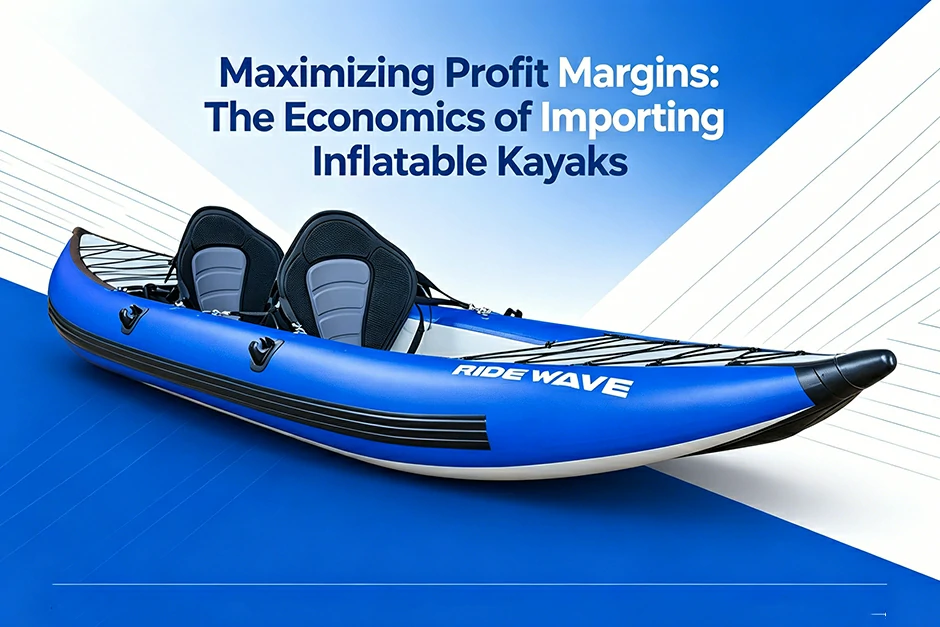


The global water sports market is undergoing an unprecedented structural evolution, driven by skyrocketing consumer demand for premium, rigid-hull performance in highly portable, inflatable formats. For B2B distributors, wholesalers, and outdoor brands across Europe, North America, and Australia, relying on legacy, manual manufacturing no longer offers a viable path to scale. Traditional hand-gluing and manual material cutting inherently introduce human fatigue, high defect rates, and volatile production timelines that fail under modern market pressures. To eliminate these critical supply chain vulnerabilities, the industry is forcing a rapid paradigm shift toward AI-driven design tools and automated production lines. By transitioning to digitized manufacturing, forward-thinking brands guarantee absolute structural consistency, lower defect rates, and resilient, high-volume output. This technological leap transforms the inflatable kayak from a variable novelty item into a precision-engineered, high-margin asset ready for global market expansion.
How Do AI-Driven Design Tools Accelerate the Time-to-Market for New Kayak Models?
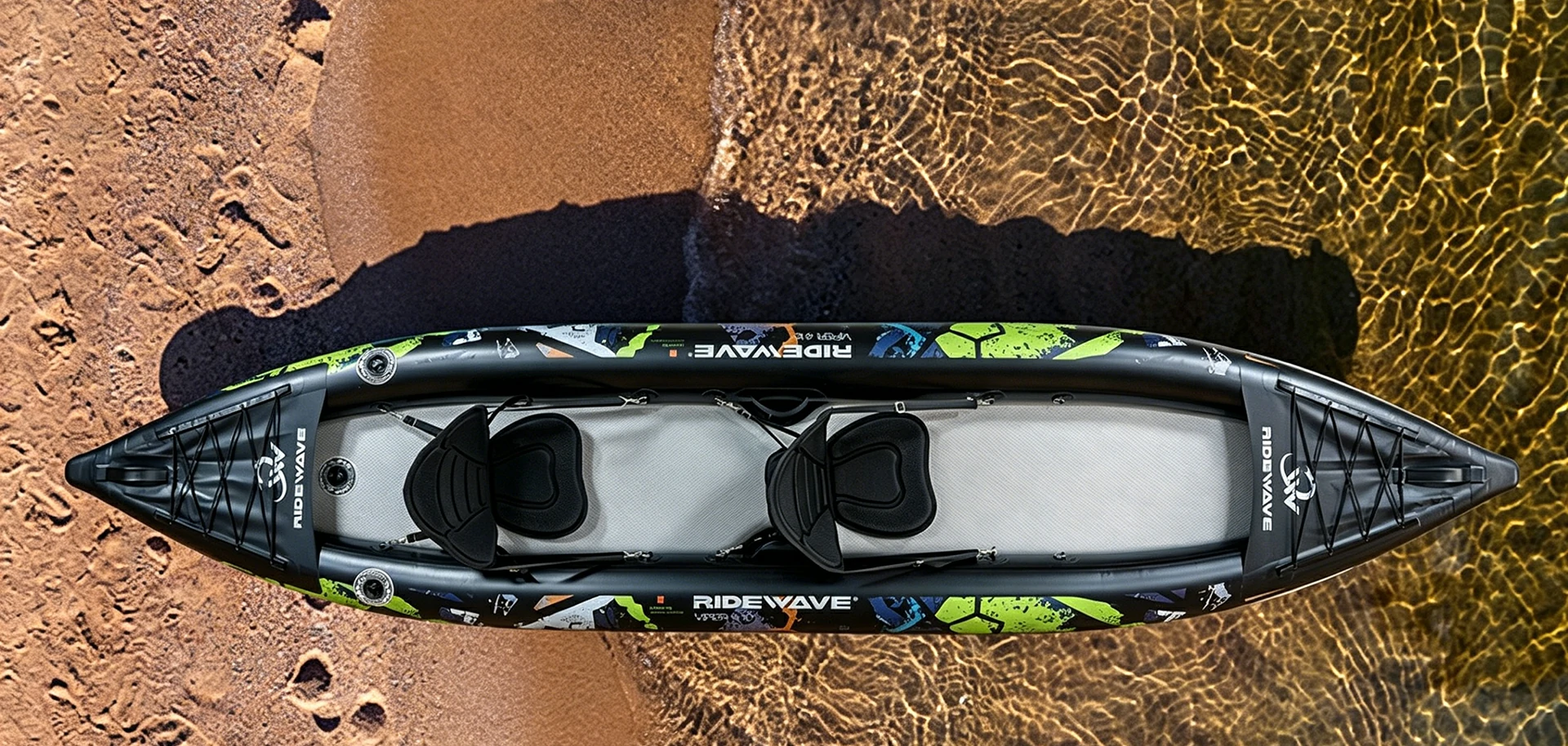
For global outdoor gear brands and commercial watercraft wholesalers, the traditional product development cycle for a new inflatable kayak line has historically been a costly gamble. In legacy manufacturing, transitioning from a conceptual sketch to a market-ready wholesale inflatable boat requires multiple rounds of physical prototyping, manual drop-stitch stress adjustments, and expensive hydrodynamic trial-and-error. If a hull tracking flaw or a seam stress vulnerability is discovered during real-water testing, the entire tooling and patterning process must restart, delaying product launches by six to nine months and missing critical seasonal sales windows. Today, advanced inflatable kayak manufacturers like RIDEWAVE are completely disrupting this bottleneck by integrating predictive Artificial Intelligence and Computational Fluid Dynamics (CFD) into the initial R&D phases. By simulating thousands of open-water variables in a digital environment, AI-driven design infrastructure eliminates structural blind spots, allowing global distributors to introduce cutting-edge, certified products to their regional markets ahead of the competition.
📈 Streamlining Custom OEM/ODM Kayak Prototyping Through Algorithmic Simulation
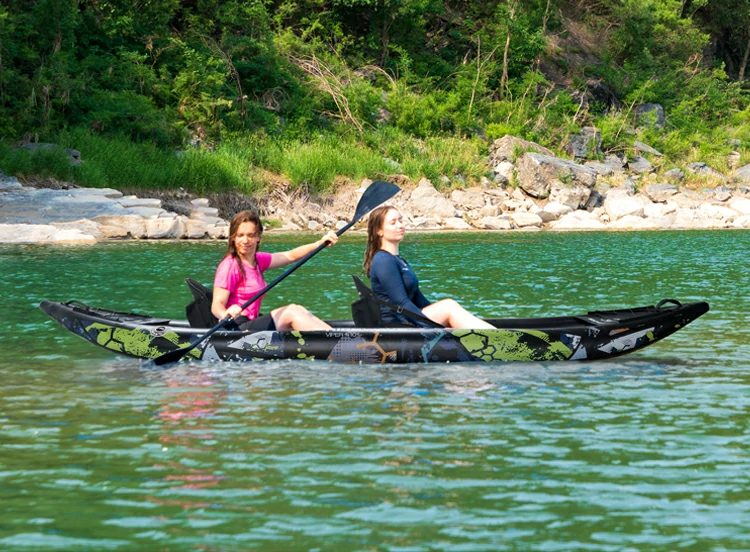
The primary vector where AI compresses lead times is the elimination of physical prototyping bottlenecks for custom inflatable tandem kayaks and specialized angling platforms. When an outdoor brand requests a custom rocker profile or a unique multi-chamber configuration to target the premium inflatable fishing kayak market, RIDEWAVE's integrated design software subjects the 3D digital twin to rigorous algorithmic stress analysis.
Predictive Hydrodynamic Tracking: The AI engine simulates fluid flow against the inflatable kayak hull, predicting drag coefficients, stability metrics, and tracking efficiency before a single piece of heavy-duty PVC fabric is cut.
Virtual High-Pressure Stress Mapping: Algorithms automatically calculate how internal drop-stitch polyester threads distribute load when inflated up to a rigid 15 PSI to 18 PSI limit, identifying potential hull bowing or twisting areas instantaneously.
Optimal Nesting Patterns: The cloud-based design suite automatically calculates the most efficient material nesting layouts, minimizing specialized PVC fabric scrap and ensuring stable b2b inflatable kayak manufacturing wholesale pricing for volume buyers.
🎯 Minimizing Structural Defect Risks Prior to Bulk Kayak Production
For high-volume water sports equipment distributors, a design flaw caught after shipment is a financial catastrophe. AI-assisted engineering serves as an automated gatekeeper that ensures every new inflatable touring kayak model complies with strict international safety standards (such as CE, ISO 6185, and NMMA) during the blueprint phase, rather than testing by trial-and-error on the factory floor.
Automated Chamber Failure Simulations: The software simulates sudden decompression in one chamber to verify that the remaining multi-chamber inflatable kayak system retains sufficient buoyancy and structural rigidity to safely support the paddler.
Seam Shear Stress Optimization: AI precisely calculates the exact surface area required for high-frequency welding overlaps, eliminating the historical risk of seam delamination under extreme heat or UV exposure common in tropical distribution zones.
Ergonomic and Load-Distribution Balance: By analyzing digital human factors data, the system optimizes the placement of D-rings, adjustable aluminum seats, and integrated gear tracking rails, ensuring the inflatable kayak drop-stitch floor maintains a perfect center of gravity under full cargo loads.
Can Automated Laser Cutting and Robotic Welding Eliminate Human Error in Drop-Stitch Construction?

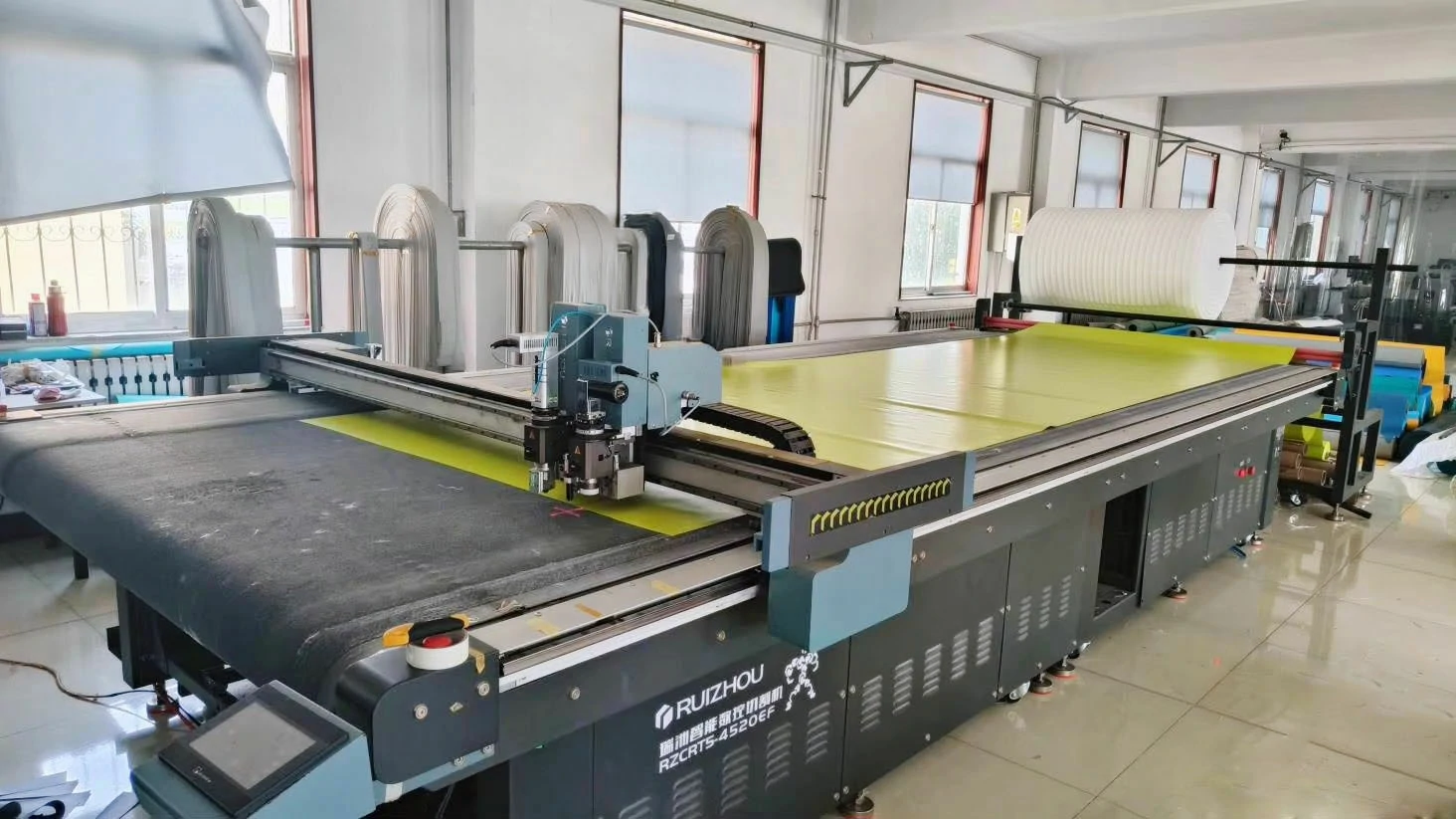
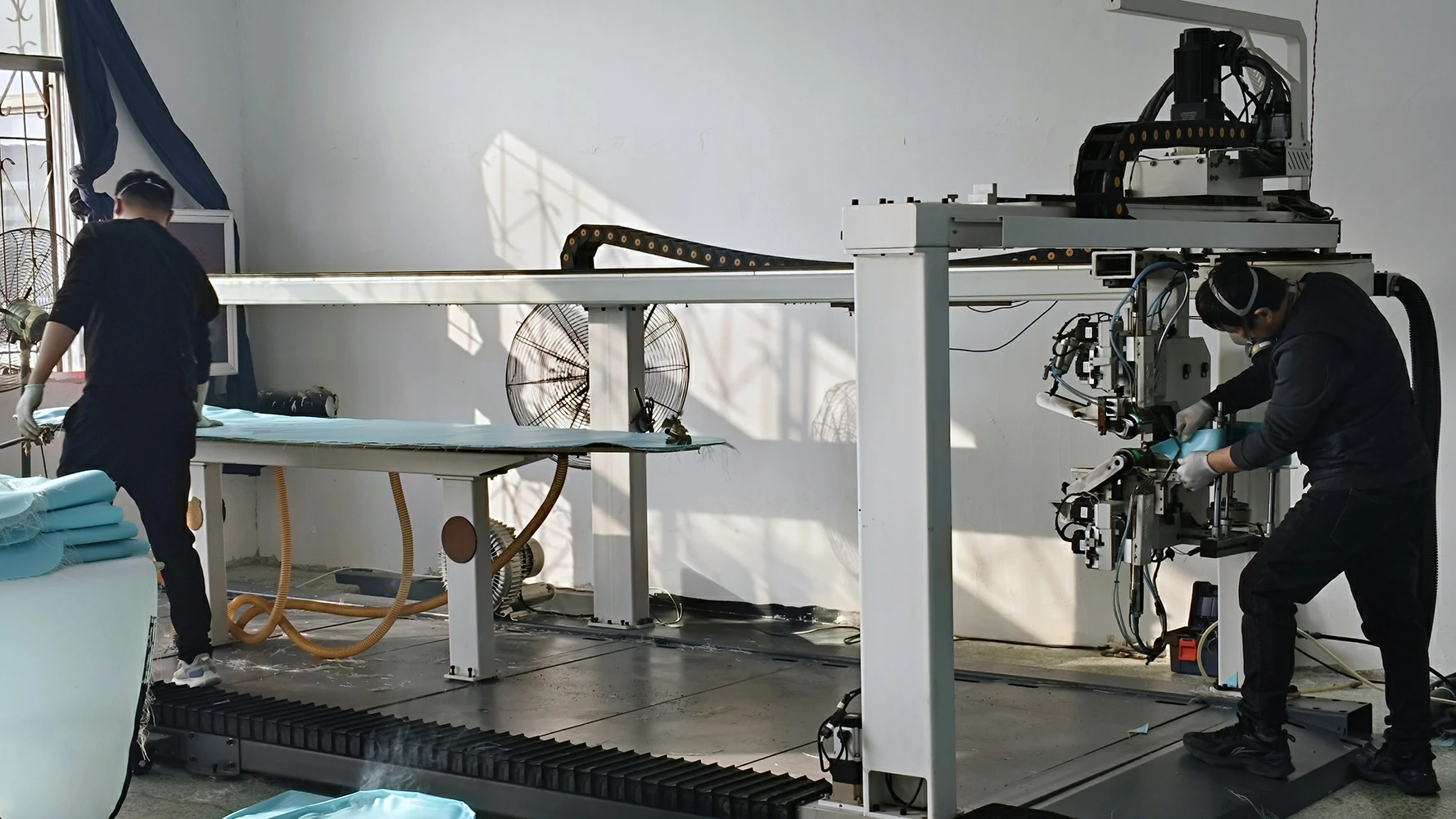
The short answer is yes: automated precision machinery removes the physical fatigue, environmental sensitivity, and structural inconsistency inherent in manual operations, establishing a new gold standard for structural integrity. In high-pressure drop-stitch kayak construction, the internal core consists of thousands of polyester threads that must hold up to 15 PSI to 18 PSI of air pressure. If the outer military-grade PVC layer is cut unevenly by even a fraction of a millimeter, or if the heat-welding temperature fluctuates by a few degrees during a manual shift, the inflatable tracking boat tracking, rocker, and ultimate safety are compromised. By utilizing automated computer-numerical-control (CNC) laser cutting tables, the technical specifications are translated directly from digital blueprints to the fabric with zero deviation. This guarantees that every single panel aligns perfectly with its counterpart, preventing the twisting and warping common in inferior products when fully inflated.
Furthermore, the integration of robotic heat-welding arms-which replace toxic, volatile organic compound (VOC) glues-ensures that seams are fused at the molecular level with absolute thermodynamic consistency. To help global procurement teams visualize the profound operational differences between legacy manufacturing and advanced smart facilities, the following analytical matrix breaks down the performance metrics across critical manufacturing vectors:
Elimination of Thermal Delamination: Robotic welding systems utilize advanced real-time sensors to modulate temperature and pressure dynamically, compensating for ambient factory humidity that frequently ruins hand-glued wholesale stand-up paddleboards and high-end inflatable watercraft.
Micro-Precision Edge Sealing: CNC lasers sear the edges of the heavy-duty PVC fabric simultaneously as they cut, sealing the internal woven scrim and preventing microscopic air wicking-a major hidden cause of slow leaks in cheap inflatable sport boats.
Algorithmic Nesting Optimization: Automated cutting software arranges the geometric panels on the raw fabric with surgical efficiency, driving down manufacturing waste to a fraction of traditional methods and stabilizing wholesale costs for international buyers.
| Manufacturing Vector | Traditional Manual Construction | RIDEWAVE Tech-Driven Automated Production Line | B2B Strategic Advantage |
| Material Cutting Precision | Manual shears/die-cuts; variance of $\pm2.0\text{mm}$ to $5.0\text{mm}$. | CNC Automated Laser Cutting; variance within $\pm0.1\text{mm}$. | Eliminates asymmetrical hull warping; guarantees perfect straight-line tracking for the consumer. |
| Seam Fusion Technology | Layered chemical gluing; highly vulnerable to humidity and human fatigue. | High-Frequency Robotic Heat-Welding & Molecular Fusion. | Eliminates delamination over time; completely VOC-free and compliant with global environmental laws. |
| Tensile Strength & PSI Capacity | Standard working pressure limited to 10–12 PSI; higher risk of bursting. | Continuous pressure rating up to 15–18+ PSI (Rigid-hull equivalence). | Mimics the hard-shell performance preferred by premium Western outdoor enthusiasts. |
| Production Cycle Consistency | Highly variable; dependent on workforce attendance, skill levels, and health. | 24/7 continuous operation with predictable, algorithmic output scheduling. | Mitigates seasonal inventory stockouts; ensures predictable delivery windows for global distributors. |
| Scrap Rate & Material Waste | 8%–12% due to human miscalculations and nesting errors. | Less than 1.5% via intelligent AI optimal-nesting algorithms. | Lowers baseline material costs, supporting stable wholesale inflatable kayak pricing structures. |
How Does Computer Vision and AI Quality Control Guarantee Zero-Defect Rates for Global Wholesalers?
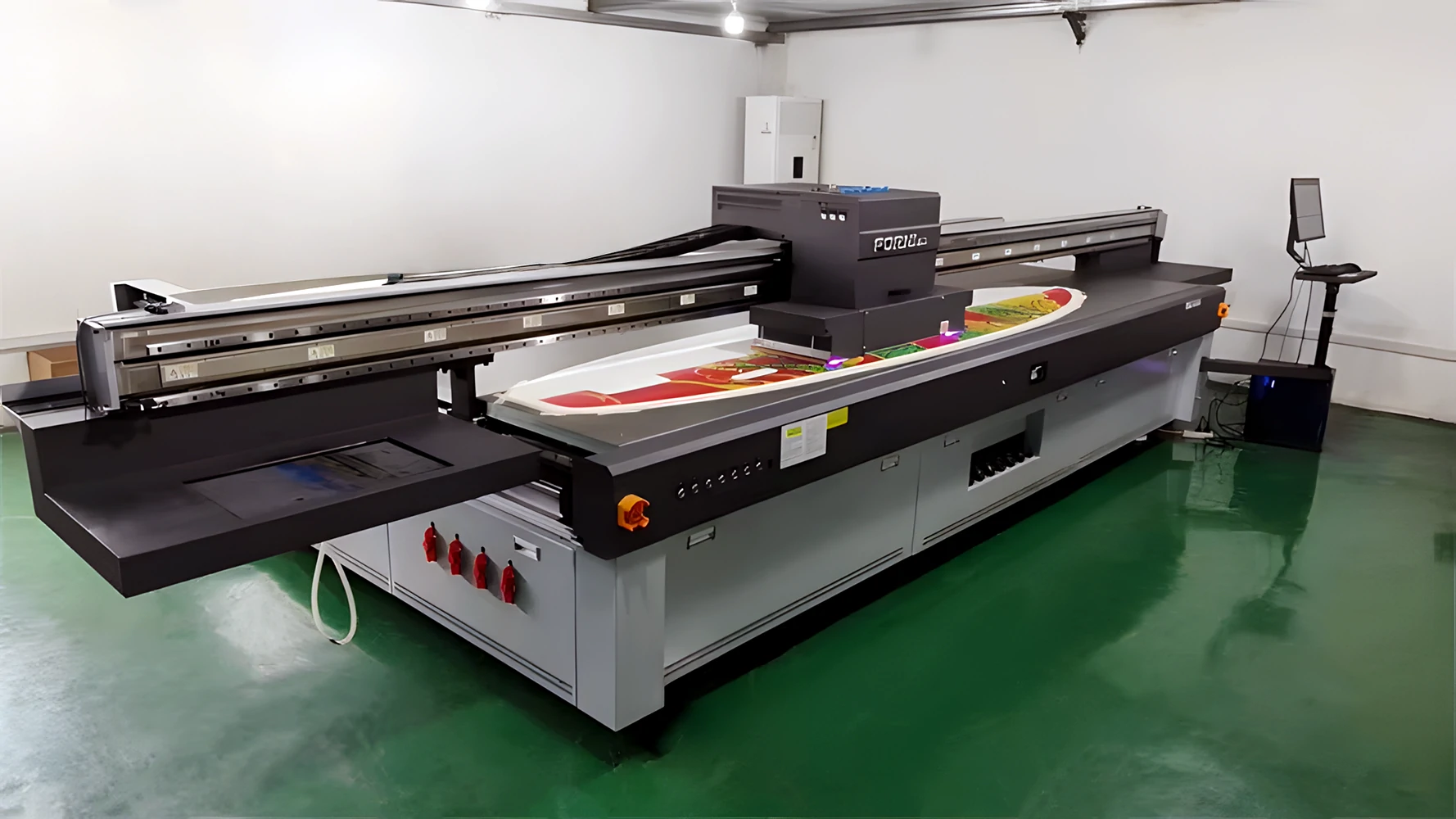
For high-volume overseas importers and premium multi-sport retailers, the hidden financial killer of an inflatable watercraft brand is the post-delivery defect rate. In traditional manual inspection setups, detecting microscopic seam leaks, inner drop-stitch fiber alignment deviations, or asymmetrical valve placements relies entirely on the naked eye of tired factory workers. If a batch of wholesale stand-up paddleboards or heavy-duty whitewater kayaks leaves the factory with an unnoticeable 0.5-millimeter structural weakness, the defect will only manifest after the end-consumer inflates the craft under hot summer conditions. This triggers catastrophic retail product returns, logistical chargebacks, and structural damage to your brand's reputation. To neutralize this supply chain vulnerability, modern inflatable kayak manufacturers like RIDEWAVE have replaced variable manual oversight with integrated computer vision and automated AI-driven quality control infrastructure.
🔍 Automated Multi-Spectral Scanning and Defect Detection Algorithms
By embedding multi-spectral cameras and laser scanners directly into the final stages of the assembly line, the factory ensures that every inflatable tracking boat conforms exactly to its technical 3D digital blueprint. The AI quality control system performs real-time diagnostics that are impossible to replicate manually.
Sub-Millimeter Seam Visual Auditing: High-resolution digital cameras capture real-time optical telemetry of the heat-fused seams. AI convolution neural networks automatically scan for microscopic air pockets, irregular bonding widths, or compound alignment deviations within a $\pm0.1\text{mm}$ safety threshold.
Laser Surface Topography Verification: Industrial laser profilometers scan the entire inflated surface of the inflatable kayak hull at maximum working pressure. This identifies hidden structural anomalies, asymmetry, or localized high-pressure bulges that indicate compromised internal drop-stitch fibers.
Thermal Imaging Bond Analysis: Infrared sensors analyze the thermal signature of the robotic molecular fusion welding process, immediately flagging any temporary temperature drops that could create a weak point vulnerable to UV-induced delamination.
⏱️ Continuous Algorithmic Pressure Monitoring Systems
Passing an instant visual inspection is not enough to guarantee long-term sea-worthiness. Advanced quality ecosystems require automated endurance stress testing to protect the margins of global water sports equipment distributors.
Automated 48-Hour High-Pressure Stress Test: Every single production unit of RIDEWAVE's inflatable touring kayak lines is transferred to an automated testing bay, inflated to 120% of its maximum rated PSI capacity, and sealed for 48 hours.
Barometric Sensor Network Data Logging: Instead of workers checking pressure gauges by hand, centralized digital barometric sensors log the internal air pressure of hundreds of watercraft simultaneously into a unified cloud database, automatically compensating for ambient factory temperature fluctuations.
Instant Fail-Safe Flagging: If the digital monitoring system detects a micro-bar drop exceeding 0.01 PSI over the 48-hour window, the specific serial-numbered inflatable kayak drop-stitch hull is automatically flagged, rejected, and routed back to R&D for analysis.

What Role Do Smart Supply Chains Play in Mitigating Global Shipping and Material Risks?
For international outdoor sports importers, large-scale distributors, and seasonal water sports equipment distributors, procurement is a delicate race against the calendar. The consumer market for watercraft across North America, Europe, and Oceania is heavily compressed into peak spring and summer sales windows; missing a shipping deadline by even two weeks can leave a wholesaler stuck with dead inventory for an entire year. In an era marked by volatile global ocean freight rates, unpredictable maritime routing bottlenecks, and shifting tariffs, traditional reactive production scheduling exposes B2B buyers to immense commercial risk. To guarantee supply chain continuity, premier inflatable kayak manufacturers like RIDEWAVE have transitioned to integrated, smart supply chain architectures. By leveraging predictive analytics and algorithmic resource planning, we transform manufacturing from an isolated factory operation into a transparent, bulletproof fulfillment engine.
📊 Algorithmic Production Scheduling and Material Hedging
Smart supply chain management eliminates the chaotic "bullwhip effect" that frequently derails legacy manufacturing hubs when raw material costs fluctuate. RIDEWAVE's data-driven operational infrastructure actively mitigates these macroeconomic shocks through strategic, automated resource positioning.
Predictive Material Requirement Planning (MRP): Our central enterprise resource algorithms analyze historical B2B order volumes, regional market expansion trends, and real-time pricing feeds for military-grade PVC and high-tensile polyester drop-stitch fabric. This allows us to secure raw material futures up to six months in advance, insulating our partners from sudden wholesale price spikes.
Dynamic Lead-Time Forecasting: The AI-driven scheduling engine continuously cross-references factory floor capacities, automated robotic output velocities, and component availability (such as Bravo-style high-pressure valves and custom aluminum paddles). It automatically generates accurate, unalterable production timelines so global buyers can lock in their retail distribution contracts with absolute confidence.
Decentralized Component Redundancy: The system monitors the logistical health of secondary component suppliers. If an automated alert flags a localized disruption in an external accessories facility, the smart supply chain automatically reroutes procurement to certified, pre-audited backup lines to keep the primary inflatable kayak hull assembly running uninterrupted.
🚢 Integrated Logistics Tracking and Smart Port Diversification
The responsibility of a tier-one manufacturing partner does not end at the factory loading dock. A truly intelligent supply chain integrates directly with global maritime tracking infrastructure to optimize delivery pathways for wholesale inflatable boat containers.
Real-Time Intermodal Freight Visibility: RIDEWAVE's digital shipping portal synchronizes with global carrier APIs, providing distributors with real-time transit telemetry, automated customs documentation updates, and predictive port congestion alerts for major destination hubs like Los Angeles, Rotterdam, and Sydney.
Algorithmic Routing Optimization: When maritime chokepoints or carrier strikes threaten traditional shipping lanes, our logistical software automatically evaluates alternative multi-modal routes-such as sea-rail combined transport or strategic port diversification-to bypass localized delays.
Just-In-Time (JIT) Inventory Synchronization: For large-scale wholesalers managing multiple regional distribution centers, our flexible production capabilities allow for staggered, container-optimized shipments that align perfectly with your seasonal warehousing capacity, reducing localized carrying costs for wholesale stand-up paddleboards and kayak fleets.
How Does Automation Align with Western Market Demands for Green Manufacturing and ESG Compliance?
For modern corporate procurement officers, sustainability is no longer a marketing afterthought; it is a rigid legal and financial gatekeeper. Across Europe, North America, and Australia, tier-one outdoor sports consumer chains and institutional water sports equipment distributors are legally mandated to audit their entire supply chains against strict Environmental, Social, and Governance (ESG) performance indexes. Importing watercraft manufactured through archaic, chemically hazardous methods exposes Western brands to massive compliance penalties, consumer boycotts, and import bans. Advanced inflatable kayak manufacturers like RIDEWAVE have anticipated this regulatory shift by anchoring our smart factories in automated sustainability. By replacing volatile manual chemistry with precision-engineered automated workflows, we directly reduce the carbon footprint and compliance risk of every single wholesale inflatable boat that leaves our loading docks, ensuring our partners seamlessly clear customs and pass domestic retail environmental audits.

🌿 Eliminating Volatile Chemical Adhesives via Robotic Thermal Fusion
The single largest ecological hazard in traditional inflatable watercraft production is the heavy reliance on toluene-based chemical glues. Manual gluing lines not only release high concentrations of Volatile Organic Compounds (VOCs) that endanger workers, but they also create structural vulnerabilities that lead to early product obsolescence.
100% VOC-Free Molecular Seam Bonding: RIDEWAVE's automated robotic high-frequency welding arms use precise electromagnetic energy to fuse the military-grade PVC layers at the molecular level. This completely eliminates the need for toxic liquid glues, creating a multi-chamber inflatable kayak seam that is entirely eco-friendly, odorless, and chemically stable.
Enforcing Strict Workplace Safety Standards: Shifting from manual gluing to closed-loop automated assembly lines drastically reduces human contact with industrial solvents. This ensures the production ecosystem easily complies with International Labour Organization (ILO) standards and Western corporate social responsibility (CSR) mandates.
Enhanced Lifespan to Reduce Landfill Waste: Thermally welded seams do not degrade, crystallize, or dry out under extreme UV or high-temperature storage conditions, extending the working life of the inflatable kayak hull by up to 300%. This directly aligns with the circular-economy principles championed by high-end Western consumers.
♻️ Optimizing Fabric Scrap and Carbon Footprints via AI Material Nesting
Material waste is not only a drain on wholesale profitability; it is a massive driver of industrial carbon emissions. Automation allows smart factories to execute surgical manufacturing that manual operations can never replicate.
Algorithmic Panel Layout Optimization: Before the heavy-duty drop-stitch fabrics enter our CNC laser cutting machinery, proprietary cloud-based nesting algorithms compute the absolute tightest layout for the geometric panels. This reduces raw material scrap rates from an industry average of 10% down to less than 1.5%.
Low-Emission Laser Cutting Infrastructure: Unlike mechanical die-cutting which requires continuous physical tooling replacements and massive hydraulic power draws, our automated CNC laser cutting systems operate with optimized energy profiles, reducing electricity consumption per wholesale inflatable kayak hull produced.
Verifiable Supply Chain Traceability: Every roll of REACH-certified and RoHS-compliant PVC fabric utilized in our automated production line is digitally logged via RFID tracking. This provides European and North American brand owners with verifiable material transparency reports that satisfy local environmental labeling mandates.

Why Is RIDEWAVE's Smart Factory the Ideal Strategic Partner for Outdoor Brand Expansion?
Understanding the theoretical benefits of automated manufacturing is valuable, but examining its execution in a high-stakes commercial distribution crisis illustrates its true logistical power. For international water sports equipment distributors, brand owners, and growing outdoor retail chains, choosing a primary supply chain partner is not merely about sourcing inventory; it is about securing capital resilience. When a mid-to-large-scale enterprise decides to scale its market footprint into premium product categories-such as specialized inflatable fishing kayaks or high-capacity tandem watercraft-they cannot afford the variable execution delays, structural warps, or communication gaps common in legacy facilities. Advanced inflatable kayak manufacturers like RIDEWAVE serve as strategic scaling engines. Our operational infrastructure absorbs the technical and regulatory friction of product development, ensuring that our global commercial clients consistently hit their critical seasonal launch windows with certified, zero-defect products.
💼 Case Study: How RIDEWAVE Rescued a Premium 14-Foot Tandem Kayak Launch for a Major North American Brand
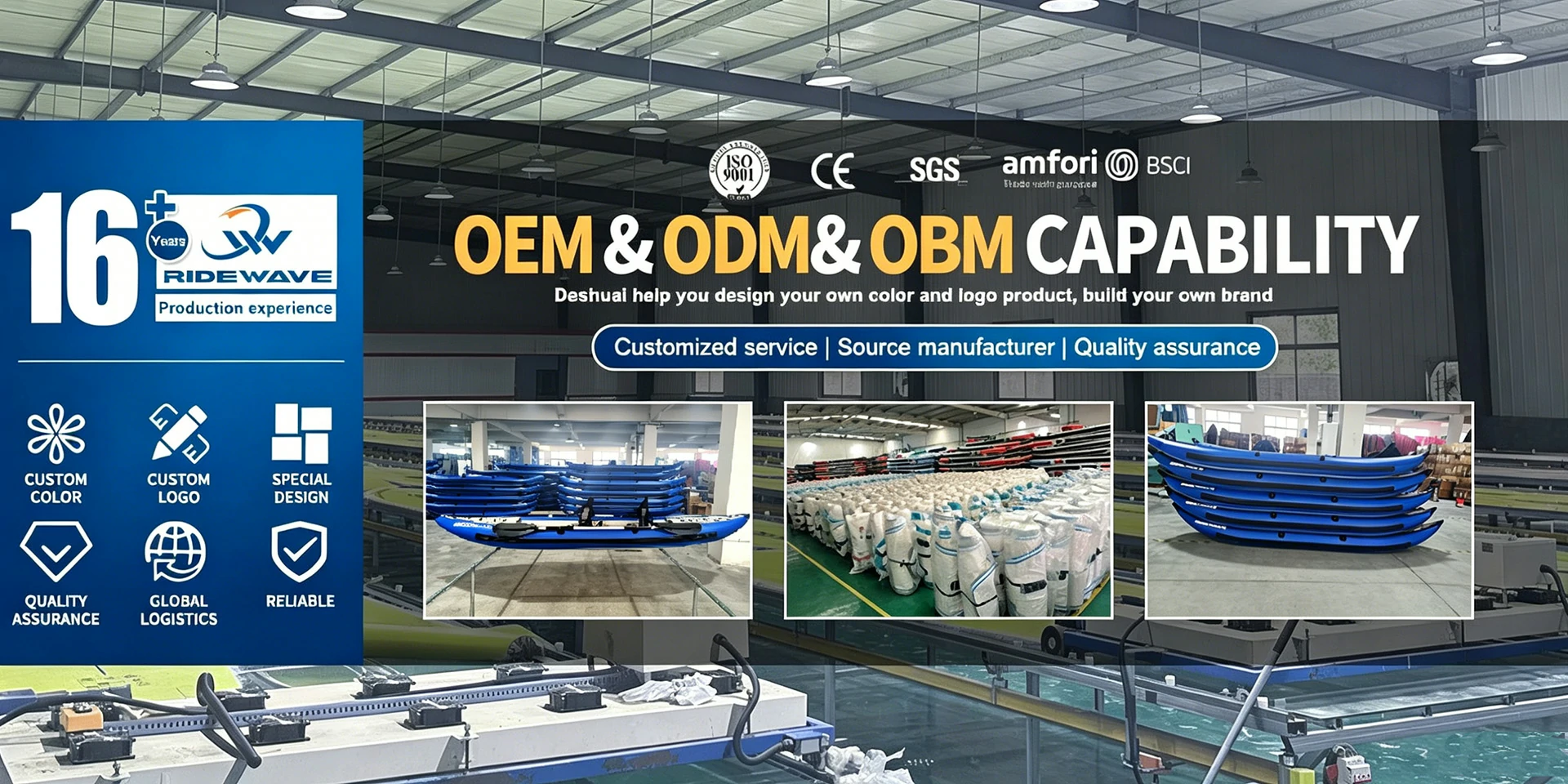
To illustrate the commercial protection that automation provides, consider a real-world supply chain intervention executed by RIDEWAVE. A prominent outdoor equipment brand based in North America had recently secured a highly lucrative distribution contract with a major multi-sport retail chain. The contract required the immediate delivery of a newly designed, professional-grade 14-foot double-chamber inflatable touring kayak tailored for rugged, multi-day coastal expeditions.
The Supply Chain Crisis:
The brand's existing manufacturing partner-relying on traditional, manual assembly lines-notified them just weeks before production that they could not guarantee the strict structural straight-line tracking tolerances and high-pressure rigid hull ratings required for the retail chain's mandatory safety certification within the required 30-day shipment window. A failure to deliver meant severe corporate financial penalties, a permanent loss of retail shelf space, and a devastated brand reputation.
01
The RIDEWAVE Automated Intervention:
RIDEWAVE immediately onboarded the client's raw CAD blueprints into our AI-driven design verification system. Within 48 hours, our structural optimization software identified two critical stress concentration vulnerabilities in the original manual layout where the high-pressure inflatable kayak drop-stitch floor met the side chambers, which would likely cause bowing under consumer inflation. Our engineering team corrected the parameters digitally and transferred the refined nesting blueprints directly to our automated production ecosystem.
02
The Operational Turnaround:
By removing manual hand-gluing entirely and avoiding the delays of physical prototyping cycles, RIDEWAVE's CNC laser tables and robotic high-frequency welding arms completed the precision fabrication of the entire high-volume run of wholesale inflatable boats within 25 days. Every single unit underwent our automated computer-vision quality check and continuous barometric pressure logging.
03
The Commercial Outcome:
The finished kayak fleet achieved a uniform 15 PSI rigidity that mirrored hard-shell tracking performance, passed all retail safety audits on the first attempt, and maintained a verified post-delivery defect rate of less than 0.1%. For our North American partner, this tech-driven responsiveness translated into a highly successful seasonal launch, full preservation of their wholesale profit margins, and a 40% year-over-year expansion in their regional distribution network.
04
How Can Distributors Leverage Tech-Driven Supply Chains to Outperform Competitors by 2027?
As the global watersports market positions itself for the 2027 season, the line separating market leaders from struggling importers will be defined entirely by supply chain intelligence. For global water sports equipment distributors, outdoor sports retail buying groups, and high-end brand owners, relying on generic, low-cost manual manufacturing is no longer a viable commercial strategy. The consumer of 2027 demands hard-shell performance, impeccable eco-friendly manufacturing compliance, and localized product availability. Wholesalers who anchor their distribution infrastructure with advanced, technology-driven partners can convert production reliability into aggressive regional market share expansion. By aligning with smart-factory inflatable kayak manufacturers, global procurement teams eliminate structural operational friction, capture higher premium margins, and guarantee inventory availability when less-prepared competitors are drowning in product recalls and shipping delays.
🚀 Strategic Blueprints for High-Margin B2B Watercraft Product Expansion
To outpace localized competition and establish dominance in regional outdoor networks, commercial buyers must transition from passive product purchasing to proactive tech-driven asset deployment.
Targeting Premium Blue-Ocean Niches: Shift your inventory portfolio away from saturated low-pressure novelties and aggressively target high-growth sectors like specialized inflatable fishing kayaks and multi-chamber expedition craft. Utilizing RIDEWAVE's AI-accelerated ODM capabilities allows you to deploy custom-molded accessory tracks, integrated transducer mounts, and rigid high-PSI drop-stitch platforms before competitors can even finish physical prototyping.
Leveraging Quality as a Operational Marketing Weapon: In the high-end outdoor segment, a verified 0.1% defect rate is a devastating competitive advantage. Use RIDEWAVE's automated computer-vision quality audits and barometric sensor logs as transparency marketing assets within your dealer network, proving to local retailers that your wholesale inflatable boat line eliminates their back-office warranty and consumer exchange overhead.
Executing Lean Container Optimization: Protect your working capital from high inflation and ocean freight volatility by leveraging smart-factory predictability. Synchronize your ordering cycles with RIDEWAVE's automated, continuous production lines to schedule just-in-time staggered container shipments, mixing high-margin wholesale stand-up paddleboards and advanced kayak fleets to match seasonal consumer demand spikes precisely.
🤝 Secure Your 2027 Supply Chain Dominance with RIDEWAVE
The future of the outdoor marine market belongs to the technologically agile. RIDEWAVE does not merely manufacture high-performance watercraft; we engineer the scalable manufacturing pipelines that allow your outdoor brand to dominate regional wholesale channels without operational compromise. Whether you are an established distributor looking to replace volatile manual suppliers, or a premium sporting brand expanding into the high-margin inflatable touring kayak segment, our fully automated CNC and robotic welding production matrix is ready to scale your vision.
Don't let seasonal manufacturing bottlenecks or quality variances restrict your commercial growth. Connect with our dedicated B2B procurement consultants today to secure your production windows for the upcoming season, request tailored technical whitepapers, and unlock factory-direct OEM/ODM pricing matrixes designed to maximize your regional distribution margins.
Related Articles
Case Study: How A Local Brand Successfully Launched An Inflatable Kayak Line
Navigating Shipping Challenges For Large Kayak Orders
Why Big-Box Retailers Are Prioritizing Inflatable Kayak Inventory