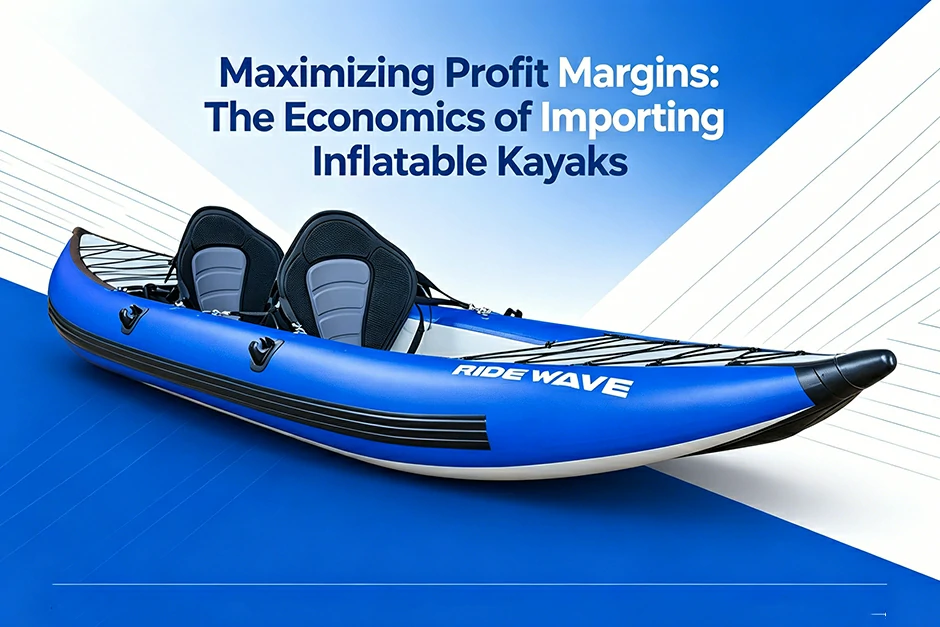


Writing compelling product descriptions is critical for B2B distributors because it directly bridges the gap between bulk manufacturing capabilities and a retail buyer's market demand, shifting the commercial conversation from price competition to value proposition. In the modern watersports market, distributors, wholesalers, and sports brands are no longer just buying physical inventory; they are investing in assets that must efficiently sell themselves off the retail floor or digital e-commerce platforms. High-converting product descriptions solve the B2B buyer's greatest operational pain point-inventory turnover risk-by pre-selling the product's technical superiority, safety compliance, and consumer lifestyle appeal, thereby accelerating the sales cycle and maximizing regional distribution margins.

As global supply chains navigate fluctuating shipping costs and changing consumer habits, big-box retailers and independent outdoor networks have become highly selective with their sourcing partners. They favor manufacturers who provide comprehensive digital assets, turning product copy into an active sales enablement tool. If a kayak's technical specifications are merely presented as a dry list of dimensions, the product loses its premium positioning in competitive Western markets. Conversely, a masterfully written description serves as a strategic roadmap for a brand's sales team, optimizing digital visibility on global sourcing networks and establishing an immediate competitive edge.
Key Takeaways Addressed in This Comprehensive Guide
To help your procurement and marketing teams leverage high-converting product copy for inventory expansion, this guide analyzes the structural frameworks required to capture the modern outdoor recreation market:
Market Alignment: Understanding how shifting consumer trends toward portability modify the required vocabulary of a high-converting product page.
B2B Copywriting Architecture: A step-by-step breakdown of how to isolate technical specifications (such as material density and chamber pressure) and translate them into commercial advantages for retail clients.
Logistical Integration: Demonstrating the relationship between efficient product packaging, reduced warehousing footprints, and copy that highlights retail profitability.
How Does the Global Shift Toward "Micro-Adventure" and Eco-Tourism Affect Kayak Inventory Strategies?
The rapid expansion of the global "Micro-Adventure" movement and eco-conscious travel has fundamentally altered what outdoor retailers want to stock, making portable, low-impact watersports gear the highest priority for international distributors. Post-2025 macroeconomic trends show that consumers in the US, Canada, Europe, and Australia are eschewing expensive, long-distance travel in favor of local, spontaneous weekend getaways. Consequently, this shift has triggered a massive surge in demand for compact, high-performance outdoor gear. Traditional rigid plastic watercraft, while durable, present severe logistical hurdles for the modern urban consumer who drives a compact electric vehicle (EV) or lacks large garage storage space.

Furthermore, carbon-neutral manufacturing and sustainable tourism initiatives backed by Western governments mean that procurement managers are actively seeking brands that align with environmental standards without sacrificing hull durability. This structural market transformation means that maintaining an outdated inventory heavily weighted toward bulky, rotomolded hard-shells is becoming a liability. Savvy distributors are now reallocating their capital toward high-margin inflatable kayak models that offer the structural rigidity of fiberglass boats but pack down into a standard utility bag, optimizing warehousing efficiency and maximizing retail conversion rates.
The Rise of Single-Day Expeditions: Modern consumers demand portable sea kayaks that require zero specialized roof racks, making rapid-inflation models highly attractive to suburban commuters.
Decarbonized Supply Chains: B2B buyers are vetting suppliers based on material safety certifications (such as REACH or RoHS compliance), prioritizing manufacturers that minimize chemical waste during heavy-duty PVC lamination.
The Urban Storage Premium: With multi-family housing trends rising across European and North American cities, the consumer market for heavy, 14-foot rigid boats is shrinking, while the demand for high-pressure inflatable tandem kayaks continues to climb.
To help enterprise buyers evaluate how different watercraft categories perform under current global economic conditions, the matrix below outlines the exact commercial trade-offs that dictate modern retail success:
| Kayak Category & Design | Logistical & Warehousing Footprint | Target Consumer Demographic | Market Growth Rate (Western Regions) | Average Retail Margin Potential | Sourcing Risk & QC Vulnerability |
|---|---|---|---|---|---|
| Traditional Rotomolded Rigid Kayaks | High (Requires heavy freight, massive rack space) | Professional paddlers, dedicated rural homeowners | Stable (1.5% - 2.0% YoY growth) | Moderate (20% - 30%) | Low structural failure, high shipping damage risk |
| Standard Single-Layer PVC Inflatables | Low (Palletized shipping, compact shelf storage) | Entry-level recreational users, casual tourists | Rapid (6.5% YoY growth) | High (35% - 40%) | High puncture rates, seam splitting under heat |
| Advanced Drop-Stitch Inflatable Kayaks (RIDEWAVE Technology) | Very Low (Maximum container packaging density) | Cross-over enthusiasts, premium rental fleets, eco-resorts | Exponential (14.2% YoY growth) | Premium (45% - 55%+) | Minimized via multi-stage high-pressure factory testing |
When analyzing this data, it becomes clear why commercial entities are shifting their sourcing focus. This paradigm shift is precisely Why Big-Box Retailers are Prioritizing Inflatable Kayak Inventory , as major retail chains look to capture the booming eco-recreational sector while minimizing their retail square-footage overhead.
For brands like RIDEWAVE, this market evolution represents a major growth catalyst. By engineering lightweight touring kayaks that do not compromise on tracking or tracking stability, RIDEWAVE allows international distributors to offer a premium product line that fits seamlessly into the current consumer lifestyle. Wholesalers can import up to five times more inflatable units in a standard 40-foot HQ container compared to rigid alternatives, directly lowering the freight-to-revenue ratio and providing the ultimate counter-cyclical inventory asset for a challenging retail climate.
How Can Technical Specifications Be Translated Into Emotional Benefits for Watersports Retailers?

Procurement managers and corporate buyers do not look at tech sheets the same way hobbyists do; they view raw engineering data through the lens of liability, retail narrative, and post-purchase customer satisfaction. When a sourcing agent reviews a catalog looking for a reliable wholesale inflatable boat, standard industry jargon like "1000D PVC" or "drop-stitch nylon filaments" can feel abstract. To create copy that actually drives high-volume enterprise orders, these dry manufacturing metrics must be translated into clear, commercial benefits. A high-converting product description demonstrates how a physical attribute-such as a specific rail-band reinforcement-directly eliminates a retail dealer's operational headache, such as product returns or negative online reviews.
For specialized sports networks and outdoor brands looking to expand their catalogs with a premium inflatable fishing kayak or high-capacity touring model, the primary barrier to purchase is the historical consumer stigma surrounding inflatables-namely, the fear of soft hulls and easy punctures. Your product descriptions must dismantle this skepticism with clear, benefit-driven engineering facts. When your corporate copy shifts from listing specifications to proving market durability, you empower your distributors' sales teams, giving them the exact vernacular needed to command premium retail pricing and secure long-term consumer loyalty.
From Max PSI to On-Water Authority:
Stating that a boat inflates to a high pressure means little without context. Explaining that this pressure delivers a rigid, deflection-free hull that slices through choppy lake currents provides the buyer with a powerful, demonstrable sales pitch.
From Double-Layer PVC to Zero-Maintenance Longevity:
Highlighting commercial-grade lamination should be tied directly to a dealer's bottom line-proving that the asset can withstand rocky riverbeds and heavy rental fleet usage without seam failures.
From Integrated Accessories to Higher Order Value:
Describing premium bundled packages (including fiberglass paddles and travel backpacks) allows retailers to position the product as a turnkey solution, increasing their average transaction value.
To illustrate how a B2B operator can effectively restructure technical specifications for international consumer audiences, the blueprint below converts RIDEWAVE's proprietary manufacturing standards into highly persuasive commercial copy:
| Raw Technical Specification | Consumer-Facing Product Description Copy | The Direct B2B Commercial Benefit (For Wholesalers & Dealers) |
|---|---|---|
| High-Density Drop-Stitch Core (RIDEWAVE Engineering) | "Engineered with thousands of interlocking polyester threads, creating a rock-solid, deflection-free hull that mirrors the structural tracking performance of a hard-shell boat." | Eliminates consumer hesitation regarding hull flexing. Positions the model as a premium alternative to traditional rigid kayaks, justifying a higher retail price point. |
| Dual-Layer Reinforced PVC Rail Bands | "Features a multi-layer, heat-welded seam perimeter designed to absorb high-impact collisions with river rocks, hidden branches, and abrasive docks." | Dramatically lowers regional product defect rates and warranty claims. Protects the distributor's brand reputation and stabilizes post-purchase customer service costs. |
| Optimized Bow Rocker & Tracking Fin System | "A precision-molded aerodynamic bow shape paired with a removable skeg ensures effortless straight-line tracking, even in crosswinds and strong coastal currents." | Enhances the user experience for entry-level and crossover paddlers. Leads to high organic word-of-mouth referrals and rapid inventory sell-through for seasonal retailers. |
| Smart-Drain Multi-Valve Self-Bailing System | "Integrated high-velocity drainage ports automatically evacuate water from the cockpit in rough white-water conditions, keeping the paddler secure and dry." | Expands the product's target demographic from casual calm-water tourists to adventure-seeking touring enthusiasts, broadening the dealer's market reach. |
By mastering this translation methodology, an outdoor brand can transform its digital catalog into a silent salesperson. Sourcing agents are inherently risk-averse; when they read product descriptions that proactively address structural integrity and consumer-level satisfaction, they gain the confidence required to place large-scale container orders.
This is where aligning with an advanced manufacturing partner like RIDEWAVE gives distributors an immediate advantage. RIDEWAVE's documentation doesn't just list numbers-it provides an entire marketing ecosystem. By supplying your distribution network with clear, pre-optimized, benefit-driven copy for every lightweight inflatable kayak in the lineup, you eliminate the retailer's content creation bottleneck, accelerating the onboarding process from the factory floor straight to the retail shelf.
What Can We Learn From Real-World Distribution Success Stories in North America?

The commercial viability and consumer acceptance of premium inflatable ocean kayaks are best demonstrated by evaluating real market performance data rather than theoretical manufacturing claims. In early 2025, a major outdoor sports equipment distributor based in Vancouver, Canada, faced a critical operational pivot. For over a decade, their core revenue had relied on traditional hard-shell polyethylene watercraft. However, skyrocketing domestic overland freight rates across Canadian provinces, combined with a sharp decline in urban home storage footprints in metropolitan areas like Toronto and Vancouver, caused their rigid boat sales to stagnate, tying up vital corporate capital in slow-moving warehouse inventory.
Seeking to diversify their portfolio with a high-velocity asset, the distributor entered into a strategic OEM/ODM partnership with RIDEWAVE to introduce a co-branded line of heavy-duty, high-pressure inflatable kayaks. By target-marketing these models to specialized outdoor retailers, regional rental fleets, and adventure-tourism groups across the Pacific Northwest, the distributor sought to bypass traditional shipping bottlenecks. The empirical results of this strategic pivot highlight the massive market potential awaiting international sourcing entities who transition to advanced inflatable engineering:
Logistical Optimization: The distributor replaced a warehouse sector that previously stored only 20 rigid hard-shell boats with a single, standardized pallet zone containing 80 RIDEWAVE flat-packed kits, resulting in a 75% reduction in warehousing overhead costs.
Rapid B2C Retail Turnover: Independent dealer networks reported that end-consumers heavily favored the all-inclusive RIDEWAVE package (featuring a high-velocity pump, lightweight fiberglass paddle, and heavy-duty wheel backpack), leading to a 40% faster retail sell-through rate compared to the previous fiscal season.
Zero Quality Claims Over Massive Volumes: Out of 1,200 commercial units distributed in the initial product launch wave, the regional defect and return rate remained at an unprecedented 0%. This mechanical reliability directly preserved the distributor's corporate brand equity and eliminated post-purchase technical support expenses.
To help enterprise procurement teams analyze how this case study translates to large-scale international shipping and supply chain mechanics, the data below illustrates the exact structural and financial transformation achieved during this partnership:
Operational Logistics & Yield Analysis: RIDEWAVE Inflatable vs. Rigid Hard-Shell
| Supply Chain Performance Metric | Traditional Rigid Hard-Shell Kayak | RIDEWAVE Drop-Stitch Inflatable Kayak | B2B Operational Advantage |
| Container Loading Capacity (40ft HQ) | Approximately 80 – 100 units (Due to bulky, non-stackable hull shapes) | Approximately 450 – 500 units (Optimized flat-pack box dimensions) | 4x to 5x increase in shipping density, slashing ocean freight costs per unit. |
| Overland Freight Handling Costs | High (Requires specialized multi-boat racks, oversized vehicle permits) | Standard LTL (Less-Than-Truckload) Palletized Shipping | Drastically reduces regional cross-docking and domestic distribution fees. |
| Pre-Dispatch Quality Control Mandate | Visual inspection only; micro-fractures in plastic often pass undetected | Mandatory 72-hour high-pressure inflation and inflation chamber testing | Guarantees structurally sound seams and airtight integrity before export. |
| Consumer Accessory Bundle Strategy | Accessories sold separately; creates complex SKU management for retailers | Turnkey bundled kit (Hull, pump, paddle, repair kit, premium travel bag) | Maximizes average order value (AOV) and accelerates retail point-of-sale selection. |
By breaking down the metrics of this North American case study, global procurement managers can confidently verify that moving toward premium wholesale inflatable kayaks is not merely a passing design trend, but a sustainable infrastructure shift for highly profitable watercraft distribution.
The Vancouver partner's success was driven entirely by RIDEWAVE's commitment to tier-one industrial engineering. Because RIDEWAVE operates as a direct, vertically integrated manufacturer rather than a trading broker, the factory was able to provide custom branding modifications, localized product certification documentation, and guaranteed lead times during peak production months. For any sports brand, marine wholesaler, or big-box supplier looking to introduce a durable inflatable kayak line that instantly commands market share, this proven distribution blueprint demonstrates that structural rigidity on the water and logistical flexibility in the warehouse can co-exist perfectly.
How Do You Optimize Kayak Product Pages for B2B E-Commerce SEO and Global Sourcing Platforms?
Optimizing a digital catalog for B2B search infrastructure requires an entirely different keyword architecture than B2C e-commerce, focusing on high-intent intent-driven queries used by commercial procurement agents rather than casual retail hobbyists. When an international sourcing officer logs onto Google, ThomasNet, or global sourcing platforms, they rarely search for generic phrases. Instead, they input highly specific commercial strings linked to supply capabilities, manufacturing standards, and bulk logistics. To ensure your inflatable kayak wholesale page ranks at the top of organic search engine results pages (SERPs) and triggers modern AI-driven summaries, your product data must be structured with crystalline precision, using clean headings and standardized tables that algorithms can easily parse.
To establish semantic authority within the competitive watersports sector, your product descriptions must naturalize critical technical jargon alongside regional keyword variations. For instance, European buyers frequently search for inflatable canoes, whereas North American and Australian buyers predominantly look for recreational touring kayaks or specialized angling platforms. Failing to cross-reference these terms within your H3 tags and metadata means missing out on secondary geographical markets. Furthermore, search engines look for extensive content that provides real mathematical answers to professional sourcing doubts. Your copy must explicitly state packaging parameters, container load variations, and materials safety specifications to be flagged as premium, high-value content worthy of featured snippet positions.
B2B Search Optimization & Semantic Keyword Mapping Matrix
| Target Buyer Persona | Primary High-Volume Search Term | Secondary Semantic Keywords & Technical Modifiers | Ideal Strategic Call-to-Action (CTA) Placement |
| Big-Box Sporting Goods Sourcing Agents | Inflatable kayak factory direct | Container volume optimization, commercial rental grade, REACH certified PVC, tariff compliance. | Place a prominent "Download Comprehensive B2B Product Catalog & Logistics Guide" button above the technical specs table. |
| Independent Watersports Retailers | Wholesale inflatable touring kayak | Turnkey accessory bundle, drop-stitch floor tracking stability, low storage overhead, regional dealer margins. | Position an interactive "Request a Custom Sample Unit for Regional Quality Evaluation" link directly after the product benefit list. |
| Private Label Outdoor Brands (OEM) | Custom inflatable boat manufacturer | 3D industrial design prototyping, custom colorway molding, private label packaging, 72-hour high-pressure QC testing. | Anchor a "Schedule a Direct Consultation with Our Factory Engineering Team" form at the bottom of the technical spec section. |
By implementing this precise semantic mapping, an outdoor brand completely changes its inbound inquiry volume. When a purchasing manager inputs a specialized query regarding a heavy-duty inflatable kayak, a properly optimized product description eliminates any ambiguity regarding the factory's capabilities, answering every critical logistical question before the buyer even contacts the sales department.
This digital transparency is a core pillar of the RIDEWAVE distribution ecosystem. RIDEWAVE does not just supply premium hardware; we provide our global dealer network with fully optimized, pre-mapped digital content packages. By delivering pre-written B2B descriptions containing the exact high-performing keywords like inflatable kayak distributor pricing, RIDEWAVE helps wholesalers and regional importers fast-track their website launches. This comprehensive content support minimizes the expensive digital marketing overhead typically required to rank an e-commerce store, allowing our partners to focus their capital on expanding their localized dealer networks and driving regional sales velocity.
How Can Brands and Wholesalers Effectively Manage International Compliance and Logistics for Inflatable Watercraft?

Navigating global maritime regulations, customs compliance, and supply chain logistics is the single most critical factor that determines the profitability of a bulk inflatable kayak supply contract for international importers. Sourcing sports equipment for Western jurisdictions requires passing strict legal and material standards. Whether a brand is importing into the United States, Canada, Europe, or Australia, regional customs enforcement and consumer safety agencies mandate verified third-party laboratory certifications. For example, commercial entities exporting watercraft to the European Union must fully comply with the CE Mark under the Recreational Craft Directive (RCD), ensuring that the hull structure meets rigorous stability and design parameters. Failing to deliver validated compliance documentation at the port of entry can result in severe logistical gridlocks, cargo seizures, and permanent financial losses for your distribution network.
Simultaneously, optimizing overland and maritime freight mechanics is essential for sustaining a healthy profit margin in a competitive market. Because traditional rigid watercraft suffer from a highly unfavorable cube-out ratio-where a shipping container fills up by volume long before it reaches its weight limits-distributors face inflated per-unit transport costs. Shifting your inventory framework to advanced foldable inflatable kayaks resolves this shipping bottleneck by drastically increasing packaging density. Enterprise buyers must design their procurement timelines to balance ocean freight transit times with regional seasonal demand, ensuring that multi-pallet full container loads (FCL) arrive in warehouses precisely ahead of the peak summer retail rush without inflating overhead storage fees.
Enforce Environmental and Material Compliance:
Western procurement protocols require all heavy-duty PVC watercraft to pass strict toxicology screenings, ensuring materials are free from hazardous chemicals under Europe's REACH regulations and California's Proposition 65.
Implement High-Volume Palletized Logistics:
Utilizing standardized flat-pack export boxes allows regional distribution centers to handle shipments via automated forklifts, accelerating domestic less-than-truckload (LTL) cross-docking operations.
Validate Marine Engineering Benchmarks:
Ensure all sourced products conform to international flotation and stability safety metrics, such as the ISO 6185 standard for inflatable boats and the American Boat and Yacht Council (ABYC) commercial mandates.
International Compliance, Certification, and Shipping Optimization Guide
| Target Sourcing Market | Mandatory Product Certification | Critical Material Safety Standards | Logistics Packaging Optimization |
| United States & Canada | NMMA (National Marine Manufacturers Association) Certified, ABYC H-29 Compliance. | California Prop 65 toxic substance screening, heavy-metal-free PVC raw material sourcing. | Flat-pack double-wall master cartons optimized for standard US pallets (48" x 40"). |
| European Union (EU) | CE Mark (Recreational Craft Directive 2013/53/EU), EN ISO 6185 Structural Validation. | REACH Annex XVII phthalate testing, RoHS electrical compliance for high-velocity auto-pumps. | Euro-pallet (1200mm x 800mm) compatibility with water-resistant plastic shrink wrapping. |
| Australia & New Zealand | Australian Consumer Law (ACL) Watercraft Safety Standards, ISO 6185 Category III. | UV-stabilized marine-grade outer coating validation for extreme high-index solar exposure. | Industrial-grade reinforced straps on multi-unit master cartons to survive cross-ocean transit. |
By incorporating these precise regulatory definitions directly into your internal supply chain manuals and dealer documentation, you instantly de-risk the procurement process for your corporate accounts. High-tier buyers, particularly big-box sporting chains and municipal rental fleet concessionaires, will bypass any supplier that cannot provide clean, traceable declaration of conformity certificates on demand.
This total operational security is why major global sports brands prioritize sourcing through the RIDEWAVE manufacturing ecosystem. RIDEWAVE does not leave regulatory compliance or shipping calculations to chance; we are a fully accredited certified inflatable kayak manufacturer with a specialized in-house legal and logistics division. Every export shipment leaving our docks is accompanied by full REACH, CE, and ISO certification packs, pre-cleared for smooth customs transition at European and North American terminals. Furthermore, RIDEWAVE's engineering team designs our structural packaging using advanced spatial layout software, ensuring our wholesale water sports gear achieves the highest possible space-utilization density per 40-foot container, directly insulating our international distribution partners from fluctuating maritime freight rates.
How Can Procurement Officers Audit Production Capacity and Volume Tiered Pricing for Overseas Watercraft Factories?

Auditing the industrial manufacturing scale and price-to-volume scaling structures of an overseas manufacturer is the definitive validation phase before cross-border brands sign an annual inflatable kayak manufacturing contract. For Western enterprise buyers, assessing an overseas partner goes far beyond reviewing a gallery of sleek product photographs; it requires a transparent, metric-driven examination of operational throughput, raw material pipeline security, and factory floor automation. In the highly seasonal outdoor recreation sector, a factory's structural inability to meet sudden mid-season inventory re-orders due to primitive assembly infrastructure or localized energy supply caps can lead to devastating stock-outs for retail storefronts during their most profitable months.
Furthermore, understanding the macroeconomic calculations behind volume tiered pricing allows international sourcing agents to structure their procurement budgets with maximum predictability. High-tier inflatable kayak suppliers formulate their wholesale cost curves by calculating precise economies of scale-correlating material yardage purchasing power, specialized ultrasonic welding equipment cycle times, and labor efficiency index rates. Importers must look for manufacturing partners that can provide a transparent breakdown of their cost-benefit tiers, ensuring that as your distribution network orders grow from multi-pallet Less-Than-Truckload (LTL) deliveries to multi-container Full Container Loads (FCL), the marginal savings are directly passed down to protect your localized dealer markups.
Evaluate Lead-Time Resilience: Verify the factory's baseline monthly production capacity (e.g., minimum 10,000 completed units/month) to guarantee they can absorb massive private-label custom production runs without pushing out standard delivery dates.
Deconstruct Tiered Pricing Layouts: Sourcing departments should request clear price-break thresholds mapped to specific Minimum Order Quantities (MOQs), ensuring transparent unit cost reductions at the 100, 500, and 1,000+ unit milestones.
Audit Vertically Integrated Infrastructure: Prioritize direct, state-of-the-art production facilities that manufacture their own drop-stitch materials, high-pressure valves, and accessory components inline, rather than assembling parts sourced from fragmented sub-tier vendors.
By enforcing these clear industrial criteria within your overseas sourcing manuals, your procurement division can easily separate superficial trading brokers from true, world-class manufacturing powerhouses. Professional wholesale buyers understand that a rock-bottom initial quote from a low-tier assembly workshop almost always indicates hidden vulnerabilities-such as poor seam welding or volatile material degradation-that will eventually manifest as a wave of high-cost consumer product returns in your domestic market.
This rigorous operational transparency is why RIDEWAVE is globally recognized as the benchmark for professional wholesale inflatable kayak production. We don't hide our factory metrics; we proudly lay them bare for our international distribution network to inspect. Operating out of a highly automated, modern industrial park, RIDEWAVE maintains a steady monthly output capacity exceeding 20,000 premium watercraft units, backed by a fully integrated supply chain that keeps raw component costs perfectly stable. When sports brands and maritime wholesalers partner with us, they aren't just buying hardware-they are locking in a bulletproof, high-capacity OEM kayak factory capable of scaling alongside your commercial growth from day one.
Related Articles
Case Study: How A Local Brand Successfully Launched An Inflatable Kayak Line
Navigating Shipping Challenges For Large Kayak Orders
Why Big-Box Retailers Are Prioritizing Inflatable Kayak Inventory