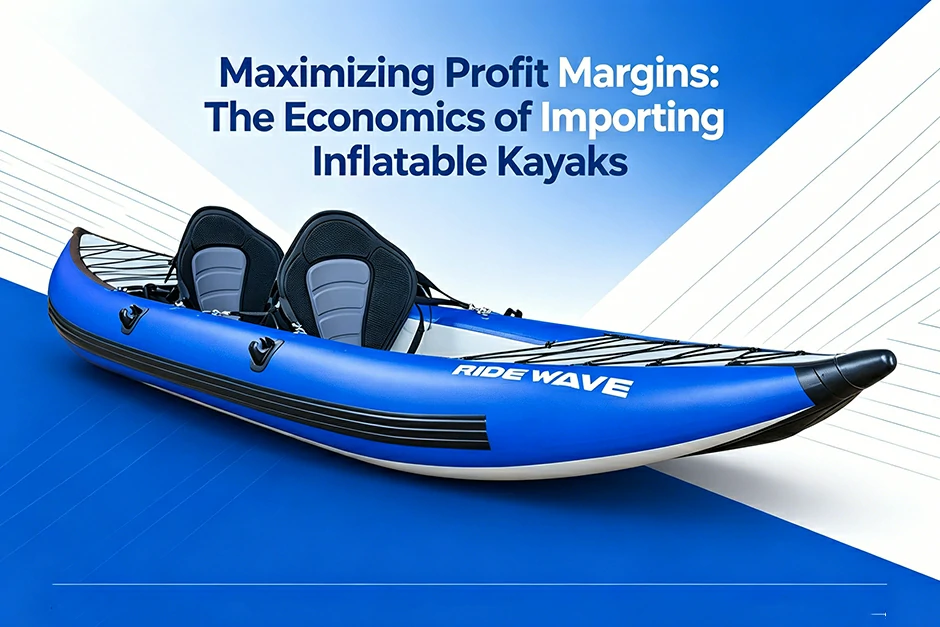

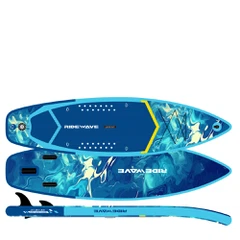
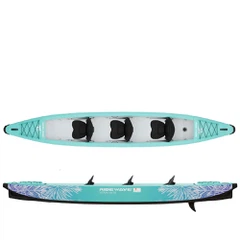

In an era of shifting consumer demands and volatile global supply chains, international B2B distributors, wholesalers, and sports brands are under immense pressure to identify high-margin, resilient product lines. Driven by global sustainability trends and a structural shift toward flexible outdoor recreation, the premium water sports market has experienced an unprecedented surge. Traditional hard-shell gear, while durable, increasingly burdens overseas buyers with exorbitant ocean freight rates and massive warehousing costs.

Why are global outdoor distributors aggressively adding inflatable kayaks to their portfolios in 2026?
The global water sports market is undergoing a structural realignment, forcing international distributors, B2B wholesalers, and sports gear brands to re-evaluate their seasonal inventory strategies. As of 2026, shifting consumer demographics across North America, Europe, and the Asia-Pacific region have elevated eco-friendly, highly portable outdoor recreation from a niche trend to a dominant market driver. For commercial buyers, inventorying traditional hard-shell watercraft has increasingly become a logistical liability, characterized by soaring ocean freight rates, restrictive warehousing footprints, and escalating last-mile delivery surcharges. To counter these compressions on gross margins, agile procurement networks are rapidly pivoting toward premium inflatable kayaks. Brands like RIDEWAVE have anticipated this transition by engineering professional-grade, high-pressure inflatables that deliver the structural rigidity of rigid plastics while offering the volumetric efficiency required for modern cross-border supply chains. This analytical overview breaks down the precise macroeconomic catalysts and technical advancements making the inflatable kayak category the most lucrative expansion opportunity for high-volume sports equipment distributors today.


* Macroeconomic Catalysts: How Global Shipping Constraints Drive the Shift to Inflatable Kayak Wholesale
The economics of international maritime logistics have fundamentally changed the procurement calculus for heavy outdoor equipment. Shipping rigid hardshells across transatlantic or transpacific routes invariably involves paying premium freight rates for what is essentially transported air. A standard 40-foot high-cube (40HQ) container can typically accommodate only a limited number of rigid plastic boats, resulting in a staggering per-unit freight cost that erodes wholesale margins before the product even arrives at a localized distribution center. Conversely, a commercial order for a modern inflatable kayak leverages high-density packaging geometries.
By utilizing advanced collapsible materials, a single maritime container can hold up to six times the volume of product compared to its rigid counterparts. Industry leaders like RIDEWAVE have further optimized this ratio by aligning their product dimensions with standard Euro-pallet and US-pallet configurations. This hyper-efficient optimization allows international inflatable kayak distributors to hedge against ongoing geopolitical shipping disruptions and volatile fuel surcharges. In a market where supply chain resilience dictating profitability, minimizing the volumetric footprint of incoming inventory is no longer just an operational preference-it is a baseline requirement for maintaining sustainable B2B gross margins
* Consumer Demographics: Capturing the High-Density Urban Market with Compact Inflatable Kayak Designs
The profile of the end-consumer driving retail growth in major Western markets has radically transformed. High-density urban living, coupled with the rise of smaller passenger vehicles and electric cars, means the modern outdoor enthusiast rarely possesses a large suburban garage or a heavy-duty roof rack system. For a regional retail chain or an e-commerce inflatable kayak supplier, matching this consumer evolution is vital. A professional inflatable kayak completely removes the friction points of purchase: storage and transport.
When deflated and housed within an ergonomic heavy-duty backpack, a multi-passenger watercraft can easily be stored in an apartment closet or transported via public transit and compact vehicles. Furthermore, the diversification of outdoor demographics has created specialized micro-niches. Aggressive demand is currently observed for tandem variations and dedicated inflatable fishing kayak models equipped with integrated accessory mounts, tracking fins, and reinforced structural zones. By sourcing a versatile, multi-tier product line from an established manufacturer like RIDEWAVE, commercial importers can capture a highly lucrative demographic that was previously locked out of the water sports market due to spatial limitations.


* Material Engineering: Why Drop-Stitch Technology Elevates Inflatable Kayaks to Commercial Standards
The historical bias linking inflatable watercraft to cheap beach toys has been definitively shattered by mainstream material engineering. The catalyst for this technological revolution is high-density drop-stitch inflatable kayak construction. This manufacturing methodology utilizes tens of thousands of polyester threads linking the upper and lower PVC layers internally. When inflated via high-pressure valves to optimal operating pressures (frequently ranging from 10 to 15 PSI or higher), the chamber achieves a near-rigid structural profile that mimics the hydrodynamic tracking, stability, and speed of molded polyethylene hulls.
For B2B buyers and brand owners, this structural integrity is a critical risk-mitigation factor. Cheap, single-layer PVC inflatables suffer from flexing and poor tracking under load, resulting in high return rates and negative consumer reviews that damage a distributor's local reputation. In contrast, RIDEWAVE utilizes industrial-grade, UV-treated, heavy-duty composites combined with thermal heat-welding seam technology. This eliminates the degradation risks associated with standard chemical adhesives under prolonged exposure to sun and salt water. By offering a robust inflatable sit-on-top kayak built on drop-stitch fundamentals, distributors can confidently market to rental operations, luxury resorts, and high-end outdoor retailers, ensuring long-term product lifespans and a near-zero rate of warranty claims due to structural delamination.
* Portfolio Diversification: Maximizing ROI for Commercial Inflatable Watercraft Importers
In a highly volatile wholesale environment, relying on a singular product vertical introduces significant commercial vulnerability. Many successful sports brands and paddleboard distributors are aggressively integrating the inflatable tracking kayak into their inventory architectures to optimize asset utilization and balance seasonal sales curves. Because the core manufacturing technology and manufacturing lines for premium stand-up paddleboards (SUPs) and high-end inflatables overlap significantly, sourcing these items from a unified supplier consolidates procurement operations and increases purchasing leverage.
Working with a centralized manufacturer like RIDEWAVE allows international purchasing offices to mix containers with various SKU configurations-including single-user inflatable ocean kayak units, multi-person recreational vessels, and matching specialized accessories. This sourcing flexibility ensures that outdoor sports distributors can continually refresh their retail product placement throughout the fiscal year. Furthermore, the higher average order value (AOV) associated with professional-grade inflatable watercraft ensures that every square meter of localized warehouse space yields a significantly higher return on investment (ROI) compared to lower-margin consumer lifestyle goods.
| Key Operational Matrix | Traditional Rigid Polyethylene Kayaks | RIDEWAVE Commercial Inflatable Kayaks |
| Volumetric Container Yield | 60 - 80 Units per 40HQ | 400 - 600 Units per 40HQ |
| Average Last-Mile Shipping Fee | Substantially High (Oversized Freight) | Standard Ground Parcel Delivery |
| Warehouse Storage Surcharge | High Footprint / Non-Stackable | Low Footprint / Multi-Tier Palletized |
| B2B Wholesale Margin Buffer | Compressed (15% - 25%) | Highly Resilient (35% - 50%+) |
| Material Durability Tech | Solid Rotomolded Plastic | Dual-Layer Reinforced Drop-Stitch |
How does a gym or fitness brand successfully cross over into the water sports market?
The post-pandemic wellness boom has permanently blurred the lines between indoor fitness and outdoor lifestyle recreation. Today, fitness centers, gym chains, and e-commerce health platforms are facing intensifying competition and compressed margins on traditional indoor exercise gear. To unlock new revenue streams, visionary brand owners are actively seeking low-risk, high-yield product expansions that align with their existing health-conscious customer bases. The integration of a premium inflatable kayak lineup represents the most logical cross-over vertical. However, migrating into the water sports domain poses significant technical hurdles for traditional fitness brands, primarily due to unfamiliar marine safety standards, complex manufacturing specifications, and the threat of high product return rates. To mitigate these operational risks, global sports equipment buyers are pivoting away from simple trading firms and partnering directly with experienced ODM/OEM manufacturers. Brands like RIDEWAVE have established comprehensive incubation frameworks that allow commercial fitness enterprises to seamlessly launch customized inflatable tandem kayak lines and technical watercraft without absorbing heavy upfront research and development overhead.

* Cross-Border Success: The Strategic Case of an Italian Fitness Platform Moving 100+ Inflatable Kayak Units Monthly
The commercial viability of this cross-industry expansion is fully demonstrated by the real-world success of a prominent commercial gym and fitness platform based in Italy. Seeking to hedge against the seasonal summer slowdown typical of indoor fitness markets, the platform's procurement directors aimed to introduce a premium outdoor product line. However, they were constrained by a total lack of technical marine expertise and deep concerns regarding the structural durability of inflatables on European coastal waters. They initiated a strategic partnership with RIDEWAVE to construct a turnkey product solution. RIDEWAVE's engineering division completely bypassed the platform's technical limitations by delivering a specialized heavy duty inflatable kayak prototype tailored precisely for the Mediterranean retail demographic.
Rather than merely supplying inventory, RIDEWAVE provided a comprehensive brand-enablement package, including localized European technical certifications (CE and REACH compliance), white-labeled instructional setup videos, and high-definition marketing photography. This end-to-end support allowed the Italian enterprise to rapidly list the new inflatable boat kayak models across their existing digital commerce channels. The market response was immediate. Within the first quarter of deployment, the platform successfully mitigated its seasonal revenue dip, achieving a stable, recurring velocity of over 100 units sold per month. This case establishes a clear blueprint: when a fitness brand leverages a manufacturer's technical core, cross-border product diversification becomes highly efficient and exceptionally profitable.
* Mitigating Wholesale Risk: Eliminating Technical Barriers for New Inflatable Kayak Suppliers
For an domestic importer or an ambitious inflatable kayak wholesaler stepping into the marine industry for the first time, the single greatest threat to business sustainability is the cost of post-sale customer support. Unlike static gym equipment like dumbbells or yoga mats, an outdoor watercraft operates under high internal pressures and encounters unpredictable environmental forces like rock impacts, sharp oyster beds, and intense ultraviolet degradation. If a factory utilizes inferior materials or weak manual gluing, seam blowouts are inevitable, leading to devastating product recall costs and severe damage to the distributor's B2B contract retention.
To systematically eliminate these technical friction points, RIDEWAVE integrates industrial-grade material safeguards directly into its wholesale manufacturing protocols. By offering a high-performance inflatable sit-on-top kayak constructed from multi-layered PVC with structural rail-reinforcements, new suppliers can enter the market with absolute quality assurance. Every unit undergoes a mandatory 72-hour high-pressure inflation tank test before final palletization, ensuring that fitness distributors, brand owners, and general sports stores can scale their marketing campaigns without the constant financial threat of warranty-driven capital erosion.

What technical specifications separate professional-grade inflatable kayaks from cheap retail toys?
In the international outdoor equipment commerce landscape, product misclassification represents an expensive liability for high-volume corporate buyers. Sourcing managers and major sporting goods chains frequently struggle to distinguish between consumer-grade recreational inflatables designed for calm backyard pools and authentic commercial-grade drop-stitch inflatable kayak units engineered for open-ocean or swift-water transit. For an overseas enterprise looking to establish a sustainable brand presence, listing a substandard product leads directly to structural failure under solar heat expansion, catastrophic hull flexing under load, and severe damage to corporate reputation. To build a resilient portfolio, B2B procurement officers must master the specific metallurgical, chemical, and structural benchmarks that define professional watercraft. Sourcing exclusively from tier-one engineering manufacturers like RIDEWAVE ensures that every inventory acquisition meets the precise structural pressure thresholds, hydrodynamic tracking standards, and tear-resistance metrics demanded by sophisticated Western consumer markets.

* Structural Engineering: High-Pressure Internal Cavity Design and Rigid Inflatable Kayak Performance
The definitive technical indicator of an elite watercraft is its maximum operational internal pressure capacity, measured in Pounds per Square Inch (PSI). Cheap retail inflatables utilize standard low-density PVC chambers supported by simple vinyl interior bulkheads, restricting inflation to a fragile 2 to 4 PSI. Under the weight of a paddler, these toy-grade hulls buckle, creating severe water displacement resistance and rendering proper tracking impossible. Conversely, an advanced rigid inflatable kayak manufactured by RIDEWAVE utilizing linear space-yarn tech safely withstands sustained working pressures between 10 and 15 PSI.
This high internal pressure turns the inflated chamber into a rock-solid platform. To ensure absolute safety on open water, RIDEWAVE implements a multi-independent chamber architecture. In the highly unlikely event that an exterior impact punctures the primary floor, the independent port and starboard side pontoons retain full structural air volume, allowing the paddler to return to shore safely. For commercial distributors and rental fleet operators, this advanced redundancy is an essential product safety feature that significantly reduces corporate insurance liabilities and operational risk.
* Polymer Chemistry: Advanced UV-Guard Coatings and Seam Fusion for Long-Life Inflatable Ocean Kayak Builds
The environmental threats encountered by a commercial inflatable ocean kayak demand advanced solutions in material chemistry. Prolonged exposure to solar radiation triggers photo-degradation in standard polymers, causing cheap PVC to turn brittle, fade, and delaminate at the seams within a single season of use. To intercept this premature failure mode, RIDEWAVE utilizes a proprietary military-grade composite formulation. The base high-tensile polyester woven core fabric is tightly coated on both sides with dense, UV-stabilized PVC formulas, supplemented by a specialized outer coating that repels salt water corrosion, industrial oil slicks, and abrasive sand.
Furthermore, the method of connecting these advanced fabrics represents a crucial quality differentiator. While budget factories rely on cheap, volatile organic chemical adhesives that degrade rapidly when exposed to hot summer temperatures, RIDEWAVE utilizes computer-controlled thermal heat-welding fusion. This industrial process welds the PVC layers together at a molecular level, creating a unified, seamless rail structure. This flawless seam fusion enables inflatable kayak distributors to guarantee exceptional product lifespans to end-users, successfully positioning the brand as a premium, eco-friendly, and durable alternative within the global water sports supply network.

How can international wholesalers balance logistics costs and supply chain stability amidst global shipping fluctuations?
The landscape of maritime commerce in 2026 presents unprecedented operational friction for high-volume sporting goods importers. Ongoing geopolitical realignments across critical trade lanes, volatile bunker fuel surcharges, and unpredictable congestion at major Western ports mean that freight expenditures can easily determine the success of an entire fiscal year. For an international inflatable kayak wholesaler, relying on archaic packaging paradigms or static manufacturing scheduling is a structural vulnerability. If an importing business cannot optimize its container packing density, it is essentially wasting valuable logistics capital. Minimizing global supply chain volatility requires an intentional focus on volumetric optimization and factory-direct production agility. Tier-one manufacturers like RIDEWAVE solve these cross-border complexities by designing high-performance inflatable kayak systems that are fundamentally built around maritime shipping geometries, enabling commercial distributors to stabilize their landing costs and guarantee inventory availability regardless of macroeconomic market disruptions.

* Volumetric Efficiency: Maximizing Container Load and Minimizing Last-Mile Freight Surcharges
The single most effective operational lever for protecting B2B wholesale margins under current shipping conditions is maximizing spatial utilization inside the ocean container. Standard rigid rotomolded hulls are inherently inefficient to ship because their rigid, hollow shapes create massive amounts of "dead space" that cannot be filled, resulting in a low unit yield per container. A standard inflatable sit-on-top kayak utilizing premium drop-stitch fabrics completely alters this financial equation. Because the entire hull can be completely deflated, rolled, and packed into a standardized heavy-duty transport bag, the package footprint is drastically reduced.
RIDEWAVE's factory engineering division takes this optimization further by ensuring all retail cartons conform perfectly to international Euro-pallet and US-pallet dimensional standards. This allows for seamless double-stacking inside a 40HQ container, boosting total product capacity up to 400 to 600 complete sets-including high-pressure pumps, multi-piece carbon paddles, and luxury seats. Furthermore, once the inventory arrives in the target country, these compact dimensions enable distributors to bypass expensive oversized truck freight, allowing them to utilize standard ground parcel delivery services like UPS, FedEx, or DHL to fulfill local retail store orders, saving up to 65% on last-mile fulfillment costs.
* Supply Chain Rigidity: Guaranteed Lead Times and Flexible Sourcing with a Trusted Sourcing Partner
Logistical cost control is worthless if the manufacturing facility cannot guarantee predictable production timelines. In the seasonal water sports business, arriving late by even two weeks can cause an importer to miss the peak spring purchasing window, leaving them with capital tied up in dead stock until the following year. To counter this, an international brand owner or regional inflatable kayak distributor requires a sourcing partner with high production capacity and raw material stock security. RIDEWAVE maintains long-term structural supply alliances with the world's leading high-tensile drop-stitch fabric polymer mills.
This deep upstream supply security allows RIDEWAVE to insulate its commercial clients from seasonal raw material spikes and supply blockages. Backed by a highly digitized manufacturing infrastructure and multi-line production scaling, RIDEWAVE guarantees consistent production timelines and a high on-time delivery rate even during peak global procurement months. Furthermore, by providing adaptable minimum order quantity (MOQ) allowances per container, RIDEWAVE gives wholesalers the agility to mix multiple SKUs-such as combining high-demand single-seater models, pro-grade inflatable fishing kayak versions, and specialized multi-passenger touring watercraft-to ensure optimal cash-flow velocity and inventory turnover across the entire commercial fiscal year.
What are the customized marketing and branding supports that sustainable distributors expect from manufacturers?
In the highly saturated global e-commerce and retail market of 2026, the traditional relationship between water sports manufacturers and international distributors has underdone a fundamental evolution. Leading regional brand owners, high-volume sport equipment importers, and e-commerce store operators no longer evaluate factories purely on per-unit ex-works pricing. Instead, modern procurement networks prioritize long-term, structural brand-enablement ecosystems. When a commercial buyer acquires an advanced inflatable kayak lineup, their secondary operational bottleneck is local market speed-to-market. Preparing professional white-label listings, producing high-definition multi-media assets, and ensuring alignment with strict regional environmental policies can cost a business thousands of dollars in hidden overhead. Partnering with a fully integrated enterprise manufacturer like RIDEWAVE removes these initial friction points. By delivering ready-to-publish digital marketing collateral alongside compliance documentation, RIDEWAVE enables international inflatable kayak suppliers to instantly scale their local marketing presence while capturing the growing demographic of eco-conscious global consumers.

* Digital Asset Empowerment: Accelerated Time-to-Market with Factory-Direct Multi-Media Kits
The faster a localized wholesale buyer can deploy their commercial campaigns, the quicker they can generate return on investment (ROI) to clear container inventory. Recognizing this velocity requirement, RIDEWAVE provides its global network of wholesale buyers with an extensive, pre-rendered marketing asset suite. This goes far beyond generic product snapshot images. When an order for a new inflatable tandem kayak batch or recreational fleet is confirmed, the importing company receives direct access to an elite cloud repository filled with high-definition lifestyle photography tailored for Western demographics, commercial-grade product demonstration clips, and white-label 3D animations breaking down internal drop-stitch performance.
Furthermore, for digital commerce platforms optimized for search engines, RIDEWAVE's content marketing desk supplies localized keyword matrix sheets, localized technical user manuals, and step-by-step unboxing instructional video blocks. This premium material allows a regional inflatable kayak distributor to seamlessly integrate the new products into their existing ERP systems, Amazon storefronts, or standalone Shopify nodes within 48 hours of cargo landing, successfully eliminating the typical one-month delay traditionally lost to localized copywriting and media production.
* Eco-Friendly Compliance: Navigating Stringent Western Regulations with Certified Green Supply Chains
In 2026, corporate sustainability is no longer an optional marketing slogan-it is a rigid regulatory barrier governing commercial importation across North America, the European Union, Great Britain, and Australia. Corporate buyers face extreme legal liabilities if their imported plastic goods contain illegal phthalates, heavy metal stabilizers, or non-recyclable polymer compounds that violate local environmental laws like REACH or RoHS. For an international inflatable ocean kayak importer, sourcing blindly from unverified, low-tier chemical plants risks catastrophic custom seizures and severe government fines. RIDEWAVE mitigates these legal threats by building its high-end watercraft atop an eco-verified manufacturing foundation.
Every batch of heavy-duty reinforced PVC and specialized space-yarn drop-stitch fabric utilizes premium, non-toxic polymer formulas that achieve full international environmental compliance certification. RIDEWAVE provides all authorized inflatable kayak wholesalers with complete, transparent laboratory test reports, carbon-footprint tracing indices, and certified recyclable packaging blueprints. Aligning with RIDEWAVE's verified green supply chain not only guarantees smooth customs clearing at international entry ports but also allows enterprise sports brands to proudly market their products as premium, planet-safe, and ESG-compliant solutions, securing an immense competitive advantage in tender bidding processes for municipal rental operations and elite luxury resort supply contracts.

How should a professional water sports distributor structure their inventory for the upcoming peak seasons?
In the highly cyclical water sports commerce ecosystem of 2026, inventory precision is the ultimate dividing line between exceptional profitability and catastrophic capital lock-up. Because watercraft sales are heavily compressed into the spring and summer months across major Western markets, regional distributors, wholesalers, and multi-store marine networks must design hyper-accurate logistics and storage strategies. Miscalculating seasonal demand patterns leads to dual operational traps: either entering the peak buying window with empty shelves-surrendering market share to competitors-或 arriving late with excessive stockpiles, dragging down portfolio diversification and spiking localized warehouse overhead. Mitigating these alignment risks requires a highly calculated approach to product mix and manufacturing pipelines. By analyzing empirical consumer booking data and leveraging flexible bulk supply structures, strategic procurement managers can configure a resilient stock architecture. Aligning inventory with specialized producers like RIDEWAVE gives commercial volume buyers the structural agility required to optimize supply chain pipelines, balance cash-flow velocity, and maximize seasonal retail gross yields.

* Chronological Planning: Overcoming Marine Lead Times via Forward-Looking Procurement Pipelines
The foundation of profitable water sports distribution is the mastery of the forward-looking procurement pipeline. Importers frequently underestimate the extensive time matrix required for ocean transit, customs inspections, and localized inland distribution. Sourcing an advanced drop-stitch inflatable kayak requires backward-calculating timelines from the exact week consumer retail spending spikes, which traditionally begins in mid-April across North America and Europe.
To guarantee that inventory is physically resting on localized distribution center pallets by late March, the procurement cycle must initiate during the winter freeze. Partnering with RIDEWAVE streamlines this temporal challenge. While unorganized smaller trading factories suffer from volatile production schedules during peak seasons, RIDEWAVE's automated multi-line infrastructure guarantees reliable 30-to-45-day manufacturing cycles. This extreme operational predictability allows corporate procurement departments to execute structured, phased rolling container shipments, ensuring a constant stream of fresh inventory throughout the summer peak without overwhelming localized storage thresholds or overextending corporate line-of-credit caps.
* SKU Mix Optimization: Structuring Product Tiers for Maximum Capital Turnover Velocity
A resilient wholesale portfolio must never rely on a single boat geometry. To appeal to wide-ranging consumer demographics and maximize overall asset turnover, a regional inflatable kayak supplier must intentionally balance their container SKU allocation. Consumer demands vary widely depending on skill levels, water body classifications, and lifestyle applications. For instance, high-volume recreational models serve as high-velocity cash-flow drivers, whereas specialized craft command premium pricing tiers that substantially elevate overall gross revenue.
RIDEWAVE's extensive product configuration library facilitates this balancing strategy. When planning a container allocation, strategic distributors should target a tiered SKU ratio: Allocating roughly 50% to single-user inflatable tracking kayak options aimed at individual fitness enthusiasts and solo touring beginners; deploying 35% toward high-stability inflatable tandem kayak designs tailored for family recreation and resort rental contracts; and dedicating the remaining 15% to elite, high-margin niche models such as the professional inflatable fishing kayak fitted with structural accessory tracks and elevated aluminum frame chairs. This intentional, multi-tier product distribution structure ensures that the commercial importer addresses every active market segment simultaneously, converting valuable localized square-meter warehouse storage space into an incredibly efficient, high-yield revenue engine.
Related Articles
Navigating Shipping Challenges For Large Kayak Orders
Why Big-Box Retailers Are Prioritizing Inflatable Kayak Inventory
The Evolution Of Portable Kayak Design Over The Last Decade