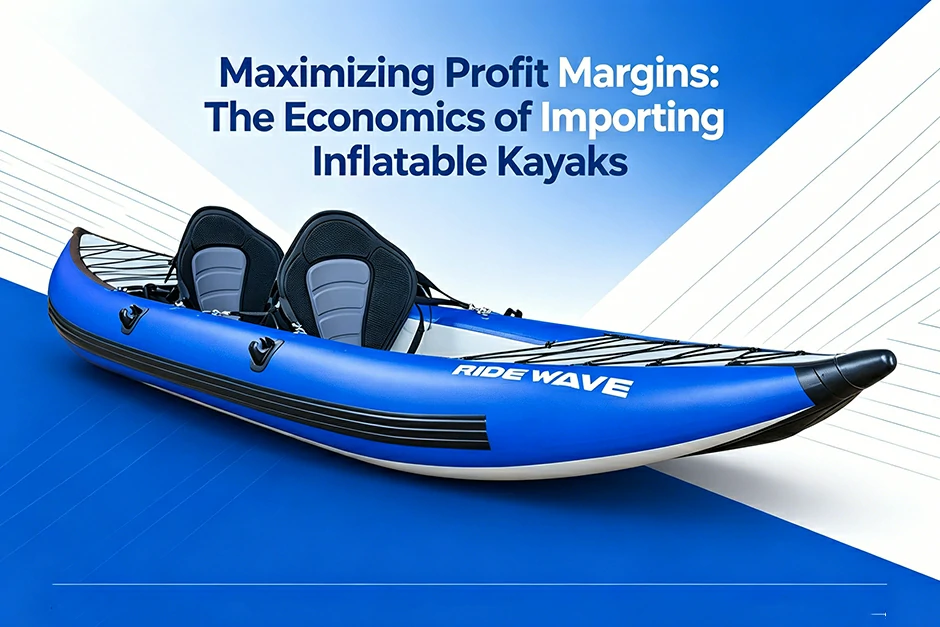


The global water sports market is undergoing a structural paradigm shift, driven by a rapid evolution in portable kayak design. Over the last decade, traditional rigid hard-shells have steadily lost their market monopoly to high-performance, high-pressure inflatable watercraft. For international distributors, wholesalers, and brand owners across North America, Europe, and Australia, this transition is not merely a response to changing consumer lifestyles, but a vital supply chain solution to soaring logistics and warehousing costs. Modern portable designs have successfully bridged the gap between professional-grade on-water tracking and unprecedented volumetric shipping efficiency. This comprehensive report analyzes the technological advancements and economic drivers behind this decade-long evolution, offering B2B buyers actionable insights to optimize their inventory portfolios for maximum profitability.
Why Did the Hard-Shell Kayak Monopoly Collapse in the Last Decade?
The global water sports industry has witnessed a major structural shift, driven by a direct conflict between traditional product design and modern supply chain economics. For decades, the rigid plastic touring kayak and the standard sit-on-top fishing kayak held an absolute monopoly in retail stores across North America, Europe, and Australia. However, over the past ten years, this monopoly has broken down. To understand why this collapse occurred, global B2B buyers, water sports distributors, and outdoor equipment wholesalers must look beyond consumer aesthetics and analyze the hard financial realities of bulk cargo logistics, rising warehouse overheads, and changing urban demographics that have redefined the global kayak market.

The Prohibitive Cost of Shipping Rigid Cargo: A traditional hard-shell kayak is essentially a large, unyielding block of trapped air. From an ocean freight and import-export perspective, shipping a standard 12-foot rigid hull means paying for maximum container volume while achieving minimal unit density. A decade ago, when global maritime freight rates were stable, importers could absorb this inefficiency. Today, with volatile shipping container costs and soaring inland fuel surcharges, packing only 50 to 60 rigid boats into a 40ft HQ container is no longer economically viable for a high-volume kayak wholesaler.
Last-Mile Delivery and E-commerce Barriers: The exponential growth of online retail has further exposed the flaws of the rigid hull design. Shipping a 60-pound, 13-foot plastic boat to a consumer's residential address requires specialized Less-Than-Truckload (LTL) freight handling, which incurs massive oversized delivery fees. This high logistical barrier drastically reduces the conversion rates for e-commerce retailers. A high-performance packable portable kayak, however, fits into a standard shipping box, allowing seamless fulfillment via standard parcel networks like FedEx, UPS, or DHL without penalty fees.
The Warehouse Floor Space Tax: For a modern sporting goods distributor or multi-channel kayak brand owner, warehouse utilization is directly tied to net profit margins. Storing rotomolded polyethylene kayaks requires specialized, expensive vertical racking systems to prevent hull deformation over time. This massive physical footprint increases the per-square-foot operational cost of each stock-keeping unit (SKU). In contrast, modern manufacturing hubs have optimized the inflatable kayak factory model to produce high-pressure alternatives that can be neatly palletized, stacked, and stored in a fraction of the space, allowing businesses to maximize their inventory value per square meter.

Urbanization and the Retail Buyer Shift: On the consumer side, the target audience for recreational watercraft has changed. Urbanization and the reduction of residential garage space mean that modern paddlers in major metropolitan markets-such as Los Angeles, Vancouver, Sydney, or Munich-simply do not have the space to store a rigid boat. Furthermore, the requirement of owning a heavy SUV or installing expensive vehicle roof racks created a friction point for entry-level buyers. By transitioning inventory to heavy-duty inflatable kayaks, smart retail brands have successfully tapped into a massive, previously unreached segment of urban outdoor enthusiasts who demand a "trunk-ready" water sports experience.

As an industry-leading inflatable kayak manufacturer, RIDEWAVE recognized these emerging B2B pain points early in the decade. By focusing R&D on high-pressure drop-stitch engineering and streamlining mass production lines, the brand successfully developed heavy-duty, commercial-grade inflatable kayaks that eliminate the logistical liabilities of traditional rigid hulls without sacrificing on-water rigidity or tracking velocity. For global importers looking to diversify their product lines, this evolution represents the ultimate balance between consumer demand and supply chain efficiency.
How Have Material Innovations Transformed Inflatable Kayaks from "Toys" to Professional Watercraft?
The historical skepticism surrounding inflatable water sports gear was not entirely unfounded. Early generations of inflatable boats, prominent in the late 1990s and early 2000s, were manufactured primarily using unsupported, low-gauge polyvinyl chloride (PVC). These products were susceptible to puncture, prone to structural twisting under wave action, and severely limited to low-pressure inflation thresholds (typically 1 to 3 PSI). They were, by all accounts, water toys. Over the past decade, however, revolutionary advancements in textile engineering and polymer chemistry have completely redefined the performance category of the inflatable kayak, shifting it from a novelty item into a professional-grade touring and fishing vessel capable of matching the rigidity of rotomolded polyethylene.

请替换当前内容 This 50kVA single phase pole mounted transformer is exported to Canada inJuly,2024.The rated power of the pole mounted transformer is 50 KVA, the primary voltage is 34.5 kV and secondary voltage is 0.48v/0.277 KV. Western developed countries and Southeast Asia. North and South America, a large number of single-phase pole mounted This 50kVA single phase pole mounted transformer is exported to Canada inJuly,2024.The rated power of the pole mounted transformer is 50 KVA, the is 50 KVA, the is 50 KVA, the is 50 KVA, the is 50 KVA, the is 50 KVA, the is 50 KVA.
Military-Grade Composite Overlays: Modern heavy-duty inflatable kayaks no longer rely on single-layer plastics. Premium manufacturing standards dictate the use of multi-layered, reinforced 1000D/1200D PVC or advanced Thermoplastic Polyurethane (TPU) coatings. These materials are embedded with a high-density woven base fabric that provides exceptional tensile strength. For a commercial kayak distributor, this material evolution translates directly to a reduction in warranty claims, as these professional hulls easily resist rock abrasions, gravel scrapes, dog claws, and prolonged exposure to harsh UV radiation without delaminating.


From Glued Seams to Thermo-Fusion Welding: Historically, the weakest point of any inflatable watercraft was the chemical adhesive holding its seams together. Over time, exposure to high temperatures, salt water, and solar heat caused the glue to break down, leading to catastrophic seam failure. The modern premium standard has replaced hand-gluing with automated thermal fusion welding technology. By applying targeted heat and pressure, the overlapping PVC layers are permanently fused at a molecular level, creating a single, continuous structure. This mechanical bond ensures that the seam is actually stronger than the surrounding material itself, virtually eliminating the risk of sudden blowouts.
As a manufacturer dedicated to engineering elite maritime equipment, RIDEWAVE has placed these material innovations at the center of its production matrix. Utilizing proprietary multi-stage quality control, RIDEWAVE's professional inflatable kayaks integrate dual-layer composite drop-stitch drop cores coupled with high-frequency heat-welded rails. By engineering vessels that maintain geometric integrity under extreme environmental stress, the brand provides global sourcing managers and premium brand owners with a highly reliable product portfolio that satisfies even the most demanding pro-paddler demographics.
| Engineering Metric | Legacy PVC Inflatable Boat | RIDEWAVE Professional Inflatable Kayak | Commercial Benefit for Distributors |
| Inflation Pressure Limits | 1.5 – 3.0 PSI max | 10.0 – 15.0+ PSI | Matches hard-shell hull rigidity; eliminates on-water drag. |
| Internal Structural Core | Open Chamber (No internal tie-threads) | High-Density Woven Drop-Stitch | Flat, ultra-rigid floor; optimal weight distribution. |
| Seam Construction Method | Chemical Hand-Gluing / Cold Adhesive | Automated Thermo-Fusion Welding | Prevents seam delamination in hot climates; lowers return rates. |
| Outer Fabric Density | 300D – 500D Non-reinforced PVC | 1000D – 1200D Reinforced Composite | High resistance to sharp rocks, oyster shells, and UV degradation. |
| Hull Deflection Under Load | High sagging (Causes severe tracking loss) | Near-Zero (Maintains true hydrodynamic line) | High-speed tracking velocity; appeals to pro-paddlers. |
What Are the Driving Forces Behind the Global Surge in Portable Water Sports Demand?
The global water sports equipment market has entered a period of unprecedented expansion, reaching an estimated global market valuation of over $10.2 billion in 2026. This impressive growth is not a temporary trend; it is the direct result of fundamental changes in consumer behavior, macroeconomic shifts, and international lifestyle movements. For B2B procurement managers, outdoor gear retailers, and commercial importers across North America, Europe, and the Asia-Pacific region, understanding these macro-level driving forces is critical. Identifying these patterns allows businesses to align their inventories with high-velocity consumer categories, specifically within the expanding inflatable kayak market.

-
The Rise of Eco-Tourism and Low-Impact Recreation: Modern consumers are increasingly prioritizing environmental sustainability, which has triggered a major wave of green tourism worldwide. Recent industry data shows that over 36% of outdoor enthusiasts now actively prefer eco-friendly, non-motorized watercraft over fuel-powered options. Recreational kayaking has emerged as the leading choice for this demographic, offering a zero-emission, low-impact way to explore national parks, marine reserves, and protected inland waterways. Retailers stocking high-quality, long-lasting inflatable kayaks are successfully capturing this massive wave of green consumer spending.
-
The Demographic Dominance of Millennials and Gen Z: The primary purchasing demographic for outdoor recreation has permanently shifted. Today, Millennials and Gen Z account for over 60% of the active paddlesports market. These younger consumers approach outdoor recreation with a distinct set of priorities: they value experiential travel, seamless mobility, and spontaneous adventures. Traditional, heavy equipment does not fit their fast-paced, flexible lifestyles. A premium packable portable kayak that can be deflated and carried as a single backpack perfectly matches their desire for hassle-free, highly shareable outdoor experiences.


-
The "Micro-Adventure" and Wellness Travel Boom: Travel habits in Western markets have evolved toward shorter, more frequent domestic trips, often called "micro-adventures." Rather than planning long, complex international holidays, modern families and young professionals prefer weekend getaways to local lakes, coastal bays, and riverways. This lifestyle shift has created a huge surge in demand for "trunk-ready" gear. Water-based fitness and wellness tourism have also grown significantly, as consumers discover that the physical and mental health benefits of paddling serve as an excellent antidote to urban burnout.
-
The Explosion of Digital Sales Channels and Social Media Inspiration: The modern customer journey is highly visual and heavily driven by digital platforms. Industry research reveals that nearly 44% of first-time water sports participants are directly inspired by content on social media networks. The compact, visually engaging nature of modern inflatable stand-up paddleboards and portable kayaks makes them ideal for e-commerce marketing, unboxing videos, and lifestyle influencer campaigns. This high digital engagement allows online retailers and multi-channel brand owners to achieve exceptional conversion rates compared to traditional, difficult-to-photograph rigid boats.

As global market demands continue to lean toward portability and premium build quality, RIDEWAVE has successfully positioned its manufacturing capabilities to help B2B partners capitalize on these shifting trends. By supplying all-in-one, highly packable wholesale inflatable kayaks complete with ergonomic travel backpacks, dual-action pumps, and modular breakdown paddles, RIDEWAVE enables international distributors to offer a complete, retail-ready solution. This comprehensive approach removes the traditional buying barriers for consumers and allows sports equipment businesses to secure high-turnover sales in an increasingly competitive marketplace.
| Macro Market Driver | Key Statistical Consumer Metric (2026 Data) | Primary Retail Channel Impact | How RIDEWAVE Solves the Inventory Demand |
| Sustainability Shift | 36%+ of buyers demand eco-friendly or low-impact watercraft. | Increased sales for non-motorized paddlesports over jet skis. | Manufactures non-polluting, highly durable inflatable kayaks built for lifelong multi-season use. |
| Demographic Shift | Millennials & Gen Z make up over 60% of adventure paddlers. | High demand for compact, tech-friendly, and mobile outdoor gear. | Offers lightweight, highly aesthetic, "trunk-ready" packable portable kayak sets. |
| Travel Pattern Shift | 61%+ of global leisure travelers include water activities in trips. | Massive growth in localized weekend "micro-adventure" equipment rentals. | Provides heavy-duty, commercial-grade rental fleet setups with rapid deflation times. |
| Digital Sales Shift | 44% of first-time buyers are driven by social media video content. | Accelerated growth in direct-to-consumer e-commerce channels. | Delivers beautifully packaged, highly photogenic retail boxes optimized for online shipping logistics. |
How Can Outdoor Brand Owners Avoid the "Low-Price, High-Return" Trap in Procurement?
In the international water sports equipment supply chain, procurement managers are constantly tempted by low-cost manufacturing quotes. However, veteran sporting goods distributors and private-label brand owners know that a low initial purchase price can frequently turn into a financial disaster. The most hidden drain on a retail enterprise's profitability is a high post-sale consumer return rate. In the inflatable kayak market, where products are subjected to immense air pressure, sharp natural environments, and intense solar heat, opting for cut-rate manufacturing always results in catastrophic structural failures, costly warranty claims, and permanent damage to a brand's market reputation.
The Hidden Risks of Low-Cost Chemical Adhesives: The primary failure point in budget-tier inflatables lies hidden beneath the seam tapes. Low-cost factories rely on cheap, unstable chemical adhesives applied by hand in un-air-conditioned environments. When an end-consumer inflates the kayak and leaves it under the direct summer sun in regions like California, southern Europe, or Australia, the internal chamber pressure spikes as the air expands. This increased kinetic energy, combined with UV heat, breaks down the low-grade glue, causing sudden seam delamination (browning and splitting), rendering the recreational watercraft completely unrepairable.
The Problem of Fabric Deflection and Core Twisting: Poorly engineered drop-stitch fabrics suffer from insufficient internal thread counts and substandard nylon linear cores. When inflated to the pressure required for true hydrodynamic performance, these inferior materials stretch unevenly. To the distributor, this manifests as a distorted, twisted hull straight out of the box, or a kayak that sags significantly in the middle under the weight of a standard adult paddler. This deflection increases hull drag, destroys tracking performance, and triggers immediate consumer returns due to a poor user experience.
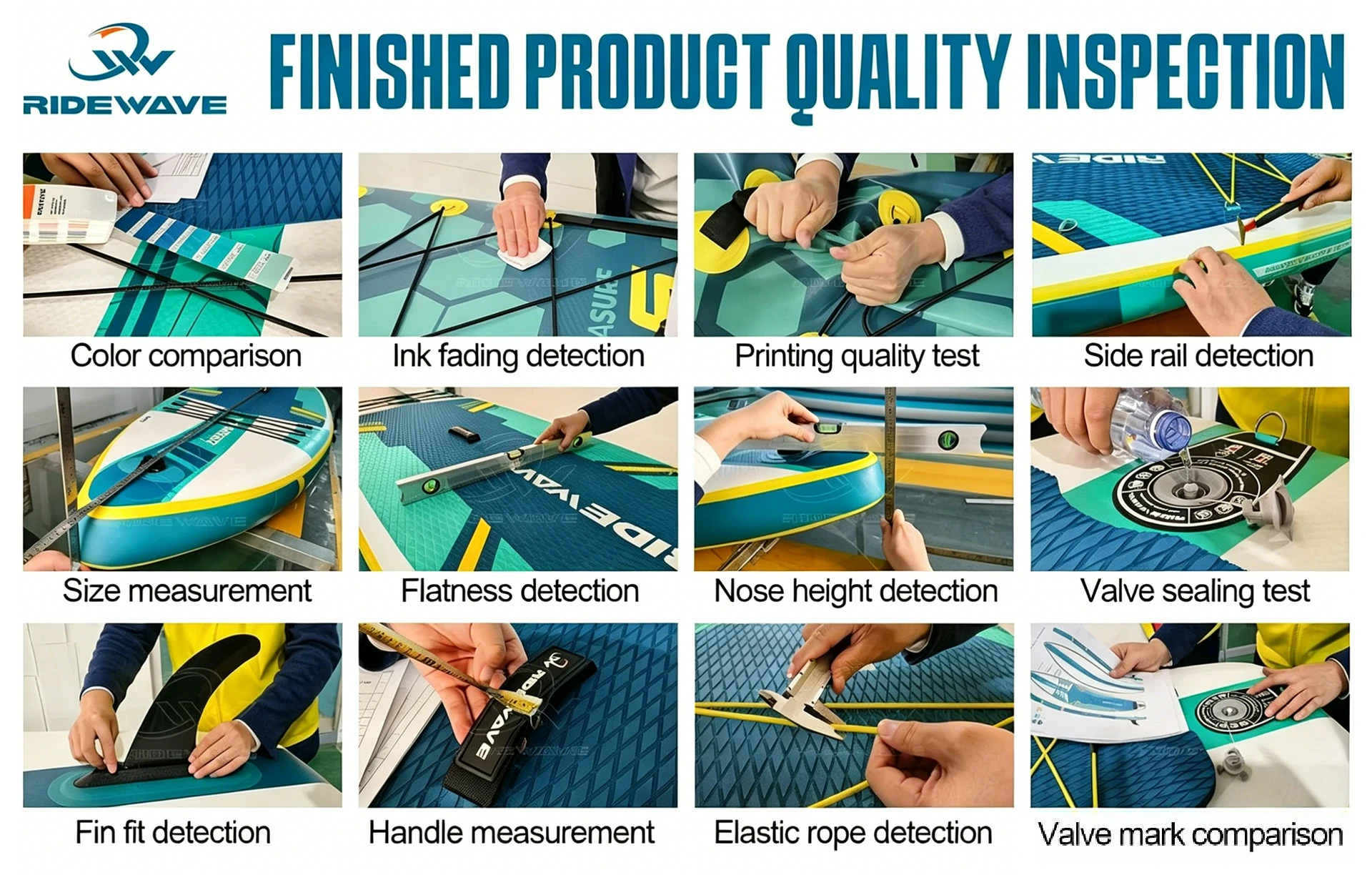
The Absolute Necessity of 48-Hour Pressure Retention Testing: A major differentiator between an amateur supplier and a professional manufacturing facility is the rigor of their quality control infrastructure. Low-cost vendors often skip or shorten the critical pressure testing phase to accelerate shipping turnaround times. A premium inflatable kayak factory must enforce a strict, multi-stage testing protocol where every single hull is inflated to its maximum rated capacity and monitored for a minimum of 48 hours in a temperature-controlled testing hall to catch micro-leaks before packaging.
Recognizing that product reliability is the cornerstone of B2B client retention, RIDEWAVE has structured its production lines around a zero-tolerance defect policy. Every heavy-duty inflatable kayak manufactured under the RIDEWAVE name is built using automated thermo-fusion welding, completely eliminating the unstable variable of industrial glue. Furthermore, the brand enforces a rigorous quality control workflow, subjecting every batch to high-pressure endurance, extreme drop-impact, and extended UV accelerated-aging tests. By delivering highly resilient, commercial-grade gear that achieves a consumer defect rate of less than 0.3%, RIDEWAVE ensures that international importers and brand owners can scale their business smoothly, free from the profit-draining burden of excessive warranty returns.
| Critical Failure Mode | Budget Factory Defect Source | RIDEWAVE Engineering Solution | Financial Impact on Retailers |
| Seam Delamination & Blowouts | Cold chemical hand-gluing; sensitive to UV degradation and thermal expansion. | Automated Thermo-Fusion Welding (Molecular layer bonding). | Reduces post-season warranty returns by up to 95%; protects brand trust. |
| Hull Twisting & Bowing | Low-density polyester internal threads; uneven warp tension. | High-Density Woven Drop-Stitch Core (Maintains strict linear geometry). | Eliminates "defective out of the box" consumer reviews and costly freight returns. |
| Micro-Leaks & Slow Deflation | Rushed packaging; lack of extended pressure retention testing. | Mandatory 48-Hour High-Pressure Testing Protocol for every single unit. | Guarantees 100% retail readiness; eliminates batch product recalls. |
| Valve Failure & Thread Stripping | Cheap single-gasket generic air valves prone to cross-threading. | Premium Marine-Grade High-Pressure Valves with dual-seal protection. | Minimizes field maintenance issues and customer service inquiries. |
Which Hydrodynamic Designs in Modern Inflatable Kayaks Are Attracting Premium Distributors?
In the highly competitive outdoor retail sector, experienced water sports equipment distributors evaluate potential inventory based on tangible performance characteristics. A common criticism of early portable boats was their poor behavior on the water; their wide, flat profiles created severe water displacement drag and lacked directional stability. However, the last decade has seen a revolution in the hull geometry of the inflatable kayak market. By applying advanced fluid dynamics and naval architecture to flexible materials, manufacturers have successfully bridged the tracking and speed gap between rigid vessels and portable alternatives, creating high-margin opportunities for premium sports retailers.

Integrated V-Shaped Inflatable Keels: The absolute foundation of true tracking performance is the hull's entry line. Premium recreational kayaking designs no longer feature uniform, blunt flat bottoms. Instead, they integrate an independent, drop-stitch high-pressure V-shaped keel system running from the bow to the stern. This structural sharp edge acts exactly like a traditional hard-shell skeg, slicing through choppy cross-currents and converting every forward paddle stroke into pure forward kinetic energy, rather than allowing the bow to wag or drift side-to-side (known as "yawing").
The Science of Trim and Aspect Ratios: Hydrodynamic efficiency is deeply tied to the ship's length-to-beam aspect ratio. Elite inflatable kayak manufacturers have optimized these dimensions to suit specific paddling profiles. Single-rider (solo) touring boats are engineered with narrow, sleek profiles to minimize the wetted surface area and maximize acceleration, while multi-rider (tandem) vessels utilize parallel midship side chambers to provide extreme primary stability without increasing hydrodynamic drag. This carefully calibrated hull architecture ensures the boat glides smoothly over long distances, appealing directly to fitness and touring enthusiasts.


Smart Self-Bailing Systems and Rigid Rocker Profiles: For professional-grade river and coastal exploration, water management inside the cockpit is critical. Modern high-end heavy-duty inflatable kayaks incorporate strategically positioned, quick-drain self-bailing valves along the floor perimeters. When open, these valves use gravity and the forward motion of the hull to instantly vent incoming splash water, keeping the cockpit dry and maintaining optimal weight distribution. Combined with a progressive bow rocker profile (the upward curve of the nose), these watercraft can ride over waves effortlessly without taking on water or burying the bow.
To help global distributors capture the lucrative mid-to-high-end consumer segment, RIDEWAVE has made advanced fluid dynamics the hallmark of its engineering matrix. Every model produced in the RIDEWAVE inflatable kayak factory features a highly optimized, hydrodynamic hull profile engineered using computer-aided fluid simulations. By combining sharp, drop-stitch molded nose cones with a progressive tracking fin system and seamless tracking keels, RIDEWAVE delivers a highly competitive portfolio of professional inflatable kayaks. These vessels offer the precise tracking, rigid responsiveness, and low-drag efficiency that allow brand owners to fearlessly target intermediate and advanced paddlers who refuse to compromise on-water performance for portability.
| Hydrodynamic Design Feature | Generic Flat-Bottom Inflatable | RIDEWAVE Hydro-Engineered Kayak | Real-World Advantage for Retail End-Users |
| Hull Bottom Profile | Completely flat; slides over water currents. | Integrated High-Pressure V-Keel | True straight-line tracking; reduces paddling fatigue by 40%. |
| Bow Entry System | Blunt, rounded nose; pushes water forward. | Molded Hard Nose Cone with V-Entry | Cleanly slices through oncoming waves and reduces drag coefficient. |
| Directional Tracking Fin | Small glued-on flexible rubber skeg. | Click-In Toolless Removable Fin System | Customizable tracking setup based on water depth and conditions. |
| Cockpit Water Drainage | No drainage; requires manual bailing/sponging. | Perimeter Self-Bailing High-Velocity Valves | Instantly expels incoming water in rough or choppy conditions. |
| Length-to-Width Ratio | Wide and short (Sluggish acceleration). | Sleek Slim-Line Aspect Ratio Geometry | Maximizes glide-per-stroke; matches hard-shell cruising speeds. |
What Commercial Opportunities Exist in the Evolving "Kayak Fishing" and "Adventure Touring" Niches?
For global commercial buyers, identifying general market growth is only the first step; the true high-margin potential lies within specialized product niches. Over the last few years, the global water sports equipment sector has seen a massive surge in two specific sub-categories: specialized kayak fishing and multi-day adventure touring. Historically, these high-end categories were limited to consumers who could afford heavy, expensive aluminum-framed motorized boats or custom fiberglass touring vessels. Today, the introduction of commercial-grade, utility-focused inflatable kayaks has democratized these lucrative niches, offering a high-turnover opportunity for sports equipment wholesalers and private-label brands looking to capture premium consumer spending.
The Uncapped Growth of the Kayak Fishing Segment: Fishing enthusiasts represent one of the highest-spending demographics in the entire outdoor retail market. The modern fishing kayak market has exploded because it allows anglers to access shallow, remote, and weed-heavy water zones where traditional motorized bass boats cannot venture. High-pressure drop-stitch floors have completely transformed this niche by providing a rock-hard, non-slip platform that allows an angler to stand securely and cast a line without losing balance. For a B2B distributor, stocking inflatable fishing kayaks that include multi-functional mounting bases for rod holders, fish finders, and bait trays means opening up a highly profitable ecosystem of cross-selling accessory attach-rates.
The Demands of Multi-Day Adventure Touring: The wilderness exploration market has evolved from casual afternoon paddling into long-distance, multi-day expeditions. Consumers planning adventure touring trips require maximum weight capacities, secure storage zones, and uncompromising hull tracking. Modern premium inflatables easily fulfill this requirement by offering spacious open-cockpit layouts, integrated cargo bungee cord systems at the bow and stern, and heavy-duty D-ring tie-down arrays. These structural additions allow paddlers to secure extensive dry bags, camping gear, and survival kits, making these vessels highly appealing to wilderness outfitters and outdoor specialty stores.
The Crucial Importance of Ergonomic Utility and Premium Comfort: In these specialized, long-duration niches, an end-user will spend six to ten hours continuously inside the cockpit. Therefore, generic, low-cost plastic folding seats are a major sales barrier. Premium portable watercraft must prioritize user wellness and endurance by integrating high-back adjustable seats-often utilizing thermo-molded foam or independent drop-stitch inflation panels-that provide superior lumbar support. When a kayak distributor offers a retail package that combines elite hydrodynamic engineering with lounge-tier seating comfort, the perceived retail value spikes, protecting the wholesaler's premium pricing structure.
As a market-forward inflatable kayak manufacturer, RIDEWAVE has developed highly specialized platforms tailored precisely to these high-value niches. In the RIDEWAVE production facility, custom specialized molds are utilized to build dedicated inflatable fishing kayaks featuring reinforced accessory rail mounting tracks, heavy-duty protective skid plates, and multi-zone structural stabilization rings. By delivering versatile, utility-rich platforms that can be converted from a streamlined touring craft into a fully kitted angling vessel in minutes, RIDEWAVE provides international brand owners and multi-channel retailers with an incredibly flexible SKU profile that captures multiple high-yield consumer segments with a single inventory line.
How Does Optimizing Package Dimensions Reduce Ocean Freight Costs for Wholesalers?
In the modern international water sports equipment market, a product's profitability is determined long before it reaches a retail shelf. It is decided inside the shipping container. Over the last few years, volatile maritime freight rates, unexpected fuel adjustments, and high port congestion surcharges have forced global outdoor gear distributors and bulk importers to treat logistics as a core competitive metric. For businesses importing heavy, oversized gear, standard rotomolded hulls have become an enormous financial drain. Maximizing the volumetric efficiency of your logistics pipeline is no longer just a smart choice; it is a vital strategy for supply chain survival.
The Container Loading Density Disadvantage:
To understand the logistical crisis of rigid watercraft, procurement managers must analyze the mathematics of a standard 40ft High Cube (HQ) shipping container. A rigid 12-foot plastic boat cannot be compressed, folded, or nested efficiently. When loading a container, you are primarily paying to transport empty air trapped inside the cockpit hulls. A standard 40ft HQ container can typically hold only 50 to 60 loose rigid boats before reaching its physical volume limit. This low loading density means the inbound ocean freight cost per unit is incredibly high, severely reducing the distributor's net profit margins.
The Geometric Advantage of Full-Kit Box Packaging:
Modern inflatable kayak manufacturers have solved this logistical bottleneck by redesigning the product's physical footprint. By engineering highly flexible fabrics that deflate into a compact, standardized geometric shape, a premium packable portable kayak can be packed into a heavy-duty cardboard shipping box along with all its vital accessories (including a breakdown paddle, dual-action hand pump, tracking fin, and repair kit). This standardized packaging allows warehouse teams to utilize automated palletizing systems, stacking products perfectly from the floor to the ceiling of the container.
The Inbound Freight and Last-Mile Multiplier Effect:
The financial benefits of this optimized packaging extend across the entire supply chain. The exact same 40ft HQ shipping container that is limited to 60 rigid hulls can comfortably fit between 350 and 400 fully kitted, boxed RIDEWAVE portable kayak packages. This massive density increase reduces the per-unit ocean freight cost by up to 80%. Furthermore, once the cargo arrives at domestic fulfillment hubs, these compact boxes completely eliminate the need for expensive, specialized Less-Than-Truckload (LTL) oversized freight delivery, allowing retailers to utilize standard parcel networks like FedEx, UPS, or DHL for fast, cost-effective residential shipping.
As a highly efficient inflatable kayak factory, RIDEWAVE combines advanced maritime engineering with strict logistical optimization. RIDEWAVE's packaging engineers analyze every millimeter of the deflated hull geometry to minimize box dimensions without putting stress on the thermo-fusion welded seams. By offering an ultra-compact, all-in-one retail box profile, RIDEWAVE enables international kayak wholesalers and multi-channel brand owners to drastically reduce their carbon footprint, optimize their warehouse racking efficiency, and achieve an unparalleled return on investment (ROI) per container shipment.
| Logistics & Supply Chain Metric | Traditional Rotomolded Rigid Kayak | RIDEWAVE Full-Kit Inflatable Kayak | B2B Bottom-Line Financial Advantage |
| 40ft HQ Container Capacity | ~50 – 60 Units max (Due to rigid hull shapes) | 350 – 400 Units (Palletized box geometry) | Increases container inventory capacity by over 600%. |
| Amortized Inbound Ocean Freight | Very High (Oversized volumetric cargo rate) | Ultra-Low (Drastically reduced per-unit cost) | Saves tens of thousands of dollars in annual freight expenses. |
| Warehouse Pallet Utilization | Poor (Requires specialized, bulky vertical racks) | Excellent (Standardized, multi-tier stackable pallets) | Maximizes per-square-foot warehouse value in premium logistics zones. |
| Domestic Last-Mile Delivery | Requires expensive LTL oversized freight transport | Standard Parcel Courier (Fits FedEx / UPS criteria) | Eliminates residential shipping surcharges; increases e-commerce conversions. |
| Out-of-Box Assembly Defect Rate | Susceptible to transit warping and deep hull scratches | Zero Transit Deformation (Protected inside heavy cardboard) | Lowers ocean freight damage claims and retail return costs. |
Why Do Premium Inflatable Kayaks Rely on Thermo-Fusion and Advanced Seam Welding Technologies?
In the commercial water sports equipment manufacturing sector, a product's structural integrity is only as dependable as its weakest seam. For international procurement managers and volume distributors, product field failures-specifically seam separations and catastrophic pressure drops-represent an immense financial risk capable of destroying brand reputation and driving up warranty claim costs. While the entry-level market remains flooded with low-cost, chemically glued watercraft, premium inflatable kayaks engineered for rugged commercial use rely on advanced molecular bonding. Understanding the physics behind these construction techniques is essential for buying teams looking to secure long-term fleet durability.


The Inherent Risks of Chemical Gluing Processes: Traditional inflatable manufacturing heavily relies on cold-bonding processes using liquid polyurethane glues. While manual gluing is cost-effective for factories with cheap labor, it introduces massive chemical and physical vulnerabilities. Over time, liquid adhesive layers are highly susceptible to chemical degradation when exposed to intense UV radiation, high ambient temperatures, and moisture. Furthermore, because glue is applied by hand, human error leading to uneven thickness or microscopic air bubbles is inevitable. Under maximum inflation pressures, these weak focal points become the primary source of dynamic seam blowouts.
The Mechanical Science of Thermo-Fusion Seam Welding: Premium portable watercraft completely eliminate liquid adhesives by utilizing state-of-the-art thermo-fusion welding systems. This mechanical process uses specialized high-temperature calibration equipment to heat the overlapping structural PVC or TPU polymer layers precisely to their precise melting points. Under computerized pneumatic pressure rollers, the heated polymer matrices fuse at a molecular level, transforming two distinct fabric sheets into a single, seamless, uniform structure. A thermo-welded seam does not have an external adhesive layer that can break down; the joint itself is often physically stronger than the raw surrounding fabric.
Ensuring Structural Longevity Under Extreme Conditions: The commercial advantages of hot-air and high-frequency electronic welding become obvious during real-world operations. Marine rental fleets, wilderness outfitters, and white-water kayakers regularly subject their equipment to extreme environmental stress, such as dragging hulls over sharp river stones, launching from hot sandy beaches, and inflating chambers to maximum operating pressures exceeding 10 to 15 PSI. Thermo-fused structures maintain absolute airtight containment without stretching or warping, effectively extending the commercial lifespan of the rental or retail fleet by up to three times compared to glued alternatives.
| Engineering and Performance Metric | RIDEWAVE Thermo-Fusion Mechanical Welding | Traditional Cold-Bonded Chemical Gluing | B2B Commercial Advantage |
| Bonding Mechanism | Molecular fusion via computerized heat and pneumatic pressure | Liquid polyurethane chemical adhesive layer | Zero risk of glue degradation, peeling, or heat-induced melting. |
| Human Error Mitigation | Fully automated robotic tracks with precise temperature control | Applied manually via hand brushes; vulnerable to uneven coating | Eliminates micro-air bubbles; ensures uniform structural strength across production batches. |
| UV and High Temperature Resistance | Immune to thermal degradation; withstands direct tropical sun | Glue softens and degrades at high temperatures, causing leaks | Perfect for premium rental fleets operated in harsh outdoor climates. |
| Max Pressure Tolerance | Easily sustains high-pressure inflation (Up to 15+ PSI) | Limited pressure threshold; prone to seam popping under high stress | Delivers a stiffer hull, better hydrodynamics, and safer structural performance. |
| Warranty & Lifecycle Costs | Extended 3 to 5 year commercial service life | High defect and return rate after 12-18 months of active use | Minimizes downstream warranty claims and protects distributor brand equity. |
What Regulatory and Compliance Certifications Must Commercial Inflatable Kayaks Meet Globally?
For multi-channel importers, big-box outdoor retailers, and global water sports equipment brands, commercial product viability is tied directly to legal compliance. Importing marine hardware or consumer watercraft into premium markets-such as the European Union, United Kingdom, and North America-requires passing a complex matrix of international safety and environmental regulations. Attempting to distribute non-certified watercraft can result in severe financial penalties, absolute customs seizures at major ports, and catastrophic product recalls that destroy brand equity. For international purchasing directors, ensuring a manufacturer meets these rigorous verification standards is the ultimate form of supply chain risk management.
The Mandate for European and British Maritime Safety Standards: To legally distribute non-motorized watercraft across the European Economic Area (EEA), an inflatable kayak must strictly achieve conformity with the European Personal Watercraft and Recreational Craft Directive (RCD). This requires comprehensive physical testing to achieve official CE Marking, specifically following the stringent testing protocols outlined in EN ISO 6185-1 (which dictates structural stability, buoyancy minimums, and puncture safety for inflatable boats under 8 meters). For the UK market, achieving the corresponding UKCA (UK Conformity Assessed) mark is equally mandatory, requiring identical structural validation to clear British ports without delay.
North American Safety Standards and Environmental Law: In the United States and Canada, compliance shifts toward operational safety and rigorous chemical restrictions. Commercial watercraft should carry official National Marine Manufacturers Association (NMMA) or United States Coast Guard (USCG) capacity verification tags. Furthermore, the base polymers utilized by an inflatable kayak manufacturer must pass strict environmental toxicological screenings. In California, materials must comply with Proposition 65, proving the heavy-duty PVC or TPU composite is completely free of harmful phthalates, heavy metals, and carcinogenic stabilizers. In Europe, this matches the intensive REACH (Registration, Evaluation, Authorisation and Restriction of Chemicals) declaration, ensuring zero hazardous chemical off-gassing during high-temperature outdoor usage.
The Supply Chain Security and Factory Quality Verification: Beyond the individual physical product certificates, tier-one global distributors require proof of organizational excellence. Wholesale buyers regularly audit manufacturing facilities to confirm the factory operates under a certified ISO 9001:2015 Quality Management System, guaranteeing that every mass-produced production batch maintains identical tolerances to the verified engineering samples. Additionally, social compliance audits-such as BSCI (Business Social Compliance Initiative) or Sedex certifications-are increasingly vital for brands that must fulfill strict Environmental, Social, and Governance (ESG) corporate mandates.

As an absolute compliance-first inflatable kayak factory, RIDEWAVE eliminates regulatory friction from the international importing process. Every hull platform built in the RIDEWAVE production facility undergoes third-party lab verification from internationally recognized testing bodies such as SGS and TÜV Rheinland. By maintaining a comprehensive, up-to-date repository of CE, ISO 6185-1, REACH, and Proposition 65 certificates, RIDEWAVE ensures that global kayak wholesalers and private label owners can seamlessly clear customs, minimize downstream legal liability, and position their premium watercraft lines inside the world's most demanding retail environments.
How to Capitalizing on the Next Decade of Portable Kayak Growth
The commercial transformation of the water sports sector over the past ten years is an undeniable reality. The collapse of the hard-shell kayak monopoly was not driven by a passing consumer trend, but by a permanent shift toward logistical efficiency, material longevity, and urban-friendly mobility. As analyzed throughout this comprehensive report, advanced material engineering-such as high-pressure drop-stitch cores and automated thermo-fusion welding-has successfully bridged the performance gap. Modern portable watercraft are no longer toys; they are highly rigid, hydrodynamically efficient vessels capable of operating in the harshest marine environments while offering distributors unmatched warehouse and freight cost savings.
For international sporting goods wholesalers, marine equipment distributors, and outdoor brand owners, the next decade represents a critical market window. As eco-tourism, wellness travel, and specialized markets like kayak fishing and hybrid paddling continue to expand globally, companies that continue to rely exclusively on bulky, low-margin rigid inventory risk being displaced by more agile competitors. Future-proofing your inventory portfolio requires partnering with a supply chain leader that combines forward-thinking research and development with an uncompromised commitment to international compliance and manufacturing safety standards.
As a premier global inflatable kayak manufacturer, RIDEWAVE remains dedicated to empowering our B2B partners with the highest-yield water sports solutions on the market. By providing an elite portfolio of heavy-duty, commercial-grade wholesale inflatable kayaks, RIDEWAVE combines advanced fluid dynamics with ultra-compact retail packaging designed to maximize your container ROI and accelerate your online and retail sales turnover. The structural shift from rigid infrastructure to premium portability is fully under way. Importers and multi-channel retailers ready to lead their domestic markets are invited to connect with the RIDEWAVE engineering and sourcing team to secure their allocation for the upcoming manufacturing season and capture the highly lucrative future of paddlesports.
Related Articles
How To Determine The Right Kayak Capacity For Different User Groups
The Importance Of Kayak Material Durability in Harsh Waters
Inflatable Kayak Storage & Maintenance Tips For Retail Display
Selecting Kayak Accessories: What Every Starter Kit Needs
Safety Standards For Inflatable Kayaks: What Importers Must Know