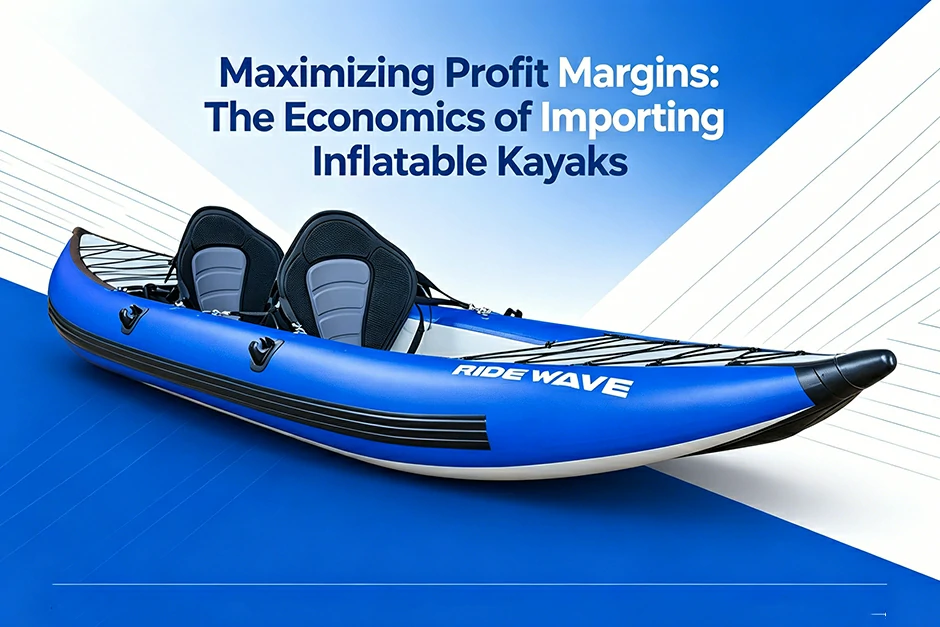


The global sports retail inventory landscape is undergoing a massive disruption. Industry data reveals that premium big-box chains and multi-national distributors are scaling back their legacy rigid watercraft pipelines, reallocating up to 35% of their purchasing capital exclusively toward wholesale inflatable kayak stock. Why this sudden shift? The answer lies at the intersection of compressed retail margins, shifting consumer habits, and a massive macroeconomic pivot toward high-efficiency outdoor gear. For sport equipment brands and regional wholesalers looking to expand their product portfolios, navigating this trend is no longer optional-it is the key to unlocking sustainable profitability in a competitive market.
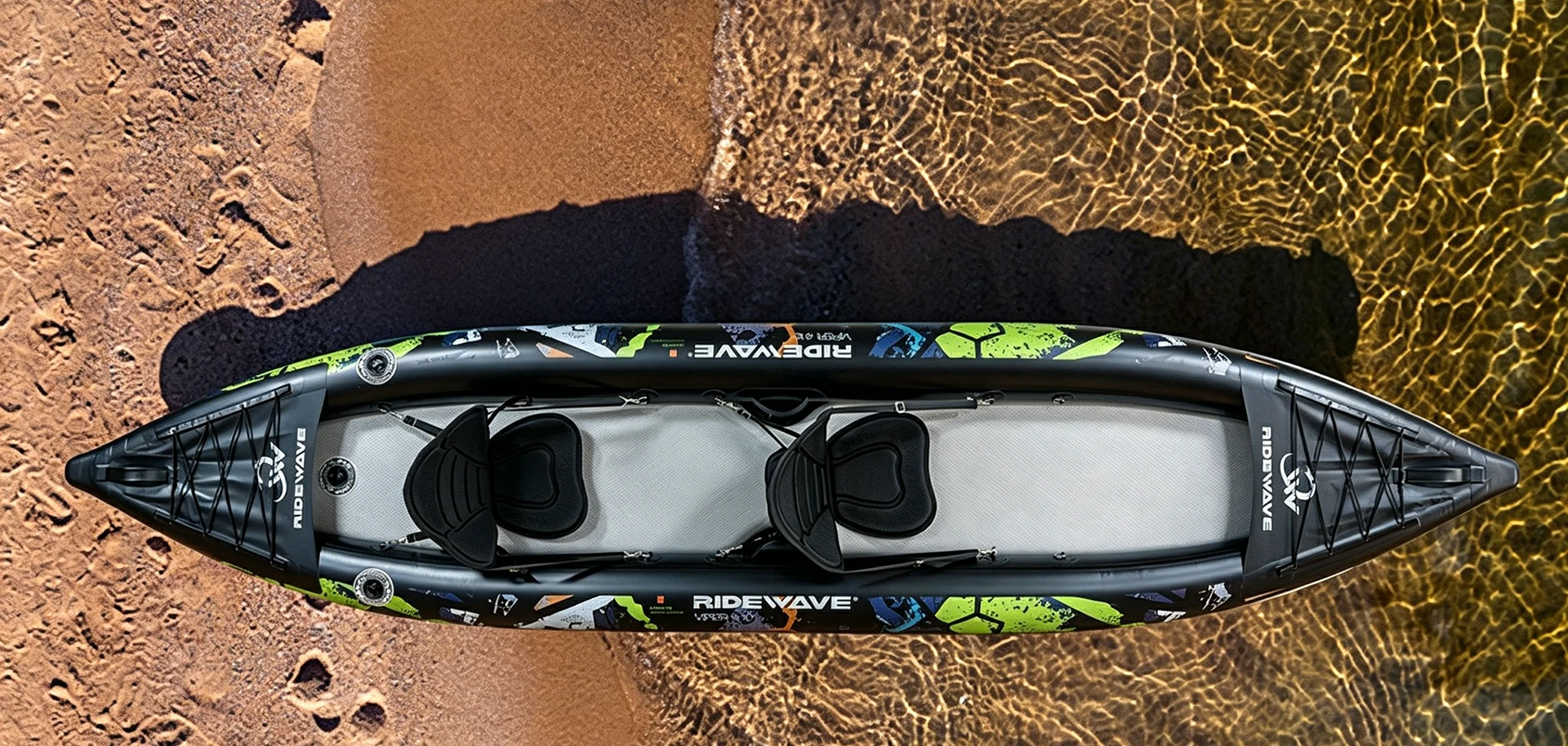
As a premier inflatable kayak manufacturer, RIDEWAVE has monitored this procurement transition firsthand. B2B buyers are no longer asking if they should diversify into the inflatable water sports sector; instead, they are focused on how to source high-performance fleets that mirror the rigidity of hardshells while optimizing logistics. By analyzing the strategic moves of retail giants, this report uncovers the exact commercial drivers behind the inflatable kayak boom and provides actionable sourcing frameworks for international brands, distributors, and bulk buyers aiming to dominate the upcoming outdoor seasons.
How Do Inflatable Kayaks Optimize Retail Logistics and Floor-Space Efficiency for Distributors?
Global supply chains face continuous pressure from fluctuating freight rates and rising industrial real estate costs. For international distributors and sports equipment wholesalers, the physical dimensions of a product directly dictate its ultimate profitability. This is precisely why big-box retailers are aggressively restructuring their watersports purchase orders. Traditional rigid fiberglass or plastic hardshell watercraft are notoriously inefficient to transport and store; they consume excessive cubic footage in shipping containers, rack up exorbitant dead-space fees in warehouses, and demand massive retail floor space that yields low sales per square foot.
Transitioning to a commercial inventory dominated by the best inflatable kayak designs instantly eliminates these logistical bottlenecks. Because high-end inflatable models can be deflated and compactly packed into standardized, stackable shipping cartons, they allow B2B buyers to maximize container utilization rates. An average 40-foot high-cube (HC) ocean container that can only hold roughly 50 to 60 rigid hardshells can comfortably accommodate hundreds of premium deflated units. This massive volumetric advantage cuts per-unit landed costs by more than 60%, drastically expanding a distributor's net profit margins before the product even hits the retail shelf.
| Efficiency Metrics & Logistics Variables | Traditional Rigid Hardshell Craft | Advanced Drop-Stitch Inflatable System |
| 40ft HC Container Loading Capacity | 50 – 60 Assembled Units | 450 – 600 Deflated Boxed Units |
| Per-Unit Ocean Freight Allocation | Critically High (Exorbitant Dead-Space) | Optimized Minimum (Maximizes Cube-Utilization) |
| Warehouse Pallet Storage Capacity | 1 – 2 Stacked Units Maximum per Rack | 16 – 20 Standardized Cartons per Pallet |
| Retail Shelf Space Footprint (Square Feet) | 40 – 60 sq. ft. (Requires Specialized Wall Racks) | 4 – 6 sq. ft. (Standard Retail Pallet Display) |
| In-Store SKU Turnover Rate Potential | Low to Moderate (Bulky, Slow Seasonal Movement) | High (Compact, Cross-Expanded Merchandising) |
| Cross-Selling Synergy with Inflatable Gear | Independent (High Sourcing Disconnection) | Perfect Alignment with Inflatable Paddle Board Lines |
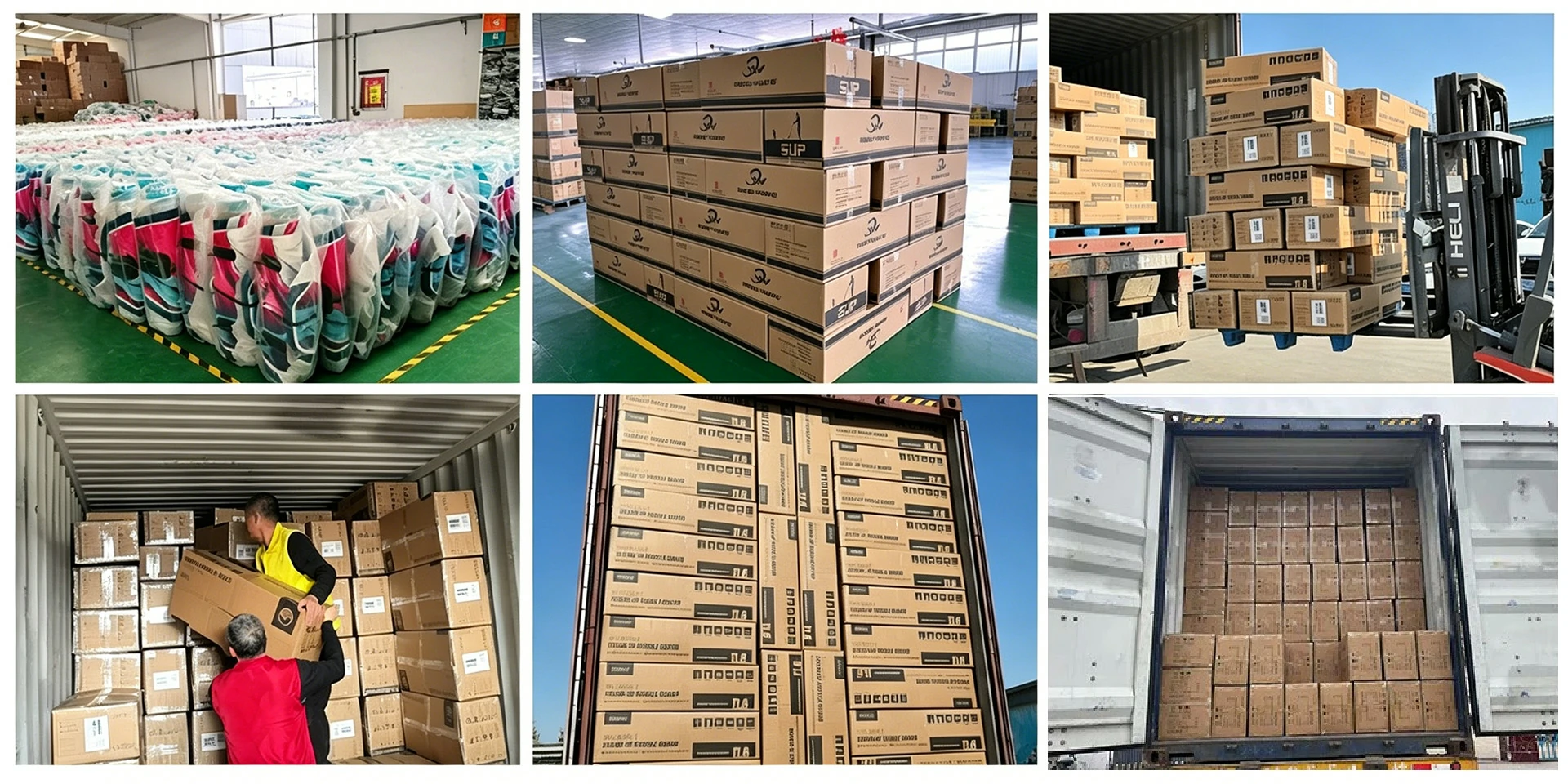
As a technical commercial reference, RIDEWAVE's factory engineering team has specifically optimized this operational pain point. By implementing ultra-dense, multi-layered compression packing protocols for every durable inflatable kayak manufactured, the physical outer carton dimensions are minimized without compromising the structural integrity of the internal PVC layers. This ensures that when regional wholesalers receive bulk shipments, the boxes remain pristine, easy to handle via standard forklift operations, and fully optimized for automated sorting systems in Western distribution centers (3PLs).
Furthermore, this space-saving benefit extends directly onto the brick-and-mortar retail floor. A big-box store or independent outdoor dealer can display a complete range of different SKUs within a single standard aisle footprint. Instead of dedicating an entire exterior wall or ceiling grid to hang one rigid boat, a retailer can stock an entire family of heavy duty inflatable kayak models right next to popular all around SUP boards, unlocking massive cross-selling potential and maximizing impulse-buy revenue from recreational weekend shoppers.
What Global Consumer Trends Are Driving the Exponential Demand for Inflatable Water Sports Gear?
The global outdoor recreation market is experiencing a profound behavioral shift. Consumer demographic data from North America and Western Europe indicates that participation in paddle sports is skyrocketing, yet user preferences have radically turned away from heavy, high-maintenance gear. Modern outdoor enthusiasts-particularly Millennials and Gen Z buyers who now form the backbone of retail consumption-prioritize spontaneity, mobility, and minimalism. For big-box buying groups and regional outdoor brands, understanding these lifestyle shifts is essential to aligning commercial pipeline orders with active market demand.
The primary catalyst behind the compounding sales of the inflatable water sports gear sector is the exponential growth of the "Trunk Economy" and the massive surge in active RV (Recreational Vehicle) lifestyles across the United States, Canada, and Australia. Traditional rigid watercraft impose significant physical and financial barriers on consumers; they require specialized vehicular roof rack systems, dedicated storage garages, and intense physical lifting to transport from home to water. In contrast, a high-performance inflatable fishing kayak or family-sized touring model packs completely into a standard travel backpack. It easily fits inside the trunk of a compact electric vehicle (EV) or an RV storage bay, transforming water sports from a heavily planned weekend logistics operation into an effortless, on-the-go lifestyle choice.
🚙 Consumer Demographics & Lifestyle Synergy Matrix
| Macro Consumer Lifestyle Trends | Traditional Rigid Vessel Obstacles | Inflatable Tech Adaptation & Benefits |
| Urbanization & Compact Living | Impossible to store in high-rise apartments or condos without paying off-site storage fees. | Fits seamlessly into standard bedroom closets, balconies, or utility rooms. |
| The EV & Small Vehicle Boom | Excessive weight and wind resistance on roof racks severely drain electric vehicle battery range. | Stored internally, maintaining vehicle aerodynamics and preserving maximum mileage. |
| Overland & RV Camping Surge | Consumes external rack space needed for overland tents, solar panels, or bike carriers. | Tucks away neatly inside under-bed storage compartments or exterior gear lockers. |
| Solo Adventure Participation | Requires multiple people to lift, load, and launch heavy plastic or rotomolded boats safely. | Lightweight drop-stitch construction allows a single user to transport, inflate, and launch independently. |
This demand for extreme portability has directly altered the purchasing cycles within the wider watercraft industry. Distributors are noticing that customers who previously sourced standard wholesale stand up paddle board units are now heavily cross-purchasing matching inflatable boats to capture a broader consumer age range. While paddleboarding attracts fitness-focused individuals and solo paddlers, the recreational sit on top inflatable kayak segment appeals directly to active families, pet owners, and older demographics who desire the comfort of a stable, seated paddling position without sacrificing the convenience of a compact inflatable setup.
RIDEWAVE has strategically structured its international manufacturing supply chain to support brand owners capitalising on these cross-demographic trends. By blending the core tracking characteristics of a traditional touring hull with advanced, lightweight PVC composite fabrics, RIDEWAVE designs deliver an entry weight that is up to 30% lighter than industry averages, directly matching the consumer demand for easily transportable gear. When retail customers experience an easy to inflate kayak that tracks straight on open water and packs down in under ten minutes, consumer satisfaction spikes, resulting in a dramatic drop in retail return rates-a critical metric that big-box chains monitor relentlessly when evaluating their long-term vendor partnerships.
Which Material Innovations Allow Inflatable Kayaks to Match the Performance of Rigid Hard-Shells?
For decades, professional sports equipment importers and commercial outfitters harbored deep skepticism regarding the structural integrity of inflatable watercraft. The historical perception of inflatable vessels was tied to soft, unstable recreational dinghies that flexed under wave impact, punctured easily on river debris, and lacked the hydrodynamic tracking of solid rotomolded polyethylene or composite fiberglass hulls. However, the modern B2B sourcing sector has been entirely revolutionized by quantum leaps in material science. Today's commercial-grade heavy duty inflatable kayak lines do not merely approximate the rigidity of hardshells-under precise operational pressures, they match them entirely, providing a rock-solid platform that completely shifts consumer expectations.
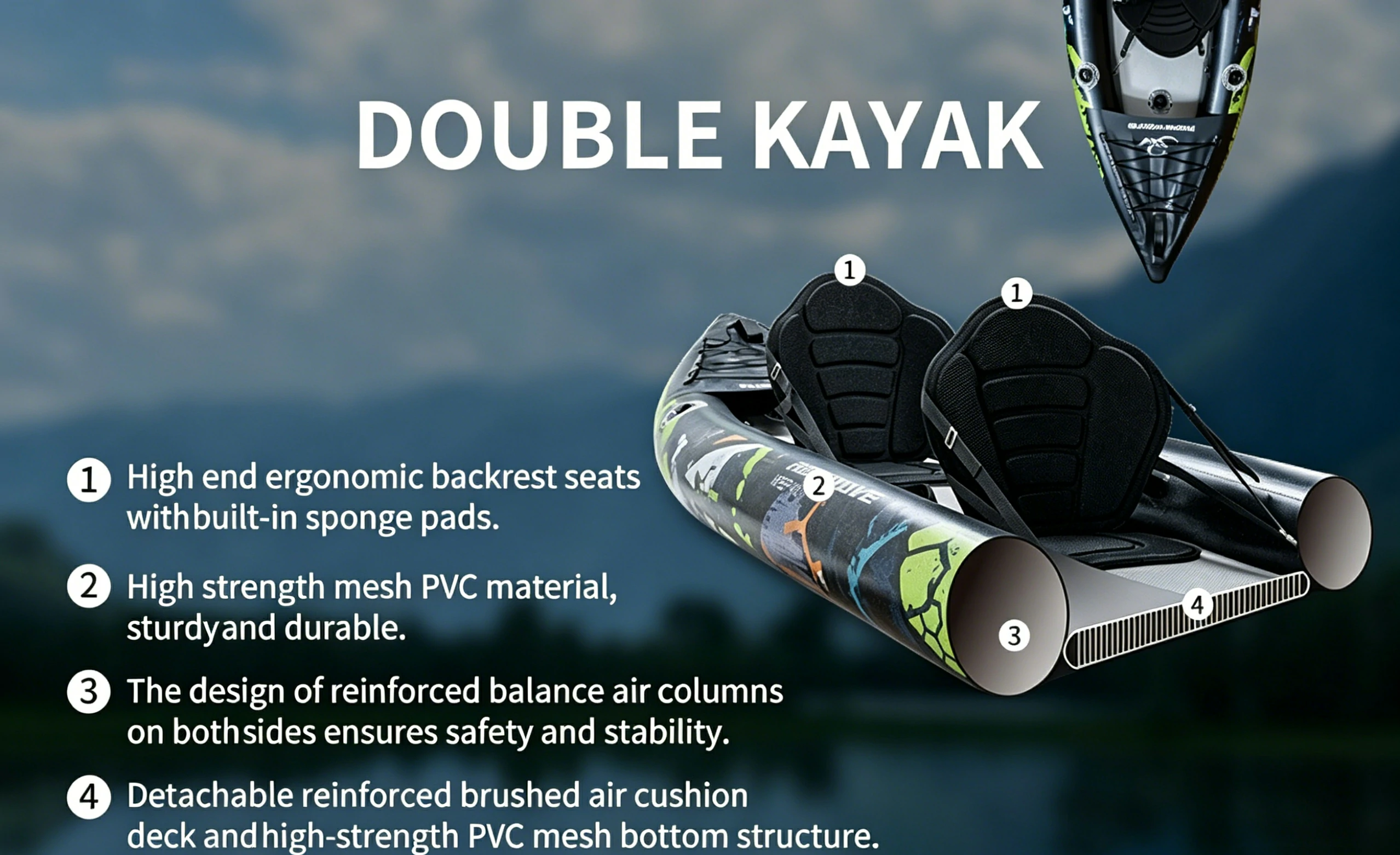
The foundational blueprint behind this high-rigidity revolution is the widespread adoption of advanced, high-density drop-stitch technology. This complex manufacturing method utilizes tens of thousands of premium polyester threads that interconnect the top and bottom internal base fabrics of the air chamber. When a user inflates the watercraft, these internal filaments reach maximum tension, ensuring the hull maintains a perfectly flat, uniform, and deflection-free profile even when subjected to high internal air pressures exceeding 10 to 15 PSI. For regional distributors looking to capture premium market segments, stocking vessels engineered with this advanced internal core is the ultimate prerequisite for ensuring long-term shelf success and brand authority.
| Technical Material Layer | Standard Economy Specifications | RIDEWAVE Commercial Grade Standards |
| Drop-Stitch Filament Density | Low-Density Linear Grid (Prone to local flexing) | High-Density V-Woven Drop-Stitch (Maximum torsional rigidity) |
| Base Exterior Coating | Single-Layer Calendered PVC fabric | Military-Grade Dual-Layer Reinforced 1000D PVC Composite |
| Chamber Seam Technology | Standard Cold Glue / Chemical Adhesives | Precision Automated Thermal Fusion Welding (Heat-Sealed) |
| UV & Abrasion Resistance | Basic Anti-UV Additives (Prone to fading/cracking) | Multi-Layer Coated Polymer Matrix (Saltwater & Oil resistant) |
| Recommended Operational Pressure | 6 – 8 PSI Maximum | 12 – 15+ PSI (Achieves structural rigid hardshell baseline) |
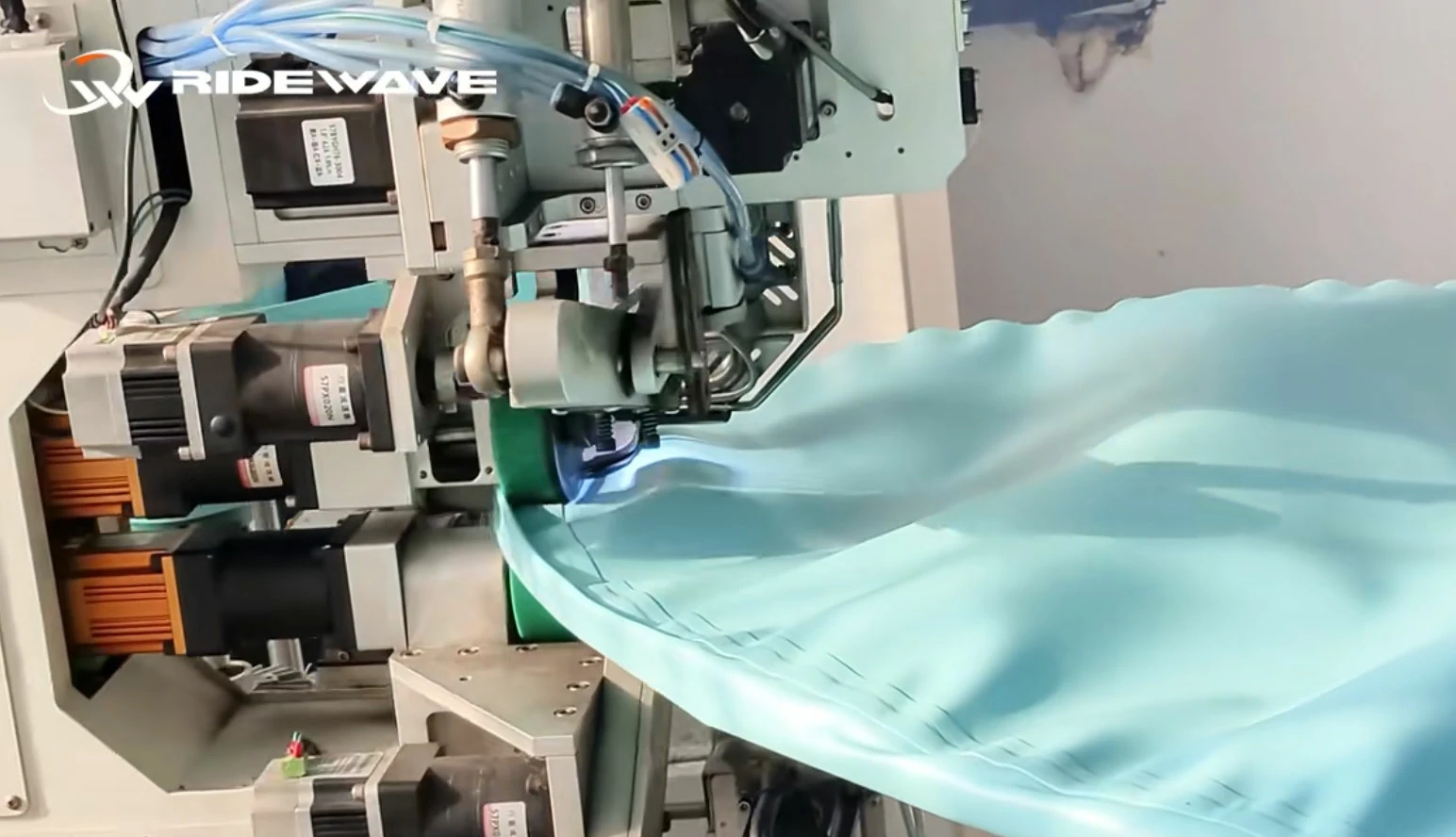
To ensure structural reliability at these elevated internal pressures, structural seam construction has evolved from manual labor into highly automated, industrial-grade engineering. While entry-level factories still rely on manual cold-gluing methods-which inevitably degrade over time due to intense UV exposure, summer heatwaves, and consistent hydro-pressure-leading manufacturers have completely upgraded their production lines. RIDEWAVE, for instance, has integrated automated thermal fusion welding technology into its primary assembly processes. By using precise heat energy to melt and seamlessly merge the overlapping edges of the heavy-duty PVC layers, RIDEWAVE creates an indestructible, molecular-level bond. This elimination of traditional chemical glues prevents seam delamination, a primary driver of historical consumer return rates, and guarantees a lifespan that easily satisfies the strict multi-year warranties demanded by major global retailers.
Furthermore, this advanced structural rigidity directly enhances hydrodynamic tracking. When a commercial distributor imports a fleet of modern drop stitch hull inflatable kayak models, they are delivering a product that features a true V-shaped keel and highly streamlined side rails. This crisp structural profiling allows the boat to cut through choppy lake waters and coastal swells without flexing or losing forward kinetic energy. By bridging the gap between inflatable convenience and hardshell performance, these material innovations provide wholesale buying groups with an unassailable commercial narrative: a premium, bulletproof watercraft that fits in a suitcase, performs like a rigid vessel, and delivers exceptional profit margins.
How Can Outdoor Gear Importers Mitigate Supply Chain Risks and Seasonal Stockouts in 2026?
The global procurement landscape in 2026 demands an entirely higher standard of operational resilience. Industry surveys indicate that volatile maritime freight rates, unexpected transit delays across major shipping lanes, and shifting regional import regulations represent the top operational hazards for international sports gear brands and volume distributors. In the watersports industry, inventory timing is absolute; missing the narrow spring-to-summer consumer buying window due to a delayed factory production queue can instantly destroy a wholesaler's annual balance sheet. Therefore, global big-box buying groups are no longer choosing production partners based solely on the lowest ex-works price-they are heavily prioritizing manufacturers that offer verifiable supply chain stability and proactive risk mitigation.
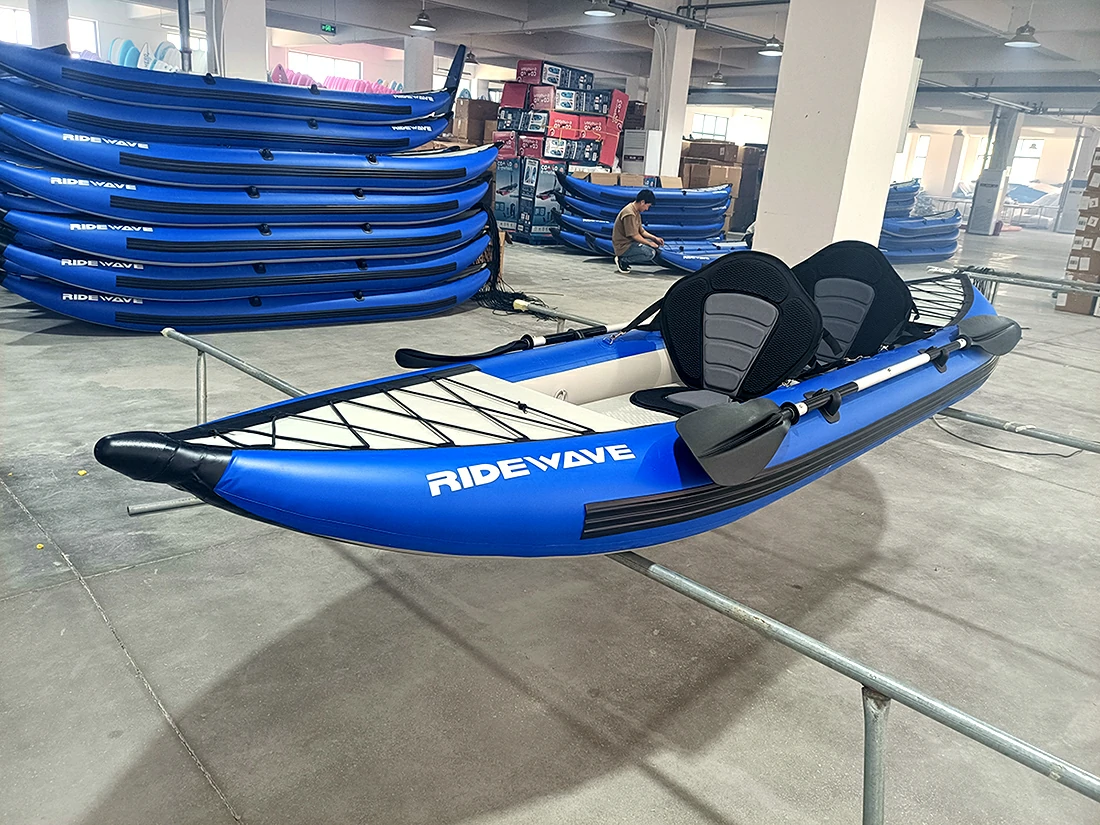
For outdoor gear importers, managing these cyclical fluctuations requires moving away from fragmented, small-scale workshops and partnering directly with an established, vertically integrated inflatable kayak manufacturing hub. Small factories frequently suffer from raw material bottlenecks, local energy constraints, and lack the financial leverage to secure priority container allocations during peak shipping months. When a distributor transitions to a high-capacity tier-one manufacturing pipeline, they gain access to a highly synchronized industrial infrastructure that guarantees consistent lead times, multi-stage quality control, and scalable volume throughput regardless of macroeconomic turbulence.
| Supply Chain Bottlenecks (2026 Realities) | Fragmented Low-Tier Workshop Vulnerabilities | RIDEWAVE Enterprise-Grade Safeguards |
| Raw Material Volatility (PVC & Drop-Stitch) | Spot-market purchasing; prone to sudden price hikes and severe material shortages. | Strategic multi-ton raw material stockpiles; locked-in multi-year material pricing. |
| Peak-Season Lead Time Delay | Unpredictable manufacturing queues; high risk of missing the summer retail window. | Standardized high-volume production lines; predictable on-time delivery guarantees. |
| Quality Control Escapes (Defect Rates) | Basic manual visual checks; high variance across large bulk purchase orders. | Automated 24-hour high-pressure inflation tests; rigorous multi-checkpoint QC protocols. |
| Sourcing Friction (Multi-Category SKU) | Inability to produce diverse paddle lines; requires dealing with multiple disparate vendors. | One-stop unified production for wholesale inflatable sup models and multi-tier kayak designs. |
To directly address these operational pain points, RIDEWAVE has structured its manufacturing infrastructure as a true corporate hedge against supply chain disruption. Recognizing that inventory agility is paramount for Western big-box distributors, RIDEWAVE maintains extensive, strategic stockpiles of military-grade 1000D PVC and high-density woven fabrics. This massive raw material reserve insolates our global B2B clients from sudden upstream commodity price shocks and ensures that high-volume custom inflatable kayak production lines can launch immediately upon order confirmation, maintaining a stable and highly predictable manufacturing cycle even during high-demand seasons.
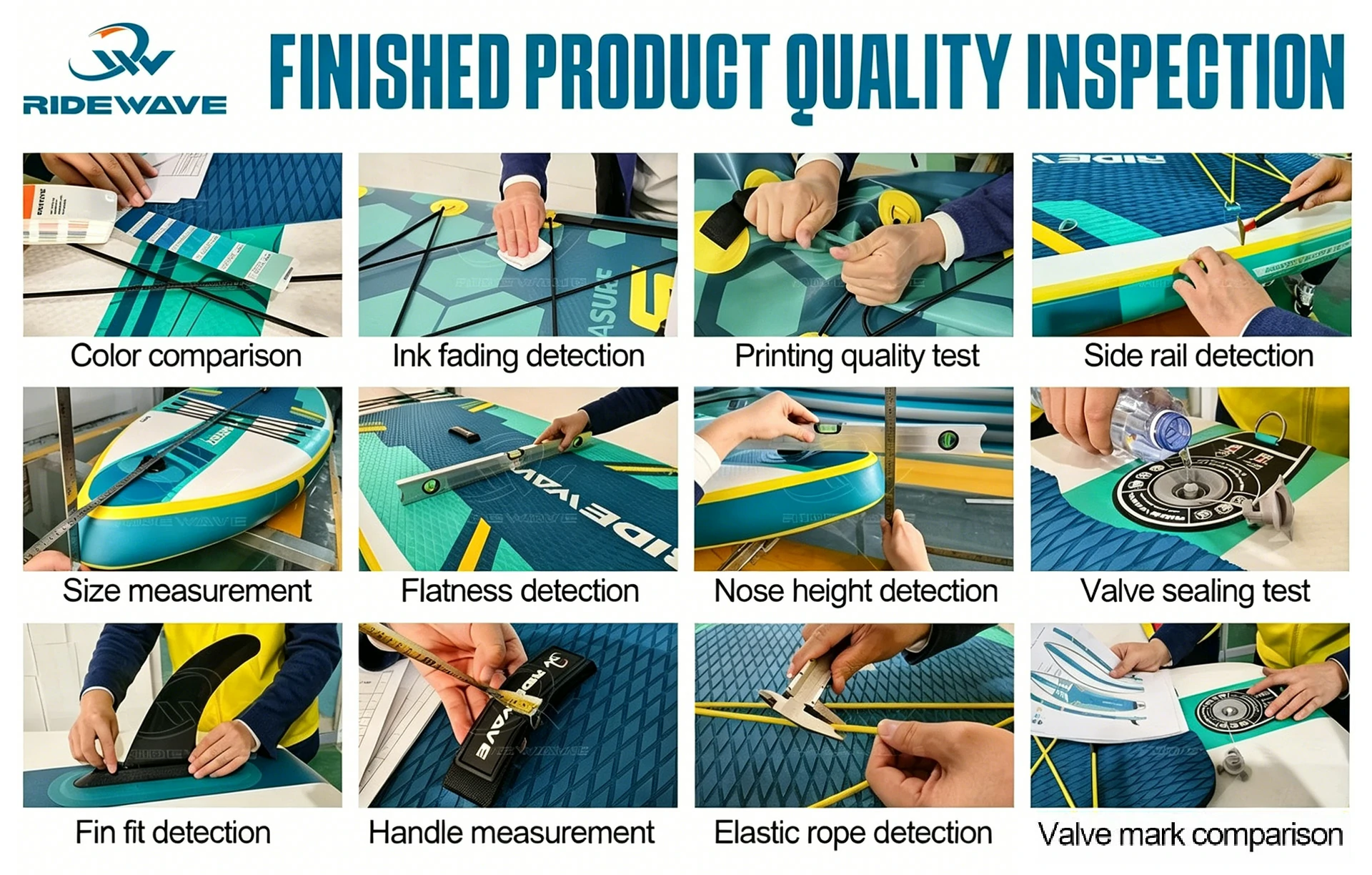
Furthermore, risk mitigation must extend to the final product verification stages to prevent costly international returns. Every single watercraft manufactured within the RIDEWAVE facility undergoes an uncompromising, automated 24-hour high-pressure inflation test and intensive mechanical seam inspections before moving to the high-density compression packaging stage. For sport equipment importers, this extreme dedication to quality assurance eliminates the risk of receiving defective batches at overseas ports-where local rework or return logistics are financially crippling. By providing a transparent, bulletproof manufacturing pipeline, RIDEWAVE empowers global wholesalers to aggressively market their inventory, secure early retail pre-orders, and eliminate the fear of seasonal stockouts.
Why Is Cross-Expansion into Inflatable Kayaks the Most Lucrative Move for Existing Stand-Up Paddleboard (SUP) Brands?
The global standalone paddleboard market is transitioning into a mature, highly saturated lifecycle stage. Over the past several years, an influx of baseline e-commerce vendors and aggressive price-cutting strategies have compressed retail net margins on standard inflatable stand-up paddleboards (iSUPs). For an established inflatable paddleboard supplier or regional water sports distributor, relying exclusively on single-category SKU velocity is no longer sufficient to sustain high profitability. To capture defensive market share and increase average order value (AOV), top-tier brands are executing strategic portfolio diversification-and cross-expanding into advanced inflatable boat designs has emerged as the most financially logical progression.
The primary financial justification for this specific portfolio expansion lies in the near-perfect synergy of supply chain assets and target audiences. A brand already distributing wholesale stand up paddle board inventory possesses an established B2B infrastructure that is up to 85% compatible with inflatable watercraft logistics. The core consumer demographics overlap seamlessly; both products appeal to outdoor recreationists, marine holidaymakers, and multi-activity camping markets. By introducing a matching high-performance 2 person inflatable kayak or touring model, distributors can immediately reactivate their existing retail dealer networks, leverage their current marketing spend, and upsell their active user base without incurring additional customer acquisition costs (CAC).
| Asset & Resource Categories | Existing Inflatable SUP Infrastructure | Inflatable Kayak Cross-Expansion Synergy | Asset Reusability Rate % |
|---|---|---|---|
| Manufacturing Technology | High-pressure drop-stitch cores & heavy PVC coatings. | Identical drop-stitch chambers and composite fabric layers. | 100% Core Technical Overlap |
| Retail Distribution Channels | Marine specialty pro-shops, big-box outdoor aisles, online 3PLs. | Exact same buyers, procurement agents, and physical shelf categories. | 100% Channel Reusability |
| Logistics & Warehousing | Standardized pallet racks and transport cartons. | Identical boxed dimensions; fits into existing fulfillment workflows. | 100% Logistics Integration |
| Consumer Accessories Bundle | High-pressure hand pumps, repair kits, travel backpacks. | Dual-purpose hand pumps, upgraded tech packs, tracking fins. | 90% Component Commonality |
| Wholesale Profit Optimization | Margins compressed due to high single-SKU entry saturation. | Higher retail MSRP and significantly lower competitive market density. | Drastic Net ROI Improvement |
Industry leaders are already hardcoding this cross-merchandising logic into their international product rollouts. A review of premium global design strategies demonstrates a clear industry baseline: leading market operators are transitioning towards unified "hybrid watercraft ecosystems." For instance, prominent legacy houses are actively introducing upgraded multisport bundles-such as high-end touring packages equipped with pre-installed deck D-rings, detachable ergonomic kayak seats, and dual-blade convertible oars. This approach transforms a standard paddle line into a premium inflatable paddle board kayak hybrid, allowing retail partners to command much higher price points and dramatically increasing the profitability per square foot of retail floor space.
RIDEWAVE's advanced OEM/ODM production facility is engineered specifically to facilitate this profitable product crossover for international brand owners. Rather than forcing importers to source from multiple disparate vendors-which fragments purchasing power and creates immense quality control friction-RIDEWAVE provides a unified, one-stop sourcing pipeline. Because our manufacturing lines operate at peak efficiency across both all around SUP and dual-purpose drop stitch inflatable kayak variations, we allow our B2B partners to blend their container shipments with flexible mixed-SKU allocations. This capital-efficient structure allows existing brands to trial new watercraft lines with minimal financial risk, maximize container loading capacity, and capture the massive, high-margin consumer demand driving the modern water sports market.
What Profit Margins and ROI Can Wholesalers Expect from Premium vs. Economy Inflatable Kayaks?
In the commercial sports equipment sector, product passion must always cross-reference with balance sheet realities. When sourcing a container fleet of a new watercraft line, purchasing managers and procurement agents evaluate two primary financial metrics: initial gross margin potential and long-term return on investment (ROI). The expanding wholesale inflatable boat segment generally splits into two distinct operational paradigms: low-margin, high-volume Economy single-layer models, and high-margin, professional-grade Premium drop-stitch variations. Understanding the exact corporate cost allocation and warranty risk profile associated with each grade is critical for B2B buyers seeking to maximize net profitability.
Economy models-typically constructed using thin, single-layer non-reinforced PVC-are designed strictly to satisfy price-sensitive seasonal retail aisles. While these units offer low entry barriers and quick checkout velocities for big-box retailers during summer peaks, their thin construction creates a severe financial headwind: massive post-sale return rates. In Western retail markets, a defective inflatable unit returned by a consumer is rarely repaired; it is written off entirely as a total loss. Conversely, investing procurement capital into a premium drop stitch floor inflatable kayak or professional multi-chamber platform fundamentally shifts the risk-to-reward ratio. High-end build standards allow distributors to command structural premium pricing, tap into passionate specialist user groups (like kayak anglers and multi-day tourers), and virtually eliminate the profit-draining cost of quality (CoQ) escapes.
| Financial Performance Indicators | Economy Single-Layer Vinyl Models | Premium Multi-Layer Drop-Stitch Systems |
| Average Ex-Works Sourcing Cost | Low Entry Point ($45 – $75 USD) | Mid-to-High Strategic Tier ($160 – $280 USD) |
| Target Retail MSRP Range | $120 – $199 USD (Highly commoditized) | $450 – $899+ USD (Value-driven premium) |
| Wholesale Gross Margin Potential % | 20% – 30% (Compressed by market duplication) | 45% – 60% (Protected by technical barriers) |
| Average Global Retail Return Rate | High Risk Hazard (8% – 14% due to seam leaks) | Optimized Security (<0.5% due to thermal bonding) |
| Estimated Net ROI Per Container | Moderate (Fast cash flow, low retention yield) | Exceptional (Compounding brand equity, high yield) |
| Commercial Warranty Liability Period | 90 Days to 1 Year Maximum | 2 to 3-Year Enterprise-Grade Guarantee |
Navigating these financial metrics requires sourcing from an infrastructure that balances advanced technical standards with scalable production economies. A professional inflatable kayak factory must be capable of absorbing raw material cost pressures while outputting premium-tier builds that command top-dollar retail prices. When a distributor sources commercial fleets through a highly optimized production pipeline, the financial return profile stabilizes. Tier-one factories utilize automated material nesting and precision electronic welding systems that drastically lower manufacturing scrap rates, allowing them to pass those back-end operational savings directly to international buyers in the form of highly competitive B2B tiered pricing.
RIDEWAVE has structured its entire corporate value proposition around maximizing this net ROI for global wholesalers. By rejecting cheap, single-layer construction and focusing exclusively on reinforced multi-layer composites, RIDEWAVE products allow regional brands to confidently market a premium durable inflatable kayak that justifies a high retail MSRP. Because our automated thermal welding production line achieves an industry-leading defect rate of less than 0.5% in global distribution channels, RIDEWAVE clients completely bypass the logistical nightmare of processing seasonal retail returns and managing warranty claims. This structural reliability ensures that the gross margins projected on your procurement spreadsheet translate directly into realized, compounding net profits at the close of the outdoor season.
How Should B2B Buyers Choose Between OEM Customization and Distributing Established Manufacturer Brands?
When entering or expanding presence within the high-growth watercraft market, corporate procurement teams face a critical strategic fork in the road: Should they leverage a manufacturer's infrastructure for full OEM private label customization, or should they contract as an authorized distributor of an established manufacturer brand? This choice impacts everything from initial capital allocation and time-to-market speed to long-term brand equity development. For big-box buying groups, multi-store outdoor chains, and regional sports equipment importers, the decision requires a careful assessment of internal marketing capabilities, engineering resources, and localized competitive landscapes.
The custom OEM route represents the ultimate vehicle for achieving absolute market differentiation and building proprietary enterprise value. By collaborating with a technologically advanced inflatable kayak supplier, brand owners can dictate exact product specifications, engineer unique aesthetics aligned with regional tastes, and build a protective competitive moat around their pricing architecture. Custom manufacturing allows an importer to completely avoid the "race to the bottom" price comparison traps commonly found on open e-commerce platforms. However, executing a successful private label campaign demands a sophisticated understanding of consumer product design, a willingness to absorb higher initial minimum order quantities (MOQs), and a dedicated timeline for regulatory compliance testing.
| Sourcing Performance Matrix | Full Private Label OEM Customization | Factory Brand Distribution Model |
| Time-to-Market Velocity | Extended (Required for 3D design, tooling, & prototyping) | Immediate (Ready-to-ship inventory with pre-tested SKUs) |
| Minimum Order Quantity (MOQ) | Higher Sourcing Threshold (Required for custom runs) | Highly Flexible MOQ (Optimized for rapid testing) |
| Pricing Autonomy & Margins | Absolute control over MSRP; zero local price scraping | Fixed wholesale price structures tied to brand mapping |
| Marketing Infrastructure Burden | 100% Internal Creation (Requires independent digital asset design) | Shared Asset Library (Access to factory photography & 3D renders) |
| Synergy with Inflatable Gear | Perfectly blends with custom inflatable paddle board lines | Co-branded alignment with existing marine ecosystems |
Conversely, entering the market as an authorized distributor of an established manufacturer brand offers unparalleled speed, flexibility, and operational security. For regional wholesalers or multi-sport retailers wanting to test market demand without heavy capital risk, distributing a recognized factory brand eliminates product development bottlenecks entirely. Buyers gain instant access to field-tested, certified watercraft portfolios, alongside complete packages of high-end marketing collateral, technical specification sheets, and international safety certifications (such as CE, ISO, and REACH compliance). This drastically shortens the sales cycle, allowing commercial operators to capture emerging seasonal waves immediately while preserving corporate liquidity.
Recognizing that international buyers require distinct solutions based on their corporate lifecycles, RIDEWAVE has structured a highly responsive, dual-track B2B partnership framework. For global brand owners seeking custom private label solutions, RIDEWAVE provides a world-class industrial design team capable of rendering advanced 3D models and optimizing complex drop-stitch internal structures to create specialized customized inflatable kayak fleets that match proprietary brand guidelines perfectly. Simultaneously, for distributors seeking immediate, high-margin inventory, the RIDEWAVE factory brand program offers immediate access to a comprehensive, ready-to-ship ecosystem of premier touring inflatable kayak models and matching water sports gear. Backed by flexible tiered MOQs and an extensive library of professional marketing media, RIDEWAVE ensures that whether your commercial strategy dictates bespoke engineering or fast-turn brand distribution, your supply chain remains optimized, secure, and highly profitable.
How Can We Seize the High-Margin Inflatable Kayak Market Window in 2026 and Beyond?
The reallocation of retail inventory budgets toward advanced inflatable vessels is not a temporary seasonal spike; it represents a permanent structural evolution in the global outdoor recreation industry. As big-box chains, international distributors, and regional brand owners look toward the upcoming sales cycles, the commercial metrics remain unassailable. Transitioning a procurement pipeline to prioritize high-performance, drop-stitch vessels is the single most efficient mechanism available to combat rising logistics overheads, maximize retail floor-space margins, and directly capture the high-growth, mobility-driven modern consumer demographic.
For sports equipment importers and existing paddleboard brands, the window to secure early-mover regional advantages and lock in high-margin supply contracts is right now. Choosing the correct industrial partner is the critical pivot that separates successful market expansion from costly operational friction. By aligning your business with a vertically integrated manufacturer that enforces rigorous quality standards, maintains expansive raw material reserves, and provides a highly flexible OEM/ODM framework, your business secures more than just inventory-you build a highly resilient, crisis-proof supply chain built for compounding long-term growth.
The reallocation of retail inventory budgets toward advanced inflatable vessels is not a temporary seasonal spike; it represents a permanent structural evolution in the global outdoor recreation industry. As big-box chains, international distributors, and regional brand owners look toward the upcoming sales cycles, the commercial metrics remain unassailable. Transitioning a procurement pipeline to prioritize high-performance, drop-stitch vessels is the single most efficient mechanism available to combat rising logistics overheads, maximize retail floor-space margins, and directly capture the high-growth, mobility-driven modern consumer demographic.
For sports equipment importers and existing paddleboard brands, the window to secure early-mover regional advantages and lock in high-margin supply contracts is right now. Choosing the correct industrial partner is the critical pivot that separates successful market expansion from costly operational friction. By aligning your business with a vertically integrated manufacturer that enforces rigorous quality standards, maintains expansive raw material reserves, and provides a highly flexible OEM/ODM framework, your business secures more than just inventory-you build a highly resilient, crisis-proof supply chain built for compounding long-term growth.
Related Articles
The Evolution Of Portable Kayak Design Over The Last Decade