


For wholesale distributors, sports goods resellers and emerging paddle board brands sourcing inflatable SUP from Asia to Spain and broader EU markets, rising freight rates, unpredictable port congestion and shifting customs rules have eaten directly into profit margins over the past two years. Many B2B buyers find themselves stuck between two bad choices: rush small shipments by air at premium cost, or book sea freight and risk long lead times that leave retail shelves empty during peak summer sales.
This SUP B2B sourcing guide breaks down practical, field-tested tactics to cut Spain import logistics costs and compress lead times for bulk inflatable stand up paddle board orders. We do not rely on generic logistics theory; the strategies here come from years of working with European wholesale partners, including distributors importing commercial grade inflatable SUP for rental fleets, retail chains and outdoor sports retailers.
We will cover shipping mode comparisons, customs compliance checklists, packaging optimization tricks and real supply chain adjustments that your business can implement immediately. Along the way, we share a live case study from one of RIDEWAVE's long-term Spanish distribution partners, showing how small tweaks to order planning and container loading delivered measurable savings without compromising SUP product quality or safety certifications.
If you are expanding your outdoor product catalog and evaluating new inflatable SUP manufacturers, this guide answers the most common sourcing pain points before you sign a bulk contract. We will also reference our deeper manufacturing guides for buyers who want to dig deeper into custom development and factory vetting. Read our full breakdown: How Custom Paddle Boards Are Made: From Design To Production to understand how early-stage design choices impact shipping volume and landed cost.
Why Are Spain SUP Import Logistics Costs Rising & Lead Times Delaying in 2026?
The short answer: inflatable SUP import costs to Spain are climbing because of three compounding factors - ongoing Red Sea rerouting surcharges, EU carbon border adjustment mechanisms affecting shipping emissions, and post-pandemic container imbalances that still favor transpacific routes over Asia-Mediterranean lanes. For B2B buyers sourcing wholesale SUP inventory, these pressures have pushed landed costs up by 12–18% compared to 2024 baseline rates, while average lead times have stretched from 35 days to 45–55 days door-to-door.
Let's break down what's actually happening on the ground, based on what we see at RIDEWAVE when coordinating shipments for our European distribution partners.

What Global Logistics Trends Are Driving SUP Shipping Cost Inflation?
Several structural shifts are hitting the inflatable stand up paddle board category harder than other outdoor goods, because SUPs are bulky but lightweight - volume weight, not actual weight, determines freight cost.
Red Sea rerouting surcharges remain embedded in base rates. Even after partial normalization, most carriers still apply a $1,200–$2,500 per 40ft container "war risk" or "rerouting" fee on Asia-Spain lanes. For a full container of drop stitch SUP boards, this adds roughly $3–5 per unit in logistics cost alone.
EU ETS expansion to maritime shipping started phasing in from 2024. By 2026, shipping lines pass through carbon allowance costs directly to shippers. Bulk heavy duty inflatable paddle board orders now carry an environmental surcharge that didn't exist two years ago.
Port congestion at Valencia and Algeciras - Spain's two main container gateways - still adds 5–10 days of dwell time during peak season (March–June). This isn't a China problem; it's a Spain-side bottleneck that buyers often overlook when planning inventory.
Labor agreements and port strikes across Southern Europe continue to create unpredictable delays. A 48-hour strike at Algeciras in 2025 delayed more than 40 vessels, and distributors who didn't build buffer stock lost their early summer sales window.
How Does This Hit B2B SUP Buyers Specifically?
For distributors, rental operators and brand owners, the real impact isn't just the freight line item. It cascades into three cost traps that erode margins:
Emergency air freight premiums - when a shipment misses the spring window, rushing a small batch by air can cost 5–7x more than sea freight per unit. Many SUP wholesale buyers end up absorbing this to avoid stockouts.
Cash flow tied up in transit - extra 10–15 days at sea means inventory is paid for but not selling. For a 40ft container of commercial grade inflatable SUP units worth $60,000–$90,000, the working capital cost of extended lead times is real.
Competitive disadvantage - when your competitors have stock on shelves in March and yours arrives in May, you lose the pre-season buyer who only shops once.
At RIDEWAVE, we've watched a Spanish partner watch this exact scenario play out in 2024, and the solution wasn't simply "find cheaper freight." It required rethinking packaging volume, order timing, and which shipping mode matched each SKU. We'll walk through that case later in this guide.

What 2026 Global Logistics & European Trade Trends Impact Spain SUP Imports?
The simple answer: 2026 trade and logistics trends reshaping inflatable SUP sourcing to Spain center on carbon regulation, regional carrier capacity shifts, revised EU product compliance rules, and redefined peak-season inventory cycles. These trends do not only affect freight bills; they change how B2B buyers plan bulk SUP order timelines, packaging specifications and supplier selection for inflatable stand up paddle board wholesale lines.
EU Maritime ETS: How Carbon Rules Add Hidden Costs to SUP Shipments
The EU Emissions Trading System for shipping is fully phased in during 2026, and carriers pass carbon allowance charges directly onto importers. Since drop stitch SUP shipments are volume-heavy, the per-container carbon fee hits inflatable paddle boards harder than dense outdoor goods.
Carriers calculate emissions based on total container capacity, not the actual cargo weight. A 40HQ filled with compressed wholesale inflatable SUP will still incur full container ETS fees, even when the total cargo weight is low.
Spanish customs and freight forwarders now list ETS surcharges as a separate line item on landing costs. Many B2B buyers previously overlooked this expense when calculating landed margins for their commercial grade inflatable SUP catalog.
Planning tip: Lock in long-term freight contracts early with carriers that offer fixed ETS pass-through terms. RIDEWAVE helps its European wholesale partners pre-estimate these carbon charges at the quotation stage to avoid unexpected budget overruns.
01
Red Sea & Mediterranean Shipping Capacity Shifts
Vessel rerouting around the Cape of Good Hope remains a baseline cost factor for Asia–Spain lanes in 2026, though spot rates fluctuate week by week.
Longer sailing times reduce total available vessel capacity into Mediterranean ports, creating tighter cabin availability between February and May, the core pre-season window for SUP wholesale stock.
Alternate transshipment hubs such as Malta and Tunisia are seeing higher volumes, which introduces extra handling risks for packaged inflatable SUP units. Rough transshipment handling can damage board bags and valves if packaging is not reinforced.
Buyers relying solely on spot market bookings face sudden rate spikes and rolling vessel delays. Contracted space is more stable, but requires committing to order volumes months ahead.
02
Updated EU Product Compliance Trends for Imported Inflatable SUP
Trade trends are not limited to shipping; product compliance changes in the EU create import hold risks at Spanish ports.
Updated REACH and safety standard checks for PVC materials and valve components are enforced more strictly at Valencia and Algeciras. Non-compliant inflatable stand up paddle board shipments can be detained, generating costly storage fees and missed sales seasons.
Spanish customs now randomly audit batch test reports for large wholesale consignments. Suppliers that cannot provide full certification documentation will cause shipment stoppages.
This is one reason many distributors work with manufacturers that pre-complete required testing before production. 10 Questions Every B2B Buyer Should Ask Before Placing An Inflatable SUP Factory Order covers certification and documentation checks you should confirm before placing your bulk SUP order.
03
Shifting Peak Demand Cycles for European SUP Retail
Traditional summer-only demand for paddle boards is evolving, creating new inventory planning challenges.
Pre-sales now start as early as late January in Spain, pushing order deadlines forward. Distributors that used to place inflatable SUP orders in December now need production confirmed by October or November of the prior year.
Off-season small-batch restocks are growing as retailers offer autumn lake and coastal paddle experiences. This creates demand for mixed-container shipments combining full-size boards, kids SUP and accessory packs.
Mixed SKU containers require careful factory packing design. Poor loading wastes container space and raises per-unit logistics cost. RIDEWAVE's packing engineering team often optimizes mixed-SKU loads for partners to maximize container utilization.
Internal link suggestion for this section: If you want to design board lines optimized for EU market demand, How To Design A Paddle Board That Sells explains how sizing, accessory bundles and material choices impact both retail sell-through and import logistics.
04
How Do Different Shipping Modes Compare for Inflatable SUP Shipments to Spain, EU, US, AU & CA?
The bottom line: there is no single "best" shipping mode for inflatable SUP wholesale orders. The right choice depends on your order volume, SKU mix, inventory urgency and target market. For most Spanish and EU distributors, a blended strategy - bulk FCL for core SKUs plus targeted air freight for fast-movers - delivers the best balance of cost and lead time. Below is a practical comparison we use with RIDEWAVE's global B2B partners.
How to read this table: For a 40HQ container of compressed wholesale inflatable SUP units, FCL usually wins on unit cost once you reach around 300+ boards. Below that threshold, LCL may look cheaper on paper, but volume-weight billing often erodes the savings. Rail sits in the middle - slightly pricier per container than sea, but cuts 10–15 days off lead time. Air freight is a tool, not a strategy: use it for top-selling SKUs that are about to go out of stock, not as your default shipping method.
FCL Sea Freight: The Workhorse for SUP Wholesale
Full-container loading remains the default for distributors placing bulk SUP order for the spring selling season. A single 40HQ container can hold roughly 600–800 compressed inflatable stand up paddle board units, depending on board size and accessory packing.
Cost efficiency improves with volume. Once your order hits 300+ units, per-unit freight drops sharply. RIDEWAVE's packing team designs container-loading plans that maximize cubic utilization - typically hitting 90–95% fill rate on 40HQ containers.
Stability beats cheap spot rates. For peak-season shipments (February–May), booking contracted space 60–90 days ahead avoids the "rolling" problem where your container gets bumped to the next vessel.
Best for core, proven SKUs. FCL makes sense for your top 3–5 best-selling board models that you know will sell. It is less suitable for testing new designs.
01
LCL Sea Freight: Flexible but Easy to Overpay
Less-than-container load works for smaller orders or when you want to test a new SUP product line before committing to a full container. However, LCL pricing trips up many new importers.
Volume weight is the enemy. SUPs are light but bulky. Freight forwarders bill by CBM (cubic meter), not actual weight. A shipment of 150 drop stitch SUP boards can cost more in LCL than you expect because the total volume dwarfs the weight.
Consolidation matters. Working with a factory that already consolidates multiple buyer shipments into one container reduces your per-CBM cost. This is a quiet advantage of partnering with an established inflatable SUP manufacturer - they have steady outbound volume.
Watch for destination fees. LCL consignees often face higher handling charges at Spanish ports than FCL, because the cargo needs to be devanned and sorted.
02
China–Europe Rail: The Middle Option Most Buyers Ignore
Rail freight through Central Asia to Spain (via the Madrid terminal) is underused by SUP distributors, but it fills a real gap between sea and air.
Speed vs. cost balance. At 18–24 days to Madrid, rail is roughly half the sea transit time, at about 60–70% of air freight cost per CBM.
Less weather and port congestion impact. Rail schedules are more predictable than sea during Red Sea disruptions or Mediterranean port strikes.
Limitations. Rail coverage in Spain is concentrated in Madrid; getting cargo to coastal cities like Barcelona, Valencia or Málaga requires trucking on the final leg. Confirm the last-mile cost before assuming rail is cheaper.
03
Air Freight: Strategic, Not Default
Air freight should be reserved for specific situations where speed justifies the premium.
Use it for: Emergency restocks of a best-selling SKU before a major retail promotion; small trial batches of a new design for trade shows or influencer seeding.
Optimize volume. Compressed SUP packaging dramatically reduces air freight cost. RIDEWAVE offers a "travel pack" option that compresses each board to nearly half its standard rolled size, cutting volume weight for air shipments.
Never use it for: Routine replenishment. If you find yourself air-freighting every quarter, your inventory planning or supplier lead times need fixing, not your shipping mode.
04
How to Match Shipping Mode to Your Sourcing Stage
Different B2B buyers need different strategies depending on where they are in their product lifecycle:
New brand / first import order: Start with LCL or rail for 100–200 units. You validate sell-through before committing to a full container. If you are still designing your line, How To Design A Paddle Board That Sells covers how product choices affect shipping feasibility.
Established distributor / proven SKUs: FCL for core models, mixed with air or rail for seasonal top-ups. Build a rolling 6-month forecast with your supplier.
Rental fleet operator: FCL works well - rental commercial grade inflatable SUP orders are standardized, volume-heavy and non-seasonal in coastal tourist hubs.
Brand expanding to new market (e.g. from Spain to France or Germany): Rail or LCL first, to test regional demand before allocating full containers.
How to Cut Spain Import Logistics Costs for Inflatable SUP Bulk Orders Without Sacrificing Quality?
The straightforward answer: you can lower landed logistics costs for inflatable SUP shipments to Spain by optimizing packaging density, improving container loading, consolidating orders, selecting suitable Incoterms, and planning shipments around seasonal freight cycles. None of these tactics require downgrading drop stitch SUP material thickness, valve quality or safety certifications. RIDEWAVE has helped dozens of European wholesalers apply these adjustments and cut per-unit logistics expense by 8–16%, while maintaining full product quality and EU compliance.

Optimize Compressed Packaging to Reduce Volumetric Weight
Volumetric weight is the single largest cost driver for bulky, lightweight inflatable stand up paddle board cargo. Many B2B buyers overlook that packaging design is decided at the factory stage, not at the freight forwarding step.
Use professional vacuum compression. Standard rolled SUPs waste substantial carton space. RIDEWAVE's factory compression workflow shrinks each wholesale inflatable SUP into smaller, stackable cartons without stretching or damaging the PVC drop stitch material. This directly reduces CBM per unit and lowers both sea and air freight charges.
Standardize carton dimensions. Uniform box sizes simplify container stacking and eliminate empty void space. Avoid custom odd-sized packaging unless required for premium retail presentation.
Separate accessories wisely. Paddles, leashes, pumps and fins can be packed in shared bulk cartons rather than individually boxed with every board. This works well for distributors who repack accessories locally in Spain, and it cuts total shipment volume noticeably.
Quality guardrail: Always test compressed boards for air retention after decompression. A poor compression process can slowly weaken seams, so reliable inflatable SUP manufacturer will complete leak testing after unpacking samples before mass packing.
Maximize Container Fill Rate for FCL Bulk SUP Shipments
A 40HQ container charges nearly the same base freight whether it is 65% full or 95% full. Maximizing container utilization is one of the highest ROI tactics for bulk SUP order buyers.
Mixed SKU container loading. Pair large all-around commercial grade inflatable SUP boards with smaller youth SUP and accessory cartons to fill gaps. RIDEWAVE's packaging team creates custom loading plans before production starts, calculating exact unit counts and stacking sequences.
Avoid overloading and pallet overhang. Pallet overhang wastes container space and increases damage risk. For Spain destination, use Euro pallet dimensions compatible with Valencia and Algeciras port handling.
Compare container types carefully. 40HQ is almost always preferred for SUP wholesale; a 40HQ costs roughly 50–60% more than a 20GP but delivers double the usable volume.


Consolidate Shipments & Align Order Timelines to Avoid Peak Surcharges
Seasonal freight spikes and multiple split shipments erode margins quickly for SUP wholesale distributors.
Merge small restock orders into one consolidated shipment. Two half-full containers cost more than one fully loaded container. If you import multiple SKUs, schedule production to finish at the same time for combined loading.
Shift ordering to off-peak windows. February–May is peak pre-season shipping for European paddle sports. Book production and sea freight from July to November, when base rates and Red Sea related surcharges are often lower. This strategy also reduces competition for limited container space.
Negotiate contracted freight volume. If you place recurring inflatable SUP orders, commit annual volume with your forwarder to secure fixed rates and avoid spot-market price volatility.

Select the Right Incoterms & Manage Hidden Destination Fees
Many Spanish importers lose savings by picking the wrong trade terms without comparing total landed cost.
FOB is usually better for experienced buyers. Under FOB, you control freight selection and can shop multiple carrier quotes. CIF often includes freight markup from suppliers, and you still bear destination risks.
Audit all destination surcharges upfront. Spanish ports apply THC, documentation, security and storage fees. Ask your freight forwarder to provide a full breakdown before confirming booking. Demurrage and detention fees can grow rapidly if documents arrive late, so pre-submit all certification paperwork ahead of vessel arrival.
Bonded warehousing option for resellers. Distributors re-selling across the EU can store inflatable stand up paddle board inventory in Spanish bonded warehouses, deferring VAT and duty until goods are released for sale. This improves cash flow for large bulk SUP order buyers.
Pre-Validate Compliance to Prevent Costly Customs Hold
Customs detention is one of the most expensive hidden logistics costs for SUP imports into Spain. Delays create port storage fees and missed sales windows, even if the product itself is high quality.
Confirm correct HS tariff code classification for inflatable SUP before shipment. Misclassification triggers fines and extra inspections.
Prepare complete REACH, material test reports and batch certification documents. RIDEWAVE pre-audits these files for European partners before loading, reducing inspection risk at Spanish ports.
Avoid undervaluation. Under-declaring goods value to cut duty is illegal and may lead to penalties, cargo seizure or repeated customs audits on future shipments. Optimize cost legally through packaging and freight planning only.
Quick Quality Checklist When Cutting Logistics Costs
Do not compromise product integrity while optimizing shipment cost. Keep these rules in place:
Drop stitch fabric tensile strength and seam welding standards remain unchanged.
Each board still undergoes air leak testing for 24 hours after production.
Reinforced valve and rail protection remains intact inside compressed cartons.
Carton stacking pressure limits are marked and followed during loading.
Full batch certification for EU market stays available for every inflatable SUP shipment.
What Common Shipment Damage Risks Exist for Inflatable SUP Imported to Spain & How to Prevent Them?
The core takeaway: inflatable SUP boards suffer specific damage risks during ocean transit, transshipment and port handling. Most issues are not factory defects but packaging and loading failures. With targeted protective measures, B2B buyers can reduce cargo damage rates below 1% for bulk SUP order shipments to Spain, without adding excessive packaging weight or volume. RIDEWAVE has tracked thousands of Europe-bound shipments and identified four most frequent damage types for drop stitch SUP.
Valves and board rails are the most vulnerable parts during long sea shipping. Rough container friction and pallet shifting can scratch PVC layers or crack valve bases.
Use reinforced corner protectors on each rolled inflatable stand up paddle board. Hard plastic or thick foam guards shield rail edges during stacking.
Wrap every board with thick PE protective film before carton packing, to prevent rubbing between separate boards inside one box.
Fix valve caps tightly and add extra foam padding around valve recesses. Even small valve cracks lead to batch returns and brand complaints for commercial grade inflatable SUP used in rental fleets.
Inspection tip: Ask your supplier to take packing photos before container sealing. Photos serve as proof if damage appears after arrival at Valencia or Algeciras.
Carton Collapse from Stacking Pressure
40HQ container stacking creates heavy vertical pressure on bottom cartons. Thin cardboard will deform and squeeze rolled SUPs.
Select double-wall corrugated cartons for wholesale inflatable SUP bulk shipments. Single-wall boxes easily crush during long transit.
Set stacking height limits clearly on every carton. Do not stack more than 8 cartons vertically on one pallet.
Avoid over-compression. Over-vacuumed boards can permanently crease drop stitch fabric under heavy stack pressure. RIDEWAVE adjusts compression strength according to shipping mode, sea freight uses milder compression compared with air freight.
Water & Humidity Damage During Sea Voyage
Condensation inside containers (container rain) is often overlooked by SUP importers. Moisture can damage deck pad adhesive, printed graphics and weaken PVC layers.
Add desiccant moisture absorber bags inside each carton, especially for long Asia-Spain sea routes.
Use waterproof inner polybags for every rolled inflatable SUP. Even small water ingress can fade surface printing.
Request factory to avoid loading on rainy or high-humidity days. Wet cartons lose rigidity quickly and increase mold risk.
Rough Transshipment Handling at Mediterranean Hubs
Transshipment in Malta, Tunisia or other intermediate ports brings extra drop, impact and tearing risks for SUP packages.
Reinforce pallet strapping. Use metal corner protectors for pallets if your shipment will go through transshipment.
Mark fragile zones clearly with international shipping labels: "Do Not Drop", "Keep Dry".
Minimize transshipment whenever possible. Direct port-to-port service reduces cargo handling times and damage risk.
What to Do If Damages Occur After Arrival
Prepare contingency steps before shipment arrives:
Take full photos and video of pallet condition before opening any cartons at Spanish port or warehouse.
Notify freight forwarder and supplier within 48 hours, to apply for cargo insurance claims.
Purchase all-risk cargo insurance covering inflatable stand up paddle board bulk shipments. Never skip insurance to cut small upfront costs. Repair or replacement costs for damaged bulk SUP order will be far higher.
Real RIDEWAVE Case Study: How A Spanish SUP Distributor Cut Landed Cost & Fixed Late Deliveries
Core takeaway: This real case from a long-term RIDEWAVE Spanish distributor demonstrates that inventory delays and bloated landed costs are rarely caused by a single factor. They usually stem from poor packaging efficiency, misaligned order timelines and suboptimal shipping planning. After restructuring their sourcing workflow, the client reduced per-unit landed cost by 13% and eliminated repeated late shipments for their inflatable SUP wholesale stock.
Client Background
The distributor operates physical paddle sport shops and supplies rental fleets along the Spanish Mediterranean coast, with primary warehouses near Valencia. Their catalog focuses on all-around commercial grade inflatable SUP and youth drop stitch SUP models.
Original order pattern: Separate small batch orders placed from October to December each year, using LCL for restocks and spot-market sea freight for main orders.
Pain points before optimization:
Frequent vessel rolling and arrival delays; stock often reached Valencia 2–4 weeks past the planned pre-season sales window.
High volumetric weight from standard rolled packaging pushed up sea freight per unit.
Multiple split shipments created repeated destination THC, document and handling fees.
Occasional valve abrasion damage discovered after container unloading.
The Root Cause Analysis
RIDEWAVE's sourcing and logistics team reviewed their full supply chain together with the client:
Packaging was not compressed. Boards were loosely rolled into standard cartons, wasting nearly 20% of container cubic space.
Orders were split into three separate shipments, instead of one consolidated FCL. Each shipment incurred independent destination port surcharges.
Booking relied fully on spot rates during the peak pre-season freight market (Oct–Dec), when carrier rates and rerouting surcharges were at their highest.
No dedicated protective padding around valves and rails, leading to minor but recurring packaging abrasion during transit and transshipment.
Implemented Optimization Actions
We rolled out four targeted changes without downgrading board material, weld quality or EU certification:
Switch to factory vacuum compression packaging RIDEWAVE adjusted the packing workflow to compress each wholesale inflatable SUP into smaller cartons. Container fill rate rose from 74% to 92%. The reduced per-unit CBM directly cut ocean freight expense. All compressed samples were decompressed and leak-tested before mass packing to guarantee no seam damage.
Consolidate 3 separate orders into one single FCL 40HQ shipment The client adjusted their production timeline so all SKUs (adult all-around SUP, youth boards and accessory packs) finished production simultaneously for combined loading. This removed duplicate port handling and documentation fees for multiple consignments.
Shift production & booking window to off-peak season Instead of placing orders in Oct–Dec, they moved production to August and booked contracted sea freight 90 days in advance. This avoided peak market spot rate hikes and reduced risk of rolling vessels caused by Mediterranean port congestion.
Add standardized protective packaging upgrades Foam rail protectors and valve foam inserts were added for every board. Double-wall corrugated cartons replaced thinner single-wall boxes. Pre-loading packing photos were taken for full QC records before container sealing.
Measurable Business Results
After the revised shipment arrived in Valencia:
Per-unit landed cost decreased by 13%, mainly from better container utilization and elimination of duplicate destination fees.
Total lead time stabilized at 42 days door-to-door; no further late deliveries for two consecutive selling seasons.
Cargo damage rate dropped from 3.2% down to under 0.8%. No batch returns related to transit abrasion.
Improved cash flow: Less capital was tied up across multiple split shipments.
Key Lessons for Other Spanish B2B SUP Importers
Packaging optimization is the fastest lever to reduce freight cost, not just negotiating lower carrier rates.
Consolidating SKUs into one FCL often delivers bigger savings than trying to haggle freight price on small separate orders.
Pre-season rush orders carry double risk: higher freight prices plus higher chances of vessel delays.
Small upgrades in protective packaging can cut after-sales losses far more than the minor extra packaging expense.
How to Build A Reliable 6-Month SUP Inventory & Shipment Forecast for EU Wholesale Sales?
The practical answer: a dependable 6-month inflatable SUP shipment forecast combines historical sales data, lead time buffers, seasonal demand curves and supplier production capacity planning. For Spanish and EU distributors, this forecast directly determines how much working capital you tie up in inventory and how often you run stockouts during peak season. The goal is not perfect prediction - it is reducing supply chain surprises.
Why B2B SUP Buyers Need Rolling 6-Month Forecasts
Many first-time importers underestimate how long the full sourcing cycle takes. From production confirmation to warehouse-ready stock in Spain, the timeline easily stretches 90–120 days.
Production lead time: 25–35 days for standard drop stitch SUP models, longer for custom designs.
Sea freight: 28–38 days to Valencia, plus 5–10 days for customs and inland trucking.
Port delays: Add 7–14 days buffer for congestion, strikes or weather disruptions.
Without a rolling forecast, you are always reacting. A 6-month plan lets you book production early, secure ocean freight space, and avoid expensive air freight emergencies.
How to Structure Your 6-Month SUP Shipment Plan
A practical approach for most SUP wholesale distributors:
Month 1–2: Historical sales review Look back at the previous year's monthly sell-through. Which SKUs sold fastest in March vs. June? Which sizes had leftover inventory in September? This data becomes your baseline.
Month 3: Production confirmation Lock in your order quantities with the factory. Confirm packaging specs, accessory bundles and carton dimensions. This is when you decide which commercial grade inflatable SUP models go on this shipment vs. a later restock.
Month 4: Freight booking & customs prep Book ocean freight 60–90 days ahead. Prepare all REACH, material test reports and commercial invoices. For shipments through Mediterranean transshipment hubs, factor in extra handling time.
Month 5: Production QC & loading Your supplier sends pre-loading photos and inspection reports. Confirm container loading plan and packing quality before sealing.
Month 6: In transit & arrival prep Cargo is at sea. Use this time to coordinate warehouse receiving in Spain, update sales forecasts, and plan the next replenishment cycle.
Visualize your timeline: A Gantt-style calendar works best. Mark production start, vessel sailing, estimated arrival, and target warehouse receipt dates. RIDEWAVE provides all B2B partners with a shared shipment tracker that maps these milestones.
How Much Safety Stock Should You Hold?
Safety stock is the buffer between unexpected demand spikes and costly air freight. For inflatable stand up paddle board distributors in Spain:
Fast-moving core SKUs: Keep 4–6 weeks of safety stock. These are your proven best-sellers.
Mid-volume models: 2–3 weeks of buffer.
New or test designs: Start with minimal stock (1–2 weeks max). You do not want to be stuck with unsold inventory on a design that does not sell.
Total safety stock should not exceed 15–20% of your annual order volume. Too much safety stock ties up cash; too little leads to stockouts.
Common Forecasting Mistakes to Avoid
Ignoring shoulder seasons. Spanish SUP demand is not only summer. March–May and September–October are strong pre- and post-season windows. Plan shipments to hit shelves 2–3 weeks before each demand surge.
Over-forecasting new products. Excitement around a new board design does not equal proven sell-through. Start small, reorder fast.
Forgetting accessory lead times. Paddles, pumps, leashes and fins often have separate production timelines. Make sure accessories arrive with the boards, not 3 weeks later.
Top Mistakes B2B Buyers Make When Importing Bulk Inflatable SUP to Spain
Core takeaway: Even experienced European wholesalers repeatedly fall into predictable traps when importing inflatable SUP into Spain. These errors are not always about picking a bad manufacturer; most stem from overlooked logistics details, misjudged compliance rules and flawed inventory planning. Understanding these common pitfalls helps you avoid unexpected fees, cargo delays, product holds and lost sales for your bulk SUP order.
Mistake 1: Treating All Inflatable SUP Suppliers As Equal
Many buyers select vendors based solely on unit price. Low quotes may exclude compression packaging, pre-shipment QC, EU test documentation or proper container loading.
Some factories cut corners on drop stitch SUP fabric thickness or weld inspection to hit lower prices.
Others charge separately for certification paperwork, palletizing and export documents, inflating your final landed cost.
Best practice: Compare full landed cost, not just ex-factory price. Confirm in writing which QC tests, certificates and packaging upgrades are included before confirming orders.
Mistake 2: Underestimating Destination Port Charges & Local Customs Fees
Focusing only on ocean freight is one of the most widespread errors. Spain import costs consist of multiple layers beyond sea rates.
THC, customs brokerage, security surcharges, storage and detention fees can add a surprising amount per container.
LCL shipments carry much higher handling fees at Spanish ports compared to FCL.
Pitfall warning: Demurrage and detention fees start counting quickly if documentation arrives late or warehouse space is not ready for cargo pickup. Always ask your forwarder for a full breakdown of all destination costs.
Mistake 3: Neglecting EU Compliance Documentation
Missing or incorrect paperwork is a top reason for customs detention in Spain.
Incorrect HS codes, incomplete REACH declarations, or outdated material test reports trigger inspections and cargo holds.
Some suppliers provide generic certificates that are not batch-specific; Spanish customs may reject these.
Best practice: RIDEWAVE performs a document pre-audit before shipment, matching test reports and declarations to the exact batch of wholesale inflatable SUP. Never rely on generic certificates for bulk imports.
Mistake 4: Poorly Timed Orders Around Peak Season
Ordering right before the spring selling rush creates a cascade of risks.
Limited container space, higher spot freight rates, vessel rolling and port congestion all happen Feb–May.
Even if production finishes on time, your goods may arrive too late for pre-season retail launches.
Fix: Lock production and freight 60–90 days in advance, or shift production to off-peak months for better pricing and reliability.
Mistake 5: Skipping Cargo Insurance to Save Small Upfront Expense
A lot of importers view insurance as unnecessary extra cost.
Sea transit always carries risk: container rain, rough handling, accidental impact, vessel incidents.
Without all-risk cargo insurance, your business bears 100% of replacement cost if commercial grade inflatable SUP boards become damaged or lost.
Tip: The premium for bulk SUP shipments is relatively low compared to the value of the goods. Never remove insurance to cut costs.
Mistake 6: Overlooking Packaging & Container Loading Risks
Buyers often leave packaging and loading decisions entirely to the factory without specifications.
Loose rolling, inadequate rail/valve protection, thin cartons or poor pallet stacking increase damage risk.
Improper loading wastes cubic space, raising per-unit freight.
Requirement checklist: Define carton grade, foam protection, compression limits and pallet specs in your purchase contract. Request packing photos before container sealing.
Mistake 7: No Buffer In Lead Time Planning
Many importers build their schedule with zero contingency. They assume production, sailing and customs will all run perfectly.
Mediterranean port strikes, Red Sea route adjustments, weather delays and customs inspections can easily add 1–3 weeks.
Without a time buffer, stockouts happen immediately, forcing costly emergency air freight replenishment.
Rule of thumb: Add a 10–15% time buffer to your full end-to-end supply chain timeline for every inflatable stand up paddle board shipment to Spain.
Importing inflatable SUP bulk shipments to Spain and wider EU markets does not need to be a stressful gamble. Most logistics, cost and delivery problems come from small, avoidable planning errors rather than uncontrollable external events.
You can achieve predictable lead times, lower landed cost and minimal cargo damage by focusing on these core tactics: optimize compressed packaging to cut volumetric weight, consolidate orders for higher container fill rates, build safety stock and 6-month rolling forecasts, lock freight in advance, and fully validate EU compliance documents before loading.
RIDEWAVE's logistics and OEM team works with wholesale distributors, rental operators and paddle sports retailers across Spain and Europe. We provide optimized packing plans, batch certification, pre-loading QC and flexible shipping recommendations tailored to your bulk SUP order.
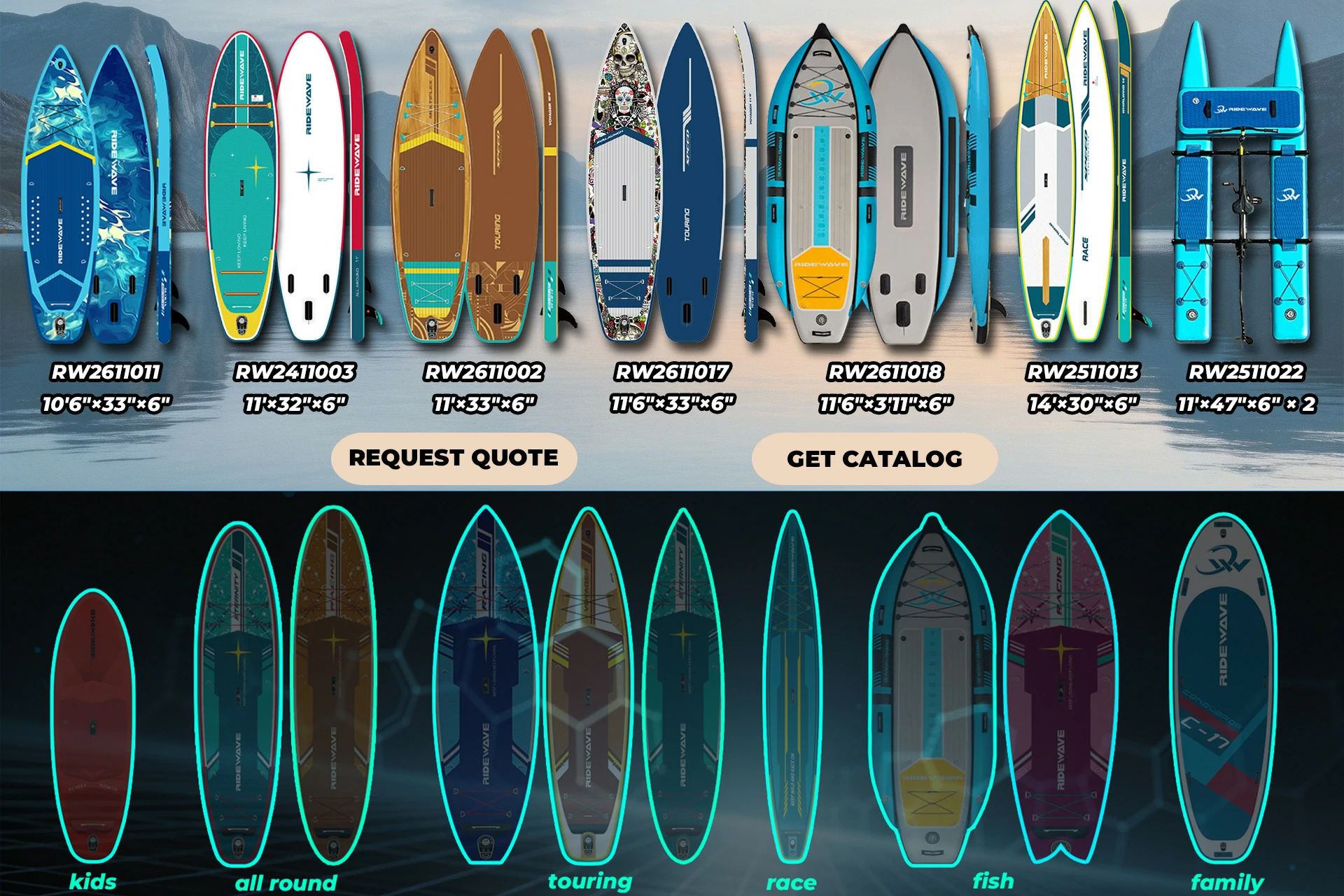
Ready to discuss your next wholesale inflatable SUP shipment to Spain? Contact our B2B sales team for custom packing and logistics advice, or request your latest product catalog with packaging dimensions and MOQ details.
Related Articles
How Spanish SUP Distributors Avoid Bulk Quality Inconsistency & Reputation Risks in 2026
A B2B Guide: How Australian Wholesalers Source High-quality Inflatable SUPs?
Looking To Settle Inflatable SUPs For Chile? How Can Wholesalers Choose The Right Supplier?
How Canadian Wholesalers Can Source Profitable Inflatable SUPs From China
Looking To Settle Inflatable SUPs For Canada? How Can Wholesalers Choose The Right Supplier?