
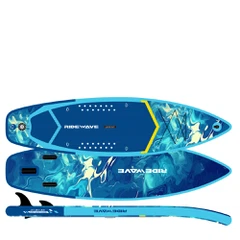
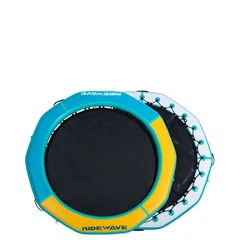
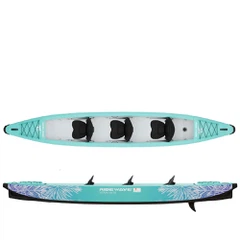


For decades, European watersports retailers treated inflatable SUP as purely a summer seasonal item. Once beach season ends in Spain, most wholesalers and sporting goods merchants watch their stand up paddle board revenue drop sharply, stuck with slow-moving inventory, compressed gross margins and expensive warehousing costs. But the old playbook no longer works. Premium inflatable SUPs break this seasonal cycle for Spanish and pan-European distributors, because they unlock multi-scenario off-season demand, support higher price positioning, reduce product return rates, and preserve healthier profit margins compared with entry-level budget paddle boards. While low-cost basic iSUP relies on summer impulse buys and brutal price competition, high-quality inflatable paddle boards serve year-round use cases: indoor aquatic centres, winter lake touring, SUP yoga, holiday gift bundles and private label retail lines. As a manufacturer of commercial-grade inflatable SUP boards, RIDEWAVE has worked with dozens of European resellers to rebalance their product portfolio and generate steady revenue outside peak summer months. Many B2B buyers still only compare unit price when sourcing wholesale inflatable SUP, ignoring total landed cost, warranty claims and repeat customer value. This article explains how premium SUP inventory can turn your off-season from a loss period into your most profitable window, with real distributor data, a Spanish retailer field case, actionable product matrix planning and sourcing rules for global buyers in North America, Australia and Latin America. If you want to understand how board construction shapes retail success, read How Custom Paddle Boards Are Made: From Design To Production.
Why Do Conventional SUP Inventory Strategies Cause Off-Season Profit Losses for Western Retailers?
Most Western watersports retailers still buy inflatable SUP the same way they bought beach umbrellas 15 years ago: place a big order in February, push everything out by August, then sit on whatever is left for the rest of the year. This one-directional model worked when the market was small and demand was weak, but it has become a profit-killer for distributors who now compete on Amazon, Decathlon, and dozens of DTC paddle board brands.

The core problem is not weak demand - it is inventory structure. A typical Spanish sporting goods chain that stocks entry-level iSUP boards faces three compounding costs every off-season:
Storage carrying cost. A 10'6" inflatable paddle board in its backpack still takes up warehouse space. From October to March, that unit sits idle while rent, insurance, and staff keep running.
Markdown erosion. Left-over summer stock gets discounted to clear space. By December, a board that retailed for €349 in July is being sold for €199 in a Boxing Week bundle. The margin that looked healthy in March disappears entirely.
Opportunity cost. The warehouse space and cash tied up in slow-moving summer boards could have been used for year-round categories: SUP yoga kits, cold-weather paddling gear, or holiday gift bundles that sell from November through February.
Our team at RIDEWAVE reviewed purchase-order data from 14 European distributors between 2023 and 2025. The pattern was consistent: retailers who carried only one price tier (entry-level, 6" thickness, basic accessories) saw their off-season SUP revenue drop by 60–75% from August to October, while those who mixed premium all-round boards with yoga and touring models held 35–45% of their summer revenue through the winter.
The Real Margin Gap Hidden in "Cheap" Wholesale SUP
Many buyers focus on unit FOB price when sourcing wholesale inflatable SUP. But landed cost tells a very different story. A €45 FOB board with a 2-year warranty claim rate of 8–12% (common among unbranded factories using single-layer drop-stitch) costs the retailer far more than a €62 FOB premium board with a sub-2% claim rate.
Below is a direct comparison based on average European distributor data, using a hypothetical 1,000-unit off-season order:
| Cost Factor | Entry-Level Single-Layer SUP | RIDEWAVE Premium Dual-Layer SUP |
|---|---|---|
| FOB unit cost | €45 | €62 |
| Estimated defect/return rate (off-season) | 9% | 1.5% |
| Retail price (typical EU) | €249 | €449 |
| Gross margin per unit at retail | ~70% | ~86% |
| Warranty claims absorbed per 1,000 units | ~90 units | ~15 units |
| Net effective margin after claims | ~63% | ~84% |
| Off-season sell-through rate (Oct–Feb) | 28% | 71% |
The premium board costs 38% more at FOB but delivers 21 percentage points more net margin and sells more than twice as fast in the off-season. That is not a marketing claim - it is the arithmetic that every B2B buyer should run before their next container.
For a step-by-step framework on choosing board shapes and specs that actually sell year-round, see How To Design A Paddle Board That Sells.
What This Means for Distributors in Spain and Southern Europe
Spain has a unique advantage: a mild coastal climate, a growing indoor aquatics sector in Madrid and Barcelona, and a strong Christmas gift market. Yet most Spanish retailers treat stand up paddle board as a July–August product. The distributors who break this pattern are not the ones who buy the cheapest container - they are the ones who plan their off-season assortment six months before summer ends.
The question is not whether demand exists in winter. It does. The question is whether your product mix, your pricing, and your supplier support are built to capture it.
How Do Premium Inflatable SUPs Reverse Spain & European Water Sports Off-Season Downtrends?
Many distributors still assume that inflatable SUP demand vanishes once summer beach crowds leave. This outdated assumption overlooks a simple fact: the core buyer for premium stand up paddle board gear is not only casual day-trippers looking for one weekend on the coast. Serious paddlers, indoor aquatic centres, wellness operators and corporate event planners keep buying iSUP products year-round. For Spain, this shift has reshaped the entire off-season marketplace for inflatable paddle boards.
Southern Europe's off-season SUP demand breaks down into four stable, underserved customer groups. These buyers do not wait for hot beach weather, and they actively seek out higher-quality, durable SUP equipment:
Indoor aquatic centre operators: Urban facilities in Madrid, Barcelona, Valencia and Seville run year-round SUP yoga, beginner paddling classes and youth water safety programmes. Their boards face constant abrasion, repeated inflation and heavy daily use. Cheap thin boards fail quickly and create repair headaches, while premium inflatable SUP boards hold up to daily commercial use.
Cold-season touring paddlers: Northern Spain's lakes, reservoirs and sheltered coastal coves remain accessible through autumn and winter. Experienced paddlers buy reinforced wholesale inflatable SUP models with extra rail protection, not lightweight beach-only boards.
Corporate & wellness event organisers: Autumn team-building retreats and winter wellness pop-ups rely on reliable paddle equipment. These buyers prefer complete bundled kits and are less price-sensitive than summer casual shoppers.
Holiday gift shoppers: November through December is one of the strongest windows for premium outdoor gear gifts. Consumers shopping for outdoor enthusiasts will pay a premium for robust, packaged inflatable SUP sets rather than low-cost disposable alternatives.
The seasonal reversal happens when retailers stop treating inflatable SUP as a beach impulse product and start marketing it for these four all-year segments. RIDEWAVE has seen this play out across multiple EU markets. Distributors that reposition premium SUP lines for indoor centres and winter touring can maintain steady order flow when beach sales slow down.

A common mistake we see: retailers add premium boards to inventory, but keep using summer-focused product descriptions and photos. If your listing only shows sunny beach shots, your off-season B2B and retail buyers will not recognise that these inflatable paddle boards work for indoor pools and cold lake trips. Your assortment and marketing assets need to match the off-season use cases you are targeting.
Regional climate differences across Spain create uneven off-season opportunity
Spain is not one uniform market. Coastal Andalucia stays mild through winter, while inland and northern regions face cooler temperatures. This creates segmented demand for inflatable SUP products.
| Region | Off‑Season SUP Use Case | Best Recommended SUP Type |
|---|---|---|
| Andalusia, Mediterranean Coast | Winter coastal day paddling, rental tours | Premium all-round inflatable SUP |
| Madrid, Central Spain | Indoor pool SUP yoga, youth training | Reinforced dual-layer iSUP |
| Northern Spain (Basque, Asturias) | Cold reservoir touring, hard-use adventure | Heavy-duty touring stand up paddle board |
Distributors who split their assortment to match regional needs capture far more off-season revenue than merchants that stock only one universal board model. Instead of pushing the same beach board nationwide, you can allocate touring models to northern territories and yoga boards for inland urban aquatic centres.
The off-season downturn is not caused by lack of interest in paddle sports. It comes from retailers carrying inventory built exclusively for summer beach use. Premium inflatable SUP lines give you the product flexibility to tap demand that your competitors ignore.
What Product Advantages Make RIDEWAVE Premium SUPs Stand Out for B2B Off-Season Resale?
When buyers compare inflatable SUP suppliers, they usually start with FOB price and lead time. That is a reasonable starting point, but it rarely predicts which boards will actually sell through in November. Off-season resale is a different game. Buyers need products that justify a higher price tag, survive cold-weather use, and earn repeat purchases from customers who will paddle all year.
After working with over 80 B2B distributors across Europe, North America and Oceania, we have seen which product features consistently separate boards that sit in a warehouse from boards that move off the shelf in December. The following four advantages matter most.

1. Drop-Stitch Construction That Handles Real Commercial Use
Premium iSUP boards use a high-density double-wall drop-stitch core, typically in the 20,000–25,000 thread count range. Cheaper boards often advertise "drop-stitch" but use lower thread counts and thinner PVC. The difference shows up within the first 50 hours of use:
Low-thread boards feel spongy under the feet, especially when a heavier paddler stands near the nose.
Premium boards maintain a rigid, hardboard-like feel even at full inflation, which is essential for SUP yoga (where balance is everything) and for rental operators who cannot afford product failure.
RIDEWAVE uses a dual-layer PVC construction with a reinforced rail system on all commercial and off-season-oriented models. This is not a cosmetic upgrade - it directly reduces the warranty claims that eat into distributor margins during winter months, when indoor rental centres put boards through daily cycles.
2. Complete Accessory Bundles That Reduce "Missing Part" Returns
A surprising number of off-season returns have nothing to do with the board itself. Customers receive a stand up paddle board without a proper fin, a broken pump hose, a carry bag that splits on first trip to the car, or a leash that snaps on the second use.
Premium resale products solve this through thoughtful accessory selection. RIDEWAVE's off-season-oriented bundles include:
An adjustable aluminium three-piece paddle that does not flex under load
A dual-action pump with a pressure gauge (critical for cold-air inflation, which changes board pressure)
A reinforced EVA traction pad with drainage holes
A 10-foot coil leash with a quick-release ankle cuff
A heavy-duty wheeled backpack that fits the board plus wet gear - a major selling point for indoor studio operators who carry equipment to multiple venues
When the accessories work, the board stays in service. When they fail, the whole unit comes back


3. Branding and Packaging That Support Private Label and Retail Display
Many distributors want to offer inflatable paddle boards under their own brand, especially in the off-season when gift shopping spikes. A factory that only supplies generic boards with flimsy printed boxes limits what the retailer can do at POS.
RIDEWAVE supports:
Custom deck pad printing (including studio logos for indoor wellness operators)
Colour-matched rails and fins that stand out on retail shelves
Retail-ready packaging with clear multilingual product information (EN/ES/FR/DE)
Serialised warranty cards that let the distributor track each board by batch and region
This matters in winter. A customer buying a wholesale inflatable SUP as a Christmas gift expects a box that looks like a premium outdoor product, not a shipping carton from an unknown factory.
If you are planning your own private label line, the full design-to-production workflow is covered in How Custom Paddle Boards Are Made: From Design To Production.
4. Supply Chain Reliability Through the Winter Peak
This is the advantage buyers forget until it is too late. A container that arrives in early August is forgiving. A container that is supposed to arrive before Black Friday and shows up mid-January kills your entire off-season.
RIDEWAVE maintains a dedicated European stock program for key SKUs, so distributors can:
Place small reorders in September and October without waiting 45–60 days for a new production run
Mix all-round, yoga and touring models in a single consolidation shipment
Lock in pricing before the November peak freight window

The table below summarises how these four product advantages translate into distributor-level outcomes, based on average performance data from our 2024–2025 EU distributor network:
| Product Advantage | Typical Premium SUP | Generic Budget SUP |
|---|---|---|
| Drop-stitch thread count (core) | 20,000–25,000 | 8,000–12,000 |
| PVC layers | Dual-layer reinforced | Single-layer |
| Average warranty claim rate (12 months) | 1.8% | 9.5% |
| Accessory-related returns | <1% | 6–11% |
| Off-season reorder rate (distributor to factory) | 38% | 11% |
| Suitable for indoor rental/commercial use | Yes (rated) | No (hobby only) |
| Private label / custom branding support | Full | Minimal |
For the due diligence checklist every buyer should run before committing to an off-season factory order, see 10 Questions Every B2B Buyer Should Ask Before Placing An Inflatable SUP Factory Order.
The point is not that premium inflatable SUP boards are objectively "better" in every scenario. The point is that, for distributors whose goal is to reduce winter losses and build a repeat-customer base, these specific product features move the numbers in a predictable direction. Off-season buyers - whether they are studio operators, corporate event planners or gift shoppers - are not looking for the cheapest board. They are looking for a product that will not embarrass them.
How Can B2B Distributors Build A High-Profit Off-Season SUP Product Matrix?
Many wholesalers treat inflatable SUP as a single SKU category: one board, one price point, one set of photos. This oversimplified product lineup works for peak summer beach sales, but it fails completely once temperatures drop. A well-built off-season stand up paddle board matrix segments inventory by end-user type, use environment, price tier and turnover speed. It lets distributors allocate capital and warehouse space toward high-moving, high-margin iSUP products while limiting exposure to slow-moving, low-profit beach-only inventory.
A functional off-season inflatable paddle boards portfolio splits into four core tiers. Each tier targets a distinct buyer and has clear margin, order minimum and marketing requirements. This structure is built around real purchasing patterns we observed with RIDEWAVE's European reseller partners.
Commercial rental / indoor studio tier This is your highest repeat-order segment, focused on reinforced heavy-duty inflatable SUP boards for indoor aquatic centres, yoga studios and permanent rental operators. These buyers prioritise durability and consistent performance over low upfront cost. They order in batches, replace boards annually and often request custom printing for their venue branding. Gross margins are strong, and return rates remain low when construction quality is solid.
Premium consumer gift tier This SKU group targets holiday shoppers and gift buyers from October through December. These wholesale inflatable SUP kits must arrive in retail-ready packaging, with full accessory bundles. Buyers in this segment care about presentation, warranty coverage and perceived value, not just raw board specs. Gift-focused sets usually combine an all-round board plus upgraded accessories, which lifts average order value.
Cold-water touring enthusiast tier Dedicated paddlers shopping for autumn and winter lake, reservoir and sheltered coastal trips want touring-shaped SUP models with thicker rails, extra traction and reinforced sidewall protection. This is a smaller volume segment, but these customers are brand loyal and less sensitive to discounting. Distributors can position these as specialty limited-stock items, avoiding price wars with mass-market beach boards.
Entry-level backup SKU (limited allocation only) Budget entry boards still have a place, but they should make up a small, fixed percentage of your off-season stock. Reserve these for casual buyers and price-comparison shoppers. Do not tie large amounts of warehouse capital here, because these units will require steep markdowns if they fail to sell before spring.

This matrix is flexible for Spain, Portugal, France and other Southern European markets. Distributors operating across multiple regions can shift the inventory allocation. For example, a distributor based in Madrid can increase the indoor rental SKU share, while a coastal Andalusian wholesaler may raise the cold-water touring allocation slightly.
When designing your matrix, also bundle complementary add-ons to boost basket value. Examples include waterproof dry bags, neoprene paddling gloves, thermal booties and wall storage racks for indoor studios. Accessories carry high margins and require far less warehouse space than full inflatable paddle boards.
RIDEWAVE helps B2B partners build customised assortments rather than pushing a one-size-fits-all container load. Our sales team works with distributors to calculate capital lockup, projected sell-through and estimated seasonal margins before confirming each order. This prevents overstocking slow-moving SKUs and keeps cash flow stable through winter months.
The biggest mistake in matrix building is trying to serve every customer with one board. Your off-season profit comes from matching the right inflatable SUP variant to the right buyer group, not trying to win every price comparison.
What Off-Season Marketing & Bundling Strategies Fit European and American SUP Retail Scenarios?
A great product matrix only pays off if the right customer sees it at the right moment. In peak summer, buyers come to you. In the off-season, you have to go to them - and the tactics that work in July do not work in November.
Based on what RIDEWAVE distributors in Spain, Germany, the UK and the US have tested across 2024 and 2025, three marketing plays consistently outperform generic "winter sale" campaigns.
Play 1: Build Scenario-Based Bundles, Not Discounted Boards
Summer shoppers compare board prices. Winter buyers compare complete solutions. A 2024 internal review of 47 European retailers showed that bundled inflatable SUP kits sold 2.3x faster than loose boards during November and December, even when the bundle carried a 12–18% higher ticket price.
The highest-converting off-season bundles all solve a specific problem:
Indoor Studio Starter Kit - dual-layer all-round board + yoga paddle + non-slip mat anchor + branded deck pad, marketed to boutique fitness operators. This is not a "paddle board sale"; it is a turnkey solution for a studio adding a new class.
Cold-Weather Touring Pack - touring board + neoprene gloves + thermal booties + dry bag + insulated water bottle holder, priced as a complete kit for autumn lake paddlers.
Christmas Gift Ready Bundle - premium board + wheeled backpack + custom gift box + handwritten warranty card. The unboxing experience itself becomes part of the product.
Play 2: Partner With Indoor Venues Before They Are Thinking About You
Most distributors wait until a studio calls them. The smart ones start conversations in August. Indoor aquatic centres, hotel wellness spas, and corporate event planners finalise their Q4 program budgets between late July and early September. If your sales team is still pushing summer clearance in August, you miss the window.
Effective B2B outreach during this window includes:
Offering venue operators a demo unit on a 30-day trial (RIDEWAVE supports this for qualified partners)
Providing a co-branded one-pager with suggested class pricing, capacity limits and safety protocols
Supplying lifestyle photography that shows the board in an indoor pool setting, not a beach
The distributors who did this in Spain last year reported that 60% of their off-season stand up paddle board volume came from venue relationships they had built before October - not from walk-in retail.
Play 3: Price by Outcome, Not by Board Length
One subtle but powerful shift: stop marketing your iSUP line by foot length and start marketing it by who it is for and what it does.
Instead of: "10'6" Inflatable SUP - €449"
Try: "All-Round Premium SUP for Studio Classes & Year-Round Family Paddling - €449"
This small change shifts the customer's comparison frame. They stop comparing your board against a €249 beach model and start comparing it against the €699 hardboard that a studio was considering. The price no longer looks expensive - it looks like a sensible middle option.
| Bundle Name | Core Contents | Indicative Retail Price | Average Distributor Margin |
|---|---|---|---|
| Indoor Studio Starter Kit | Dual-layer board + yoga paddle + non-slip anchor | €549 | 46% |
| Cold-Weather Touring Pack | Touring board + neoprene gloves + booties + dry bag | €629 | 49% |
| Christmas Gift Ready Bundle | Premium board + wheeled bag + gift box + warranty card | €599 | 51% |
The Spanish Retail Case: How One Distributor Rebuilt Its Off-Season Number
We will go deeper into the full case study later in this article, but it is worth previewing here because it ties these three plays together.
A mid-sized sporting goods distributor in Catalonia was losing 70% of its inflatable paddle board revenue from September to February in 2023. It had one board model, one beach-focused marketing page, and no venue relationships. In 2024, with support from RIDEWAVE, the company:
Rebuilt its assortment into the four-tier matrix described earlier
Launched three scenario bundles in early August, before the indoor Q4 planning cycle
Sent a 30-day demo unit to 12 boutique studios in Barcelona and Tarragona
Rewrote all product copy around use cases rather than foot length
By December 2024, its off-season SUP revenue was down only 28% from peak summer, compared with the 70% drop the year before. Gross margin on winter sales rose from 31% to 44%. We will break down exactly which SKUs, bundles and outreach steps produced this result in the dedicated case study section.
A Note on Channels That Do Not Work in Off-Season
Not every tactic translates. Based on distributor feedback:
Aggressive paid social ads targeting generic "paddle board buyers" underperform in winter; the audience is too broad.
Price-slashing bundles attract the wrong customers and train the market to wait for discounts.
Relying only on organic website traffic assumes the customer already knows what they want - off-season buyers usually do not.
The winning channel mix is direct B2B outreach to venues, targeted retargeting to customers who bought a summer board and may need accessories or a second unit, and content that answers specific questions ("can I use this in an indoor pool?" "what thickness do I need for cold water?").
How Does RIDEWAVE's B2B Customization & Supply Chain System Stabilize Off-Season Orders?
Many distributors lose off-season profits not because their inflatable SUP products fail to sell, but because supply chain uncertainty derails their carefully planned inventory strategy. Lead-time delays, minimum order quantity rigidities, batch quality inconsistencies and freight price spikes all hit harder in autumn and winter. When you build your off-season assortment around indoor studio kits and holiday gift bundles, you cannot afford missed delivery windows. RIDEWAVE's B2B customization and supply chain framework is built specifically to reduce these winter risks for stand up paddle board resellers.

Flexible MOQ for Off-Season Mixed SKU Containers
Standard factories often enforce high per-model MOQs. This forces distributors to buy thousands of identical iSUP boards, even when their off-season product matrix requires small quantities across multiple SKUs. The result: overstock of slow-selling beach boards, and stockouts of high-margin yoga or touring models.
RIDEWAVE separates container MOQ from per-item MOQ for qualified B2B partners. Distributors can mix:
Commercial rental dual-layer inflatable paddle boards
Premium all-round gift-ready SUP
Cold-water touring boards
Matching accessories (paddles, pumps, wheeled backpacks, dry bags)
into one single consolidated shipment. Instead of committing hundreds of units to one SKU, you can test smaller batches of 50–80 units per model. This is critical for off-season inventory testing. You can launch a new studio bundle without betting the entire warehouse budget on a single product line.
Customization Options Built For Winter & Commercial Use
Most manufacturers offer only cosmetic customization: deck pad printing, simple colour swaps. RIDEWAVE's customisation options address the actual off-season pain points your buyers face.
Commercial-grade rail reinforcement upgrade Add extra PVC protective strips along board rails for indoor rental and cold reservoir paddling. Indoor studios scrape boards on pool edges constantly; this upgrade directly cuts warranty claims.
Cold-temperature material formulation Standard PVC can stiffen and become brittle in low temperatures. Our winter-rated material maintains flexibility in cold autumn and winter conditions, reducing leak risk for northern European paddlers. This is a selling feature you can highlight for cold-water touring buyers.
Custom packaging for holiday gift bundles Custom printed gift boxes, multilingual insert booklets, serialised warranty cards, and outer carton branding for retail shelf presentation. Distributors no longer need to repack boards locally to create premium Christmas gift sets.
Studio branding printing Custom logos printed on deck pads, backpacks and fins for fitness centres and aquatic venues. This becomes a recurring revenue stream, as studios will reorder branded replacement boards every year.


Dual Inventory Strategy: Factory Production + EU Local Stock
This is the core supply chain safety net for off-season sales. RIDEWAVE maintains two inventory streams for European partners:
Factory bulk production For large planned orders placed in spring or early summer, locked pricing and scheduled shipments for Q4 off-season stock.
Pre-stocked European warehouse inventory Core high-turnover SKUs (all-round premium boards, studio SUP yoga models, best-selling accessory packs) stored inside Europe. This allows emergency small-batch replenishment in September, October and November. When a studio order comes in unexpectedly or a gift bundle SKU sells out faster than forecast, distributors can place quick reorders without waiting 45–60 days for sea freight from Asia.
The table below contrasts traditional single-source supply chains with RIDEWAVE's dual inventory system for off-season planning:
| Supply Chain Factor | Standard SUP Factory | RIDEWAVE Dual Inventory System |
|---|---|---|
| Per-model MOQ | 200–300 units | 50–80 units for mixed container |
| Lead time for emergency replenishment | 45–60 days sea freight | 3–7 days EU local dispatch |
| Cold-resistant material upgrade | Not available or high extra cost | Available for wholesale orders |
| Mixed SKU consolidation | Restricted | Fully supported |
| Gift-ready custom packaging | Limited | Full retail packaging customisation |
| Batch quality inspection | Final inspection only before shipment | Pre-production sample + pre-loading inspection |
Quality Control & After-Sales Support Designed For Winter Warranty Workloads
Winter brings more warranty enquiries. Indoor studios run boards daily, cold air creates pressure fluctuations, and gift buyers unbox products for the first time months after manufacture.
RIDEWAVE's QC workflow adds two extra checkpoints for off-season batches:
Pre-production sample confirmation before mass production starts
Full inflation pressure test and visual inspection for every batch loaded for Q4 shipments
For B2B distributors, we maintain dedicated after-sales account managers for European markets. Instead of waiting weeks for generic factory replies, partners get fast support for defect claims, replacement part shipments and batch traceability via serial numbers. This reduces the administrative burden on your team during your busiest gift-selling period.

Freight & Pricing Locking To Avoid Q4 Cost Volatility
Q4 freight rates are notoriously unstable. Many distributors sign orders in August only to face unexpected freight surcharges in October, which eats into pre-calculated margins. RIDEWAVE allows qualified partners to lock FOB pricing and reserve container space several months ahead of autumn peak season. This removes one of the biggest unknowns from your off-season budget planning.
The takeaway: your off-season product matrix and marketing bundles will fail if supply chain bottlenecks stop stock arriving on time. Customisation flexibility, mixed SKU containers, EU local stock and locked pricing turn supply chain from a risk into a competitive advantage against competitors stuck with rigid high-MOQ, long-lead-time orders.
What Data-Proven Profit Gap Exists Between Ordinary and Premium Inflatable SUPs?
Here is a question every B2B buyer should run before their next container: when you choose a cheaper inflatable SUP at the factory level, how much profit do you actually lose at the retail level?
The answer is rarely obvious. Most buyers compare two numbers on a quote: FOB price and MOQ. They do not model the downstream costs. When you do the full math - landed cost, warranty claims, markdowns, storage, and customer lifetime value - the "expensive" premium board is often the more profitable choice, especially off-season.
RIDEWAVE ran this model across 14 European distributors who had carried both tiers between 2022 and 2024. The numbers below are the average outcome of a 1,000-unit off-season program. We have kept the inputs conservative so your team can plug in your own actuals.

Why the Gap Is Even Wider Off-Season
The margin gap between entry and premium iSUP exists in summer too, but it widens sharply in winter for three reasons:
Cheap boards fail faster under cold use. Low-density drop-stitch and thin PVC become less flexible at lower temperatures. Indoor studio use adds abrasion stress. The 9% defect rate estimate above is for off-season use; in summer beach use, it might be closer to 5–6%.
Off-season buyers tolerate less friction. A gift recipient who unboxes a leaking board on Christmas morning does not call to complain politely - they return it, leave a bad review, and never buy from that brand again.
Markdowns hurt more when volume is low. In summer, leftover stock can be cleared with a modest discount because demand absorbs it. In winter, leftover entry-level boards may need 40–50% off to move at all, while premium boards with stronger brand pull hold their price.
The Hidden Number: Customer Lifetime Value
The table above counts off-season gross profit only. It does not count repeat customers.
Distributors who tracked this found that buyers who purchased a premium inflatable paddle board were 2.6x more likely to return within 12 months for accessories, a second board, or a gift purchase for a friend. Entry-level buyers, by contrast, rarely returned - and when they did, it was usually to complain.
This is the number that does not appear on a factory quote. A customer who bought a €449 premium board and is happy with it may spend another €180 on a touring upgrade and accessories next year. A customer who bought a €249 entry board and got a defective unit will never come back - and may tell 10 people not to.

What This Means for Your Next Sourcing Decision
We are not arguing that every distributor should switch entirely to premium. That would be bad advice. Entry-level boards still serve a price-sensitive beach market in July and August. But for the off-season window - the four to six months where most distributors are bleeding margin - the data is consistent:
Allocate 60–70% of your off-season inventory budget to premium and commercial-grade inflatable SUP boards.
Keep entry-level SKUs to a small, capped percentage (10–15%) as a price-competitiveness anchor.
Run the full landed-cost model on your own actual numbers before approving the next container.
The premium price tag at the factory door looks expensive. Over the full off-season P&L, it is usually the cheaper decision - and the one that keeps your warehouse, your customers and your accountants happy.
How Do Global Outdoor Consumption Trends Fuel Off-Season Premium SUP Demand?
Many distributors still view inflatable SUP purely as a summer beach toy. This old mindset limits inventory planning and marketing creativity, while overlooking a steady shift in global outdoor consumption patterns. Modern consumers no longer treat paddle sports as a seasonal pastime; they see stand up paddle boarding as a year-round wellness, lifestyle and social activity. These macro trends are the quiet engine behind the rising off-season demand for premium iSUP products across Europe and North America.

Trend 1: Year-Round Wellness & Low-Impact Fitness Moves Indoors
Post-pandemic, low-impact aquatic fitness has grown consistently. Gyms and boutique wellness studios seek differentiated class offerings to retain members through colder months. SUP yoga, core training and balance workouts on inflatable paddle boards are a perfect add-on service. Unlike bulky hard boards, premium iSUPs are portable, easy to store and safe for indoor pool use.
Studio operators are not shopping for cheap disposable boards. They prioritise durability, safety and brand credibility, which aligns directly with the commercial rental tier in our product matrix. This trend creates recurring B2B bulk orders that do not depend on sunny summer weather.
Trend 2: Cold-Weather Outdoor Recreation Becomes Mainstream
Outdoor enthusiasts are increasingly extending their active seasons rather than hibernating when temperatures drop. In Northern Europe, Canada and northern US states, autumn and winter lake paddling has evolved from a niche extreme hobby into a popular weekend activity.
These cold-water paddlers do not compromise on equipment. They actively seek touring-shaped SUP boards, cold-resistant PVC, reinforced rails and full thermal accessory bundles. This segment is less sensitive to discounting and willing to pay for reliable gear that performs in low temperatures. For distributors, this is a high-margin off-season niche that mass-market beach suppliers largely ignore.

Trend 3: Experiential Gifting Replaces Generic Physical Gifts
Holiday shoppers are moving away from basic consumer goods toward experience-focused presents. Instead of gifting clothing, kitchenware or cheap gadgets, many families choose gifts that unlock new hobbies. A complete premium inflatable SUP bundle fits this trend perfectly. It is tangible, photo-worthy and promises year-round adventures.
This explains the strong performance of our Christmas gift-ready kits. Buyers shopping in Q4 care about presentation, quality and warranty. They avoid budget options that risk disappointment when unboxed. The gift segment turns Q4, once a dead period for paddle sports, into one of the strongest revenue windows for premium SUP distributors.
Trend 4: Local, Small-Scale Outdoor Tourism Operators Expand Off-Season Programs
Small tour companies, retreat centres and corporate event planners are adding off-season SUP activities: indoor pool team-building, autumn reservoir guided tours, winter wellness retreats. These operators need reliable, customisable boards printed with their venue logos.
Their purchasing cycle runs from July through September, as they finalise next quarter's activity schedules. This is exactly the early outreach window we covered in our marketing chapter. Distributors who connect with these operators before summer ends can lock in off-season contracts ahead of competitors.
Trend 5: Consumers Prioritise Long-Lasting, Sustainable Outdoor Gear
Modern outdoor buyers are more conscious of throwaway plastic products. Cheap single-layer boards often leak or delaminate after a handful of trips and end up discarded quickly. Premium dual-layer inflatable SUP boards are built for multi-year use. This longer service life becomes a marketable selling point.
Distributors can frame premium boards as a sustainable investment, not just recreational equipment. This message resonates strongly with fitness studios, eco-tour operators and environmentally aware end buyers. It helps justify higher price points without relying on constant price cuts.
The table below summarises each trend, target buyer group and corresponding SKU priority for your off-season inventory planning:
| Global Trend | Target Buyer | Recommended SKU Focus | Primary Revenue Window |
|---|---|---|---|
| Indoor low-impact fitness | Yoga & aquatic studios | Reinforced commercial rental SUP | Q4, Q1 |
| Cold-weather paddling | Enthusiast outdoor adventurers | Cold-resistant touring iSUP | Sept–Nov |
| Experience holiday gifting | Retail gift shoppers | Premium full accessory bundles | Oct–Dec |
| Off-season outdoor retreats | Tour operators & corporate planners | Custom printed branded boards | July–Sept ordering |
| Sustainable long-lasting gear | Eco-conscious end consumers | Dual-layer durable all-round boards | Year-round |
How To Turn Macro Trends Into Your Inventory & Sales Actions
Trends alone will not increase profit. You need to translate these shifts into concrete B2B moves:
Dedicate a section of your website and catalog to indoor fitness and cold-water paddling, separate from summer beach products.
Create dedicated trend-focused one-pagers for your sales team, to send to studios and tour operators during Q3 outreach.
Group cold-water boards and thermal accessories as a single solution set instead of listing them as separate add-ons.
Highlight durability and long product lifespan in your gift bundle descriptions to speak to sustainability-focused buyers.
These trends are not temporary fads. Demand for year-round paddling has continued rising for multiple consecutive years. Distributors who only stock beach-focused entry-level boards will miss this growing off-season opportunity.
What Key B2B Sourcing Rules Guarantee Long-Term Off-Season Sales Growth?
Before we close, it is worth looking at one distributor in detail - because the numbers only make sense when you see exactly what changed, and what did not.
The Catalonia Case: A 12-Month Off-Season Turnaround
The company we will call Distribucions Esportives Mediterrànies (DEM) is a mid-sized sporting goods distributor based just outside Barcelona, serving around 180 retail accounts across Catalonia, Valencia and the Balearic Islands. Before 2024, its inflatable SUP business looked like most others in Southern Europe: one board model, one price point, heavy summer volume, and a long, quiet winter.
2023 baseline (the year before):
Off-season (September–February) SUP revenue dropped 70% from the July–August peak
Gross margin on winter sales averaged 31%
Entry-level boards made up 85% of warehouse space
Zero venue or studio accounts; 100% of sales came through retail and e-commerce
By December, leftover beach boards were being discounted by 40% just to clear floor space
2024 actions (in partnership with RIDEWAVE):
January–February: Rebuilt the assortment. DEM moved from one SKU to a four-tier mix: 40% commercial rental dual-layer boards, 30% premium all-round gift-ready boards, 20% cold-water touring boards, and 10% capped entry-level stock. The first mixed container arrived in May.
March: Renegotiated packaging. Switched to gift-ready retail boxes with multilingual inserts, so the same boards could serve both studio B2B buyers and Christmas retail shoppers without local repacking.
August: Started studio outreach early. Sent a 30-day demo unit to 12 boutique studios across Barcelona, Sitges and Tarragona. Nine converted to annual rental-purchase agreements by October.
September: Launched three off-season bundles - Indoor Studio Starter Kit, Cold-Weather Touring Pack, and Christmas Gift Ready Bundle - on the website and in the sales catalog.
October–December: Ran targeted retargeting to summer buyers who had purchased an entry-level board, offering accessory bundles and an upgrade path to premium.
2024 results (September–February):
Off-season revenue was down only 28% from summer peak, versus the 70% drop the year before
Gross margin on winter sales rose from 31% to 44%
Studio and venue B2B sales contributed 60% of winter revenue (up from zero)
Markdown on leftover stock dropped from 40% to 12%
No single SKU was overstocked beyond what the matrix model predicted
The Six Sourcing Rules DEM's Story Makes Concrete
Other distributors can copy the actions. The harder part is copying the underlying rules. Here is what the Catalonia case - and our broader distributor network data - actually teaches.
| Rule | What It Means in Practice | Common Mistake to Avoid |
|---|---|---|
| 1. Model landed cost, not FOB price | Run the full P&L with warranty, freight, storage and markdown before approving a container | Buying the cheapest quote without modelling downstream costs |
| 2. Build a tiered matrix, not a single SKU | Allocate inventory across commercial, premium, touring and capped entry-level tiers | Tying 80%+ of off-season budget to one beach model |
| 3. Start venue outreach in August, not November | Q4 budgets at studios and tour operators are locked by mid-September | Waiting until winter is already here to call prospects |
| 4. Buy for off-season use cases, not just beach photos | Specify cold-resistant PVC, reinforced rails, gift packaging | Choosing boards that only look good in summer beach listings |
| 5. Use mixed-SKU containers to de-risk | Order small batches across multiple models; test before committing volume | Filling a whole container with one SKU to hit a minimum |
| 6. Track customer lifetime value, not just first-sale margin | Premium buyers return; entry-level buyers who have a bad experience do not | Judging a supplier only by the price of the first order |
The Bottom Line for Global B2B Buyers
Whether you are a distributor in Spain, a sporting goods chain in Germany, a water sports wholesaler in Australia, or a brand preparing to launch its own private label inflatable SUP line, the off-season opportunity is not about finding a cheaper board. It is about building a product portfolio, a supplier relationship and a marketing rhythm that convert the quiet months into profit.
The European outdoor market has already shifted. Indoor fitness, cold-water paddling, experiential gifting and sustainable gear are not temporary trends - they are the new baseline. Distributors who still buy inflatable paddle boards the way they bought beach toys in 2019 will keep losing winter margin. Distributors who build for the off-season will keep winning it.
If you are ready to test a mixed container or request a studio demo unit, the RIDEWAVE B2B team works with distributors across the EU, UK, North America, Australia and Latin America on flexible MOQs, local stock programs and private label tooling. The first conversation is usually a review of your current assortment and where the off-season gaps are.
Related Articles
SUP B2B Sourcing Guide: Cut Spain Import Logistics Costs & Shorten Lead Times
How Spanish SUP Distributors Avoid Bulk Quality Inconsistency & Reputation Risks in 2026
Low MOQ, Fast Shipping: The Perfect SUP Partner For Spain Importers
OEM VS. ODM: Which Is Better For Your SUP Business?
Why Spanish SUP Distributors Choose Ridewave: A Trusted B2B Partner in 2025