

For B2B wholesalers and distributors targeting Poland's water sports market, sourcing reliable inflatable SUP inventory is never just about finding the lowest unit price. Many established outdoor retailers and emerging brand owners lose significant profit due to flimsy drop-stitch construction, incomplete EU compliance paperwork, and custom printed boards that fail local consumer preferences. As B2B planning shifts toward pre-season orders for next year's spring and summer selling window, importers are prioritizing durable, certified inflatable paddle boards that perform well on Poland's inland lakes and slow-moving rivers. At RIDEWAVE, our team works with dozens of European stockists each year, helping them navigate regulatory hurdles, refine product selections, and build private-label ranges without overextending their budgets. If you are weighing custom graphics, tailored accessories or custom sizing for your upcoming lineup, How Custom Paddle Boards Are Made: From Design To Production walks you through every manufacturing stage so you can set clear expectations before locking in your first sample. This wholesale sourcing handbook covers CE and GPSR requirements, top-selling iSUP models, factory vetting tactics, supply chain risk mitigation, and real-world lessons from Polish importers. It is built for buyers who want to reduce container detention risks, cut end-customer return rates, and build a sustainable SUP product portfolio with predictable margins. We avoid overhyped sales language and lean on hands-on manufacturing experience to answer the practical questions most distributors ask when expanding into inflatable water sports equipment.
What is the current inflatable SUP market outlook for Poland and broader EU in 2026?
The Polish inflatable SUP market continues its steady upward trajectory, driven by thousands of inland lakes and slow rivers that make recreational paddleboarding accessible for families, casual paddlers, and watersport rental businesses. Unlike coastal European markets built around ocean waves, Poland's demand for iSUP centers on calm freshwater environments, which shapes which board styles sell best for retailers and wholesalers across the country.
Right now, late Q3 is the critical pre-order window for 2027 spring-summer inventory. Most Polish distributors are no longer chasing spot stock for the current selling season; instead, they are finalizing next-year assortments, testing samples, locking factory lead times, and reviewing compliance documentation before committing to large container orders. This timing is why smart buyers prioritize durable, fully certified inflatable paddle boards rather than low-cost disposable alternatives that carry high return risk.
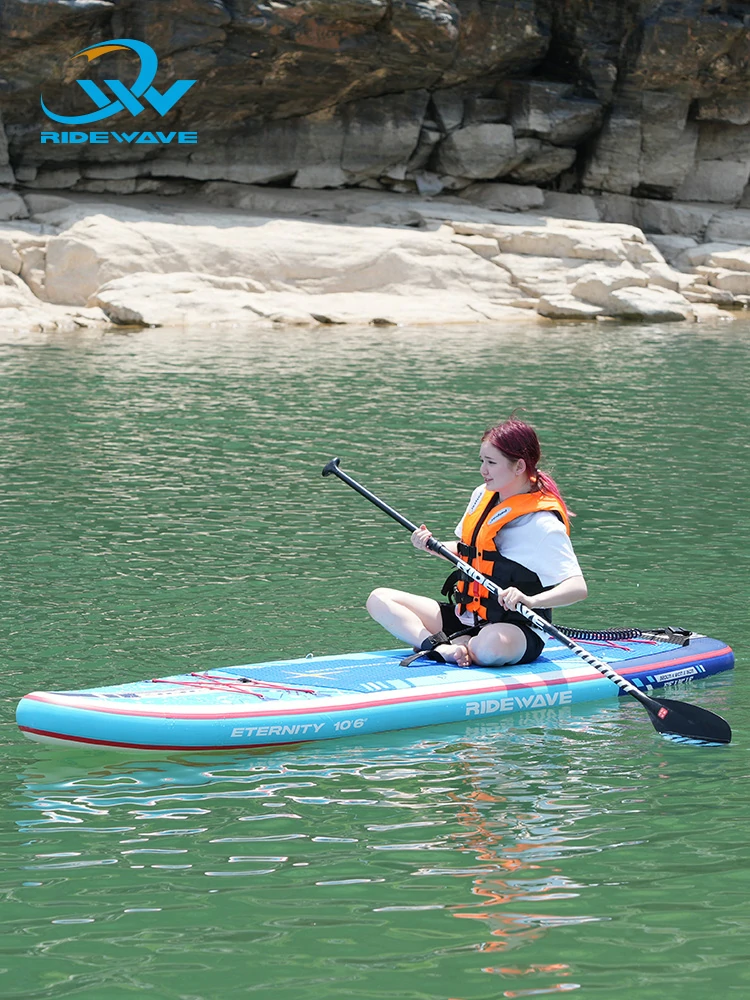
Across the wider EU, three major trends directly impact your SUP wholesale purchasing strategy in 2026:
The enforcement of GPSR (General Product Safety Regulation) has raised market surveillance standards. National inspectors can request full technical files at any time, and non-compliant inflatable SUP batches face detention or forced withdrawal from retail shelves.
Buyers and end consumers increasingly demand sustainable manufacturing without greenwashing. Retail chains now ask suppliers for REACH-compliant raw material reports, phthalate-free PVC, and reduced plastic packaging. RIDEWAVE has worked to adopt recycled PVC rails and plastic-free packaging options for EU customers responding to this shift.
End-user preference has moved away from ultra-cheap single-layer boards. Shoppers are willing to pay more for high-density drop-stitch construction that resists seam failure, even for beginner-level recreational SUP.
Poland's rental market is another fast-growing segment. Lake resorts, campsites and tourist operators purchase heavy-duty commercial inflatable SUP in bulk, prioritizing boards that withstand repeated use, scrapes and heavy rider loads. These bulk rental orders deliver stable recurring revenue for distributors, but they require stricter QC testing than retail consumer stock.
For wholesalers expanding into the SUP category for the first time, it is easy to underestimate regional differences between EU countries. A board optimized for choppy coastal waters will underperform on Poland's lakes, and vice versa. Taking regional water conditions into account during product selection directly improves sell-through rates and protects your margin.
What CE & EU documentation do Polish importers require for inflatable SUP clearance?
Bringing inflatable SUP products into Poland is not simply a matter of attaching a CE sticker on the board. Polish customs and national market surveillance bodies verify complete supporting paperwork, and missing or incorrect documents are one of the most frequent causes of cargo detention at Polish ports and border checkpoints. Many first-time iSUP importers underestimate how deeply market surveillance can audit your records long after goods clear customs. Even if your container lands smoothly, inspectors may request files months later, and non-compliant inflatable paddle boards can be pulled from store shelves.
The core paperwork package for wholesale SUP imports combines CE certification documents and the newer GPSR requirements. Unlike some regions where certification is treated as optional, the EU treats product safety documentation as a continuous legal obligation for anyone placing inflatable SUP onto the European single market. This applies equally to private label brands, resellers, and rental fleet operators buying bulk boards for commercial use.
Below is a practical checklist you can use to review supplier files before confirming your inflatable SUP order.
| Required Document | Purpose | Mandatory for Poland Import | Notes |
|---|---|---|---|
| CE marking + EU Declaration of Conformity (DoC) | Formal statement that product meets EU harmonised safety standards | Yes | Must include manufacturer name, model numbers, standards reference, EU responsible person |
| Technical Construction File (TCF) | Full technical evidence for regulators | Yes | Must be stored and available for 10 years after last batch release |
| ISO 25649 test report | Safety testing for inflatable recreational floating equipment | Yes | Covers burst pressure, seam strength, material safety for inflatable SUP |
| GPSR EU Responsible Person contact | Single point for EU market surveillance enquiries | Yes | Cannot use overseas factory address; must be EU-based entity |
| User manual & safety warnings in Polish | End-user guidance | Yes | Warnings must reference safe use on lakes and inland waterways |
| REACH material test certificate | Restricted chemical screening for PVC raw materials | Recommended | Retail chains often require this document for shelf listing |
Many suppliers hand over generic test reports that list only one board model, then reuse the same file for dozens of different SUP sizes and constructions. This shortcut fails Polish inspection audits. RIDEWAVE's compliance team creates separate technical records for each board SKU, so every inflatable SUP model you purchase has matching test data, DoC and TCF files ready for review.
Two common document mistakes that catch Polish importers off guard:
Using English-only manuals: Even if most customers speak English, Polish law requires local-language safety instructions sold within Poland.
Outdated test reports: Older reports pre-dating GPSR enforcement may be rejected during market surveillance checks.
Working through compliance before production starts saves far more money than trying to fix paperwork after goods ship. If you are evaluating multiple factories, ask each supplier to share sample compliance files early in your sourcing process. 10 Questions Every B2B Buyer Should Ask Before Placing An Inflatable SUP Factory Order includes targeted questions you can send suppliers to verify their certification capabilities before sample payment.
Which inflatable SUP models sell best for Polish lake, river and rental businesses?
Not all inflatable SUP designs perform equally across Europe, and product lines that sell strongly in coastal markets often struggle to move inventory for Polish retailers. Most end-users in Poland paddle on calm inland lakes and slow-flowing rivers. This means your top-selling iSUP SKUs should prioritise stability, ease of inflation, and durable drop-stitch construction instead of narrow, high-performance boards built for ocean surf. Choosing the right mix of inflatable paddle boards directly improves sell-through rates and protects your wholesale margin as you build or expand your SUP category.
When building your product portfolio for Poland, you will typically serve three core customer groups: family retail buyers, intermediate recreational paddlers, and commercial rental operators. Each group has distinct priorities, and mixing the correct board types helps you balance fast-moving entry-level stock and higher-margin specialist SUP products.
| Board Type | Target End User | Best Sales Channel | Gross Margin Potential | Inventory Risk |
|---|---|---|---|---|
| All-round inflatable SUP | Beginners, family users | Outdoor shops, online retail, holiday gift shops | Medium, stable | Low, fast turnover |
| Touring inflatable SUP | Intermediate paddlers, long-distance lake trips | Specialist watersports stores | Medium-high | Medium |
| Yoga / Fitness SUP | Wellness-focused customers | Fitness & lifestyle retailers | High | Medium, smaller sales volume |
| Kids lightweight SUP | Family gift buyers | Retail chains and tourist shops | Medium | Low |
| Heavy-duty rental inflatable SUP | Lake resort & river rental stations | Watersport rental operators | High | Low, built for heavy repeated use |
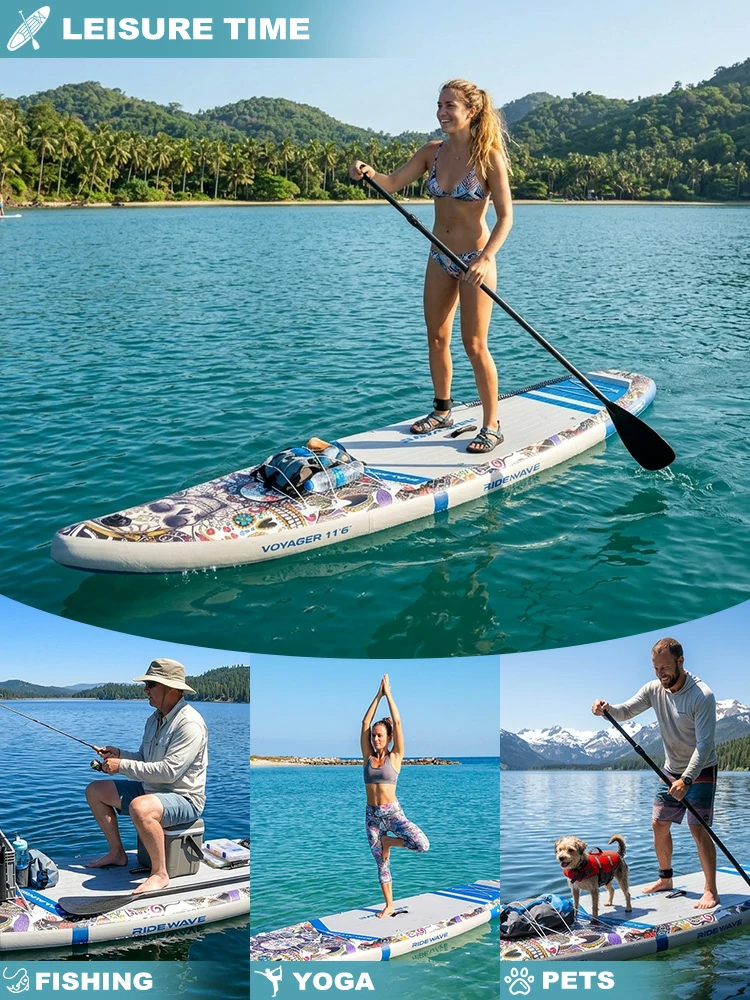
For most new distributors entering the Polish market, the all-round inflatable SUP should form the backbone of your lineup. These boards have wider decks, forgiving rocker profiles, and simple handling that suits first-time paddlers. Families shopping for summer outdoor gear represent the largest buying segment, and this SKU delivers consistent sales year after year. RIDEWAVE's all-round models are engineered specifically for freshwater environments, with reinforced side rails to resist scrapes against rocks, sand and wooden jetties common around Polish lake shores.
Commercial rental businesses are a reliable high-volume segment, but they demand extra robustness. Rental inflatable SUP sees dozens of users each week, often with poor handling and rough contact with shorelines. Cheap thin PVC boards develop pinholes and seam leaks quickly, driving up replacement costs and customer complaints. Heavy-duty rental iSUP uses thicker woven drop-stitch fabric, double-layer rail reinforcement and industrial-grade glue to extend service life. While upfront wholesale cost is higher, the total cost of ownership is much lower for rental operators.
Touring SUP appeals to more experienced paddlers who enjoy multi-hour trips along Poland's river systems. These boards have longer hulls for straighter tracking, but they remain stable enough for casual recreational use. They work best as a secondary SKU rather than your main volume driver, as customer demand is smaller compared with all-round boards.
Yoga and kids' inflatable SUP serve niche but profitable subsets. Yoga boards attract wellness consumers who shop in lifestyle retail spaces, while lightweight kids' boards work well as add-on purchases for families buying adult iSUP models. Keep stock volumes limited for these specialist lines to avoid tying capital up in slow-moving inventory.
Many buyers make the mistake of filling their container with premium specialist boards when launching their SUP range in Poland. Narrow racing or surf-style boards look impressive in catalogues, but they rarely match local water conditions and often sit unsold in warehouses. Careful SKU planning keeps your inventory liquid. How To Design A Paddle Board That Sells covers practical design choices that resonate with European freshwater customers, so you can avoid investing in boards that do not fit your target market.
How can B2B buyers evaluate factory quality before placing bulk inflatable SUP orders?
Price alone is a poor benchmark for judging inflatable SUP quality. Many B2B buyers select suppliers based only on unit cost, only to discover inconsistent seam adhesion, low-quality drop-stitch fabric, or defective air valves once the container arrives. For wholesalers and brand owners expanding their SUP portfolio, quality validation must happen before sample confirmation, not after mass production starts. Small defects on individual boards quickly translate into returned goods, damaged retail reputation, and lost repeat orders from Polish retail and rental partners.
Quality assessment for iSUP breaks down into four core inspection areas: raw material specifications, drop-stitch fabric integrity, seam and rail construction, and finished product functional testing. Each of these areas directly impacts long-term durability in freshwater lake and river conditions across Poland.
Raw material testing: Ask suppliers to share material certification reports for PVC and drop-stitch yarn. Thin, cheap PVC will degrade faster under UV sunlight and scratch easily on rocky shorelines. Reputable manufacturers specify fabric weight and tensile strength for every inflatable paddle board SKU, rather than using generic, unmarked raw materials.
Drop-stitch fabric check: Woven drop-stitch delivers far better rigidity and puncture resistance than basic non-woven alternatives. When reviewing samples, press hard across the board surface. A low-quality SUP will flex and sag heavily under pressure, while reliable woven drop-stitch maintains flatness even at recommended inflation pressure.
Seam and rail construction: Double-layer rail reinforcement is critical for rental-grade inflatable SUP. Inspect corners and rail joints carefully; these are the most common failure points for boards used repeatedly on Polish lake shores. Hand-taped seams often develop slow leaks over time, while industrial hot-welded seams offer more stable long-term performance.
Air valve performance: Poor valves are one of the top customer complaint drivers. Test inflation and deflation multiple times, check for air seepage when fully pressurized, and confirm valves lock securely. Even a tiny leak will lead to negative reviews and product returns for your retail customers.

pressure testing, and request access to batch test records. Many smaller workshops skip batch sampling entirely, leading to large quality variations between production runs. RIDEWAVE implements 100% air tightness testing for all finished inflatable SUP before packing, paired with random burst-pressure sampling for every production batch. This step helps catch leaks and structural flaws before boards are packaged and shipped to EU customers.
Do not rely only on photos or promotional videos when vetting a factory. Virtual factory tours, live production line video calls, and third-party audit reports add credibility. The goal is to confirm the supplier can replicate the sample quality consistently across thousands of units, not just produce one perfect sample for your review.
What OEM & private label options are practical for Polish SUP distributors?
For Polish inflatable SUP wholesalers, private labeling is one of the most reliable ways to lift profit margins, build brand loyalty, and differentiate your iSUP lineup from generic competitors sold across marketplaces. That said, many first-time brand owners over-customize their inflatable paddle boards, which pushes up MOQ, increases tooling fees, extends lead times and locks more operating capital into inventory. The most successful SUP private label projects balance custom branding with proven standard board platforms that already perform well on Poland's lakes and rivers.
There are tiered customisation levels available for B2B buyers, so you can pick options aligned with your order volume and business goals:
Basic private label: Custom printed deck pad graphics, your brand logo on the board surface, branded carry bag, custom colour box. This tier works for low to medium MOQ and has the shortest production lead time. It uses existing mature inflatable SUP moulds, so no new tooling cost applies.
Mid-level OEM: Custom colour for rails, modified accessory bundles, personalised user manual printed with your brand and Polish safety warnings. Great for distributors wanting subtle differentiation without major investment.
Full custom development: Custom board dimensions, modified rocker shape, unique drop-stitch layout or custom mould. This tier requires much higher MOQ, longer development cycles and tooling charges, and it carries higher market risk until you confirm customer demand.
Many Polish buyers begin with basic private label to test market feedback before committing to full custom board redesign. This phased approach reduces financial risk and lets you validate which colours and graphic styles resonate with local end consumers.
Understanding the full production workflow will help you set realistic timelines and avoid miscommunication with your manufacturer. How Custom Paddle Boards Are Made: From Design To Production breaks down artwork approval, raw material preparation, hot welding and final QC stages, so you know exactly what happens once your design files are submitted.
RIDEWAVE supports all three tiers of customisation for EU-based SUP distributors. Our product team commonly advises Polish clients to start with logo printing and custom packaging rather than full board redesign for their first private label run. This keeps MOQ manageable, preserves the proven freshwater performance of our standard board shapes, and still creates a distinct branded product that stands out on retail shelves. We also help customers prepare branded Polish-language manuals aligned with GPSR and CE rules, removing one common compliance headache for new private label importers.
A key detail often overlooked: custom artwork must follow EU chemical and labelling requirements. Certain printing inks contain restricted substances listed under REACH, and non-compliant prints can cause delays during market surveillance audits. Your factory should supply ink test certificates alongside the rest of your compliance package.
When planning private label, calculate your total landed cost, not just the unit board price. Custom bags, colour boxes, printing setup fees and compliance document revisions all add incremental costs that impact your final wholesale margin.
How to design a marketable paddle board for Poland and EU markets?
Great inflatable SUP design is not about visual flair alone. For wholesalers and brand owners selling into Poland and the wider EU, successful iSUP design balances aesthetic appeal, freshwater functionality, manufacturing practicality and regulatory compliance. Many new brand teams spend months refining bold graphics, only to overlook core shape details that determine whether customers keep the board or return it. If your inflatable paddle boards cannot perform reliably on calm lakes and slow rivers, even the most eye-catching print will not drive repeat sales for your SUP product line.
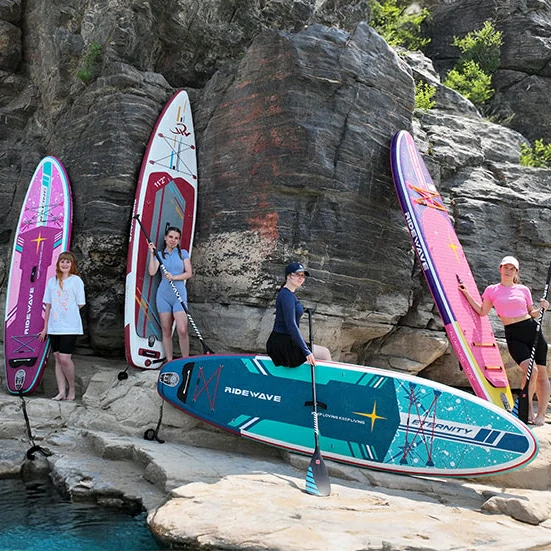
When designing boards targeted toward Polish end users, focus on four foundational design priorities:
Stable deck width: For family-focused all-round inflatable SUP, a width ranging from 32 inches to 34 inches reduces tipping risk for new paddlers. Narrower boards work only for experienced touring users and are not recommended as your main volume SKU for Polish retail.
Gentle rocker profile: Excessive rocker built for surf creates drag on flat inland water. A mild rocker keeps the board tracking straight while still handling minor debris and small waves found on lakes and rivers.
Reinforced rail geometry: Polish lake shores are lined with rocks, wooden pilings and rough sand. Thick, multi-layer side rails reduce puncture risks and extend the usable life of your iSUP, which lowers return rates and improves customer reviews.
Practical accessory integration: Built-in D-rings for dry bags, secure foot strap mounts and a detachable central fin are essential features for inland paddling. Simple, functional extras resonate better with European freshwater buyers than decorative add-ons.
Colour and graphic choices also shape sell-through. Bright neon prints were popular a few years ago, but EU consumers now lean toward muted, natural tones such as sage green, charcoal grey and navy blue. These colour palettes photograph well for online retail and hold up visually after prolonged UV exposure. Graphics should avoid overly busy patterns that distract from the board shape, and all printing materials must meet REACH chemical standards.
One common design mistake is overloading the board with features that increase production cost without adding real value for Polish customers. Extra handles, redundant D-rings or complex multi-fin systems push up your unit price, while most casual inland paddlers will never use those features. Every design choice should tie back to the end user and your target wholesale margin.
requirements are defined under GPSR. Trying to add warning stickers after production is risky and often non-compliant. The best practice is to integrate safety markings directly into your deck pad graphic file during the design phase.
If you want to learn how to balance creativity with commercial viability during product development, How To Design A Paddle Board That Sells breaks down proven design principles and helps you filter ideas before you invest in samples or bulk manufacturing.
RIDEWAVE's in-house design team frequently works with EU distributors to tweak existing board shapes and artwork for local markets. Instead of building entirely new moulds for every client, we adjust graphics, colours and accessory bundles based on local user behaviour. This method keeps development costs low while preserving the field-tested performance of our base inflatable SUP models. It is a pragmatic approach, especially for first-time private label buyers testing demand in Poland.
Before locking your final artwork, run a simple market test. Share renderings with local retail partners or rental operators and collect honest feedback. This small step can prevent costly misjudgements in colour, sizing or feature selection before you commit to mass production.
What supply chain & logistics risks should Polish SUP wholesalers watch for?
Even with a well-designed, fully certified inflatable SUP product lineup, supply chain disruptions and logistics missteps can erase your projected wholesale margins before your goods reach Polish warehouses. Many iSUP importers focus solely on factory lead times, overlooking hidden bottlenecks that impact shipment scheduling, customs clearance, and final delivery timelines. For inflatable paddle board buyers planning pre-season orders for Poland's spring and summer selling window, identifying and mitigating these risks is critical to keeping inventory in stock and ready for retail partners.
Four primary supply chain risks regularly impact SUP wholesale shipments into Poland:
Extended raw material lead times: PVC, woven drop-stitch fabric and accessory components are subject to global material market fluctuations. When raw material supplies tighten, factories may push back production dates, which delays container loading. Late production puts your shipment at risk of missing the pre-spring retail stocking window.
Port congestion and carrier space shortages: Northern European ports periodically face vessel delays and limited container capacity, especially during Q4 and early Q1 when outdoor sporting goods shipments peak. If your container misses its vessel cut-off date, delivery to Poland can slip by multiple weeks.
Customs hold risk: Incomplete or mismatched compliance paperwork remains the top reason for detention at Polish border points. Even minor inconsistencies between test reports, DoC files and shipment product descriptions can trigger extended inspections.
Last-mile delivery constraints: Larger inflatable SUP packages are bulky and lightweight, which attracts higher volumetric shipping rates. Local Polish haulers may also have limited capacity during peak pre-season periods, creating delays moving goods from port to inland warehouses.
These risks are not theoretical. One RIDEWAVE wholesale client, a Poland-based SUP rental equipment distributor, learned this lesson during their first private label order. The customer locked in artwork and confirmed production late in Q4. Their supplier at the time underestimated raw material delays, pushing production past the vessel booking deadline. The container rolled to the next available sailing, arriving in Poland well after lake resorts had finished placing their seasonal equipment orders. The distributor was forced to discount the inflatable SUP stock and lost nearly 40% of the projected season revenue.
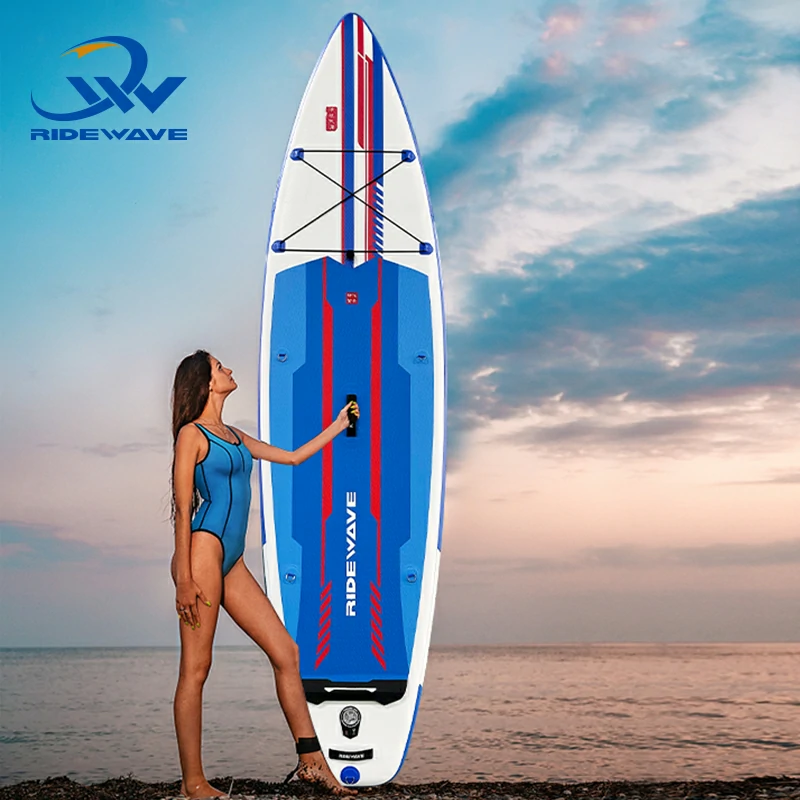
This real example highlights why pre-planning matters. Our team now advises Polish buyers to finalize sample confirmation, compliance documentation and production scheduling no later than Q3 to secure vessel space and avoid raw material bottlenecks. We also maintain backup accessory suppliers for key components such as fins, hand pumps and carry bags, reducing the chance a single missing part halts the full inflatable SUP production run.
You should also build contingency planning into your wholesale contract. Negotiate clear penalty terms for production delays, and confirm whether your supplier will assist if customs officials request supplementary compliance documents after arrival. Some factories wash their hands of paperwork issues once goods leave their facility, leaving the importer to resolve inspection requests alone.
Inventory cash flow is another logistics-linked consideration. Inflatable SUP takes up significant warehouse volume. Over-ordering can tie up working capital and increase Polish warehousing fees, especially for slower-moving niche SKUs like yoga iSUP. Many successful wholesalers use phased ordering: a smaller first container to test sell-through, followed by repeat orders once local retail demand is validated.
While supply chain challenges cannot be eliminated entirely, early scheduling, verified compliance files, and backup component sourcing drastically reduce the chance of costly shipment delays.
What costly inflatable SUP sourcing mistakes should Polish wholesalers avoid?
Even experienced B2B buyers can make avoidable errors when sourcing inflatable SUP for the Polish freshwater market. These mistakes do not always appear until your container arrives or once retail sales begin, and the financial damage can erase multiple seasons of SUP profit. Recognising these common pitfalls before signing your purchase order protects your cash flow, brand reputation and long-term partnership with Polish retail and rental customers.
Below are six expensive sourcing mistakes many iSUP importers repeat, along with practical steps you can take to steer clear:
Choosing suppliers purely based on the lowest unit price Cheap inflatable paddle boards rely on thin raw materials, weak seam bonding and generic reused certification files. The small upfront savings disappear quickly when you face leak complaints, product returns and market surveillance penalties. Always compare full landed cost, QC standards and compliance support rather than only unit price.
Skipping independent sample testing before bulk production Some buyers rely only on supplier-provided sample reports without running separate pressure and leak testing themselves. Factories may hand-build premium samples for approval and then switch to cheaper raw materials for mass production. Independent sample verification confirms the production version matches the sample quality you approved.
Ignoring local market requirements and ordering coastal-focused SUP models Importing surf or racing inflatable SUP for Poland's lakes is one of the most common inventory mistakes. These narrow boards have poor stability on flat freshwater, resulting in high return rates from family and beginner buyers. Your core SKU lineup must be built around stable all-round models suitable for inland water.
Underestimating compliance work and leaving paperwork to the last minute Many buyers assume the factory will handle all GPSR, CE and Polish-language documentation. In reality, the importer holds primary legal responsibility for products sold within Poland. Waiting until shipment is ready to request technical files or translated warnings often creates customs detention or forced product withdrawal.
Locking in oversized orders before testing local market demand Ordering full container loads of unproven custom SUP designs ties up large working capital. If local retailers or rental operators do not accept the colour scheme, sizing or features, you will be stuck with slow-moving inventory that incurs ongoing warehouse fees. Start small and scale gradually after positive market feedback.
Failing to clarify after-sales support terms in the purchase contract Some manufacturers refuse replacement parts or defect compensation once goods leave their factory. Before confirming production, define warranty coverage, spare fin/valve supply, and the process to resolve batch quality issues in writing. Without written terms, you carry all customer complaint costs alone.
RIDEWAVE's sales and compliance team regularly sees Polish buyers fall victim to these exact mistakes. We recommend new distributors begin with small trial orders and complete document reviews before committing to large container shipments. We also share a pre-order checklist to help customers audit supplier quality, paperwork and after-sales commitments before deposit payment.
Do not rush your sourcing timeline to meet a tight selling window. Rushed decisions are where most costly errors happen. Slow, methodical supplier vetting and sample validation take extra time, but this work safeguards your inflatable SUP wholesale business over multiple selling seasons.
The inflatable SUP market in Poland remains full of opportunity for wholesalers, rental operators and private label brands. The country's abundance of lakes and slow rivers creates steady demand for family-friendly, durable iSUP built for calm freshwater. But sustainable success does not come from rushing large orders or chasing the lowest-priced generic inflatable paddle boards. It comes from building a market-aligned product lineup, locking in solid compliance documentation, validating quality before mass production, and carefully managing supply chain timelines for your SUP inventory.
Your biggest competitive advantage in Poland will be understanding local water conditions and buyer habits better than overseas competitors. Most pan-European brands build their assortments around coastal paddling. When you focus your catalog on stable all-round boards, reinforced rails and practical features tailored to lakes and rivers, your product range naturally stands out to Polish retailers and rental businesses. Pair this with complete, ready-to-audit CE and GPSR paperwork, and you reduce the risk of customs delays or market surveillance penalties.
Private label is a powerful tool, but it should be treated as a gradual project rather than a one-time huge investment. Start with simple logo printing and custom packaging to test customer reaction. Once you gather sales data and feedback, you can consider deeper OEM customisation, new colourways, or specialised SKUs such as heavy-duty rental inflatable SUP. This phased approach keeps risk low while allowing your brand to evolve alongside market demand.
Supplier partnership matters more than a small discount per unit. A reliable manufacturer will provide consistent QC, timely compliance support, transparent communication on raw material delays, and clear after-sales terms. RIDEWAVE works with Polish distributors with exactly this long-term mindset. We do not view each order as a standalone transaction. Our compliance, design and production teams stay engaged through sampling, artwork approval, batch testing and post-delivery support, helping clients navigate EU regulatory rules and seasonal ordering cycles.
Planning ahead remains the single most important rule for outdoor sports wholesale. Polish retail and rental buyers lock in next season's purchases months in advance. Waiting until late Q4 to start sampling and production often means missing the spring selling window. Build your sourcing calendar around Q3 sample reviews and production confirmation, so you secure vessel space and avoid raw material shortages.
When you balance product performance, compliance, cash flow and timing, your SUP wholesale business can build repeat customers year after year. Avoid the temptation to cut corners on quality or documentation. Those shortcuts almost always create larger costs later in the form of returns, fines, damaged reputation and stranded inventory.
Related Articles
How Custom Paddle Boards Are Made: From Design To Production
OEM Vs ODM Paddle Boards: Which Is Better For Your Brand?
How To Choose The Right SUP Paddle Board Manufacturer
OEM Vs ODM: Which Inflatable SUP Model Is Right For Your Brand?
How Inflatable Paddle Boards Are Made: Inside The Manufacturing Process