
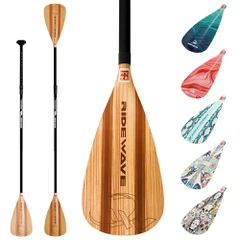

Inflatable SUP demand across Latin America keeps climbing year after year, and Brazil stands out as one of the most stable, high-potential markets for wholesale inflatable paddle board distributors, sporting goods resellers and private label brand operators. Many importers spend months comparing iSUP factories, weighing build quality, lead times, private label flexibility and after-sales support before locking in a long-term manufacturing partner. Brazilian dealers repeatedly turn to RIDEWAVE not for rock-bottom pricing alone, but because our wholesale inflatable SUP lineup is engineered to match local water conditions, retail price tiers and consumer habits along Brazil's extensive coastline, river networks and inland lagoons. If you want to look deeper into the production workflow that backs every board we ship to South American buyers, you can read How Custom Paddle Boards Are Made: From Design To Production to understand our material checks, drop stitch assembly and final QC testing process.
For B2B buyers sourcing inflatable SUP stock, the biggest risk is not finding a supplier who can make boards; it is finding a manufacturer who understands what Brazilian end customers actually buy, what survives hot, salty coastal environments, and what leaves enough profit margin for distributors, beach rental operators and outdoor retail stores. This guide breaks down the real challenges of selling inflatable SUP in Brazil, what features local retailers prioritize, how to build a balanced SKU mix, and how wholesale partners like RIDEWAVE remove friction from sampling, bulk production, customs documentation and repeat ordering. We will cover practical sourcing questions every Latin American iSUP importer faces, without overpromising sales results or leaning on empty marketing claims.
Why Is Brazil Becoming a Priority Market for Inflatable SUP Wholesale Buyers?
Brazil's geographic and cultural profile makes it one of Latin America's most attractive markets for inflatable SUP wholesale, and the growth curve for iSUP inventory keeps drawing the attention of international paddle board suppliers. More than 7,400 kilometres of coastline, paired with thousands of freshwater lagoons, rivers and reservoirs, creates year-round access for stand-up paddleboarding. Unlike many markets with short summer windows, large sections of Brazil stay warm enough for water sports across most months, which extends selling seasons for distributors, beach shops and rental operators.
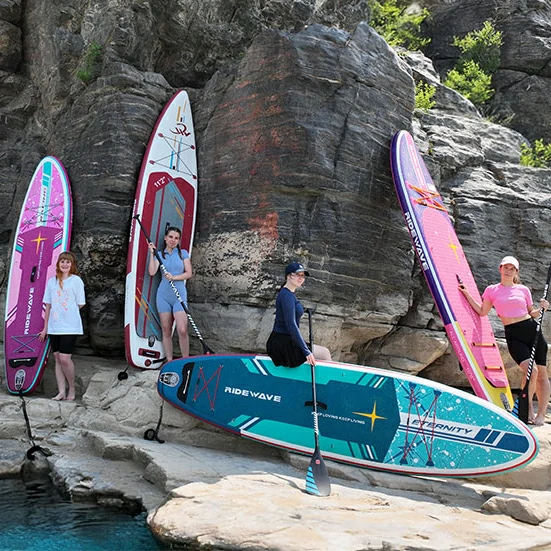
Hard paddle boards have long been available in Brazil, but they carry clear drawbacks for local resellers. Solid boards take up massive warehouse space, suffer high damage rates during last-mile delivery, and cost far more to ship inside the country. That is why inflatable SUP designs have steadily captured market share. Rollable, packable iSUP units cut storage pressure for retailers, reduce in-transit breakage, and open the category to casual families, beginner riders and travelling outdoor enthusiasts who would not consider a rigid board.
Broader global lifestyle trends also fuel local demand. Consumer interest in low-impact outdoor fitness, family-friendly water recreation, SUP surfing and eco-conscious active leisure has accelerated across South America. Local SUP clubs, coastal race events and beach yoga communities continuously introduce new participants to the sport. For wholesale buyers, this does not just mean more end customers; it means a more diverse buyer pool. A single distributor can stock inflatable SUP models for entry-level families, performance surf riders, yoga practitioners and inland freshwater anglers, all within one product category.
is important to ground this opportunity in realism. Rising demand does not automatically guarantee easy sales. Brazil's import landscape, local price sensitivity and competition from low-tier generic iSUP factories force serious distributors to source boards that balance durability, price point and consistent quality. This is where a manufacturer such as RIDEWAVE can add tangible value, by building wholesale SUP shapes that account for saltwater exposure, intense sunlight and rough handling common at Brazilian beach rental sites.
Many first-time importers underestimate how much local environmental stress shortens the service life of cheap inflatable SUP. Thin PVC, poorly bonded seams and low-grade drop-stitch material fail quickly under constant UV radiation and saltwater contact. Returns, warranty claims and bad customer reviews eat into distributor margins far faster than most buyers forecast. Choosing a factory that builds boards for these harsh conditions becomes a core competitive advantage for Brazil-focused resellers.
*Year-round warm water access lengthens retail and rental selling windows
*Compact iSUP packaging solves expensive domestic logistics and storage pain points for Brazilian retailers
*Diversifying end-user segments create room for multi-SKU SUP ranges instead of one-size-fits-all inventory
*UV and salt resistance become non-negotiable material requirements for coastal stock
*Low-quality generic inflatable SUP create a gap for reliable mid-tier wholesale suppliers
What Do Brazilian Distributors and Retailers Actually Expect From an iSUP Supplier?
Most overseas inflatable SUP factories frame their offering around low unit pricing and broad product catalogs. Brazilian distributors, however, judge wholesale partners on a much tighter set of priorities that tie directly to their ability to turn inventory into steady, repeatable revenue. A cheap iSUP that arrives with weak seams, inconsistent graphics, or incomplete documentation does not deliver value; it creates customer complaints, warranty overhead, and reputational damage that local sellers struggle to recover from in tight regional markets.
At the top of the list is construction built for local field conditions. Boards stocked for coastal Brazil need robust, UV-stabilized PVC, reinforced rail bonding, reliable drop-stitch fabric, and hardware that resists corrosion from salt spray. Retailers and rental operators do not just ask for "good quality"; they need inflatable SUP units that hold air reliably through dozens of sessions, stand up to hot storage inside beach kiosks, and survive rough handling by beginner renters. Many local buyers also want flexible accessory bundling, because Brazilian shoppers often prefer ready-to-use kits rather than purchasing paddles, leashes, pumps and carry bags separately.
Clear, predictable communication ranks second. Time zone gaps between Brazil and Asia already slow response cycles. Distributors need suppliers who share realistic lead times, flag material delays early, send verified production photos, and answer technical questions about SUP specs without generic replies. They want transparency around sampling timelines, revision rounds for private label artwork, and what documentation will be provided for customs review. Unplanned surprises at the bulk production stage can derail seasonal sales windows that Brazilian dealers spend months planning around.
Third, they need a supplier that understands margin structure. Brazilian importers must account for ocean freight, import duties, local inland transport, marketing, retail overhead and exchange volatility. A distributor cannot survive on thin gross margins alone. Good wholesale partners offer tiered pricing, spare parts support, and consistent quality so retailers can position their inflatable SUP lineup across entry, mid-range and premium price bands. This is one reason many seasoned buyers settle into long-term collaboration with RIDEWAVE: we avoid pushing every customer toward the lowest-cost board and instead help them build a balanced SKU stack matched to their own channel.
Fourth, compliance and paperwork support matters more than many new international buyers anticipate. Brazilian customs checks can be strict, and incomplete product descriptions or ambiguous material declarations slow clearance, add storage fees, or even hold shipments. A reliable iSUP manufacturer supplies accurate packing lists, commercial invoice details, material specification sheets, and test records the buyer can share with their local customs broker. We always remind partners that final classification, tariff rules and clearance decisions sit with local authorities, and our documents serve only as supporting reference material.
| Buyer Concern | Practical On-The-Ground Requirement | How A Trusted Wholesale Supplier Responds |
|---|---|---|
| Saltwater & UV durability | Boards for coastal rental and beach retail resist sun degradation and salt exposure | Spec UV-resistant PVC, reinforced rail seams, corrosion-resistant D-rings and fin hardware |
| Consistent air retention | No slow leaks after repeated inflation and heavy use | Standard air hold testing before packing, batch QC for drop-stitch and glue lines |
| Complete accessory kits | Local customers prefer all-in-one SUP packages | Offer configurable bundles: pump, adjustable paddle, leash, backpack, repair kit, fins |
| Transparent lead time tracking | Need to align shipments with Brazilian peak beach seasons | Share production milestones, photo updates, early warning for material bottlenecks |
| Customs-ready documentation | Avoid costly port holds and clearance delays | Provide standardized spec sheets, packing lists, material data for broker review |
| After-sales spare parts | Avoid dead inventory when small parts break | Keep spare fin screws, valves, leash rings available for wholesale partner restocks |
How Does RIDEWAVE Design and Manufacture Wholesale iSUPs for the Americas Market?
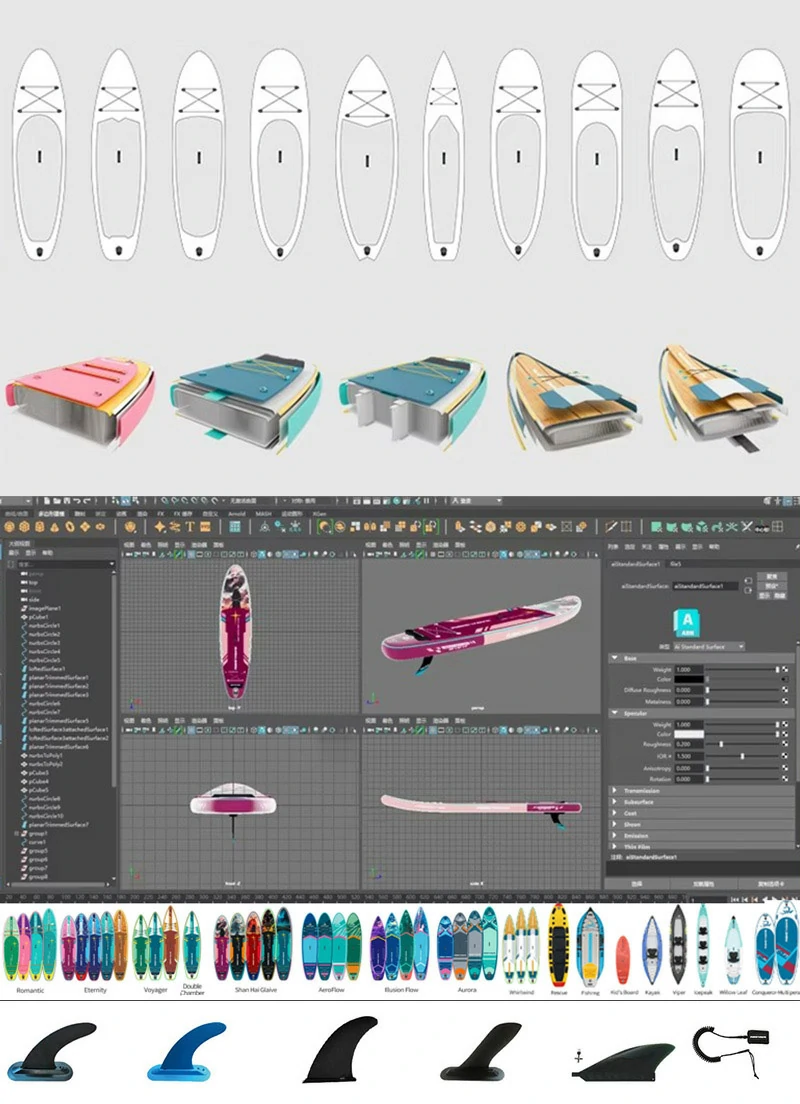
Designing and building inflatable SUP for the Americas is not a simple matter of taking a standard Asian-market paddle board and printing a new graphic on it. Water conditions, climate, consumer expectations and retail price bands shift dramatically from Canada down through the Caribbean and into Brazil, Argentina and other South American territories. At RIDEWAVE, our product development team builds wholesale iSUP platforms specifically calibrated for these regional variables, starting with material selection and running all the way through final batch quality control. Every design choice ties back to the practical challenges that distributors, rental operators and resellers face once the boards land in their local markets.
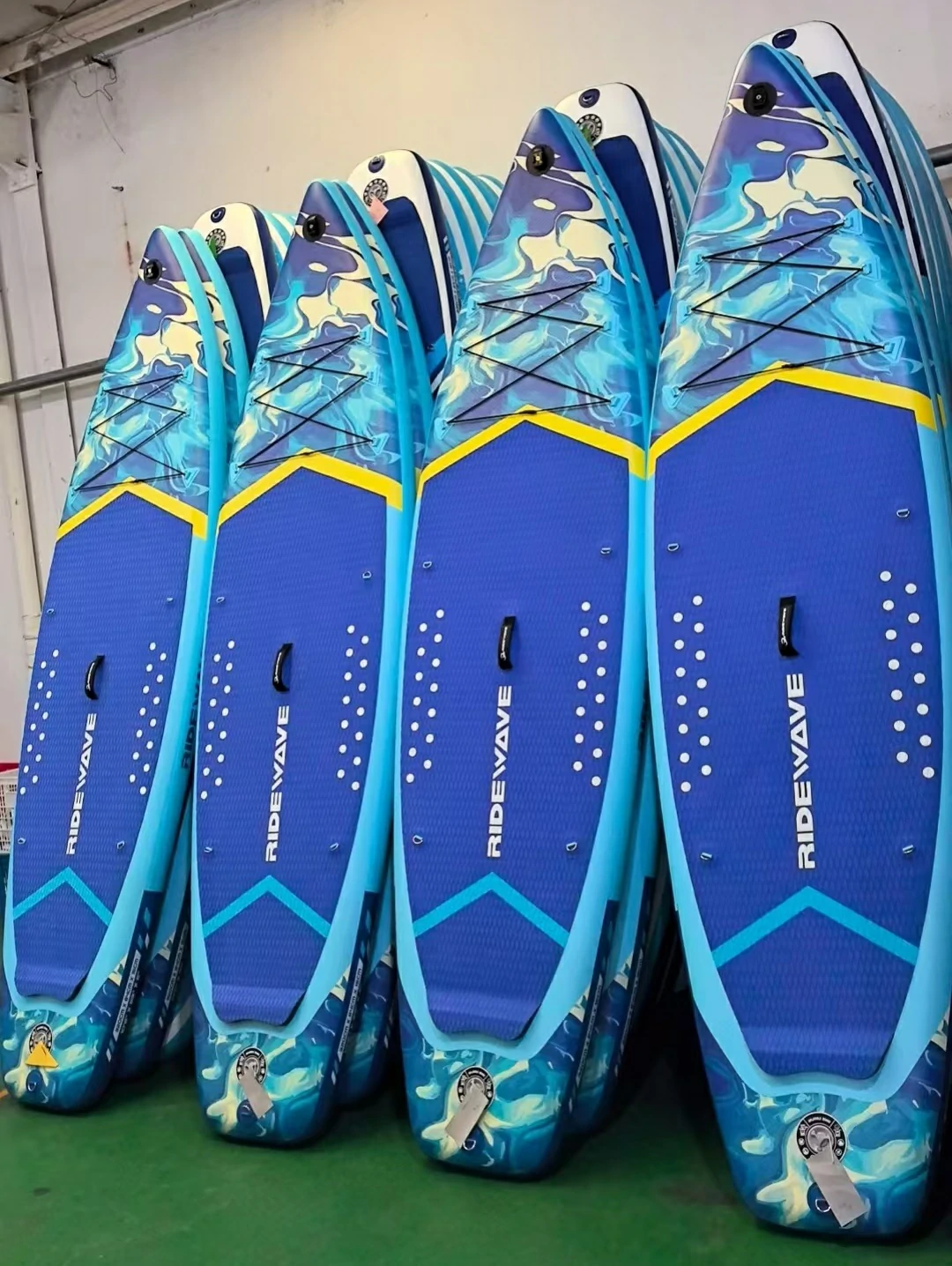
The foundation of every durable inflatable SUP is its drop-stitch core. For Americas stock, especially inventory heading to Brazil's coastal zones, we select high-tensile density drop-stitch fabric that maintains rigidity under heavy rider load and constant sun exposure. Paired with multi-layer UV-stabilized PVC lamination, this construction resists fading, surface cracking and delamination that commonly plague low-cost iSUP after just one beach season. Rail reinforcement is another key detail most budget manufacturers cut corners on. We add extra bonded PVC strips along the board rails because rails absorb the majority of impact during beach loading, docking, and collisions in choppy coastal water.
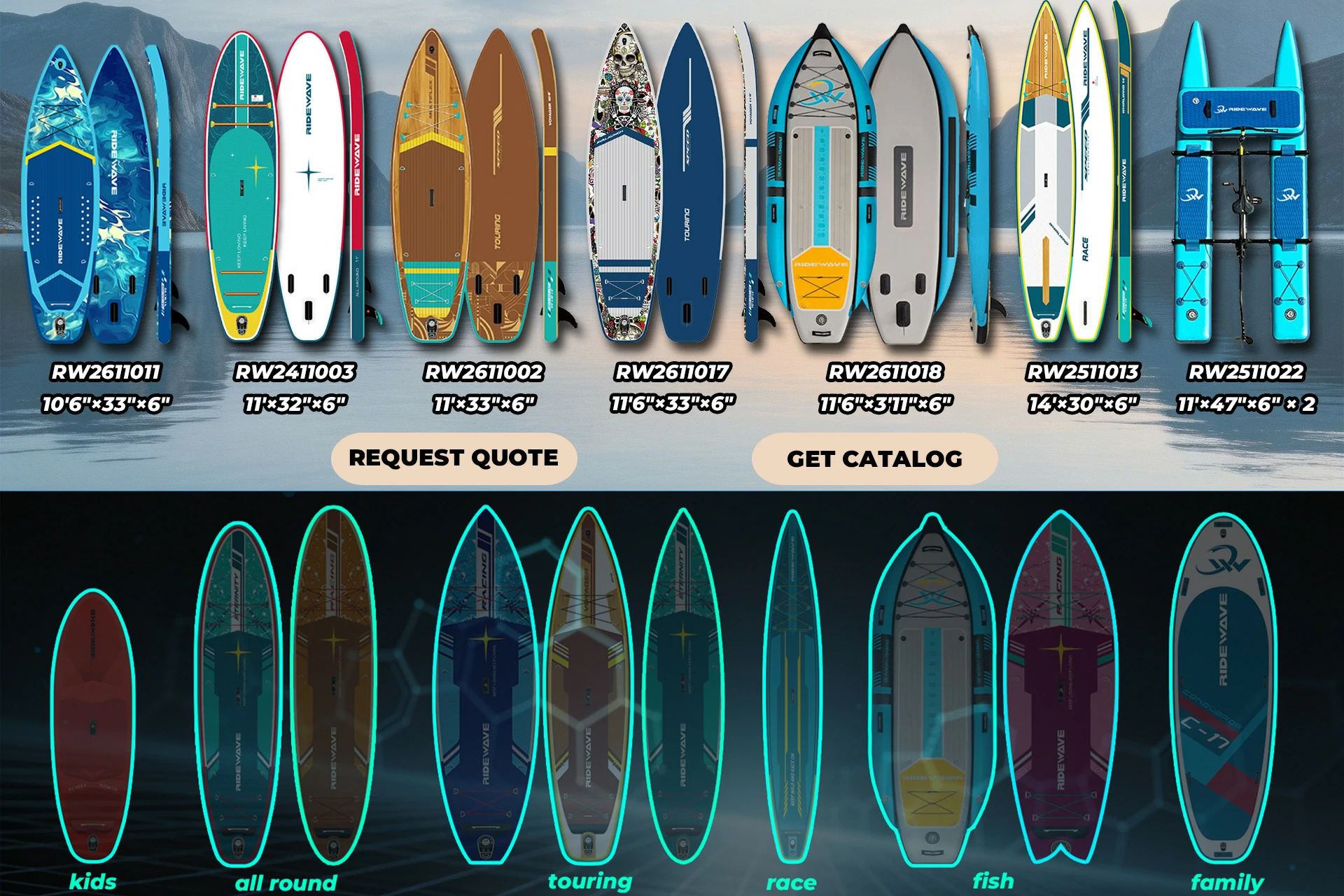
Shape geometry also receives region-specific tuning. All-around SUP models intended for Brazil balance stability and moderate glide, which works well for family beginners, casual day use and beach rental fleets. Touring shapes get a longer waterline and narrower profile for river and lagoon exploration. Surf-oriented iSUP carry a pulled-in nose, softer rocker and reinforced fin boxes to handle small to medium beach breaks common along Brazil's Atlantic coast. We do not force distributors into one universal shape; instead, we design a modular lineup so buyers can pick shapes that match the dominant water types their customers will use.
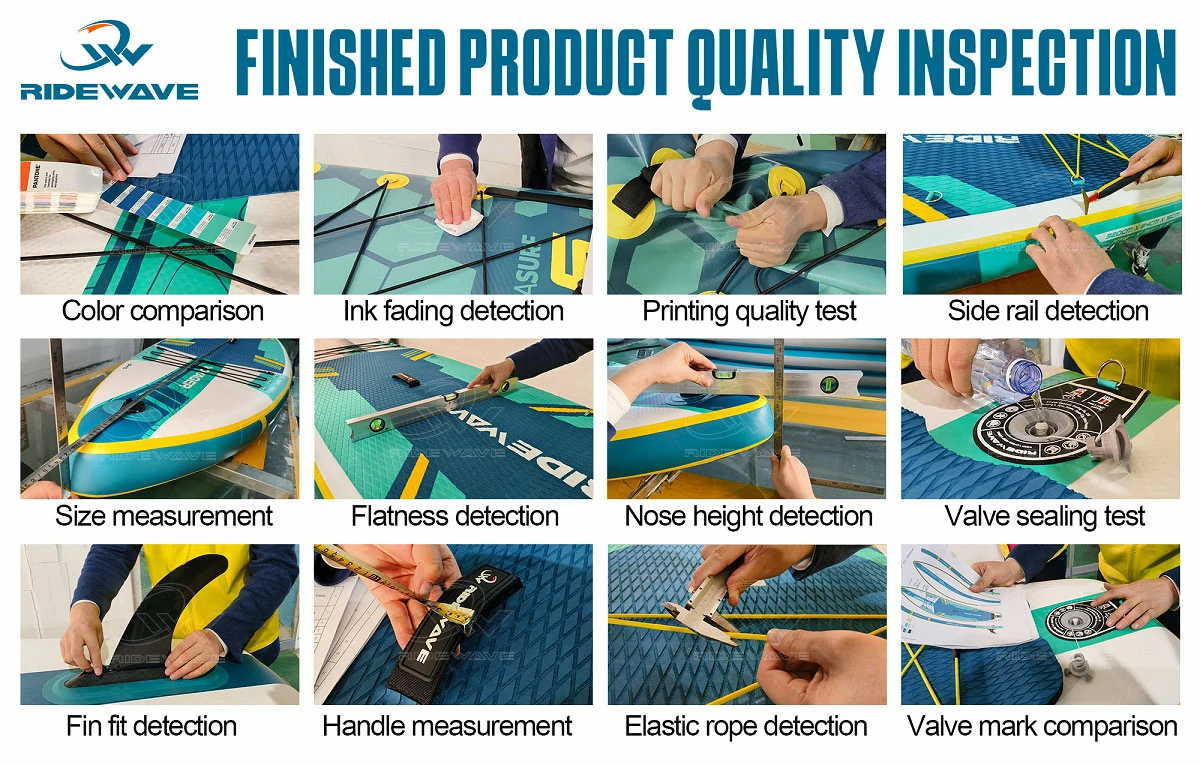
Our in-house QC workflow runs at multiple checkpoints and is consistent for both standard wholesale orders and private label batches. Material rolls are inspected before cutting; seams and rail bonds undergo visual and tactile checks; every finished board goes through a mandatory air hold test; accessory fitting and graphic alignment are verified before packing. If you want to dig deeper into each production stage from concept art to finished packed board, review How Custom Paddle Boards Are Made: From Design To Production to follow our full factory workflow.
*Regional climate and water conditions guide inflatable SUP material and shape choices for Americas buyers
*High-density drop-stitch and UV-resistant multi-layer PVC form the core of Brazil-ready iSUP construction
*Reinforced rail bonding addresses the high impact risks common at Brazilian beach rental sites
*Separate shape profiles for all-around, touring, surf and yoga use reduce mismatched inventory risk
*Multi-stage QC and a dedicated spare parts system support long-term distributor reliability
Which iSUP Categories Should Dealers Stock to Cover Different Brazilian Use Cases?
Many new inflatable SUP distributors make the same inventory mistake: they buy only one or two popular all-around shapes and hope the same board will satisfy every end customer. This simplified SKU strategy works for small trial orders, but it caps revenue potential and creates missed sales opportunities across Brazil's diverse water environments. Brazil's mix of calm inland lagoons, wide river stretches, open coastal surf zones and beach yoga spaces means successful dealers build a segmented iSUP catalog matched to distinct rider groups and activity types. A well-balanced SUP lineup lets distributors serve rental operators, family retail buyers, freshwater anglers, surf enthusiasts and fitness customers without competing against themselves on price.
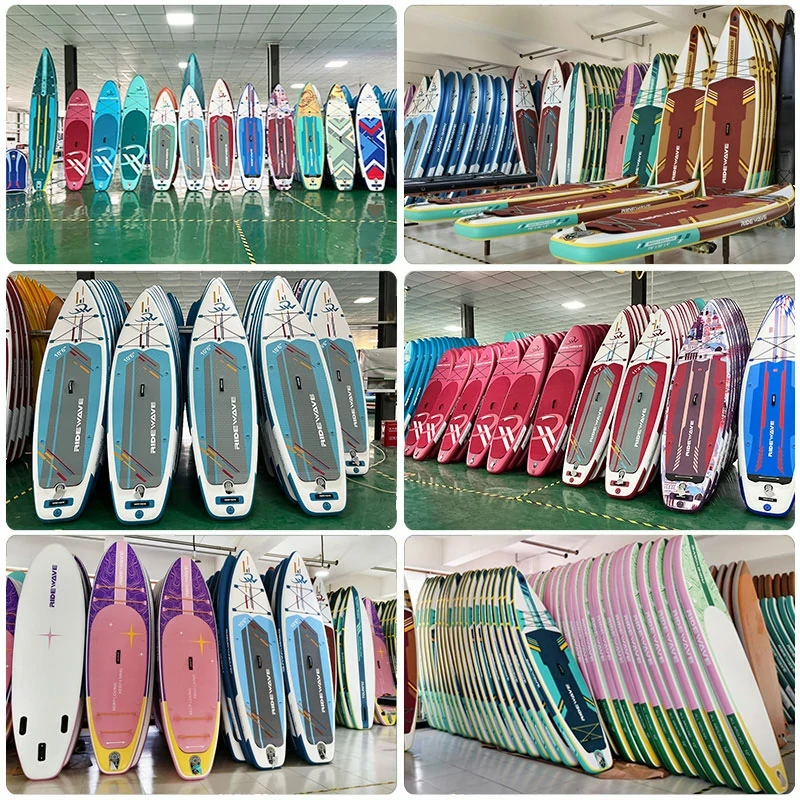
The all-around inflatable SUP remains the foundational SKU for nearly every Brazil-focused wholesaler. These boards are wide, stable, forgiving for new riders, and perform acceptably in flat water and small surf. They fit beach kiosks, entry-level online bundles and rental fleets that serve mixed casual traffic. This category drives high volume and turns inventory quickly, so it is the logical starting point for any first-time importer. That said, relying solely on all-around boards locks a distributor into crowded, low-margin segments where generic competitors fight on price.
Touring iSUP models fill a different niche. With longer lengths, narrower hulls and refined tracking, they are built for straight-line paddling across lagoons, large reservoirs and slow-moving rivers. Brazilian outdoor groups and adventure tour operators actively seek these boards for day trips and multi-hour excursions. Touring SUP buyers often have higher spending power and care more about glide efficiency than beginner stability, so this category supports healthier margin tiers.
SUP surf models are engineered for the Atlantic breakers found along much of Brazil's coastline. Compared to all-around boards, surf iSUP feature a pulled nose, tighter rocker, reinforced fin boxes and more responsive rail geometry. They are not the best choice for absolute beginners, but they attract dedicated surf riders and local SUP clubs that host competitions and group sessions. Retailers near surf towns can use this category to build brand authority and capture passionate repeat buyers.
Yoga and fitness inflatable SUP prioritise a wide, flat deck and soft, non-slip deck pad. These boards target beach yoga studios, wellness retreats and fitness instructors running water-based classes. They are less focused on speed and tracking, and optimised to hold steady while users shift poses. This segment is less price-sensitive than entry recreational boards, and many yoga operators order in bulk for class fleets.
Fishing iSUP represent another high-value niche. Built with extra D-rings, reinforced deck areas, mounting points for rod holders and weight capacity for coolers and gear, fishing SUP resonate with Brazilian freshwater anglers. Many inland river and reservoir regions have strong fishing communities, and these boards often sell as premium bundles with dedicated accessories.
| iSUP Category | Best Brazilian Use Environment | Target End User | Dealer Positioning Tip | Featured RIDEWAVE Reference |
|---|---|---|---|---|
| All-around inflatable SUP | Calm bays, small surf, lakes, general beach rental | Families, first-time riders, casual users | High-volume entry SKU, bundled kits for fast turnover | RIDEWAVE all-round iSUP |
| Touring inflatable SUP | Lagoons, long river routes, inland reservoirs | Adventure tour groups, intermediate paddlers | Mid-margin SKU, marketed for long-distance trips | RIDEWAVE touring iSUP |
| Surf inflatable SUP | Atlantic coastal beach breaks, small to medium surf | SUP surfers, local paddle clubs, competition participants | Premium performance SKU for surf-focused retail zones | RIDEWAVE surf iSUP |
| Yoga / Fitness inflatable SUP | Sheltered flat water, beach wellness zones | Yoga instructors, retreat centres, fitness studios | Fleet sales for classes, low price competition | RIDEWAVE yoga iSUP |
| Fishing inflatable SUP | Slow rivers, inland lakes, quiet reservoirs | Freshwater anglers, fishing guides | High-margin niche SKU, sold with fishing accessory packs | RIDEWAVE fishing iSUP |
What Customization and Private-Label Options Can Brand Owners Request?
Many Brazilian inflatable SUP resellers eventually outgrow generic unbranded stock. Once a distributor builds loyal local customer groups, private label becomes one of the most practical ways to lock in repeat buyers, build independent brand identity and avoid direct price competition with other importers carrying identical off-the-shelf iSUP inventory. Not all customization carries the same MOQ, and it is critical for B2B buyers to separate low-risk, simple branding adjustments from full custom board redesigns before locking in a production plan. This tiered approach lets brand owners test local market reaction without sinking large capital into unproven new shapes.
Basic private label is the most accessible starting point for new brand operators. This includes adding your logo on the deck pad, rail graphic, backpack, paddle blade and printed user manual. Color swaps on the existing board graphic, adjusted accessory packaging and custom printed hang tags also fall into this low-MOQ category. These changes do not require new moulds or revised cutting patterns, so lead times stay close to standard wholesale schedules, and sample revisions are faster. This is the entry point for most first-time private label buyers in Brazil, and it works well for rental fleets, local sports shops and regional online stores that want to present a unified branded look.
Mid-tier customization opens up deeper visual and packaging control. Buyers can request fully original graphic wraps across the board surface, custom deck pad colours and textures, bespoke accessory bundles tailored to Brazilian consumer preferences, and localised printed manuals in Portuguese. Many Brazilian distributors choose this level because Portuguese instructions reduce customer support workload after delivery. You can also adjust accessory assortments: removing items that sell poorly locally, adding high-demand extras such as extra D-rings, waterproof phone pouches or upgraded double-action pumps. If you want to build graphics and packaging that resonate with local shoppers, reading How To Design A Paddle Board That Sells will help you frame your design brief around what actually converts at retail.
Full ODM customisation represents the highest tier, with higher MOQ and longer development cycles. This includes modifying board dimensions, rocker lines, fin box layouts, D-ring placement and deck pad geometry for a completely unique SUP shape. This path suits established brands with strong market data, confirmed local demand and enough sales volume to absorb development costs. It is not recommended for buyers who are still testing whether the inflatable SUP category fits their channel. At RIDEWAVE, our design team works side-by-side with brand owners at every stage, sharing renderings, prototype photos and test feedback before mass production begins.
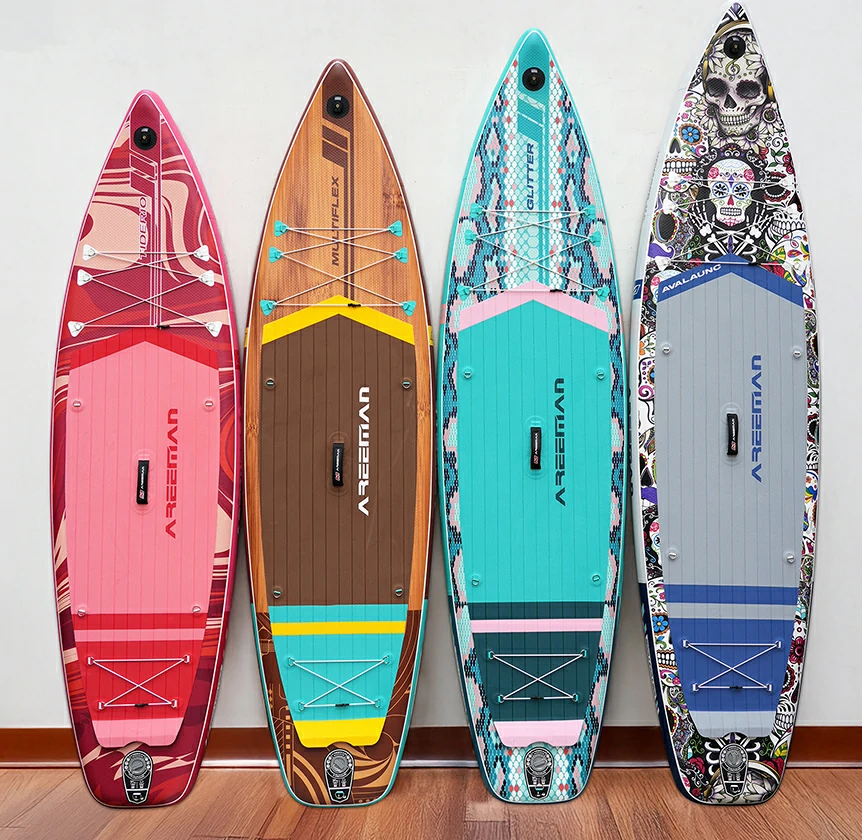
A common misconception among new buyers is that private label automatically means higher unit prices. In reality, simple logo printing adds only modest incremental cost, while the value comes from differentiation. Generic boards are easy for competitors to copy and match on price; a branded, locally tailored iSUP line helps distributors build customer trust and justify slightly higher retail price points. We also make it clear that custom artwork must be owned or licensed by the buyer, and we cannot produce graphics that infringe third-party trademarks or copyright.
What Import, Compliance and Shipping Details Should Buyers Check Before Sourcing From China?
Even when a distributor finds a reliable inflatable SUP manufacturer, poorly planned import and logistics arrangements can erase most of their expected profit margin. Brazil's import rules, port congestion, customs documentation requirements and currency volatility create a unique set of risks for buyers sourcing iSUP from Asian factories. Many new wholesalers only focus on factory unit price, and overlook landed cost - the total expense after freight, duties, local handling, customs brokerage and inland delivery. Understanding the full landed cost structure is non-negotiable before confirming any bulk SUP order.
Trade terms are the foundation of clear risk allocation. EXW, FOB and CIF are the most common agreements for wholesale inflatable SUP shipments. Under EXW, the buyer handles all trucking from the factory, export documentation, ocean freight and insurance. FOB means RIDEWAVE manages inland transport to the nominated port and export clearance, while the buyer covers sea freight, insurance and all destination-side risks. CIF includes sea freight and insurance up to the Brazilian port, but import duty, customs clearance and local delivery still fall to the buyer. No single term is universally better; the right choice depends on the buyer's logistics team, local broker network and willingness to manage shipping delays.
Buyers must confirm the correct HS classification with their local customs broker before ordering. Inflatable SUP can be classified under different tariff codes depending on construction, material and whether they are sold as complete kits. The factory can provide product specs, packing lists and material declarations to support the broker's review, but we cannot guarantee the final HS code or tariff rate. Brazilian customs authorities hold the final decision, and misclassification can trigger fines, cargo holds or unexpected duty charges. This is a top risk point for first-time iSUP importers into South America.
Shipping mode selection also shapes cash flow and inventory timing. FCL full container loads lower the per-unit freight cost for larger orders, while LCL less-than-container loads suit small trial orders that mix SUP with other water-sports accessories. It is common for Brazilian distributors to combine inflatable paddle boards, pumps, leashes and replacement parts into one consolidated LCL shipment for initial market testing. Lead times need to account for production, vessel scheduling, transit time and Brazilian port clearance delays, which can stretch longer than many buyers forecast during peak import seasons.
Document preparation is another critical step. Standard paperwork supplied by RIDEWAVE includes commercial invoice, packing list, bill of lading supporting data, material specification sheets and product photos. Some brokers may ask for additional declarations for PVC, plastic components or recreational sporting goods. We always advise buyers to share the document checklist with their customs broker in advance, so nothing is missing when the shipment arrives at Brazilian ports. Missing paperwork does not just slow release; it accumulates daily storage and demurrage fees that quickly eat into margins.
There are practical pre-order steps every Brazil-focused inflatable SUP buyer should build into their workflow. Ordering samples first lets the local team verify quality, packaging and labelling before committing to bulk volume. Locking in freight quotes early helps budget for exchange rate swings. Leaving buffer time between vessel arrival and peak retail seasons prevents stockouts if clearance slows down. These small, consistent habits reduce the chance of costly surprises after an iSUP shipment departs China.
The table below summarises core logistics and compliance considerations for inflatable SUP shipments to Brazil.
| Topic | Items To Confirm With RIDEWAVE | Items To Confirm With Your Local Brazilian Broker |
|---|---|---|
| Trade Term | Agree EXW / FOB / CIF; confirm loading port and export documents | Clarify who handles import filing, taxes and destination delivery |
| HS & Tariff Support | Supply construction specs, material sheets, kit contents | Issue official HS ruling, confirm duty, tax and ICMS obligations |
| Shipping Type | Confirm packaging dimensions, carton weight, stackability for FCL/LCL | Advise port preference, peak season congestion risk, detention rules |
| Documentation Package | Commercial invoice, packing list, material spec, product images | Provide broker-specific declaration templates or extra forms required |
| Lead Time Planning | Production timeline, ready date, vessel booking window | Estimated clearance duration, storage and demurrage fee structure |
How Does RIDEWAVE Balance Wholesale Pricing, MOQ and Margin Protection for Distributors?
Many inflatable SUP wholesale buyers fall into one of two frustrating traps: either the factory pushes a rock-bottom unit price tied to unattainably large minimum order quantities, or low MOQ orders carry such steep per-unit costs that local retail margins disappear before the stock even lands in Brazil. At RIDEWAVE, our pricing and ordering framework is built around tiered flexibility, because we recognise that iSUP distributors sit at vastly different stages of business. Some operators are testing the water sports category for the first time with small trial shipments, while established regional retailers and rental fleets need consistent volume pricing to compete steadily across beach and inland markets.
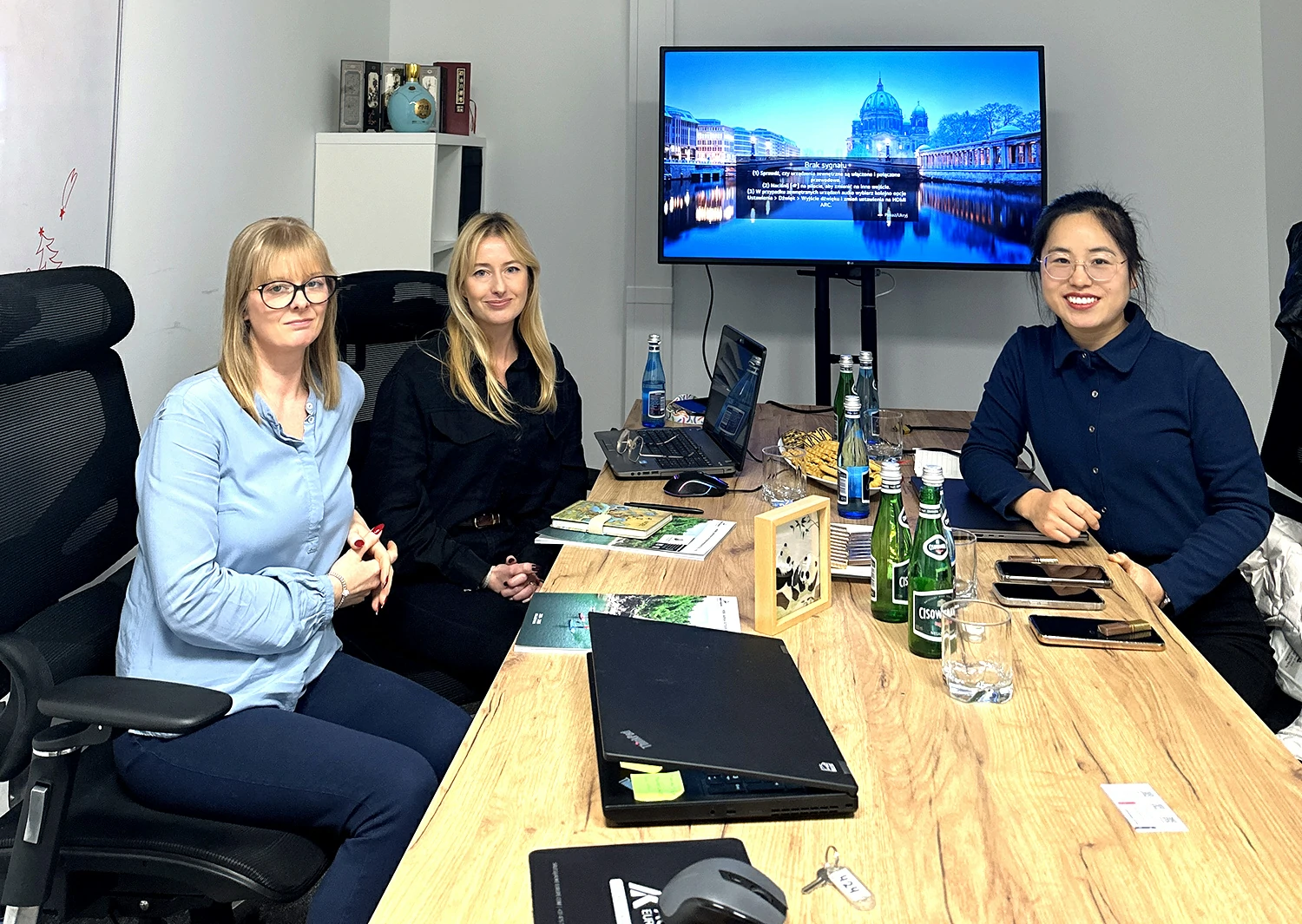
Our tiered MOQ structure separates trial stock, mid-volume repeat orders and full container commitments. Trial-level batches are designed for new distributors who want to validate local demand for inflatable SUP without overexposing capital. The unit price is higher than full-container pricing, but the risk is contained. This gives buyers room to test multiple SKUs, such as all-around, yoga and surf SUP models, before locking in a larger commitment. Mid-volume brackets apply to buyers who have already confirmed steady turnover; these customers receive better unit pricing and can mix different board shapes within the same order, without hitting FCL scale. Full-container pricing delivers the lowest per-board cost, reserved for mature partners with predictable monthly sales and established retail channels across Brazil.
A core part of margin protection is avoiding reckless price erosion within the same regional market. We do not share customer pricing lists, and we ask our wholesale partners to respect their own retail positioning rather than race to the lowest advertised price. We also avoid selling identical generic inflatable SUP stock to competing local retailers in the same city unless the customer uses distinct private label branding. This is not a rigid territorial restriction, but a practical guardrail to preserve the value of the inventory our partners invest in. Cheap, unbranded commodity iSUP markets collapse quickly when multiple sellers flood the same area with identical goods; private label and thoughtful SKU mixing help prevent that dynamic.
Transparent pricing also means we separate board cost, accessory upgrades, custom artwork charges and freight estimates clearly on every quotation. Many SUP factories bundle or hide add-on fees, which creates unpleasant surprises once the buyer is ready to place the order. Our quotes break out standard kits, upgraded pumps, custom deck pads, bespoke graphic wraps and spare parts independently. This structure lets distributors build their package to match their target retail price band, rather than paying for features their local customers will not value.
Spare parts support also acts as quiet margin protection. When a valve, fin screw or leash ring fails, distributors do not need to write off an entire inflatable SUP or absorb the cost of sending a full replacement board. We keep common replacement components available for wholesale partners at low incremental cost. This reduces warranty-related losses, keeps customer satisfaction higher, and prevents small component failures from turning into expensive returns or public negative reviews.
Real-World RIDEWAVE Partner Case Study: A Brazilian Coastal SUP Rental & Retail BusinessDescription
Case examples help new inflatable SUP buyers turn abstract sourcing rules into actionable decisions. This is a real anonymised partner story from a coastal Brazil operator, combining beach rental fleets and a small retail store. The owner previously sourced generic iSUP from multiple low-cost suppliers, and ran into recurring issues: fast UV fading, seam leaks, inconsistent graphic quality, slow factory replies and almost no spare parts support. Rental boards failed after only one or two seasons, warranty complaints piled up, and the business lost repeat local customers.
The operator first reached out to RIDEWAVE for a small trial batch of mixed inflatable SUP. They selected high-volume all-around SUP for rental use, plus a smaller quantity of surf and yoga models for retail sales. They chose basic private label: their local brand logo printed on deck pads, backpacks and paddle blades, without full custom graphic wrapping. This kept sample cost and lead time manageable, while letting them separate their fleet from unbranded generic boards sold by nearby competitors.
From the material side, the UV-stabilized PVC and reinforced rail construction solved their biggest pain point. Boards left outdoors under intense Brazilian sunlight maintained colour and air retention far longer than their old stock. Because we included a structured spare parts pipeline, the rental team could swap valves, fin hardware and repair small damage on-site instead of retiring whole boards. This directly cut annual fleet replacement spending.
After six months of stable turnover, the partner moved from small mixed trial batches to mid-volume repeat orders. They added Portuguese printed manuals and upgraded double-action pumps to their standard kits, which reduced customer support messages for retail sales. They also began to reserve occasional FCL shipments ahead of Brazil's peak summer beach season, locking in better unit pricing and avoiding freight spikes during busy shipping windows.
Not every part of the transition was seamless. Their initial landed cost calculation underestimated inland transport and ICMS charges, so they adjusted their retail pricing model after the first shipment. They also learned that surf SUP sold slower than all-around models in their specific town, so they reduced surf SKU share and allocated more budget to family-friendly all-around and yoga units. This iterative inventory tuning is normal for new iSUP businesses, and we share sales feedback calls with partners to refine future SKU mixes.
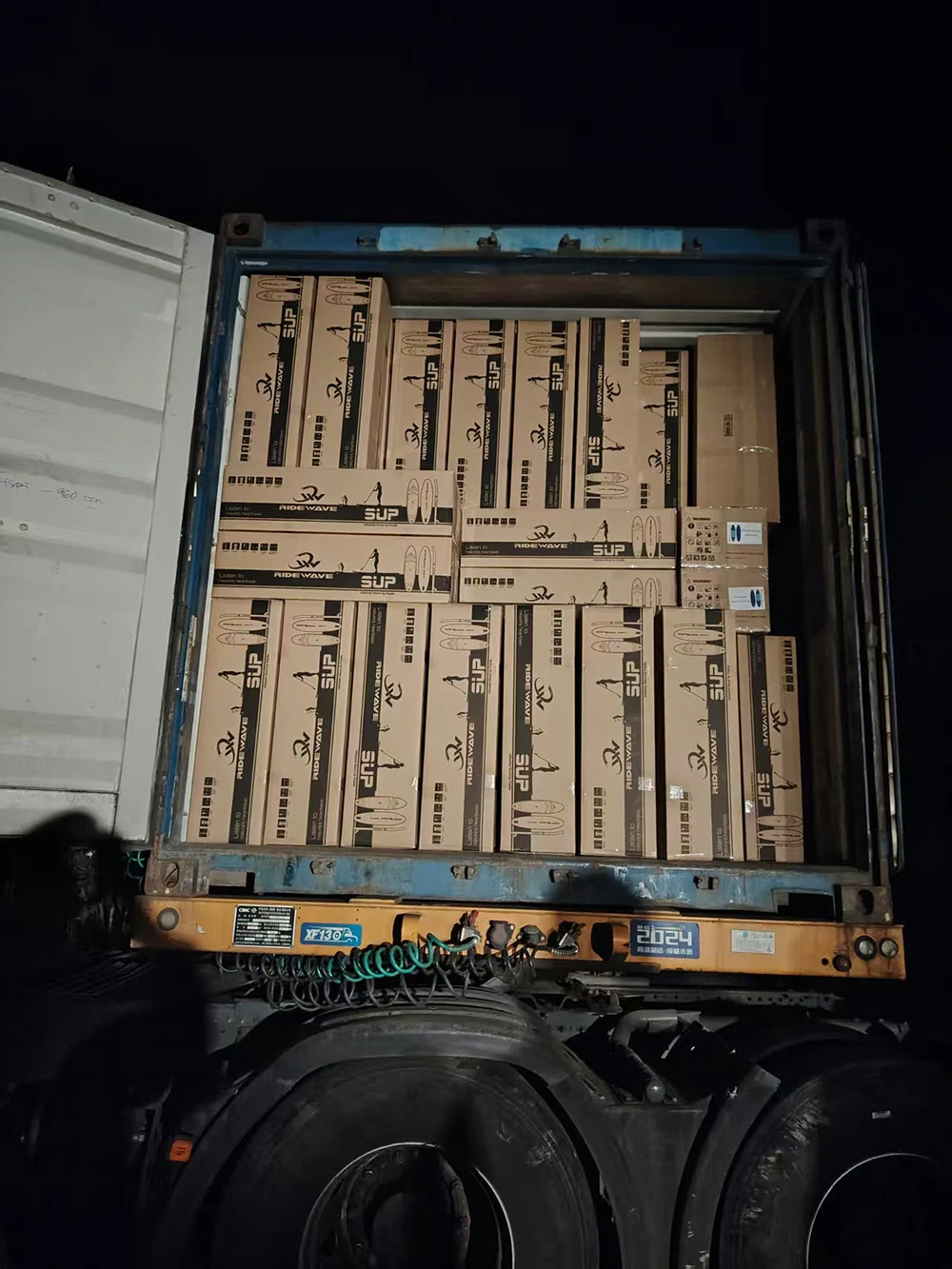
This partner's core lesson is simple: durable inflatable SUP construction, predictable communication and accessible spare parts support matter more than chasing the lowest upfront unit price. Rental and retail profitability depends on how many seasons each board stays in service, not just the cost written on the factory invoice.
What Final Checks Should You Complete Before Confirming Your Brazil Inflatable SUP Order?
Even after settling on SKU mix, customization level, pricing and shipping terms, a short pre-order checklist prevents costly oversights when importing inflatable SUP to Brazil. Many distributors rush to lock production once they receive a favourable quotation, only to discover mismatched specs, incomplete artwork, or gaps in documentation that delay shipments or hurt retail performance. These final checks are designed to catch issues before fabric is cut and production begins.
First, validate every board specification against your local market needs. Confirm dimensions, weight capacity, drop-stitch density, PVC grade and UV rating. Double-check accessory contents for each kit: pump type, paddle material, leash length, fin style and repair kit components. For Brazil, confirm whether you need Portuguese printed manuals, local safety labelling, or warning text. A common mistake is approving standard English packaging only to find retail customers struggle to understand setup and safety instructions.
Second, sign off on all custom artwork and branding files. If you selected private label, verify logo placement, colour codes, font size and graphic alignment on the board, backpack, paddle and hang tags. Review mockups carefully, and confirm you hold full copyright or licensing rights for all imagery. At RIDEWAVE, we will not proceed to mass production until you provide written approval for the final artwork proof. This avoids rework charges and schedule delays caused by last-minute design changes after production starts.
Third, confirm landed cost in full with your logistics broker and freight forwarder. Reconfirm ocean freight, local port fees, customs duties, ICMS, inland transport, brokerage fees, insurance and estimated demurrage rules. Do not rely only on factory FOB pricing to build your retail budget. Ask your broker whether any special declarations for plastic sporting goods or PVC materials are required at Brazilian customs. This is also the time to confirm the agreed trade term, loading port and latest vessel booking window.
Fourth, lock in sample validation. If you have not already tested a physical sample, schedule sample inspection before bulk production. Physical testing lets you verify air retention, deck pad grip, rail stiffness, hardware corrosion resistance and how the kit holds up under inflation cycles. Photos and renderings cannot fully replicate the feel and durability of a finished inflatable SUP. For rental fleet buyers, sample testing is especially critical, as fleet boards face heavy repeated use.
Fifth, align production and shipping timelines with your local selling calendar. Brazil's peak beach season runs through warmer summer months. Build buffer time for production, vessel transit, Brazilian port clearance and inland delivery. If you arrive too late, you miss the core selling window; rushing production increases the risk of quality shortcuts. Agree on the ready date and ask for periodic production photos so you can track progress without constant follow-ups.
Sixth, confirm after-sales and spare parts terms. Review which parts are covered under the standard wholesale support, lead time for spare part replenishment, minimum order quantity for replacement components, and how to submit a quality claim. Clear agreement here prevents disputes if valves, fins or D-rings need replacement after the shipment arrives in Brazil.
Final Summary & Next Steps for Brazilian Inflatable SUP Wholesale Buyers
Sourcing durable inflatable SUP for Brazil is not only about finding the lowest unit price. Successful distributors build their strategy around regionally tuned materials, balanced SKU mixes, clear private label differentiation, full landed-cost budgeting, and reliable after-sales spare parts support. Brazil's strong sunlight, saltwater coastal conditions, complex import rules and seasonal summer demand create a unique operating environment that generic off-the-shelf iSUP and low-cost factories are not built to serve.
To recap the core takeaways from this guide:
Material choices must prioritise UV-stabilised multi-layer PVC and high-density drop-stitch, with reinforced rails to withstand Brazil's intense sun and coastal impacts.
A healthy lineup combines high-turnover all-around SUP with niche touring, surf, yoga and fishing models to balance volume and margin.
Private label is a scalable, low-risk way to escape commodity price competition; simple logo branding is the best starting point for new operators.
Import planning must centre on landed cost rather than factory price alone, and buyers need to work closely with local brokers to confirm HS classification, ICMS, duties and documentation.
Tiered MOQ options let new distributors test the market with small batches before committing to full container volumes.
Pre-order checks covering specs, artwork approval, sample testing, timeline buffers and spare parts terms prevent expensive mistakes after shipment departs China.
Spare parts access extends fleet life, cuts warranty losses and keeps rental and retail customers satisfied over multiple beach seasons.
If you are ready to move forward, these are your clear next steps as a Brazil-focused inflatable SUP buyer:
Step 1: Define your channel type - retail store, beach rental fleet, online shop or mixed model - and set your target retail price brackets.
Step 2: Pick your initial SKU mix, starting with all-around boards and adding one or two niche categories aligned with your local water types.
Step 3: Decide your customization level: unbranded stock, basic private label logo print, mid-tier custom graphics, or full ODM shape development.
Step 4: Request formal samples, complete on-site inflation and durability testing, and confirm Portuguese packaging and manuals if required.
Step 5: Share your shipment details with your Brazilian customs broker to lock in HS code, tax structure and all required import paperwork.
Step 6: Ask RIDEWAVE for a fully itemised quotation separating board cost, accessory upgrades, custom fees, and estimated freight.
Step 7: Confirm production timeline, artwork proof approval process, spare parts terms and quality claim procedures before signing off on the order.
At RIDEWAVE, we do not treat every Brazil buyer the same. A small beach rental operator needs a different package from a national sports retailer or an online water-sports brand. Our wholesale team will adjust SKU recommendations, MOQ structure and customisation workflows to match your business scale, local customer base and sales goals. We focus on long-term repeat partnerships rather than one-off container sales, because stable demand for inflatable SUP in Brazil comes from distributors who can keep their customers happy year after year.
The Brazilian market for paddle sports keeps growing. Buyers who avoid race-to-the-bottom pricing and invest in durable, regionally optimised iSUP inventory will capture the most sustainable share of that growth.
Related Articles
Argentina Import Guide: Customs Rules & Documentation For Bulk Inflatable Paddle Boards
Fishing Inflatable SUPs: The High-Margin Niche For Argentine Water Sports Wholesalers
OEM & Private Label Inflatable SUPs: A Complete Sourcing Guide For Argentina Dealers
Drop Stitch Inflatable SUPs: What Quality Specs Matter For South America Market
How To Choose A Reliable Inflatable SUP Manufacturer For Argentina Bulk Orders