


When sourcing drop stitch inflatable SUPs for South America's diverse coastal, river and lake trade, many B2B wholesalers, distributors and watersports brand owners fall into the same costly trap: judging a board only by its listed price, rather than the material, construction and testing specs that determine real-world durability, return rates and long-term margin. While customisation can help you match local consumer preferences, every custom choice needs to tie back to field performance standards you can verify at the factory, as outlined in How Custom Paddle Boards Are Made: From Design To Production. South America's market brings unique environmental and regulatory hurdles that set it apart from North American, European or Australian inflatable SUP supply chains, from intense year-round UV exposure and abrasive volcanic and quartz sand beaches to shifting import compliance rules and popular rental fleet use cases. Not all drop stitch iSUP cores are built equal, and a spec sheet that works well for a temperate lake in Canada may fail quickly on a sun-baked Brazilian shoreline or rocky Chilean cove.

For buyers planning to expand their SUP catalogue, the goal is simple: select inflatable stand up paddle boards that balance landed cost, batch consistency, warranty risk and local market demand. Too many new entrants to the Latin American watersports space prioritise low unit pricing, only to face high after-sales volumes, delayed customs clearance because of missing test documentation, and unhappy retail or rental clients that damage their brand reputation. This guide breaks down exactly which quality metrics you need to audit before locking in bulk orders of drop stitch paddle boards, with practical benchmarks, comparison tables and real factory field insights that you can pass directly to your purchasing and quality teams. At RIDEWAVE, as a manufacturer specialising in commercial-grade inflatable SUP, we work regularly with Latin American distributors to align board specifications with their local operating conditions; we do not push one universal board model for every country, but instead help buyers match specs to their target sales channel, whether that is family retail, tourist rental fleets, beginner packs or premium performance lines.
This article answers the core sourcing question: what quality specs actually matter for drop stitch inflatable SUPs sold into South America? It moves past generic marketing language and focuses on verifiable, testable criteria for drop stitch core density, PVC laminate grades, seam construction, valve reinforcement, import certification, pressure retention testing and inventory-friendly board shapes. Whether you are an established SUP wholesaler adding new SKUs, a general watersports brand testing your first inflatable paddle board line, or a rental operator building out a fleet for beach resorts, these benchmarks will help you reduce defects, cut return rates and protect your profit margin in a volatile Latin American import market.
Why is South America's SUP market a distinct sourcing environment for drop stitch inflatable boards?
South America's SUP market demands tailored drop stitch inflatable SUP specifications because its environmental stressors, channel structure and import rules differ sharply from North American, European and Australian watersports markets. Many overseas suppliers build their standard inflatable paddle board lines around temperate freshwater lakes and mild coastal conditions, where UV intensity is moderate, shorelines are sandy rather than abrasive, and import documentation frameworks stay consistent year after year. That default spec will underperform quickly once deployed across Brazil's tropical Atlantic coast, Chile's rocky Pacific shore, Argentina's wind-scoured lakes and Peru's high-altitude river systems.

Distributors across Latin America also rely heavily on rental-grade inflatable SUP fleets as their highest-volume revenue stream, a dynamic that changes what you need from raw materials and construction. A retail-only board built for occasional weekend use cannot withstand repeated inflation, heavy rider loads, constant contact with sharp volcanic sand and uninterrupted equatorial sunlight. On top of field wear, every country maintains separate testing, labelling and customs requirements for blow up paddle board imports; paperwork that clears goods into Chile may trigger delays or rejection when shipping to Brazil.
Many first-time SUP importers underestimate these regional gaps and select generic Asian factory stock, only to discover rising warranty claims, customer complaints and stuck shipments months after their order lands. This is not a failure of the drop stitch concept itself, but a mismatch between one-size-fits-all product specs and local operating reality. At RIDEWAVE, our engineering team regularly reviews field feedback from partners across the continent to separate universal iSUP quality standards from region-specific adjustments, rather than pushing identical inventory to every Latin American buyer.
When mapping out your SKU plan for this territory, you must separate three core variables: local climate, primary sales channel and national import compliance. These three factors will shape every later decision around core density, PVC grade, seam design and accessory bundles.
What drop stitch core metrics should B2B buyers verify before confirming bulk orders?
Before locking bulk inflatable SUP orders for South America, B2B buyers must verify thread density, thread tensile strength, core flatness under load, maximum rated PSI and core consistency across production batches for every drop stitch core. The drop stitch core defines rigidity, load-bearing performance and long-term shape retention, and it is the single most frequently misrepresented specification on generic supplier spec sheets. Many factories quote a general "drop stitch" label without sharing test reports for the stitching material, which becomes a critical failure point for boards used on hot, abrasive South American shorelines.
A cheap drop stitch core with low thread density will flex heavily under rider weight, warp after repeated sun exposure and develop slow air seepage along stitch points. For retail beginner boards targeting casual users, a lower density core can work for temperate markets, but it cannot survive the high utilisation rental fleet model common in Brazil, Uruguay and Chile. You should always ask suppliers to separate core test data from PVC fabric data; these two sets of performance numbers are often blended together on simplified marketing spec sheets.
Every custom modification to the board shape, length and weight capacity will change the core requirements, as explored in How Custom Paddle Boards Are Made: From Design To Production. A wide, stable family SUP designed for two riders needs a stronger core than a narrow touring board for single advanced paddlers. RIDEWAVE shares independent third-party core test certificates with all B2B buyers ahead of mass production, so distributors can compare lab results against their own local use requirements instead of relying only on factory self-reported data.

Do not rely solely on sample board testing. A perfect hand-made pre-production sample can hide batch variation. Request random batch inspection records and loaded flatness test results from your manufacturer, to confirm that core quality stays consistent across thousands of units.
How do PVC lamination and fabric grades impact board lifespan in South America's hot, abrasive shore conditions?
PVC lamination structure, fabric weave and UV stabiliser loading directly determine how many seasons your drop stitch inflatable SUP can survive South America's intense sunlight, sharp sand and frequent contact with rock and shell. Many buyers fixate only on the total PVC thickness printed on spec sheets, but raw mil thickness alone tells you very little about abrasion resistance, heat resistance or delamination risk. A thick, low-grade PVC without proper UV inhibitors will turn brittle, crack and peel after just a few months under equatorial sun, even if the board never hits a rock.

South America's shorelines bring two overlapping failure modes for inflatable paddle board fabric: abrasive wear from volcanic sand, quartz grit and broken shell, plus thermal degradation from prolonged high-temperature exposure. Standard single-layer PVC that works well for indoor pools or temperate European lakes will develop micro-tears on the deck and rail after regular beach use. Most commercial-grade iSUP built for this region rely on multi-layer composite lamination, where a woven polyester base carries tensile load, and coated PVC layers deliver air retention and surface protection.
Not all multi-layer builds perform equally. Budget factories sometimes glue thin PVC films together with heat-sensitive adhesive that softens at sustained high temperatures. When boards sit fully inflated on hot sand for hours, weak adhesive bonds separate, creating bubbling and delamination between fabric layers. This issue rarely appears during short factory QC checks in air-conditioned workshops, so it is a hidden failure mode that only emerges after delivery to Latin American distributors.
At RIDEWAVE, our fabric sourcing team separates UV stabiliser batches and runs accelerated weathering tests before signing off new fabric rolls. We do not rely only on supplier fabric certificates; we expose sample swatches to continuous UV cycling and thermal ageing to mimic 12+ months of outdoor use in Brazil or northern Peru. This does not mean every board must use the heaviest fabric available. A lightweight touring inflatable SUP for retail customers who mainly paddle inland rivers can use a balanced mid-weight laminate, while rental fleet SKUs for open coastal beaches need reinforced top and bottom lamination.
When evaluating fabric, ask your supplier for three separate lab reports: abrasion resistance, UV ageing retention and peel strength between laminated layers. These three metrics are far more predictive of real-world performance than simple mil thickness.
What seam, valve and reinforced-point specs cut rental fleet failure rates for Latin American distributors?
To reduce rental fleet breakdowns for Latin American distributors, you must validate heat-weld seam width, seam overlap design, valve base reinforcement, rail patch layout and handle anchor reinforcement on every drop stitch inflatable SUP. Seams and valve junctions are the highest-failure zones for heavily used rental boards, far more often than core fabric tears. Many low-cost iSUP manufacturers cut corners on weld width and reinforcement patches because these details are invisible once the board is fully inflated.
Glued seams are not suitable for coastal rental use across South America. Adhesive bonds degrade quickly under cyclic heating, salt spray and sand abrasion. Only continuous high-frequency heat welding creates airtight, flexible seams that tolerate repeated inflation and heavy handling. Even with heat welding, narrow welds will split along the seam edge when the board flexes under load. For entry retail boards aimed at light, occasional use, narrower welds may be acceptable, but rental-grade inflatable SUP require a consistent, verified weld width across the full perimeter.
Valve failure is the second most common after-sales complaint from SUP rental operators. Cheap screw valves with thin plastic bases pull loose after repeated twisting, bumping and board dragging across sand. The best construction for Latin American beach fleets uses a reinforced PVC valve pad fused directly into the weld line, rather than a simple patch glued on top. Double-lock inflation valves with debris covers also reduce sand from entering the air chamber; sand grains trapped inside the valve seat stop the seal from closing fully and cause slow leaks.
High-stress reinforcement points include carry handles, D-ring anchor points, bungee cord bases and rail impact zones. These locations take constant pulling, rubbing and impact. A missing or undersized reinforcement patch will tear away from the board after dozens of rental cycles. Distributors often overlook these small patches during sample review, because they focus on overall board shape and colour printing.
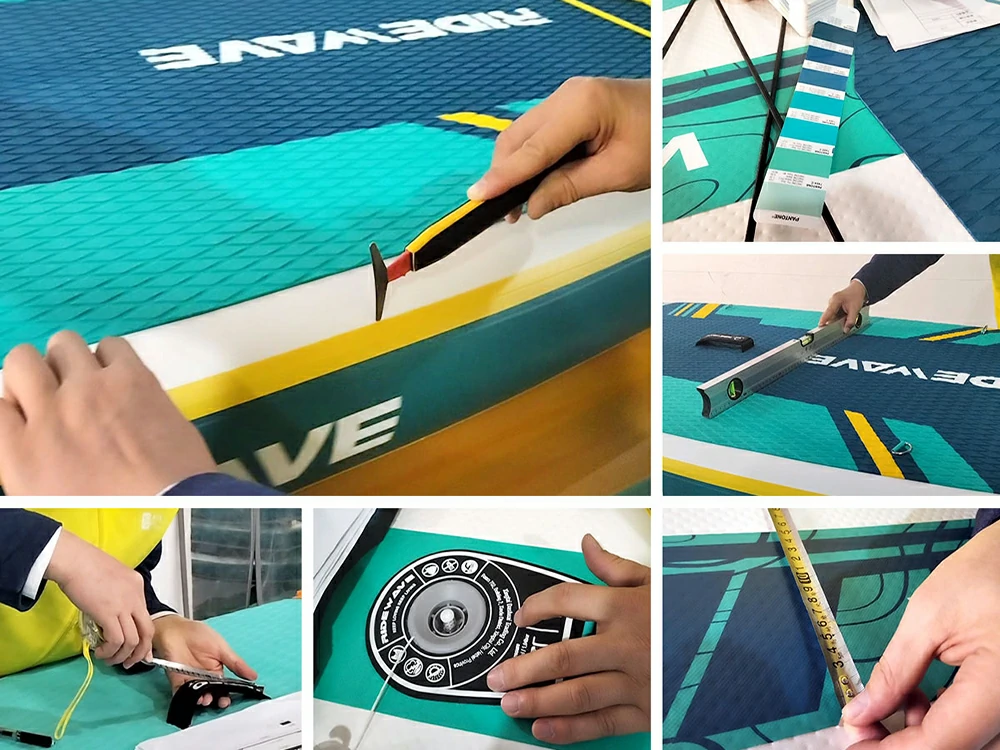
RIDEWAVE marks all reinforcement zones on pre-production technical drawings for rental SKUs. Our QC team checks weld continuity and patch alignment on every batch, and we flag any units where reinforcement patches sit outside the approved tolerance zone. This level of detail does not add huge unit cost, but it drastically reduces the number of fleet boards returned for repair mid-season.
You should ask your supplier for a seam cross-section photo and valve pull test report before approving rental moulds. A visual check of the finished board is not enough to prove weld strength.
Which certifications and material compliance rules are non-negotiable for South America iSUP imports in 2026?
For 2026 inflatable SUP shipments bound for South America, non-negotiable compliance requirements vary by country and cover heavy metal limits, phthalate restrictions, PFAS screening, local language labelling and designated import test reports; missing documentation is one of the fastest ways to trigger customs detention or cargo seizure. Many B2B buyers assume a single CE or UKCA certificate will clear all Latin American ports, and this is one of the most costly sourcing mistakes you can make. CE is widely recognised as supporting evidence, but it does not replace region-specific mandatory test files and local importer registration obligations.

Brazil maintains the strictest framework among major SUP markets on the continent. While inflatable paddle boards are not formally listed under mandatory INMETRO certification as of 2026, many customs inspectors and inland tax authorities demand a third-party test report referencing INMETRO safety standards for toys and inflatable water articles. The report must cover phthalates, lead, cadmium and restricted volatile compounds, paired with Portuguese permanent warning labels printed directly on the board or packaging. A generic English-only test certificate will frequently lead to extended cargo hold times at Brazilian ports.
Chile and Argentina enforce separate chemical restriction rules, with growing scrutiny on PFAS and fluorinated treatment additives used in stain-resistant or anti-abrasion fabric coatings. Several Latin American customs agencies have updated lab checklists to flag fluorinated substances in watersports inflatables, so your fabric supplier must provide a PFAS-free statement alongside full material composition declarations. Peru, Uruguay and Colombia follow lighter documentation paths, but they still require traceable batch test records and Spanish warning markings for end consumers.
Compliance is not a one-time paperwork task completed before your first order. Test reports expire, national customs guidance updates, and some ports perform random physical sampling after goods arrive. If you run multi-country consolidation shipments into South America, every destination in the container must carry its matching set of test documents and correctly translated labels. Mixing label formats for Brazil and Chile inside one pallet creates inspection delays for the entire shipment.
At RIDEWAVE, our compliance team builds market-specific document packages for each Latin American destination before shipment. We do not issue a universal certificate bundle for all South American orders. We work with third-party labs that accept the test matrix accepted by local customs, so distributors avoid the risk of commissioning a test that will not be recognised upon arrival.
How can PSI retention testing and field simulation reduce after-sales risk for wholesalers?
Structured PSI retention testing and field simulation cycles cut wholesaler after-sales risk by revealing slow leaks, thermal expansion weaknesses and stitch-seal drift before the drop stitch inflatable SUP reaches end buyers or rental fleets. A simple visual inspection and quick 24-hour static air hold test in a cool workshop cannot replicate the real stress profile of a board left inflated under tropical sun, heated sand and repeated pressure cycling. Many slow-leak defects only appear after temperature rises and the internal air chamber expands repeatedly.
PSI retention testing measures pressure loss over a fixed time window, under controlled temperature cycles, not just at room temperature. For South America's tropical and subtropical markets, reputable manufacturers run 48-hour thermal cycling hold tests: inflate the board to rated PSI, shift the temperature between 20°C and 55°C repeatedly, and log pressure drop at set intervals. A board that passes a static room-temperature test can lose unacceptable pressure once exposed to daytime beach heat. The acceptable threshold for wholesale rental SKUs is far stricter than for casual retail SKUs.
Field simulation builds on pressure testing by adding abrasion, load cycling and UV exposure together. This combined accelerated ageing test mimics months of beach rental use within a controlled lab cycle. It separates boards that only look good on paper from boards that maintain performance through repeated rental rotation. The limitation here is clear: lab simulation is not identical to real-world use, but it is a consistent benchmark you can compare across different suppliers and production batches.
A common trick among low-cost factories is to skip thermal cycling and only perform static air hold. Their spec sheets advertise "24h airtight" performance, but this number is collected in a cool indoor environment. Once your inventory lands in Brazil, Colombia or northern Peru, rising temperatures expose the hidden leak points: stitch micro-permeation, weak valve seating, marginal seam fusion. End customers will not complain about "thermal pressure drift"; they will simply report that the board "goes soft by afternoon".

RIDEWAVE applies tiered PSI retention standards aligned with each sales channel. Our retail all-around SUP uses a baseline thermal hold standard, while rental-grade drop stitch inflatable SUP runs a tighter pressure loss threshold and longer cycle times. We share full pressure log data with B2B buyers upon request, not just a single "pass / fail" result. This lets wholesalers set their own internal warranty thresholds and align customer support expectations before they sell the boards.
You should add two clauses to your purchase agreement: a requirement for thermal cycling PSI reports for pre-production samples, and random batch pressure retention testing for every container shipment.
What board shapes and accessory bundles deliver better inventory turnover across Brazil, Chile, Argentina and Peru?
For South American inflatable SUP inventory turnover, the highest-selling drop stitch inflatable SUP shapes and accessory packs balance local water conditions, rider skill distribution, storage limits and regional consumer spending habits, rather than copying the best-selling SKUs from North America or Europe. A narrow touring board designed for long-distance freshwater paddling will sit slow-moving in a Brazilian coastal retail shop, while a bulky, ultra-wide family board may struggle to sell in Chile's small beach rental kiosks with limited storage space. Many new Latin American SUP importers overstock niche performance shapes and leave high-demand all-around models under-ordered, which ties up working capital and slows cash flow.
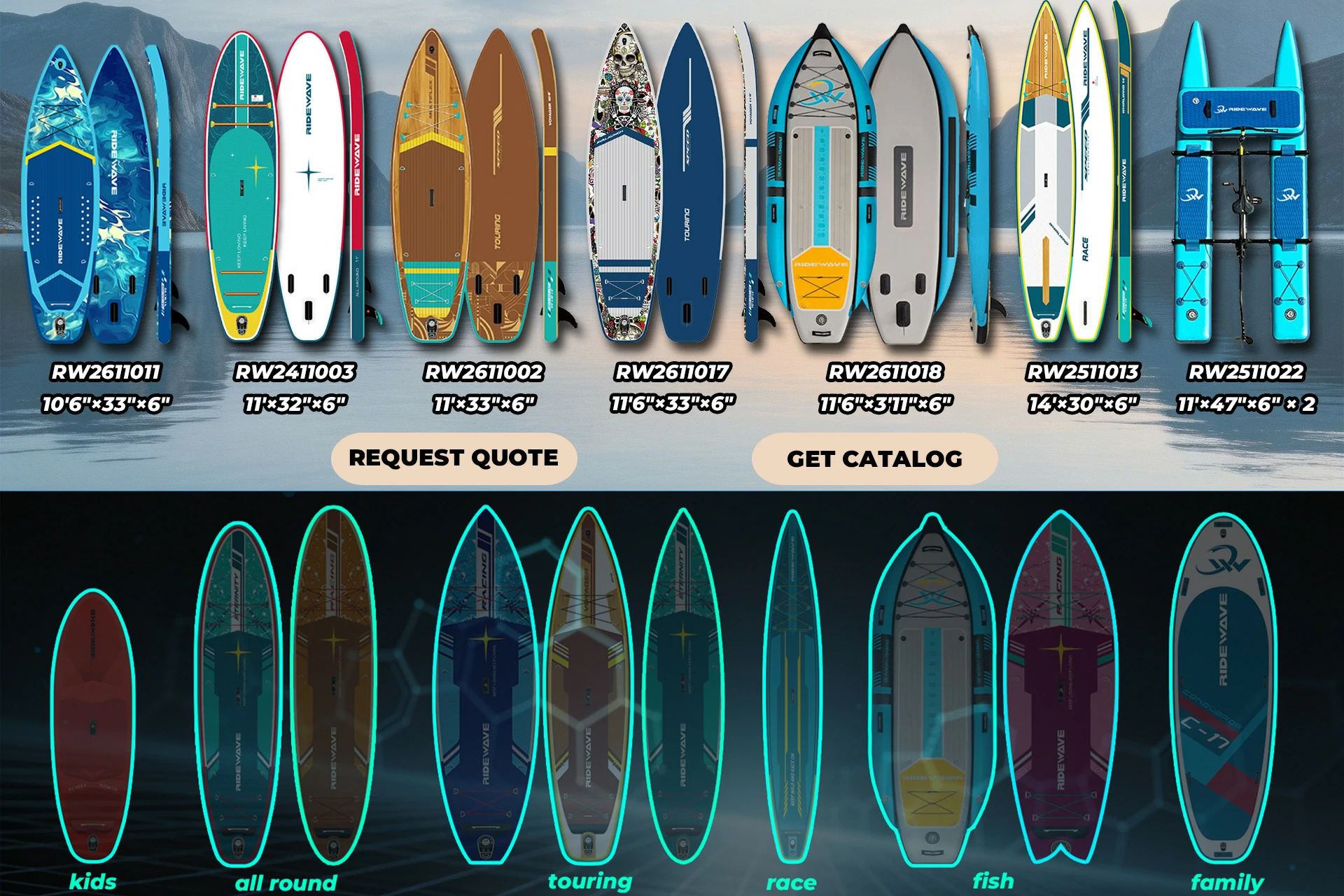
Brazil's tropical coastal market leans heavily toward stable, wide all-around inflatable paddle boards. Most buyers are casual families, beginner groups and day-trippers on sheltered Atlantic beaches. Boards between 10'6" and 11'6" with 32–34 inch width maintain steady velocity while supporting multiple riders, coolers and beach gear. For inland river tourism in the Amazon basin and central Brazil, shorter, more manoeuvrable shapes gain traction. Chile's Pacific coastline is windier, with rougher surf and rocky entry points; distributors here move more compact surf SUP and mid-length touring boards built for choppy conditions. Argentina's large freshwater lakes draw recreational paddlers and angling users, so angler-friendly SUP with built-in accessory mounting points sell consistently. Peruvian demand splits between beginner tourist boards along the Pacific coast and lightweight touring models for high-altitude Andean rivers.
Accessory bundling is one of the simplest levers to lift gross margin and speed stock rotation, yet it is frequently overlooked. Standalone board sales produce lower average order value, while pre-packaged bundles reduce consumer friction and work well for both retail shelf display and rental fleet handover. You can tier bundles to match local price tiers: entry beginner packs with basic aluminium paddle, leash, hand pump and repair kit; mid-tier packs upgraded with adjustable carbon composite paddle and waterproof dry bag; premium rental bundles fitted with heavy-duty coil leash, reinforced fin and high-pressure dual-action pump.
Not every accessory translates equally well across borders. Thin plastic fins crack quickly on Chile's rocky shore, and cheap single-action pumps frustrate Brazilian retail buyers who want fast inflation. The most successful bundles are built around the same wear logic you apply to the board itself: abrasion resistance, UV stability and simple field repair. The core design principles behind high-converting SUP packs are explored further in How To Design A Paddle Board That Sells.
RIDEWAVE works with Latin American distributors to tailor bundle assortments instead of pushing one fixed accessory kit for every market. We share historical sales data from comparable territories to help buyers forecast SKU mix, and we adjust fin material, pump type and leash grade according to whether the stock will go to retail shops, beach rentals or hotel activity programmes. Our Ridewave all-around drop stitch inflatable SUP range is the base platform for most of these customised packs, as it supports easy add-on configuration without full mould changes.
When planning your purchase order, avoid skewing your mix toward one single shape. Build a small portfolio: 65–75% stable all-around SKUs as your core mover, 15–20% surf / wind-adapted shapes for coastal hotspots, and 10% or less of specialised fishing or long-distance touring boards. This structure protects your turnover if consumer trends or local weather patterns shift.
How does a factory's QC workflow influence consistency for repeat B2B orders to South America?
A transparent, stage-gated QC workflow directly controls batch-to-batch consistency of drop stitch inflatable SUP, which is critical for B2B buyers placing repeat orders to South America, because inconsistent quality erodes distributor trust and ruins long-term local rental fleet contracts. Many buyers only inspect pre-production samples and then assume every future shipment will match that sample. Sample approval is just one checkpoint; reliable quality control runs through fabric receiving, core stitching, welding, reinforcement fitting, pressure testing, final visual audit and random container sampling. Even small shifts in fabric batch, weld temperature or stitch tension can create visible and functional differences between two production runs.
Most low-cost factories limit QC to a final visual check after full assembly. This catches obvious cosmetic defects, but misses hidden risks: uneven drop stitch thread tension, incomplete weld fusion, misaligned reinforcement patches, and valve seal weakness. These hidden defects may pass sample inspection, then surface weeks after the boards reach a beach rental fleet. For distributors locked into multi-year tourism supply contracts, scattered failures across a batch can damage their reputation with resort partners far faster than a one-time defective shipment.
Every stage of inspection should leave a traceable record. Fabric roll inspection reports, drop stitch core sampling logs, weld parameter logs, thermal PSI retention records and finished unit serial tracking let you trace a failure back to its root cause. Without this documentation, factory and buyer can only debate whether the issue came from raw material, production or end-user misuse. This traceability is especially valuable for South America, where sea freight transit times are long and return shipments are prohibitively expensive.
We can illustrate this dynamic with a real RIDEWAVE partner case. A distributor based in Valparaíso, Chile, first sourced generic drop stitch SUP from a different supplier in 2025 for beach rental operations. The initial sample performed well, but the first bulk shipment showed inconsistent core rigidity. After three months of rental use on volcanic sand, 18.7% of the fleet developed excessive flex and slow air loss. The distributor switched to RIDEWAVE and worked with our engineering team to lock in rental-grade specs: 20–24 threads/cm² drop stitch core, double-layer UV-stabilised PVC, fully fused valve reinforcement and batch thermal cycling PSI testing. Our QC team added a dedicated check station for stitch tension and weld width before lamination. Across the next 12 months, the fleet failure rate dropped to 2.9%, and the partner expanded the programme into three additional coastal resort locations with custom printed branding.
This case does not mean RIDEWAVE has zero defects. It demonstrates that formalised QC gates and locked spec parameters reduce variance between batches. For B2B buyers, the goal is not to find a factory that promises perfect boards, but one that can prove its inspection process catches deviations before goods are packed. Our Ridewave inflatable SUP batch testing and QC process overview lays out these inspection stages for new buyers to review.
Before confirming repeat orders, ask your manufacturer for recent batch inspection logs from comparable rental or wholesale runs. Request that they flag any out-of-tolerance units and document the corrective action taken.
What sourcing balance between cost, spec and warranty protects your margin in Latin America's volatile retail climate?
You protect your margin in Latin America's volatile SUP market by balancing landed cost, verified performance specifications and clearly defined warranty terms, rather than chasing the lowest unit price or over-specifying every SKU unnecessarily. Raw unit price is only one component of your total cost. When you select an ultra-low-cost drop stitch inflatable SUP, you accept hidden liabilities: higher warranty labour, replacement freight, lost repeat retail clients, and cancelled rental fleet contracts. On the other side, specifying premium rental-grade materials for every beginner retail SKU pushes your landed cost above the local price ceiling and slows sales volume.
The right balance starts by mapping warranty obligations to the actual spec grade. Entry-level promotional SKUs should carry a shorter warranty window, clearly communicated to your retail partners, with coverage limited to factory defects in seams and air chambers, not abrasion damage from beach rocks or sand. Mid-tier all-around stock can carry a standard 12-month warranty, while premium rental fleets justify extended warranty coverage because you have validated core, fabric and weld specs through third-party testing. Written warranty boundaries eliminate endless claim disputes once the boards reach Latin America.
Currency fluctuation, import tax adjustments and container freight volatility are constant background risks for South America water sports importers. Even if you lock in a good factory price, unexpected cost shifts can erase your margin. Your sourcing strategy should separate non-negotiable performance specs from optional upgrades. Non-negotiable items include minimum drop stitch thread density, UV stabilised fabric, heat-weld seams and mandatory compliance documentation. Optional upgrades include custom full-print artwork, carbon paddles, premium storage bags and high-end accessory kits. You can flex optional upgrades to adjust landed cost without sacrificing the core durability that prevents mass returns.
Many buyers build their order checklist only after receiving factory quotations. A better approach is to finalise your spec and warranty checklist first, then send it out for quotation. This keeps suppliers aligned on your testing, documentation and quality standards and avoids apples-to-oranges price comparisons. The core questions you should put on your checklist are outlined in 10 Questions Every B2B Buyer Should Ask Before Placing An Inflatable SUP Factory Order.
RIDEWAVE does not push buyers to upgrade every SKU to the highest rental grade. We walk through margin modelling together with distributors, separating must-have specs from nice-to-have add-ons, so buyers can build a product portfolio that fits local price sensitivity while keeping after-sales exposure predictable. We share transparent warranty templates that our partners can adapt for their local Spanish or Portuguese sales channels.
Your most profitable South America SUP programme is not built on the cheapest board or the most heavy-duty board. It is built on matched specs, realistic warranty limits and a clear understanding of what failure modes you will and will not cover. This framework lets you scale steadily without exposing your whole business to unplanned after-sales expense.
Related Articles
Quality Control Checklist For SUP Manufacturers
Low MOQ Paddle Board Manufacturers For Small Brands
OEM Vs ODM Paddle Boards: Which Is Better For Your Brand?
How To Choose The Right SUP Paddle Board Manufacturer
How Custom Paddle Boards Are Made: From Design To Production