

If you are an Argentina-based distributor, wholesaler, or outdoor brand owner looking to expand your water sports catalog, OEM & private label inflatable SUPs remain one of the most profitable, low-stock-burden categories you can add to your lineup. Many buyers start this sourcing journey with only two simple goals: lock in stable, consistent quality and build a branded SUP range that stands apart from generic mass-market stock. Yet most new importers hit roadblocks quickly: confusing factory QC standards, unclear minimum order rules, volatile ocean freight to Buenos Aires, mismatched certification requirements, and custom artwork workflows that drag on for weeks.

Working with a transparent inflatable SUP manufacturer removes much of this friction. Before you send your first inquiry or approve a sample, it helps to understand every step that turns a blank custom concept into a finished, retail-ready board. You can dive deeper into production workflows in our companion article, How Custom Paddle Boards Are Made: From Design To Production.
At RIDEWAVE, we speak regularly with Latin American dealers who have learned that the best private label inflatable SUP programs are not built around the lowest unit price alone. They are built around predictable lead times, consistent drop-stitch construction, flexible branding options, accessible spare parts support, and documentation that fits Argentina's import and customs requirements. This guide is written for practical decision-makers: established sports retailers launching their first SUP line, existing paddle stockists expanding private label SKUs, and new wholesale operators comparing Asian inflatable SUP factories.
We will break down real sourcing benchmarks, compare popular SUP shapes for local recreational markets, walk through compliance checks, explain Incoterms for shipments to Argentina, and share a verified dealer case study from our own private label program. Every detail here is designed to help you weigh risk, calculate margins, and negotiate factory terms without relying on vague sales promises. Whether you plan to order small trial MOQs for local beach shops or load full containers of custom printed inflatable stand up paddle boards, the frameworks inside apply to your buying plan.
Why Is Private-Label Inflatable SUPs a Smart Category for Argentina Dealers in 2026?
Inflatable stand up paddle boarding has kept steady growth across South America, and Argentina shows distinct demand drivers that make private label inflatable SUPs a worthwhile addition for established dealers and new importers alike. Unlike hard fiberglass paddle boards, inflatable SUPs ship folded, occupy far less container space, and require no special local delivery trucking. This single logistical advantage cuts down landed cost dramatically when importing into Buenos Aires, where warehouse space and last-mile delivery fees stay high for bulky sporting goods.

Local consumer demand splits into three clear groups: casual families looking for lake and river recreation, beach visitors along the Atlantic coast, and intermediate riders exploring yoga, touring, and light fitness on the water. Generic unbranded SUPs flood low-price market channels, but Argentine shoppers are increasingly willing to pay more for consistent build quality, complete accessory kits, and a local brand they recognise. That is exactly where private labeling creates margin protection for you. You own the brand identity, control retail pricing, and avoid direct price wars with other resellers carrying identical stock from mass-market suppliers.
Many sport goods retailers in Argentina hesitate before adding water sports SKUs because they fear slow turnover and dead inventory. Inflatable SUPs solve this risk profile. A single container can hold hundreds of folded boards, and you can start with a narrow SKU set rather than stocking a wide range of hard watercraft. For dealers already selling camping gear, kayaks, outdoor apparel, or beach accessories, adding a private label SUP line creates natural cross-sell opportunities with paddles, leashes, pumps, and repair kits.
Market trends across the wider Latin American region also support this choice. Consumers prioritise portable, multi-use outdoor equipment, and short-distance domestic travel to lakes, reservoirs and coastal towns continues to recover and expand. That said, Argentina has unique import constraints: currency volatility, changing customs rules, and longer lead times during peak shipping seasons. A reliable private label program does not remove these challenges, but it gives you predictable quality and documentation so you can plan purchases months ahead.
What Makes an OEM Inflatable SUP Factory Reliable for the Argentine Market?
Not every factory that builds inflatable SUPs can support dealers selling into Argentina. Many manufacturers only focus on low-cost bulk orders for European or North American markets, and they lack familiarity with the documentation, packaging standards, and quality expectations that matter for Latin American importers. When you screen OEM suppliers, you need to separate factories that can produce boards from factories that can reliably support your Argentina wholesale business long-term.
The foundation of every durable OEM inflatable SUP is its drop-stitch core and PVC lamination. Cheap boards use thin PVC fabric, inconsistent drop-stitch thread density, and hot air welding with weak bonding. These units develop slow air leaks, delaminate under sun exposure, and generate high return rates once they reach end buyers. For Argentina, where many customers use SUPs under strong UV sunlight along the coast, UV resistance is not an optional upgrade - it is a baseline requirement. A trustworthy factory will share material test reports, batch inspection records, and pressure testing logs instead of only sending polished product photos.
Beyond raw materials and construction, you need to evaluate the factory's operational transparency. Key practical checks include: whether they own their cutting and welding production lines, whether their QC team inspects every batch before shipment, whether they can generate commercial invoices, packing lists, and certificates formatted to match Argentine customs agent requirements, and whether they can prepare multilingual manuals including Spanish versions. Many small trading firms advertise factory pricing but outsource all production; they cannot control lead times or intervene when quality issues emerge.

Communication and sample handling are another major filter. A good supplier will confirm artwork colour matches, send pre-production samples for sign-off, and clearly flag delays before a production window slips. Red flags to watch for: promises of unrealistically low MOQ with hidden later charges, refusal to share factory video tours, vague answers about warranty coverage, and reluctance to provide third-party test reports.
How Does RIDEWAVE Approach Private-Label SUP Manufacturing for Regional Distributors?
RIDEWAVE operates as a direct manufacturer focused on custom private label inflatable SUPs for regional distributors, wholesalers and emerging water sports brands. Our workflow is built around the reality that most B2B buyers in Latin America do not want a rigid, one-size-fits-all ordering system. Many dealers start with small trial batches to test local market feedback before scaling to full container loads, and our private label process is designed to accommodate that low-risk launch path.

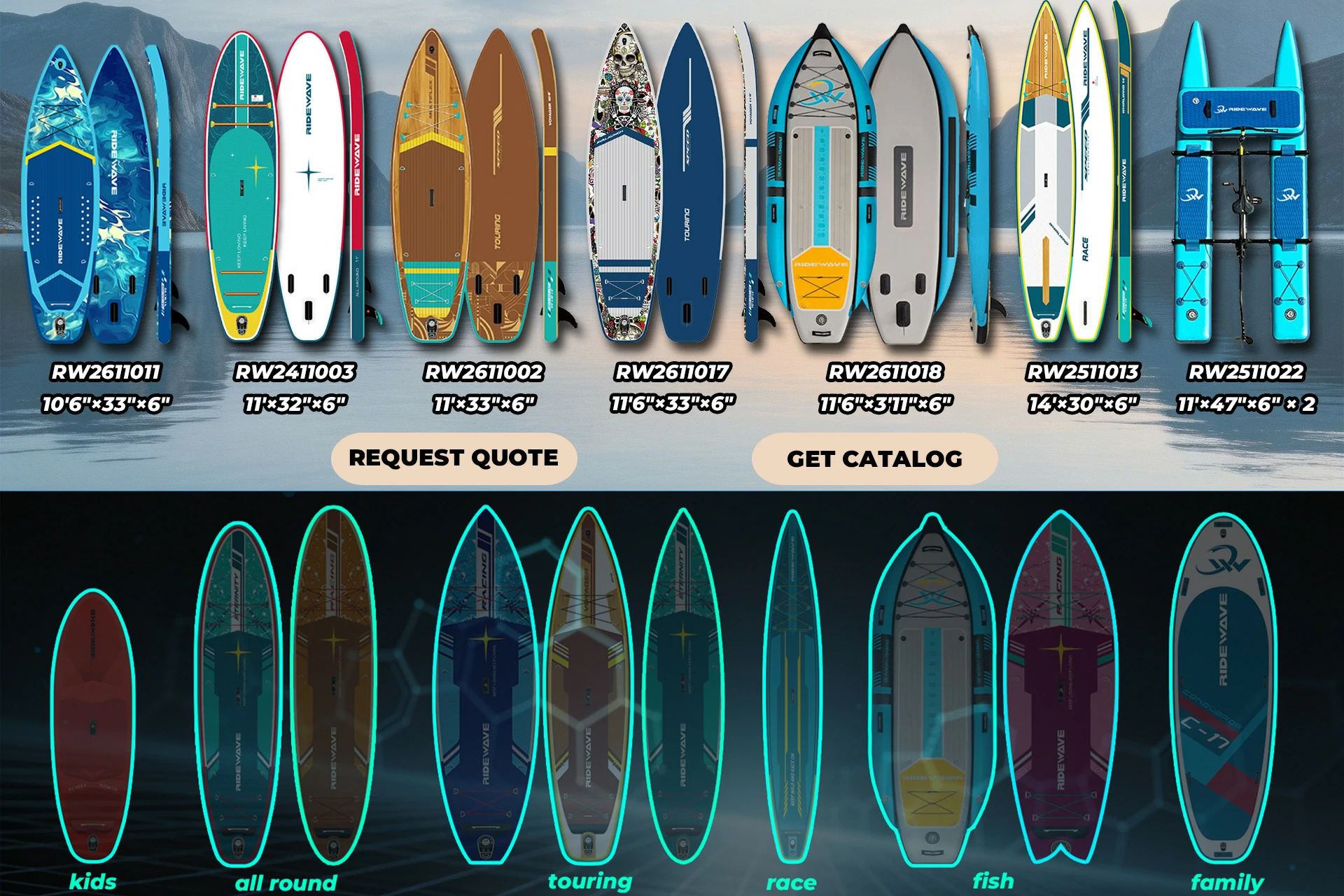
The full private label sequence follows a clear, repeatable structure: product selection from our proven base shapes, artwork confirmation and colour matching, pre-production sample creation, sample approval by the buyer, mass production, scheduled in-line QC checks, final batch pressure testing, custom packaging assembly, document preparation and shipment handover. We do not push customers toward unnecessary custom moulds unless they already have solid local sales data to support the extra tooling cost and longer lead time. For most Argentina dealers, logo printing on existing mature SUP shapes delivers the best balance between custom identity, cost control and fast turnaround.
We keep our communication focused on practical details that matter for your local market. Our team can supply packaging artwork templates, Spanish manual drafts, and standard commercial documentation ready for your Argentine customs broker. During production, we share scheduled progress photos and QC reports, so you do not need to travel to the factory to verify the condition of your order. We also maintain dedicated stock of common spare parts such as replacement valves, fins, leash attachments and repair patches, so you can offer after-sales support to your end customers without long delays.
To illustrate how this workflow works for a Latin American dealer, we share a real anonymised case from our private label portfolio. A South American outdoor distributor previously sold camping and hiking gear, with zero existing SUP inventory. They wanted to add a private label inflatable SUP line but were worried about tying up too much capital in unproven stock, and they struggled to find a supplier who could provide Spanish marketing materials and consistent spare parts. They selected two all-round shapes and one touring shape, with only their brand logo printed on our standard colour scheme. They placed a trial order with a moderate MOQ, signed off on the pre-production sample, and arranged shipment on FOB terms. After the first batch arrived and sold steadily through their retail network, they submitted feedback about preferred colour adjustments and upgraded accessory bundles. Their second repeat order expanded the colour range and added more pump and leash options. This dealer now runs SUP as one of their highest-margin categories, with predictable replenishment cycles.
We do not guarantee sales results for any dealer. Our role is to deliver the agreed product specification, stable quality, transparent production updates and ongoing spare parts support. Your market pricing, local promotion, retail partnerships and seasonal demand will always decide how quickly your private label line moves.
Which SUP Models and Configurations Sell Best to Argentine Recreational and Touring Buyers?
Not all inflatable SUP shapes perform equally well in Argentina's lakes, slow rivers and coastal inlets. Dealers who stock only one universal board often leave revenue on the table, while those who overstock niche advanced shapes tie capital into slow-moving inventory. The strongest wholesale assortments for Argentina balance high-turnover beginner-friendly SKUs with a small number of premium options for experienced riders.

All-round recreational inflatable stand up paddle boards form the core of every successful private label lineup in this region. Wider decks, stable rail shapes and forgiving weight limits suit first-time paddlers, families and casual users who do not plan long-distance touring. Most local buyers prioritise stability above speed, especially on choppy coastal water or windy reservoir days. These boards also work well for short yoga sessions and pet use, which expands their use cases and raises perceived value.
Touring inflatable SUPs sit as the second core SKU. Narrower and longer than all-round versions, they track straighter on longer trips along rivers and calm coastal stretches. They appeal to intermediate paddlers and outdoor enthusiasts who plan multi-hour outings. Touring boards sell fewer units per month, but they carry stronger brand loyalty and support higher retail price points.
Yoga and fitness inflatable SUPs serve a smaller but profitable niche. Extra-wide, flat deck layouts and soft non-slip traction attract yoga instructors, wellness studios and fitness-focused consumers. This segment is concentrated in larger cities and tourist hubs, so most Argentine dealers keep this as a limited-stock premium add-on rather than a main volume driver.
Kids and compact lightweight SUPs fill a family upsell slot. Shorter lengths, lower weight capacity and simplified hardware make them easy for children to handle. They pair naturally with full-size adult boards and lift bundle sales for beach shops and holiday resorts.
Accessory bundling is one of the easiest ways to improve average order value on every private label inflatable SUP. Argentine customers expect complete kits out of the box. Missing paddles, low-quality pumps or basic leashes create frustration and bad reviews. Standard recommended bundles include an adjustable aluminium paddle, double-action hand pump, coil leash, removable fin, repair kit and carry backpack. Upgraded bundles can add electric pumps, waterproof phone cases and dry bags for premium pricing tiers.

How Does Private-Label SUP Customization Work: Design, Materials, Branding, and Packaging?
Private label inflatable SUP customization exists on multiple tiers, and Argentina dealers can select the level that matches their budget, order volume and brand goals. Many new buyers overspend on deep custom mould changes when simple graphic and colour adjustments are enough to build a distinct local brand identity. Understanding the full workflow helps you avoid unnecessary tooling fees and extended lead times.

he first customization tier is logo printing on existing standard SUP shapes. This is the most popular starting point for first-time private label buyers. You supply vector artwork, confirm print placement and colour codes, and the factory prints your brand mark onto the pre-built base board. This option carries low MOQ, fast lead times and no mould cost, which fits perfectly for trial orders testing the Argentine market.
The second tier covers surface customisation: custom deck pad colours, custom rail graphics, custom colour matching for the board fabric, and adjusted D-ring layouts. These changes create a fully unique visual identity without reworking the core drop-stitch structure. This is the sweet spot for dealers who already have proven sales and want to stand out from competitors selling generic white-label boards.
The third tier is full custom development: new board outline shapes, modified rail thickness, changed rocker profile, and redesigned deck layouts. This requires new moulds, higher MOQ, longer sampling cycles and extra engineering review. We only recommend this path for established brands with consistent sales data and predictable local demand.
Material choices are locked in during this design phase. You select PVC thickness, drop-stitch density, welding method, valve brand and traction pad material. UV stabilised marine-grade PVC is strongly recommended for Argentina, as prolonged strong sunlight quickly degrades unprotected fabric. Every material choice changes the final weight, durability, price point and target customer of your inflatable SUP.
What Certifications, Testing, and QC Should Argentina B2B Buyers Verify Before Ordering?
A beautiful printed inflatable SUP will create costly trouble for your Argentina wholesale business if it fails safety testing or lacks documents required by local customs. Certification and quality control are not optional extras; they protect your import clearance, reduce end-user accidents and limit warranty claims after the goods arrive in South America.
All inflatable stand up paddle boards produced for global recreational water sports should pass core safety and material testing. The most widely accepted standard is CE for recreational watercraft. Beyond CE, reputable manufacturers run internal batch testing: air tightness retention, pressure holding test, seam peel strength, UV ageing test and load bearing test. These internal tests are especially important for Argentina's high UV coastal environment.
You should distinguish between factory self-declaration and third-party laboratory test reports. A self-declaration is useful, but third-party reports from recognised labs add credibility when customs agents or local safety inspectors request supporting documentation. Before confirming mass production, ask your supplier to share sample reports matching the exact material and construction you are ordering. Do not accept generic test reports from unrelated board models.
The factory QC workflow should cover three key stages: incoming raw material inspection, inline production spot checks, and final finished board inspection before packing. At RIDEWAVE, every finished inflatable SUP is inflated and held under pressure for a fixed period to check for slow leaks. Inspectors check weld seams, valve fit, deck pad adhesion, D-ring pull strength, printing alignment and accessory completeness before packing. Defective units are separated and reworked rather than mixed into the shipment.

Documentation preparation is another critical part for Argentina importers. Your supplier needs to provide a commercial invoice, packing list, bill of lading supporting data, and certificate of origin, formatted to match your customs broker's requirements. Some local regulators may request material safety statements. Working with a manufacturer familiar with Latin American shipments avoids last-minute document mismatches that delay release at Buenos Aires ports.
What Are Typical MOQs, Lead Times, Payment Terms, and Factory-Order Costs for Argentina?
Many Argentina-based inflatable SUP buyers begin negotiations with one single question: how many boards do I need to buy for a private label order? MOQ rules are not fixed across all factories, and they shift sharply based on the customization level you select. Understanding the cost structure, timeline and payment norms prevents you from agreeing to terms that squeeze your cash flow or delay your seasonal selling window.

For tier-one customisation, which only adds your logo to existing RIDEWAVE base shapes, the trial MOQ stays accessible for first-time dealers. This low entry barrier is designed for importers testing local Argentine demand without committing to a full container. Once you move into tier-two graphic and colour customisation, the MOQ rises slightly because artwork setup and colour change create extra production downtime. Full custom shape development carries the highest MOQ, as tooling, mould validation and engineering sampling require heavy factory resource investment.
Lead times split into sampling lead time and mass production lead time. Pre-production samples usually take 7 to 14 working days, depending on artwork confirmation speed. Standard mass production runs typically sit between 30 and 45 working days after sample approval. You must add extra buffer time for ocean transit to Buenos Aires, port congestion, customs review and local inland delivery. During peak outdoor season from January to March, most Asian inflatable water sports factories fill their schedules quickly, so pushing your order deadline back will often extend the lead time.
Payment terms vary by order history and trust level. First-time B2B buyers commonly work with a deposit balance arrangement: 30% deposit upon order confirmation, and the remaining 70% balance paid before shipment. Repeat RIDEWAVE distributors with stable order history can discuss flexible arrangements, subject to internal review. Letters of credit are sometimes requested by larger Argentine importers, though they add bank fees and administrative delay. Always confirm payment currency, transfer fees and beneficiary details before issuing your transfer.
Total landed cost for your inflatable stand up paddle board is far more than the unit price quoted by the factory. You need to add sampling charges, printing setup fees, packaging upgrade costs, ocean freight, insurance, Argentine import duties, customs broker service fees, port handling charges and local inland trucking. Many new dealers underestimate these extra layers and accidentally erase their planned margin.
Before you sign off on any factory order, run through the core purchasing checklist in our dedicated article: 10 Questions Every B2B Buyer Should Ask Before Placing An Inflatable SUP Factory Order.
How Do Shipping, Duties, and Import Logistics Work from a Chinese Factory to Argentina?
Even after you lock in quality, pricing and production timelines for your private label inflatable SUP order, logistics and Argentine import rules can turn a smooth purchase into a costly delay. Most B2B buyers underestimate the unique complexity of shipping cargo into Argentina, where foreign exchange controls, document scrutiny and port backlogs create risk points that do not appear when shipping to North America, Europe or Australia.

The first critical choice is your Incoterm. EXW, FOB, FCA, CIF and DDP each split responsibility between factory, freight forwarder and importer very differently. For most first-time Argentina dealers, FOB is the most balanced option: the factory handles loading onto the vessel at the Chinese port, while you control freight booking, insurance and the full import clearance process through your local broker. DDP may sound convenient, but few forwarders can reliably guarantee Argentina DDP clearance, and unexpected tax adjustments often lead to extra charges at destination.
Inflatable SUPs ship folded and packed flat, which is the biggest logistical advantage compared to hard boards. Container utilisation rates are high, and you can fit far more units into a 20ft or 40ft container. Two shipping modes are available: full container load (FCL) and less than container load (LCL). LCL works well for small trial orders, but it carries higher per-unit freight, longer consolidation times and higher risk of cargo damage or document mix-ups. FCL becomes economical once your order volume grows.
The primary entry port for most SUP shipments is the Port of Buenos Aires. You must work with a local licensed customs broker who understands water sports goods classification, tariff codes and current import regulations. Tariff rates change periodically, and exchange restrictions can affect the approval timeline for import payments. You should never rely on your Asian supplier to interpret Argentina's internal tax rules; the factory can only supply accurate commercial documents, not give legal tax advice.
Cargo insurance is strongly recommended for every ocean shipment. It covers loss or damage during transit, including container water intrusion, rough handling and accident. Transit time from major Chinese ports to Buenos Aires usually falls between 35 and 50 days, not including customs holding time. Build this timeline into your seasonal sales planning.
What After-Sales, Warranty, and Spare-Parts Support Do Distributors Need Long Term?
A profitable inflatable SUP wholesale relationship does not finish once the container leaves the factory. Long-term loyalty from your retail customers depends on your ability to resolve failures, supply replacement parts and explain warranty coverage clearly. Many new dealers overlook after-sales planning and lose repeat retail partners simply because they cannot source spare parts quickly.
First, separate manufacturing defects from normal wear and tear, because this line defines your warranty policy. RIDEWAVE's standard warranty covers factory defects such as faulty welding, defective air valves, material delamination from production error, and printing misalignment. It does not cover abrasion from rocks, improper over-inflation, UV damage caused by lack of care, cuts, impact damage, or misuse. You should translate this warranty statement into Spanish and share it with your retail network and end buyers.
The most frequently requested spare parts for inflatable stand up paddle boards are replacement valves, fin screws, slide fins, repair patches, leash connectors, and spare pump hoses. Keeping a small dedicated spare parts stock alongside your board inventory is a low-cost way to deliver fast local service. Instead of waiting for a full container to restock spares, you can arrange small parcel shipments of accessory kits when you run low. This is especially valuable for Argentina dealers, as ocean lead times are long and end customers will not wait months for a replacement valve.
When a quality claim arises, the standard workflow is simple: collect clear photos, video of the defect, batch number and order reference, then send these details to the manufacturer. We review evidence and offer resolutions ranging from spare parts supply, partial credit on your next order, or targeted rework guidance, depending on the root cause. We do not automatically approve full board replacements for damage caused by user misuse.
You should also build simple troubleshooting guides for your sales team. Common issues include slow air leakage from loose valve cores, slipping deck pads in hot weather, and paddle locking mechanism failure. Basic guidance reduces support tickets and makes your brand look more professional to retailers.
How Can an Argentina Dealer Launch a Branded SUP Line Without Overcommitting Inventory?
Many Argentina dealers hold back from launching a private label inflatable SUP brand because they fear locking large sums of capital into slow-moving inventory. The good news is that you do not need a full container of 5 different shapes to test market fit. A phased, low-risk launch strategy works perfectly for the Argentine market and keeps your cash flexible.
Your first phase is narrow SKU testing. Select only one or two high-demand all-round inflatable stand up paddle boards as your core offering. These are the shapes with the widest buyer appeal and fastest turnover. Start with the logo-only customization tier, which keeps your sample cost and MOQ low. Ship this trial batch to your warehouse, sell through your existing retail network, beach shops and marketplace channels, and collect concrete feedback: customer complaints, favourite colour options, accessory preferences, and price sensitivity.
After the trial batch proves steady sales, you move into phase two: gradual expansion. You can add one touring or yoga SUP model if demand signals appear, roll out custom colour graphics, and upgrade accessory bundles. This step is where you build differentiation from competitors selling generic white-label boards. You can also negotiate slightly better unit pricing from the factory as your order volume grows.
Phase three is mature brand scaling. Once you have reliable seasonal sales forecasts, you can consider full container shipments, custom retail packaging, and even full custom shape development. At this stage, you can also plan pre-season stock placement ahead of Argentina's summer recreational window.
Across all three phases, use bundled selling to lift average order value. Pair boards with spare repair kits, electric pumps and dry bags for premium bundles. Track which bundles sell best, and cut slow-moving combinations from your lineup. Keep your inventory lean: avoid stocking too many colour variants unless your sales data clearly supports the extra SKUs.
The biggest advantage of this staged approach is control. You follow local market feedback instead of guessing what Argentine consumers will buy. RIDEWAVE supports this low-risk launch model by accommodating small trial MOQs, providing fast sample turnaround and maintaining stable spare parts supply for new private label partners. If you are ready to review shape options, confirm pricing, or request a custom quotation for your own branded SUP line, reach out to our sourcing team.
Related Articles
Quality Control Checklist For SUP Manufacturers
How To Choose The Right SUP Paddle Board Manufacturer
OEM Vs ODM: Which Inflatable SUP Model Is Right For Your Brand?
Inflatable Paddle Boards: A Practical Guide For Modern Water Sports
How To Choose A Reliable Inflatable SUP Manufacturer For The European Market