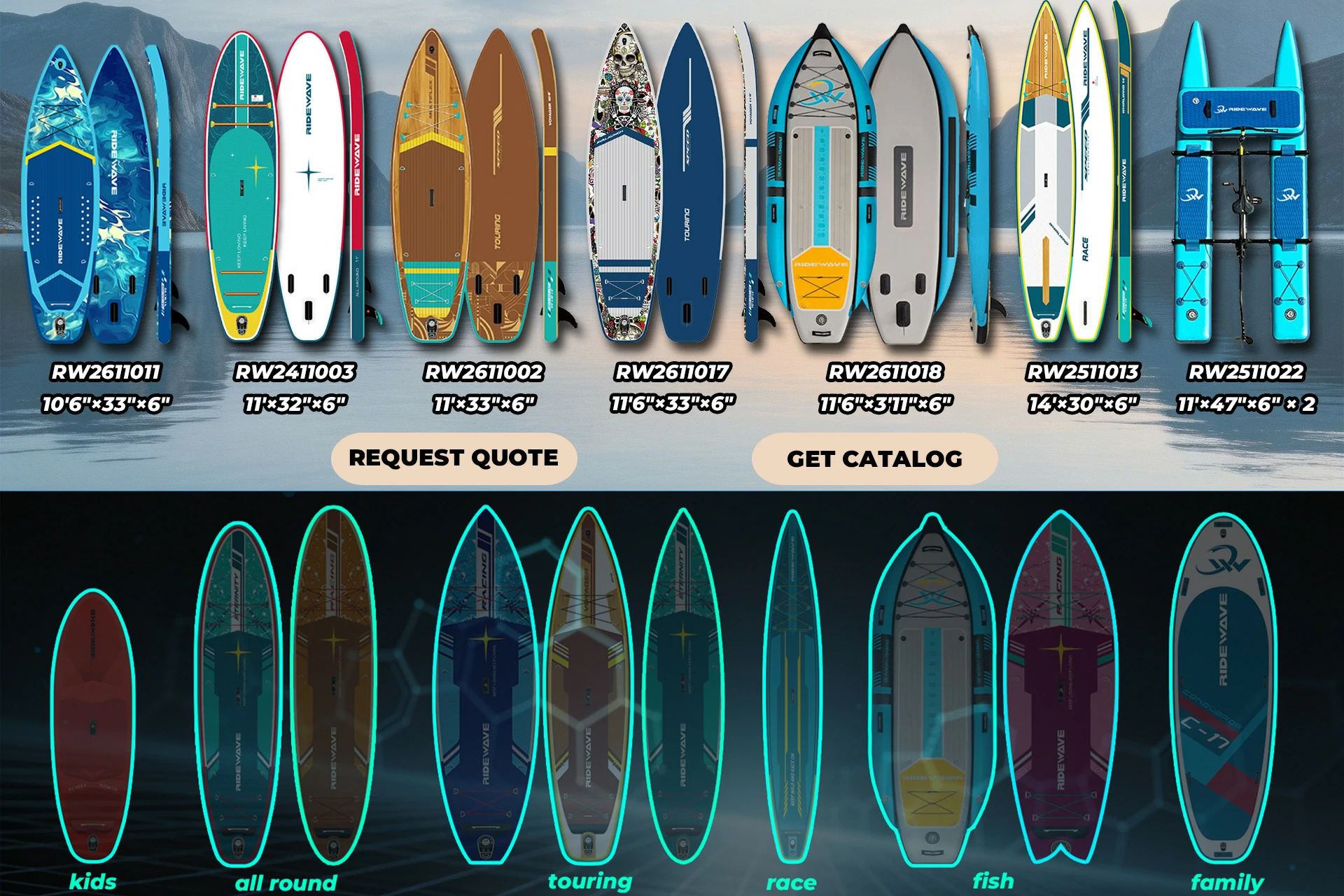

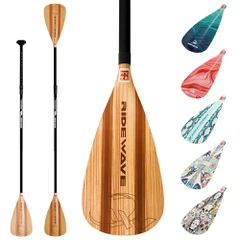

Importing bulk inflatable SUP boards into Argentina does not start with placing your factory order, and it does not end once your inflatable stand-up paddle board shipment leaves the port. Many distributors, regional sports retailers and new watersports brand owners we speak with at RIDEWAVE have locked in attractive pricing on wholesale inflatable paddle boards, only to hit costly delays, unexpected tax adjustments or documentation gaps at Argentine customs. This guide walks B2B buyers through the full import workflow for bulk SUP inventory, including market demand signals, correct tariff classification, mandatory paperwork, local labeling rules, shipping terms and common clearance pitfalls. We draw on our direct factory experience shipping custom printed inflatable SUPs to Latin American dealers, and we point buyers to deeper manufacturing context in How Custom Paddle Boards Are Made: From Design To Production when you want to evaluate build quality, drop-stitch construction and OEM capability before committing to a large container load.
What SUP and Watersports Demand Looks Like in Argentina for B2B Buyers?
For any B2B distributor planning to stock bulk inflatable SUP boards for Argentina, the first critical step is mapping local demand patterns instead of only chasing low factory pricing. Argentina's watersports market is split between coastal tourist hubs, inland lake districts and urban river recreation zones, and each region favors a different style of wholesale inflatable stand up paddle board. Bariloche, El Calafate and the Patagonian lake corridors draw outdoor-focused customers who prefer durable touring inflatable SUPs and fishing SUP platforms, while Mar del Plata, Bahía Blanca and Buenos Aires coastal zones sell high volumes of entry-level all-around inflatable paddle boards for family rental and casual weekend use. Yoga SUPs and compact kids SUPs are slower-moving SKUs but create strong margin opportunities for dealers who target boutique watersport shops and wellness retreats.
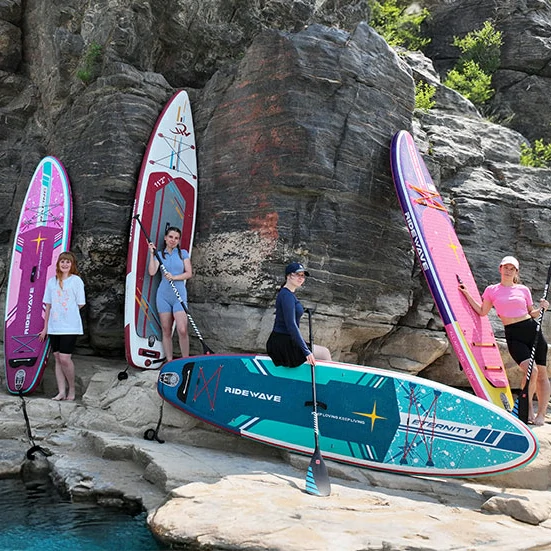
ocal buyer behavior also shapes inventory planning. Argentine consumers are sensitive to final retail price points, so lightweight drop-stitch boards with reinforced PVC tend to outperform ultra-premium heavy models in mass retail channels. Seasonality is sharp: the main selling window runs from late September through early April, with the peak shipping window for bulk SUP inventory falling between June and August to avoid port congestion ahead of summer. Many new importers underestimate this lead time gap and end up missing the core selling season entirely. At RIDEWAVE, we regularly share seasonal forecast guidance with Latin American partners to help them stagger container orders and avoid overstocking slow-turning variants. If you want to align your product lineup with market preferences, you can dig deeper into product design logic in How To Design A Paddle Board That Sells.
• Coastal tourist zones: high turnover for entry-level all-around inflatable SUP boards
• Patagonian lake markets: steady demand for heavy-duty touring and fishing custom inflatable paddle boards
• Urban recreation segments: small, portable youth and fitness SUPs for day rental fleets
• Seasonal window: September–April retail sales; factory shipment planning ideally completed June–August
What HS Code Applies to Inflatable Paddle Boards Imported into Argentina?
Misclassification of inflatable stand up paddle boards is one of the most frequent reasons for customs delays, extra fines or seizure for Argentina SUP importers. The vast majority of bulk inflatable SUPs fall under HS 9506, the tariff heading for articles and equipment for general physical exercise, gymnastics, athletics or other sports. It is critical to separate the main board body from bundled accessories, because pumps, adjustable paddles, safety leashes and carry backpacks carry different HS codes and separate duty rates.
A common mistake new buyers make is listing the full container as one single HS code, combining boards and accessories together. Argentine customs officers will often split the declaration and recalculate duties individually, which creates unpredictable extra costs. Even within HS 9506, subheading distinctions matter: rigid hard SUPs, inflatable drop-stitch SUPs and simple floating mats are not treated identically. We always advise our RIDEWAVE B2B partners to share the factory product specification sheet with their local licensed customs broker before filing SIRA import paperwork, to confirm the final classification accepted by AFIP.
✅ Main inflatable SUP board body: HS 9506 (sports equipment)
✅ Hand / electric air pump: separate HS classification for pneumatic tools
✅ Aluminum / fiberglass paddle: separate HS code for sporting oars
✅ SUP leash, waterproof phone bag: separate textile / plastic accessory codes
⚠️ Hard-shell solid paddle boards use different subheading codes and should not be declared the same as inflatable SUPs
⚠️ Final classification always depends on your local Argentine customs broker and AFIP guidance; factory classification guidance is only reference
| Item | Common HS Heading Note | Declaration Tip |
|---|---|---|
| Inflatable drop-stitch SUP board | HS 9506 | Primary goods, core declaration line |
| Adjustable SUP paddle | Separate sporting goods subheading | Declare separately if value is meaningful |
| Electric / manual air pump | Pneumatic equipment heading | Do not bundle with SUP board value |
| SUP leash, backpack, repair kit | Plastic / textile accessories | List individually on packing list |
What Customs Duties, Taxes and Fees Do Importers Pay on Bulk SUP Shipments?
Pricing your wholesale inflatable paddle board resale margin in Argentina is impossible if you overlook the layered tax structure managed by AFIP. Import duties apply to the CIF value of your bulk inflatable SUP shipment, followed by IVA (Argentine VAT), statistical tax, and withholding perception taxes. The exact rate schedule can shift quickly under Argentine fiscal policy, so every B2B buyer should confirm the latest tariff table with their broker 2–4 weeks before vessel departure.
Duty calculations are not static. Inflation, currency exchange controls and periodic tariff adjustments can change landed cost overnight. Many distributors we work with at RIDEWAVE build a contingency buffer of 8–12% above the estimated landed cost to absorb unexpected tax or exchange movement. Remember that accessories declared separately will also trigger their own duty and VAT charges, so bundled packages are not automatically simpler or cheaper to clear.
✅ Import customs duty: applied to CIF value of goods
✅ IVA (VAT): standard 21% on taxable import value
✅ Statistical tax: small fixed percentage on import declaration
✅ Withholding perceptions: advance tax collection for AFIP, varies by importer tax profile
⚠️ Exchange rate fluctuations can change final landed cost even if duty percentages stay the same
⚠️ Promotional discounts on factory invoice must follow AFIP invoicing rules to avoid audit risk
| Cost Component | Calculation Base | Practical Note for SUP Importers |
|---|---|---|
| Import Duty | CIF value of declared goods | Rate subject to AFIP updates |
| IVA VAT | CIF + duty + statistical tax | 21% standard rate for most sports goods |
| Statistical Tax | Declared customs value | Low percentage, non-negotiable |
| Withholding Perception | Importer's registered tax condition | Discuss with local accountant |
| Brokerage, port & storage fees | Local service charges | Variable by port and cargo volume |
Which Import Approvals and Customs Documents Are Required to Clear SUPs in Argentina?
SIRA registration is the foundational import approval for nearly all bulk inflatable SUP shipments entering Argentina, and missing or expired SIRA is the top cause of cargo hold-ups at Buenos Aires ports. Before your OEM inflatable paddle board container leaves the factory, the Argentine importer must secure valid SIRA authorization, tied to the importer's AFIP tax ID. The factory provides supporting commercial paperwork, but the legal responsibility for SIRA filing sits with the local buyer, not the overseas manufacturer.
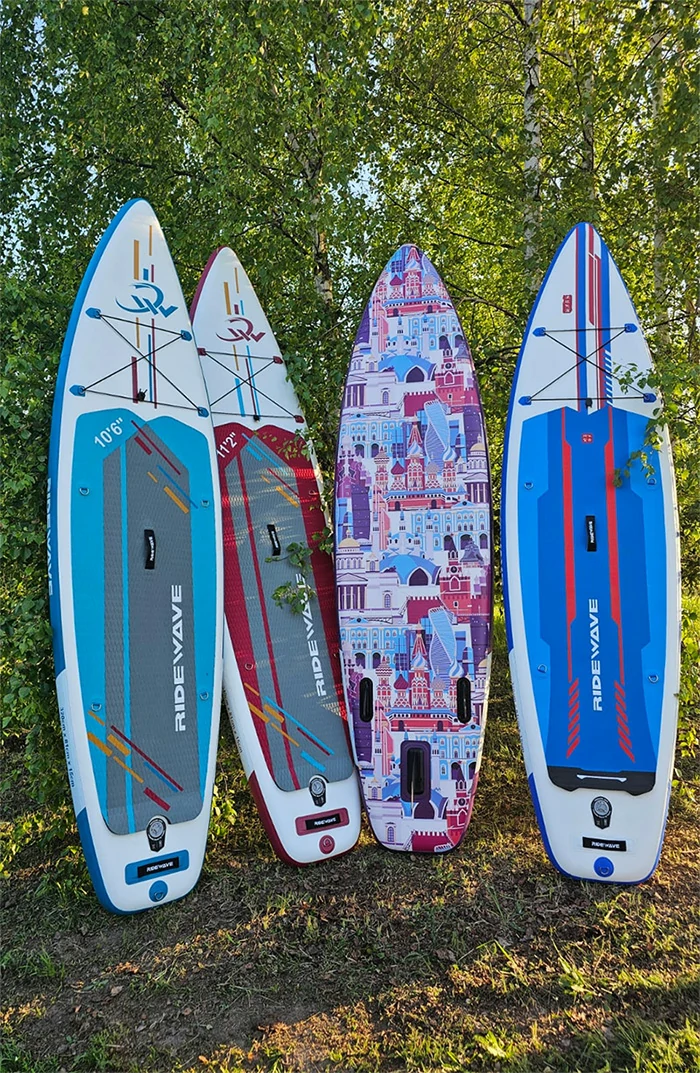
Beyond SIRA, the full document package must be consistent across every file: invoice, packing list, bill of lading and certificate of origin must show matching product descriptions, quantities and unit values. Mismatched descriptions, inconsistent SKU names or differing total weights will trigger customs inspection. At RIDEWAVE, our documentation team cross-checks every commercial set for Latin American orders to reduce mismatch risks, though we always remind buyers that local broker review is mandatory.
• SIRA import authorization: issued under Argentine importer AFIP tax ID
• Commercial invoice: detailed unit pricing, SKU descriptions, payment terms • Packing list: net weight, gross weight, carton count, item breakdown
• Bill of lading / air waybill: consignee details match SIRA holder
• Certificate of origin: for preferential tariff programs if applicable
• Insurance certificate: required for most CIF shipments
⚠️ SIRA cannot be issued by the overseas manufacturer; only the local Argentine importer applies
⚠️ All document descriptions must align exactly; minor discrepancies trigger inspection
| Document | Responsible Party | Mandatory? |
|---|---|---|
| SIRA Import Approval | Local Argentine importer | ✅ Mandatory |
| Commercial Invoice | Factory (RIDEWAVE) | ✅ Mandatory |
| Packing List | Factory (RIDEWAVE) | ✅ Mandatory |
| Bill of Lading | Freight forwarder | ✅ Mandatory for sea freight |
| Certificate of Origin | Factory chamber of commerce | ⭕ Optional, for tariff preference |
| Insurance Certificate | Shipper / importer | ✅ Mandatory for CIF terms |
What Certification, Labeling and Compliance Rules Apply to SUPs Sold in Argentina?
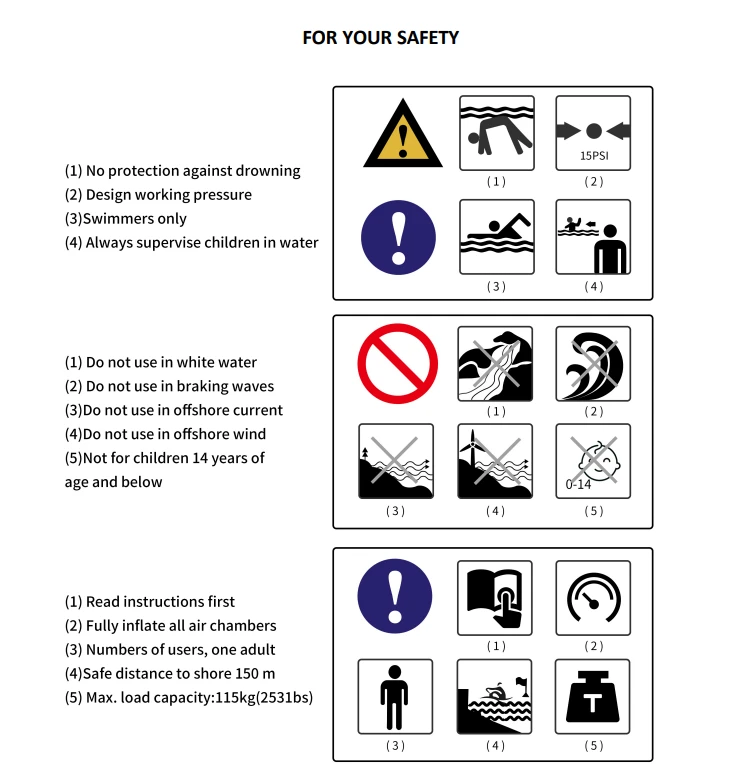
Many B2B buyers new to Argentina assume they need a single universal product certification for inflatable SUP boards, but the reality is different. Argentina does not have a dedicated mandatory national certification standard for recreational drop-stitch inflatable paddle boards at the time of writing. The heavier compliance requirement is consumer-facing labeling under Argentine consumer protection law, which requires Spanish language permanent labels on the board itself and retail packaging.
andatory label content includes product name, manufacturer / importer legal details, weight capacity warning, inflation pressure range, safety warnings and warranty information. Stick-on paper labels are often rejected; durable printed or heat-embossed markings on the board surface hold up best during customs and retail checks. RIDEWAVE can support custom Spanish label printing on bulk orders for Latin American dealers, which removes the extra cost of relabeling after the goods arrive at the importer's warehouse.
• Permanent Spanish label directly on the SUP board body
• Clear maximum load capacity and recommended PSI inflation range
• Importer legal name, tax ID and local contact address
• Safety warning text for deep water use, children supervision
• Retail packaging must carry matching consumer warnings
⚠️ Temporary adhesive stickers are frequently rejected during inspection
⚠️ Third-party safety test reports are not legally mandatory, but strongly recommended for dealer risk protection
Which Incoterms and Shipping Routes Work Best for Bulk SUP Orders to Argentina?
Choosing the right Incoterm for your bulk inflatable SUP container changes who carries customs risk, freight cost and cargo loss responsibility all the way to Argentina. For most first-time Argentine importers, FOB is the most balanced choice: the buyer controls freight, selects their preferred local broker and manages SIRA clearance, while the factory handles loading and export documentation. EXW gives the buyer maximum control but increases logistics coordination burden, while CIF shifts ocean freight cost to the factory but leaves the buyer still responsible for import clearance and all local port charges.
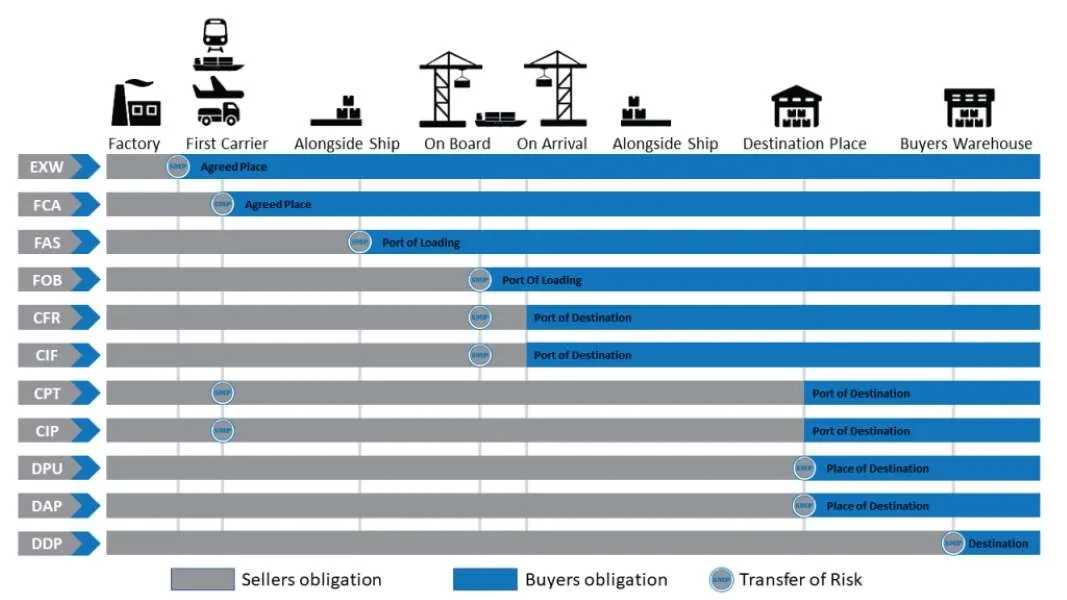
ost wholesale inflatable SUP bulk shipments go via sea freight to the Port of Buenos Aires. LCL less-than-container loads are common for small trial orders, while FCL full containers are far more cost-effective for established distributors with seasonal stock plans. Air freight is only suitable for emergency restocks of fast-selling SKUs, as air freight rates for bulky inflatable SUPs quickly erase profit margins. At RIDEWAVE, we help buyers compare FOB, EXW and CPT options based on their experience level and existing freight partner network.
• FOB: Best for most B2B buyers with their own freight forwarder and broker
• EXW: For experienced importers with robust Latin America logistics teams
• CIF: Factory arranges ocean freight and insurance; buyer still clears customs
• FCL full container: Lowest per-unit cost for seasonal bulk SUP stocking
• LCL consolidation: Suitable for small trial bulk orders before scaling
⚠️ No Incoterm transfers the legal obligation to secure SIRA; that always stays with the Argentine importer
⚠️ Inflatable SUPs are bulky, so volumetric weight heavily impacts air freight pricing
How Should B2B Buyers Evaluate an Inflatable SUP Manufacturer Before Placing a Bulk Order?
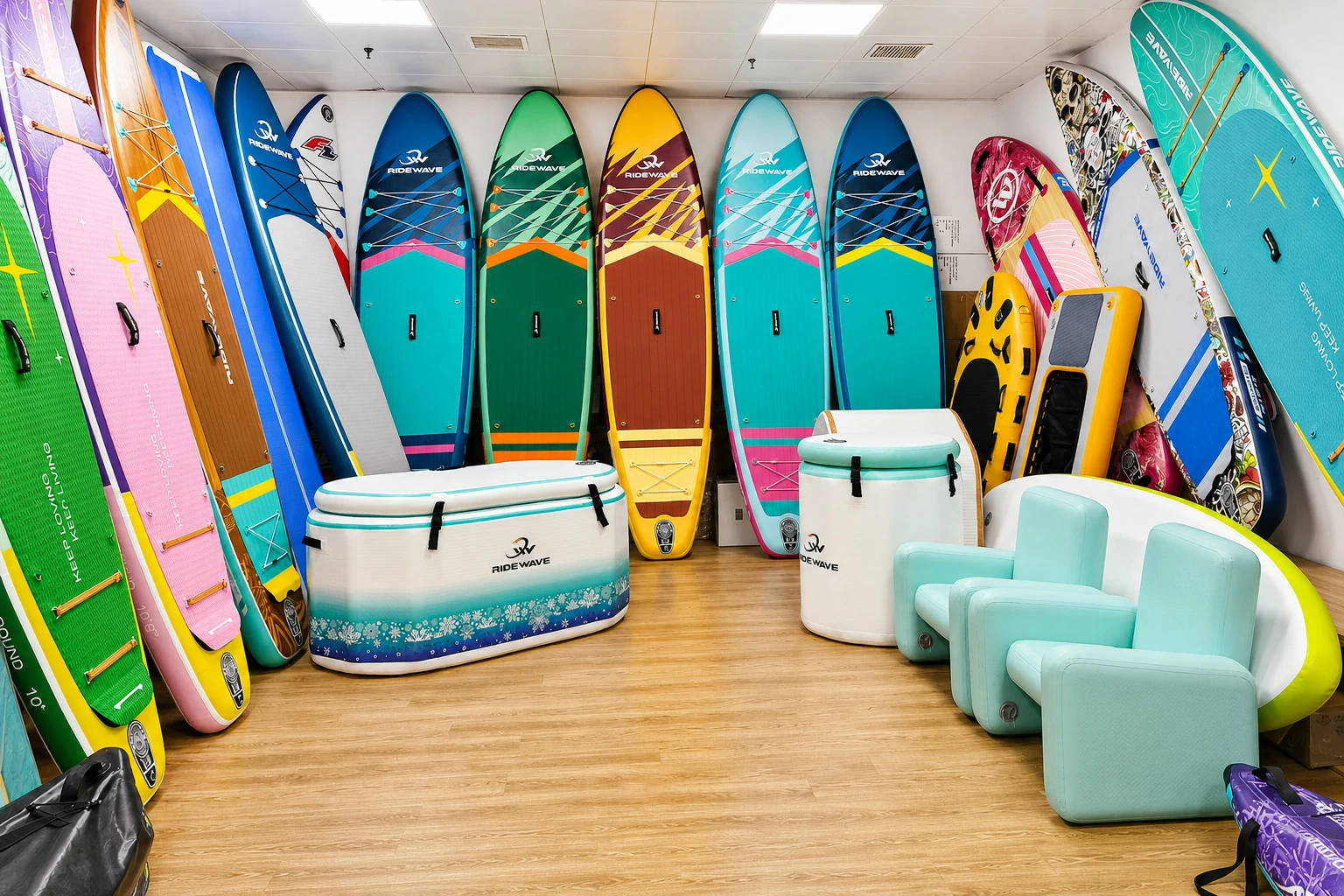
Price alone is a dangerous benchmark for selecting a supplier for bulk inflatable SUP boards. A reliable factory must demonstrate consistent drop-stitch quality, stable PVC lamination, pressure testing capacity, private label printing capability and on-time delivery history for Latin American shipments. Many buyers skip pre-order verification and discover poor air retention, weak seam welding or inconsistent printing after a full container arrives in Argentina.
Your evaluation checklist should cover material specs, in-house testing, sample turnaround, MOQ flexibility, after-sales spare parts policy and the factory's familiarity with Latin American import documentation rules. We recommend every B2B buyer run through the core questions in 10 Questions Every B2B Buyer Should Ask Before Placing An Inflatable SUP Factory Order before committing to a large container. At RIDEWAVE, we share full material test reports, arrange third-party inspection and provide sample shipments for new Argentina-focused distributors before bulk production starts.
• Verify drop-stitch thread density and PVC fabric layer specifications
• Confirm air retention testing and pressure cycle testing standards
• Check private label, custom graphic and Spanish label printing capacity
• Confirm lead times during peak summer production windows • Confirm repair kit, spare valve and after-sales support terms
⚠️ Low unit price often correlates with thinner PVC and lower tensile strength, raising retail return rates
⚠️ Ask for reference clients already selling inflatable stand up paddle boards into South America
What Does a Real Bulk SUP Supply Case Look Like for a Latin American Distributor?on
This case follows a long-term RIDEWAVE B2B distributor based in Santiago, Chile, who imports bulk inflatable SUPs and resells to retail partners and rental operators across Argentina via cross-border wholesale distribution. The client wanted to expand their watersports category beyond kayaks, targeting both Patagonian lake rental fleets and Buenos Aires coastal retail shops, and they needed a mixed SKU container with private label branding.
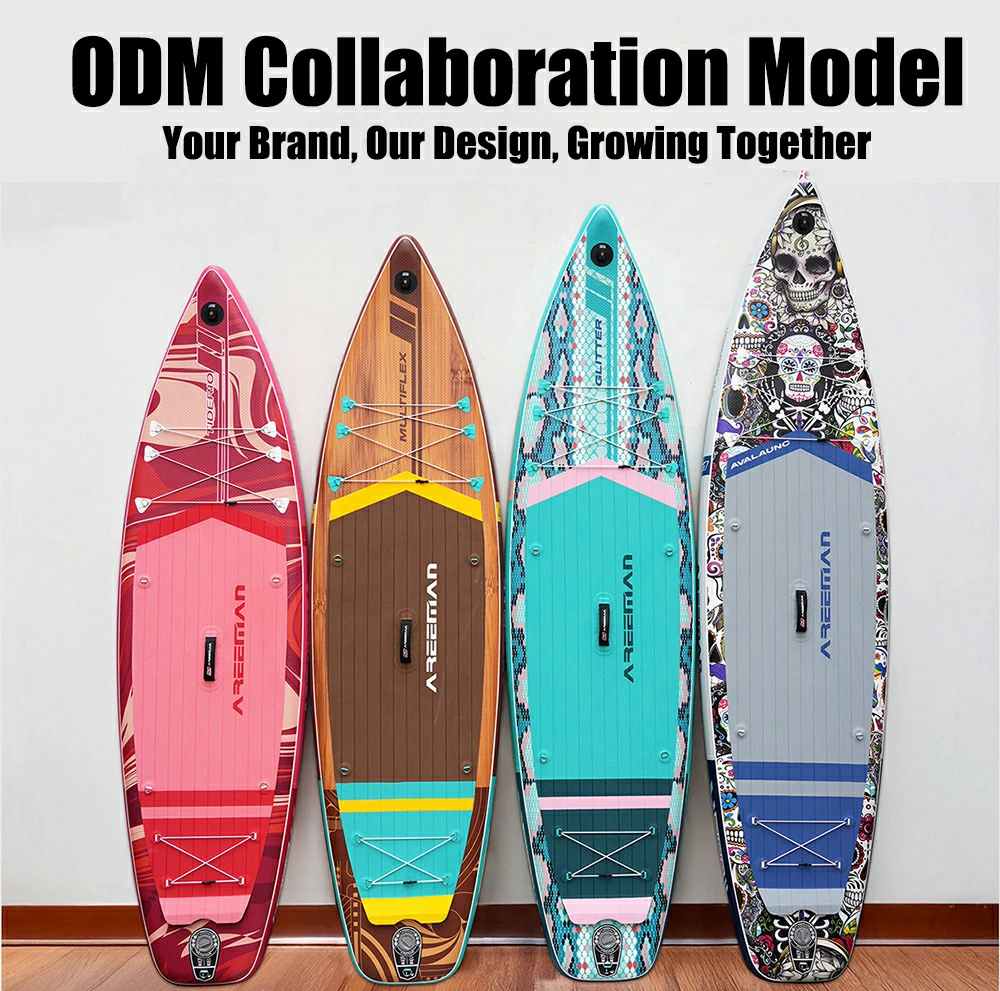
The order breakdown was 220 units total: 100 all-around entry-level inflatable stand up paddle boards, 70 touring SUPs for lake use, 50 fishing SUP platforms. The client selected FOB terms, requested custom brand graphics and pre-printed Spanish safety labels on the board surface, and required full batch pressure testing before shipment. Our production team adjusted the artwork timeline to hit the June shipment window, so the inventory would arrive in advance of Argentina's September summer selling kickoff.
The shipment cleared Buenos Aires customs with the client's local broker and SIRA approval. After the first container sold through faster than forecast, the distributor placed a repeat order 3 months later, with a small adjustment to SKU ratios to add more fishing SUPs, which had the strongest margin in Patagonian resale channels. The main lesson from this case is that mixed-SKU containers, pre-printed compliance labels and aligned seasonal lead times drastically reduce the risk for new Argentina-focused SUP importers.
What Common Import Risks Can Derail an Argentina SUP Order, and How Can Buyers Avoid Them?
Even with solid factory pricing and good product quality, several predictable risks can derail your wholesale inflatable paddle board shipment to Argentina. The most frequent pain points are SIRA approval delays, AFIP document audits, currency control restrictions, port congestion, and hidden damage to bulky inflatable SUPs during transit. Many of these risks are manageable with advance planning, rather than reactive fixes once the cargo is already at port.
Exchange controls and payment restrictions are a persistent risk for Argentine importers. Confirm your payment channel and forex timeline with your local accountant before signing the factory contract. Document mismatches remain the second-largest risk, which is why RIDEWAVE standardizes commercial documents for Latin America orders and runs cross-checks before sending final files. Physical damage risk comes from improper carton packing; folded SUPs with sharp accessory parts inside can scratch PVC surfaces during long sea transit.
How Can Buyers Build a Profitable Long-Term SUP Supply Partnership in Argentina?
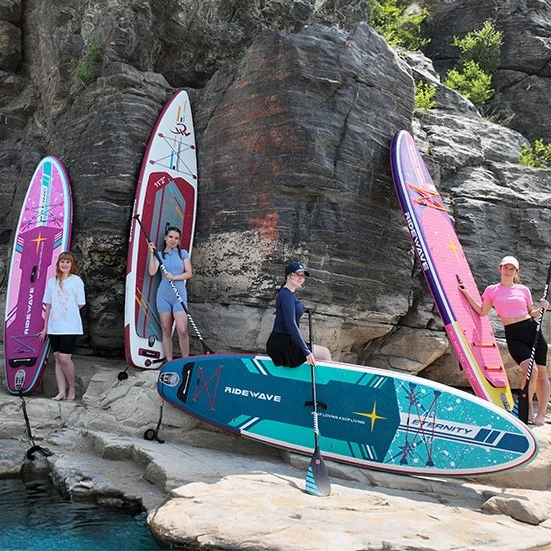
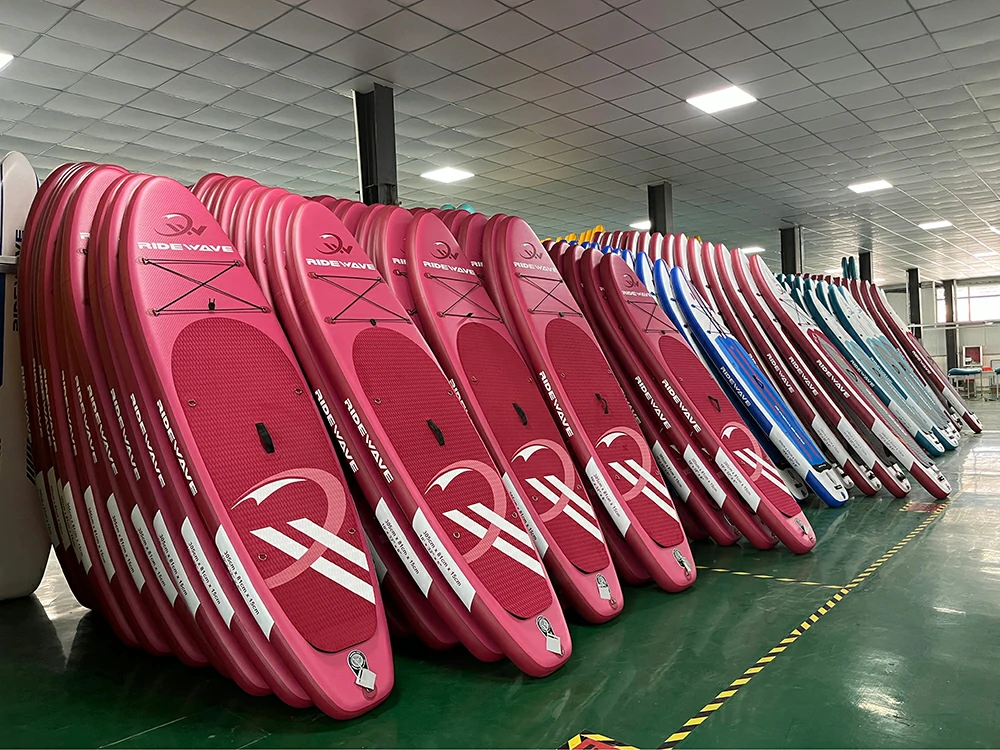
Successful B2B distributors selling inflatable SUP boards in Argentina do not treat their factory order as a one-off transaction. Sustainable profit comes from layered SKU planning, seasonal inventory cadence, differentiated private label positioning and steady communication with your manufacturer about local market feedback. The best performing dealers split their range into entry-level high-turn SKUs for mass retail, mid-range touring boards for outdoor shops, and higher-margin specialty fishing / yoga SUPs for niche buyers.
Working closely with your factory also lets you iterate product features based on local feedback: heavier grab handles for lake rental fleets, reinforced D-rings, optimized backpack sizes for Argentine retail shelf space. At RIDEWAVE, we support long-term partners with seasonal production forecasts, flexible order scheduling and iterative custom artwork updates. You can refine your product lineup strategy further with guidance from How To Design A Paddle Board That Sells.
The final goal is not just clearing customs smoothly, but building a repeatable, profitable watersports category that fits Argentina's unique pricing, seasonal and regulatory environment. Stable, transparent factory communication and consistent compliance planning turn one bulk SUP shipment into an ongoing revenue stream for your wholesale business.
• Tier your SKU lineup: fast-moving entry models + high-margin specialty SUPs
• Share local retail feedback with your factory to improve product details
• Lock in seasonal production slots ahead of peak summer demand
• Build private label identity to separate your brand from generic commodity SUPs
• Keep compliance documents and labeling standards consistent across every order
⚠️ Avoid overinvesting in ultra-premium SUP models before testing local retail demand
Navigating Argentina's import rules for bulk inflatable SUPs takes advance planning, careful documentation and a manufacturer familiar with Latin American B2B workflows. RIDEWAVE continues to support distributors, brand owners and new watersports importers as they test and scale SUP inventory across South America. If you want to review sample options, confirm OEM labeling lead times or walk through a bulk order quotation, reach out to our B2B team directly.
Related Articles
How To Design A Paddle Board That Sells
How To Build A Paddle Board Brand: The Ultimate B2B Success Roadmap
OEM & ODM SUP Solutions: Why Brands Choose Professional Manufacturers
How Inflatable Paddle Boards Are Made: Inside The Manufacturing Process
| Low MOQ, Fast Shipping: The Perfect SUP Partner For Spain Importers |