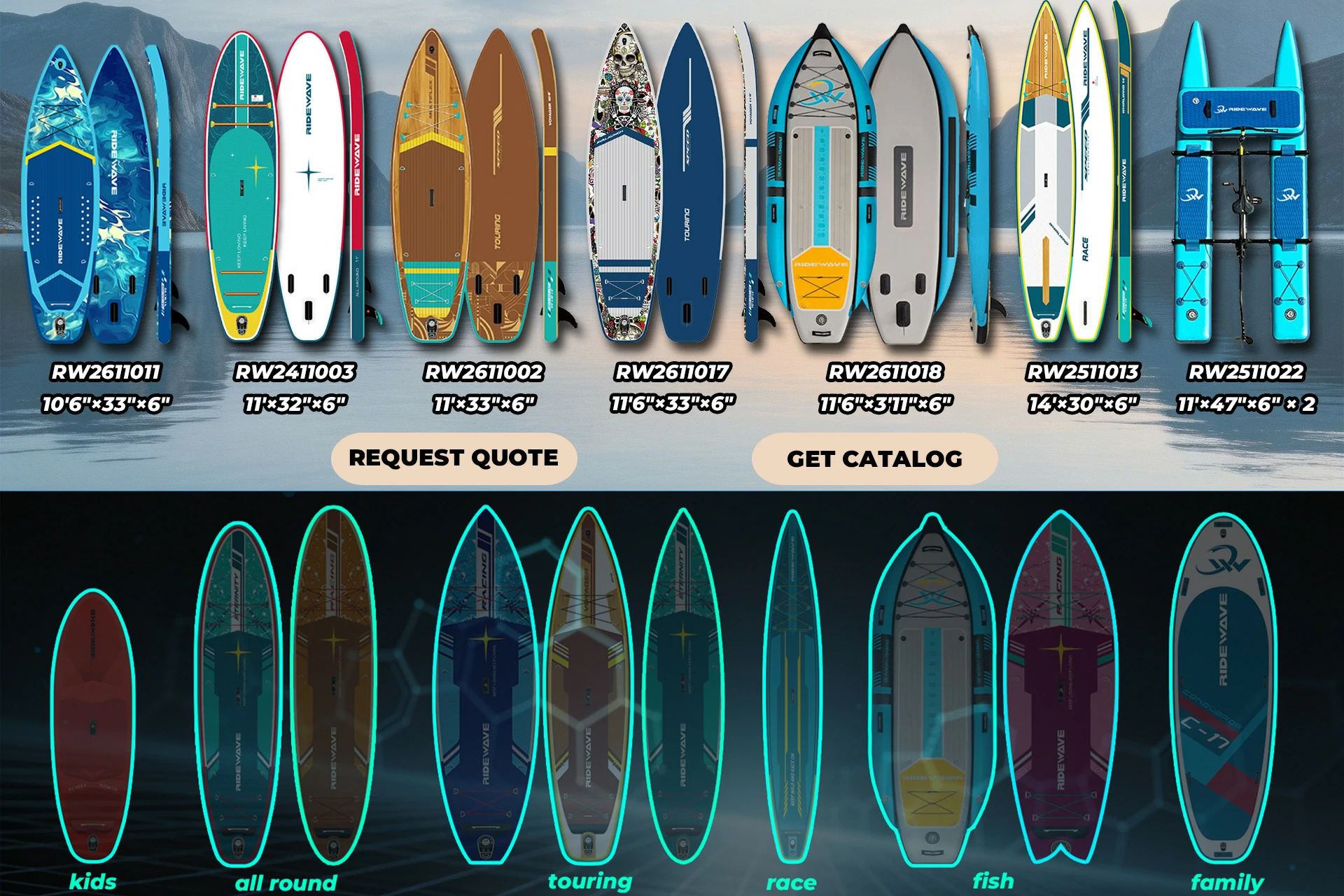


Fishing inflatable SUPs have quietly turned into one of the most stable high-margin categories for water sports distributors across Argentina, Latin America, North America, Europe and Australia, far beyond the saturated market of generic all-around inflatable paddle boards. Many wholesalers and brand owners keep chasing low-price entry-level SUP inventory, only to get trapped in endless price wars and thin profit margins, while angler-focused fishing SUP lines create clear differentiation, higher bundle revenue and loyal repeat buyers from fishing communities, lake campers, rental operators and tackle retailers. If you have wondered how factory sourcing, custom graphics and reinforced construction change the retail performance of fishing iSUPs, you can dive deeper into the manufacturing workflow in How Custom Paddle Boards Are Made: From Design To Production. Unlike recreational yoga or touring SUP models built for casual paddling, a well-engineered fishing inflatable SUP prioritises wide deck stability, high load capacity, pre-installed mounting points for fishing accessories and durable multi-layer PVC, all features that let your retail customers fish from calm flats, lagoons and slow rivers without investing in bulky fishing kayaks or small boats. For B2B buyers, the core advantage is simple: you are not just stocking another stand-up paddle board; you are bringing a portable angling platform that opens crossover sales between water sports, fishing gear and outdoor camping segments. This article breaks down sourcing benchmarks, product specification checks, bundle design strategies and supplier evaluation standards, with real market data and a practical RIDEWAVE B2B case to help you decide whether to add fishing inflatable SUPs to your 2026–2027 product portfolio.
Why Are Fishing Inflatable SUPs Becoming a High-Margin Niche in Water Sports Distribution?

The crowded marketplace of basic inflatable SUP models has forced most water sports wholesalers to compete purely on landed cost, cutting into gross margins and creating constant pressure to slash prices for retail partners. A standard all-round inflatable paddle board often sells as a standalone item with only a handful of basic accessories, leaving little room for upselling and brand differentiation. Fishing-focused fishing SUP lines flip this dynamic entirely, because the target end user comes with a clear functional goal: they need a stable platform to fish, carry tackle, coolers and outdoor gear, rather than just a board for casual paddling. This functional demand lets you build tiered bundles, add high-value accessories and position your inventory away from low-cost commodity SUP listings. Many B2B buyers overlook that this niche also overlaps with fast-growing outdoor trends: portable shore fishing, car camping, backcountry lake access, and low-cost alternatives to fishing kayaks and small fishing boats. Even if you already stock general SUP inventory, adding fishing iSUPs can unlock new sales channels, from local tackle shops and fishing lodges to lake-side rental fleets. Before locking in your SKU lineup, it helps to understand how design choices shape retail appeal, a topic covered in How To Design A Paddle Board That Sells. Wholesalers who have tested this category consistently report that customers shopping for fishing stand-up paddle board solutions are far less price-sensitive than buyers browsing entry-level recreational boards, provided the construction and mounting features match the promises on your product page. RIDEWAVE works with dozens of regional distributors to refine fishing SUP SKUs for local water conditions, without pushing generic one-size-fits-all boards that fail to satisfy serious anglers.
What Exactly Is a Fishing Inflatable SUP, and How Is It Different from a Regular Paddle Board?
A fishing inflatable SUP is a purpose-built inflatable stand-up paddle board engineered to support stable angling, gear storage, and seated paddling on calm freshwater and sheltered coastal water. It is not just a standard all-around inflatable paddle board printed with fishing graphics. Every core feature is tuned to carry a full angler load: the rider, fishing tackle, cooler box, dry bags, and mounted fishing accessories. Generic recreational inflatable SUP models prioritize light weight, easy turning, and casual fitness use. They usually have narrow decks, limited D-ring anchoring points, and lower static load ratings, which make them shaky and unsafe when loaded down with fishing gear. A dedicated fishing SUP trades some nimble turning performance for a wider footprint, reinforced rail construction, multiple pre-placed mounting points, and a thick non-slip EVA deck pad that works equally well when standing or sitting for hours. Many distributors mistakenly group fishing iSUPs with regular leisure boards on the same product shelf, which confuses retail buyers and weakens the product's premium positioning. It helps to separate your product catalog by use case, so shoppers can immediately tell the difference between a yoga SUP, touring SUP, recreational SUP, and fishing-specific platform. If you are sorting out how to describe these functional differences on your product page, you can revisit the core production logic in How Custom Paddle Boards Are Made: From Design To Production. RIDEWAVE's standard fishing board line follows this functional-first rule: every D-ring, bungee station, and mounting insert is added with real angler workflows in mind, instead of decorating a regular board to look like a fishing model.

Who Is Actually Buying Fishing SUPs in Argentina, Latin America and Broader Global Markets?

When you build your wholesale fishing inflatable SUP lineup, guessing the end customer will lead to slow inventory turns and mismatched marketing. Successful distributors break this niche into clear buyer groups, each with unique budget limits, usage habits and feature priorities for their inflatable SUP. The first and largest group is casual recreational anglers across Argentina, Chile, Brazil and neighbouring Latin American regions. Many of these anglers already fish from riverbanks and lake shores, and they want affordable, portable alternatives to heavy fishing kayaks or small motor boats. They value easy transport in a car, fast inflation and enough deck space to hold a cooler and basic tackle. The second stable buyer group is outdoor camping enthusiasts, who treat a stand-up paddle board as one part of their backcountry adventure kit. They travel to remote lakes and lagoons, and they prefer gear that packs small and supports multi-day trips. Rental operators and lake resort managers form a third high-volume segment. They need tough, low-maintenance inflatable paddle board units that hold up to repeated use by inexperienced guests, and they often reorder replacement boards season after season. The fourth audience is independent tackle shops and outdoor retailers, searching for crossover SKUs that connect fishing gear and water sports. Finally, private-label brand owners source fishing SUP models to build their own angling-focused product lines without investing in expensive mould development. These groups do not share the same buying triggers, so one single board specification cannot satisfy every channel. For example, a board made for rental fleets requires thicker reinforced rails, while a board for casual weekend anglers can balance weight and cost. RIDEWAVE's B2B sales team helps distributors map their local audience before locking in orders, so you do not stock inventory that fails to match regional demand patterns.
Which Product Specs Matter Most When Choosing a Fishing SUP Line for Wholesale?
Skipping technical validation on your fishing inflatable SUP specifications is one of the costliest mistakes a water sports wholesaler can make. A spec sheet that looks good on paper does not guarantee a reliable inflatable SUP for anglers, and customer complaints about instability, low weight capacity or weak welds will quickly eat away your wholesale reputation. The first metric you must lock in is board dimension. Most market-ready fishing SUP models fall between 10'0" and 11'6" in length, with widths ranging from 32 inches to 36 inches. Extra width delivers the lateral stability anglers need when shifting position, reaching for tackle, or standing to cast. Thickness usually sits at 6 inches to 8 inches, directly impacting overall rigidity and load support. Next is advertised and tested load capacity. Never rely only on factory headline numbers; confirm the safe working load that accounts for the paddler, cooler, tackle box, dry bags and mounted accessories. Drop-stitch density and PVC construction are non-negotiable quality markers. Single-layer PVC keeps entry pricing low, while double-layer or rail-reinforced inflatable paddle board builds stand up to heavy use, rental cycles and rough handling. The EVA deck pad also deserves careful review: angling buyers need deep, non-slip texture with drainage channels, because standing and sitting on wet surfaces for hours is standard. You also need to audit accessory mounting infrastructure: welded D-rings, threaded inserts for rod holders, bungee storage zones and carry handles. Fin systems affect tracking on slow rivers and flat lakes; a central removable fin is the most practical default for fishing-focused boards. Packaging and included accessories round out the spec review, as these items shape your bundle pricing and retail presentation. If you want to understand how these specs translate into physical production, you can review the manufacturing process in How Custom Paddle Boards Are Made: From Design To Production. RIDEWAVE shares full test data and pressure-check records for all fishing SUP SKUs, so buyers can compare verified specs instead of only comparing quoted unit prices.

Why Do Fishing SUPs Attract Better Bundle Sales Than Basic Paddle Boards?

Most wholesalers selling entry-level inflatable SUP units struggle with thin profit margins because shoppers compare these simple inflatable paddle board products purely by unit price. A basic recreational SUP usually ships with only the mandatory starter kit: paddle, hand pump, backpack, leash and repair kit. There is limited room to add extra items without pushing the retail price outside buyer expectations. A purpose-built fishing inflatable SUP breaks this pricing trap, since anglers arrive with a clear list of functional gear needs. They are not just looking for a stand-up paddle board; they need a complete mobile fishing station ready to deploy on the water. This opens natural opportunities for tiered bundles and accessory upsells that boost your average order value and overall gross profit. The core add-ons include rod holders, removable padded seat, cooler mount, waterproof tackle bag, dry storage bag and spare fin. You can structure packages for different customer segments, from a value-focused base fishing kit all the way up to a fully loaded expedition fishing bundle for serious anglers. Bundling also simplifies selling work for your retail partners. Instead of convincing a shopper to buy separate accessories one by one, the retailer can present one ready-to-fish package. That cuts sales friction and reduces the chance the customer will source accessories from competing vendors. Even so, smart B2B sellers avoid overstuffing bundles with low-quality, irrelevant add-ons that dilute perceived value. Every accessory should serve a real fishing use case. If you are refining how to package and position your new SUP lineup for retail, you can pick up actionable ideas in How To Design A Paddle Board That Sells. RIDEWAVE supports custom bundle assembly for wholesale clients, letting distributors pick and match accessories to match local market preferences without being locked into a fixed pre-set pack.
What Should Distributors Check Before Ordering a Fishing iSUP from an Overseas Factory?
Sourcing fishing inflatable SUP inventory from overseas manufacturers cuts your landed cost, but blind orders carry hidden risks that can erase your wholesale profit margin. Many first-time buyers only compare unit pricing for inflatable SUP models and overlook critical factory qualifications, quality controls and order terms, which leads to delayed shipments, inconsistent batches, leaky welds or accessories that fail to match product descriptions. Start with factory specialization: confirm whether the facility focuses on inflatable paddle goods, rather than a general inflatable toy factory that occasionally makes inflatable paddle board products. General inflatable manufacturers often lack the precise drop-stitch welding and pressure testing standards required for heavy-load fishing SUP models. Next, evaluate sample performance thoroughly. A sample inspection is not just a quick visual check. You need to test air retention, rail rigidity, EVA pad adhesion, valve sealing, fin box fit and the stability of threaded inserts built for rod holders. Clarify all order terms in writing: MOQ for standard stock items, MOQ for custom printing, sample lead time, mass production lead time, acceptable colour deviation range, inspection standards and the spare parts policy for defective units. Compliance documentation is another key checkpoint. Ask for test reports relevant to your target markets, and confirm whether the provided certificates apply specifically to fishing iSUP constructions, not generic lightweight recreational boards. Communication reliability also matters. Stable B2B sourcing depends on clear updates for production photos, pre-shipment inspection videos and container loading plans. If you want a structured checklist to run through every negotiation round with your supplier, review our dedicated guide: 10 Questions Every B2B Buyer Should Ask Before Placing An Inflatable SUP Factory Order. RIDEWAVE encourages all new wholesale partners to request samples before bulk commitments, and we share pre-production samples, batch inspection records and loading photos for every fishing SUP production run.

How Can Brand Owners Create a Fishing SUP Line That Sells Instead of Competing on Price?

Private-label and house-brand sellers often fall into the same trap: they build a fishing inflatable SUP range that looks identical to every other low-cost inflatable SUP on the market, and then compete only on unit price. This race to the bottom erodes margins and makes it nearly impossible to build loyal retail customers. The core of a successful fishing inflatable paddle board line is intentional differentiation built around the angler's real habits, not just a camouflage print stuck onto a standard recreational SUP deck. Start with your target buyer profile. Are you serving casual weekend anglers on local lakes, backcountry campers, high-volume rental fleets, or serious tournament-focused fishermen? Each group demands different construction, accessory layouts and visual styling. Once you lock in your audience, map the functional features first: deck width, load rating, number of threaded inserts for rod holders, reinforced rail zones and drainage EVA pad texture. Graphics and colourways come second, as visual appeal only works when the board's performance matches the marketing promise. Many brand owners waste budget on fancy artwork while skipping structural upgrades, which triggers negative reviews once customers load the board with coolers and tackle. You should also build your product storytelling around use cases, not technical jargon. Retail listings and marketing assets should show the board in lagoons, slow rivers and shallow flats, highlighting how it simplifies shore-to-water fishing trips. If you want a clear framework to balance functionality, visual design and retail appeal, refer to our guide: How To Design A Paddle Board That Sells. RIDEWAVE supports brand builders with flexible ODM and private-label workflows, from custom deck pad patterns and custom printed art to branded packaging and tailored accessory bundles, so you can build a distinct fishing SUP lineup without starting the whole development cycle from scratch.
| Brand Positioning | Core Feature Priorities | Recommended Visual Style | Target Retail Channel |
|---|---|---|---|
| Entry Casual Angler | Balanced weight, competitive price, basic mounting points | Simple earth tones, subtle fishing graphics | General outdoor stores, online marketplaces |
| Backcountry Camping Angler | Compact packed size, reliable air retention, durable rails | Muted woodland, lake landscape prints | Camping and adventure gear retailers |
| Rental Fleet | Heavy double-layer PVC, reinforced rails, easy repair | Solid single colour, low-fuss branding | Resorts, lake activity centres, rental operators |
| Premium Angler Speciality | Multiple rod inserts, high load capacity, premium EVA pad | Camo, marine technical styling | Tackle shops, high-end fishing gear stores |
How Does RIDEWAVE Support B2B Fishing SUP Orders for Distributors and Brand Owners?

Many factory suppliers treat fishing inflatable SUP orders as just another batch of generic inflatable SUP production, with fixed SKUs and rigid rules that leave little room for regional adjustment. RIDEWAVE builds its fishing inflatable paddle board programme around the unique needs of global distributors and private-label partners, rather than forcing every buyer to adapt to a one-size-fits-all product. A practical recent B2B case illustrates this workflow: a distributor based in southern Chile reached out last year, looking for fishing SUP units suitable for cold glacial lakes and strong mountain winds. Local anglers there often carry heavy waterproof gear and large coolers, and standard off-the-shelf fishing boards were failing under the load. Our team adjusted the spec sheet: upgraded to 0.9 mm double-layer PVC, added extra welded D-rings along the side rails, thickened the central drop-stitch core, and kept the board width at 34 inches to preserve stability without becoming too bulky for vehicle transport. We also produced two sample rounds for field testing before mass production, and shared pressure test reports and weld inspection records with the client at every stage. This is the core difference: we do not simply sell ready stock; we adapt the stand-up paddle board to match local water conditions and end-user habits. Support extends beyond product engineering. We offer transparent lead time forecasts, pre-shipment QC videos, flexible accessory bundling, neutral packaging and full private-label printing for brand builders. If you want to align your custom design choices with feasible manufacturing limits, you can explore the production workflow in How Custom Paddle Boards Are Made: From Design To Production. We also maintain stable stock of our standard fishing inflatable SUP range for buyers who need faster shipments without custom development. RIDEWAVE does not push overcomplicated add-ons or unnecessary upgrades; our goal is to help you stock inventory that sells steadily and reduces after-sales complaints.
| RIDEWAVE B2B Service | What It Includes | Benefit For Your Business |
|---|---|---|
| Spec Customisation | PVC thickness, rail reinforcement, threaded inserts, deck width | Match local water and end-user demands |
| Sample Validation | 1–2 rounds of pre-production samples + test reports | Avoid costly bulk production errors |
| Private Label Support | Custom printing, branded packaging, custom colour | Build your unique brand identity |
| Flexible Bundle Options | Mix and match fishing accessories | Adjust bundles to fit local retail price points |
| Standard Stock Programme | Ready-made fishing SUP SKUs | Short lead time for urgent replenishment |
What Final Checks Should You Complete Before Launching Your Fishing SUP Line?
Adding a new fishing inflatable SUP line to your catalogue is exciting, but skipping final validation steps can undo all the work you put into sourcing and product design. Even when you have reviewed spec sheets, tested samples and locked in bundle pricing, a short checklist will help you launch your inflatable SUP lineup with confidence and reduce the risk of avoidable complaints. First, cross-check that all marketing descriptions match the physical construction of your inflatable paddle board. Load ratings, material thickness, mounting insert counts and accessory lists must align exactly between product pages, packaging and sales sheets. Overstated performance claims create fast returns and harm long-term trust with retail partners and end anglers. Second, test every bundled accessory together with the fishing SUP. A rod holder that does not fit the threaded inserts, or a seat that slides around on the deck pad, will ruin the user experience no matter how well the board itself performs. Third, confirm your after-sales policy and spare parts inventory. Work out replacement pathways for valves, fins, D-rings and repair kits, so you can support retailers when minor damage happens out on the water. Fourth, align your sales team and retail partners on the core selling points of fishing stand-up paddle board models. Train them to explain the difference between fishing-focused SUPs and regular recreational boards, rather than letting them market everything as a generic all-around board. Last, map your initial stock allocation across channels. Reserve smaller trial quantities for new retail partners and tackle shops before rolling out large shipments to high-volume rental fleets. This staged rollout lets you collect real feedback before scaling inventory. If you need to revisit supplier communication standards as you prepare for launch, keep our sourcing checklist handy: 10 Questions Every B2B Buyer Should Ask Before Placing An Inflatable SUP Factory Order. RIDEWAVE shares launch-ready product assets, spec datasheets and high-resolution product photos for our wholesale clients, so you do not waste extra time building marketing materials from scratch.

| Pre‑Launch Check | Verification Content | Risk If Unchecked |
|---|---|---|
| Marketing Copy Audit | Match specs, load rating, material and accessory list | Misleading listings, customer returns |
| Accessory Compatibility Test | Rod holder, seat, fin fit with the SUP inserts | Poor end-user experience and bad reviews |
| After-sales Preparation | Spare parts stock, replacement process | Slow support and retailer dissatisfaction |
| Sales Training | Clear differentiation between fishing SUP and recreational SUP | Incorrect product positioning and lost premium sales |
| Stock Rollout Plan | Small trial stock for new channels first | Large unsold inventory if market feedback is weak |
Related Articles
Quality Control Checklist For SUP Manufacturers
Top Inflatable SUP Factories For Private Label Brands
Low MOQ Paddle Board Manufacturers For Small Brands
OEM Vs ODM Paddle Boards: Which Is Better For Your Brand?
How Custom Paddle Boards Are Made: From Design To Production