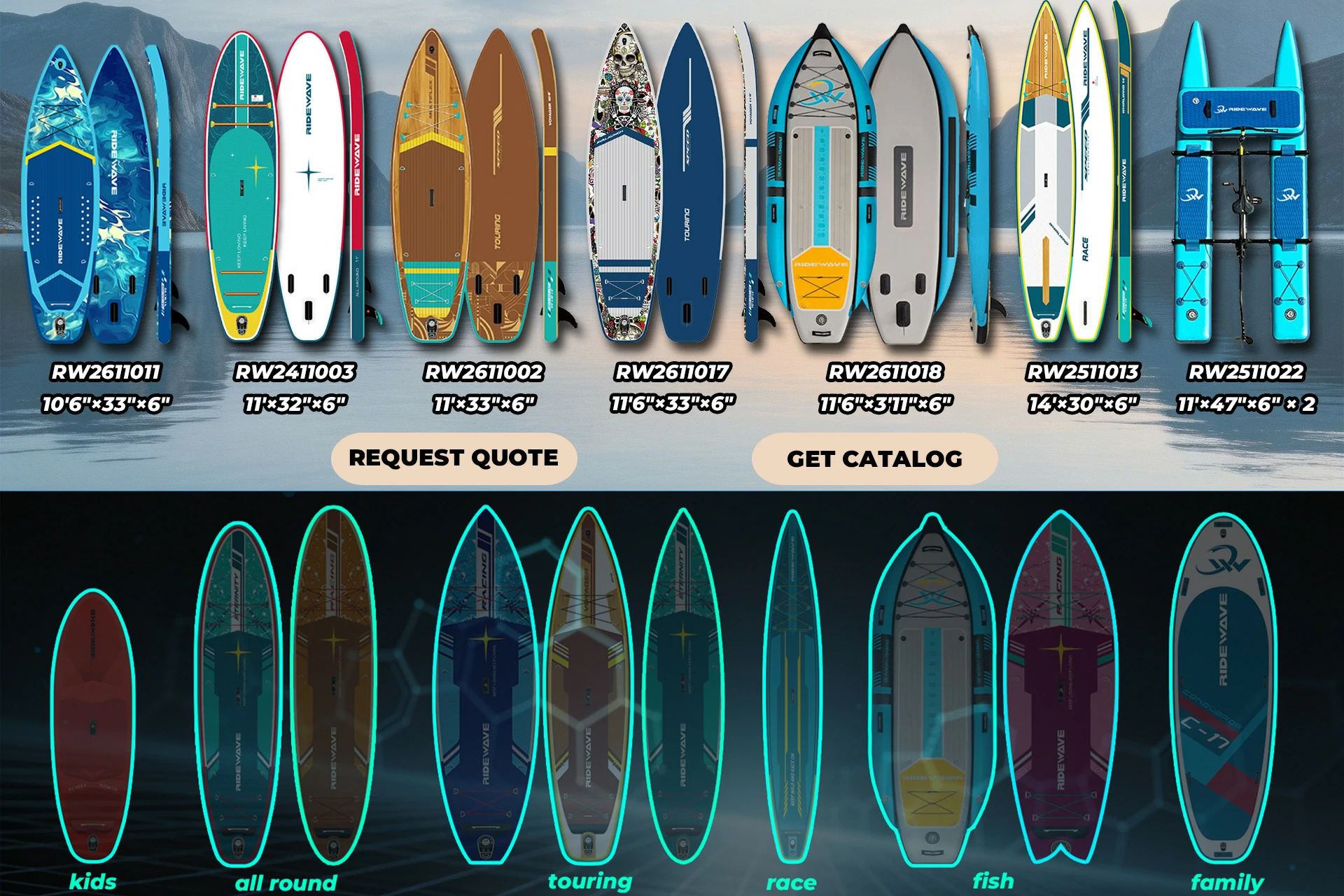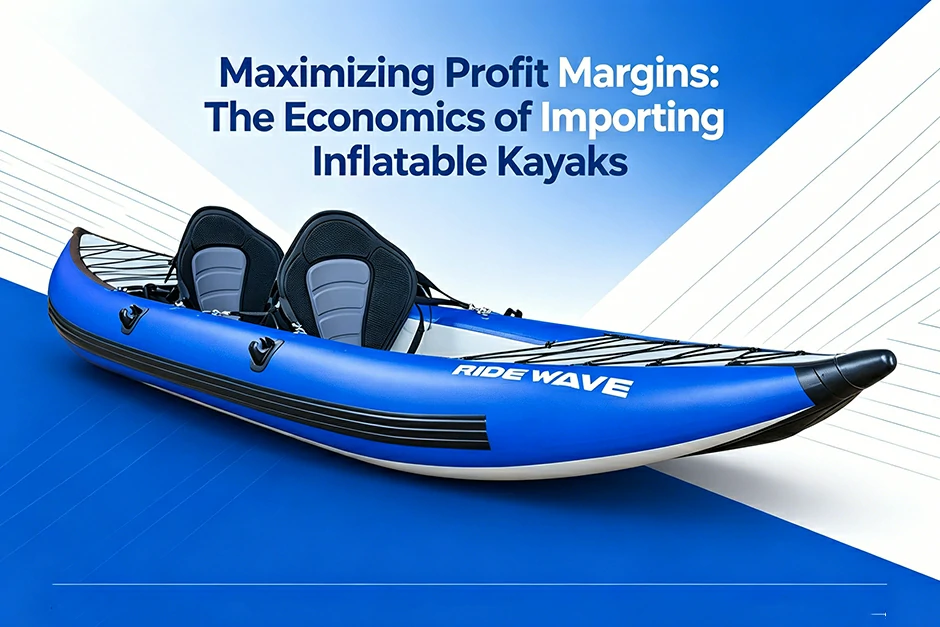


If your wholesale, distribution or outdoor sports brand is exploring inflatable SUP expansion into Spain's fast-growing watersports market, this market briefing breaks down on-the-ground demand signals, top-selling board profiles, and practical bulk sourcing guardrails to cut excess inventory risk. Spain's coastal tourism boom, paired with rising interest in accessible family outdoor recreation, has pushed inflatable stand up paddle board sales upward across coastal regions from Andalusia to Catalonia. Many B2B buyers run into two recurring hurdles: picking SUP models aligned with local consumer tastes, and locking in a stable manufacturer that delivers consistent quality without long, rigid minimum order commitments. Understanding the full production workflow helps evaluate factory capability, and you can dive deeper into the manufacturing journey in How Custom Paddle Boards Are Made: From Design To Production. This report draws on RIDEWAVE's multi-year supply chain data serving European SUP distributors, combining real order trends, retailer feedback, and compliance considerations to help B2B buyers make data-backed purchasing decisions for the Spanish market.
What Is the 2026 Market Status & Key Trends of the Spanish SUP Industry?
The Spanish inflatable SUP market entered 2026 on a solid growth trajectory, driven by a mix of coastal tourism recovery, rising domestic outdoor participation, and expanding retail channels beyond traditional beachfront shops. Based on order data tracked by RIDEWAVE across European distributors, demand for inflatable stand up paddle board units continued to climb through the 2025 season and carried strong pre-season momentum into early 2026. The market is no longer limited to summer tourists; year-round use on inland lakes, reservoir parks and urban paddle clubs is broadening the sales window beyond the traditional May-to-August peak.
Three structural trends stand out for B2B buyers planning their SUP inventory for 2026:
Family and beginner segments are the volume engine. Entry-level all-around boards in the 10' to 11' range continue to move fastest, driven by casual buyers, rental operators and small retail shops that want a forgiving, stable board for first-time paddlers.
Niche categories are growing faster than average. Fishing SUP boards with mounting points, yoga boards with EVA deck pads, and lightweight touring models for longer-distance paddling are outpacing the generic all-around segment in repeat order volume.
E-commerce and Amazon-style marketplaces are shifting buying behavior. Spanish consumers now compare prices and read reviews online before visiting physical stores, meaning distributors must carry models with strong spec sheets, clear packaging and reliable warranty support rather than relying solely on foot traffic.

Why Spain Matters More Than Other European SUP Markets in 2026
Spain holds a distinct position in the European inflatable SUP landscape. Its 8,000+ kilometers of coastline, warm Mediterranean climate, and affordable coastal tourism infrastructure create more natural paddling days per year than Northern European markets. According to RIDEWAVE's 2025 shipment review, Spanish distributors accounted for roughly 22% of the company's Southern European SUP volume, second only to France in the region. That figure is expected to grow as more rental companies and beach operators upgrade their fleets from older, heavier boards to modern lightweight inflatable SUP designs.
It is also worth noting that Spain's post-pandemic outdoor recreation boom has not fully cooled. Local tourism boards, municipal parks and water sports associations continue to fund paddleboarding access points, SUP rental stations and beginner-friendly courses in regions like Costa del Sol, Costa Brava, the Balearic Islands and the Canary Islands. This infrastructure investment directly feeds retail demand for SUP boards, accessories and replacement parts.
2026 SUP Demand Drivers Every B2B Buyer Should Track
| Demand Driver | What It Means for SUP Buyers | Risk if Ignored |
|---|---|---|
| Rising coastal tourism arrivals | More rental fleet turnover and seasonal retail demand | Understocking popular sizes before peak season |
| Inland lake & reservoir paddle growth | Extended selling window beyond coastal regions | Over-reliance on coastal-only customer assumptions |
| EU REACH & material compliance updates | Stricter requirements for PVC and glue used in SUP construction | Customs holds, product recalls, or rejected shipments |
| Direct-to-consumer brand competition | Price pressure from DTC brands selling similar boards online | Margin erosion if sourcing is not cost-efficient |
| Sustainability-conscious retail buyers | Preference for recyclable packaging and eco-material claims | Missed retail contracts with eco-focused chains |
For a deeper look at how board construction affects long-term retail performance, you can read How Custom Paddle Boards Are Made: From Design To Production - it walks through every production stage and helps buyers understand what separates a durable commercial board from a disposable cheap import.
Key Consumer Segments Shaping 2026 SUP Retail
Understanding who actually buys SUP boards in Spain helps distributors avoid ordering boards that sit in a warehouse. The main segments include:
Tourists and day-trippers. They rent rather than buy, but they drive demand for rental-grade boards that withstand heavy daily use. Rental operators need boards with reinforced handles, durable fin boxes and replacement accessory kits.
Local weekend paddlers. Mostly 25 to 45 years old, price-sensitive, and likely to research online before purchasing. They look for lightweight boards, included paddles, pumps and travel bags, and they check review scores before committing.
Families with children. They prioritize stability, wide decks and boards that can carry a kid or a dog alongside the adult paddler. All-around boards in the 10'6" to 11'4" range dominate this segment.
Fitness and yoga enthusiasts. A smaller but loyal segment. They prefer narrower, longer boards with non-slip EVA deck pads and attachment points for waterproof bags or anchors.
Fishing and light-touring users. The fastest-growing niche in RIDEWAVE's Spanish order book. They need D-ring arrays, rod holders, camera mounts and enough volume to carry gear.
Which Inflatable SUP Models Are in Highest Demand in the Spanish Market in 2026?
When building your SUP product lineup for Spain, not every popular international inflatable SUP will deliver strong local turnover. Coastal weather, water conditions and buyer expectations shape which inflatable stand up paddle board styles move off retail shelves or stay in warehouses. RIDEWAVE's order logs from Spanish dealers show four core board categories consistently generate repeat orders, with clear size and feature preferences tied directly to end-user behaviour across coastal towns and inland reservoirs.
The principles behind designing market-ready boards are universal, and you can dive deeper into product development logic in How To Design A Paddle Board That Sells. This resource helps buyers understand why certain shapes, widths and accessories perform better for retail and rental channels, instead of picking specs based only on factory price lists.
Top 4 High-Demand Inflatable SUP Models for Spain 2026
All-around beginner inflatable SUP (10'6"–11'2") This remains the volume workhorse for Spanish retail and small rental businesses. Wider 32–34 inch decks create extra stability for new paddlers, families and occasional users. Most retailers prefer boards with a full EVA non-slip pad, multiple D-rings for leash and cargo, and three removable fins. These boards sell well in beach shops, online marketplaces and inland lake outfitters. They tolerate choppy nearshore waters common along the Mediterranean coast, without the higher cost of premium touring models.
Lightweight touring SUP (11'6"–12'6") This is the fastest-growing non-rental segment for local enthusiasts. Spanish weekend paddlers often take longer trips along calm bays or reservoir routes, so they value streamlined shapes that track straight and weigh less for car transport. Distributors report strong demand for drop-stitch boards with reinforced side rails and integrated carrying handles. These sit at a higher price tier, delivering better profit margins than entry all-around boards.
Fishing inflatable SUP (11'–12') A niche but high-loyalty category concentrated in freshwater reservoirs and quieter coastal estuaries. Spanish anglers want pre-installed D-ring anchor systems, rod mount plates, storage bungee areas and weight capacity to hold coolers and tackle. RIDEWAVE Spanish partners note this group rarely buys the cheapest board; they prioritize reinforced seams and load capacity over low unit price.
Yoga & fitness SUP (10'–10'8") Popular with beach yoga studios and fitness clubs operating in tourist hotspots such as Costa del Sol. Buyers look for flat, wide, full-coverage EVA deck pads, low-profile rails and enough stability for standing stretches. These sell in smaller quantities but command premium retail pricing and attract repeat accessory sales for leashes, dry bags and anchors.
Model Comparison Table for Spanish B2B SUP Buyers
| Board Type | Typical Size Range | Primary Spanish Sales Channel | Key Must-Have Features | Target End User | Margin Profile |
|---|---|---|---|---|---|
| All-Around Beginner SUP | 10'6"–11'2" | Beach retail, online marketplace, small rental | 32–34" width, full EVA pad, triple fins, bungee storage | Tourists, families, first-time paddlers | Medium, high turnover |
| Lightweight Touring SUP | 11'6"–12'6" | Watersports specialty shops | Slim nose shape, reinforced side rail, lightweight drop stitch | Local weekend paddlers | High, moderate volume |
| Fishing inflatable SUP | 11'–12' | Tackle shops, outdoor specialty retailers | Rod mounts, heavy-duty D-rings, high weight capacity | Freshwater & inshore anglers | High, low volume |
| Yoga & Fitness SUP | 10'–10'8" | Beach yoga studios, fitness centres | Flat wide deck, full non-slip EVA, stable hull | Fitness enthusiasts, yoga instructors | Premium, low turnover |
Common Sizing & Feature Mistakes Spanish Distributors Should Avoid
Many new B2B buyers over-order narrow, fast racing boards or ultra-light compact boards that work well in Northern Europe but underperform in Spain. Nearshore wind and small waves make narrow boards intimidating for casual users, the largest buying group.
Other frequent missteps:
Skipping reinforced handles for rental fleets, leading to high return rates
Choosing thin, low-cost EVA deck pads that wear out quickly under heavy sun exposure
Forgetting to include multi-language instruction manuals and safety labels compliant for Spain
Overlooking board colour preferences; bright blue, teal and muted olive sell better than neon pink or loud graphic prints in Spanish retail environments
When planning your mix, balance high-volume entry inventory with smaller quantities of niche boards to capture higher-margin sales without overexposing your capital to slow-selling stock.
What Consumer & Dealer Preferences Define Spanish SUP Retail Sales in 2026?
Product selection is only half the equation. To move inflatable SUP units consistently across the Spanish market, distributors also need to understand what local retail partners and end customers actually care about when they compare boards side by side. Based on feedback collected by RIDEWAVE from 40+ Spanish dealers across Andalusia, Catalonia, the Valencian Community and the Balearic Islands, purchase decisions are shaped by a surprisingly consistent set of preferences that differ noticeably from Northern European or North American buying patterns.
These preferences cover packaging, pricing, accessories, after-sales support and even how boards are displayed in storefronts. Missing even one of these factors can mean the difference between a repeat reorder and a slow-moving SKU that gets discounted by mid-season.

Spanish Retail Dealers' SUP Stocking Preferences
Spanish dealers operate on thinner margins than large European retail chains, so they are extremely sensitive to inventory turnover and minimum order quantities. Their key preferences when selecting an inflatable stand up paddle board supplier include:
Low minimum order quantities (MOQ) for test orders. Most mid-sized Spanish distributors want to start with 20–50 units per model before committing to larger volumes. Suppliers that insist on MOQs of 200+ units per SKU lose a significant share of new dealer accounts.
Mixed-model container loading. Dealers rarely want an entire 40HQ container of one board type. They prefer to mix 3–4 SKUs - typically all-around, touring and fishing boards - in a single shipment to spread market risk.
Included accessories, not bare boards. Spanish retail customers expect a complete package: adjustable aluminum paddle, dual-action pump, coiled leash, waterproof phone pouch and a wheeled backpack. Boards sold without accessories sit on shelves because end customers have to source everything separately.
Clear multilingual packaging. Boxes and instruction manuals must include Spanish (Castilian) labeling. Retailers consistently report that boards with only English or German packaging get negative customer feedback and lower conversion.
What End Customers Actually Look For on the Floor
When a Spanish consumer walks into a beach shop or browses an online listing, they typically evaluate the SUP board on four visible factors before asking about price:
Deck width and stability. Wider boards (32 inches or more) instantly read as "safe" and "beginner-friendly." Narrower boards need a clear performance narrative to justify themselves to casual buyers.
Color and graphics. As noted earlier, teal, navy, muted olive and sunset gradient finishes consistently outsell bright neon or cartoon-style graphics in the Spanish market.
Included gear. The bundle matters. A board that arrives with a quality paddle, comfortable backpack and reliable pump feels like better value even at a slightly higher sticker price.
Brand authenticity and warranty. Spanish consumers are increasingly cautious of no-name marketplace listings. A recognizable brand, visible certification marks and a clear warranty policy significantly improve conversion.

After-Sales Expectations That Drive Long-Term Dealer Loyalty
B2B relationships in the Spanish watersports market are relationship-driven. Dealers remember suppliers that solve problems quickly, especially during peak season. The after-sales factors that most influence reorder decisions include:
Replacement parts availability. Leashes, fins, valves and repair kits need to be in stock locally or shipped within 7 days. Dealers cannot afford to tell a customer "the part will arrive in 6 weeks."
Quality consistency between production batches. A dealer who receives a second shipment that feels lighter, has glue odor or has misaligned fins will switch suppliers quickly.
Marketing support materials. High-resolution product images, spec sheets in Spanish, and retail display assets help local dealers move inventory faster.
Flexible communication. WhatsApp or email support during European business hours, with Spanish-speaking account managers when possible, dramatically improves dealer satisfaction.
For buyers evaluating a new manufacturing partner, these after-sales criteria are just as important as unit price. You can cross-reference factory capabilities with the checklist in 10 Questions Every B2B Buyer Should Ask Before Placing An Inflatable SUP Factory Order.
What Are the Biggest Bulk Sourcing Risks for Spanish SUP B2B Buyers in 2026?
Sourcing inflatable SUP for the Spanish market comes with unique hazards that many first-time importers underestimate. Low unit prices often mask hidden costs, compliance delays and quality failures that can erase margins before your boards even reach retail shelves. While price is always a factor, seasoned Spanish SUP distributors rank supply reliability, EU regulatory compliance and batch consistency as higher priorities when selecting manufacturers.
These risks are not theoretical; RIDEWAVE's account team regularly speaks with Spanish wholesalers who faced costly disruptions in 2024 and 2025, from customs detentions to large returns caused by seam failure and poor valve quality. Understanding each risk category helps buyers build safeguards into contracts and order planning.
Core Bulk Sourcing Risks for Spanish Inflatable SUP Importers
EU REACH and product compliance non-conformity
Spain enforces REACH, RoHS and personal protective equipment rules for watersports gear. Cheap imported inflatable stand up paddle board products sometimes contain restricted plasticizers or untested glue compounds. Shipments failing chemical screening may get held at Spanish ports, incur storage fees, or face mandatory destruction. This risk rises when buying from factories that cannot provide full test reports for every production batch.
Seasonal lead time misalignment
The Spanish SUP buying season starts early. Pre-orders need to land between February and April to hit beach retail shelves before May. Delays of just 3–4 weeks can turn a full container of inventory into dead stock, as retail demand drops sharply once summer ends. Many new buyers underestimate factory peak-season backlogs and underestimate ocean transit times to Mediterranean ports.
Inconsistent drop-stitch and seam quality
Low-cost inflatable SUP often use thinner drop-stitch fabric or rushed heat-welded seams. Under strong Spanish UV exposure and repeated rental use, boards develop air leaks, bulges or seam separation. This leads to consumer complaints, product returns and permanent damage to your brand reputation with local retailers.
Hidden logistics and customs charges
Quotations marked "FOB" do not always include EU import duties, port handling fees, inspection costs or inland delivery to Spanish warehouses. Some suppliers omit these details, leaving distributors with unexpected expenses that can shrink expected profit margins by 10% to 18%.
Intellectual property and graphic copyright risk
Pre-printed board graphics, stock artwork and licensed patterns can trigger customs holds in Spain. Distributors have had shipments seized when boards carry copyrighted images without formal permission. This risk is easy to overlook when ordering ready-made stock boards from generic suppliers
Sourcing Risk & Mitigation Table for Spanish SUP Buyers
| Risk Category | Likely Impact | Practical Mitigation Strategy |
|---|---|---|
| EU REACH / Material non-compliance | Customs detention, fines, product disposal | Request batch-specific test certificates; confirm factory understands Spanish import rules before deposit |
| Late shipment before summer season | Inventory misses peak sales window, heavy discounting | Lock lead times in written contract; schedule production to arrive in Spain by mid-April at latest |
| Poor seam / drop stitch durability | High return rates, dealer complaints | Request pre-production samples, third-party QC inspection before container loading |
| Unaccounted logistics fees | Margin erosion | Ask supplier for full landed cost estimate, including duties and port charges for Valencia / Barcelona |
| Copyright infringement on board prints | Shipment seizure, legal fees | Use original artwork only; avoid generic stock graphics or licensed imagery without authorization |
Red Flags to Watch for When Vetting New SUP Factories
You can filter unreliable manufacturers quickly by watching for these common warning signs during negotiation:
Refusal to provide batch material test reports or only offering generic, non-dated certificates
Promising unrealistically fast lead times during the September–December production rush
Avoiding third-party pre-shipment inspection (PSI) requests
Unable to supply spare replacement fins, valves and repair kits alongside bulk orders
Pressuring buyers to place large MOQ orders without sample testing
Many buyers fixate only on per-unit price and overlook these warning signs. A slightly cheaper board can end up being the most expensive purchase if it triggers port holds or mass returns.
How Can B2B Buyers Achieve Low-Risk SUP Bulk Sourcing for the Spanish Market?
The goal is not to buy the cheapest inflatable SUP per unit. The goal is to buy boards that sell through, earn repeat orders from your dealers, and don't create after-sales headaches in August when you're on summer holiday. Based on how experienced Spanish SUP distributors actually structure their sourcing, the low-risk playbook comes down to a few concrete moves most first-time importers skip.

Start Small, Validate, Then Scale
The single biggest mistake new buyers make is placing a full-container order on the factory's first production run. Seasoned Spanish distributors we work with almost always begin with a 20–50 unit test order. That test batch serves three purposes at once: it lets you check build quality under real retail conditions, it lets your dealers give honest feedback on which shapes move, and it reveals whether the factory's lead times hold up under pressure.
A test order does not have to be expensive. Most factories accept small trial orders at slightly higher unit prices, but the extra cost is cheap insurance against a container of unsellable inventory. One Spanish dealer we spoke with in Barcelona placed a 30-unit trial order in February 2025, reordered 200 units by May, and hit sell-out by early July. That path would not have existed if he'd committed to 500 units on day one.
Mix Your SKUs, Don't Put All Eggs in One Board
A common pattern among first-time buyers is picking one "hero" board and loading a container with it. In the Spanish market, this rarely works. Retail shops want options, and end customers have different needs depending on whether they're renting for a day, buying for their family, or fishing on a reservoir.
A low-risk opening order typically spreads across 3–4 SKUs:
50–60% all-around beginner boards (the volume anchor)
15–20% touring or lightweight boards (higher margin)
10–15% fishing or niche boards (lower volume, loyal customers)
5–10% premium or limited-color boards (test top-tier demand)
This mix lets you respond quickly when one SKU over-performs without being stuck with a warehouse full of boards nobody wants.


Negotiate Landed Cost, Not Just FOB Price
The quoted FOB price means very little until you account for everything that happens between the factory dock and your Spanish warehouse. A board that looks $5 cheaper per unit on a quote can end up more expensive after duties, port fees, inspection charges and inland trucking.
Before comparing supplier quotes, ask each one for a full landed-cost estimate to either Valencia or Barcelona, including:
FOB unit price
Ocean freight per CBM
EU import duty rate (HS code 9506.91 typically applies)
Spanish port handling and THC
Inland delivery to your warehouse region
This comparison often reveals that the cheapest FOB quote is not the cheapest landed cost, especially when the supplier uses slower, more fragmented shipping methods.
Lock Quality Milestones Into the Contract
Quality is not something you discover after the container arrives. It should be written into the purchase order. The most effective clauses we see Spanish distributors use:
Pre-production sample approval before mass manufacturing starts
Third-party inspection (PSI) before container loading, with the right to reject the shipment if critical defects exceed 2%
Written defect tolerance for valve leaks, seam bonding, and fin box alignment
Spare parts inclusion - at least 2% of order volume in replacement fins, valves and repair kits
These clauses are not adversarial. Reputable factories expect them, and factories that push back on quality milestones are usually telling you something you need to know.

Plan the Shipping Timeline Backwards From April
Spanish beach retail shelves need product by early May. Working backwards, the container should leave Shanghai or Ningbo by late February at the latest. That means production needs to be finished and inspected by mid-February, which means material procurement starts in early January.
Many new buyers start planning in March, realize the lead time is already compressed, and end up either paying emergency air freight (which kills margin) or missing the season entirely. Starting your sourcing conversation the previous October or November gives you negotiating leverage and avoids the January–February production crunch.
What Factory Advantages Make Stable SUP Supply Possible for European Distributors?
Many buyers treat all inflatable SUP manufacturers as interchangeable, judging factories solely by unit price. But consistent delivery for the Spanish market relies on a set of practical capabilities that not every factory can support. When evaluating suppliers for long-term inflatable stand up paddle board partnerships, Spanish dealers look beyond sample quality and focus on systems that keep orders on schedule, maintain uniform quality and handle after-sales demands across a busy summer selling window.
RIDEWAVE has supported dozens of European SUP wholesalers through peak seasons, and these are the core factory strengths that repeatedly separate reliable production partners from risky vendors.

In-House Drop-Stitch & Welding Control
The foundation of a durable inflatable SUP is its drop-stitch fabric and heat-welded seams. Factories that outsource raw fabric production lose direct oversight over tensile strength, UV resistance and batch-to-batch thickness. With in-house processing, manufacturers can adjust material specs before cutting begins, reduce glue odour issues and catch weak seam sections during production, rather than discovering leaks after containers reach Spain.
This capability matters most for rental-grade SUP boards, which must withstand repeated inflation, rough handling and strong Mediterranean sunlight. Boards made with loosely controlled drop-stitch will develop slow leaks after a few months of heavy rental use, triggering returns that damage your relationship with local retailers.
Flexible MOQ & Mixed Container Loading Capability
As covered earlier, most Spanish dealers prefer small trial orders and mixed SKU shipments. A factory that can pack multiple SUP models, colours and accessory bundles in one 20GP or 40HQ container removes a major barrier for new distributors.
This requires organised production scheduling and warehouse segregation to avoid mixing orders. Many large factories only accept full single-model containers, which locks out smaller and mid-sized Spanish buyers who cannot commit to hundreds of identical boards at once. RIDEWAVE's mixed loading workflow is built to support exactly this kind of flexible ordering for regional European dealers.


On-Site QC and Pre-Shipment Inspection Compatibility
Reliable factories welcome third-party PSI before loading, instead of resisting inspection requests. Internal QC should cover air pressure holding tests, seam visual checks, fin box alignment, valve sealing, packaging and label verification. For Spain, inspectors also verify that packaging and manuals carry correct Spanish text and safety markings.
The best suppliers maintain a formal defect log for every batch, documenting repair work and failure rates. This transparency lets you spot quality drift early before it becomes a large-scale issue across your inventory.
Dedicated Spare Parts Stock for European Markets
Smooth dealer after-sales depends on readily available SUP spare parts: replacement fins, valves, leash D-rings and vinyl repair kits. Factories that do not maintain separate spare inventories force distributors to wait weeks or months for replacement components when something breaks during the rental season.
Suppliers with pre-packed spare parts can include the required 2% spare ratio directly in your bulk shipment or send small express parcels to Spain for emergency dealer support. This simple capability drastically reduces complaints from rental operators and retail partners.


Compliance Documentation Team for EU Import
Navigating REACH, material test reports and customs paperwork becomes much easier when the factory has a dedicated team familiar with EU watersports import rules. Generic manufacturers often provide outdated certificates or documents not matched to your production batch.
A factory that can issue batch-specific chemical test reports, declaration of conformity and properly formatted HS-code paperwork will help you avoid customs detention at Barcelona or Valencia ports. This administrative strength is often overlooked until a shipment gets held.
Multilingual Sales & Support During European Working Hours
Spanish distributors operate on CET time and rely on fast replies when urgent issues arise around production, shipping or inspection. Factories that only respond during Asian night hours create costly delays. Teams with English-speaking account managers and clear WhatsApp or email channels make communication smoother for B2B partners across Southern Europe.
To understand how these factory controls apply step by step on the production line, read How Custom Paddle Boards Are Made: From Design To Production.
How Did RIDEWAVE Help a Spanish Sports Distributor Expand Its SUP Product Line in 2026?
To make the sourcing advice above more concrete, here is a real distributor case from RIDEWAVE's 2025 order book. The partner is a mid-sized outdoor sports wholesaler based outside Barcelona, already selling camping gear and beach leisure products to 120+ retail shops across Catalonia. They had considered adding inflatable SUP for two seasons but kept hesitating because of three concerns: uncertain local demand, high factory MOQs, and the risk of being stuck with unsold boards after the summer.
The outcome? They launched with a mixed 96-unit trial order, sold through 80% by mid-June, and placed a follow-up order of 320 units in late June. By the end of the season, their new SUP category had contributed roughly 42% of their beach division's seasonal revenue.
The Starting Point
The distributor's beach division already sold inflatable loungers, beach umbrellas and folding chairs. Their retail customers repeatedly asked if they could also source stand up paddle board inventory. The distributor knew demand was there, but they had no SUP-specific supply chain and were nervous about committing large capital to a new product category.
Their constraints were clear:
First order needed to stay under 100 units to control risk
They wanted at least 3 different board styles to test what sold
Packaging had to be in Spanish
Delivery needed to arrive before mid-April for spring retail stocking
How RIDEWAVE Built the Order
Rather than pushing a large container immediately, RIDEWAVE's account team worked with the buyer to design a mixed trial order spread across three SKUs:
| SKU | Board Type | Quantity | Rationale |
|---|---|---|---|
| 1 | 10'6" all-around beginner inflatable SUP (teal) | 50 units | Core volume anchor for beach retail |
| 2 | 11' lightweight touring SUP (navy) | 26 units | Higher-margin option for local enthusiasts |
| 3 | 11' fishing inflatable SUP (olive) | 20 units | Niche but high-loyalty reservoir anglers |
The total 96 units were packed in one LCL (less-than-container) shipment, which kept upfront logistics costs manageable. Each board came with a standard accessory bundle (adjustable paddle, dual-action pump, coiled leash, waterproof pouch, wheeled backpack), Spanish-language manual and CE marking.
Key Support That Made the Launch Smooth
Beyond just manufacturing the boards, RIDEWAVE supported the launch in three ways that mattered to a first-time SUP importer:
Production timeline management. The factory started production in early January, passed pre-shipment QC in early March, and delivered to Barcelona port by late March - four weeks before the distributor's April retail deadline.
Replacement parts included. The order came with a 3% spare pack: extra fins, valve repair kits and replacement leash attachments. This covered the distributor's warranty obligations for the first season without a separate reorder.
Marketing assets in Spanish. RIDEWAVE supplied high-resolution product photos, spec sheets and a simple sell-through flyer that the distributor translated locally and sent to their 120+ retail customers.
Results & Lessons for Other Buyers
By mid-June, the all-around beginner boards had nearly sold out. The touring boards moved steadily through specialty watersports shops, and the fishing boards sold slower but attracted repeat inquiries from freshwater tackle stores. The distributor placed a second order of 320 units in late June, weighted more heavily toward the all-around model and adding a yoga board SKU based on feedback from beach yoga studios.
The key takeaway for other B2B buyers is that low-risk inflatable SUP entry does not require a huge upfront commitment. With a mixed test order, clear delivery timeline and factory support on documentation and accessories, even a first-time importer can enter the Spanish market without betting the farm.
How Can European B2B Buyers Choose a Reliable SUP Manufacturer for Long-Term Cooperation?
Selecting a factory is not only about winning your first sale; it is about building a supply chain that grows with your dealer network over multiple seasons. Many European distributors lock into a supplier based solely on a competitive quotation, only to face quality drift, shrinking capacity or weak after-sales support once larger orders kick in. For buyers targeting the Spanish and broader Southern European inflatable SUP market, long-term partnership relies on six core evaluation criteria that go well beyond sample inspection.
1. Verify Production Capacity & Peak Season Resilience
Capacity needs to match your growth curve, not just your trial order. Ask the factory for their monthly output for inflatable stand up paddle board products, along with historical production data from the September–December rush. Factories that max out their production line during Q4 cannot scale quickly when your summer sales exceed forecasts.
Check whether they maintain backup raw material stock for drop-stitch fabric and high-grade PVC. During global material shortages, manufacturers without pre-stocked materials will push your order back. For Southern European customers, this directly risks missing the critical spring delivery window.
2. Audit Quality Control Systems, Not Just Samples
Samples can be hand-built and polished for sales presentations. Mass production tells the real story. A trustworthy factory will let you review their full QC workflow: raw material incoming inspection, inline seam and pressure testing, random batch sampling, and final visual audit before packing.
Request records of past non-conformity reports and corrective actions. A factory that can show consistent improvement on recurring defects demonstrates stable process control. If they cannot provide these records or dismiss quality complaints as isolated incidents, it signals risk for large bulk shipments.
3. Confirm Compliance Document Sustainability
EU import compliance is not a one-time certificate. For ongoing shipments to Spain, the supplier must generate batch-specific REACH test reports, declarations of conformity and safety markings for every production run. Avoid manufacturers that reuse old certificates across multiple orders.
You should also confirm they understand regional labeling requirements: Castilian Spanish user manuals, packaging warnings and CE marking. A factory familiar with Spanish customs requirements will anticipate document checks before your goods arrive at the port.
4. Evaluate Flexibility: MOQ, Customization & Mixed Loading
As your business expands, your needs will shift. You may want custom printed graphics, modified board dimensions or revised accessory bundles. A long-term partner should offer manageable MOQs for custom work, alongside the ability to pack mixed SKUs into containers.
Some factories excel only at mass-producing identical boards and refuse small custom tweaks. These suppliers are fine for commodity goods, but they limit your ability to differentiate your brand in crowded Spanish beach retail markets.
5. Test After-Sales & Spare Parts Support
Long-term dealer loyalty hinges on fast spare-part fulfillment. Before signing multi-season agreements, test the supplier's response speed for replacement fins, valves and repair kits. Confirm they can hold dedicated spare inventory for your brand and ship emergency parts by express to Spain within one week.
Also clarify the warranty policy for manufacturing defects in writing. Define who covers freight costs for defective returns and the turnaround time for replacements. Vague verbal warranty promises often create conflicts once retail complaints rise in peak summer.
6. Assess Communication & Account Management Continuity
B2B supply chains live or die by consistent communication. Find out if you will work with a fixed account manager, or be reassigned to new staff every season. Frequent staff turnover leads to lost order details, miscommunication on specs and missed deadlines.
A qualified supplier team should respond during CET working hours and support communication via email and WhatsApp. For Southern European distributors, this reduces delays when handling urgent issues such as inspection rescheduling or customs document revisions.
| Evaluation Item | What to Confirm |
|---|---|
| Peak capacity | Monthly output; drop-stitch/PVC raw material safety stock |
| QC process | Inline pressure test, batch sampling, defect correction records |
| Compliance | Batch-wise REACH reports, CE docs, Spanish packaging & manuals |
| Order flexibility | Mixed container loading, custom graphics MOQ, accessory adjustments |
| After-sales | Dedicated spare parts stock, written defect warranty, 7-day express shipment |
| Account service | Fixed account manager, CET-time support, WhatsApp/email channels |
Related Articles
Solve Spanish SUP B2B Pain Points: Stable QC, On-Time Delivery & Local After-Sales Support
MSL Fusion Vs Single-Layer SUP: Which Construction Suits Spanish B2B Bulk Orders?
Why Premium Inflatable SUPs Boost Spanish Retailers' Off-Season Sales & Profit Margins
SUP B2B Sourcing Guide: Cut Spain Import Logistics Costs & Shorten Lead Times
How Spanish SUP Distributors Avoid Bulk Quality Inconsistency & Reputation Risks in 2026