


Many inflatable SUP distributors across Spain, Europe, North America and Australia share the same recurring frustrations when sourcing bulk paddle boards: inconsistent product quality, unreliable shipment timelines, and limited local support once goods land in their market. Even well-established water sports resellers often see healthy pre-order forecasts collapse because factory QC fails to hold batch-to-batch consistency, delivery delays empty retail shelves in peak summer season, and defective inventory turns into costly dead stock with no easy repair solution.
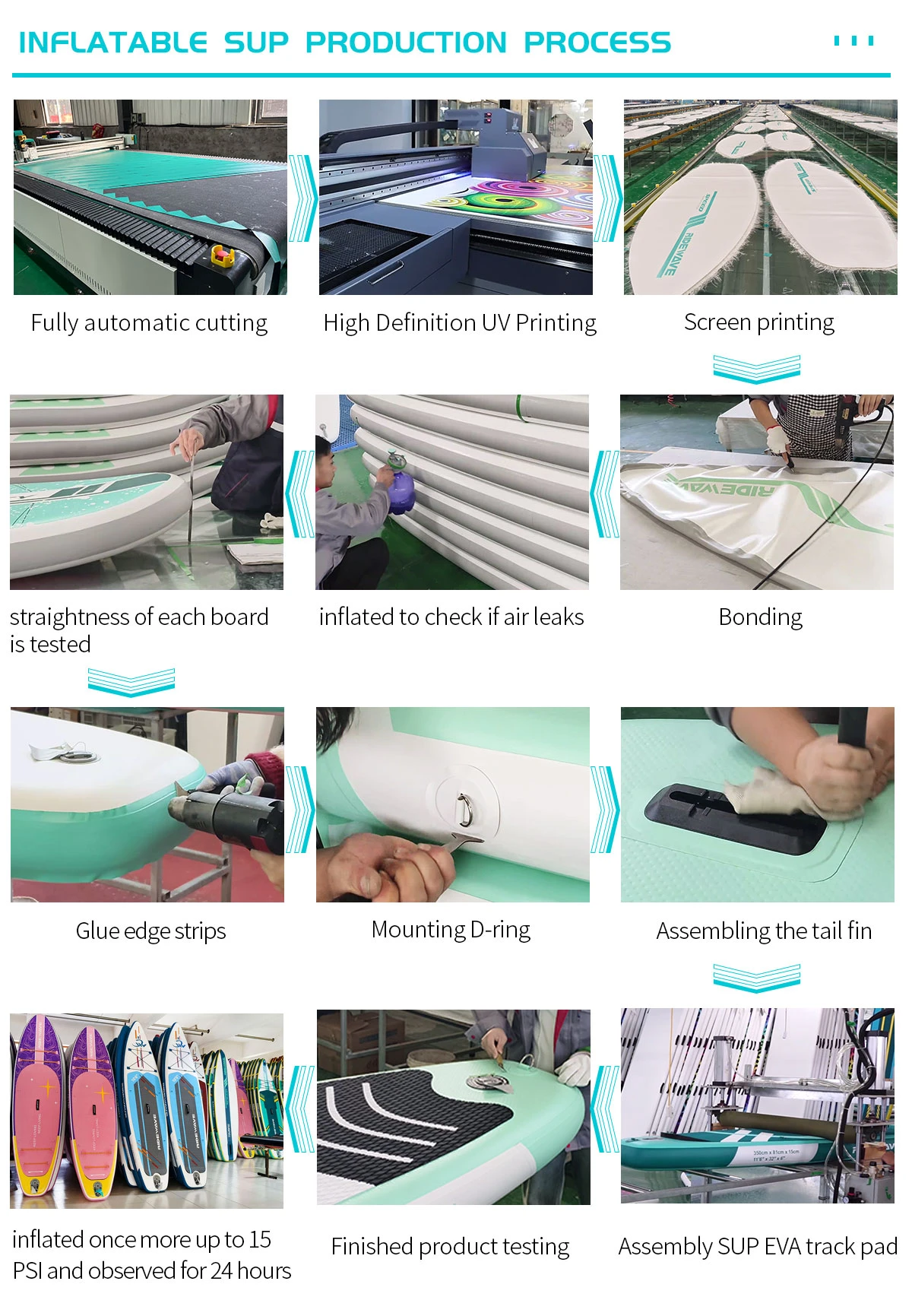
Working with a factory that only focuses on low unit cost without stable process controls will slowly eat away your profit margin and customer loyalty. When evaluating potential manufacturers, it helps to understand every production stage behind finished boards, as covered in How Custom Paddle Boards Are Made: From Design To Production. For B2B dealers, the most valuable supplier partnership balances reliable inflatable SUP quality, predictable lead times, and practical local after-sales support. This article breaks down those three core pain points, shares actionable benchmarks for vendor assessment, and draws from real supply chain cases to help wholesalers, brand owners and expanding sports retailers pick partners that protect their long-term market growth.
Why Do Spanish & European B2B SUP Distributors Struggle With Unstable QC For Inflatable Paddle Boards?
Many distributors first notice the problem after the boards reach their warehouse, not during the factory sample stage. A sample may ride well, feel durable and pass every visual check - but the second container arrives with slightly weaker seams, inconsistent drop-stitch density, or valves that leak after three weeks of customer use. This batch-to-batch inconsistency is the single most damaging issue in inflatable SUP wholesale, because it silently destroys the trust you have already built with your retail customers and rental operators.
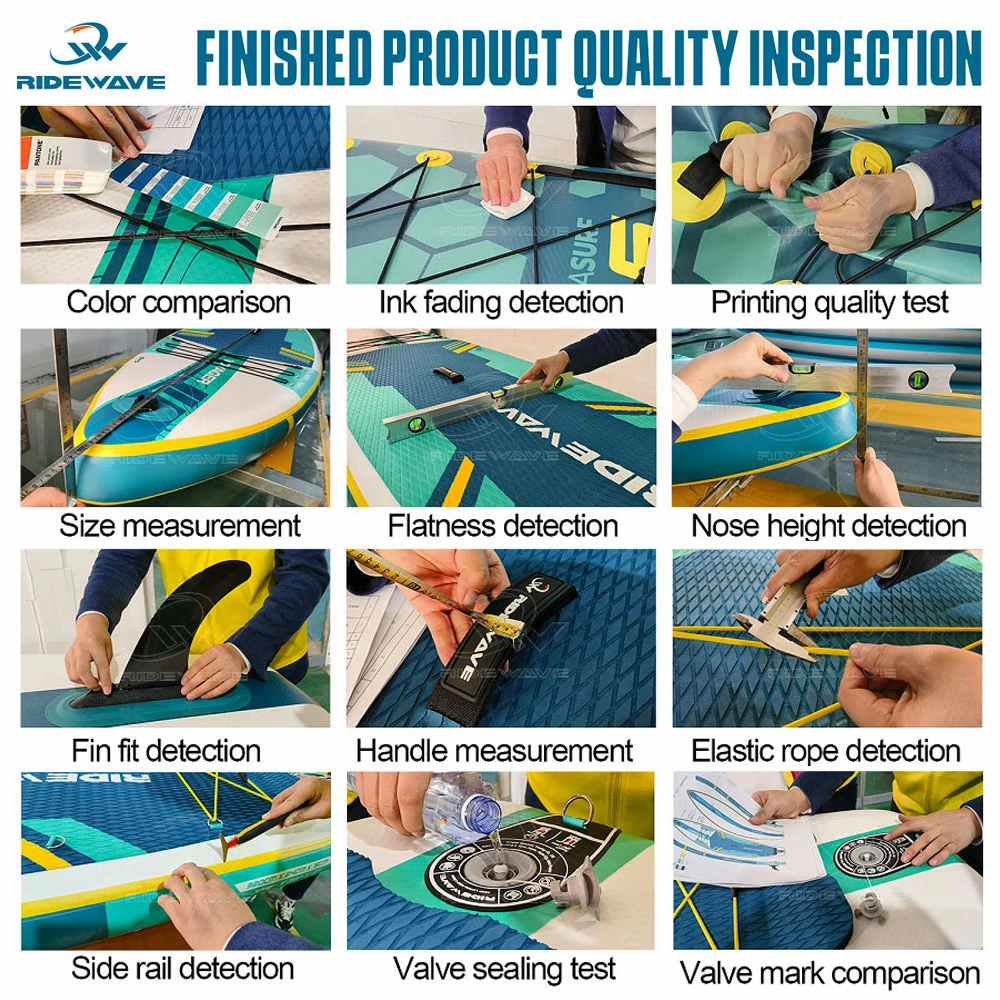
The root cause almost always traces back to one thing: the factory treats SUP production as a generic injection-and-glue process rather than a controlled engineering workflow. When QC relies only on a final visual inspection, defects inside the seams, the drop-stitch core and the PVC lamination simply cannot be caught. For Spanish and European distributors, this shows up in very specific, expensive ways:
Warranty returns climb during peak season, when you least have bandwidth to handle complaints.
Retail partners stop reordering after one bad batch, even if your previous shipments were perfect.
Rental fleets see boards delaminate after a single summer, forcing operators to switch brands next season.
Brand reputation erodes slowly, because one unhappy rental operator tells five others in your local paddling community.
This is not a price problem. You can pay 10–15% less per unit and still lose far more from returns, chargebacks and lost reorders. Understanding where defects actually enter the production line - from raw material lamination to final inflation testing - is exactly why How Custom Paddle Boards Are Made: From Design To Production remains one of the most useful reference pieces for B2B buyers who want to inspect their supplier with sharper questions.
For a deeper breakdown on what a proper QC workflow actually looks like, the key checkpoints any serious SUP factory should run on every batch are:
Raw material inspection: PVC layer thickness, drop-stitch fabric weight, rail glue tensile strength.
Lamination bonding test: peel strength on the deck pad, side rail and D-ring areas.
Seam air-hold test: minimum 24 hours at rated pressure before packaging.
Fin box and valve torque check: consistent valve threading, no air loss under repeated inflation.
Finished visual standard: no misprinted graphics, no exposed stringers, consistent rail shape across units.
RIDEWAVE built its B2B QC protocol around these exact checkpoints because European and Australian distributors told us, repeatedly, that they were tired of "sample-perfect, batch-lottery" suppliers. We do not claim zero defects - no inflatable product on earth can honestly make that promise - but we do publish our internal rejection rates by step and share them with distributors who place repeat orders, so you can see exactly where your units fall on the quality curve.
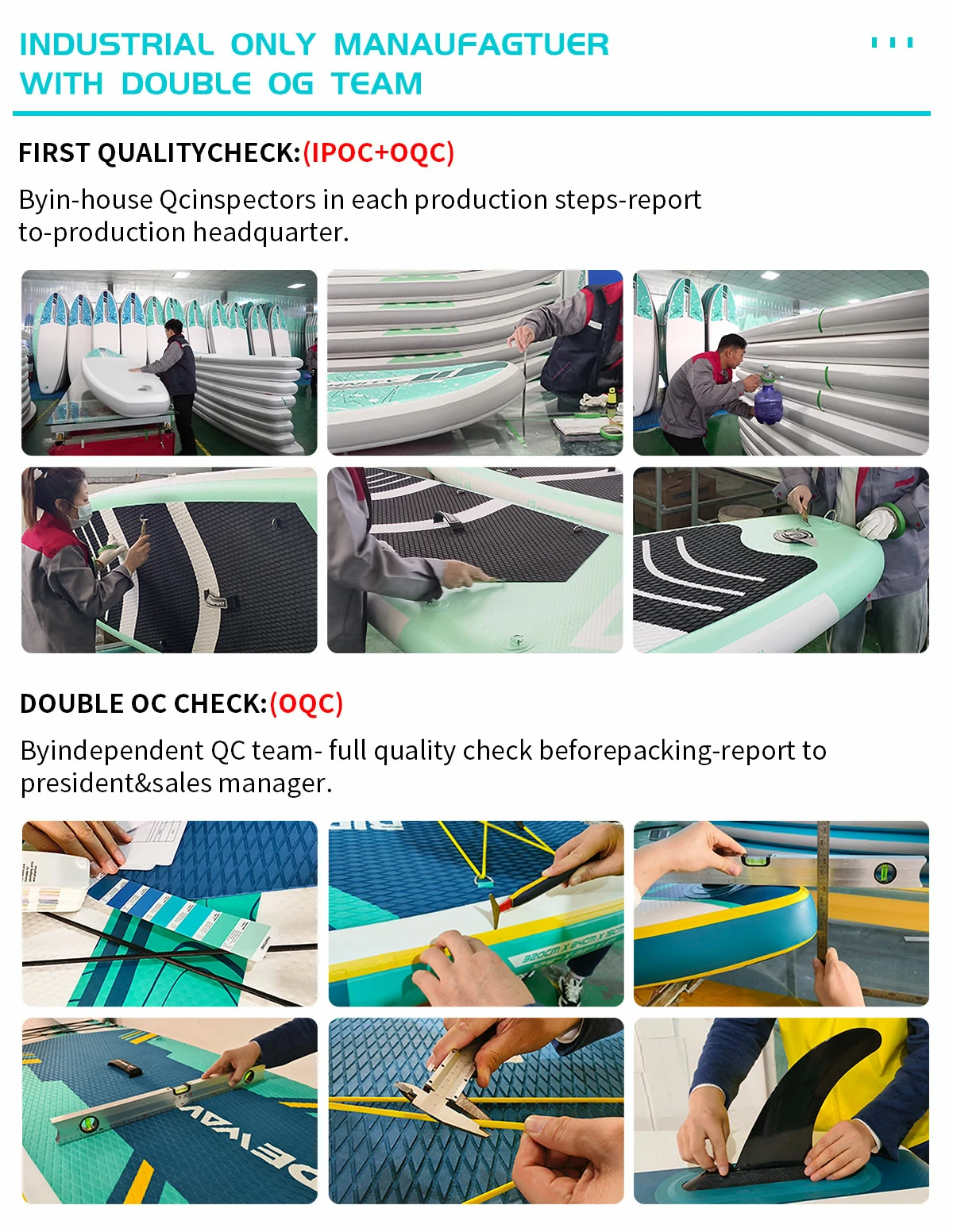
If you are currently sourcing from a factory that cannot show you written QC records per production step, that gap itself is the warning sign.
How Does Unreliable On-Time Delivery Hurt SUP Wholesalers' European Inventory Planning?
For SUP wholesalers across Spain, France, Germany and the UK, the selling window is brutally short. Most European paddle board demand peaks between late April and early September, with rental operators and retail chains placing their annual buys between October and February. Miss that window by even two weeks, and you are not just late - you are watching your competitors sell out while your container sits on the water or stuck at customs.
Unreliable lead times do not hurt you once. They distort your entire cash cycle. Here is the chain reaction most distributors experience:
Factory delays push shipment from March to May, so goods arrive in late June.
You already paid production deposit and sea freight, but your retail partners have already committed shelf space to a competing brand.
You are forced to discount heavily in July just to move inventory, compressing the margin you planned to reinvest into next year's collection.
By the time Q4 reorder season starts, your cash is tied up in unsold stock and you cannot place the next order on time.
This is why on-time delivery is not a logistics convenience - it is a financial planning tool. Distributors who can trust their factory's lead time plan can:
Lock in retail partner orders earlier with confident delivery promises.
Plan promotional campaigns and trade show booths around a known arrival date.
Negotiate better inland freight rates by booking containers in advance.
Avoid emergency air freight, which erases 15–25% of an entire shipment's margin.
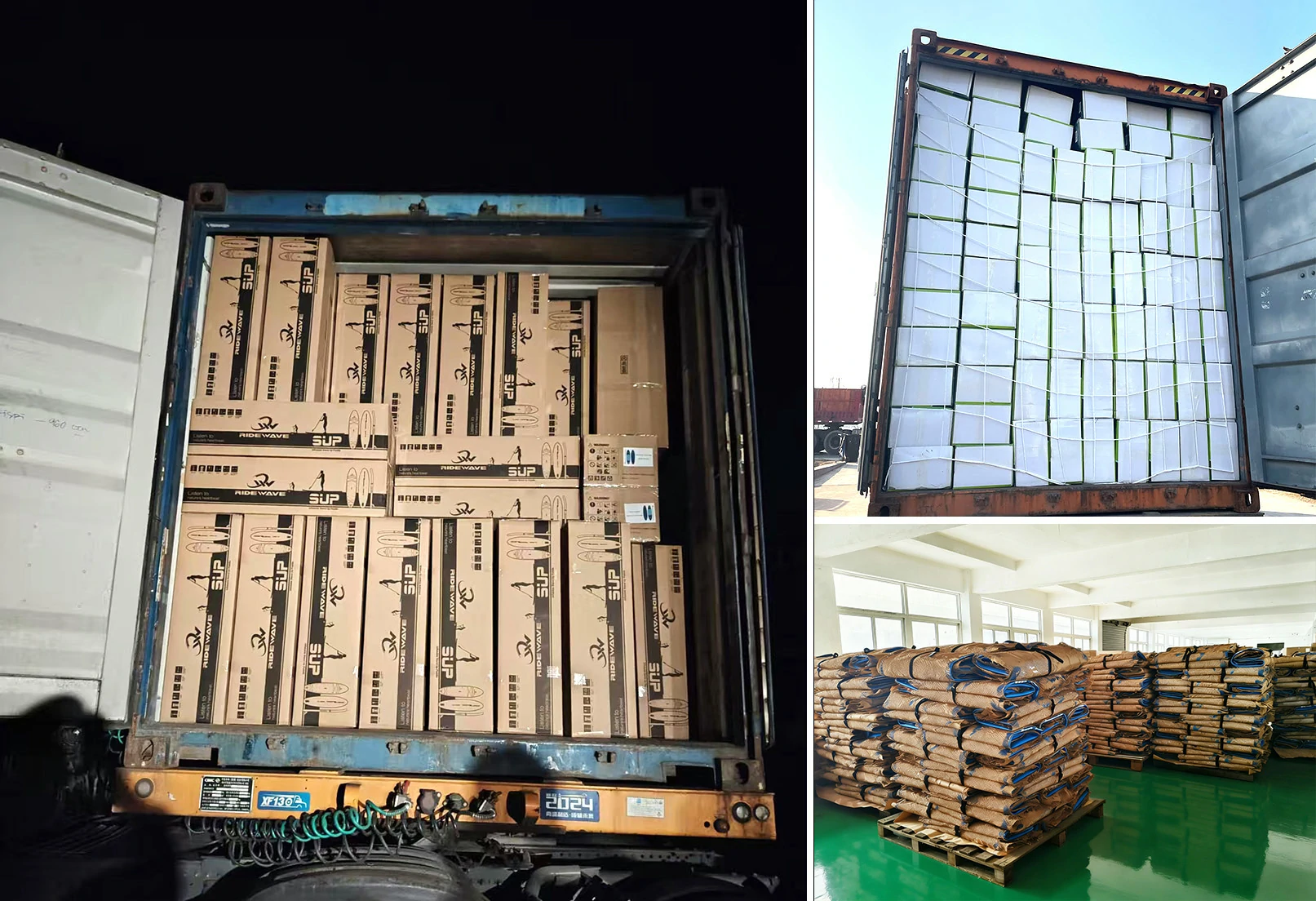
RIDEWAVE structures its B2B production schedule around European peak-season needs. We publish a rolling 6-month production window, confirm slot availability in writing before deposit, and share weekly production photos and shipping documentation milestones so distributors never have to chase us for updates. For Spanish distributors specifically, this means goods can reach Valencia, Barcelona or Algeciras with enough buffer to hit the April retail floor-ready date.
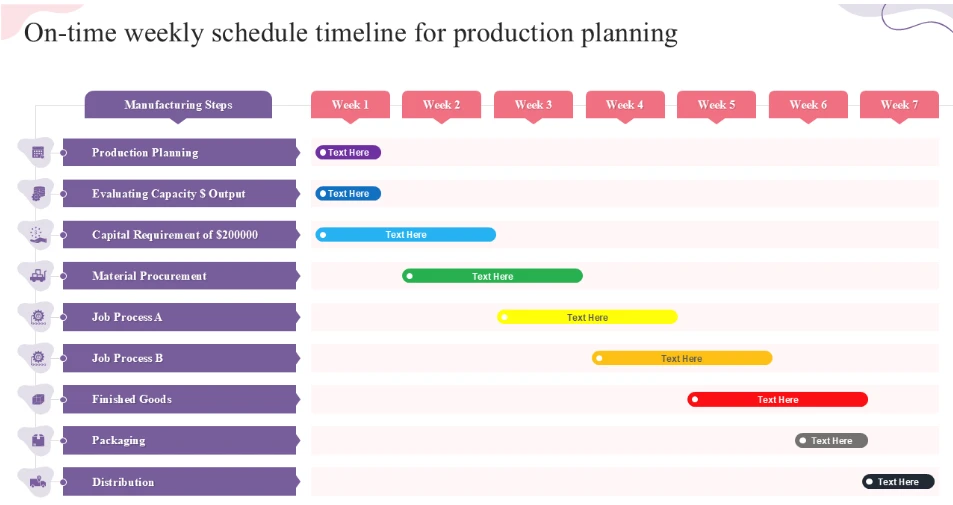
That said, no serious factory should promise "always on time" without conditions. Honest suppliers will tell you upfront which months are peak, how they buffer for Chinese New Year and Golden Week, and what their contingency plan is if a key raw material is delayed. The absence of that conversation is itself a red flag.
Can Local After-Sales Support Reduce Cross-Border Risks For SUP Resellers?
Many inflatable SUP wholesalers underestimate how much after-sales work will land on their own team once containers arrive. When a board develops a slow leak or a damaged valve appears in a retail customer's hands, the standard factory solution is often simple: ship the defective unit back to Asia. For European dealers, this path is rarely practical. Return shipping costs, customs paperwork, long transit windows and wasted labour time can make a single warranty repair more expensive than the wholesale price of the board itself.
For Spain, Portugal and other Southern European markets, this pain point is amplified. Distributors often serve rental fleets, beach shops and small outdoor retailers who expect fast fixes during peak summer months. Waiting 45 to 60 days for factory repairs means losing repeat orders and damaging local reputations. Even minor issues like broken D-rings, fin box cracks or deck pad peeling can become major complaints if your customers cannot get replacement parts quickly.
Localised after-sales changes this equation. Instead of returning full boards across oceans, dealers gain access to spare parts stock, step-by-step repair guides and local service contacts. This model turns warranty headaches into manageable customer service tasks.
Pre-stocked spare parts: valves, repair patches, fin boxes and D-rings stored in regional warehouses.
Local repair tutorials: printable guides and short videos to help rental shops fix simple damage on-site.
Dedicated B2B support channel: a technical contact familiar with EU safety standards and local shipping rules.
RIDEWAVE built regional spare parts programmes specifically for SUP B2B partners in Europe, Australia and North America. We maintain pre-packed spare kits aligned with the volume of bulk orders, so dealers receive repair supplies alongside their paddle board shipments. This does not eliminate all warranty claims, but it drastically cuts the cost and time required to resolve them.
Before locking in a supplier, every buyer should clarify what after-sales really includes. Some factories promise after-sales support in contracts but only offer email troubleshooting with no spare parts inventory. This is just paperwork without real protection. For a checklist of what to verify during supplier negotiations, read 10 Questions Every B2B Buyer Should Ask Before Placing An Inflatable SUP Factory Order.
What 2026 Global Water Sports Trends Change B2B Inflatable SUP Purchasing Rules?
Buying inflatable SUP for resale in 2026 is no longer only about low unit pricing. European, North American and Australian consumers are pushing retailers and rental operators to raise requirements around material safety, sustainability and multi-scene functionality. These shifts rewrite the rules for B2B procurement, and dealers who ignore these trends will struggle to compete in saturated markets.
The most impactful trends shaping SUP wholesale this year fall into four categories:
Stricter EU chemical compliance standards. New updates to REACH and UKCA rules mean imported inflatable water sports gear must pass additional heavy metal and plasticizer testing. Non-compliant batches risk customs holds, fines, or forced destruction. For Spanish distributors shipping into EU territories, compliance documentation is no longer optional.
Higher demand for durable, rental-grade boards. Casual recreational boards still sell, but rental fleets and outdoor tour operators are expanding fast. They need heavy-duty inflatable SUP built for repeated abrasion, frequent inflation and rough shoreline use. This creates a separate high-margin product line for dealers.
Consumer focus on sustainable manufacturing. Buyers ask retailers about PVC sourcing, recycled materials and waste reduction. While fully recycled inflatable paddle boards remain niche, dealers who can share transparent factory production records gain an advantage against generic competitors.
Multi-use SUP demand. Consumers want boards that work for lake paddling, ocean touring, yoga and lightweight fishing. Stocking only single-purpose recreational SUP limits upsell potential.
These trends force B2B buyers to adjust supplier evaluation metrics. Instead of comparing only price and MOQ, successful dealers now audit test reports, raw material traceability and product application scenarios. When designing new product lines to match market demand, How To Design A Paddle Board That Sells covers practical strategies to build a market-ready SUP collection.

RIDEWAVE updates its testing and material specifications yearly to match EU, US and Australian market regulations. Our B2B customers receive full compliance documentation along with shipments, including REACH, UKCA and performance test reports, to simplify customs clearance and retail marketing.
Trends do not automatically equal sales growth. The best distributors select SKUs aligned with their local customer groups. Beach rental shops need heavy-duty boards; outdoor retail chains prefer attractive recreational models for family users; specialty yoga stores target lightweight SUP yoga boards. Matching product selection to audience remains the core of profitable SUP wholesale.
How Do Professional Factories Standardize SUP QC To Meet EU Market Requirements?
When EU distributors talk about "quality," they are not asking for a luxury product. They are asking for consistency. A board that performs the same way for customer #100 as it did for customer #1 - that is what earns repeat orders. Professional SUP factories serving the EU market achieve this through documented, repeatable QC checkpoints at every production stage, not through last-minute visual screening.
The table below lays out the differences you can expect between a generic low-cost factory and a B2B-oriented inflatable SUP manufacturer with standardized QC. Use it as a comparison reference when you request quotations from multiple suppliers.
| QC Dimension | Generic Low-Cost Factory | B2B-Oriented SUP Manufacturer |
|---|---|---|
| Raw material inspection | Visual check only, no incoming test reports | Batch-tested PVC, drop-stitch and glue with written reports |
| Drop-stitch density control | Varied per production run | Specified core density with cross-section sampling per batch |
| Seam bonding process | Glue applied by hand, no pressure timing standard | Machine-pressed seams with fixed pressure and cure time |
| Air retention testing | Inflate and pack same day | 24-hour minimum hold at rated pressure before packaging |
| Valve and fin box inspection | Spot check on a few units | 100% valve torque and air-loss check on every board |
| Final visual standard | "Good enough" approval | Written defect tolerance guide with reject criteria |
| Test certification | Self-declared only | Third-party lab reports (REACH, CE, UKCA) available |
| Batch traceability | No production records retained | Each carton and pallet carries batch number and QC log |
For EU market specifically, SUP QC goes beyond structural testing. European retailers and rental operators also expect:
EN/CE labeling that matches the actual board's load rating and use category.
REACH-compliant materials, with documentation that can be produced during customs audits.
Clear consumer warnings and age recommendations printed on the board and packaging in the local language.
Balanced packaging weight, because EU freight calculation penalizes dimensional weight inconsistencies.
RIDEWAVE aligns its QC documentation package with these EU requirements on every B2B order. We do not ask distributors to interpret ambiguous certificates - each shipment arrives with a documented QC summary, third-party test reports and labeling files ready for retail shelves.
If a supplier cannot answer which specific test standard their boards meet, or if they say "we can provide certificates after you order," treat that as a serious risk. Certificates obtained after production rarely reflect what is actually inside your container.
What Can Dealers Expect From RIDEWAVE's Overseas After-Sales Framework?
After-sales support is often the section suppliers describe in glossy language but deliver in reality very differently. At RIDEWAVE, we structure our overseas support around three concrete commitments that SUP distributors can verify before signing, not promises they have to trust after a problem appears.
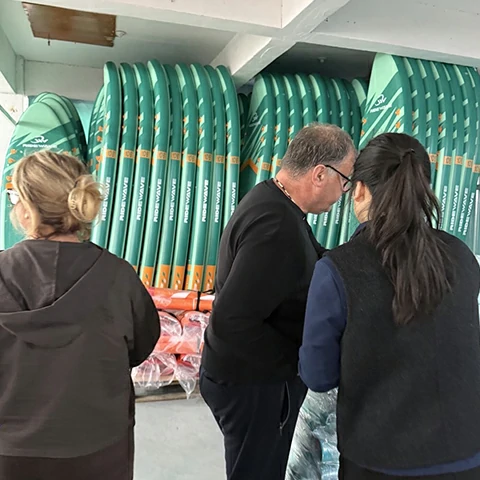
The first commitment is regional spare parts inventory. For active dealer accounts in Europe, Australia and North America, we pre-stage a baseline spare kit with each initial order - valves, repair patches, D-rings and fin boxes - sized to the volume of boards you ordered. Instead of waiting weeks for parts from China, your team can resolve 80% of minor warranty issues in your own warehouse.
The second commitment is named technical support. You are not opening a generic ticket into an anonymous inbox. Every active distributor has a direct contact who understands your product mix, your customer base and your local shipping constraints. When you send a warranty photo, the response comes from someone who has seen your boards before.
The third commitment is clear escalation terms for larger defects. If a batch shows a structural issue beyond what on-site repair can handle, our team works with you on replacement units in your next container, partial credit, or targeted spare shipments - decided case by case, not buried in a vague "we will take care of it" line.
What we do not offer is unlimited free replacement. That promise sounds attractive in a sales call but rarely survives contact with reality. Honest after-sales means defined processes, documented expectations and a partner who will tell you upfront what is covered and what is not.
For distributors who want to compare this model against other suppliers, the 10 Questions Every B2B Buyer Should Ask Before Placing An Inflatable SUP Factory Order guide walks through the exact questions to ask about warranty, spare parts and support SLAs before you place a deposit.
How Did A Spanish SUP Distributor Grow Sales After Switching Suppliers?
This case comes from a mid-sized distributor based on the Costa del Sol, serving rental operators, beach equipment retailers and a growing online D2C shop. Before working with RIDEWAVE, the owner had sourced two seasons from a different Asian factory. The unit price looked attractive on paper, but by the end of the second summer, three problems were eating into the business.
The first was QC inconsistency. About 8% of boards from the second container arrived with slow valve leaks, and another 5% had visible deck pad peeling. Rental operators started returning boards mid-season, and the distributor had to absorb replacement costs himself because the original factory refused to cover ocean freight back.
The second was lead time slip. His 2024 order was supposed to ship in late March. It actually left in mid-May, reaching Spanish ports in late June - right when the rental season was already half over. He had to discount the new models by 30% just to clear shelf space before August.
The third was after-sales silence. When he emailed about the defective batch, he waited five days for a reply that asked him to send photos, then another week for a decision. By then his customers had already posted complaints on local paddling forums.
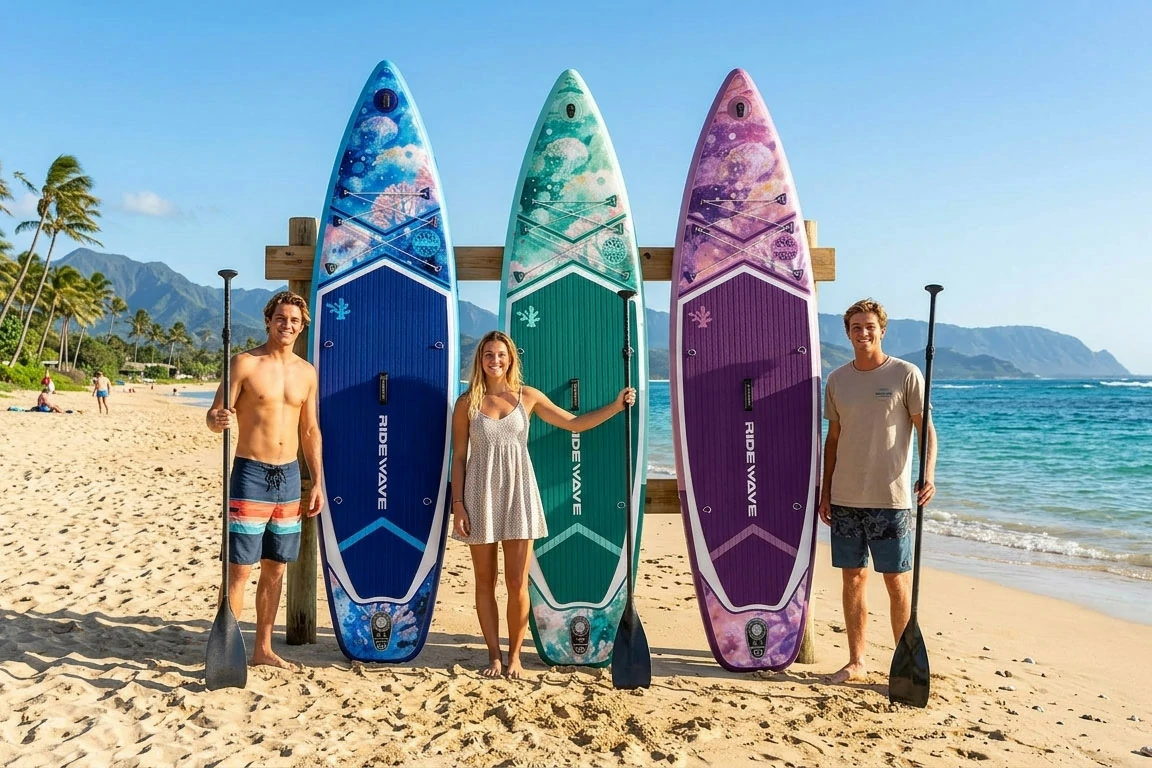
He switched to RIDEWAVE for the 2025 season with a smaller trial order. What changed after one season:
Return rate dropped from roughly 13% to under 3%. The spare parts kit shipped with his order let his team fix valve and seam issues on-site without returning boards.
Delivery landed 12 days ahead of the agreed date, giving him time to do in-house quality checks before boards hit rental fleets.
Repeat orders from his top five rental clients grew 40% in the second half of the season, because his customers stopped receiving defective units.
Margin recovered by about 18 percentage points, because he no longer needed summer discounting to clear delayed stock.
We share this case not as a "we are perfect" story - his trial order still had two boards with minor seam glue marks that our team replaced in the next shipment. The point is that a stable, predictable supplier relationship compounds: better QC protects your reputation, better delivery protects your cash flow, and local after-sales turns problems into quick fixes rather than customer churn.
He placed his 2026 season order in late February, about six weeks earlier than he did with his previous factory, because he now plans inventory around a lead time he can actually count on.
What Criteria Should B2B Buyers Compare Before Confirming SUP Bulk Orders?
By the time you reach the final shortlist of two or three SUP suppliers, the temptation is to compare price and sign. That is usually where distributors regret their decision six months later. A far more useful approach is to run a structured comparison across the dimensions that actually determine long-term profitability.
Below is a checklist you can copy directly into your own vendor comparison sheet. Score each supplier 1–5 on every row, then add the totals.
Price competitiveness - Is the unit price competitive for the specified construction, not a stripped-down version?
MOQ flexibility - Can you start with a trial order before scaling to full container?
Lead time transparency - Do they confirm production slots in writing before deposit?
QC documentation - Can they show you sample QC records from a recent batch?
Certification coverage - Do they hold current REACH / CE / UKCA / AS/NZS reports?
Spare parts support - Do they pre-stage spares with bulk orders, or only ship on request?
Communication speed - How long does it take to get a reply with real answers, not a sales line?
Customization capability - Can they handle private label, custom graphics and board sizing?
Reference customers - Are they willing to connect you with an existing distributor in your region?
Warranty terms in writing - What exactly is covered, and what is the process for claiming?
When you build a shortlist, prioritize suppliers who score consistently across QC, lead time and after-sales over the one supplier who is cheapest on unit price. In inflatable SUP wholesale, the cheapest unit almost always becomes the most expensive one over a full season.
If you want a deeper breakdown of what to ask in each category, How To Design A Paddle Board That Sells covers how product choice and supplier selection work together to build a sellable collection.
How Can New Sports Retailers Successfully Add Inflatable SUPs To Product Lines?
For sports retailers who have previously focused on bikes, camping gear or fitness equipment, adding inflatable SUP to the shelf can feel like a big leap. The good news is that the category is forgiving if you enter with the right mix of SKUs and a supplier who understands your stage.
Most new-to-SUP retailers make two mistakes at the beginning. They either stock too many niche models that do not sell in their local market, or they buy one generic board that appeals to nobody. A better entry strategy looks like this:
Start with two core sizes: a 10'6" recreational all-rounder for beginners and families, and a 11'–11'6" touring board for more serious paddlers.
Add one specialty SKU only if your local market supports it: yoga SUP for coastal wellness studios, fishing SUP for inland lake communities, or a youth board for family-focused stores.
Bundle accessories early: paddle, pump, leash and repair kit together increase average order value and reduce post-sale support questions.
Test with a 20–40 unit initial order, not a full container, until you know which sizes actually move in your region.
RIDEWAVE works with retailers entering the SUP category for the first time by offering smaller trial MOQs, clear merchandising guidance and starter accessory bundles. We do not push full-container orders on partners who are still learning their local demand - that approach burns cash and discourages second orders.

What Long-Term Supply Chain Strategies Benefit Global SUP Brand Partners?
The distributors who build the most durable businesses in inflatable SUP are not the ones who chase the lowest price every season. They are the ones who treat their factory as a long-term partner, and who build a supply chain that can absorb demand swings, regulatory changes and market shocks without breaking.
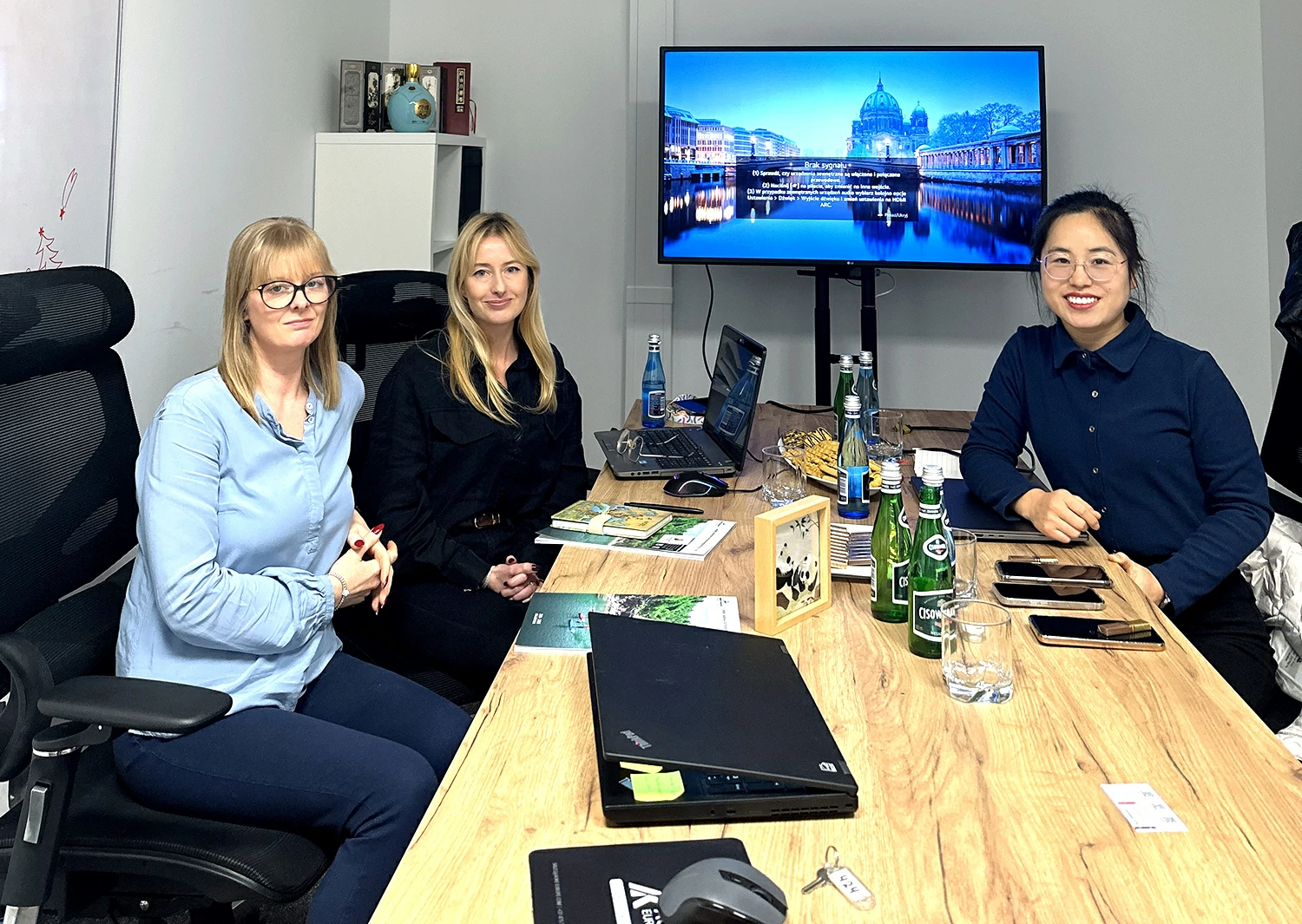
Three long-term strategies consistently separate stable SUP brands from one-season traders:
Forecast six to nine months ahead. Place your core order in Q3 or Q4 of the previous year, even before your retail customers commit. This locks production slots, protects lead times and lets you react faster if demand outperforms expectations.
Maintain two SKU tiers. Keep a fast-moving recreational model in constant stock, plus a higher-margin specialty line (touring, yoga, fishing) that you refresh every season. This avoids being trapped in a single price war.
Build buffer relationships. Work with one primary factory for the majority of your volume, but keep a qualified second supplier for 10–20% of annual demand. This is not disloyalty - it is risk management, and serious manufacturers understand it.
Invest in your own brand assets. The most durable distributors own their graphics, their packaging design and their customer experience, rather than reselling a generic factory board. Customization gives you pricing power that white-label resellers never get.
Align your marketing with your supplier's production cycle. Promote new collections when inventory is actually on the water, not when it is still being glued. Misaligned marketing creates stockouts or overstock faster than any supply chain delay.
RIDEWAVE supports brand partners who want to build this kind of long-term structure. We work with distributors on seasonal forecasting, private-label customization and multi-year production planning, not just transactional order taking. The goal is not to sell you one container - it is to help you grow a category your customers come back to.
Solving the three core pain points - stable QC, on-time delivery and local after-sales support - does not require a perfect factory. It requires a partner who treats those issues as operational commitments, not sales slides. For Spanish, European, North American and Australian distributors, the choice is no longer "cheap or expensive"; it is "reliable or not."
At RIDEWAVE, we have built our B2B program around these three pillars because we believe the SUP market rewards distributors who can promise their customers consistency. We invite you to start with a trial order, inspect our QC records yourself, and decide based on what you actually receive rather than what a catalog promises.
If you are ready to discuss your 2026 or 2027 SUP procurement plan, our B2B team can share current production slots, sample QC reports and reference distributors in your region. The best first step is a short conversation about your market, your current SKU mix and where the pain points are today.
Related Articles
MSL Fusion Vs Single-Layer SUP: Which Construction Suits Spanish B2B Bulk Orders?
Why Premium Inflatable SUPs Boost Spanish Retailers' Off-Season Sales & Profit Margins
SUP B2B Sourcing Guide: Cut Spain Import Logistics Costs & Shorten Lead Times
How Spanish SUP Distributors Avoid Bulk Quality Inconsistency & Reputation Risks in 2026
When Should Italian Importers Place Their Bulk Inflatable SUP Orders?