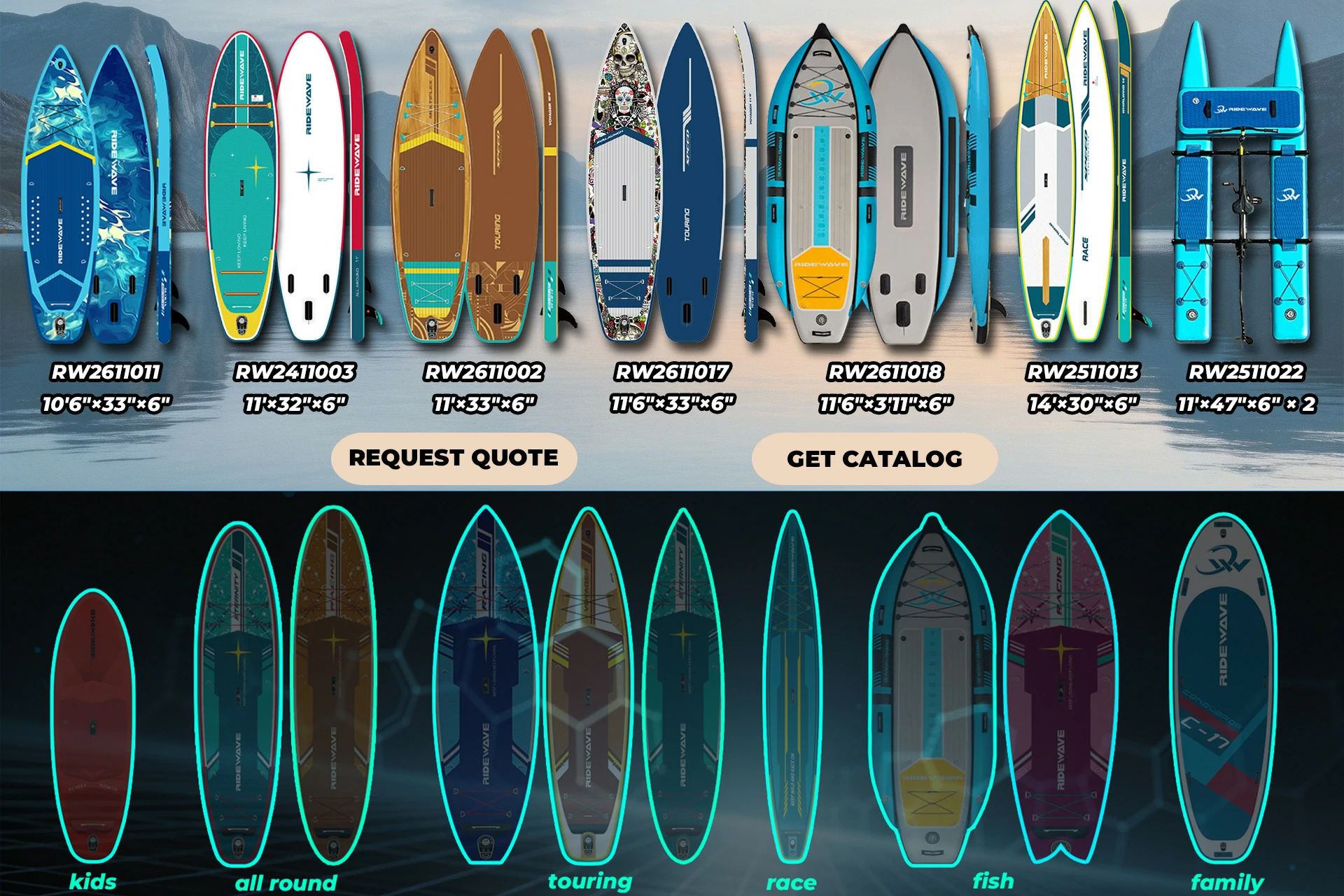



Dutch inflatable SUP importers face hidden sourcing risks far beyond simple unit price and lead time estimates: inconsistent drop-stitch fabric and PVC raw material quality, invalid or model-specific mismatched EU certification, underestimated landed & Rotterdam port detention fees, unstable supply chain capacity, greenwashing and ESG audit failures, unclear private-label legal liability, ambiguous warranty coverage, and supplier capacity overpromising. These quiet hazards can trigger customs seizure, heavy regulatory fines, mass product returns, damaged retail brand reputation, and broken distribution contracts across the Netherlands, wider EU, USA, Canada and Australia. Every B2B buyer sourcing wholesale inflatable paddle boards knows that a cheap quote can turn into a financial disaster if the factory cuts corners on core materials; understanding how boards are built from the ground up helps you spot those shortcuts early, as you can read in How Custom Paddle Boards Are Made: From Design To Production. This practical guide breaks down these overlooked sourcing hazards, includes actionable checklists, a real RIDEWAVE B2B case study, and step-by-step risk mitigation tactics built for distributors, wholesalers and outdoor sports brand owners expanding their inflatable stand up paddle board product lines. We do not sell a quick-fix miracle solution here. As a manufacturer of OEM & ODM SUP boards, RIDEWAVE sees these sourcing mistakes repeat every summer season, and we built this resource to help global B2B buyers protect their inventory, margins and market access.
What certification pitfalls can trap Dutch iSUP importers at EU customs?
Many B2B buyers of wholesale inflatable SUP underestimate how strict Dutch and EU border enforcement has become for water sports goods. A CE mark printed on the board surface is not enough to guarantee smooth clearance; customs officers in Rotterdam regularly ask for full supporting documentation to verify that your inflatable stand up paddle board meets GPSD, REACH, PPWR and PFAS regulations. The most common hidden risk here is reused or generic documentation: a factory may hand over a test report issued for one SUP model, then reuse that same file for dozens of different board sizes, fabric grades, or accessory sets. This is one of the core questions every buyer should resolve before placing deposits, covered in 10 Questions Every B2B Buyer Should Ask Before Placing An Inflatable SUP Factory Order.

Another frequent trap is confusing sample certificates with mass-production certificates. Labs test pre-production samples, but that report does not automatically apply to your full container shipment. Some suppliers will also rely on expired BSCI/amfori audit records or DoC (Declaration of Conformity) documents that reference old regulation versions. For Dutch importers, there is an extra layer of risk around product labelling: every OEM inflatable paddle board sold locally must carry Dutch-language warning marks plus the name and address of your EU-based responsible person. Missing or incorrect labels can lead to product detention, forced recalls, or fines long after the shipment clears customs.
Even small packaging non-compliance under PPWR can stop your order. Carton printing, packaging material composition, and packaging waste declarations all fall under this rule. RIDEWAVE's compliance team works through these requirements with B2B clients early in sampling, to ensure every document matches the exact SUP model, fabric batch and accessory pack ordered. This simple step avoids costly surprises once goods reach Rotterdam.
| Compliance Item | What To Verify | Common Hidden Risk |
|---|---|---|
| CE Mark + GPSD | Declaration of Conformity (DoC) issued for this exact SUP model | Generic DoC reused from unrelated products, outdated version |
| REACH Annex XVII | Restricted substance test report (PVC, webbing, glue) | Test only on sample batch, not mass production |
| PFAS & Chemical Screening | PFAS testing for board fabric & accessories | Greenwashing, no valid lab report |
| Packaging PPWR | Heavy metal limits, packaging declaration | Carton non-compliant → customs hold in Rotterdam |
| BSCI / amfori Social Audit | Valid audit report with factory site address | Expired audit or third-party shell audit |
| Product Labelling | Dutch language warning label, importer EU address | Missing label = forced withdrawal from Dutch market |
How do hidden raw material and drop-stitch quality risks erode your wholesale margin?
When comparing quotes for bulk inflatable paddle boards, most buyers only check board thickness and total weight listed on the specification sheet. But the real quality gap lives inside the drop-stitch fabric, the core component that gives an inflatable SUP rigidity and load-bearing performance. Many low-cost suppliers use thinner, recycled or second-grade PVC layers, or weak, sparse drop-stitch threads for mass production. The pre-production sample you approve may use premium raw materials, while the bulk shipment switches to cheaper fabric without formal notification. This silent material downgrade is one of the largest causes of warranty claims and negative retail reviews for outdoor distributors across Europe.
Poor drop-stitch construction creates multiple long-term failures. Loose threads or low-tensile stitching can deform the board under load, while weak PVC lamination causes slow air leakage, especially in warm summer water or under UV exposure. Glue quality is another overlooked factor: cheap adhesive will separate the board seams after repeated inflation and deflation. If your end customers return dozens of defective stand up paddle boards, your wholesale profit margin vanishes quickly. You can dive deeper into how these materials are assembled during manufacturing in How Custom Paddle Boards Are Made: From Design To Production.
Material inconsistency is hard to spot visually. RIDEWAVE locks raw material specifications inside formal contracts for all B2B clients. Our QC team tests fabric tensile strength, PVC thickness and adhesive bonding before cutting begins. We also retain a signed pre-production sample as the benchmark, so any deviation from the approved material standard can be caught before full production runs. This protects wholesalers from costly return waves once products reach retail shelves.

Practical material audit steps before mass production:
·Keep a signed and sealed pre-production sample for final comparison against bulk goods
·Request raw material lab certificates for the exact PVC and drop-stitch roll used for your order
·Schedule in-line factory QC inspection during cutting and lamination stages
·Run inflation pressure aging test on random pieces from the production line
What hidden landed and port costs do Dutch SUP buyers frequently ignore?
Many B2B buyers of wholesale inflatable SUP focus their budget planning only on unit price plus basic ocean freight. They overlook a long list of hidden landed expenses tied to Rotterdam port handling, and these unexpected charges can eat 5–12% of your total order value for inflatable stand up paddle board shipments. For Dutch importers, this is one of the most common budget shocks, especially for first-time buyers expanding into water sports categories.

Demurrage and detention fees are the biggest culprit. Demurrage applies when containers stay inside the port terminal beyond the free storage window; detention charges kick in once you take the container out but fail to return the empty box by the carrier's deadline. For large container loads of bulk inflatable paddle boards, these daily fees add up extremely fast, particularly when customs holds goods for document verification or chemical re-testing.
Other often forgotten costs include mandatory customs inspection fees, third-party laboratory retesting, customs brokerage admin fees, cargo insurance deductibles, currency exchange losses, and local transport surcharges from the port to your warehouse. Dutch import VAT at 21% is not a new rule, but many overseas buyers do not fully understand the obligations for VAT registration and deferred VAT schemes. Mismanaging VAT paperwork can trigger audits and unexpected back tax bills long after your OEM inflatable paddle board stock hits your warehouse.
RIDEWAVE shares a detailed landed cost worksheet with our B2B customers at quotation stage. We help buyers build realistic budgets by listing every foreseeable charge, instead of only sharing FOB factory price. This simple transparency helps distributors avoid cash flow disruption when shipments arrive at Rotterdam.
Why do supply chain bottlenecks and capacity overpromising sink inflatable SUP orders?
Every year during Q1 and Q2, demand for wholesale inflatable paddle boards surges as distributors prepare for summer retail sales. This seasonal rush tempts many suppliers to overpromise production capacity. A salesperson may confirm a 45-day lead time, yet the factory already has a full production schedule, so they secretly subcontract the entire inflatable SUP order to a smaller, uncertified workshop without informing the buyer. This unapproved subcontracting is one of the most damaging hidden risks for Dutch importers.
When orders get passed to secondary subcontractors, you lose control over raw material standards, in-line QC, and compliance documentation. The subcontract workshop may not follow your approved specifications, and they often lack proper EU test reports. Many B2B buyers only discover this issue after the container arrives in Rotterdam, when defects or invalid certification trigger detention. Even when suppliers do not outsource, raw material shortages for drop-stitch fabric or heavy-gauge PVC can pause production and push delivery past your retail launch window.
In early 2024, a Dutch outdoor sports wholesaler approached RIDEWAVE after a painful failed order with an unknown supplier. The buyer ordered 1,200 private-label inflatable paddle boards for sale across Dutch retail shops and webstores. The supplier quoted an attractive unit price and promised delivery within 45 days.
The hidden risks appeared step by step. The factory subcontracted mass production to a smaller workshop without informing the buyer. The drop-stitch fabric used for bulk goods was thinner than the pre-production sample they approved. When the shipment arrived at Rotterdam port, customs requested full REACH testing. The supplier's certificate was a reused report for a different board model. The shipment was detained for 22 days. Daily detention fees accumulated, and the wholesaler missed the summer selling window.
The customer reached out to RIDEWAVE to restart their SUP line. We locked material specifications in written contracts, ran pre-production material testing, scheduled in-line third-party AQL inspection, and prepared model-specific EU DoC and REACH reports before shipment. The final order cleared Rotterdam smoothly and delivered on schedule. This Dutch distributor now also resells into Belgium and Germany, using the same compliant product documentation.
The key lesson: low unit price cannot compensate for customs detention, lost seasonal sales, and brand damage.

How can greenwashing and ESG compliance risks damage your European distribution license?
Retail buyers across the Netherlands, EU, Canada, USA and Australia now demand verified sustainability data before signing contracts for wholesale inflatable SUP. Many B2B distributors underestimate how strictly European regulators and large retailers crack down on greenwashing claims for inflatable stand up paddle board products. Simply printing words like "eco-friendly", "recyclable PVC", or "low carbon" on packaging or product listings without valid supporting lab evidence counts as misleading marketing. If your OEM inflatable paddle board line fails ESG or chemical sustainability verification, major Dutch retail chains can drop your brand overnight, and regulators may issue fines or force product recall.

The EU CSRD directive and amfori BSCI audits are no longer optional add-ons for water sports brands selling into Western Europe. Auditors check factory working hours, wage records, workplace safety and waste management. A failed social audit does not only stop shipments; it can block your access to large retail marketplaces that require active, valid audit reports. Chemical sustainability overlaps with the PFAS rules we touched on earlier. Many suppliers claim their SUP fabric is PFAS-free, yet they skip third-party independent testing. RIDEWAVE runs separate PFAS screening on each new fabric batch, and we share full lab reports with B2B clients so sustainability marketing statements stay grounded in test data, rather than vague marketing hype.
It is critical to separate genuine material improvements from marketing fluff. Recycled PVC sounds attractive for your product catalog, but recycled polymer blends often weaken drop-stitch board durability. You need to confirm the percentage of recycled content and review long-term aging test results before building eco-focused sales campaigns.
ESG & green claim verification checklist for your inflatable SUP sourcing:
Keep full, batch-matched lab test reports for every environmental claim you make in marketing
Validate the expiry date and factory address on BSCI / amfori audit documents
Avoid unsubstantiated buzzwords such as "zero carbon" unless you hold verified carbon footprint reports
Confirm waste treatment processes at your manufacturing site before promoting eco-friendly messaging
What liability risks come with private label and custom designed inflatable paddle boards?
Creating a private-label inflatable SUP range is a proven way for distributors and outdoor brand owners to boost profit margins and build customer loyalty. However, many B2B buyers overlook that when you import custom inflatable stand up paddle board products and sell them under your own brand, you become the EU market responsible person. This legal status carries serious liability, covering product safety defects, warning label errors, and even intellectual property conflicts. This risk ties closely to product shape and feature design decisions, which we explore in detail in How To Design A Paddle Board That Sells.
Design liability is often underestimated. If your custom board shape, fin box layout, or handle placement creates a safety hazard for end users, the brand owner (the importer) is the first party held accountable, not the overseas manufacturer. Even minor design oversights can trigger consumer injury claims and market-wide product recalls. Intellectual property risk is another major concern. Some factories reuse existing board molds, artwork, graphic prints or fin designs from competitors without securing rights. If your private label wholesale inflatable paddle boards infringe on existing patents or registered designs, Dutch customs can seize stock, and rights holders can launch legal claims against your brand.
Product labelling obligations fall on the importer too. EU rules require clear safety warnings, product batch codes, and the contact address of your EU responsible entity printed directly on the board or packaging. If labels are mistranslated, missing, or non-compliant, regulators can force stock removal from retail shelves, even if the physical OEM inflatable paddle board itself has no quality defect.
RIDEWAVE's design team works closely with B2B private label clients to flag potential patent conflicts and safety risks early in the concept phase. We also provide label templates compliant for EU, US, CA and AU markets, so our customers avoid costly legal missteps before mass production starts.

What warranty and after-sales loopholes should B2B importers negotiate before deposit payment?
Many B2B buyers of wholesale inflatable SUP focus heavily on unit price and production lead time during negotiations, while leaving warranty and after-sales terms as casual verbal agreements. This is one of the costliest oversights for distributors selling inflatable stand up paddle board across Europe and North America. A factory may verbally promise a 12-month warranty on the inflatable paddle board, but the fine print can restrict coverage only to factory defects that exist before shipment, excluding seam leaks, air loss, or material degradation that appears once end customers start using the product.

Common warranty loopholes include shifting the burden of proof fully onto the importer, refusing to cover return shipping costs for defective boards, long lead times for spare parts, and limiting replacements only to factory-produced batches from the same production run. Some suppliers will also exclude damages caused by UV exposure, water temperature fluctuations, or normal wear and tear in a way that renders the warranty practically useless for your retail clients. When dozens of end users file claims, your wholesale business absorbs all the service labor, freight costs and brand reputation damage.
Clear written after-sales terms protect your margin and retail relationships. RIDEWAVE encourages all B2B clients to lock warranty obligations into formal contracts before placing deposits. Our warranty framework distinguishes between manufacturing defects and user-caused damage, defines clear evidence requirements, and sets fixed timelines for spare part shipments or replacements. We also supply repair kits alongside bulk OEM inflatable paddle board orders so your retail team can resolve minor leaks locally, reducing expensive cross-border returns.
What practical risk-mitigation framework works for multi-region iSUP distribution (EU, US, CA, AU)?
When building a multi-country distribution network for wholesale inflatable paddle boards, buyers need a repeatable risk control system that works across Netherlands, wider EU, USA, Canada and Australia. Different markets enforce unique product safety, chemical and packaging rules; a compliance package valid for the Dutch market will not automatically satisfy Australian or California chemical regulations. The best risk framework is not a one-time factory audit before placing an order, but an ongoing layered quality and compliance monitoring system for your inflatable SUP supply chain.
Layered inspection is the foundation of this strategy. Pre-production sample verification locks raw material specs, colors, and construction standards. In-line QC inspection happens during cutting, drop-stitch lamination and board welding to catch material downgrade or poor bonding before mass production finishes. Final AQL inspection takes place once all goods are packed into cartons, checking visual defects, air tightness, labeling accuracy and full document matching. Third-party independent inspectors are highly recommended for high-value seasonal orders.
Contract protection and supplier classification form the second layer. Sort your suppliers into risk tiers: tier 1 trusted manufacturers with full in-house production and complete compliance documents, versus tier 2 vendors who outsource work and carry higher certification risk. Add penalty clauses for material substitution, unapproved subcontracting or document non-compliance. Cargo insurance, forwarder contingency planning and pre-approved re-testing protocols also reduce disruption when customs raise questions.
RIDEWAVE builds multi-market compliance bundles for B2B distributors who sell inflatable stand up paddle board across multiple territories. We prepare separate documentation packages tailored for EU GPSD, US CPSIA, Canadian safety rules and Australian consumer goods standards. Our clients do not need to create four separate sourcing workflows for the same board model when expanding internationally.

Sourcing inflatable SUP for Dutch and cross-border wholesale distribution is far more than comparing FOB pricing and lead times. The hidden sourcing risks we have covered - certification traps, raw material downgrade, overlooked landed port costs, unapproved subcontracting, greenwashing & ESG penalties, private label product liability, warranty loopholes, and cross-border compliance gaps - can quietly erase your profit margin and damage your brand reputation overnight.
The best defence for any B2B importer of inflatable stand up paddle board is structured, proactive risk management rather than reacting to crises after containers arrive at port. Lock material specs and compliance obligations in contracts, use staged inspections, verify every batch of documentation, and avoid selecting suppliers only based on the lowest quote.
RIDEWAVE's core goal as an inflatable paddle board manufacturer is to help B2B distributors, wholesalers and outdoor sports brand owners build stable, compliant and profitable water sports product lines. We do not simply manufacture boards; we support clients with full batch testing, multi-market certification packages, transparent production scheduling and practical after-sales support. If you are evaluating new wholesale inflatable paddle boards for your product portfolio, our team can walk you through sample review, compliance documentation and capacity planning for the markets you want to serve.
Related Articles
| Low MOQ Paddle Board Manufacturers For Small Brands |
What Types Of Inflatable SUP Deliver The Best Profit Margins For Dutch Dealers?