

The short answer: yes, but only for specific types of Dutch distributors, outdoor retailers and emerging watersports brands. Private label OEM inflatable SUP can deliver substantially higher gross profit compared to reselling established branded paddle boards, yet it carries tangible risks around compliance, inventory capital and market fit that many first-time importers overlook. Dutch water culture built around city canals, inland lakes and coastal shorelines creates steady year-round demand for iSUP, not just seasonal summer sales. Before locking in a container order, you need to understand local safety rules, landed cost breakdowns, and what makes a custom SUP design resonate with Dutch end-users, and you can start learning the full production workflow with How Custom Paddle Boards Are Made: From Design To Production. RIDEWAVE works with Benelux and global B2B buyers as an inflatable SUP manufacturer, helping brands avoid common factory pitfalls while building scalable private label lines that match local consumer needs. This article breaks down market data, margin math, compliance traps, a real client case, and clear guidance to decide if private label stand up paddle board OEM fits your business model, rather than relying on generic sales promises.
Why Is the Dutch Inflatable SUP Market Heating Up in 2025–2026?
Dutch consumers continue to embrace inflatable SUP as a flexible, year-round outdoor activity, and the steady demand creates opportunities for B2B brands looking to add private label iSUP to their existing watersports catalog. Unlike many southern European markets that see heavy sales concentrated only in summer holiday months, the Netherlands' dense network of urban canals, inland lakes and sheltered coastal waters lets end-users paddle from early spring through late autumn. Local statistics show more households prioritise low-barrier outdoor fitness, and stand up paddle board gear fits perfectly with this trend, as inflatable SUP requires minimal storage and can be transported in a car boot without roof racks..

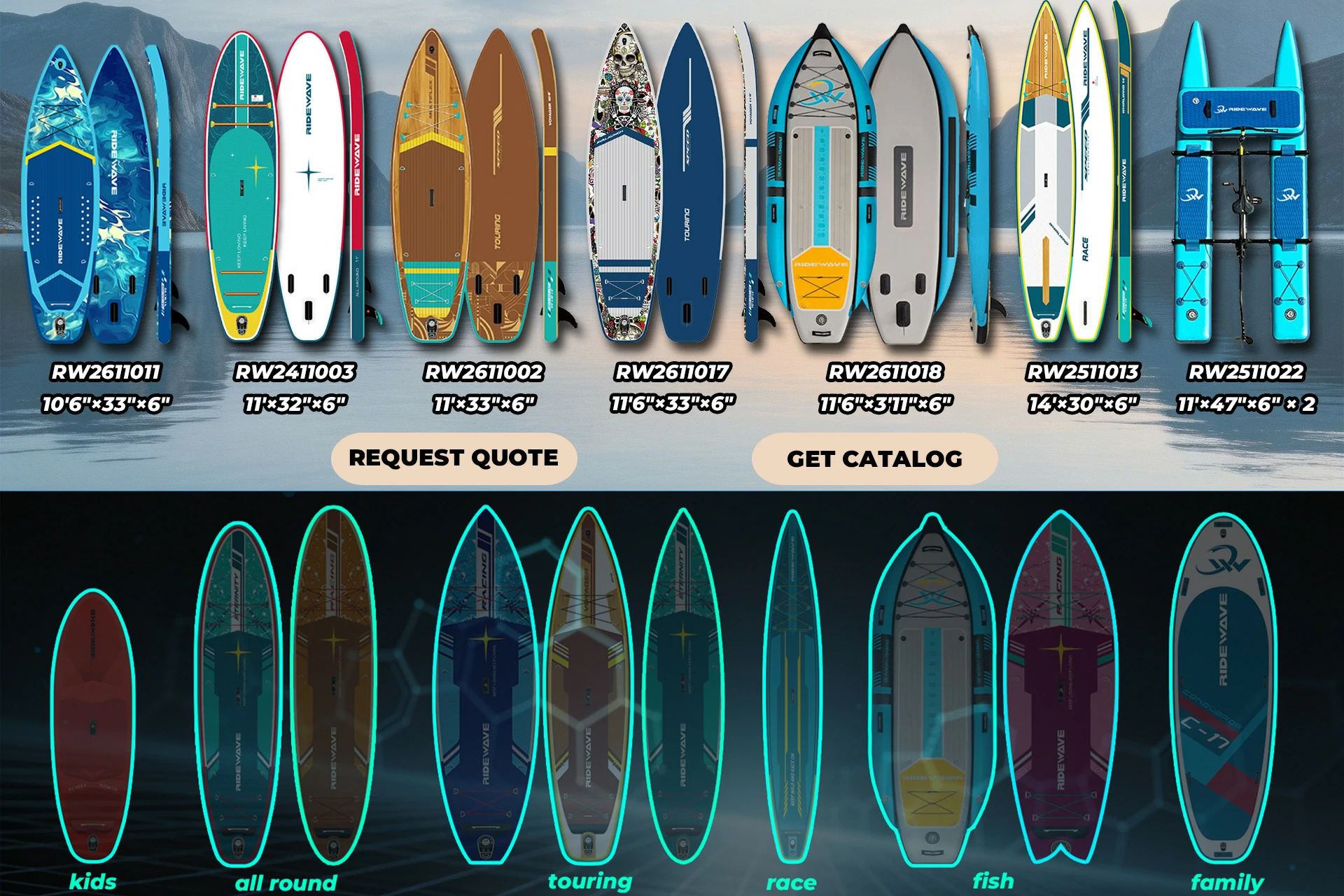
Many Dutch watersports retailers previously relied on imported branded paddle boards with fixed pricing and limited customisation options. These established brands hold tight control over MSRP, leaving thin profit margins for resellers. Private label OEM inflatable SUP changes this dynamic, letting local distributors build products tailored exactly to Dutch paddling habits: stable boards for canal beginners, touring shapes for IJsselmeer trips, compact sizes for small canal boats and even dog-friendly custom SUP variants.
Sustainability is another major growth driver in the Benelux region. Dutch shoppers actively ask retailers about recycled raw materials, PVC sourcing and product end-of-life recycling plans. Factories that can deliver low-VOC, recycled drop-stitch fabric for private label SUP gain a noticeable advantage in conversations with eco-focused Dutch buyers. This is not just a marketing talking point; many Dutch webshops such as Bol.com add sustainability filter tags that directly impact product discoverability.
Seasonal weather patterns also support longer selling cycles. Mild winters mean dedicated paddlers still head out on calm days, extending the selling window beyond the traditional June–August peak. For B2B importers, this reduces the risk of large seasonal inventory surpluses that plague purely tourist-focused merchandise.
| Metric | Netherlands Inflatable SUP Market 2022 | Netherlands Inflatable SUP Market 2024 | Forecast 2026 |
|---|---|---|---|
| Estimated annual iSUP unit sales | 72,000 | 91,000 | 114,000 |
| Average retail price (entry to mid tier) | €319 | €342 | €358 |
| Share of private label SUP in total sales | 22% | 29% | 36% |
| Main sales channel | Physical watersport shops + beach kiosks | Webshops + specialist retailers | Omnichannel (webshop + rental + retail) |
When planning your SKU lineup, it pays to separate tourist impulse buyers from recurring local outdoor enthusiasts. Tourists buy cheap boards once, while local Dutch households return for accessories, replacement fins, repair kits and upgraded inflatable paddle board models year after year. RIDEWAVE has observed this pattern repeatedly across Benelux customers, as repeat accessory sales often become a stable secondary revenue stream alongside core board sales.
What Gross Margins Can a Dutch Retailer Realistically Expect on Private Label iSUP?
Many Dutch watersport brand owners fixate only on the factory FOB price when evaluating private label SUP, and this shortcut leads to wildly inaccurate profit projections. To calculate true returns on OEM inflatable SUP, you must account for every landed cost component before comparing against your target retail price. Reselling established branded inflatable SUP often locks B2B buyers into tight margins, typically ranging from 15% to 25%. Private label custom SUP opens room for far healthier returns, usually sitting between 35% and 55%, but this range shifts heavily based on SKU tier, order volume, freight rates and compliance documentation fees.

Entry-level boards carry lower per-unit profit, while mid-tier and premium stand up paddle board models deliver the strongest gross margins for Dutch omnichannel retailers. It is critical to remember that higher margin products also carry higher upfront per-unit investment, and premium boards require stronger product storytelling to convert Dutch consumers. Many first-time importers make the mistake of ordering only low-cost entry iSUP, competing directly against mass-market retailers such as Decathlon and Aldi on raw price, which quickly erodes any planned profit.
The table below breaks down a realistic landed cost calculation for a mid-sized private label inflatable paddle board shipped from Asia to the Port of Rotterdam, with Dutch BTW and import duties included. This example uses standard order volume for a 40HQ container, one of the most common order sizes for brands expanding into private label watersports gear.
| Cost Item | Description | Estimated Cost (EUR per Board) |
|---|---|---|
| FOB factory price | RIDEWAVE mid-tier drop-stitch inflatable SUP, custom logo, standard accessories | €112 |
| Sea freight & terminal charges | Yantian to Rotterdam, 40HQ container allocation, port handling | €24 |
| Import duty | EU tariff for inflatable watersport equipment | €4.80 |
| Dutch BTW (21%) | Applied on total CIF value before retail sale | €29.69 |
| Compliance & technical file | GPSR documentation, CE file, Dutch warning label artwork | €7.50 |
| Warehousing & local handling | Rotterdam warehouse storage, pallet unpacking, picking prep | €9 |
| Total Landed Cost | Full cost to get board ready for sale in Netherlands | €186.99 |
If this board retails at €449, the gross profit per unit lands around €262, for a gross margin of roughly 58%. This is an optimistic top-end figure, achievable when brands control marketing and avoid heavy marketplace commission fees. For Bol.com or Coolblue listings, platform commissions typically subtract 8%–15% from revenue, pulling the net margin down to the 35–45% range.
Inventory capital is another hidden factor that distorts margin calculations. Even with strong gross margin percentages, slow sell-through rates will eat into cash flow and reduce your effective annualised return. RIDEWAVE recommends Dutch buyers model 2 separate margin scenarios: best case with 70% sell-through in the primary selling season, and a conservative case with only 40% sell-through, to avoid overestimating profitability.
How Does Dutch Water Culture Change the iSUP SKU Mix a Brand Should Order?
Ordering a single universal inflatable SUP SKU for the Dutch market is one of the costliest mistakes new private label brands make. The Netherlands does not have one unified paddling environment; canal cruising, inland lake touring, coastal surf and casual family use each demand distinct stand up paddle board shapes, dimensions and feature sets. Your OEM inflatable SUP lineup must reflect these segmented use cases if you want strong sell-through and positive customer reviews from Dutch end buyers.
Canal paddling, the largest use case in cities such as Amsterdam, Leiden and Utrecht, calls for stable, manoeuvrable private label SUP. Narrow canal passages, low bridges and gentle currents mean beginners and casual users prioritise balance and easy turning over raw speed. Boards in the 10'6" to 11' length range, 32–34 inch width, with a rounded nose work best for urban canal trips. Extra D-rings are a valuable add-on for Dutch buyers, as many users mount dry bags, dog leashes or small coolers while navigating city waterways.
For IJsselmeer and Wadden Sea touring, paddlers seek longer, straighter-tracking custom SUP. These users often plan multi-hour trips, covering longer distances in open water. A 12'6" touring inflatable paddle board with reinforced rails, integrated carry handle and removable fin setup delivers reliable straight-line performance. This segment attracts more dedicated enthusiasts who are willing to pay premium pricing and frequently repurchase accessories.
Coastal spots around Zandvoort and Scheveningen create demand for compact, lightweight surf-style iSUP. These shorter boards, typically 9' to 10', handle small shore breaks and are easier to carry across sand. They are a niche SKU, not your highest volume seller, but they add credibility to your brand for watersport enthusiasts and help capture shoppers searching for wave-ready inflatable SUP.
Family and pet-friendly models form another high-potential segment. Dutch households frequently bring children or dogs onto their boards, requiring extra width, non-slip thick EVA deck pad and reinforced tie-down points. This category performs very well on Bol.com and in local watersport shops, as families search for multi-purpose boards rather than performance-focused race equipment.

The following table summarises recommended SKU specifications tailored for Dutch water environments, to help you build your private label SUP product portfolio.
| Use Case | Board Size | Core Feature Priorities | Target Buyer Segment |
|---|---|---|---|
| City Canal Cruising | 10'6" × 32" | Stable wide deck, multiple D-rings, easy storage | Beginners, casual urban paddlers |
| IJsselmeer / Inland Touring | 12'6" × 32" | Reinforced rails, large single fin, long-distance tracking | Enthusiast day-trippers |
| Coastal Small Surf | 9'8" × 30" | Lightweight, compact shape, responsive tail | Wave recreation users |
| Family & Dog Friendly | 11' × 34" | Extra wide deck, thick non-slip EVA, extra tie-down points | Family households, pet owners |
Avoid overinvesting in race or high-performance racing stand up paddle board models at launch. The Dutch racing community is relatively small, and high-performance SKUs carry slower turnover and higher consumer education costs. RIDEWAVE's B2B team often advises Benelux clients to start with 2 core SKUs first, then add 1–2 niche boards in the second order once sales data confirms demand. You can refine your product selection by exploring the principles laid out in How To Design A Paddle Board That Sells.
What Should a Dutch Brand Actually Ask an OEM SUP Factory Before Placing a Container?
Many Dutch importers rush into OEM inflatable SUP container negotiations and only discuss MOQ, price and lead time. While these details matter, overlooking quality standards, component specifications and after-sales support creates costly headaches once goods land at the Port of Rotterdam. When sourcing private label SUP, every B2B buyer needs a structured checklist to separate reliable manufacturers from factories that cut corners on drop-stitch, valve construction and EU compliance documentation.
Drop-stitch density is one of the most critical benchmarks for inflatable SUP durability. Cheap factories use low-tension 80k or 90k drop-stitch fabric that will deform under pressure after months of use. Reputable manufacturers like RIDEWAVE typically use 100k or 120k high-density drop-stitch for mid-tier and premium custom SUP. You should confirm the raw fabric supplier, tensile test reports and air retention test data, rather than accepting vague marketing claims about "heavy-duty material".
Valve selection is another frequent failure point. Halkey-Roberts valves remain the gold standard for European watersports markets, while generic no-name valves carry high leak risk. Dutch end-users expect simple, reliable valves, and leak complaints will flood your customer service inbox if you choose low-cost alternatives. Ask the factory to specify valve brand, warranty coverage and spare valve supply terms for your stand up paddle board private label line.
Fin system compatibility, rail thickness and EVA deck pad quality also impact long-term product reviews and return rates. Removable US-style fin boxes are preferred in the Benelux market, allowing end-users to swap fins for canal cruising, open water touring or small surf. Thin, poorly welded rails develop delamination, which is one of the top warranty claims for imported iSUP. You should request sample boards for field testing in local Dutch water conditions before committing to a full container.
Compliance deliverables must be explicitly written into your purchase contract. Confirm who will prepare GPSR technical files, CE test reports, and Dutch-language warning labels. Some factories offer low FOB pricing but hand over incomplete paperwork, leaving the Dutch importer fully liable for product safety enforcement.
We compiled the full list of critical procurement questions in our earlier resource: 10 Questions Every B2B Buyer Should Ask Before Placing An Inflatable SUP Factory Order. Use this checklist during video factory audits and sample evaluation, to avoid miscommunication on specs, packaging, marking and liability.

Do not overlook after-sales and spare parts agreements. A strong OEM partner will reserve spare fins, repair kits and replacement valves alongside your main shipment. For Dutch distributors, fast access to spare parts reduces return rates and strengthens customer loyalty for your private label SUP brand.
Do CE Certification, GPSR and Dutch Product Safety Rules Trip Up iSUP Imports?
CE marking, GPSR and local Dutch product safety requirements are the single biggest hidden risk for brands importing private label SUP into the Netherlands. Many first-time buyers assume a factory's existing CE certificate automatically covers their OEM inflatable SUP private label line, and this misunderstanding can lead to port holds, customs fines, product recalls or even full seizure of your iSUP shipment at Rotterdam.

CE marking for inflatable SUP confirms the product meets relevant EU harmonised standards, but a certificate issued for one brand cannot simply be reused for your new private label custom SUP. The technical file must match your exact board design, branding, warning labels and accessory set. This file is not just a one-time document upload; under the EU General Product Safety Regulation (GPSR), every importer selling stand up paddle board products inside EU territory must appoint an EU-based Responsible Person. This legal representative receives product safety notifications, coordinates recall procedures and communicates with Dutch market surveillance authorities.
Dutch inspectors pay close attention to warning labels. All printed warnings on your iSUP must include Dutch language, covering drowning hazards, weight limits, inflation pressure guidelines, age restrictions and safe operation rules. Labels that only use English or German will fail inspection. Even minor translation errors can trigger non-compliance alerts during customs checks or post-market audits.
It is also important to distinguish between test reports and valid GPSR documentation. Some Asian factories supply old, generic test reports that do not reflect your specific inflatable paddle board construction. These documents will not satisfy Dutch market surveillance. RIDEWAVE works with B2B clients to build complete, product-specific technical files, including material test records, pressure retention data, risk assessments and user manuals translated into Dutch, so shipments clear Rotterdam customs smoothly.
The table below lists all mandatory documents required for importing private label inflatable SUP into the Netherlands under GPSR and CE rules.
| Document | Purpose | Ownership & Notes |
|---|---|---|
| Product-specific CE technical file | Demonstrates compliance with EU harmonised standards | Must match your private label SKU, not reused from other brands |
| Valid test reports | Material strength, air retention, seam tensile testing | Tests must be completed on your exact board design |
| GPSR EU Responsible Person declaration | Legal EU contact for market surveillance & recalls | The Dutch importer is ultimately accountable |
| Dutch language warning labels & user manual | End-user safety instructions | Permanent printed labels attached to each board |
| Packing list & commercial invoice | Rotterdam customs clearance | Must align with product descriptions on safety files |
Many Dutch brands underestimate post-market surveillance risk. Even after goods pass customs, Dutch authorities can randomly request your technical file months later. Missing or incomplete documentation can force you to stop sales, pull inventory from Bol.com and physical shops, and cover all recall costs. This is the primary reason low-price factory quotes often end up far more expensive in the long run.
Do not treat compliance as an afterthought. Negotiate all safety documentation requirements during sample development, before you sign production contracts. Clarify in writing which party creates, pays for and maintains the technical file, and confirm the scope of the EU Responsible Person service before production begins.
Can a Small Dutch Water Sport Brand Really Compete with Decathlon and Aldi-seasonal iSUP?
It is easy for Dutch small and mid-sized watersport brands to feel outmatched by mass retailers selling low-cost inflatable SUP at aggressive price points. Decathlon's Itiwit line and Aldi's seasonal iSUP promotions dominate the entry-level market, often advertising boards under €200. However, competing directly on price is not the only path to success for private label OEM inflatable SUP, and it is almost never the winning strategy for smaller Dutch distributors. Mass-market retailers win on scale, but they carry inherent weaknesses that create clear openings for niche private label SUP brands.

Big box retailers build their supply chains around huge, one-size-fits-all bulk orders. Their stand up paddle board designs are engineered for global sales, not tailored to Dutch canal riding, Wadden Sea touring or family dog paddling. The standard mass-market board works for occasional summer outings, yet it lacks the reinforced rails, extra D-rings and custom deck pad texture that local Dutch paddlers actively seek. Mass-market product support is also limited; customers struggle to find spare fins, repair supplies or personalised guidance after purchase. This gap is where smaller branded custom SUP products can capture loyal buyers.
Small Dutch watersport businesses win by selling value, not lowest price. Successful private label brands focus their messaging around local use cases, Dutch-language after-sales service, durable build quality and curated accessory bundles. Instead of fighting for the one-time tourist purchase, these brands target repeat local paddlers who plan to use their inflatable paddle board year-round. These customers care more about long-term durability and reliable spare parts than saving €30 or €50 on the upfront purchase price.
You can also build competitive advantage by bundling your private label SUP with regionally relevant extras: Dutch printed waterproof safety guides, canal route maps, repair kits and dog-specific leash mounts. These add-ons cost little at the factory level but drastically improve perceived value and separate your product from generic supermarket boards sold by Aldi and Decathlon
That said, realistic positioning is essential. Do not claim your mid-tier board beats mass-market options at the absolute lowest price. Frame your product for buyers who have already tried cheap entry-level iSUP, experienced seam leaks or unstable performance, and are ready to upgrade. This audience actively searches for durable, locally supported inflatable SUP options and has far lower return rates than first-time bargain shoppers.
| Comparison Item | Mass Market iSUP (Decathlon / Aldi) | Small Brand Private Label OEM iSUP |
|---|---|---|
| Primary selling point | Low upfront retail price | Durability, local Dutch fit & after-sales support |
| Board design | Global universal design | Customised for canals, IJsselmeer, family & dog use |
| Material & build | Basic drop-stitch, thin rails | 100k/120k high density drop-stitch, reinforced welded rails |
| Spare parts availability | Limited, long wait times | Pre-stocked spare fins, valves and repair kits |
| Product documentation | Multilingual generic manual | Dutch safety labels + localised user guide |
| Target customer | Tourists, one-off casual summer buyers | Year-round local Dutch paddlers, repeat buyers |
RIDEWAVE has worked with multiple Benelux small brands that intentionally avoid direct price competition with large retailers. These clients focus on mid-range SKUs and build loyal customer bases rather than chasing massive one-time bulk sales. A narrow, well-defined niche will always be easier to defend than a race to the bottom on pricing.
What Does a Real Private Label iSUP Order Look Like - A 2024 Benelux Case from Ridewave?
Many Dutch B2B buyers read through product spec sheets and margin projections, yet they struggle to visualise exactly how a full private label SUP OEM project unfolds from sample approval to repeat shipment. This real RIDEWAVE client story comes from a Benelux outdoor distributor with a webshop and two physical watersport shops in the southern Netherlands. Before partnering with RIDEWAVE, this brand had a painful first experience with another factory for OEM inflatable SUP, which left them with inventory that could not be sold in the Dutch market.
The brand's first failed order used generic low-density drop-stitch boards. After arriving in Rotterdam, customers quickly reported rail delamination and slow air leaks. To make matters worse, the previous manufacturer delivered incomplete CE and GPSR documentation, missing Dutch warning labels. The distributor was forced to pause all sales, absorb returned inventory costs, and discard a large portion of the shipment. They came to RIDEWAVE in late 2023 to rebuild their custom SUP private label line with compliance and durability built into every stage of production.
Together, we defined a 3-SKU lineup tailored to Dutch waters: 10'6" canal beginner board, 12'6" IJsselmeer touring inflatable paddle board, and 11' family dog-friendly iSUP. The client chose 100k high-density drop-stitch fabric, Halkey-Roberts valves, reinforced welded rails and thick non-slip EVA deck pads. We printed their custom logo, full Dutch-language warning labels and prepared complete product-specific GPSR and CE technical files before mass production started. You can dive deeper into the physical manufacturing workflow with How Custom Paddle Boards Are Made: From Design To Production.
The order scope was 120 units per SKU, totalling 360 boards, shipped as a consolidated LCL shipment to Rotterdam. The timeline spanned sample development, revision, pre-production approval, mass production and sea freight. RIDEWAVE completed factory quality inspections for every batch, including 24-hour air retention pressure testing and seam inspection.

| Project Metric | Details of this Benelux Private Label iSUP Project |
|---|---|
| Client type | Benelux outdoor & watersport distributor (webshop + 2 brick-and-mortar stores) |
| SKU count | 3 custom SKUs: canal, touring, family dog-friendly |
| Total order quantity | 360 inflatable SUP boards |
| Material spec | 100k drop-stitch, Halkey-Roberts valve, reinforced rails |
| Compliance deliverables | SKU-specific CE file, GPSR technical file, Dutch warning labels |
| Shipment type | LCL to Port of Rotterdam |
| Total lead time | 78 days from signed sample approval to port arrival |
| 6-week sell-through rate | 62% across all three SKUs |
| Repeat order status | Client placed a second expanded order 4 months later |
The client's sales team focused marketing messaging toward local Dutch paddlers, highlighting durable construction, full Dutch safety documentation and spare part availability. They avoided competing on price against mass-market retailers. Within six weeks after stock arrived at their warehouse, 62% of the inventory sold. The strong sell-through confirmed their niche positioning worked. Four months after the first shipment, they returned to RIDEWAVE for a second order, adding two new accessory bundles including repair kits and adjustable paddles.
This case illustrates a core lesson for Dutch brands: the lowest FOB price rarely creates a successful private label SUP business. Success comes from matching board design to local water conditions, locking in full EU compliance paperwork upfront, and selecting an OEM partner that performs consistent quality checks during production. RIDEWAVE's B2B team still uses this project as a reference when advising new Dutch buyers on sample testing, compliance planning and SKU selection.
How Much Working Capital Does a First iSUP Container Actually Tie Up?
Many new entrants into private label SUP underestimate the total working capital required to launch their first OEM inflatable SUP shipment. They only budget for factory FOB payment, ignoring pre-production sample fees, compliance document costs, sea freight, import duties, Dutch BTW, warehouse storage, marketing spend and contingency funds. All these expenses are locked in before your boards start selling, which can create serious cash flow pressure for small Dutch distributors.
A 40HQ full container is the most common large order for brands scaling up custom SUP, but it is not always the right starting point. RIDEWAVE often recommends first-time private label buyers in the Benelux region begin with smaller LCL shipments. LCL limits upfront capital exposure while letting brands validate market demand for their inflatable paddle board before committing to a full container load. This strategy reduces the risk of holding slow-moving iSUP inventory that drains cash reserves.
Working capital is not just the money paid to the factory. You must also account for the cash cycle: capital remains tied up from sample development, production deposit, sea transit, customs clearance and warehousing until customers pay for orders. For private label SUP shipped from Asia to Rotterdam, this full cycle usually runs between 90 and 130 days. If sales move slower than forecasted, capital stays trapped in inventory for months longer.
The table below breaks down the working capital requirement for a mid-sized first order of OEM inflatable SUP, using an LCL shipment with 360 boards (the same volume from our Benelux case study).

Even with VAT reclaim available for registered Dutch businesses, you still need to front the full BTW amount upfront. The contingency fund is one of the most frequently skipped budget lines. Shipping delays, additional market surveillance document requests or extra factory re-inspections can all trigger unexpected costs. Without this buffer, your project can stall mid-stream.
When planning your cash flow, build two scenarios: one based on your optimistic sell-through timeline, and a conservative scenario where inventory sells 50% slower. This simple exercise helps you avoid overextending your budget. Many brands discover they can start with fewer SKUs and a smaller quantity to reduce capital lockup, test the market, and then scale once revenue from private label SUP starts flowing in.
RIDEWAVE's B2B sales team will walk buyers through cash flow projections during the quotation phase, to make sure clients understand the full capital picture and do not only focus on FOB pricing.
When Should You Avoid Investing in Private Label OEM Inflatable SUP?
Private label SUP OEM manufacturing can deliver excellent profit margins for the right business, yet it is not a suitable investment for every Dutch watersport retailer or startup. There are specific red flags that signal you should hold off placing an OEM inflatable SUP order, even if you are excited about entering the paddle board market. Moving forward under these conditions often leads to trapped capital, unsold inventory and costly compliance headaches.
The first major warning sign is insufficient cash reserves. If you cannot cover the full working capital requirement and maintain a cash buffer to survive slow selling seasons, hold off. Many new entrepreneurs budget only for factory payment and overlook warehousing, compliance and marketing. When sales stall in colder months, they are left holding custom SUP inventory with no funds left for advertising or emergency repairs. Remember, inflatable paddle board inventory is illiquid; you cannot quickly convert it back to cash without steep discounts.
A second red flag is lacking clear customer positioning. If your business plan simply says "sell iSUP to anyone who wants a paddle board", private label is not the right move. Private label succeeds only when you know exactly who your buyer is: canal beginners, dog-owning families, IJsselmeer touring enthusiasts, or another defined group. Without this focus, your private label SUP will blend into the crowded marketplace, competing directly with Decathlon and Aldi without any unique selling points.
You should also delay OEM sourcing if you have no way to handle EU compliance obligations. If you cannot appoint an EU Responsible Person, afford CE/GPSR testing and prepare Dutch safety documentation, importing your own branded stand up paddle board carries serious legal risk. Cutting corners on compliance is never a shortcut; fines, product seizures and forced recalls will easily outpace any savings from a cheaper factory quote.

Another situation to pause: no existing sales channel or audience. Brands with zero webshop traffic, no retail foot traffic, no rental customer base and no existing watersport community connections should not commit to a large OEM inflatable SUP order. You will spend heavily to build awareness while carrying inventory holding costs. It is smarter to test market demand first by reselling established brands' iSUP for one or two seasons. This teaches you customer preferences, peak selling windows and common product complaints before you invest in custom SUP moulds and branding.
Also avoid private label if you expect ultra-fast returns. The full cash cycle for importing private label SUP into the Netherlands typically spans 90–130 days, plus additional months to sell through inventory. If you need immediate revenue within 1–2 months, private label OEM is the wrong business model.
Is Private Label iSUP the Right Move for Your Dutch Watersport Brand?
Launching a private label SUP line can be a powerful growth lever for established Dutch watersport businesses, but it is not a quick-win, low-risk shortcut. The entire OEM inflatable SUP project hinges on four core pillars: targeted product design built for Dutch waterways, fully compliant CE and GPSR documentation, realistic cash flow planning, and a clear strategy to serve a defined local customer group. If these four elements are in place, your custom SUP brand stands an excellent chance to separate itself from mass-market budget boards and build repeat customer loyalty.

irst, design around Dutch use cases instead of generic global specs. The most successful inflatable paddle board private label brands do not try to serve everyone. They focus on canal beginners, IJsselmeer touring paddlers, families with dogs or another tightly defined niche. Tailor board dimensions, D-ring layout, rail reinforcement and accessory bundles to those users. Avoid racing SKUs at launch unless you already have an existing enthusiast customer base ready to buy.
Second, treat compliance as a non-negotiable foundation, not an afterthought. GPSR responsibilities, CE test reports and Dutch warning labels must be locked in before mass production. The biggest profit killer for Dutch iSUP importers is not high factory pricing; it is incomplete paperwork that triggers port holds, market surveillance audits or costly product recalls. Partner with an OEM supplier like RIDEWAVE that builds compliance deliverables directly into the production workflow, rather than selling cheap boards and leaving documentation for you to resolve alone.
Third, model cash flow conservatively. Calculate full landed cost and total tied-up working capital, not only FOB pricing. Build best-case and worst-case sell-through scenarios. Many brands choose to start with smaller LCL shipments of 2 or 3 core SKUs instead of jumping straight to a full 40HQ container. This limits financial exposure while gathering real sales feedback before scaling your private label SUP product range.
Fourth, compete on value and local relevance, not lowest price. Trying to undercut Decathlon and Aldi on price is a losing battle. Your competitive advantage comes from durable construction, locally suited board features, Dutch-language support, spare parts availability and curated accessory packages. Your marketing should speak to paddlers who have already experienced the limitations of budget mass-market inflatable SUP and are ready to upgrade.
Before signing an OEM contract, ask yourself three simple closing questions:
Do I have a defined target customer group and sales channels to reach them?
Can I fund the full working capital requirement and survive a slow sales season?
Am I prepared to manage EU GPSR and CE compliance obligations for my private label stand up paddle board line?
If you answered "yes" to all three, private label OEM is worth exploring. If any answer is "no", spend time strengthening your business foundation first. Resell third-party boards, build your audience, refine your customer insights and save capital before committing to custom manufacturing.
RIDEWAVE's B2B team works with Dutch and Benelux distributors through every stage of private label development, from market consulting and sample creation, to compliance document preparation, factory inspection and shipment coordination. If you are ready to explore whether OEM inflatable SUP fits your brand, reach out to our team for a no-obligation consultation.
Related Articles
What Should Dutch Distributors Verify Before Importing Wholesale Inflatable SUP?
What Hidden Sourcing Risks Should Dutch Inflatable Paddle Board Importers Watch Out For?
What Types Of Inflatable SUP Deliver The Best Profit Margins For Dutch Dealers?
How Do Dutch Wholesalers Optimize Inventory For Seasonal Inflatable SUP Demand?
How Can Dutch Water Sports Retailers Boost Revenue With Inflatable Paddle Board Product Lines?