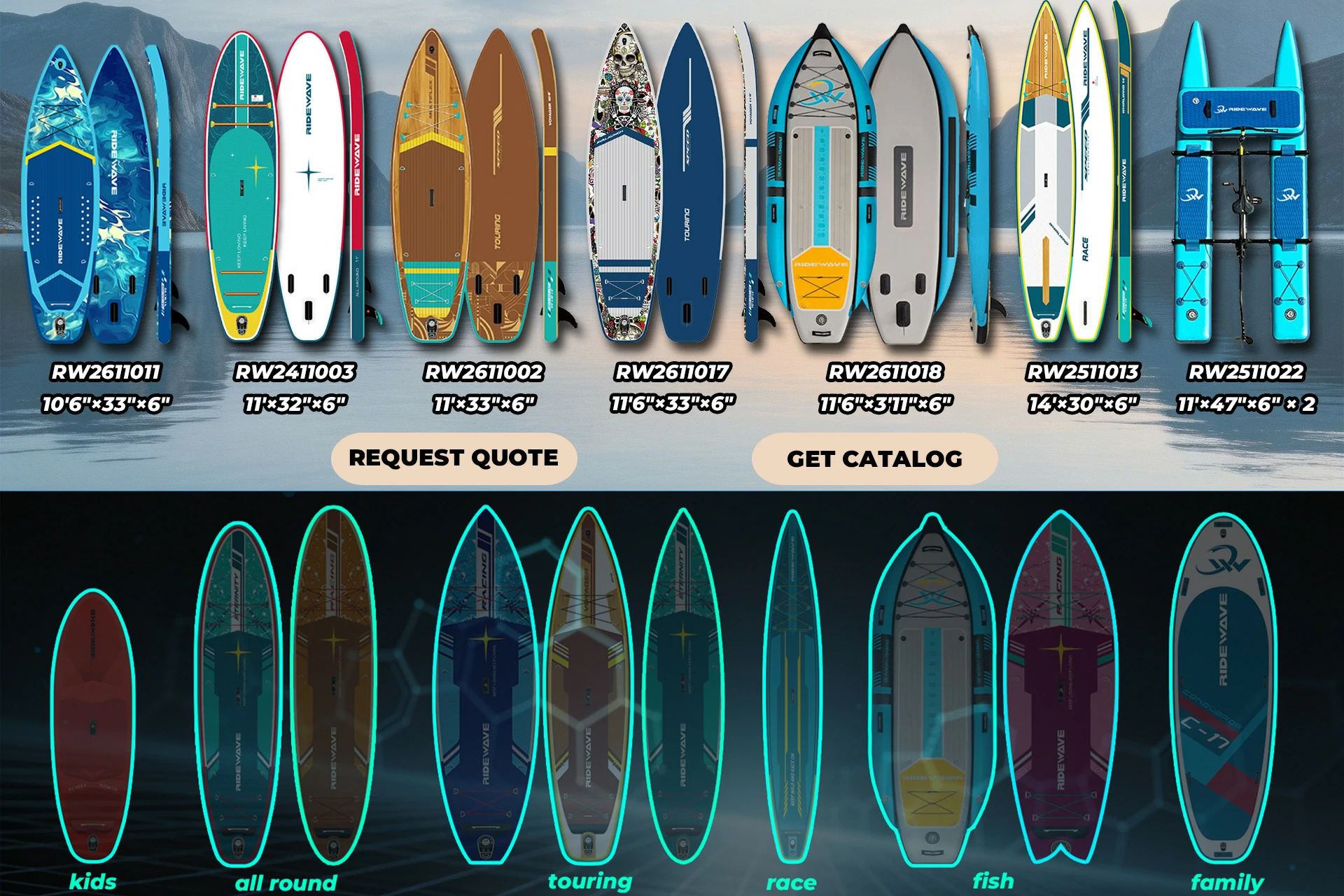



Setting inflatable SUP wholesale prices for Argentina's distributors is never as simple as marking up a factory quotation. Many new watersports resellers and brand owners stumble into thin margins, unsold inventory, and cash-flow pressure because they only compare upfront unit prices instead of mapping the full landed cost chain. When you source a durable, well-built inflatable SUP, every layer of material, welded seam, accessory bundle, and shipping timeline shapes your final retail price and competitive position. Working with a manufacturer that understands regional import rules, seasonal demand swings, and quality consistency helps you avoid race-to-the-bottom pricing while protecting your dealer profits. If you want to dig deeper into production standards that back reliable wholesale stock, you can explore How Custom Paddle Boards Are Made: From Design To Production to see how design choices directly impact your long-term return on investment.
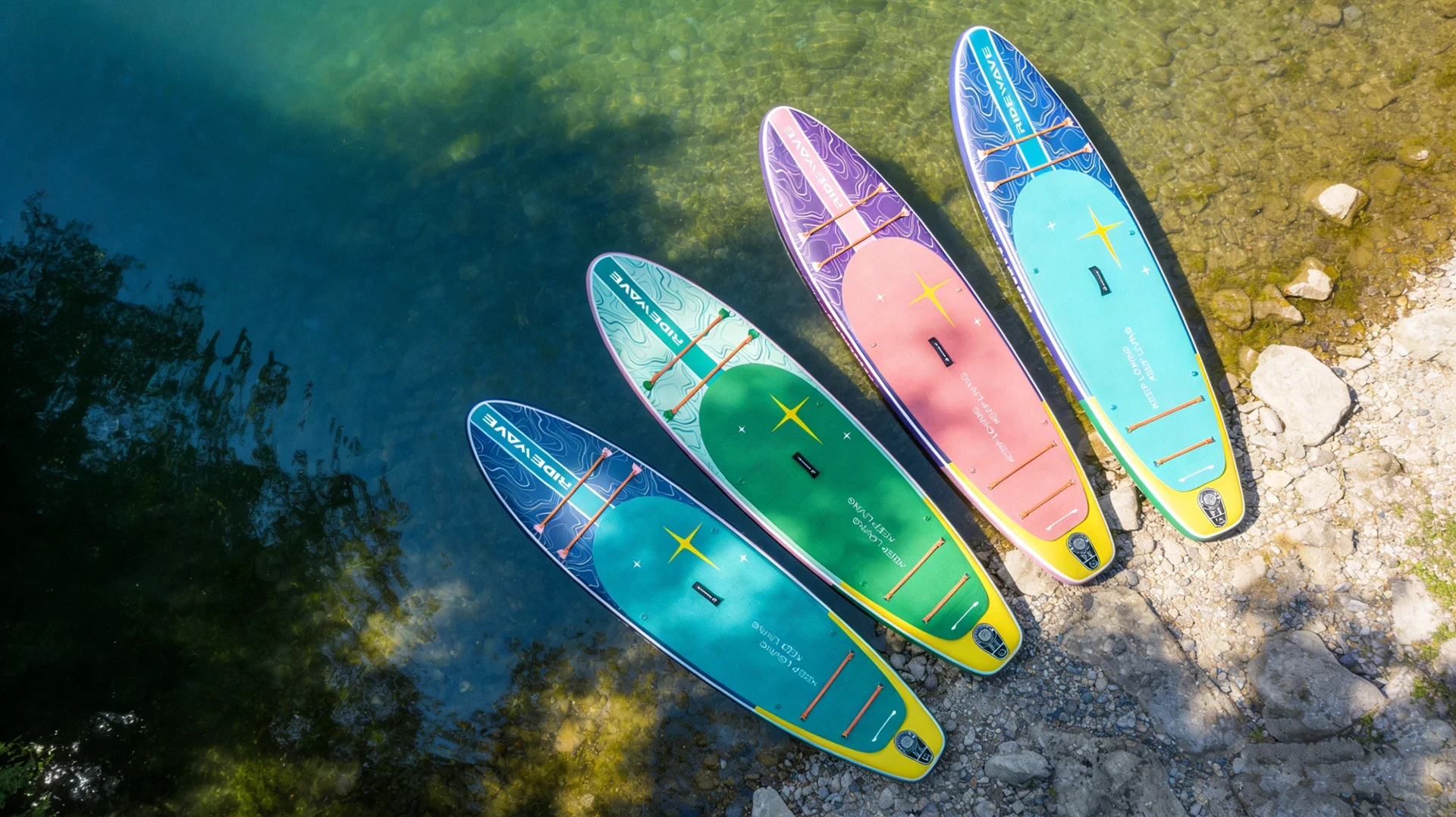
This guide is built for SUP distributors, private label brand operators, and outdoor retailers across Argentina and broader Latin America, alongside buyers from North America, Australia and Europe who are expanding their SUP product lines into new regional markets. We break down landed cost formulas, local price band benchmarks, quality validation checks, dealer pricing models, and risk-mitigation tactics for cross-border inflatable SUP procurement. RIDEWAVE contributes real-world factory insights and anonymized distributor case data, without overpromising or pushing one-size-fits-all orders. Our goal is to give you actionable frameworks you can plug into your own spreadsheets, supplier negotiations, and seasonal buying plans.
Why Does Pricing an Inflatable SUP for Argentina Demand a Landed-Cost View Instead of a Factory Quote?
Many SUP distributors make the costly mistake of building their entire pricing model using only the FOB or EXW factory price of an inflatable SUP. On paper, a cheaper unit price looks attractive, but Argentina's unique import landscape, volatile exchange rates, customs rules, and long ocean transit times create hidden costs that quickly erase planned margins. A low factory price does not equal a low landed cost, and landed cost is the true baseline you must use to calculate wholesale tiers, retail pricing, and minimum profitable order sizes.
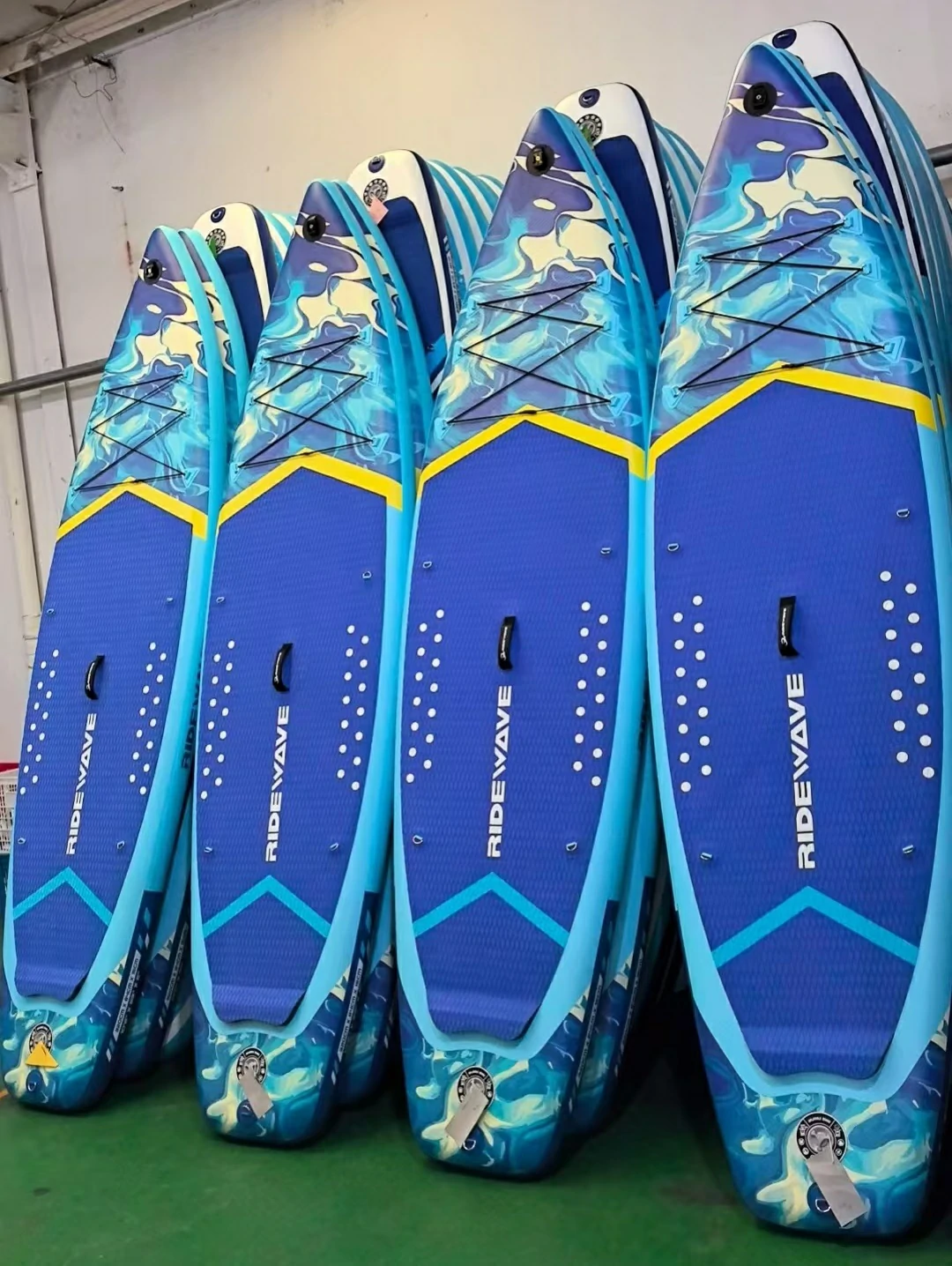
For buyers new to importing inflatable SUP into Argentina, currency fluctuation is one of the most persistent threats to profitability. Even if you lock in a USD price with your manufacturer, delays in customs clearance, extended warehouse holding times, or unexpected bank transfer fees can shift your effective cost before you sell a single board. Import documentation requirements, seasonal freight surcharges, and inspection fees also add fixed or variable expenses that many casual buyers overlook during initial supplier negotiations.
This is why experienced wholesale SUP importers separate vendor quotation reviews from full landed cost analysis. A reliable landed cost framework accounts for every expense between the factory loading dock and your local warehouse in Argentina. It also helps you compare suppliers fairly, rather than only picking the quote with the lowest upfront sticker price. When you skip this step, you may sign an order only to discover your final landed cost puts your board at a price point that cannot compete against local stock and competing imported inflatable SUP lines.
*Landed cost includes base unit price, packaging, ocean freight, insurance, port handling, customs duties, administrative import fees, local inland delivery, financing costs, and contingency reserve for currency shifts.
*Factory quotes only cover the goods themselves, and sometimes loading; they do not absorb the regional risk unique to Argentina's import market.
*A private label SUP buyer who ignores landed cost risk will also struggle to set consistent MAP pricing across online marketplaces and physical outdoor retail locations.
This framework is not exclusive to Argentina. Distributors shipping inflatable SUP to Chile, Uruguay, Brazil, and other Latin American markets can adapt the same calculation logic, though duty rates and import permits change by jurisdiction. RIDEWAVE shares this framework with its global dealer network because we have seen first-hand how miscalculated landed costs turn a promising SUP product line into stagnant inventory. If you want to build stronger supplier evaluation habits, reviewing 10 Questions Every B2B Buyer Should Ask Before Placing An Inflatable SUP Factory Order will help you flag these cost variables before you confirm your next production run.
What Wholesale and Retail Price Bands Do Argentine SUP Buyers Actually See in 2026?
Successful SUP distributors segment their catalog by clear price bands before placing bulk orders, because recreational paddlers, rental operators, and high-end private-label clients in Argentina shop with vastly different expectations. A one-price-fits-all strategy for your inflatable SUP lineup will either price you out of the mass market or leave significant profit on the table for premium buyers. Understanding the existing local price structure across Mercado Libre, waterfront shops, outdoor retail chains, and paddle clubs lets you build a balanced portfolio that serves every customer tier without triggering destructive price wars.
Argentina's SUP market has three core tiers that repeat across most coastal and river destinations, including Tigre Delta, Mar del Plata, and inland lakes around Salta. Each tier ties to a specific board construction, accessory bundle, buyer use case, and acceptable gross margin for dealers. Entry-level boards target casual family users and first-time paddlers; mid-range all-around boards serve regular hobbyists and rental fleets; premium touring, yoga, and race inflatable SUP cater to dedicated enthusiasts and high-margin private label programs.
The table below summarizes the current market bands, formatted for your team to copy directly into spreadsheets or product strategy docs. All USD figures are reference benchmarks only; local peso retail prices shift daily with exchange rates and inflation.
| Price Tier | Board Type | Target End User | Typical Retail USD Range | Recommended Dealer Gross Margin | Key Buyer Priorities |
|---|---|---|---|---|---|
| Entry | Basic all-around inflatable SUP | First-time users, family gifts, casual lake use | $240 – $360 | 28% – 35% | Low upfront price, complete starter kit, easy storage |
| Mid-Range | Reinforced all-around / touring inflatable SUP | Hobbyists, small rental clubs, regular weekend paddlers | $370 – $550 | 35% – 42% | Weld quality, durable PVC, stable tracking, replaceable accessories |
| Premium | Yoga, racing, heavy-duty touring inflatable SUP | Enthusiasts, private label brands, high-end waterfront retailers | $560 – $850+ | 42% – 50% | Custom graphics, premium material, precision shape, warranty support |
*Entry tier volume drives cash flow, but it carries the highest risk of return if quality standards slip. Many cheap imported inflatable SUP in this bracket suffer seam leaks after a small number of outings, hurting your store reputation.
*Mid-range boards are the sweet spot for most new SUP distributors entering Argentina. They balance competitive pricing and acceptable durability, and they create repeat accessory sales for fins, leashes, and replacement paddles.
*Premium SKUs do not sell in huge volume, but they lift your brand positioning and support higher-value private label collaborations. They also insulate your catalog from pure low-price competition.
When building your product mix, resist the urge to fill your warehouse with only entry stock. A healthy wholesale portfolio mixes 60% mid-range, 25% entry, and 15% premium inflatable SUP and accessories. This mix stabilizes your revenue across slow and busy selling months. You can expand this tiered strategy further when you design custom shapes, as covered in How To Design A Paddle Board That Sells.
How Do Imports, Logistics, FX, and Taxes Build the Final Cost of an Inflatable SUP in Argentina?
Every SUP distributor who imports inflatable SUP into Argentina must build a granular cost model before locking a purchase order. Factory pricing is only one line item; import duties, port fees, freight, currency exchange losses, insurance, inland transport and capital holding costs stack together to shape your true landed cost. Many new importers fail to separate controllable variables from fixed regulatory costs, which leaves them exposed to sudden margin erosion when shipping rates shift or customs rules update.
It is critical to distinguish between Incoterms when comparing supplier quotes for wholesale SUP orders. EXW places nearly all logistics, customs and risk burden on the buyer. FOB transfers risk once goods pass the ship's rail at the origin port. CIF includes ocean freight and basic insurance up to the destination port, but the buyer still manages customs clearance, local duties and inland delivery. DDP shifts most of the import administrative work to the supplier, though this option is less common for Argentina due to local import registry requirements and tax formalities. No single term is universally better; the right choice depends on your in-house import team, broker relationship and cash flow buffer.
Currency exchange remains one of the hardest variables to forecast for Argentina-based inflatable SUP buyers. Even if you sign a contract with a fixed USD unit price, settlement delays, bank spread fees, capital controls and payment processing timelines can create a gap between your budgeted exchange rate and the actual rate you receive. Wise distributors build a dedicated FX contingency fund into every landed cost calculation, rather than treating exchange movement as a secondary afterthought.
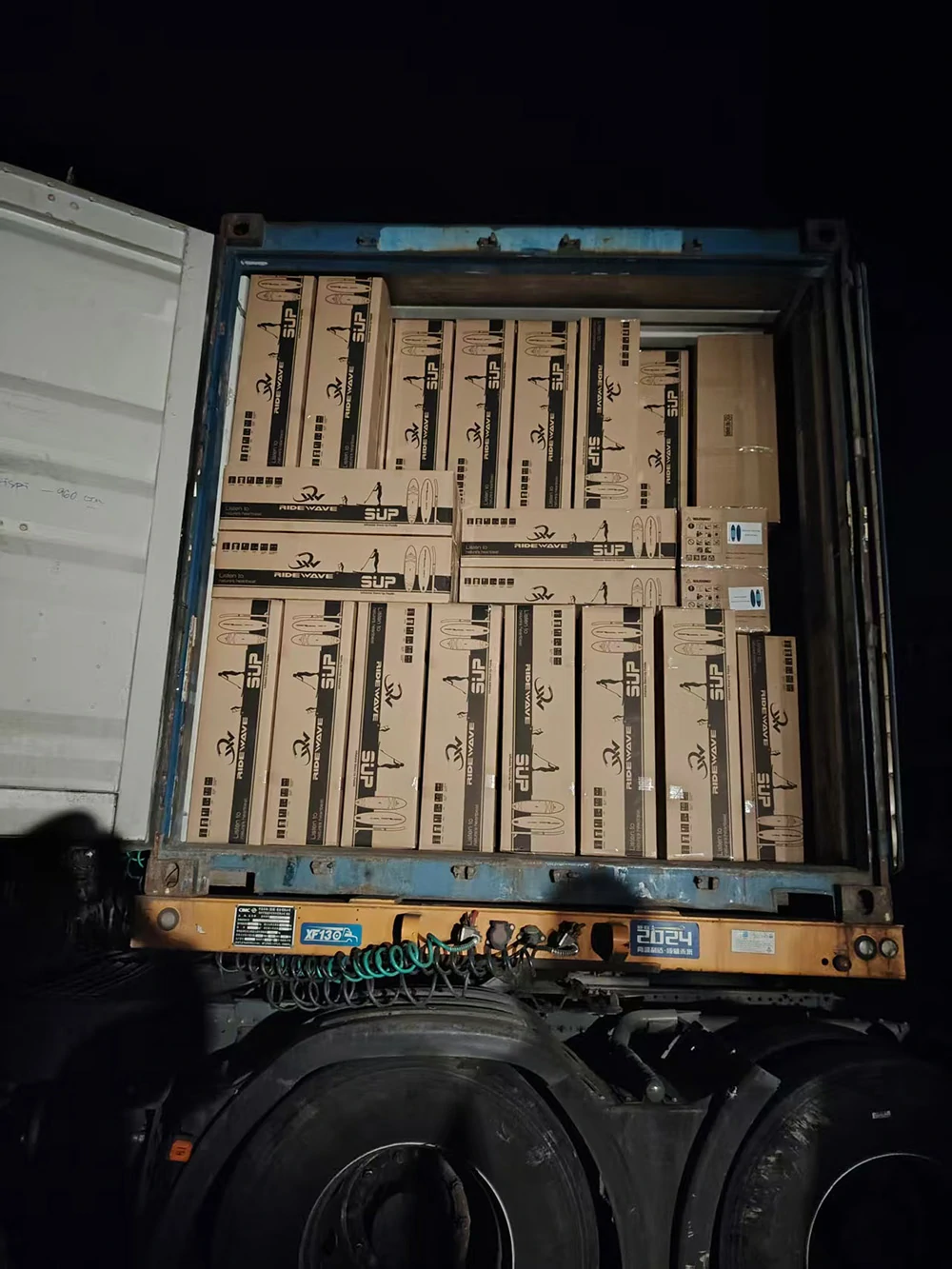
The table below breaks down standard landed cost components for one complete inflatable SUP set, formatted for direct copy into your costing spreadsheet. All percentages are industry reference benchmarks only, not legal or tax guarantees; always confirm current duty schedules and brokerage rules with your local customs broker.
| Cost Component | Description | Reference % of Total Landed Cost | Controllable? | Notes for Argentina SUP Importers |
|---|---|---|---|---|
| Base unit + accessories | Inflatable SUP, paddle, leash, fin, pump, travel bag | 58%–65% | Yes | Negotiate bundle pricing with your manufacturer; private label printing adds extra unit cost |
| Ocean freight + port charges | Container freight, THC, documentation, terminal handling | 12%–18% | Partially | Book space 3–4 months before Argentina summer peak; avoid last-minute spot rate surcharges |
| Import duties & administrative taxes | Customs duty, statistical tax, import paperwork fees | 10%–14% | No | Rates change by customs classification; confirm HS code with your broker before ordering |
| Cargo insurance | Marine transit insurance covering loss or damage | 1%–2% | Yes | Mandatory for most container shipments; higher coverage for premium SUP inventory |
| Local inland delivery | Port to your warehouse, trucking, unloading | 2%–4% | Partially | Consolidate shipments to cut per-unit delivery cost |
| FX & capital holding cost | Bank transfer fees, interest on tied-up capital, exchange reserve | 3%–6% | Partially | Build 4–5% contingency for peso volatility; stagger payments where possible |
| Inspection & customs brokerage | Broker service, pre-arrival document review, physical inspection fees | 2%–4% | Partially | Use a broker experienced with watersport inflatable goods |
*Freight timing is especially important for SUP distributors targeting Argentina's summer selling window from December to March. If your container misses the pre-season clearance window, your inventory arrives after peak demand and you will be forced to discount to clear stock.
*Improper HS coding is a frequent hidden risk for inflatable SUP. Misclassification can trigger delayed release, extra audits, back duties or fines, even when your goods meet all safety standards.
*Small batch buyers face higher per-unit logistics overhead. Many new distributors start with mixed container loads combining all-around inflatable SUP, accessories and related watersports gear to spread fixed port and brokerage costs across more SKUs.
-RIDEWAVE walks dealer partners through this costing structure during quotation discussions, because we have seen how one overlooked logistics line item can erase the profit of an entire container run. This also ties back to supplier due diligence, which you can explore deeper in 10 Questions Every B2B Buyer Should Ask Before Placing An Inflatable SUP Factory Order.
Which Quality Signals Justify a Higher Price-and Which "Spec Sheets" Mean Very Little?
Every SUP distributor has learned this lesson eventually: not all inflatable SUP specifications translate into real-world durability. Many low-cost suppliers overload spec sheets with flashy marketing phrases that sound impressive, but they do not reduce leak risk, extend service life or lower your return rate. When you build your wholesale lineup, you need a clear way to separate meaningful quality indicators from empty marketing language, so you can confidently assign higher price tiers to boards that deliver tangible value to your end customers.
For wholesale buyers importing inflatable SUP into Latin America, quality directly ties to after-sales workload and dealer reputation. Argentina's varied water conditions - shallow rocky rivers, choppy coastal surf and calm inland lagoons - put consistent stress on seams, PVC layers and valve assemblies. A board that holds up well in gentle lake use may fail quickly when rented out on the Tigre Delta or Mar del Plata shoreline. This is why material construction and welding standards matter more than decorative selling points.
Genuine quality markers that support a higher wholesale price include drop-stitch density, multi-layer PVC lamination, heat-welded seam construction, reinforced valve seats, replaceable fin boxes, consistent air retention and third-party safety test reports. These features cut warranty claims and make your wholesale SUP inventory easier to sell at mid-range and premium price points. On the other hand, vague claims such as "thick PVC", "high strength", "super durable" or a generic maximum weight rating without test conditions offer almost no actionable information for your buying team.
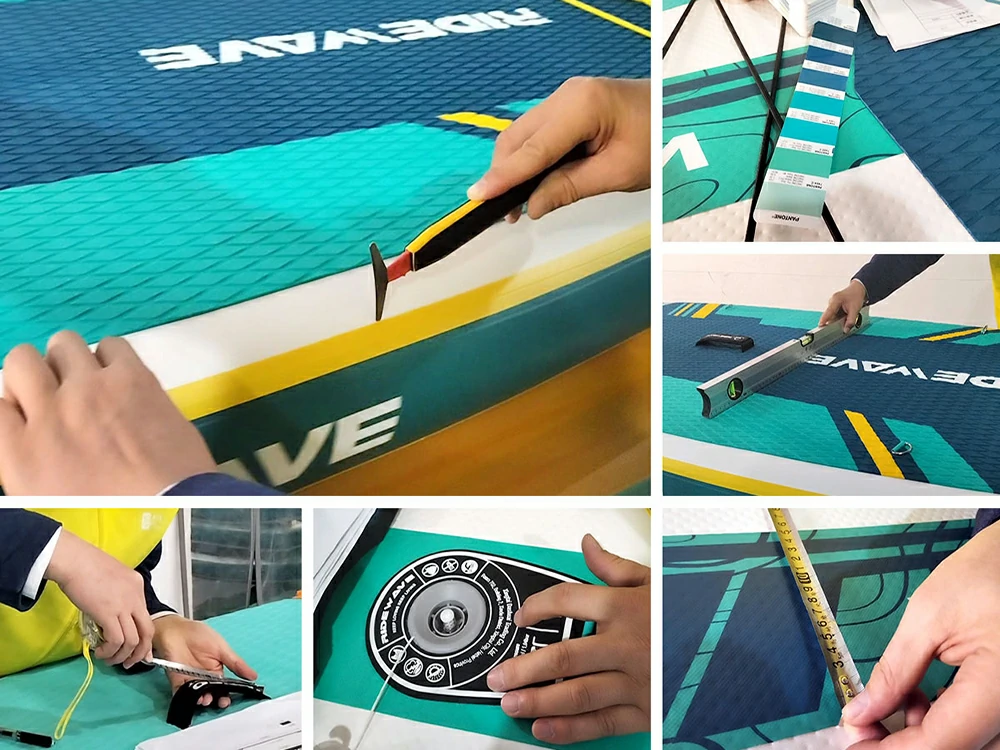
*Never judge an inflatable SUP sample only by its visual appearance. Bright graphics and attractive packaging do not prevent seam failure after repeated inflation and deflation cycles.
*Rental-focused SUP distributors should prioritize weld consistency and air retention above all other specs. Rental fleets cycle daily, and leak failures create immediate downtime and customer complaints.
*Private label buyers can add custom graphics without improving base quality. It is common to see expensive custom-printed boards built on cheap core fabric, which leads to disappointed repeat buyers.
RIDEWAVE shares this inspection checklist with dealer partners because we encourage buyers to validate samples physically before committing to large container orders. Spec sheet audits are one simple way to avoid expensive inventory mistakes before production starts. If you want to understand how these quality choices get built into production, revisit How Custom Paddle Boards Are Made: From Design To Production.
How Does RIDEWAVE Structure Its Manufacturing to Keep Cost, Durability, and Finish Aligned?
Most SUP distributors want to work with a factory that can balance three competing priorities: controlled unit pricing, consistent long-term durability, and reliable finishing for custom orders. Many manufacturers optimize only one factor: some chase rock-bottom costs and sacrifice weld quality; others focus on premium craftsmanship but lock buyers into very high minimum order quantities. RIDEWAVE's production workflow is built to avoid this trade-off trap, with modular material grades, staged quality checks, and flexible private label capacity for global inflatable SUP buyers including partners operating in Argentina.
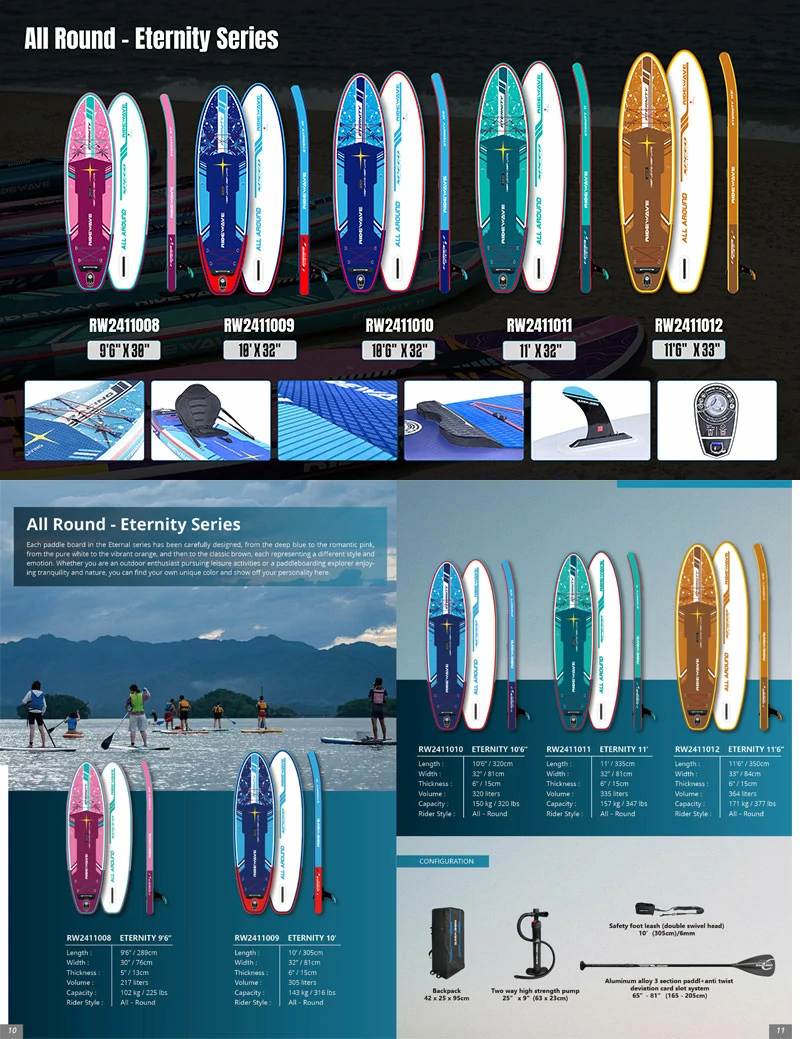
We separate our material grades into three tiers that match the market price bands we covered earlier. This tiered sourcing system is intentional: it lets distributors select the material package aligned with their target retail price point, instead of forcing every customer into a single standard. Our entry-grade inflatable SUP uses proven single-layer composite PVC for casual recreational use, with strict seam testing to control leak rates. Mid-range inventory uses reinforced multi-layer PVC and denser drop stitch, designed for rental fleets and regular weekend paddling. Premium touring and yoga SUP use heavy-duty laminated fabric, reinforced rail bands and precision shaping for dedicated enthusiasts and high-end private label lines.
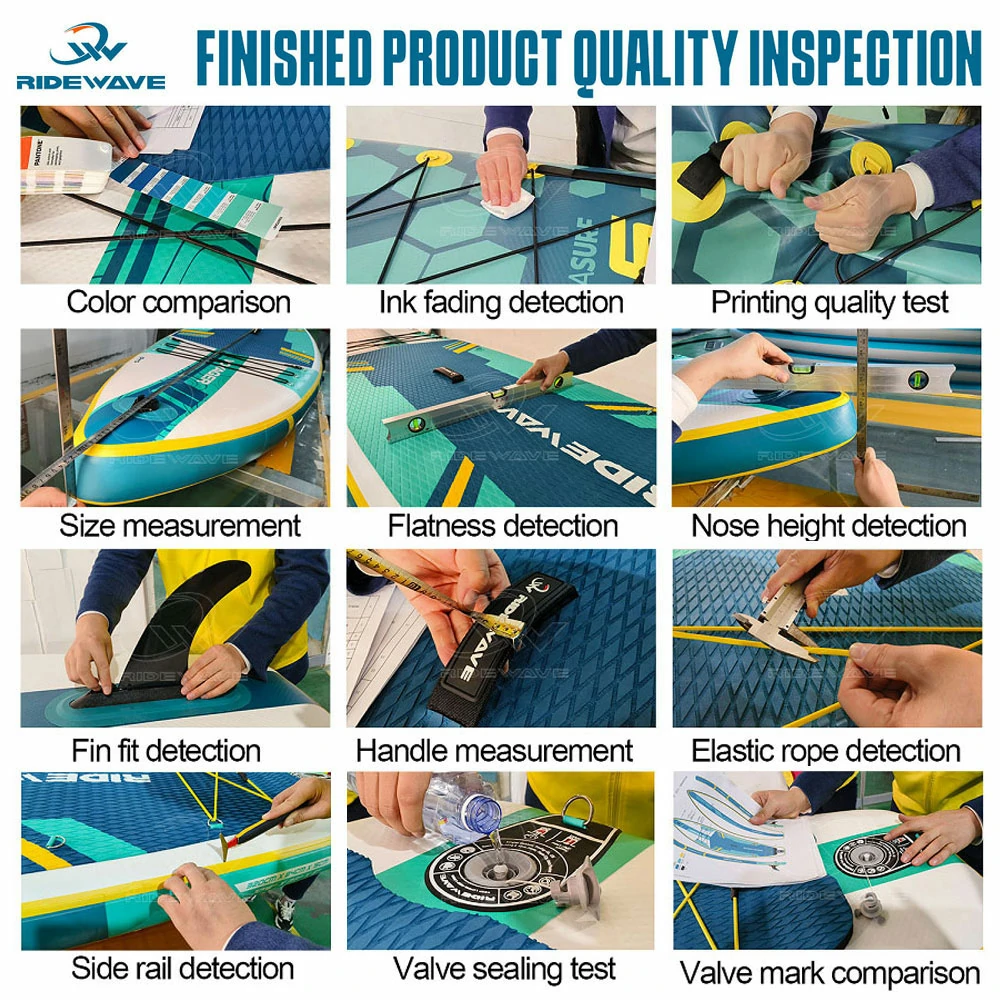
Quality checks happen at fixed stages instead of only at final inspection. Every fabric batch gets lab testing before cutting. After welding, each board undergoes visual seam inspection, pressure holding testing, and accessory fitting verification before packing. This staged QC reduces finished board rejection rate and prevents defective units from being packed into containers bound for Argentina and other Latin American ports. This process is the same framework detailed in How Custom Paddle Boards Are Made: From Design To Production.
Below is the anonymized real RIDEWAVE B2B dealer case, focused on an Argentina-based SUP distributor based in Buenos Aires. This case shows how tiered selection, planned lead time and mixed SKU ordering helped the dealer stabilize margins through a volatile inflation season.
Case overview: A Buenos Aires watersports distributor first contacted RIDEWAVE 14 months ahead of Argentina's summer peak selling window. The client already sold outdoor gear online through Mercado Libre and local waterfront retail stores, and wanted to add inflatable SUP to expand their watersports category without betting all their budget on one price tier. Their first order mixed 120 entry all-around SUP, 80 mid-range reinforced all-around SUP, and 30 premium yoga SUP, bundled with matching accessory kits. The order was placed on FOB terms, with a 42-day production lead time. The distributor scheduled shipment to arrive 3.5 months before December to beat port congestion and seasonal freight surcharges. After landing, the mid-range SKUs became the core mover, delivering steady gross margin near 38%. Entry-level boards drove website traffic and gift-season sales, while premium yoga models attracted yoga studio partnerships. Within 8 months, the client placed a repeat order, shifting the mix slightly to increase mid-range quantity and add replacement accessory packs for after-sales demand. The main feedback they shared was consistent weld quality and predictable lead time, which removed two major stress points for their seasonal buying plan.
Tiered material selection does not mean "cutting corners" on lower-priced SKUs. Every grade still passes our minimum pressure and seam testing standard.
Flexible MOQ for mixed container orders helps newer SUP distributors test multiple price bands without overinvesting in one single board style.
Private label graphics can be applied to any grade, so you can build your own brand identity without locking yourself into only premium pricing.
RIDEWAVE does not claim this formula works for every market. It is built for buyers who want transparent quality grading and predictable lead times, especially those navigating the import and currency risks of Argentina. We share this case to show how a structured sourcing plan can reduce the risk of a new SUP product line.
What Wholesale Pricing Model Best Protects Dealer Margins: MAP, Tiered Pricing, Exclusive Territory, or Bundle Deals?
Every SUP distributor competing in Argentina's crowded marketplace needs guardrails to stop margin erosion, and the right wholesale pricing model is one of your most powerful tools. A low-margin, free-for-all wholesale structure invites price dumping on Mercado Libre, social media marketplaces and local waterfront shops. Without clear rules around minimum advertised pricing, volume discounts, territory rights and bundled assortments, even a well-sourced inflatable SUP lineup can quickly turn into a race to the bottom. The goal is not simply to set the lowest wholesale price; it is to build a system that rewards committed dealers, restricts reckless discounting and keeps your catalog profitable across entry, mid-range and premium wholesale SUP SKUs.
Tiered volume pricing is the foundation for most Latin American inflatable SUP dealer programs. Under this structure, the per-unit wholesale price drops as total order quantity increases. This works well for established distributors who can absorb larger container loads, while also letting newer buyers test small mixed batches at a slightly higher unit cost. It encourages growth without forcing new operators into financially risky large orders they cannot move.
MAP, or Minimum Advertised Price, is the second critical lever. MAP sets the lowest public price a dealer can display online or in printed marketing materials. It does not dictate the final negotiated selling price for an in-person sale, but it prevents competitors from destroying your product's perceived value by advertising the same inflatable SUP at unsustainably low headline prices. MAP enforcement is harder in Argentina's informal online ecosystem, but it still creates baseline expectations you can include in dealer agreements.
Exclusive territory rights and bundle pricing carry different trade-offs. Exclusive territory agreements protect one dealer within a defined geographic zone, but they require careful vetting: if the appointed dealer fails to hit agreed sales targets, you leave revenue on the table. Bundle pricing pairs boards with fins, pumps, leashes and carry bags, lifting average order value and simplifying inventory planning for retailers. Bundles are especially effective for entry-level inflatable SUP, where recreational buyers prefer one-click complete kits.
*Most successful Argentina SUP distributors combine tiered pricing and MAP rules, rather than relying on one single model. The tiered structure rewards larger orders, while MAP stops public price erosion across Mercado Libre and Instagram shop listings.
*Bundles are an easy way to improve perceived value without cutting board prices. Many dealers add upgraded accessories as premium bundle options instead of discounting the core inflatable SUP.
*Exclusive territory works best when paired with quarterly sales targets. Without targets, exclusive rights can stagnate growth as new competitors enter the market.
When you design bundled assortments and price tiers, your product mix directly impacts how well these models perform. You can refine your SKU strategy by reviewing How To Design A Paddle Board That Sells. RIDEWAVE shares these pricing frameworks with our partners because we know a high-quality board will not deliver consistent profit if the dealer program lacks rules to protect margins.
How Can Argentine Distributors Compete Against Local Stock, Brazilian Goods, and Low-Cost Chinese Imports Without a Race to the Bottom?
All serious SUP distributors operating in Argentina face three persistent competitor groups: local sellers with ready stock, importers bringing inflatable SUP from Brazil, and low-cost generic Chinese white-label boards. It is tempting to match the lowest price you see online, but this strategy erodes margins, damages brand trust and makes it impossible to invest in after-sales service, spare parts and local marketing. Sustainable competition for wholesale SUP sellers relies on differentiation rather than price cutting.
Local stock sellers win on speed. They already hold inventory in Argentina and can ship within days, while overseas importers wait on ocean transit and customs clearance. You cannot beat them on delivery speed unless you build local warehousing, which ties up large amounts of capital. Instead, compete by offering better product consistency, formal warranty terms and spare part support that many small local sellers skip. Many casual local vendors sell one-off white-label boards with no backup supply of replacement valves, fins or repair kits.
Brazilian imports benefit from shorter regional supply chains and lower cross-border logistics friction within South America. Their freight and lead times are often more predictable, but their selection is narrower, and custom shape or private label options are limited. If your portfolio includes touring, yoga, kids and heavy-duty inflatable SUP variants, you can target niche segments that Brazil-focused suppliers do not cover.
Low-cost generic Chinese white-label boards compete purely on upfront factory price. They often cut corners on drop-stitch density, weld inspection and accessories. Their biggest weakness is inconsistent quality and poor after-sales support. This creates an opening for distributors who position their catalog around reliability, consistent QC, traceable production and available spare parts. Rental operators, outdoor clubs and repeat retail buyers will pay a premium to avoid repeated leak failures and customer complaints.
*Build niche SKU lines that low-cost competitors ignore: extra-wide stable boards for beginners, compact kids SUP, heavy-load touring boards, yoga-specific platforms with reinforced deck pads.
*Package value-added services instead of price cuts: local repair guides, spare parts packs, training for rental staff, digital marketing assets for your retail clients.
*Segment your customer base: price-sensitive gift buyers can be served by entry stock, while rental fleets and serious enthusiasts are sold durable mid-range and premium inflatable SUP.
*Avoid public price wars on marketplaces. If a competitor undercuts you, respond with limited-time bundle upgrades or free spare parts instead of lowering your board selling price.
RIDEWAVE works with dealers to build this differentiated lineup because we know that a pure low-price strategy is fragile in Latin America's volatile import environment. When currency swings or freight spikes hit, the thinnest margin players are the first to exit the market. A differentiated catalog protects your business when competitors fight only on price.
Which Payment Terms, Currency Choices, and Incoterms Reduce Risk for B2B Buyers in Argentina?
Every SUP distributor importing inflatable SUP into Argentina must build payment and shipping rules that match the country's unique capital controls, banking delays and currency volatility. Choosing the wrong payment structure or Incoterm can turn a profitable wholesale SUP order into a cash-flow disaster, even when quality, pricing and demand all line up perfectly. The safest approach is not one universal rule, but a layered risk framework that separates the obligations of buyer, manufacturer and freight partner while limiting your exposure to unexpected FX shocks.
USD remains the dominant settlement currency for cross-border inflatable SUP wholesale orders between Asian manufacturers and Latin American buyers. While local peso invoicing may seem convenient, it transfers nearly all exchange risk directly to the factory and usually comes with higher quoted unit prices to compensate the supplier. Most experienced Argentina dealers prefer USD contracts, with fixed unit pricing locked at the time of PO confirmation, even if their local revenue is collected in pesos. This makes budgeting easier, though it still requires you to reserve the FX contingency we covered earlier.
When evaluating payment terms, new SUP distributors often default to the first terms a factory offers, usually 30% deposit before production and 70% balance against copy of the bill of lading. This is the standard baseline for inflatable SUP orders, but it is not equally safe for every buyer.
Small, first-time importers should avoid 100% pre-payment. With no document trigger for the final balance, you lose leverage if production delays or quality issues appear.
Established repeat buyers with a long track record can negotiate a partial balance due after goods arrive at destination port, though few factories will accept this for new clients.
Letters of credit (L/C) reduce counterparty risk but carry steep bank fees, long processing times and strict document requirements; they are rarely economical for standard container SUP shipments into Argentina.
Pairing payment terms with the correct Incoterm reinforces your risk control. We touched on EXW, FOB, CIF and DDP before, but for Argentina inflatable SUP importers, FOB is the most widely balanced option for most SUP distributors.
FOB: The factory handles loading and documentation up to the origin port. You select your freight forwarder, control shipping timing, and can lock freight rates separately. This gives you visibility over the critical pre-peak booking window before Argentina's December–March summer.
CIF: Factory selects freight and insurance. It is simpler administratively, but you lose control over carrier choice and freight rate negotiations. If the forwarder chosen by the factory delays the shipment, you still carry the sales risk.
EXW: Highest risk for the buyer; you manage all pickup, loading, export filing and transport. Only suitable for importers with an experienced in-house logistics team.
DDP: Rarely practical for Argentina due to local import registration and tax rules, and most suppliers will not accept the ongoing liability for customs audits or back duties.
*Align your payment schedule with quality milestones when possible. For example, you can request photos and pressure test reports before releasing the final balance, rather than paying purely based on document receipt.
*Never sign contracts that allow the supplier to adjust USD pricing after PO confirmation. Fixed unit pricing in USD is your primary shield against inflation and currency swings during production lead time.
*Keep separate funds for product payment and freight. Mixing these budgets makes it harder to isolate the impact of unexpected freight surcharges from your core inflatable SUP product cost.
RIDEWAVE uses the 30/70 against B/L copy structure as our default for new SUP distributors, because it balances the factory's production risk and the buyer's quality oversight rights. If you want to add supplier verification steps to your buying process, revisit 10 Questions Every B2B Buyer Should Ask Before Placing An Inflatable SUP Factory Order.
What After-Sales and Spare-Part Strategy Protect Your SUP Dealer Reputation in Argentina?
Many SUP distributors treat after-sales support as an afterthought when sourcing inflatable SUP, but in Argentina's competitive watersports market, spare parts and warranty response are often the deciding factor that makes retail clients and rental operators come back to you. A low defect rate during production helps, but every large wholesale inventory will eventually face valve leaks, cracked fins, torn deck pads and damaged carrying bags. If you cannot supply replacement parts quickly, your downstream buyers will lose trust, even if your wholesale SUP boards are priced fairly.

Rental operators, one of the most valuable repeat customer groups for inflatable SUP dealers, depend on fast spare-part access. A rental fleet cannot wait weeks for a replacement valve shipped from overseas. When a board fails, it pulls revenue-generating inventory offline immediately. Retail buyers who purchase for personal use are more forgiving of longer lead times, but they still expect clear repair guidance and affordable spare parts instead of being told to discard the whole board.
A practical spare-part strategy for Argentina SUP distributors has three layers: local safety stock, pre-ordered spare parts shipped with each container, and a backup global supply pipeline from your manufacturer.
Local safety stock: Keep a small domestic inventory of high-turnover parts such as replacement valves, fins, foot leashes, repair patches and pump seals. This lets you fulfill urgent rental client requests within days.
Container bundled spares: Add a small percentage of spare parts into every inflatable SUP container before shipment. A common rule is 3–5% spare valves and fins relative to total board quantity. This spreads spare-part freight cost without creating oversized inventory.
Factory backup pipeline: Agree with your supplier on separate small spare-part shipments, which can be sent by courier instead of full ocean freight when local stock runs low. Courier shipments are faster, though per-unit shipping cost is higher.
Warranty terms should be simple and written clearly in your dealer agreements. Vague language like "one-year warranty" creates disputes. Strong warranty language defines what is covered: factory welding defects and material failure under normal use. It also explicitly excludes damage from rocks, impact, improper inflation, UV neglect or rental abuse. This protects you from unreasonable claims while still building credibility.
Standard spare parts bundle for every container: replacement valves, slide fins, repair kits, pump gaskets, extra leash swivels.
Create simple Spanish-language repair guides for your downstream clients. Most local retailers and rental staff do not read English technical documents easily.
Track failure data by SKU. If one specific inflatable SUP model generates repeated valve failures, share that trend with your manufacturer to adjust production QC before your next order.
Avoid overstocking low-demand parts such as custom deck pads or full rail replacement sections. These items tie up capital and rarely move.
RIDEWAVE pre-calculates recommended spare-part quantities for every SUP distributor container order, based on the mix of entry, mid-range and premium SKUs. We also provide standardized repair documentation and failure reporting templates for dealers to use with their own end customers. Reliable after-sales support turns a one-time board purchase into a long-term dealer relationship.
Every new SUP distributor launching their inflatable SUP line into Argentina can avoid costly oversights by working through a structured pre-order checklist before signing the PO. This checklist consolidates all the core topics we have covered: costing, quality, logistics, compliance, payment, after-sales and dealer policy. It is designed to be copied directly into your internal buying workflow, shared with your customs broker and forwarded to your manufacturer for confirmation.
This list is not a substitute for legal or tax advice, but it catches the most common mistakes that sink first-time wholesale SUP imports into Argentina.
✅ Budget & FX costing
Built full landed cost model including product, freight, duty, brokerage, insurance, inland trucking
Added 4–5% FX contingency buffer for peso volatility
Separated product budget and freight budget to avoid cash flow confusion
Locked fixed USD unit price in the official PO; no open price adjustment clauses
✅ Product & quality validation
Reviewed sample QC report: drop stitch density, multi-layer PVC, continuous heat welding
Completed 24‑hour air retention pressure test on the sample
Confirmed accessory specification: pump, paddle, leash, fin, travel bag
Selected material grade matching your target price tier (entry / mid / premium)
Confirmed private label printing artwork, size, placement and color proof if applicable
✅ SKU mix & spare parts
Planned mixed SKU container to balance traffic, margin and niche demand
Calculated spare parts: 3–5% valves and fins against total board quantity, plus repair kits
Avoided over‑ordering slow‑moving custom parts
Matched the mix to your sales channels: retail gift sales, rental fleets, yoga studios
✅ Logistics & Incoterms
Selected FOB (recommended for most Argentina SUP importers)
Confirmed origin port, cut-off date, ETD, and ETA aligned with Argentina summer peak (Dec–Mar)
Reserved container space 3–4 months ahead of peak season
Confirmed HS code with your local customs broker before production starts
Verified that the bill of lading, packing list and commercial invoice descriptions match the HS classification
✅ Payment terms
Agreed on 30% deposit / 70% against B/L copy (standard for new dealers)
Confirmed no 100% pre‑payment requirement for first order
Confirmed when photos, QC reports and pressure test records will be shared before balance payment
Confirmed bank receiving details, USD settlement route and expected transfer delays
✅ Warranty, after-sales & dealer rules
Written warranty definition: covers factory weld / material defects; excludes impact, UV damage, improper inflation and rental abuse
Prepared Spanish repair guides and spare‑part reorder process
Finalized MAP and tiered volume pricing rules if you plan to resell to sub‑dealers
Documented complaint escalation process for defective boards
✅ Compliance & documentation
Confirmed all required import registration documents for Argentina
Confirmed third‑party safety test certificates are available on request
Verified marking and labeling requirements for cartons and individual boards
Confirmed no intellectual property risks on graphics, shapes or brand logos
The single biggest mistake for first-time Argentina SUP distributors is rushing the PO to hit a selling window without locking in landed cost and HS classification. Even a great product will fail if customs delays, unexpected duties or currency swings erase your margin before the boards reach your warehouse.
If you are testing the market for the first time, keep the container mix conservative. Prioritize mid‑range reinforced all‑around inflatable SUP, as they have proven the most reliable revenue driver in the Argentine market, as shown in our earlier dealer case.
Keep this checklist active for every repeat order. Freight rates, customs rules and exchange conditions change frequently in South America, so what worked for your first shipment may not work six or twelve months later.
RIDEWAVE shares this checklist with new partners to create a transparent, repeatable buying process. When every item is confirmed in writing, you remove ambiguity and reduce the chance of miscommunication between your team, your broker and the factory. A well‑planned first order sets the foundation for a stable, profitable SUP product line in Argentina.
Related Articles
Argentina Import Guide: Customs Rules & Documentation For Bulk Inflatable Paddle Boards
Fishing Inflatable SUPs: The High-Margin Niche For Argentine Water Sports Wholesalers
OEM & Private Label Inflatable SUPs: A Complete Sourcing Guide For Argentina Dealers
Drop Stitch Inflatable SUPs: What Quality Specs Matter For South America Market
How To Choose A Reliable Inflatable SUP Manufacturer For Argentina Bulk Orders