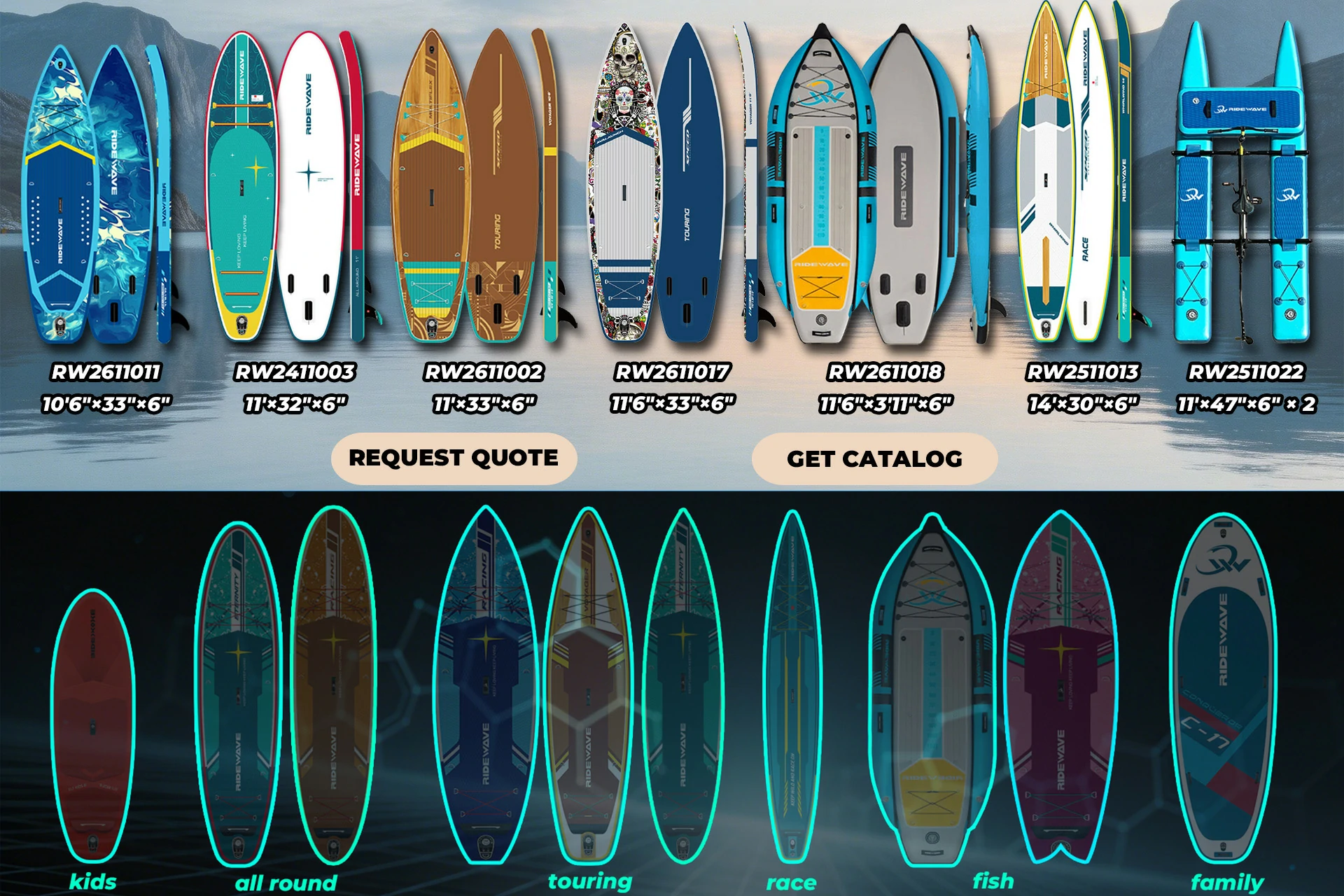


Australian wholesalers, distributors and expanding water‑sports retailers can reliably source high‑margin inflatable SUP inventory by partnering with qualified Chinese iSUP manufacturers, sorting out Australia‑specific compliance rules, forecasting summer seasonal demand, and locking in cost‑effective sea freight solutions before peak selling windows. Many local buyers overlook pre‑sales marketing support, stable lead‑time control and UV‑resistant board construction, which turn out to decide whether your stand‑up paddle board line can capture market share instead of sitting as dead stock. While local Australian suppliers offer fast delivery, factory‑direct sourcing delivers far better gross profit for resellers, private‑label brands and rental operators. This article breaks down real‑world sourcing workflows, market data, compliance checklists and practical lessons drawn from B2B cooperation cases, to help you make smarter purchasing decisions for your inflatable paddle board business.
What Is The 2026 Market Status Of Inflatable SUPs In Australia For B2B Wholesalers?
Australian B2B wholesalers are seeing steady yet more competitive demand for inflatable SUP products in 2026. Outdoor recreation remains a consistent consumer priority across coastal cities and inland regional areas. End‑user appetite covers casual leisure, SUP yoga, fishing, short touring and light surf use, pushing retailers and rental operators to keep expanding their iSUP product lines.

Several market shifts have reshaped purchasing logic for Australian resellers over the past 12‑18 months.
‑ Consumer expectation for UV‑resistant inflatable paddle board builds keeps rising; Australia's strong sunlight accelerates PVC fading and material degradation, so low‑grade boards get poor retail feedback and higher return rates.
‑ Retail customers prefer multi‑purpose all‑round shapes over single‑function specialty boards. This gives wholesalers fewer SKUs to manage while covering wider buyer groups.
‑ Seasonal concentration remains sharp: pre‑summer stock build‑up from August through November determines most annual turnover for SUP merchants. Missing this import window means lost revenue you cannot recover later in the year.
‑ Private‑label requests keep growing. Many Australian wholesalers no longer only resell existing brand stock; they want custom printed boards with their own logos to build local brand loyalty and escape price‑driven competition.
Even with clear market growth, local B2B buyers face obvious pain points. Local Australian stock usually carries steep unit costs that compress profit margins. Trading companies often change product sources without notice, creating inconsistent quality. Some overseas factories fail to understand Oceania market requirements, delivering boards unsuitable for Australia's harsh outdoor environment. A small number of importers also run into compliance delays at customs because they skip pre‑order document preparation.
Factories with solid Oceania project experience can ease most of these headaches. At RIDEWAVE, we have observed these market changes first‑hand while supporting dozens of Australian distributors. We do not recommend blindly chasing the lowest unit price. Instead, B2B buyers should balance inflatable SUP quality, compliance readiness, supply stability and available marketing resources when evaluating potential suppliers.
If you want to dig deeper into global market movement for paddle‑sport goods, you may review The 2026 Global SUP Market Outlook: How Tourism And Events Are Scaling B2B Growth.
| Sales Channel for Australian Inflatable SUP | Main Customer Group | Core Product Requirement | Typical Gross Margin Range | Key Risk for Wholesalers |
|---|---|---|---|---|
| Brick‑and‑mortar sports retail store | General family, casual paddlers | All‑round durable iSUP, complete accessory kit | 38%‑48% | High inventory holding cost, slow turn for niche models |
| Online e‑commerce reseller | Young adults, first‑time buyers | Visual‑friendly graphic design, ready‑to‑use marketing assets | 42%‑55% | Intense price competition, high return risk for poor‑quality boards |
| Water‑sport rental operator | Tourists, short‑term users | Heavy‑drop‑stitch tough build, high abrasion resistance | 55%‑65% | Fast wear, need consistent after‑sales component support |
| Private‑label brand distributor | Local brand operators | Custom printing, OEM / ODM service | 45%‑60% | MOQ pressure, artwork and certification coordination work |
What Global & Australian Industry Trends Affect 2026 Inflatable SUP Sourcing?
Australian wholesalers need to track overlapping global and local trends before finalizing any inflatable SUP purchase plan, because these shifts directly influence end‑consumer buying behaviour, inventory turnover and achievable profit margins. Ignoring emerging market signals often leads to overstocking outdated iSUP models that struggle to compete in Australia's crowded water‑sports retail space.
Several cross‑border supply‑chain developments are reshaping how overseas factories serve Oceania buyers in 2026.
‑ Raw material volatility for drop‑stitch fabric and heavy‑duty PVC keeps forcing factories to adjust unit costs in cycles. Smart wholesalers lock in pricing 3‑4 months ahead of the Australian summer peak to avoid sudden price hikes on inflatable paddle board orders.
‑ Shipping route instability and fluctuating container rates remain a persistent concern for importers. Many buyers now favour well‑established northern Chinese ports such as Qingdao for more stable vessel schedules to Australian ports.
‑ Higher global attention to product safety and chemical restrictions pushes more resellers to verify full test reports before confirming large‑volume OEM or brand‑label orders.
On the local Australian side, four consumer‑driven trends are changing which stand‑up paddle board SKUs perform well for B2B resellers.
‑ Multi‑use family‑oriented boards continue to outsell niche specialty units. Shoppers want one board that works for casual cruising, SUP yoga and light fishing, instead of buying separate equipment for each activity.
‑ Durability and sun resistance are no longer bonus selling points; they have become baseline requirements. Australian consumers frequently leave boards stored outdoors, so poor UV stability generates negative online reviews and increased product returns for wholesalers.
‑ Sustainable‑minded purchasing is gaining traction. Retail buyers ask about PVC material composition, packaging waste and recyclable accessories. Wholesalers who can market eco‑conscious product options gain an edge over competitors carrying generic stock.
‑ Short lead‑time pre‑sale strategies are growing popular. Instead of filling warehouses with huge inventory upfront, more distributors launch pre‑sales using high‑quality product assets, then place factory orders based on confirmed pre‑order numbers. This cuts capital tie‑up and lowers dead‑stock risk significantly.

Design choices directly determine whether a board resonates with local Australian customers. If you want to refine your product lineup for local preference, you can refer to How To Design A Paddle Board That Sells.
At RIDEWAVE, our product team reviews these trend reports every quarter when updating our core inflatable SUP catalog for Oceania markets. We do not blindly chase every passing fad. We remind B2B partners that faddish limited‑edition shapes carry higher inventory risk; most steady revenue still comes from refined all‑round board models that fit Australian everyday usage scenarios
| Trend Description | Benefit For Australian Wholesalers | Potential Risk To Watch | Practical B2B Action Item |
|---|---|---|---|
| Rising demand for multi‑purpose all‑round inflatable SUP | Reduce total SKU count, lower warehouse complexity | Too‑generic boards face price competition | Prioritize 3‑5 proven all‑round sizes for main stock |
| Growing consumer focus on UV‑resistant material | Fewer product returns, better retail reputation | Upfront unit cost increases slightly | Require suppliers to provide UV aging test documentation |
| Expanding pre‑sale business model | Reduce locked‑up capital, avoid overstock | Need complete marketing assets before launch | Confirm image, catalog and specification support with your factory early |
| Higher interest in eco‑friendly packaging & materials | Opens premium retail shelf opportunities | Limited supplier options, extra production cost | Start with recyclable packaging before switching raw materials |
What Key Compliance & Certification Rules Must Australian SUP Importers Follow?
Every Australian wholesalers sourcing inflatable SUP from overseas must get familiar with local import compliance requirements. Non‑compliant documentation or untested materials can trigger customs holds, product seizure, additional fines, or costly product returns back to origin. Even high‑quality iSUP units become financial losses when importers overlook Australia‑specific regulatory standards. Compliance is not optional extra work; it is the foundation for smooth import of inflatable paddle board inventory into Australian territory.
Below are core compliance checkpoints every B2B buyer should verify before placing large overseas orders. ‑ Chemical safety for PVC materials: Australia enforces strict rules on heavy metals, phthalates and volatile compounds for water‑contact recreational goods. Low‑grade stand‑up paddle board PVC may fail lab testing, resulting in clearance delays. Request full third‑party test reports covering phthalate limits and heavy‑metal content from your potential supplier. ‑ Labelling requirements for imported goods. All offshore‑manufactured products sold in Australia need clear country‑of‑origin marking. Each board, accessory pack and outer shipping carton must carry readable origin labels. Many first‑time importers get stuck at customs simply because carton labels are missing or smudged. ‑ Consumer safety guidelines for inflatable recreational water equipment. While there is no single mandatory Australian standard written exclusively for inflatable SUP, retailers remain legally liable if defective boards cause consumer injury. Reputable wholesalers rely on internationally‑recognised test standards to mitigate legal exposure. ‑ Packaging and waste regulation updates. Several Australian states keep rolling out stricter packaging waste laws. Excessive single‑use plastic packaging may bring extra disposal costs for receiving warehouses. Wholesalers are increasingly asking factories to switch to reduced‑plastic or recyclable outer packaging.
Many first‑time Australia‑focused buyers underestimate how much compliance preparation affects overall lead time. Test report sorting, label confirmation and packaging adjustment all take production time. If you leave these checks until production starts, your inflatable paddle board shipment will very likely miss the critical pre‑summer delivery window.

From RIDEWAVE's B2B project experience with Oceania partners, we have seen multiple cases where importers selected cheap suppliers only to face customs hold‑ups. Our internal workflow pre‑compiles complete test documentation for all our inflatable SUP lines targeting Australian markets. We do not promise zero‑risk import, but we help distributors gather organised files so local customs procedures move forward without unnecessary delays. You may visit our B2B resource page to view sample compliance document checklists.
| Compliance Item | Required Document / Action | Common Mistake Made By Importers | Business Impact Of Non‑Compliance |
|---|---|---|---|
| PVC & material chemical safety | Third‑party lab test report for phthalates, heavy metals | Accepting self‑written factory declarations without independent lab data | Customs detention, product cannot enter local market |
| Country‑of‑origin marking | Permanent labels on board, accessory bag & export cartons | Only labelling individual boards, ignoring outer shipping cartons | Customs inspection hold, manual re‑labelling cost |
| Consumer product safety risk mitigation | ISO‑related inflatable recreational goods test records | Skipping safety testing to cut sample cost | Legal liability if end‑users suffer injury |
| Packaging waste requirements | Recyclable / reduced‑plastic packaging solution | Accepting default heavy plastic packaging from Asia factories | Higher local warehouse waste handling fees |
Why Do Australian Wholesalers Prefer Factory Direct SUP Suppliers Over Traders?
For Australian buyers sourcing inflatable SUP, the choice between factory‑direct cooperation and third‑party trading houses shapes almost every part of their business: product consistency, unit cost, customisation flexibility, document support and after‑sales response speed. Many new‑to‑market wholesalers start with traders for simple ordering processes, yet gradually shift toward direct‑factory partnerships once they scale up their iSUP turnover.
Trading companies can aggregate goods from multiple workshops, but they add extra intermediate margins. More critically, traders seldom hold full control over raw‑material batches, production workflows and quality inspection standards for inflatable paddle board goods. When quality defects or material‑related compliance issues emerge, traders often cannot adjust production parameters on‑site to fix root‑cause problems.

Working directly with a professional inflatable water‑sport factory delivers tangible commercial advantages for Australian B2B wholesalers.
‑ Better control over stand‑up paddle board material grades. You can confirm drop‑stitch density, PVC thickness, and UV‑resistant coating requirements before mass production, instead of receiving mixed‑grade stock you cannot return.
‑ More transparent custom‑order workflows. If you plan private‑label printing, graphic adjustment or accessory kit modification, direct‑factory partners manage every production phase in‑house. To learn the full production journey behind custom‑built units, read How Custom Paddle Boards Are Made: From Design To Production.
‑ Stable and traceable quality inspection. Qualified factories run pre‑production sample checks, inline production inspections and final random sampling before cargo leaves the plant. This reduces defect rates for bulk inflatable SUP shipments bound for Australia's demanding retail market.
‑ Complete and organised compliance documentation. Factories serving Oceania markets store accumulated third‑party test records, and can tailor label, packaging files to fit Australian import rules, without relying on outside vendors.
‑ Clearer communication around lead‑time and bottlenecks. Direct access to production planners lets you receive early warnings about raw‑material delays or port congestion, so you can adjust your purchasing timeline before missing summer sales windows.
This does not mean every trading house delivers poor service. Some experienced traders offer convenient small‑batch consolidation. Still, for wholesalers targeting medium‑to‑large volume inflatable paddle board orders and long‑term brand building, factory‑direct sourcing usually creates higher long‑term return on investment.
At RIDEWAVE, we observe this shift among many incoming Australian inquiries. A large share of our new B2B partners previously worked with general traders. They switched after suffering inconsistent board hardness, mismatched printed graphics, and delayed document delivery. We do not push every prospect into large MOQ factory orders. For buyers still testing local market demand, we also share realistic guidance on when to stick with consolidated small‑batch orders and when to step into full‑scale direct‑factory manufacturing.
| Evaluation Dimension | Professional Inflatable SUP Factory‑Direct | General Trading House |
|---|---|---|
| Unit landed cost potential | Lower, remove intermediate markup | Higher, includes trader profit margin |
| Raw‑material & quality control | Direct control over PVC, drop‑stitch, inline inspection | Limited, depends on sub‑contract workshops |
| OEM / private‑label customisation | Full‑service: artwork, printing, accessory adjustment | Limited, rely on outside factories |
| Compliance & test documentation | Maintain complete in‑house test archives | Need to collect files from multiple suppliers |
| Production issue resolution | Adjust process on‑site quickly | Relay messages between buyer and distant workshop |
| Suitable order scale | Medium‑large volume, long‑term stable orders | Trial small‑batch, mixed‑item consolidated shipments |
How To Select High-Margin Inflatable SUP Models For Australian Summer Peak Sales?
Australian summer is the core peak selling season for all inflatable SUP businesses, accounting for over 70% of annual retail and wholesale revenue for most water sports distributors. For B2B wholesalers, selecting the right high-margin inflatable paddle board models is far more important than simply lowering procurement prices. Picking market-matching SKUs eliminates overstock risks, shortens inventory turnover cycles, and creates stable profit margins throughout the seasonal sales window.
Most Australian end consumers prioritize three core attributes when purchasing iSUP boards: outdoor durability, multi-scene adaptability, and user-friendly setup. Fancy professional racing or ultra-light niche SUP styles always face slow sales and severe price competition in the Australian mass market. Therefore, experienced local distributors focus on all-round inflatable SUP models rather than niche specialized products.
To build a sellable product lineup tailored for Australian market preferences, you can refer to our professional design guidance in How To Design A Paddle Board That Sells.
Through long-term cooperation with Oceania clients, the RIDEWAVE B2B team has summarized four practical selection rules for Australian summer high-profit SUP inventory:
Prioritize UV-resistant inflatable SUP with thickened 0.9mm–1.0mm PVC material. Australia's intense ultraviolet radiation rapidly fades low-quality boards and causes air leakage after long-term outdoor exposure. Upgraded UV-stabilized materials drastically reduce after-sales complaints and return rates for wholesalers.
Choose all-round sizes suitable for family and adult solo use. Sizes between 10'6" and 11' are the most mainstream and universal, perfectly covering casual paddling, SUP yoga, flat-water touring, and light fishing scenarios. This single SKU can cover 80% of Australian consumer demands.
Match complete, high-value accessory kits. Australian buyers prefer one-stop ready-to-use packages. Boards equipped with adjustable paddles, waterproof bags, safety leashes, and high-pressure hand pumps gain obvious retail advantages and support higher pricing.
Select low-maintenance, high-toughness drop-stitch construction. Reinforced internal drop-stitch structures resist impact deformation during beach transportation and daily use, extending product service life and improving end-user satisfaction.
Many new wholesalers make the mistake of pursuing cheap, thin-material SUP models to cut upfront costs. In practice, these low-cost boards damage store reputation, increase after-sales labor costs, and eventually erode long-term profits. Sustainable B2B profitability relies on stable-quality inflatable SUP inventory with low return rates and high repurchase rates.
For Australian wholesalers preparing for summer peak sales, we highly recommend reserving classic hot-selling models with verified local market performance. RIDEWAVE's 5 best-selling inflatable SUP styles for Australia have been fully verified by local consumer feedback, featuring UV-resistant materials, all-round sizes, and high-cost performance, perfectly matching mass-market retail demands.

How To Cut Ocean Freight & Landed Costs For Australian Inflatable SUP Orders In 2026?
For Australian inflatable SUP wholesalers and distributors, product procurement cost is only a small part of the total investment. Ocean freight, container scheduling, port handling and customs clearance fees largely determine the final landed cost of every inflatable paddle board unit. Many B2B buyers focus solely on factory unit prices while ignoring shipping optimization, resulting in healthy gross profit margins being eaten up by unreasonable logistics expenses. In 2026, fluctuating container rates and seasonal port congestion make freight strategy one of the core competitiveness of local iSUP sellers.
Unlike general consumer goods, inflatable SUP products feature lightweight, large-volume packaging, which makes them highly sensitive to CBM-based shipping charges. Unoptimized packaging, disordered container loading and delayed booking schedules will significantly increase logistics costs for Australian-bound orders. Therefore, mastering Australia-specific sea freight rules is essential for long-term profitable iSUP wholesale business.

For Australian inflatable SUP wholesalers and distributors, product procurement cost is only a small part of the total investment. Ocean freight, container scheduling, port handling and customs clearance fees largely determine the final landed cost of every inflatable paddle board unit. Many B2B buyers focus solely on factory unit prices while ignoring shipping optimization, resulting in healthy gross profit margins being eaten up by unreasonable logistics expenses. In 2026, fluctuating container rates and seasonal port congestion make freight strategy one of the core competitiveness of local iSUP sellers.
Unlike general consumer goods, inflatable SUP products feature lightweight, large-volume packaging, which makes them highly sensitive to CBM-based shipping charges. Unoptimized packaging, disordered container loading and delayed booking schedules will significantly increase logistics costs for Australian-bound orders. Therefore, mastering Australia-specific sea freight rules is essential for long-term profitable iSUP wholesale business.
As a stable inflatable SUP manufacturer serving Oceania markets, RIDEWAVE provides customers with one-stop shipping consultation, including CBM calculation, container loading planning, off-peak booking guidance and local port risk reminders, helping distributors accurately control landed costs and maximize net profits.
| Shipping Method | Applicable Order Volume | Average Single-Piece Freight Cost | Delivery Cycle | Congestion Risk | Best Usage Scenario |
|---|---|---|---|---|---|
| FCL Full Container Load | 500+ inflatable SUP units | Lowest | Stable | Very low | Summer peak bulk stocking, formal seasonal inventory |
| LCL Consolidated Shipment | 50–500 units | Medium | Slightly flexible | Medium | New market trial, mixed SKU small batch orders |
| Emergency Express Sea Freight | Urgent any quantity | Very high | Fast | Low | Last-minute inventory supplement, emergency restock |
| Air Freight | Sample & tiny batch | Extremely high | Fastest | None | Product sample testing, exhibition display goods |
How Do Reliable SUP Manufacturers Support Australian Distributors With Pre-Sales Marketing?
In the competitive Australian inflatable SUP wholesale market, low product pricing is no longer the decisive competitive advantage. More Australian distributors are realizing that marketing asset support from manufacturers directly determines how fast they can convert inventory into actual sales. For B2B resellers launching summer seasonal campaigns, high-quality ready-to-use visual materials, standardized product documents and professional sales guidance drastically shorten market entry cycles and reduce independent design costs.
Most small and medium-sized Australian water sports retailers and wholesalers do not have professional in-house design teams. Creating inflatable paddle board photos, detail infographics, specification sheets and promotional copy from scratch consumes massive time and manpower. Manufacturers that only provide blank products force distributors to bear all pre-sales promotion costs, resulting in slow pre-sales progress and missed peak selling windows.

Professional iSUP factories focused on long-term Oceania cooperation provide complete pre-sales marketing empowerment, helping local distributors launch fast pre-sales campaigns before summer arrives. RIDEWAVE has formed a mature B2B marketing support system for Australian partners, covering all material resources required for e-commerce stores, social media promotion and offline retail display.
We provide the following core marketing assets for every bulk Australian inflatable SUP order:
‑ Full set of studio-shot high-definition product images, including main hero images, detailed texture shots, accessory displays, and real scene usage pictures, fully adapted to Australian local store style and social media aesthetics.
‑ Standardized product specification documents, parameter sheets, size charts and feature introduction copy optimized for the Australian market.
‑ Editable product catalogs covering all hot-selling stand-up paddle board models, supporting distributor brand modification and private-label layout adjustment.
‑ Scene-based marketing materials, including summer water sports posters, lifestyle pictures and short video clips, helping distributors run Facebook, Instagram and Google Shopping advertisements.
Pre-sales material support is the core foundation for successful pre-order sales. Distributors who obtain complete factory marketing resources can start pre-sales promotion 2–3 months in advance, accumulating orders before goods arrive at local warehouses. This model effectively eliminates inventory pressure and greatly improves capital turnover efficiency.
If you want to understand how professional product design and standardized presentation improve market conversion, you can review How To Design A Paddle Board That Sells.
What Is The Real B2B SUP Sourcing Case Of RIDEWAVE Australian Distributor In 2026?
Generic industry analysis and theoretical sourcing strategies can only guide wholesalers in making basic purchasing decisions. For B2B buyers looking to expand their inflatable SUP product line, real verified wholesale cases deliver the most referenceable, actionable guidance for seasonal stocking, model selection, freight planning and pre-sale operation. To help Australian distributors avoid trial-and-error losses before the 2026 summer peak, we share a complete, authentic cooperation case with one of our long-term Australian SUP wholesale partners.
In January 2026, a professional Australian water sports distributor completed a bulk seasonal order with RIDEWAVE, targeting the upcoming Australian summer consumer boom. The client officially purchased 1,200 pieces of RIDEWAVE inflatable SUPs, covering 5 best-selling and market-verified models tailored for Australian coastal and inland recreational scenarios.
This cooperation adopted a standard factory-direct B2B workflow optimized for Oceania importers: ‑ The client selected 5 mature, high-rebate inflatable paddle board SKUs, focusing on UV-resistant all-round sizes and entry-level fishing & leisure styles - the most stable-selling categories in Australia's mass market. ‑ RIDEWAVE arranged full production scheduling according to Australian summer stocking cycles, ensuring standardized compression packaging and quality inspection for every batch. ‑ The entire 1,200-unit cargo was shipped via cost-effective sea freight from Qingdao Port, China, leveraging stable Australia-bound liner routes to significantly reduce per-unit logistics costs. ‑ Before cargo departure, our team delivered a complete pre-sale material package to the Australian partner, including official product catalogs, full studio HD images, detail close-ups, lifestyle scenario photos and standardized specification documents for each SUP model.
With our full set of marketing assets, the local distributor immediately launched multi-channel pre-sales promotions across e-commerce stores and social platforms. Without holding physical inventory in advance, the client successfully pre-sold more than 800 RIDEWAVE iSUP units before shipment arrived in Australia.

Currently, the Australian distributor's pre-sale conversion rate continues to climb. Facing strong market demand and approaching summer peak consumption, the client is actively negotiating a new replenishment order with RIDEWAVE to avoid inventory shortages during the hottest selling months.
This case proves that modern iSUP wholesale success no longer relies solely on low-cost procurement. The core profit model for Australian B2B sellers combines verified hot-selling SKU selection, low-cost stable sea freight, and factory pre-sale asset empowerment to achieve zero-risk inventory and high pre-sale conversion.
| Cooperation Dimension | Actual Case Details | Core Benefit For Australian Distributor |
|---|---|---|
| Order Scale | 1200 pieces inflatable SUP | Large-batch seasonal stocking with lowered unit cost |
| Product Selection | 5 RIDEWAVE best-selling Australian local models | Avoid niche slow-moving SKUs, guarantee turnover rate |
| Shipping Route | Qingdao Port (China) → Australian local port | Stable schedule, low detention fee, cost-effective bulk freight |
| Pre-sale Support | Full catalog, HD photos, detail images & spec files | Zero local shooting cost, fast store listing & ad launch |
| Actual Pre-sale Result | 800+ units pre-sold before cargo arrival | Low capital pressure, predictable summer revenue |
| Follow-up Plan | Ongoing replenishment negotiation | Capture continuous summer market demand |
How Can Australian Wholesalers Avoid Common SUP Sourcing & Inventory Mistakes?
Most profit losses in the Australian inflatable SUP wholesale business do not come from low market demand, but from avoidable sourcing errors and poor inventory judgment. Many new and mid-sized distributors focus only on unit pricing while ignoring hidden risks including inconsistent quality, wrong SKU selection, delayed lead times, oversized stock pressure, and invalid pre-sales preparation. These small cumulative mistakes directly erode gross margins, damage retail reputation, and even cause unsold seasonal inventory that ties up capital for an entire year.
To build a stable and profitable inflatable paddle board business, Australian B2B buyers must standardize their pre-order inspection process and avoid industry-wide common pitfalls. Before confirming any factory order, wholesalers need to verify quality standards, compliance documents, production capacity, and after-sales policies instead of relying on verbal promises or low-price quotations.
If you want a complete and actionable pre-order inspection checklist for factory cooperation, read 10 Questions Every B2B Buyer Should Ask Before Placing An Inflatable SUP Factory Order.
Combining years of Oceania after-sales data and distributor feedback, RIDEWAVE summarizes six most costly mistakes Australian iSUP wholesalers frequently make, along with practical solutions:
Blind low-price chasing without material verification. Many suppliers cut costs by using thin non-UV-resistant PVC, low-density drop-stitch fabric, or substandard accessories. These cheap stand-up paddle board units suffer fading, air leakage, and deformation after Australian sun exposure, leading to massive returns and negative reviews. Always verify material thickness, UV certification, and lab test reports before bulk orders.
Overstocking niche professional models. Racing SUPs, ultra-wide fishing boards, and overly stylized custom designs have limited local audiences. Overstocking niche SKUs creates slow-moving inventory that cannot sell out after summer ends.
Ignoring seasonal lead time gaps. Australia's summer selling window is extremely concentrated. Late production scheduling or delayed sea freight will make cargo arrive after peak demand, turning profitable seasonal goods into dead stock.
Skipping pre-sales asset preparation. Distributors who place orders without HD images, specification sheets, or catalog resources cannot launch early pre-sales, forcing full upfront inventory investment and increasing capital risk.
Failure to verify import compliance documents. Missing origin labels, incomplete chemical test reports, or non-standard packaging triggers customs holds and clearance delays.
Single-supplier dependency without quality backup. Long-term reliance on unqualified trading houses or unstable small workshops leads to batch-to-batch inconsistency and sudden supply disruptions.

Professional B2B wholesale operation relies on standardized risk control rather than luck. The successful 1200-piece pre-sale case we shared earlier fully proves that avoiding basic sourcing mistakes can increase inventory turnover rates by over 40% and greatly reduce operational risks.
RIDEWAVE's internal B2B operating system is designed to help Australian distributors avoid these common traps. We provide transparent material inspection reports, fixed seasonal production schedules, complete compliance files, and standardized marketing resources, ensuring every bulk order matches local market demand and arrives before peak sales seasons.
| Common B2B Sourcing Mistake | Hidden Risk For Australian Wholesalers | Practical Solution |
|---|---|---|
| Chasing ultra-low factory prices without material verification | Fading, air leakage, high return rates, bad store reputation | Insist on UV-resistant thick PVC test reports and pre-production sample confirmation |
| Overstocking niche professional SUP models | Seasonal unsold dead stock, capital tie-up | Focus 90% inventory on all-round mainstream inflatable SUP sizes |
| Ignoring summer lead time scheduling | Cargo arrives after peak season, zero seasonal profit | Place orders 3–4 months in advance and lock stable Qingdao shipping schedules |
| Launching orders without pre-sale marketing assets | No pre-order traffic, full inventory pressure | Obtain full HD images, catalogs, and spec sheets before production |
| Neglecting import compliance details | Customs detention, fines, clearance delays | Complete label inspection and document review before shipment |
| Long-term cooperation with unstable suppliers | Batch quality inconsistency, supply interruption | Cooperate with verified factories with stable Oceania shipment records |
How To Build A Long-Term Cooperative SUP Supply Chain With Chinese Manufacturers?
Most Australian inflatable SUP wholesalers start their business with one-time trial orders, but long-term profitability and market competitiveness rely entirely on stable, scalable B2B supply chains. One-off random sourcing brings unstable quality, fluctuating prices, and unpredictable lead times, which hurt your brand reputation and make it impossible to build steady customer loyalty in the Australian market.
Building a reliable long-term supply chain for inflatable paddle board products helps Australian distributors achieve stable cost control, consistent product quality, seasonal priority production rights, and continuous product iteration upgrades. For growing water sports businesses, supply chain stability is more valuable than temporary low purchasing prices.
RIDEWAVE has maintained continuous cooperation with dozens of Australian and Oceania distributors for multiple years. We summarize four core rules for building a sustainable China‑Australia SUP supply chain:
‑ Establish seasonal fixed ordering cycles. Australian SUP sales follow obvious summer seasonal rules. Long-term partners confirm annual stocking plans in Q1 and Q2 every year, locking production capacity and freight space in advance to avoid peak-season price surges.
‑ Achieve batch standardized quality confirmation. Long-term cooperation allows factories to solidify your fixed product specifications, PVC thickness, UV standards, accessory configurations and packaging requirements, ensuring zero batch difference year after year.
‑ Realize synchronized new product iteration. Mature factories continuously update iSUP shapes, materials and color schemes according to Australian market feedback. Long-term clients get priority access to new hot-selling models before competitors.
‑ Build direct communication channels for after-sales and adjustment demands. Stable cooperation shortens feedback loops, solves quality problems, packaging adjustments and custom demands faster, improving overall operational efficiency.

For Australian wholesalers aiming for long-term brand development, supply chain cooperation should not only focus on purchasing goods, but also on resource synchronization, market adaptation and long-term risk control.
What Value-Added Services Can RIDEWAVE Offer For Australian B2B SUP Buyers?
In the saturated Australian inflatable SUP wholesale market, product quality and price are gradually becoming standardized industry thresholds. The real gap between ordinary suppliers and premium manufacturers lies in B2B value-added services that help distributors reduce costs, increase conversion, and lower operational pressure.
Many Australian wholesalers struggle with small profit margins, complicated pre-listing work, insufficient marketing resources, and uncertain after-sales support. RIDEWAVE's complete B2B service system is specifically built for Oceania market characteristics, covering pre-order consultation, in-production customization, pre-sale marketing empowerment, shipping optimization and after-sales guarantee.

We provide six core value-added services for all Australian inflatable paddle board B2B clients: ‑ Free full-set marketing asset support. Including studio HD images, detail shots, scene photos, editable catalogs, spec sheets and promotional copy for every iSUP model, supporting fast pre-sale and store listing. ‑ Australia-targeted compliance document package. Complete third-party test reports, safety certificates and origin labeling guidelines to ensure smooth customs clearance. ‑ Flexible OEM & private label customization. Custom logo printing, color matching, accessory combination and outer packaging design to help wholesalers build local independent brands. ‑ Professional logistics planning service. Qingdao port unified shipment, container loading optimization, off-peak freight locking and landed cost calculation. ‑ Seasonal inventory and sales strategy guidance. Based on Australian summer consumption rules, we provide SKU proportion suggestions, pre-sale rhythm planning and peak-season stocking advice. ‑ Responsive after-sales support. Global after-sales team provides replacement accessories, repair kits and technical guidance, reducing local operational losses.
These value-added services do not generate extra procurement costs, but greatly improve the overall profitability and stability of your stand-up paddle board wholesale business.
How To Arrange Order & Shipment Schedule To Capture Australian Summer Demand?
Australian inflatable SUP consumption is highly seasonal, and summer (September–February) dominates the entire year's sales volume. For B2B wholesalers, the biggest competitive advantage is not cheaper pricing, but accurate order scheduling and on-time shipment arrangement to perfectly match the local summer retail window. Improper timing will turn profitable seasonal goods into slow-moving inventory, regardless of product quality.
To help Australian distributors scientifically arrange 2026–2027 summer stocking, RIDEWAVE summarizes a fully verified order & shipment schedule based on our 2026 1200-piece Australian bulk order experience: ‑ March–May (Off-season preparation): Confirm next summer's product lineup, select mainstream UV-resistant inflatable paddle board models, lock factory cooperation quota, and complete sample confirmation. ‑ June–July (Order confirmation & production arrangement): Sign formal bulk orders, confirm customization details, packaging standards and marketing material requirements, start mass production. ‑ August–Early September (Off-peak shipment): Complete container loading and Qingdao port shipment. Finish sea freight before seasonal freight surges, ensuring cargo arrives before Australian summer peak. ‑ September–November (Pre-sale & offline retail explosion): Launch pre-sales using factory marketing assets while goods are at sea; stock arrives just in time for peak retail and rental demand. ‑ December–February (Peak sales & replenishment): Maintain stable inventory, track sales data, and arrange emergency replenishment for hot-selling iSUP models.

This schedule is the most stable, low-risk, high-profit stocking rhythm for Australian stand-up paddle board wholesalers. It avoids peak-season freight surcharges, customs congestion and inventory lag problems.
Wholesalers who follow this scientific schedule can fully capture summer traffic peaks, achieve high pre-sale conversion rates, and maintain healthy cash flow throughout the year.
Related Articles
Top Inflatable SUP Factories For Private Label Brands
Low MOQ Paddle Board Manufacturers For Small Brands
How Custom Paddle Boards Are Made: From Design To Production
OEM Vs ODM Paddle Boards: Which Is Better For Your Brand?
How To Choose The Right SUP Paddle Board Manufacturer