
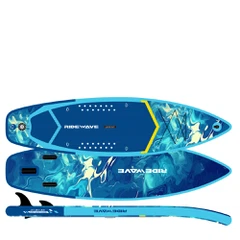
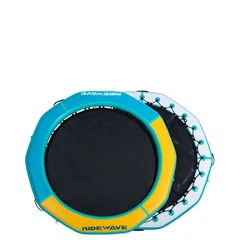
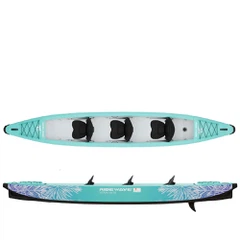


Chilean wholesalers and South‑American B2B water‑sports dealers source high‑quality inflatable SUPs by vetting factory production standards, verifying material durability, comparing total landed costs, and partnering with reliable manufacturers that can deliver marketing assets and flexible bulk terms for the Southern‑Hemisphere summer sales window. Many importers overlook hidden risks such as poor drop‑stitch fabric quality, inconsistent batch production, expensive last‑mile logistics, and lack of ready‑to‑use sales content, which can erase profit margins before products even reach retail shelves. For Chile, Argentina and neighbouring Latin‑American markets, choosing the right inflatable stand‑up paddle board supplier is not only about unit price, but about stable supply chain support that fits local seasonal demand, import rules and dealer growth goals.
Why Is the Inflatable SUP Market Booming in Chile and South America in 2026?
South‑America's inflatable SUP market is booming in 2026 because of growing outdoor recreation participation, extended coastal tourism seasons, improved local retail channels, and strong consumer preference for portable blow‑up paddle board options over hard‑shell alternatives. Chile has hundreds of kilometres of accessible coastline plus inland lakes, creating year‑round opportunities for paddle‑sport retailers and resellers. What many overseas B2B buyers do not fully realise is that Southern‑Hemisphere peak buying runs from October through February, putting strict timing pressure on wholesalers to lock in SUP bulk order production and sea freight well in advance.
Local consumer trends also shift purchasing behaviour. Latin‑American shoppers prioritise lightweight, easy‑to‑transport boards that work for family leisure, beginner recreation and casual touring. Hard fiberglass SUPs remain niche for professional athletes, while inflatable stand‑up paddle board models dominate mass‑market volume. This shift opens large market space for importers, but it also raises the bar for wholesalers: they must stock durable, competitively priced inventory while avoiding low‑grade goods that trigger product returns and damage brand reputation.

Several macro factors keep pushing market expansion:
Rising domestic investment in public waterfront recreation areas across Chile, Uruguay and Argentina, driving higher consumer exposure to paddle sports
Social‑media content growth around coastal lifestyle, lifting demand for entry‑level and mid‑range inflatable SUP board units
More brick‑and‑mortar sports retailers expanding their water‑sport product lines and searching for trustworthy wholesale suppliers
Currency and logistics fluctuations forcing local wholesalers to re‑evaluate long‑term factory partnerships instead of chasing one‑off cheap spot goods
Even with positive market momentum, B2B dealers face real pain points. Long transit times from Asia, customs clearance complexity in South‑American ports, minimum‑order‑quantity limits, and inconsistent product quality from random trading companies frequently eat into projected profits. Success does not come simply from ordering as many paddle boards as possible; it comes from aligning product selection, production lead‑time and logistics planning with the real‑world rhythm of South‑American consumer demand.
What Key Quality Standards Do American and Oceanian B2B Buyers Require for Inflatable SUPs?
North‑American, Australian, New‑Zealand and Latin‑American B2B importers set strict quality benchmarks for inflatable SUP units, focusing on drop‑stitch fabric density, PVC‑layer adhesion, air‑holding performance, safety certifications and long‑term wear resistance, rather than judging value based purely on the lowest unit price. Many first‑time SUP wholesalers fall into a common trap: they compare only quoted piece prices, ignoring costly after‑sales risks caused by sub‑standard inflatable stand‑up paddle board construction. Defective blow‑up paddle inventory leads to customer complaints, high return rates, bad retail reviews and damaged distributor credibility, which can take years to repair in competitive regional markets.
For bulk SUP wholesale orders, several physical components determine real‑world product lifespan for end‑users across Chile, Canada, Australia and Argentina.
Drop‑stitch material: High‑grade inflatable SUP boards use dense drop‑stitch fabric to keep the board flat and rigid under full inflation. Low‑cost factories cut thread counts, which creates bending, bulging and unstable performance when riders stand on the water.
Multi‑layer PVC lamination: Heat‑bonded multi‑layer PVC resists abrasion from rocks, sand and sharp shore‑line debris. Poor lamination causes slow air leakage and delamination after weeks of consumer use.
Air‑valve system: Reliable one‑way valves reduce air loss and simplify repeated inflation and deflation for retailers and end‑customers. Cheap generic valves are one of the top sources of warranty claims across the blow‑up paddle board industry.
Accessory matching: Paddles, hand pumps, fins and carry bags must match board quality. Even a well‑built SUP loses customer satisfaction if paired with flimsy, easily‑broken accessories.


Beyond physical build, global markets demand compliance documentation.
General product safety certificates for water‑sport equipment
Material test reports for heavy‑metal and harmful‑substance limits, critical for import customs checks in Chile, Brazil, USA and Australia
Batch inspection records, so wholesalers can trace production lots if quality issues appear after delivery
B2B dealers should understand that quality requirements shift slightly between target regions. Australian coastal buyers expect extra abrasion resistance for rocky shorelines. Chilean and Argentinian mass‑market retailers balance solid durability with accessible price points for family‑oriented consumers. North‑American distributors often need complete test documentation for retail‑platform compliance.
Working with manufacturers who perform in‑house batch testing removes huge uncertainty for importers. At this stage, many buyers ask: can a factory keep consistent quality across large SUP bulk order volumes? Even attractive sample boards mean little if mass‑produced goods fail to match sample specifications. This is one of the main reasons why many Latin‑American wholesalers filter out pure trading companies and seek direct factory sources.
How Do Chilean Wholesalers Filter Reliable Inflatable SUP Manufacturers in China?
Chilean importers filter trustworthy Chinese inflatable SUP manufacturers by verifying factory qualification records, auditing real production capacity, checking batch‑quality consistency, confirming import‑friendly documentation support, and evaluating how well the supplier understands South‑American local market demands, rather than only comparing unit prices from Alibaba or short‑term quotation lists. Many Chilean wholesalers new to SUP wholesale make the mistake of prioritizing the lowest offer, only to find the supplier lacks stable output, cannot provide complete test reports, or has little experience shipping inflatable stand‑up paddle board goods to Latin‑American ports. Working with an inexperienced supplier will create bottlenecks at production, customs clearance or after‑sales stages, which are extremely costly for wholesalers racing toward Southern‑Hemisphere summer sales windows.

There are several practical, actionable checks B2B buyers can run before committing to a large SUP bulk order. These steps do not always require an on‑site factory visit; remote verification works well for most Chile‑based dealers.
Review factory background and real production scale: Distinguish direct manufacturers from middle‑man trading companies. Genuine inflatable SUP factories own sewing, lamination and drop‑stitch processing workshops. Pure traders outsource all production and struggle to control batch deviation and delivery timelines.
Request verified test reports and compliance files: Ask for material safety reports, product inspection records, and copies of documents previously used for Latin‑America customs clearance. Reliable suppliers can quickly supply these files, while unreliable ones delay or refuse to share full paperwork.
Assess regional market experience: Ask whether the factory has completed bulk shipments of blow‑up paddle board products to Chile, Argentina, Brazil or other South‑American nations. Suppliers familiar with local import rules can pre‑empt many common clearance delays.
Evaluate sample performance and post‑sample communication: Order physical pre‑production samples. Pay close attention to how the supplier responds after sample delivery. Slow replies, excuses for sample‑to‑mass‑production gaps, or refusal to adjust minor details are clear warning signals for future large‑order cooperation.
Clarify lead‑time and peak‑season capacity: Confirm confirmed production turnaround during peak ordering months. Many Chinese factories become overloaded from June to August, which is exactly when Latin‑American buyers need goods ready for October summer sales. Unrealistic delivery promises often lead to missed selling seasons.
Even after passing these basic checks, Chilean buyers still need to watch out for hidden red flags. Some suppliers deliver perfect pre‑production samples, yet cut corners on fabric thickness or accessory quality once bulk manufacturing begins. Others quote attractive MOQ terms in writing, then raise minimum‑order requirements when the formal order phase arrives. These scenarios are widespread across the inflatable SUP board industry and can destroy a wholesaler's whole seasonal inventory plan.
Smart Chilean B2B dealers do not stop at technical checks. They also evaluate the supplier's willingness to offer auxiliary business support. This covers ready‑made product catalogues, editable marketing visuals, flexible order adjustments within reasonable ranges, and responsive after‑sales communication. A factory that only focuses on manufacturing physical boards, without understanding how Latin‑American resellers operate, can still become a risky partner, even if its hardware quality reaches acceptable levels.
Many Chilean wholesalers narrow down their short‑list after remote verification, then move toward small trial bulk shipments before scaling up to full‑volume seasonal orders. Trial orders help importers validate real‑world lead‑time, product consistency and cross‑border service without exposing their business to excessive financial risk. This gradual cooperation model has become standard practice for South‑America's growing inflatable SUP import community.
What Makes RIDEWAVE a Stable Long‑Term Supplier for South American SUP Distributors?
RIDEWAVE stands out as a reliable long‑term partner for South‑American inflatable SUP distributors by combining in‑house manufacturing capacity, Latin‑America‑oriented product tuning, complete compliance documentation, dedicated B2B support workflows, and realistic peak‑season capacity planning, instead of competing purely on rock‑bottom unit pricing. Many factories can produce inflatable stand‑up paddle board units, yet only a small number understand the unique challenges that Chilean, Argentinian and Peruvian wholesalers face: port clearance rules, short summer selling windows, demand for ready‑to‑use marketing assets, and pressure to control total landed cost for SUP wholesale inventory.
For cross‑border B2B dealers, stable supply means more than just finished boards coming off the production line. It covers several practical pillars that shape long‑term cooperation:
Self‑owned production and batch‑to‑batch quality control: All core inflatable SUP board production processes including drop‑stitch cutting, PVC hot lamination, board assembly and pressure testing are completed inside our facility. We avoid outsourcing critical manufacturing steps, which reduces the risk of inconsistent quality that troubles many traders and second‑tier manufacturers. Every batch goes through air‑tightness and load‑bearing inspection before packing.
Region‑adapted product development: Our R&D team keeps track of consumer feedback from Chile, Argentina and surrounding markets. For South‑American mass‑market buyers, we prioritise durable, family‑friendly blow‑up paddle board models that suit lake recreation and coastal near‑shore use. We do not push over‑specialised high‑performance boards that have limited local turnover for general wholesalers.
Import‑ready compliance file package: We prepare full sets of material test reports and product safety documents tailored for Latin‑American customs. When wholesalers place a SUP bulk order, these files are delivered together with commercial invoices and packing lists, helping to cut down clearance delays at South‑American seaports.
Transparent peak‑season capacity communication: From June to August each year, which is the busiest production window for Southern‑Hemisphere stock preparation, our sales team gives clients honest lead‑time forecasts. We will not accept orders we cannot deliver on schedule simply to win business. This approach helps distributors avoid missing critical summer sales periods.
B2B‑focused auxiliary service framework: Beyond manufacturing physical boards, our team supplies product catalogues, studio‑shot product imagery, specification sheets and editable marketing files for qualified bulk clients. These assets remove the heavy workload of in‑house content creation for local resellers.
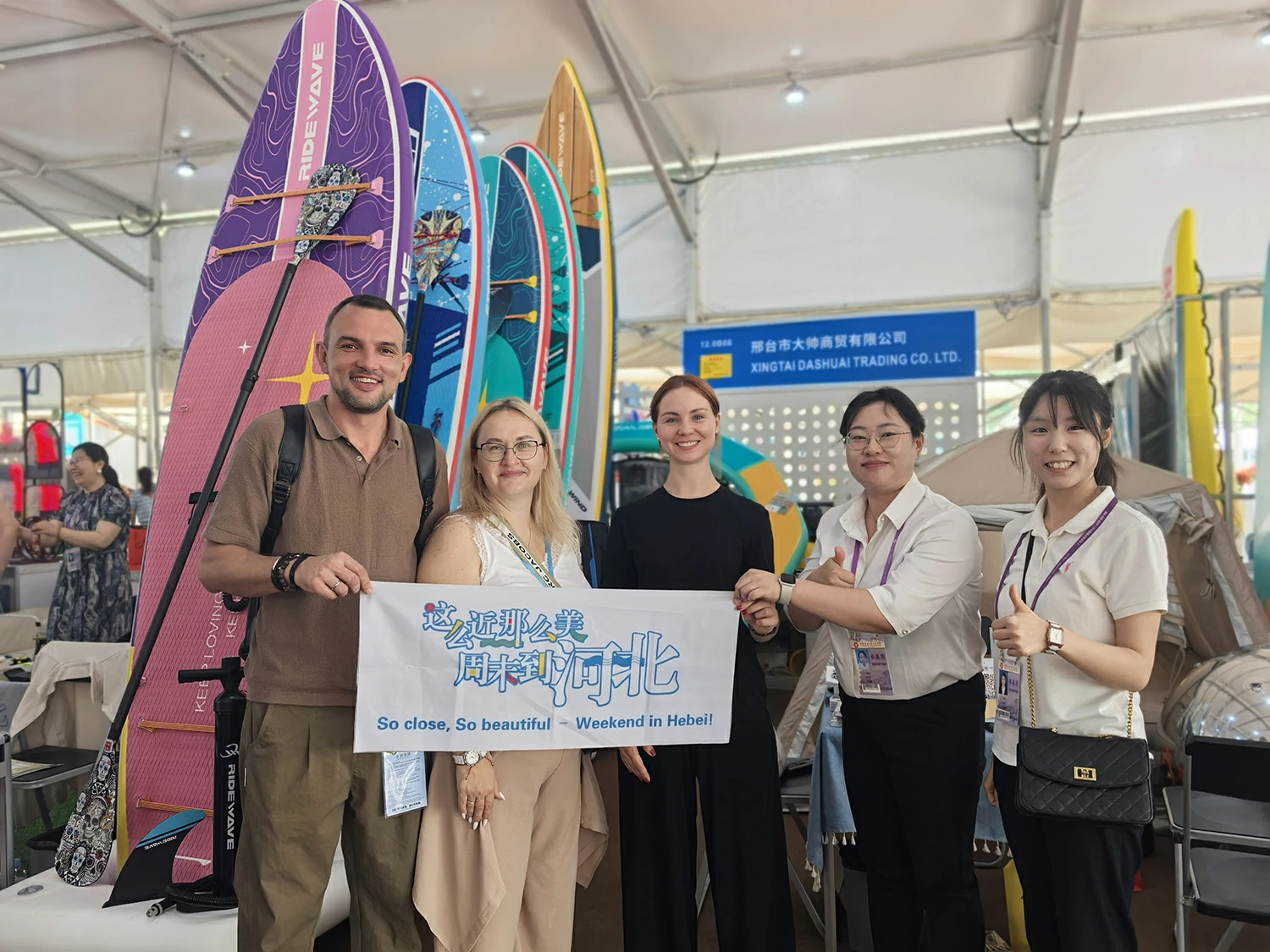
It is worth noting that no single manufacturer is the perfect fit for every buyer. RIDEWAVE is best suited for established wholesalers, expanding sports‑goods retailers and emerging private‑label brands who value stable quality and end‑to‑end B2B support, rather than buyers chasing the absolute lowest possible spot price. We still encourage prospects to compare multiple factories, request samples and run full due diligence before locking in long‑term contracts. Independent verification always protects a wholesaler's capital and seasonal business.
How Can B2B Buyers Balance SUP Product Quality and Wholesale Cost in 2026?
B2B importers can balance quality and wholesale cost for inflatable SUP inventory in 2026 by calculating full landed cost instead of only focusing on unit price, sorting product lines according to local consumer tiers, avoiding over‑specifying unnecessary features, and negotiating reasonable order scales with qualified inflatable SUP board manufacturers. Many Chilean and Latin‑American wholesalers fall into a common cost trap: they chase the lowest per‑unit quotation, without accounting for hidden expenses such as high return rates, warranty claims, extra customs fines, freight surcharges and lost brand reputation. In many real‑world cases, slightly higher‑cost mid‑tier inflatable stand‑up paddle board products deliver better long‑term gross profit than ultra‑cheap inventory.
Total landed cost is the most critical metric for every SUP wholesale project, and it goes far beyond factory ex‑works price. Key components that Latin‑American buyers must calculate include:
Ex‑works unit price of the blow‑up paddle board and complete accessory kit
Ocean freight, container loading fee and local port handling charges at destination
Import duties, customs brokerage fees and possible inspection costs in Chile, Argentina or other target countries
Expected after‑sales expenditure: replacement valves, spare fins, return shipping and customer compensation caused by product defects
Marketing investment loss triggered by bad online reviews from defective merchandise
Selecting a layered product portfolio is another practical way to strike a quality‑cost balance. Wholesalers do not need to stock only one single SUP model across their whole catalog. A reasonable tiered lineup for South‑American markets usually contains three directions:
Entry‑level durable models: For mass‑market retail, family casual use. Solid basic drop‑stitch and PVC configuration, remove over‑luxury decorations to control cost. This category generates the largest sales volume for most local dealers.
Mid‑range versatile models: For outdoor enthusiasts, rental shops and higher‑end retail outlets. Upgrade fabric thickness, valve quality and add practical accessories, bringing higher profit margins per unit.
Small‑volume high‑performance models: For niche athletes and specialty stores. Keep order quantity low, as turnover remains limited within general South‑American mass markets.

Smart buyers also cut wasteful spending by skipping unnecessary custom features. It is tempting to add countless custom prints, upgraded rails or premium grips for every SUP bulk order. Yet many local end‑users will not pay extra for those upgrades. Every additional custom detail raises unit cost and extends production lead‑time. B2B dealers can start with existing proven best‑selling styles first, then add custom modifications only for subsets of their inventory after observing local sales feedback.
Volume planning also shapes cost‑quality outcomes. Larger order sizes usually bring better unit rates, but over‑ordering creates capital pressure and warehousing risk. For Chilean wholesalers targeting the October‑February summer peak, many experienced operators split their purchasing: place a main bulk order for core SKUs, and reserve a smaller flexible allotment for fast‑moving styles to be replenished mid‑season if sales exceed projections. This strategy avoids over‑exposure to both quality risk and capital risk.
Even with careful planning, cost pressures will not disappear completely. Raw material volatility, container rate swings and import policy adjustments continue to influence the inflatable SUP supply chain across 2026. Reliable manufacturers will share market trend updates openly, helping B2B buyers adjust purchasing timelines and product mix rather than locking buyers into rigid, unchangeable pricing.
What Is the Most Cost‑Effective Sea Freight Solution for SUP Bulk Shipping from China to Chile & Argentina?
B2B wholesalers importing inflatable SUP bulk goods from China to Chile and Argentina achieve the lowest comprehensive logistics cost by choosing full container load (FCL) shipping for large seasonal orders, consolidating less‑than‑container load (LCL) cargo for mixed SKU trial orders, and locking early sea freight space 2–3 months before the South American summer peak season. Unlike general consumer goods, inflatable stand‑up paddle board products are lightweight, large‑volume cargo with low damage rates, which makes them highly adaptable to optimized sea freight strategies. Many Latin‑American SUP distributors lose 10%–18% of their annual profits due to blind freight choices, delayed shipping schedules, and unplanned port surcharges when arranging SUP wholesale shipments.

For Chilean and Argentinian water sports dealers, two mainstream sea freight modes dominate cross‑border blow‑up paddle board transportation, each with clear applicable scenarios for B2B bulk orders:
FCL (Full Container Load) Shipping: The most cost‑effective option for seasonal stock preparation. Most wholesalers choose 20GP or 40HQ standard containers for inflatable SUP board bulk shipments. FCL shipping eliminates cargo mixing risks, reduces handling fees, avoids LCL consolidation delays, and delivers the lowest unit freight cost for large order volumes. This mode is the top choice for annual summer peak inventory stocking.
LCL (Less Than Container Load) Shipping: Suitable for small trial orders, mixed‑SKU test shipments, and mid‑season supplementary orders. For new distributors testing the South American market or dealers replenishing fast‑selling SUP styles in small batches, LCL lowers the threshold for initial cooperation and avoids overstock pressure. However, LCL shipping carries higher unit costs and longer transit times, making it unsuitable for large‑scale seasonal stocking.
Timing is the most overlooked but critical factor for SUP freight cost control. The Southern Hemisphere summer consumption peak occurs from October to February, meaning Chilean and Argentinian wholesalers must complete shelf stocking before late September. From June to August every year, China's outbound sea freight capacity is tight, and freight rates rise continuously due to global seasonal shipping demand. Wholesalers who delay container booking will face inflated shipping costs and even shipment delays that miss the entire sales window.
Experienced South American B2B buyers adopt a fixed annual logistics strategy: book shipping space in advance in April–May, complete production and loading in June–July, and arrange cargo arrival at Chilean or Argentinian ports in August–September. This timeline locks in low off‑peak freight rates and reserves sufficient shipping capacity, completely avoiding peak‑season logistics premiums and congestion risks.
Another key cost‑saving tip for SUP bulk order shipping is standardized cargo packaging and container loading optimization. Qualified inflatable SUP manufacturers adopt compressed vacuum packaging for folded paddle boards, which greatly reduces cargo volume and maximizes container loading quantity. Irregular packaging and unoptimized loading will waste container space, directly increasing average logistics costs per board. Professional factory loading plans can increase single‑container shipment volume by 8%–12%, bringing obvious profit improvements for wholesalers.
It is also essential for B2B importers to clarify port destination differences. Mainstream ports including San Antonio (Chile) and Buenos Aires (Argentina) have different tariff policies, local handling fees and clearance efficiency. Choosing the optimal destination port based on warehouse location and sales coverage can further reduce terminal logistics costs and shorten stocking cycles.
How Did the 2026 Argentina RIDEWAVE 1200PCS SUP Bulk Order Achieve Pre-Sales Success?
The 2026 pre-sales success of the 1200-piece inflatable SUP bulk order for an Argentine distributor was achieved through targeted best-selling style selection, cost-effective Qingdao sea freight logistics, and full set of professional pre-marketing materials provided by RIDEWAVE, helping the local dealer complete 800 pre-sold units before cargo arrival and create a replicable seasonal sales model for South American SUP wholesale partners. Most new Latin-American distributors struggle with pre-opening inventory pressure and zero pre-order traffic, but this Argentina case proves that reliable inflatable stand-up paddle board manufacturers can help B2B clients reverse the traditional sales logic - selling first, stocking later.
In January 2026, a long-term local water sports distributor in Argentina launched its annual summer inventory plan and officially placed a large SUP bulk order of 1200 units with RIDEWAVE. Different from disorderly mixed purchasing by ordinary wholesalers, this client adopted a precise market-oriented selection strategy, finally locking 5 classic best-selling inflatable SUP styles that perfectly fit Argentine family outdoor recreation, coastal leisure and lake surfing scenarios. These SKUs feature moderate size, strong stability, super easy inflation and portable design, which are the most user-friendly options for local mainstream consumers and avoid the inventory risk of niche, low-turnover professional models.
In terms of logistics arrangement, the client chose conventional sea freight from Qingdao, China - the most stable and low-cost shipping route for South American bulk water sports goods. Compared with expensive air freight and urgent express delivery, FCL sea freight greatly reduced the average logistics cost of each blow-up paddle board, maximising the dealer's profit margin for the upcoming summer peak season. Reasonable shipping scheduling also ensured the cargo arrives at the Argentine port 30 days before local consumer demand erupts, reserving sufficient time for retail layout and market promotion.
The core highlight of this cooperation case lies in pre-sales empowerment, which is also the key reason why the client achieved outstanding sales results. Before the cargo was produced and shipped, the RIDEWAVE B2B team took the initiative to deliver a complete set of commercial marketing materials tailored for local retail, including official product catalogs, professional studio high-definition photos, panoramic detail shots, texture close-up images, and finished product display diagrams for each of the 5 styles. All materials are high-resolution, editable and suitable for local e-commerce platforms, social media promotion and physical store display.

With these ready-to-use marketing resources, the Argentine distributor did not need to spend extra time and funds on content creation. Instead, they immediately launched online and offline pre-sales promotion activities. As of the latest communication with our team, the client has successfully pre-sold 800 out of 1200 inflatable SUP units, completing two-thirds of the total order sales before the cargo even arrives in Argentina.
Facing the upcoming hot summer consumption boom in South America, the local distributor has officially initiated supplementary order negotiations with RIDEWAVE, preparing to add more hot-selling SKU inventory to meet the rapidly growing market demand. This case fully verifies that for Chilean, Argentine and other South American inflatable SUP board wholesalers, choosing a manufacturer that can provide pre-sales marketing support + stable supply chain is far more valuable than simply chasing low unit prices.
What Pre-Sales Marketing Resources Can SUP Manufacturers Support B2B Distributors With?
Trusted inflatable SUP manufacturers help B2B distributors accelerate local sales and reduce startup operational costs by providing complete, ready-to-use commercial marketing resources, including standardized product catalogs, studio-level visual assets, editable specification documents and unified brand marketing materials. For most Chilean and South American wholesalers, especially newly expanded water sports retailers and startup resellers, the lack of professional inflatable stand-up paddle board marketing content is one of the biggest barriers to fast market penetration. Many factory suppliers only deliver physical products, leaving dealers to spend weeks or months shooting, editing, and designing materials from scratch, which delays peak-season sales windows and increases operational risks for SUP wholesale businesses.
Professional manufacturer marketing support covers multiple high-value resource categories that directly improve distributors' conversion rates:
High-definition studio product visuals: Professional shot main product images, lifestyle scene images, detailed partial close-ups, inflatable and folding process demonstration pictures, and accessory matching display photos. Unlike amateur mobile photography, studio materials present consistent color tones, accurate product details and premium texture, which greatly improve store credibility and online advertising conversion for blow-up paddle board products.
Formal printable product catalogs: PDF-format wholesale catalogs containing full SKU parameters, size charts, weight data, package specifications and core selling points. Wholesalers can send catalogs directly to retail clients, offline store partners and group buyers without secondary production.
Editable product detail copy and parameter sheets: Standardized product descriptions, feature lists, advantage explanations and FAQ content optimized for South American consumer habits. These materials allow distributors to quickly build e-commerce product pages, social media posts and offline promotional posters.
Seasonal sales guidance and selling-point training: Mature manufacturers summarize localized hot-selling logic for summer water sports, helping dealers grasp consumer pain points such as portability, family suitability, safety and durability when promoting inflatable SUP board inventory.
Custom simple branding materials: For small and medium-sized wholesalers planning private-label business, qualified suppliers can provide basic blank templates and adjustable layout resources to support secondary brand promotion.
The value of these marketing resources is fully reflected in the 2026 Argentina 1200PCS bulk cooperation case. The distributor relied entirely on RIDEWAVE's official studio materials and product catalogs to launch multi-channel pre-sales promotion. Without investing extra costs in photography, design and copywriting, the team quickly completed online store shelf setup, Instagram and Facebook content publishing, and offline store display layouts. This is the core reason why the client achieved an outstanding pre-sales volume of 800 units before cargo arrival.

For Chilean B2B buyers, it is critical to judge a factory's comprehensive service capability before placing a SUP bulk order. Factories with only production capabilities can provide low-priced goods, while manufacturers with complete marketing support systems can help wholesalers sell faster and more stably, which is the fundamental way to increase long-term wholesale profit margins.
Many new wholesalers mistakenly believe that product quality and price determine sales results. In fact, in the highly competitive South American water sports market, homogeneous inflatable SUP products are widespread. Professional, delicate and standardized marketing materials become the key differentiation that distinguishes high-growth dealers from low-profit homogenized sellers.
How Do Custom SUP Production Services Boost B2B Sellers' Market Competitiveness?
Custom inflatable SUP manufacturing services improve B2B distributors' market competitiveness in Chile and broader Americas by eliminating retail market homogenization, building exclusive brand barriers, increasing profit margins, and matching local regional aesthetic and functional demands that generic mass‑produced inflatable stand-up paddle board models cannot cover. In 2026, the South American water sports wholesale market is flooded with identical low‑and mid‑level blow-up paddle board products. For Chilean wholesalers relying on offline retail chains, local sports stores, and social commerce sales, price competition alone continuously compresses profit space. Custom SUP production allows B2B sellers to differentiate their product lines, avoid vicious price wars, and cultivate stable high‑value customer groups.
For South American, North American, and Oceanian B2B buyers, reliable inflatable SUP board customization covers three practical, high‑conversion dimensions that are most suitable for wholesale scaling:
Visual customization (graphic & color tuning): Regional markets have obvious aesthetic differences. Chilean and Argentine consumers prefer bright, fresh coastal color systems and nature‑themed prints, while North American buyers favor minimalist, solid‑color, high‑texture designs. Custom printing, color matching, and surface pattern adjustment allow distributors to launch regionally exclusive styles that local competitors cannot source from ordinary wholesale channels. This visual exclusivity directly improves shelf display competitiveness and online click‑through rates.
Functional customization (size & accessory optimization): Based on local mainstream usage scenarios, manufacturers can adjust board length, width, thickness, traction pad texture, fin configuration, and supporting accessory combinations. For family‑oriented South American markets, widened stable boards and full safety accessory sets are more popular; for North American outdoor enthusiasts, lightweight touring sizes and professional performance accessories dominate sales. Targeted functional tuning greatly improves end‑user satisfaction and repurchase rates.
Brand customization (private label printing & packaging): Custom logo printing, exclusive outer carton design, and personalized manual packaging allow distributors to build their own independent brand image without investing in independent production lines. This is the fastest and lowest‑threshold way for small‑and‑medium SUP wholesale dealers to transform from "resellers" to "brand operators".
Many B2B buyers misunderstand customization as high‑threshold, high‑cost exclusive orders. In fact, mature manufacturers like RIDEWAVE have optimized flexible custom solutions for seasonal wholesale clients. Instead of requiring extremely large MOQs for minor modifications, we support mixed customization for conventional SUP bulk order batches, enabling wholesalers to test customized styles with low risk before large‑scale promotion.
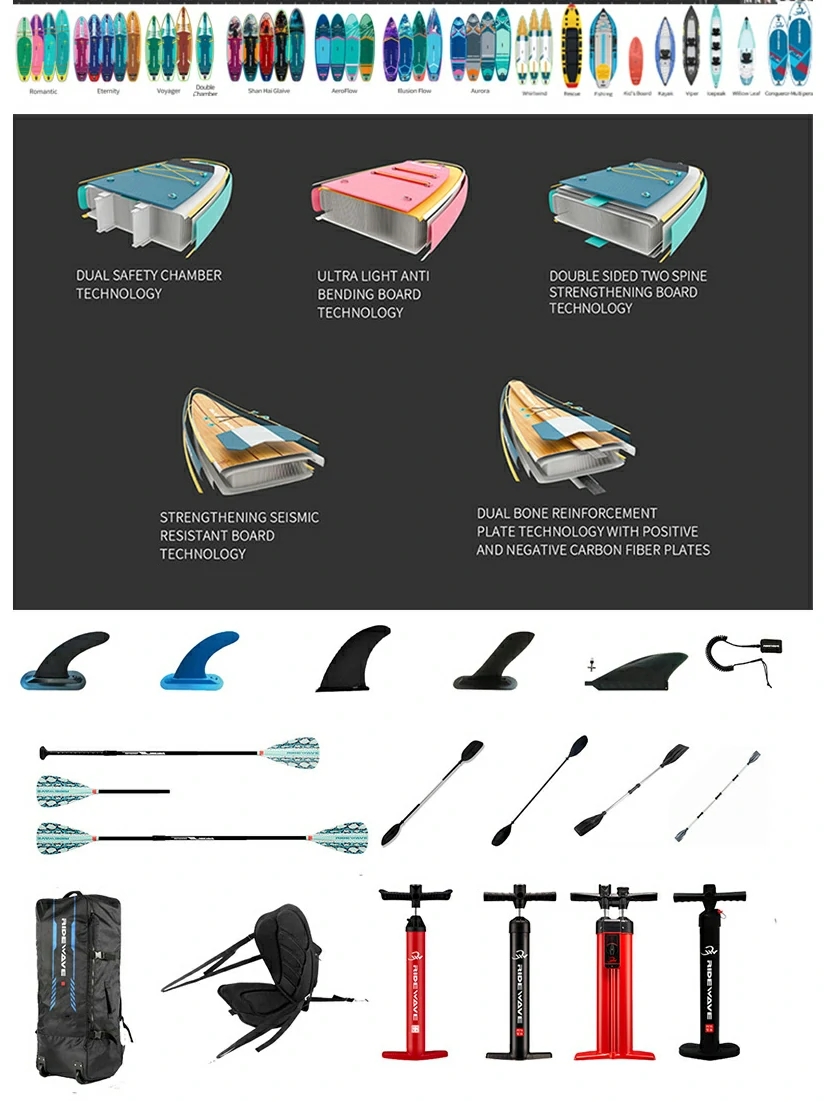
Customization further enhances long‑term competitive advantages for distributors in two invisible dimensions: product iteration capability and market anti‑risk capability. Generic public SUP styles are easy to be eliminated by market updates, and price competition becomes fierce rapidly once a style becomes popular. Custom exclusive products can be iterated seasonally according to local consumer feedback, maintaining long‑term market freshness. Meanwhile, exclusive customized SKUs cannot be arbitrarily copied by peer competitors, effectively stabilizing dealers' regional market share and profit margins.
To launch customized SUP products successfully, B2B sellers need to follow standardized production processes from professional factories. From initial design communication, pattern confirmation, sample proofing, to formal mass production and quality inspection, every link determines the final market performance of customized products.
| Customization Type | Generic Mass-Produced SUP | Custom Inflatable SUP for B2B Wholesale |
|---|---|---|
| Product Homogeneity | High market homogeneity, identical designs across most wholesale platforms, serious product homogenization | Exclusive regional customized styles, unique shelf display effect, obvious product differentiation |
| Profit Margin Space | Low profit margin, easily trapped in vicious price competition, thin seasonal profits | High and stable profit space, build exclusive sales barriers, effectively avoid price wars |
| Market Adaptability | Universal one-size-fits-all design, cannot match regional aesthetic and usage habits of American, Australian and South American consumers | Custom-tailored colors, sizes, functions and styles for local markets, highly adaptable to local water sports scenarios |
| Brand Building Value | No personalized brand attributes, only simple resale business, unable to accumulate brand assets | Support private label logo, exclusive packaging and customized printing, help distributors build independent brand influence |
| Market Competition Risk | Extremely high substitutability, peers can copy products at low cost, unstable market share | Low replicability of exclusive customized products, effectively lock regional customer groups and stabilize market occupancy |
| Applicable Business Scenarios | Suitable for new wholesalers for low-budget market trial and initial inventory testing | Suitable for mature distributors focusing on product line expansion, brand upgrading and long-term market operation |
What Core Questions Should Chilean Wholesalers Ask Before Confirming a SUP Factory Order?
Smart Chilean and South American inflatable SUP wholesalers reduce order risks and maximize seasonal profits by asking targeted, factory-validated questions before placing official SUP bulk order contracts, rather than relying solely on quotation sheets and sample images. Most B2B purchasing failures happen due to unconfirmed details regarding quality consistency, peak-season lead time, after-sales policy and B2B support resources. For importers sourcing inflatable stand-up paddle board products for the October–February summer peak, a standardized pre-order checklist can avoid delayed shipments, defective batch goods, missing marketing materials and failed seasonal inventory plans.
Before locking any wholesale contract, professional Latin-American distributors always verify the following critical questions with their blow-up paddle board manufacturers:
Can the factory provide full batch inspection reports and compliance documents for Chilean and Argentine customs clearance? Documentation completeness directly determines clearance efficiency and avoids customs detention or fines. Reliable suppliers offer test reports, safety certificates and batch quality records for every bulk order.
What is the exact peak-season production lead time and container booking schedule for 2026–2027 summer stock? Many factories over-promise delivery during busy seasons. Fixed, written lead-time commitments help wholesalers arrange retail launch timelines accurately.
How does the factory guarantee sample-to-mass-production consistency for inflatable SUP quality? Batch deviation is the top quality complaint in the inflatable SUP board industry. Trustworthy manufacturers implement layer-by-layer inspection for fabric tension, air tightness, lamination firmness and accessory matching.
What pre-sales marketing assets and B2B support are included in bulk orders? Distributors need clear confirmation of HD images, catalog files, editable descriptions and promotional materials to support local pre-sales campaigns, just like the successful 1200PCS Argentina RIDEWAVE cooperation case.
What is the official after-sales policy for defective goods, air leakage issues and accessory damage? Clear warranty terms reduce long-term operational risks and stabilize retailer reputation in local markets.
Does the factory support small trial orders, mixed SKU shipments and mid-season replenishment orders? Flexible order policies are essential for new product testing and fast-selling style restocks in competitive South American markets.

This pre-order questioning system is exactly what professional global B2B buyers adopt to filter reliable manufacturers. If you want a more comprehensive purchasing checklist, you can refer to our detailed industry article:
How to Select Best-Selling SUP Styles for South American Summer Peak Sales?
B2B wholesalers select top-selling inflatable SUP models for South American summer peaks by prioritizing family-friendly stability, portable folding design, high air tightness and cost-effective configurations that match local lake and coastal recreation habits, instead of blindly choosing professional or ultra-large sizes with low market turnover. Chile, Argentina and surrounding Latin-American markets are dominated by mass family consumption, which means inflatable stand-up paddle board bestsellers focus on universality, safety and ease of use rather than extreme professional performance.
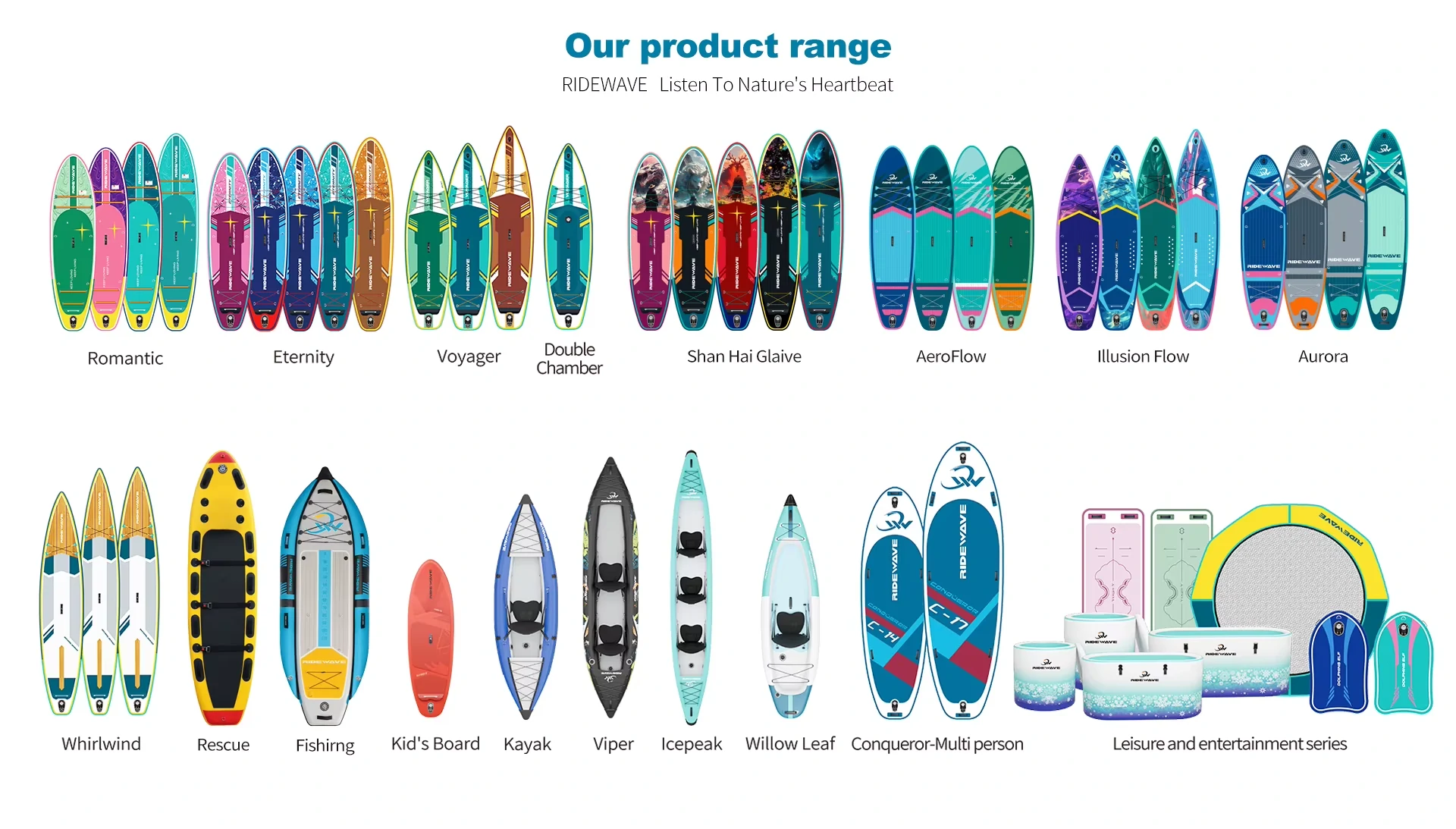
Through long-term cooperation with South American distributors, RIDEWAVE has summarized three categories of high-turnover blow-up paddle board SKUs that consistently dominate local wholesale sales:
Beginner family all-round SUP: Moderate size, widened board body, excellent stability, super easy inflation. Suitable for adults, teenagers and family group recreation. This category contributes the largest sales volume for Chilean wholesalers and fits supermarket retail, sports store sales and rental business.
Lightweight portable touring SUP: Slimmer foldable design, easy car storage and beach carrying. Perfect for tourists, lake exploration and coastal leisure activities, with high repurchase rates every summer season.
Entry-level youth recreational SUP: Fashionable color matching, lightweight structure, affordable wholesale price. Ideal for social media viral sales and young consumer groups, suitable for online store and Instagram/Facebook promotion.
The 2026 Argentina 1200PCS bulk order precisely adopted this multi-tiered best-selling SKU combination. By selecting 5 mature hot styles covering family, portable and youth recreational positioning, the distributor achieved explosive pre-sales results and avoided inventory stagnation. This proves that scientific style selection is far more important than simply pursuing low unit prices for SUP wholesale business.
Wholesalers should avoid overstocking professional racing SUPs, ultra-thick heavy boards or overly niche artistic styles. These SKUs have small audience groups, slow turnover and occupy large container space, seriously affecting overall seasonal profitability.
What Long-Term Cooperation Policies Can Help B2B Dealers Expand Water Sports Product Lines?
B2B water sports dealers expand their product lines and achieve stable annual growth by partnering with inflatable SUP manufacturers that offer flexible MOQ rules, seasonal price protection, continuous new product iteration, exclusive regional sales support and long-term B2B resource empowerment. For Chilean and Latin-American wholesalers, short-term order profits are limited, while long-term brand and product line expansion brings sustainable compound growth.
Stable long-term supplier cooperation mechanisms include:
Graduated MOQ policy for growing distributors: Support small trial orders for new dealers and increase batch volume gradually as sales grow, reducing expansion risks.
Seasonal price protection & stable quotation: Avoid raw material and freight fluctuation losses, ensure fixed profit margins during summer peak seasons.
Annual new SKU iteration updates: Continuously launch updated inflatable stand-up paddle board styles matching South American consumer trends, keeping dealers' product lines competitive.
Exclusive regional sales support: Avoid disorderly price competition among local distributors, protect regional market profits.
Continuous marketing material updates: Regularly upgrade product images, videos and catalogs to support long-term brand operation.
For emerging sports goods merchants and brand owners, long-term factory cooperation is the core foundation for continuous category expansion. The Argentina distributor's successful pre-sales and ongoing replenishment cooperation fully demonstrates that stable supply chain + continuous B2B empowerment is the key to long-term wholesale profitability.
In 2026 and beyond, the South American inflatable SUP market remains one of the fastest-growing water sports sectors for cross-border B2B wholesalers. Chilean, Argentine and pan-American distributors no longer compete simply on low pricing; instead, winners in the industry rely on verified product quality, scientific sea freight planning, precise best-selling style selection, professional pre-sales marketing support and stable long-term factory cooperation.
Sourcing high-quality inflatable stand-up paddle board inventory is not a one-time purchasing behavior, but a complete seasonal business system covering quality inspection, cost calculation, logistics scheduling, pre-sales operation and after-sales guarantee.
As a professional manufacturer focused on American and Oceanian B2B wholesale markets, RIDEWAVE consistently provides stable batch quality, customized solutions, complete marketing resources and cost-effective logistics guidance for global distributors. The 2026 Argentina 1200PCS pre-sales success case proves that factory-side empowerment can completely upgrade a wholesaler's seasonal sales efficiency and profit model.
For Chilean wholesalers ready to expand their 2026–2027 summer SUP product line, optimize procurement costs or launch exclusive customized paddle board products, long-term cooperative factory resources and professional B2B support systems will continue to be the core competitive advantage in the increasingly popular Latin American water sports market.
Related Articles
How Custom Paddle Boards Are Made: From Design To Production
OEM Vs ODM Paddle Boards: Which Is Better For Your Brand?
How To Choose The Right SUP Paddle Board Manufacturer
Why Private Label Inflatable Kayaks Are The Future Of Your Brand
How Can Chilean Wholesalers Source Inflatable SUPs For The Local Market?