

Inflatable SUP wholesale into Argentina and wider South America is far more than simply locking in the lowest factory price for bulk paddle board orders. Many regional distributors, water sports retailers and emerging private-label brands struggle with thin gross margins, unexpected import delays, high UV-related warranty claims and seasonal stock misalignment, even when they source large volumes of generic inflatable paddle boards. The clearest path to sustainable profit growth for South American SUP resellers rests on matching board specifications to local environmental conditions, building differentiated product lines through customisation, mapping out full landed cost before confirming orders, and partnering with a manufacturer that understands the unique rhythm of the Southern Hemisphere summer selling window. If you have not yet explored what goes into building a regionally tailored board, you can review our behind-the-scenes production breakdown in How Custom Paddle Boards Are Made: From Design To Production. This guide breaks down actionable, field-tested strategies that help Argentina-based SUP wholesalers and dealers raise margins, reduce return rates and build stable, repeatable local distribution networks without racing to the bottom on price.
What market trends are shaping inflatable SUP demand across Argentina and South America in 2026?
Inflatable SUP demand within Argentina and neighbouring South American markets is no longer driven only by casual recreational buyers searching for a low-cost summer toy. Three distinct, overlapping shifts are reshaping which inflatable paddle board SKUs sell faster, support higher margins and create long-term repeat orders for local distributors. First, recreational families are moving away from thin, entry-level generic boards and prioritising durable, UV-stabilised drop stitch SUP models built for prolonged exposure to strong regional sunlight. Second, fishing-focused SUP has become a high-growth niche; anglers on the Paraná River, Uruguay River and inland lake systems seek rigs with mounting points, extra storage and stable weight capacity, rather than basic touring shapes. Third, rental operators and tourism businesses are emerging as reliable bulk buyers, as provincial governments expand access to protected river and coastal recreation zones.
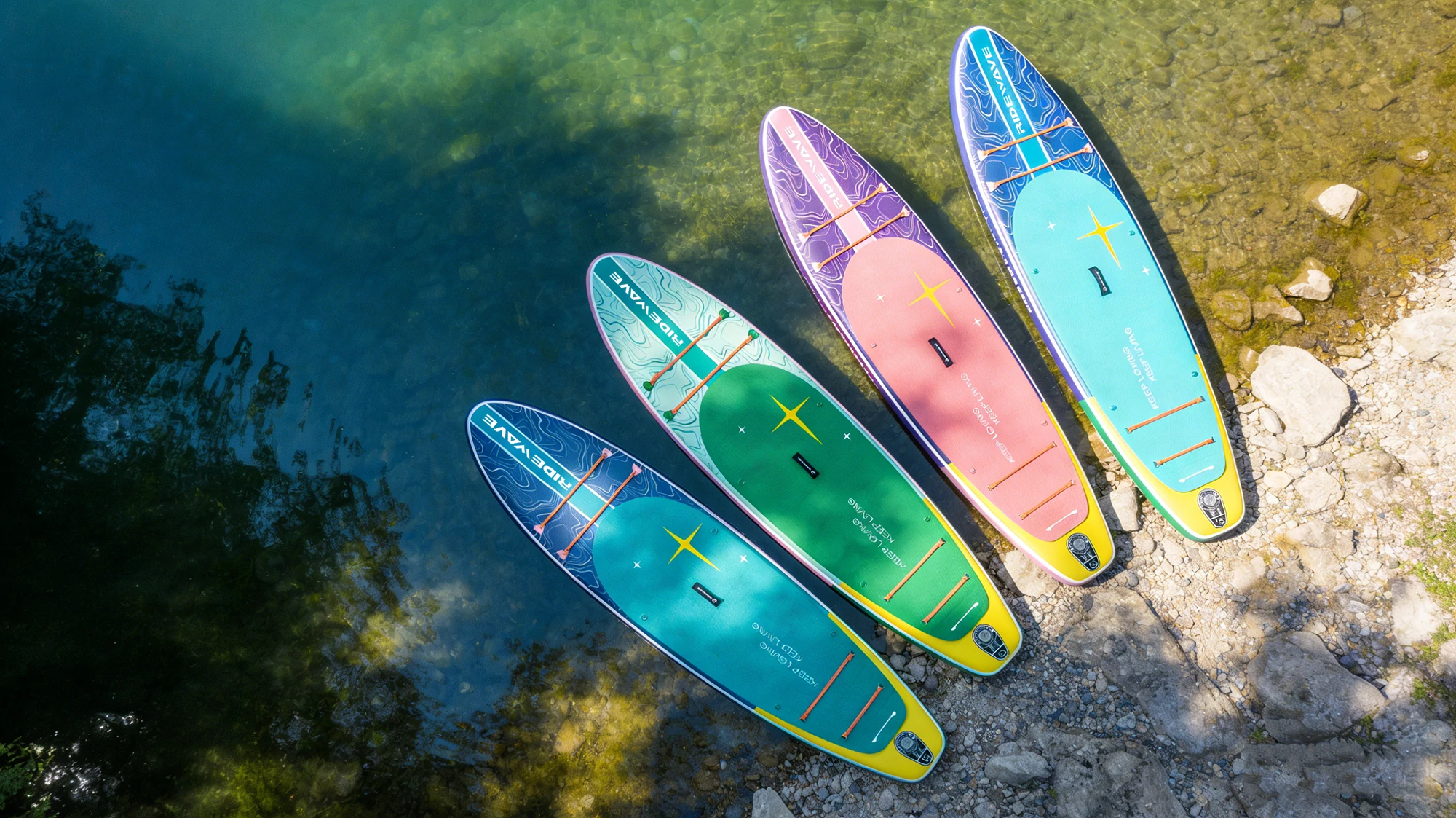
These trends create a clear opportunity for smart wholesalers to split their inventory portfolio: keep a smaller volume of budget entry boards for price-sensitive retail shoppers, and allocate more container space to premium touring and fishing inflatable SUP lines that carry stronger gross profit. Ridewave's factory data from South America shipments confirms that fishing and heavy-duty touring SKUs consistently deliver fewer warranty returns and better customer loyalty when marketed to local outdoor communities. It is also important to note that demand peaks align with the Southern Hemisphere summer, running from December through February, and pre-season buying activity begins as early as August, well before many European and North American suppliers ramp up their production schedules.
*Family recreational buyers want boards that resist fading and air loss after repeated outdoor use.
*Local angler groups actively share fishing SUP recommendations on social media, creating organic word-of-mouth demand.
*Rental fleet operators prioritise consistent quality and easy replacement parts over the lowest per-unit purchase price.
*Cross-border MERCOSUR trade flows let successful Argentine distributors resell surplus stock to dealers in Uruguay, Paraguay and southern Brazil.
How do Argentine import rules, tariffs and currency risks change your total landed cost for bulk inflatable SUP orders?
Many first-time inflatable SUP importers to Argentina make the costly mistake of calculating budgets using only the factory EXW price of their inflatable paddle board containers. Tariff codes, statistical levies, documentation requirements, peso volatility and port clearance delays can add unexpected overhead that quickly erases your planned gross margin, even before your SUP inventory reaches your warehouse. The first step to reliable costing is confirming the correct NCM tariff classification for drop-stitch inflatable paddle boards; misclassification triggers fines, cargo holds and retroactive tax adjustments that regularly catch out casual water sports importers.
Currency fluctuation remains the most unpredictable ongoing risk for Argentina-based SUP wholesalers. Unlike many other Latin American markets, rapid exchange rate swings can shift your effective purchase cost between the date you sign your proforma invoice and the date you settle payment to your manufacturer. Smart distributors build a dedicated currency contingency buffer into every order budget, rather than assuming stable exchange rates. You also need to distinguish between MERCOSUR preferential treatment and standard third-country import rules, as exemptions and rate tiers do not apply uniformly across all paddle board accessories, including pumps, paddles, leashes and repair kits bundled with your bulk SUP sets.
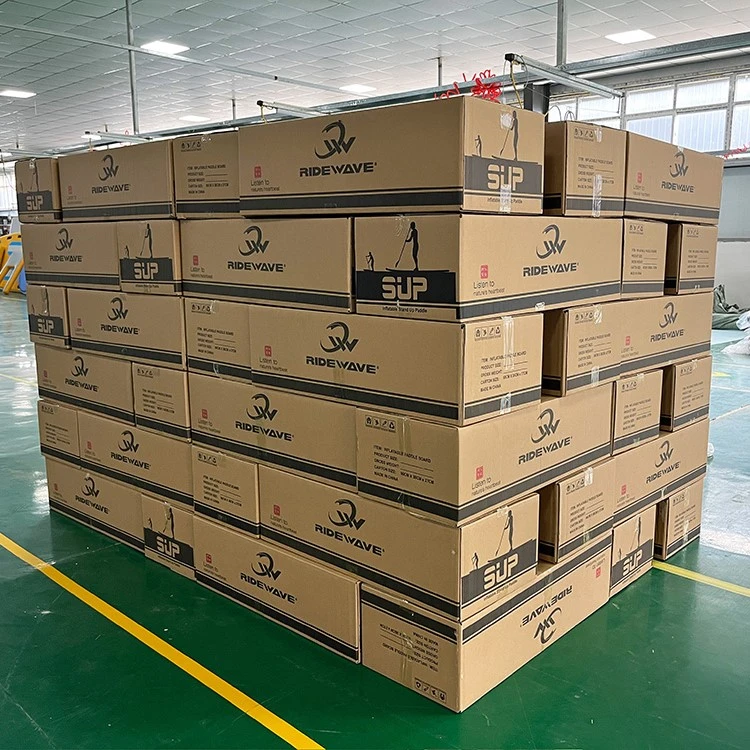
Port and customs documentation checks add another layer of complexity. Customs agents commonly request factory test reports, material specification sheets and product safety declarations for inflatable water sports goods. Missing or incomplete paperwork can hold a full container at Buenos Aires, Rosario or Bahía Blanca ports for weeks, directly cutting into your pre-summer sales window. Ridewave routinely prepares pre-validated documentation packages for regular Argentine partners, aligned with local customs requirements, to reduce detention and inspection risk.
*Confirm your NCM code with your local customs broker before finalising any bulk inflatable SUP order.
*Separate the tariff classification of board units and bundled accessories, as they may attract different tax rates.
*Lock in payment terms and currency clauses with your supplier wherever possible to soften peso volatility exposure.
*Budget for port storage, inspection fees and customs agent service fees as non-negotiable fixed landed costs.
*Schedule vessel arrival at least 6–8 weeks ahead of your target retail launch date to absorb clearance delays.
What board specifications work best for Argentina's strong UV, freshwater rivers and coastal saltwater environments?
Most generic inflatable SUP models manufactured for European or North American markets are not engineered to hold up under Argentina's harsh outdoor conditions. Intense year-round UV radiation, abrasive river sand and sediment along the Paraná basin, plus saltwater corrosion on Atlantic coastlines, create three separate failure points that drive warranty claims, negative buyer feedback and repeat returns for uninformed SUP distributors. Choosing the right material build, seam design and protective coating is one of the highest-impact ways to protect your margin and build trust with local retail and rental clients.
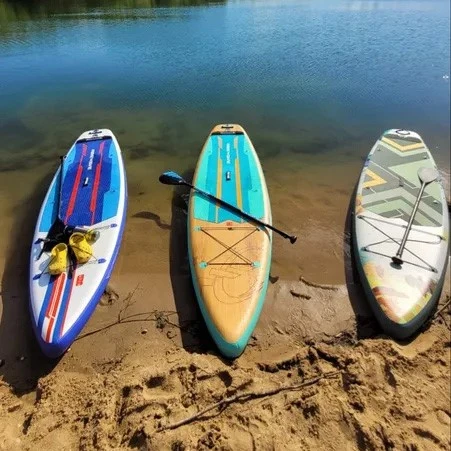
The baseline spec for Argentina-focused inflatable paddle board inventory should start with heavy-duty, UV-stabilised PVC. Standard 0.7mm consumer-grade PVC fades, becomes brittle and develops micro-leaks within a single summer season under high Andean and plains sunlight. For rental fleets and high-turnover fishing SUP lines, many successful local dealers opt for 0.9mm reinforced PVC with multi-layer UV top coating. Drop stitch density is equally critical: lower-cost sparse drop stitch cores warp under heavy anglers, coolers and onboard gear, which is a common complaint on river fishing trips.
Saltwater and freshwater exposure also changes the accessory selection. Stainless steel D-rings and reinforced rubber valve caps resist rust and grit buildup far better than cheaper plated metal hardware. EVA deck traction needs to resist mould and mildew from prolonged contact with river mud and brackish water. It is also worth noting that many casual buyers in Argentina store their inflatable SUP outdoors on rooftops, patios and boat racks, so cold resistance alongside UV resistance adds another layer of long-term durability. Ridewave formulates its South America stock lines with these environmental stressors front of mind, testing material batches under accelerated UV and salt spray cycles before bulk production.
*Prioritise UV-stabilised reinforced PVC over standard lightweight PVC for all stock bound for Argentina.
*Target a dense drop stitch core to prevent deck sag when carrying fishing gear, coolers and multiple riders.
*Select stainless steel hardware instead of plated metal D-rings to avoid rust near coastal zones.
*Specify mould-resistant EVA deck pad for prolonged use in muddy river and humid lakeside areas.
*Include user guidance on rinsing boards after saltwater use; simple care guidance lowers long-term warranty tickets.
How can distributors use private label and OEM SUP to separate themselves from low-price generic imports?
Price-only competition is one of the biggest traps for Argentina's inflatable SUP distributors. Generic unbranded inflatable paddle board stock is easy to source, but it forces every seller to compete on the same visible features: board size, included pump and printed graphic. When every competitor lists nearly identical boards, local retailers and rental buyers will simply pick the cheapest option, squeezing your margin down to unsustainable levels. Private label and OEM customisation gives you tangible differentiation that budget commodity SUP cannot match, and it builds brand loyalty that keeps your clients returning season after season.
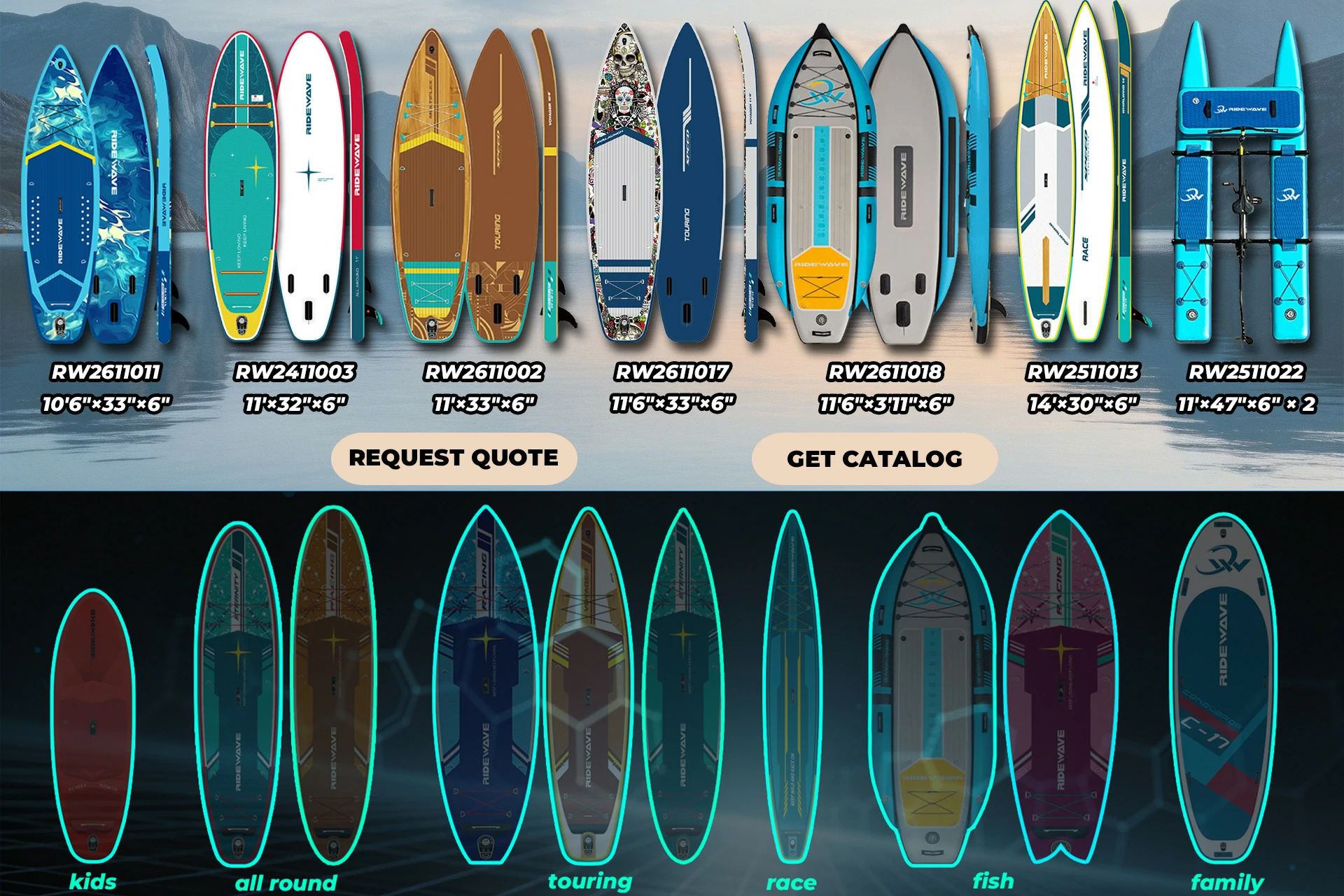
Effective private label work does not require you to redesign the entire board from scratch. Most successful South American dealers start with a proven base platform, such as Ridewave's UV-resistant touring or fishing SUP moulds, then layer in targeted custom changes. Common, high-impact tweaks include custom brand printing, Spanish-language instruction manuals and packaging, adjusted D-ring layouts for local fishing habits, and bundled accessory packs tailored to river or coastal users. These small modifications are low-cost at bulk scale, yet they make your inventory feel exclusive to your company, rather than interchangeable stock available from three other importers in Buenos Aires.
OEM customisation also helps you segment your catalogue into clear tiers. You can build one entry-level SKU for price-sensitive retail shoppers, a mid-range private label line for general outdoor enthusiasts, and a premium heavy-duty series marketed specifically to fishing guides and rental fleets. This tiered lineup stops you from fighting over the same narrow low-price buyer group. It is important to separate cosmetic customisation from structural customisation: graphics and packaging carry shorter lead times and lower MOQ, while core changes such as thickness, drop stitch layout and rail shape require longer sampling and production windows.
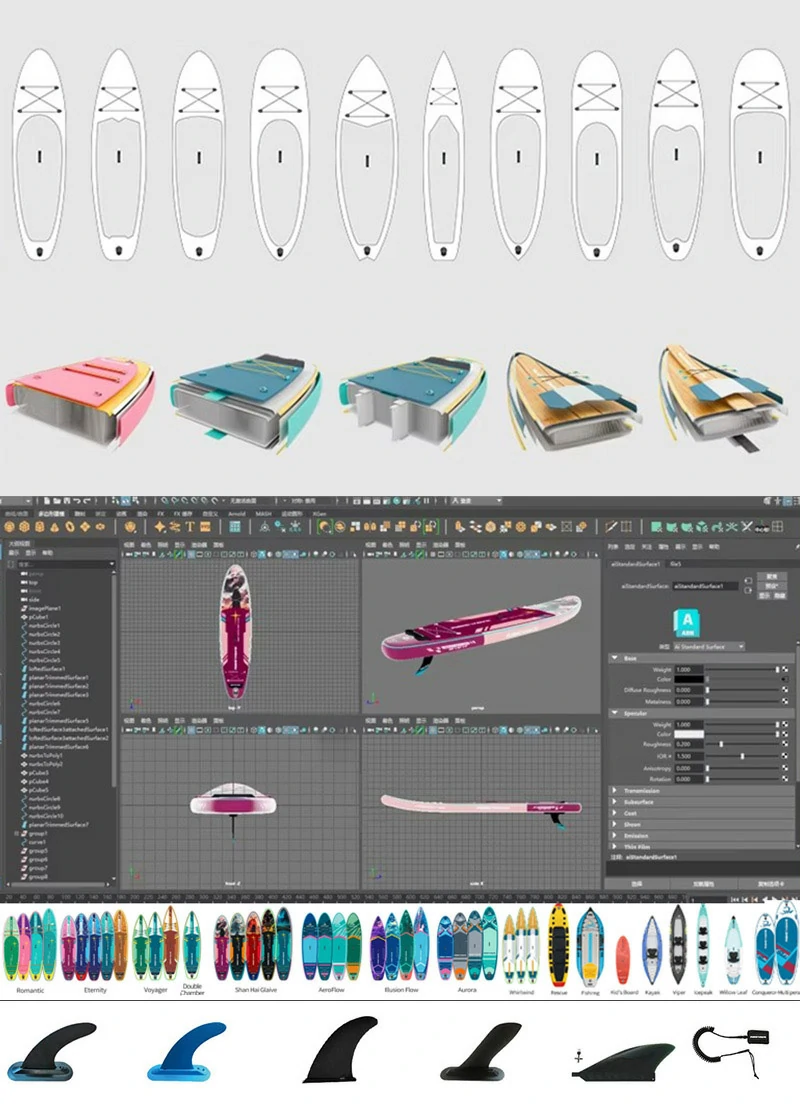
*Start customisation with branding, packaging and accessory bundles before requesting structural board changes.
*Print localised Spanish safety guides and care cards to reduce customer support workload for your retail partners.
*Build a three-tier product range: entry commodity, mid private label, premium heavy-duty SUP.
*Lock in your custom artwork and packaging files ahead of factory production to avoid delays before summer.
*Protect your local market position by agreeing limited distribution terms with your manufacturer where possible.
What is the most practical landed-cost breakdown model for inflatable SUP bulk orders into Argentina?
Many Argentine SUP buyers only compare ex-factory pricing when evaluating suppliers, which creates blind spots that eat into planned margins before inventory reaches your warehouse. A reliable landed cost model accounts for every fixed and variable expense tied to your inflatable paddle board shipment, giving you a clear baseline to set retail pricing, negotiate with retail partners, and decide whether a particular SKU is financially viable for your market. This framework works for mixed container loads, full 20GP and 40GP shipments, and it accounts for the unique tax, logistics and currency risks that apply to imports entering Argentina.
No single percentage split will match every order, as freight rates, port fees and tax interpretations shift month to month. Still, this standardised breakdown gives you a working template you can adjust for your broker's quotes, chosen port, and mix of inflatable SUP models and accessories. The table below is built around feedback from Ridewave's long-term wholesale partners operating across Buenos Aires, Santa Fe and Córdoba, and it reflects real-world averages seen across 2025 and 2026 bulk shipments.
| Cost Component | Typical % of final local selling price | Notes for Argentina B2B buyers |
|---|---|---|
| Ex-factory board + full accessory kit | 32–38% | UV-resistant material, drop stitch, Spanish manual optional |
| Ocean freight + destination port charges | 12–16% | Rates swing heavily before Southern Hemisphere summer |
| Import duty, statistical tax & local VAT | 14–19% | Check latest NCM code and MERCOSUR rules before ordering |
| Local inland transport & warehouse | 5–8% | Higher for remote provinces such as Neuquén, Río Negro |
| Marketing, warranty & after-sales reserve | 7–10% | Critical for rental-focused distributors |
| Distributor gross margin | 18–26% | Sustainable target for branded / private label lines |
| Contingency (currency fluctuation, inspection) | 3–5% | Non-negotiable buffer for Argentine Peso volatility |
Once you have this baseline, you can run simple "what-if" scenarios. For example, switching from generic thin PVC boards to premium UV-stabilised inflatable SUP will push your factory cost percentage upward, but it can shrink your warranty reserve and raise your achievable gross margin percentage. Conversely, chasing the lowest ex-factory price often pushes warranty and return costs far above the planned reserve, collapsing profitability even if the unit price looks attractive on the invoice.
*Update your cost model every time you receive new freight or customs broker quotations.
*Separate costs for core boards and bundled accessories when your broker uses different NCM classifications.
*Keep the contingency fund isolated; do not treat it as extra margin to allocate to marketing.
*Run separate landed cost calculations for fishing SUP, touring SUP and entry recreational lines, as their selling prices and risk profiles differ.
*Share a simplified version of this breakdown with your retail resellers to explain why durable private label lines carry a reasonable price premium.
How should you compare factory suppliers instead of only looking at the lowest unit price?
Unit price is an easy, fast metric to sort quotes for inflatable SUP orders, yet it rarely tells you the full story of long-term profitability when importing inflatable paddle board stock into Argentina. A supplier with a marginally cheaper board can destroy your bottom line through inconsistent material quality, missed lead times, incomplete test documentation, weak after-production support, or a refusal to accommodate region-specific adjustments such as UV coatings and Spanish packaging. Mature SUP wholesalers build a multi-factor evaluation checklist, rather than ranking manufacturers solely on the number listed on the proforma invoice.
Your evaluation framework should separate hard, verifiable criteria from soft service factors. On the technical side, verify drop stitch density, PVC thickness, UV treatment certification, hardware grade and batch inspection protocols. Many low-cost factories cut corners on material testing; the first failure often appears after 30–60 days of strong Argentine sunlight, long after the container has cleared customs. Service factors are equally important: ask whether the factory can prepare customs-ready paperwork, support small pre-production sampling runs, adjust packaging and manuals for Latin America, and resolve warranty claims consistently without lengthy delays. If you are ready to formalise your supplier audit checklist, review our dedicated guide: 10 Questions Every B2B Buyer Should Ask Before Placing An Inflatable SUP Factory Order.
It is also critical to evaluate a factory's familiarity with South American import requirements. A manufacturer that regularly ships to Argentina, Uruguay, Paraguay and Brazil already understands recurring issues around NCM coding, inspection requests and seasonal order timing. Factories focused mostly on European or North American markets may produce perfectly acceptable boards for those regions, but lack experience with the documentation and spec tweaks that reduce risk for your Argentine-bound shipments. Ridewave maintains a dedicated sales and QC workflow for South America clients, built around repeated feedback from distributors dealing with local customs and field durability challenges.
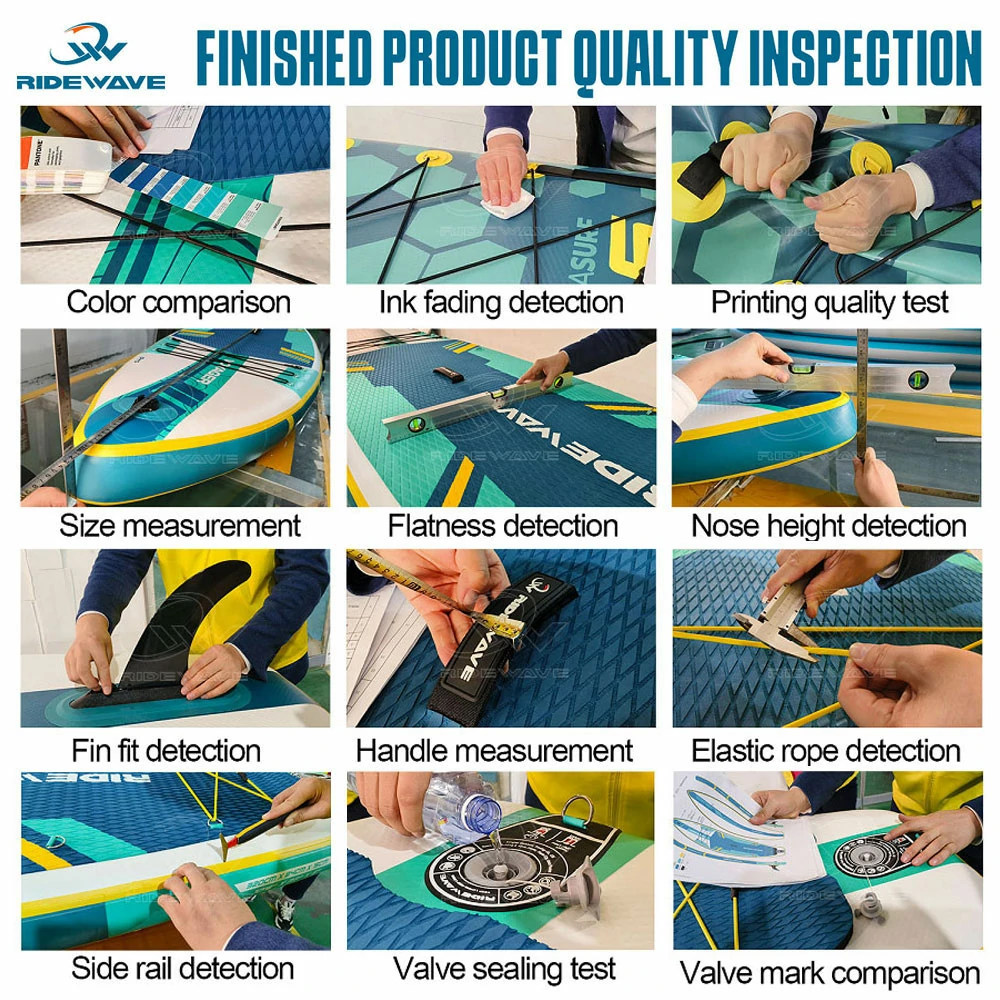
*Request material batch test reports and UV ageing certificates before confirming your first bulk inflatable SUP order.
*Confirm sampling lead time, revision limits and sampling cost before locking in large container commitments.
*Clarify warranty terms, defect acceptance thresholds and replacement policies for damaged units.
*Ask whether the factory can separate board and accessory documentation to match Argentine customs classification rules.
*Track on-time shipment rate over two or three sample and repeat orders, not just a one-time quotation promise.
What order and logistics strategy helps South American dealers stock ahead of the Southern Hemisphere summer peak?
For inflatable SUP distributors operating across Argentina and neighbouring South American territories, timing is just as critical as product quality and landed cost. The Southern Hemisphere summer selling window runs from December to February, and consumer demand ramps up quickly once school holidays begin. Many new inflatable paddle board importers fall into the same predictable trap: placing orders too late, competing for limited vessel space and facing freight surcharges, port congestion, and customs delays that leave their SUP inventory arriving after the peak selling season. A balanced replenishment strategy combines early sea freight bulk stock and flexible small-batch air freight top-ups, rather than relying on a single shipment model.
Sea freight remains the most cost-effective way to build your core inventory. Most seasoned buyers place their main container orders between July and August, so goods arrive at Argentine ports by late October or early November. This timeline creates a buffer for customs inspection, inland transport, warehousing and pre-sales marketing to retail partners. Even with careful planning, unexpected demand spikes can sell out your fastest-moving SKUs before the season ends. Air freight is the solution for these gaps: higher per-unit cost, but fast enough to restock fishing SUP and premium touring lines within 7–14 days. The key is to reserve air freight only for your highest-margin items, so you avoid eroding profits on low-margin entry boards.
This split-order approach is not theoretical. One Buenos Aires-based water sports wholesaler partnered with Ridewave in early 2025. Before this collaboration, they sourced generic inflatable SUP from multiple unnamed factories. Their inventory suffered from high UV yellowing complaints, inconsistent lead times, and their gross margin was locked below 14%. They switched to Ridewave's UV-stabilised touring and fishing paddle board range, added private label printing and Spanish packaging, and adopted the split-container strategy: 60% of their seasonal volume shipped via sea freight four months ahead of the December–February peak, and 40% was reserved as smaller air freight replenishment stock. After one full selling cycle, their product return rate dropped from 11% to 3.2%, gross margin rose to 22%, and they expanded distribution to 12 retail and rental partners across Santa Fe and Entre Ríos. This real example shows that better profit does not come from cheaper boards alone; it comes from matching order volume, logistics mode and production timing to local seasonal demand.
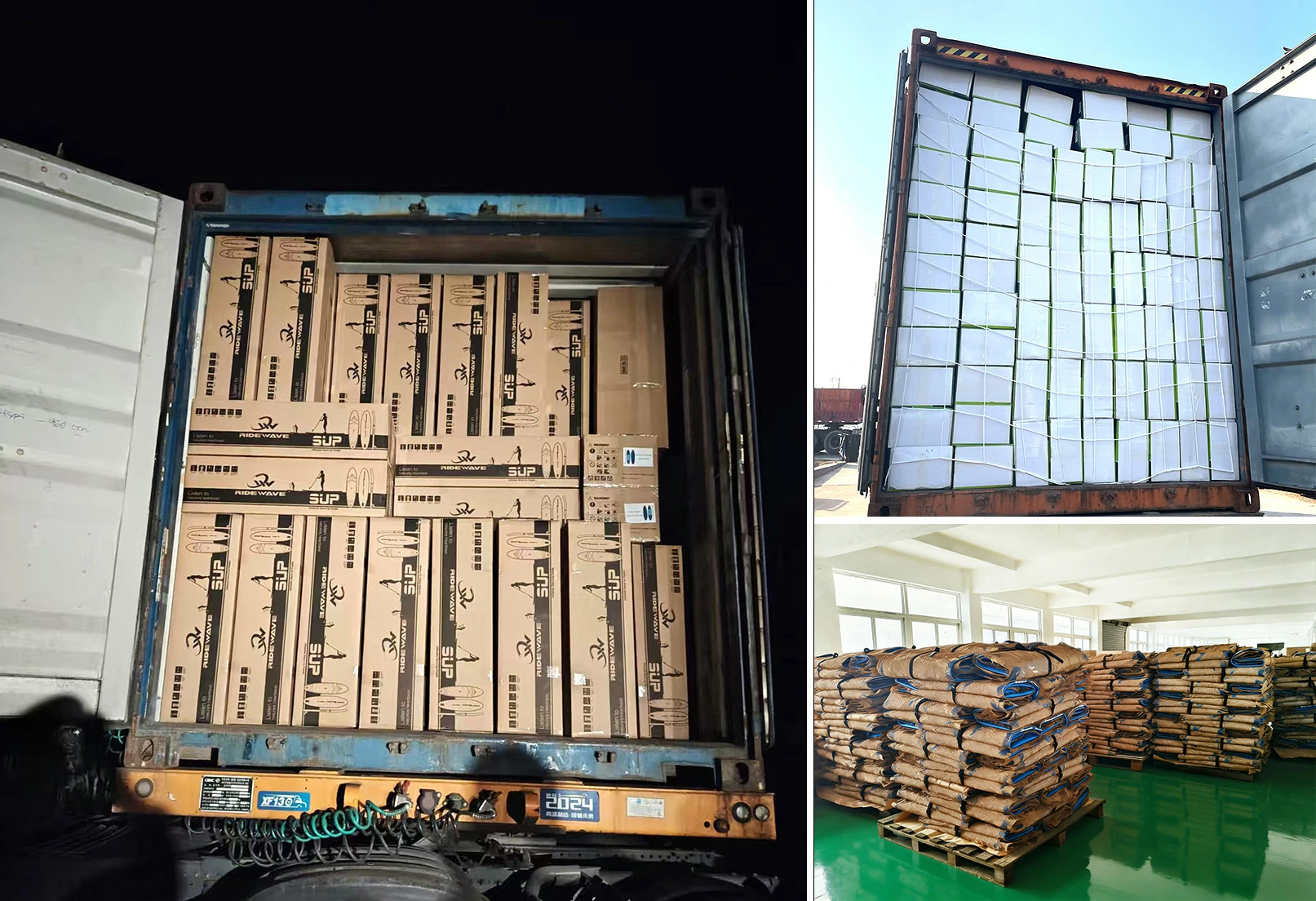
*Lock factory production slots 3–4 months before your target arrival date to avoid production backlogs.
*Reserve sea freight for core, high-volume SKUs and air freight exclusively for high-margin fast sellers.
*Communicate your firm seasonal deadline clearly to your supplier, freight forwarder and customs broker.
*Build a small safety stock of repair kits, replacement valves and fins alongside your board inventory.
*Track weekly local social media and retailer feedback to identify which SKUs will need emergency replenishment.
How does custom board design directly lift sell-through rate and profit for local SUP brands?
Many Argentine inflatable SUP distributors assume custom design is only for large, well-funded brands with huge minimum order volumes. In reality, thoughtful, market-aligned tweaks to an inflatable paddle board shape, layout and visual identity are one of the most reliable ways to boost sell-through, reduce price comparison pressure and protect your margins. Generic imported boards carry identical graphics and dimensions that any competing importer can source; buyers can easily open three different supplier pages and compare the same item by price. Custom design builds subtle, tangible value that shoppers cannot match elsewhere, justifying a higher retail price point and encouraging repeat orders from your retail network.

Design choices that move the needle do not always require reshaping the entire board outline. For the Argentina market, high-impact adjustments focus on local usage habits. Fishing SUP platforms gain faster traction when D-rings, rod mounts and storage rails are positioned for Paraná river angling, rather than layouts built for North American lakes. Touring models perform better for local families when they add reinforced grab handles, extra deck space for coolers and kids, and a stable width suited for river currents. Visual design also matters: colour palettes and artwork that resonate with South American outdoor communities outperform muted, neutral European-style prints. If you want to dig deeper into design principles that translate to stronger sales, read our dedicated guide: How To Design A Paddle Board That Sells.
A common mistake new private-label buyers make is prioritising aesthetics over functional field performance. Bold graphics can attract clicks, but poor stability, awkward accessory placement or weak rail structure will spike returns and damage your local brand reputation. The best workflow is to start with a proven, durable base platform, test revised layouts on a small sampling run, collect feedback from local anglers, rental operators and retail partners, then lock the final design for mass production. Ridewave's design team works with South American clients on this iterative process, balancing visual customisation, structural integrity and local usability without forcing unreasonably high MOQ for early trials.
Align deck fitting layouts with the specific river, lake and coastal use cases your local customers actually prefer.
Test revised designs with a small sample batch before committing funds to a full container production run.
Separate cosmetic customisation (art, colour, packaging) from structural customisation (width, rail shape, drop stitch density).
Keep local weather and water conditions front of mind: UV-resistant printing prevents fast fading of custom graphics.
Document feedback from rental fleets and fishing guides; these power users surface design flaws casual buyers will miss.
What support should a reliable SUP manufacturer provide to long-term South American distribution partners?
Selecting an inflatable SUP factory is not only about locking in competitive pricing for your inflatable paddle board orders. The most valuable partnerships are built on consistent, region-specific support that reduces your operational risk and helps you scale your SUP wholesale business year after year. Many manufacturers can produce a functional board, yet few are equipped to deliver the ongoing backend assistance that makes importing into Argentina and nearby Latin American markets manageable. This support stretches far beyond basic production and shipment, covering documentation, technical guidance, after-sales handling and flexible customisation pathways tailored to your local market.
At the foundational level, your manufacturer should deliver customs-compliant documentation packages pre-aligned with Argentine import standards. This includes organised test reports, material specification certificates, batch traceability records and separated paperwork for boards and accessories to match local NCM classification rules. Next, technical support is essential: access to spare parts inventories, official repair guidance, and clear material data sheets you can share with rental operators and retail clients concerned about UV resistance and saltwater durability. Flexible sampling and customisation pipelines are another pillar; your supplier should welcome iterative design tweaks, Spanish-language packaging and manual adjustments, and transparent communication around MOQ and lead times for private label runs. If you would like to understand how these custom concepts move from artwork files to finished bulk goods, you can review our production breakdown: How Custom Paddle Boards Are Made: From Design To Production.
A dependable factory also maintains realistic, honest communication around seasonal capacity constraints. Ahead of the Southern Hemisphere summer rush, they should flag production bottlenecks, advise you on safe order windows, and avoid overpromising delivery dates they cannot honour. Responsive warranty resolution is equally non-negotiable. Defects will occasionally appear in every product category, but a strong partner will agree on clear defect thresholds, photo/video claim workflows, and fair remediation options rather than delaying replies or shifting blame to freight and handling. Ridewave structures its South America partner service stack around these priorities, with dedicated QC tracking, regional documentation templates and a support team familiar with the rhythm of Argentine SUP retail cycles.
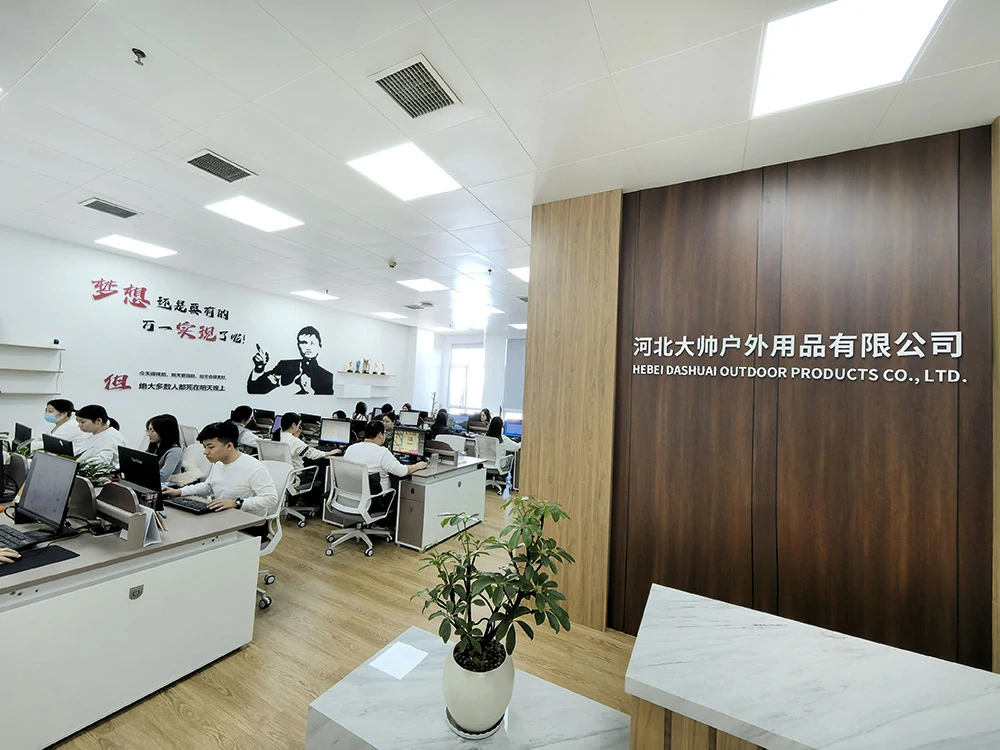
*Confirm that spare valve, fin and D-ring stock can ship separately on short notice for your after-sales kit.
*Verify that your supplier can revise certificates and declarations to match updates in local customs requirements.
*Secure a single dedicated contact rather than rotating sales staff for all your repeat inflatable SUP orders.
*Agree on a written warranty SOP before placing large recurring orders, to avoid disputes later.
*Ask for advance notice of raw material price shifts or supply delays that may impact your seasonal budget.
Sustainable growth in Argentina's inflatable SUP wholesale market does not come from chasing the rock-bottom factory price on generic inflatable paddle board inventory. It comes from aligning your product specification, landed cost model, customisation roadmap, logistics timing and supplier support with the unique realities of South American outdoor conditions, import rules and the Southern Hemisphere selling calendar. The most successful SUP distributors in this region stop competing purely on price and instead build layered portfolios: durable UV-resistant core stock, high-margin private label lines tailored for fishing, river touring and rental fleets, and lean inventory workflows that avoid costly stockouts or overstock.
Every choice you make, from verifying drop stitch density and PVC grade to negotiating warranty terms and scheduling sea freight lead times, shapes your final margin and local brand reputation. The frameworks, cost tables and real-world examples shared in this guide are designed to help you evaluate suppliers, plan seasonal orders and build stable relationships with retail and rental partners across Argentina, Uruguay, Paraguay and southern Brazil. Whether you are launching your first container of inflatable SUP or refining an established wholesale catalogue, focusing on durable, market-fit products and transparent manufacturer partnerships will separate your business from the crowd of commodity importers.
Related Articles
Quality Control Checklist For SUP Manufacturers
OEM Vs ODM Paddle Boards: Which Is Better For Your Brand?
How To Choose The Right SUP Paddle Board Manufacturer
2026 SUP Design Trends: Aesthetics That Capture Market Share For Retailers And Dealers
2026 Global Inflatable SUP Sourcing Guide: How Brands And Wholesalers Choose Top-Tier Suppliers