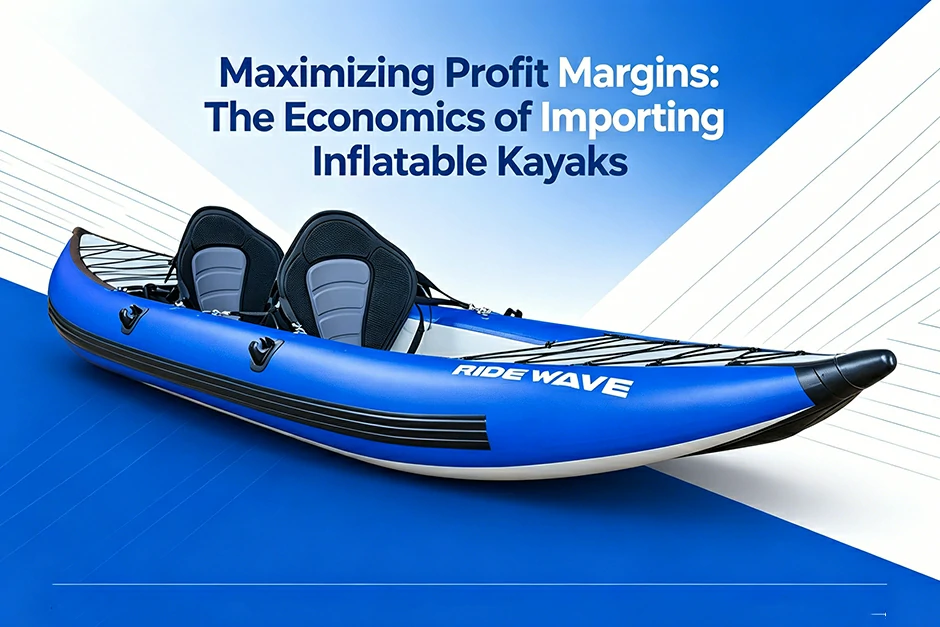

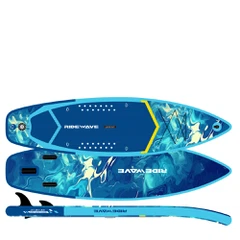
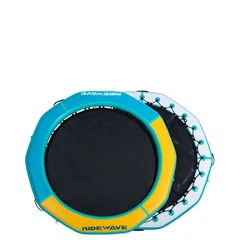
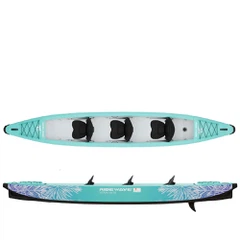


For Italian watersport wholesalers planning to stock inflatable SUP boards, sourcing reliable iSUP inventory from Chinese factories brings clear profit potential - yet many importers run into costly setbacks simply because they only compare FOB unit pricing. Before committing to large‑volume orders of blow‑up stand‑up paddle boards, buyers need to prioritize EU regulatory compliance, real factory production capacity, full landed‑cost calculations, seasonal inventory timing, usable marketing assets and supply‑chain risk control.

Far too many European distributors focus narrowly on cheap per‑unit costs, only to face customs holds at Genoa or Naples ports, high end‑user return rates, delayed summer stock arrivals or poorly performing retail listings. The 2026 global market for inflatable paddle craft also adds new layers of complexity: stricter EU REACH chemical restrictions, growing consumer demand for durable multi‑purpose iSUP models, volatile ocean freight rates and rising retailer interest in pre‑sales‑ready wholesale stock.
While this article speaks directly to Italian watersport wholesalers, these sourcing rules apply equally to distributors, resellers, sports‑goods merchants and private‑label brand owners across EU markets, North America, Canada, Australia and Latin America. Written from the perspective of an established China‑based inflatable SUP manufacturer, RIDEWAVE shares industry‑wide practical insights alongside real‑world client experience. This guide avoids generic marketing fluff and delivers actionable steps you can apply to your next iSUP bulk order.
What 2026 global water‑sport market trends should Italian wholesalers keep in mind for iSUP business?
Italian wholesalers must track five critical market forces when building their inflatable SUP product portfolio for 2026: tightening EU sustainability compliance rules, rising demand for multi‑functional iSUP units, growing rental‑grade paddle‑board requirements, predictable seasonal sales cycles and unstable cross‑ocean shipping costs. Ignoring these trends often leads to overstock of outdated models or missed peak‑season revenue opportunities.

Below are key market shifts every watersport wholesaler should monitor:
Stricter EU environmental regulations for inflatable paddle craft: REACH restriction updates create higher barriers for low‑cost imported goods. Non‑compliant PVC materials will trigger customs inspection and detention across Italian and EU borders.
Multi‑use family‑oriented inflatable SUP boards gain market share: Simple one‑person touring boards still sell steadily, yet consumers increasingly seek hybrid designs that support family recreation, short fishing trips and light‑kayak conversion.
Rental‑spec iSUP demand keeps growing: Lake‑side and coastal rental operators in Southern Europe look for heavy‑duty drop‑stitch construction, rather than entry‑level thin‑wall blow‑up paddle boards. Wholesalers who stock rental‑grade SKUs can unlock extra B2B revenue streams.
Regional seasonal selling windows differ drastically: Southern Europe peaks in late spring through summer; Australia and New Zealand hit high‑sales volume during northern‑hemisphere winter. Successful wholesalers build separate inventory timelines for each target territory.
Ocean freight volatility remains a major variable: Container rates and port congestion can shift within weeks. Even well‑planned iSUP bulk order schedules face delays if buyers fail to build sufficient logistics buffer time.
Many new‑to‑market wholesalers fall into a common trap: copying last‑year best‑selling items without reviewing updated market data. Selling outdated low‑spec inventory creates high return rates and damages long‑term relationships with your local retail partners.
This regional demand snapshot highlights why one single product line cannot satisfy every overseas territory. At RIDEWAVE, our sales team frequently observes distributors select mixed‑model containers to match multiple target markets, rather than filling one full container with identical single‑size boards. This mixed‑SKU strategy helps wholesalers spread market risk.
Which EU compliance certifications are non‑negotiable for importing inflatable SUPs into Italy?
Italian wholesalers must get clear documentation for CE declaration, REACH compliance reports for PVC and all supporting accessories before shipping inflatable SUP boards into Italy. BSCI factory audit reports will also add value if you supply large‑scale retail chains. Missing or falsified paperwork leads directly to customs detention at Italian ports, product confiscation, fines and costly delivery delays for your iSUP bulk order. Many first‑time importers underestimate how strictly Italian customs inspect blow‑up paddle‑board shipments.
Below are the non‑negotiable compliance documents every buyer should verify:
CE self‑declaration of conformity: This document confirms your inflatable paddle craft meets EU safety standards. It must list the exact product model numbers you import. Generic blank CE files without matching SKUs hold zero legal value for Italian customs.
REACH chemical compliance test reports: Focus on phthalate, heavy‑metal and PVC‑material testing. Third‑party lab reports are required; factory‑written internal documents cannot replace official lab test results. Many cheap Chinese inflatable SUP suppliers hand over expired or altered REACH files.
Accessory compliance checks: Paddles, hand pumps, backpacks and repair kits shipped together with the SUP also fall under EU import rules. Wholesalers frequently overlook accessory testing and face inspection holds even if the board itself passes requirements.
BSCI audit (optional but high‑value): Major Italian sport‑retail retailers require BSCI social‑audit records before opening new wholesale partnerships. It proves factory working conditions meet European social‑responsibility benchmarks.
A widespread sourcing myth: "one certification fits all European countries". While core EU rules align, Italian customs carry out higher‑frequency physical spot‑checks for watersport inflatables. Documentation that passes inspection in northern EU ports may still trigger extra verification when goods arrive in Genoa or La Spezia.

Working directly with a verified inflatable SUP manufacturer reduces compliance risk. At RIDEWAVE, our compliance team double‑checks every batch‑specific test report before container loading, to avoid mismatched documentation that could create headaches for overseas wholesalers. Even so, we always remind B2B clients to review all compliance files themselves before shipment departs China.
How to tell the difference between trading companies and real inflatable SUP manufacturers in China?
Wholesalers can reliably separate genuine inflatable SUP board manufacturers from middle‑man trading companies by verifying in‑house welding production lines, independent QC laboratory, self‑owned mould resources, workshop access and stable repeat‑order track records. Many Italian buyers get trapped by traders posing as factories, which leads to unstable quality, delayed lead‑times and vague after‑sales support for their blow‑up paddle‑board wholesale projects.

Trading companies outsource nearly all production tasks to third‑party workshops. They can offer attractive initial pricing, yet they hold zero direct control over raw‑material selection, seam‑welding quality or production scheduling. When quality defects emerge, traders often pass responsibility between multiple subcontractors and slow down your claim resolution process.
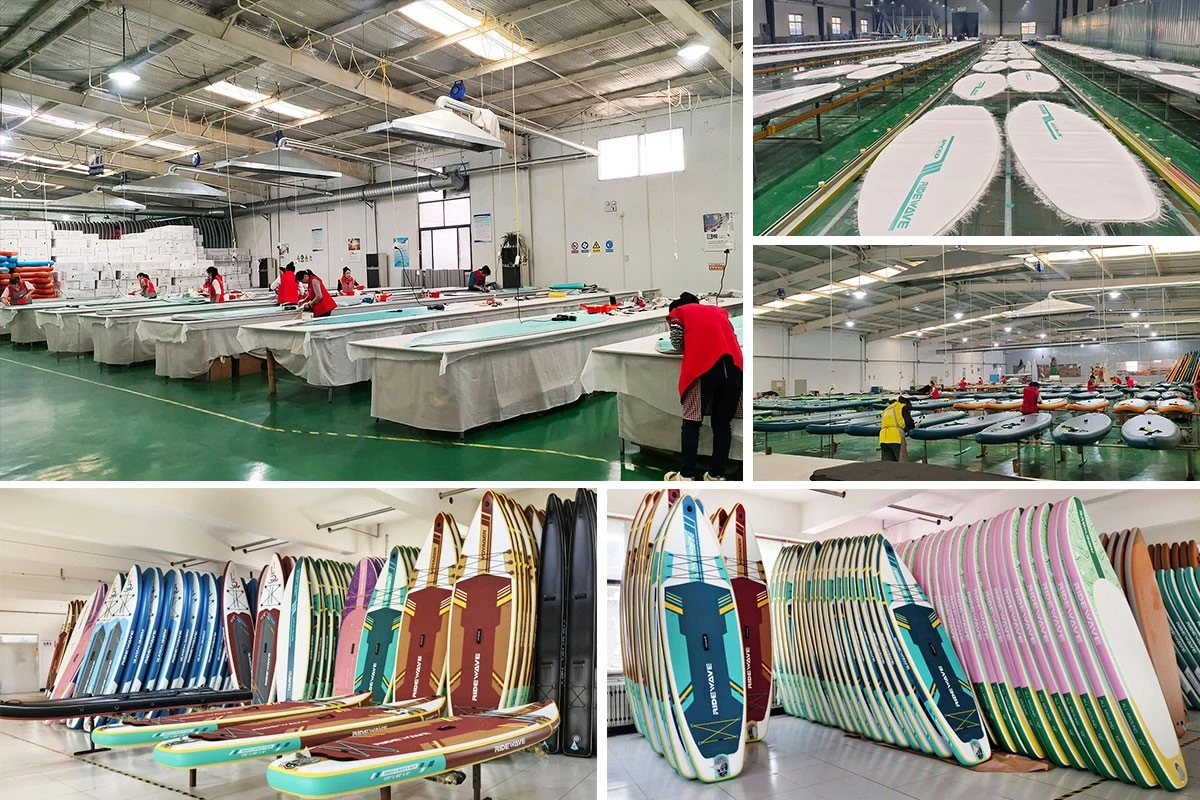
Real manufacturers own complete production workflows onsite: drop‑stitch fabric cutting, high‑frequency heat‑welding assembly, pressure‑leakage testing and finished‑goods packing. They can adjust product specs, modify graphics and handle custom‑label ODM requests directly without coordinating with outside subcontractors.
Key practical checks you can perform before placing large orders:
Request live video tours of production lines, QC testing stations and finished‑goods warehouse. Genuine factories will agree without hesitation; traders will give excuses or show downloaded stock footage.
Ask about mould ownership. Real iSUP makers hold physical mould sets for their board shapes; traders have no original mould assets.
Review pressure‑test workflow. Credible inflatable paddle craft producers run mandatory 24‑48‑hour holding‑pressure leakage tests for every production batch.
Check after‑sales protocols upfront. Real factories define clear defect‑rate thresholds and replacement terms. Traders frequently give only verbal promises.
It is worth noting that not every factory on Chinese B2B platforms operates its own full‑line production. Some register factory‑style profiles but still subcontract most manufacturing work. At RIDEWAVE, we welcome B2B partners for live virtual workshop visits, so wholesalers can observe our full iSUP production and QC procedures firsthand. We encourage all Italian buyers to complete this verification step regardless of which supplier they finally select.
What construction details & quality metrics should wholesalers evaluate when sourcing inflatable SUP?
Wholesalers need to assess drop‑stitch fabric density, heat‑weld seam performance, military‑grade PVC layers, mandatory pressure‑holding leakage tests, valve hardware and complete accessory matching before confirming bulk orders of inflatable SUP boards. These core build factors directly control end‑user satisfaction, product failure rates and long‑term profitability for your iSUP wholesale business. Many overseas buyers only look at board appearance, ignoring hidden construction flaws that trigger high return rates after retail sales.
Different build grades serve distinct business scenarios, from entry‑level consumer retail to heavy‑duty lake‑side rental fleets. You cannot rely on product pictures alone to judge real‑world durability.
Key quality benchmarks every B2B buyer must inspect:
Drop‑stitch fabric density: Higher thread count delivers stiffer, more rigid blow‑up paddle boards. Low‑density drop‑stitch leads to obvious board flex under weight, poor handling performance and faster product fatigue. Rental‑oriented SKUs require upgraded high‑density drop‑stitch material.
Heat‑weld seam integrity: Quality inflatable paddle craft adopt full high‑frequency heat‑weld technology instead of glue bonding. Glued seams tend to peel or leak under UV exposure and repeated inflation cycles. Always confirm welding technique with your supplier.
Multi‑layer PVC lamination: Thicker multi‑layer PVC improves UV‑resistance and abrasion resistance for coastal salt‑water environments. Thin single‑layer PVC works for budget‑focused consumer lines yet cannot withstand heavy rental‑usage cycles.
24‑48‑hour pressure holding test: Every production batch should complete static air retention testing. This procedure catches tiny seam leaks and valve defects before goods are packed and shipped. Skipping this step creates serious after‑sales headaches for wholesalers.
Valve & accessory quality: Cheap leak‑prone one‑way valves, brittle plastic paddles and low‑pressure hand pumps count among top consumer complaints. Even a well‑built inflatable SUP board will receive negative reviews if paired with poor‑quality supporting accessories.

Before approving mass production, place a sample order and run your own real‑world tests. Inflate the board to recommended PSI, keep it stored for 48 hours, check air loss, test valve operation and inspect all accessories. Physical sample testing exposes flaws that product specifications cannot show.
To deepen your understanding of production workflows, read our article: 🔗How Custom Paddle Boards Are Made: From Design To Production
At RIDEWAVE, our QC team carries out batch‑wise pressure retention checks for every container of inflatable paddle craft. We remind partners that higher‑grade construction raises unit FOB cost moderately, yet it drastically cuts return rates and protects your brand reputation in local markets. It is not always wise to chase the lowest possible unit price.
What MOQ, pricing structure and hidden costs should Italian wholesalers calculate carefully?
Italian wholesalers should never base purchasing decisions solely on quoted FOB unit price for inflatable SUP boards. You need to calculate full landed cost, including sea freight, import duty, Italian VAT, customs clearance fees, inland trucking and contingency budget for defective goods, to evaluate real profitability for your blow‑up paddle‑board wholesale project. Multiple hidden fees can erase your profit margin even if you secure a low per‑unit FOB price.
Many first‑time Italian importers overlook landed‑cost analysis. They compare quotations from several suppliers only by FOB price, place large‑volume orders, and discover slim or zero profit after goods arrive at Italian ports.

Critical pricing & MOQ points for B2B Italian buyers:
Flexible mixed‑SKU MOQ: Reputable inflatable paddle craft factories support mixing multiple hot‑selling models within one full container. Mixed‑model MOQ lets wholesalers diversify product portfolios without over‑investing in single‑SKU inventory. Small‑volume LCL partial container orders carry higher per‑unit logistics overhead.
Three main price tiers: Budget entry‑level, mid‑range retail grade, heavy‑duty rental grade. Each tier matches different target customer groups and retail price positioning.
One‑off extra charges: Sample fees, graphic mould‑opening charges, private‑label printing setup cost, packaging modification fees. These are non‑recurring costs that need to be counted in your initial budget.
Tax rules for Italy import: Import duty and VAT apply to the total value of goods plus ocean freight. Tax calculation cannot rely only on product FOB value.
Logistics contingency budget: Reserve funds for potential port detention surcharges, minor cargo damage and replacement part shipments.
At RIDEWAVE, our quotation sheets clearly separate one‑time setup fees versus recurring unit‑product costs. We advise Italian clients to run full landed‑cost simulation before confirming container orders, rather than judging offers only on FOB figures. Even if another supplier provides lower unit pricing, higher failure rates or extra logistics expenses may make it less profitable overall.
How to plan lead‑time & sea‑logistics for seasonal Italian & global SUP sales peaks?
Wholesalers must place inflatable SUP boards bulk orders 90‑120 days ahead of their local peak selling season. You need to build separate buffer time for factory production cycles, ocean‑vessel transit and customs clearance, otherwise you risk empty‑warehouse status right when consumer demand for your iSUP wholesale inventory spikes. Many European and Australian distributors underestimate total end‑to‑end timeline, missing core selling windows and losing considerable revenue.

Lead‑time variables you cannot ignore:
Factory production cycle: Off‑season (October‑January) normally takes 30‑45 working days. Peak‑season production (February‑June for European market) tightens capacity, pushing manufacturing cycles up to 60‑75 working days.
Ocean transit duration: Qingdao to main Italian ports takes 32‑42 days for FCL full containers. LCL consolidated cargo often adds another 7‑14 days due to container consolidation and deconsolidation work.
Customs & inland delivery buffer: Reserve 7‑15 extra days for port inspection, document verification and trucking from seaport to your local warehouse. Italian customs spot checks can extend this window without advance warning.
Peak‑season freight volatility: Container rates can jump rapidly within Q1‑Q2. Booking shipping space early locks in better prices and avoids vessel roll‑over risks.
Full container FCL and less‑than‑container LCL each fit different‑size wholesalers:
FCL Full Container Load: Best for orders from 500 units upwards. Lower per‑unit shipping expense, fewer cargo‑handling scratches. Mixed‑model loading is widely adopted among experienced buyers.
LCL Less Than Container Load: Suitable for trial orders under 250 units. Higher unit logistics cost, increased risk of surface abrasion during multiple transfer steps. Not recommended for large‑scale seasonal stock replenishment.
Real‑world B2B sourcing case from RIDEWAVE: In January 2026, one of our long‑term Australian distributors placed a bulk order covering 1200 units of branded inflatable paddle craft. They selected five proven hot‑selling board styles matching local Australian consumer preferences. Goods were shipped by cost‑effective full‑ocean freight from Qingdao port in China toward Australia. Before physical production kicked off, RIDEWAVE delivered complete marketing assets, including printable product catalogs, professional studio‑shot photos, main product renders and close‑up detail images for every single SUP variant.
Equipped with these ready‑to‑use visual resources, this distributor launched pre‑sales campaigns before the container physically arrived at their domestic warehouse. Up to now, they have already pre‑sold 800 complete sets, and are actively negotiating follow‑up replenishment terms with our sales team. The extra stock will help them satisfy heavy customer demand ahead of Australia's fast‑approaching summer selling period.

This pre‑sales‑oriented supply model works equally well for Italian and European wholesalers. You do not need to wait for container arrival to start your marketing activities. Access to finished marketing assets lets you open pre‑sales, reduce capital pressure tied up in static inventory and better forecast how many extra blow‑up paddle‑board units you will need to re‑order.
Browse our product collection for wholesale‑ready inflatable SUP models: RIDEWAVE Hot‑selling inflatable SUP collection
What kind of marketing assets support can a reliable SUP manufacturer provide for B2B wholesalers?
Qualified inflatable SUP board manufacturers should deliver printable catalogues, high‑resolution studio photos, close‑up detail imagery, standardized spec‑sheets and editable marketing copy. These assets help wholesalers run pre‑sales campaigns, populate e‑commerce store listings and produce offline retail brochures for your blow‑up paddle‑board wholesale business. Many factories only deliver physical goods and offer zero usable marketing resources, forcing distributors to spend extra time and budget shooting product content from scratch.
Not all visual resources from suppliers carry commercial‑use rights, and this is a frequent pain‑point for European B2B buyers. Generic low‑resolution images downloaded from public websites cannot be used for paid ads, product listings or printed catalogues, and may trigger copyright‑infringement claims.

Breakdown of practical marketing assets a trustworthy supplier should supply:
Print‑ready product catalogue: Complete SKU specifications, dimension data, kit contents, colour variants. Formatted for offline printing or online PDF distribution.
Copyright‑cleared studio photos: Main hero shots, lifestyle pictures, angle variations, component‑focused detail shots for every inflatable paddle craft SKU. Files should be high‑resolution without watermarks.
Standard spec sheets: One‑page technical documents for each board, listing PSI rating, weight capacity, packed dimensions and full‑kit accessory lists.
Packaging & label production files: For private‑label / ODM partners, editable AI or PDF print files for outer cartons and product stickers.
Short descriptive copy snippets: Ready‑to‑adapt product descriptions you can tweak for your own website or marketplace storefronts.
Marketing asset support directly ties back to the Australian distributor case covered in the previous section. That partner could launch pre‑sales smoothly mainly because complete sets of copyright‑cleared visual materials were handed over before goods left China. Without these materials, pre‑sales activity would be nearly impossible.
New‑entry wholesalers often overlook this factor during supplier evaluation. They focus only on unit price, yet post‑production content creation costs will eat into your final profit margin. When you compare different factory quotations, you ought to clarify what marketing resources come included inside the wholesale package.
If you want to learn more about developing market‑friendly paddle‑board products, read: How To Design A Paddle Board That Sells
At RIDEWAVE, we treat marketing assets as part of complete B2B wholesale service instead of an extra paid add‑on for standard‑range orders. Our team prepares full visual packages for branded‑order clients. Still, we remind buyers to confirm asset scope in advance during quotation communication, so both sides hold aligned expectations before order confirmation.
What risks do Italian wholesalers face when sourcing cheap inflatable SUP from China?
Many Italian wholesalers are tempted by ultra‑low quotations for inflatable SUP boards, yet rock‑bottom pricing almost always comes with hidden trade‑offs that harm your iSUP wholesale business long‑term. Short‑term margin gains can quickly vanish through customs penalties, high consumer return rates, negative retail feedback and damaged business relationships with your local retail partners. It is critical to separate genuine competitive pricing from misleading low‑cost offers for blow‑up paddle‑board inventory.
Core risks brought by overly‑cheap inflatable paddle craft supplies:
Non‑compliant raw materials and incomplete certification: Low‑cost suppliers frequently cut corners on PVC material quality and skip third‑party lab testing. Shipments may lack valid CE and REACH documentation. Once intercepted by Italian customs, goods can be detained or confiscated, resulting in total financial loss for your order.
Compromised physical construction quality: Thinner drop‑stitch fabric, glue‑bonded seams instead of heat‑welding, inferior‑grade valves and brittle accessories. These defects lead to high rates of air leakage, board deformation and early‑stage product failure after short‑term consumer use.
Unreliable after‑sales support: Budget‑oriented suppliers often provide only minimal after‑sales assistance. Once quality issues emerge, responses become slow, defect‑rate thresholds are denied, and replacement solutions are hard to obtain. Wholesalers end up bearing nearly all customer‑complaint costs locally.
No usable commercial marketing assets: Cheap‑source factories rarely supply copyright‑cleared high‑resolution photos, formal catalogues or editable spec sheets. You will need to invest extra manpower and capital to create all sales content locally.
Unstable batch‑to‑batch consistency: Raw‑material batches may change without advance notice. The second or third container you receive may show obvious differences in board stiffness, colour shade and accessory quality compared with your initial sample.

Buyers should never rely purely on sample quality to judge mass‑production performance. Some low‑cost vendors carefully hand‑assemble perfect‑looking samples, while mass‑production goods adopt downgraded materials. Always request batch‑specific test reports before container loading.
Review our earlier compliance guidance: 10 Questions Every B2B Buyer Should Ask Before Placing An Inflatable SUP Factory Order
At RIDEWAVE, we regularly encounter European clients who switched over after painful experiences with ultra‑cheap inflatable paddle craft suppliers. They share that initial attractive per‑unit prices ultimately generated far bigger overall losses. This does not mean every budget‑priced option should be rejected; it means wholesalers need to verify compliance, build standards into contracts and weigh total comprehensive cost instead of only comparing unit FOB prices. We always remind partners that saving a small amount on each board can create disproportionate downstream risks for your whole distribution business.
What practical terms should you put into your inflatable SUP wholesale purchasing contract?
Verbal promises carry almost zero legal protection for cross‑border inflatable SUP boards wholesale transactions. All critical agreements must be written clearly within your formal purchasing contract, to protect your blow‑up paddle‑board import business when quality disputes, delivery delays or compliance‑related issues arise. Many Italian small‑and‑medium wholesalers skip detailed contract drafting, relying only on chat‑message records, which creates huge obstacles for overseas claim resolution.
Key clauses worth adding to your SUP wholesale contract:
Compliance documentation clause: Confirm that CE declarations, REACH third‑party lab test reports correspond exactly to this specific production batch. Specify that documents shall be delivered before container loading. Clarify supplier liability if goods fail customs inspection due to invalid paperwork.
Quality‑standard clause: Write down drop‑stitch density, PVC layer specification, pressure‑holding test duration, agreed maximum acceptable defect rate. Tie these physical standards to the pre‑approved sample.
Production & delivery timeline: State exact production lead‑time, latest container loading date. Define liquidated damages for serious delivery delays caused by the manufacturer.
After‑sales & claim settlement terms: Clarify how defective‑goods compensation works: replacement parts, partial refund or product replacement. Confirm response time windows for quality‑problem feedback.
Batch‑consistency requirement: Explicitly require mass‑production goods match sample on material, colour, accessory configuration. Mention notification obligation if raw‑material suppliers get changed.
Marketing‑asset delivery scope: List exactly which photos, catalogues, spec‑sheets and editable print files the factory shall provide, plus delivery timeline for these digital resources.
Even reliable inflatable paddle craft manufacturers make occasional mistakes. A well‑written contract does not mean you distrust your supplier; it sets clear shared rules for both sides and reduces misunderstandings.
At RIDEWAVE, our sales team provides detailed proforma invoices and formal purchasing agreements covering above‑mentioned core items for every bulk container order. We welcome our Italian clients to add extra protective clauses according to local import requirements. Transparent written agreements help both parties avoid misunderstandings and keep long‑term stable wholesale cooperation.
Final key takeaways for Italian wholesalers sourcing inflatable SUP from China
Successful inflatable SUP boards sourcing is never only about hunting for the lowest FOB price. Profitable iSUP wholesale relies on balanced evaluation of compliance status, manufacturing quality, full landed‑cost calculation, lead‑time planning, after‑sales mechanisms and usable marketing resources. Every step of your import workflow shapes retail performance, customer feedback and long‑term brand reputation for your blow‑up paddle‑board distribution business.
For Italian‑market buyers, keep these core takeaways front‑of‑mind:
Always validate EU‑compliant documentation including batch‑specific CE and REACH lab reports before shipment departs China. Never underestimate Italian customs inspection intensity for inflatable paddle craft goods.
Distinguish real manufacturers from middle‑man traders. Request virtual factory tours, verify QC workflows and confirm pressure‑holding test standards before committing to large‑volume orders.
Judge profitability based on full landed‑cost, not unit‑only FOB quotation. Factor in freight, tax, contingency budget and potential after‑sales loss risk.
Plan orders well ahead of seasonal peaks and build sufficient time buffers for production, ocean transit and customs clearance. Pre‑sales supported by complete marketing assets can greatly relieve your inventory capital pressure.
Put all core requirements into written purchasing contracts, instead of relying on informal chat‑room promises. Clarify quality standards, compliance liabilities, defect compensation and marketing‑asset delivery scope.
Stay alert to ultra‑low‑price traps. Minor savings on per‑unit cost may trigger customs seizures, high return rates and retailer‑relationship damage that far outweigh short‑term profits.
Sourcing from China creates huge growth opportunities for European watersport wholesalers, yet it requires systematic, detail‑oriented work. You do not have to sacrifice quality for lower pricing, nor do you need to overpay for unnecessary premium features. The ideal supplier delivers stable‑quality goods, complete compliance paperwork, reasonable pricing, reliable after‑sales support and practical B2B marketing resources.
At RIDEWAVE, we work with global distributors including Italian watersport wholesalers. Our goal is to deliver steady‑performance inflatable paddle craft and practical wholesale‑oriented support, rather than chasing the absolute lowest market price. We believe long‑term win‑win partnerships come from transparent communication, aligned quality standards and shared market growth.
Related Articles
How To Build A Long-term Partnership With SUP Manufacturers
How To Start A Paddle Board Brand On A Budget
Exhibitions And Trade Shows For SUP Manufacturers