

How Chilean Wholesalers Can Source Profitable Inflatable SUPs from China
Chilean water‑sports wholesalers, distributors and resellers can build solid profit margins by sourcing inflatable SUP directly from verified Chinese manufacturers, yet many struggle with unreliable suppliers, unclear import rules, wrong model selection and unpredictable ocean freight. This article walks you through real‑world sourcing workflows, market data, compliance checks and practical lessons drawn from South‑American B2B projects, including one recent distributor cooperation handled by the RIDEWAVE manufacturing team. Whether you are an existing paddle‑board wholesaler expanding stock, a general sports‑goods dealer adding a new category, or an emerging private‑label brand owner, you will get actionable steps to lower sourcing risk and boost your local return on investment. Latin America's warm summer season creates short selling windows, so smart procurement planning directly decides whether your inflatable stand‑up paddle board inventory sells through or ties up your working capital.
Why Is Inflatable SUP the Most Profitable Water Sports Category for Chilean Wholesalers in 2026?
flatable stand‑up paddle boards balance affordable landed cost, low storage pressure and broad consumer appeal across casual recreation, lake touring, coastal leisure and rental business channels. Hard fiberglass paddle boards carry high shipping volume, expensive local warehousing and higher return rates for damaged goods. By comparison, compact roll‑up iSUP inventory cuts down both container space and local warehouse overhead, which matters a great deal for Chilean importers working with limited warehouse square meters.
Local consumer demand across Chile keeps expanding: coastal tourist towns, inland lake zones and outdoor retail chains all report growing buyer interest in accessible paddle‑sport gear. End‑users prefer drop‑stitch inflatable SUP for easy transport inside cars, no need for roof racks, and simple home storage. For wholesalers, this translates into faster inventory turnover and less capital locked in slow‑moving stock.

That does not mean every inflatable SUP batch automatically delivers good profit. Low‑end cheap units from unknown factories often trigger high return rates, customer complaints and compliance failures. Many Chilean buyers learned this lesson after importing budget boards that delaminated, leaked air or failed material tests. Selecting the right quality tier and suitable model mix is non‑negotiable if you want consistent gross profit.
Key profit‑driving advantages of wholesale inflatable SUP for Chilean B2B operators:
Lower per‑unit ocean freight cost compared with hard paddle boards due to rolled‑up packing
Wide customer base: retail buyers, rental operators, tourism agencies, gift‑sport shops and corporate promotional clients
Flexible order range: from mid‑size mixed container loads up to large‑volume full‑container shipments
Multiple price tiers: entry‑level recreational boards, touring‑focused inflatable SUP, and premium reinforced models for salt‑water coastal use
| Product Segment | Typical China FOB Price Range | Estimated Landed Cost Chile | Common Local Wholesale Resale Price | Approximate Gross Margin |
|---|---|---|---|---|
| Entry‑level recreational inflatable SUP | $85‑110 | $115‑145 | $175‑210 | 35‑42% |
| Mid‑range touring drop‑stitch inflatable SUP | $115‑145 | $150‑185 | $230‑280 | 40‑48% |
| Heavy‑duty salt‑water reinforced inflatable SUP | $148‑180 | $188‑225 | $290‑350 | 42‑50% |
Notes: Landed cost includes sea freight, documentation and estimated import duty; final numbers shift with exchange rate, fuel surcharges and customs adjustments. Data aggregated from South‑America‑focused manufacturer feedback including RIDEWAVE B2B order records.
How Do 2026 Global Watersport Trends Reshape Chile's SUP Wholesale Market Rules?
Global watersport trends in 2026 are rewriting purchasing rules for Chilean SUP wholesalers, and ignoring these shifts will leave you holding inventory that fails to resonate with local buyers. Three major forces are driving change across Latin‑American inflatable paddle‑board markets: tightened material compliance requirements, seasonal purchasing rhythm for Southern‑Hemisphere summer, and rising consumer demand for durable salt‑water‑ready inflatable SUP.
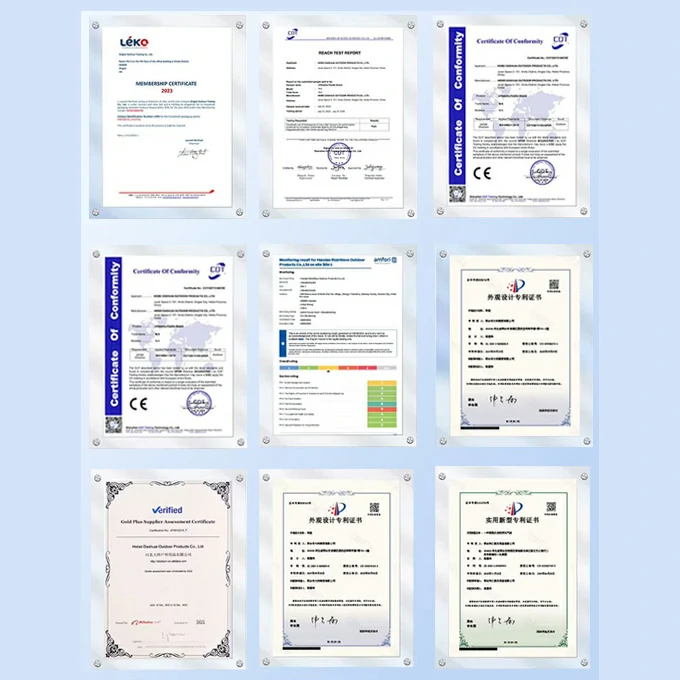
First, updated global chemical regulations cannot be overlooked. Even though Chile does not fully copy EU PFAS rules, many Chilean retail chains and tourism rental operators now require suppliers to provide test reports for inflatable stand‑up paddle board materials. If your stock lacks valid lab documentation, large‑chain buyers will reject your offers. Some Chinese manufacturers still produce older formula PVC without updated testing. This creates hidden risk for importers, and you need to verify compliance before confirming deposits. RIDEWAVE updates material test documentation regularly for South‑American clients to match evolving retailer requirements, as we have seen more Chilean distributors request these certificates before sample evaluation.
Second, Southern‑Hemisphere seasonal timing dictates your whole inventory cycle. Chile's peak selling window runs October through February. Most successful wholesalers place production orders between March and July, to secure China factory production slots and arrange ocean transit before summer demand spikes. Delayed order placement leads to factory backlogs, higher spot freight rates and missing your core selling months. Many first‑time Chilean SUP importers underestimate lead‑time pressure and end up receiving containers right after summer fades away.
Third, end‑user preference is shifting away from ultra‑cheap thin‑wall boards. Shoppers in Chile spend time both on fresh‑water lakes and salty coastal bays. Thin cheap inflatable SUP models scratch easily on sand and salt‑water particles, generating high post‑sale complaints. Wholesalers now gain competitive edge by stocking mid‑tier boards with reinforced outer layers, rather than competing purely on rock‑bottom price.

Other notable market shifts shaping Chilean iSUP wholesale:
Rental businesses are growing fast, requiring heavy‑duty, high‑PSI drop‑stitch inflatable SUP built for repeated heavy‑use
Private‑label requests keep growing; local wholesalers want to print their own brand logo on paddle‑board decks
Buyers care more about complete accessory kits: not only the board itself, but adjustable paddles, high‑pressure pumps, safety leash and travel backpack
Practical take‑away for your sourcing plan: you cannot copy product mixes designed for Northern‑Hemisphere markets directly into Chile. What sells well in Europe or Canada may under‑perform on Chile's coast and lakes.
Why Is China the Only Cost‑effective Manufacturing Base for High‑margin Inflatable SUPs?
Buyers from Chile and across South America keep asking: where can I source consistent‑quality inflatable SUP without blowing up my total landed budget. For high‑margin inflatable stand‑up paddle board wholesale, China remains the most practical manufacturing hub, and it is not only about cheap unit prices. The full supply‑chain ecosystem for iSUP production sets Chinese factories apart from alternative production locations.

Inflatable paddle‑board manufacturing relies on a tightly connected supply chain: drop‑stitch fabric, reinforced PVC layers, high‑pressure valves, EVA deck pads, production moulds, accessory kits, packaging cartons and pre‑shipment quality inspection. Within China's water‑sport manufacturing clusters, all these raw‑material components can be sourced locally. Factories do not need to import most core parts from overseas, which shortens lead‑times and stabilizes production costs. Many competing manufacturing regions struggle with incomplete component supply. They must import key fabrics or valve parts, which creates longer lead times, supply‑chain delays and unpredictable cost swings.
That said, "Made in China" is not a guarantee of good quality. The market splits into three distinct tiers of wholesale inflatable SUP manufacturers. Many first‑time overseas buyers fail to tell these groups apart and end up partnering with low‑tier workshops.
Low‑tier workshops: Focus on rock‑bottom FOB prices. They use thin‑gauge raw fabric, recycled PVC material, basic non‑branded valves and minimal quality checks. MOQ can appear attractive, yet defect rates are high. These boards frequently suffer air leaks, delamination and weak deck adhesion after short‑term use. They may pass visual inspection before shipment but fail once end‑users put them into salt‑water conditions.
Mid‑tier professional factories: Specialize in water‑sport inflatable goods. They use certified virgin drop‑stitch material, standard‑grade valves and perform batch‑by‑batch QC testing. They support mixed‑container orders, private‑label printing and complete accessory matching. Most South‑American stable‑margin wholesalers choose suppliers within this tier.
High‑end premium factories: Target ultra‑premium global brand clients. Strict raw‑material screening, custom‑formula fabric, extensive lab testing. Unit costs rise noticeably, which compresses profit space for Chile mass‑market wholesale business.
RIDEWAVE sits within the mid‑tier professional factory group. Our production setup is built for large‑volume South‑America bound inflatable SUP orders, balancing controlled cost, consistent quality and flexible customization options, rather than chasing either the absolute lowest price or luxury‑level premium pricing.
When comparing production geographies, you also need to account for ocean‑shipping accessibility. Major Chinese ports such as Qingdao, Shanghai and Ningbo offer frequent direct and trans‑shipment vessel routes toward Chile and South America. Stable sailing schedules help wholesalers stick to their southern‑hemisphere summer sales timeline. Alternative manufacturing locations often have fewer weekly sailings to Latin America; minor shipping delays can completely ruin your selling season.
| Production Region | Raw Material Supply | Typical Lead Time | Unit Cost Level | Latin America Shipping Frequency | Best‑fit Buyer Profile |
|---|---|---|---|---|---|
| China professional iSUP factory | Complete local supply chain | 30‑45 days | Medium | High, frequent sailings | Most Chilean wholesalers, mixed container, private label |
| Low‑cost overseas workshop | Partial imported key components | 55‑80 days | Low | Limited vessel options | Only for buyers accepting higher defect risk |
| Premium overseas manufacturing | Partial imported components | 60‑90 days | High | Medium | Luxury brand, small‑batch high‑end lines |
How to Screen Reliable Chinese Inflatable SUP Manufacturers Avoiding Low‑quality Inventory Risks?
Every Chilean SUP wholesaler's worst nightmare is paying for a full container of inflatable SUP, only to receive goods that leak air, fail material tests or cannot be resold to local retailers. Effective supplier screening is your first‑line defence against bad inventory and lost working capital. Many overseas buyers judge factories only by Alibaba photos or quoted FOB price; this approach will expose you to avoidable risk.
Screening trustworthy inflatable stand‑up paddle board manufacturers needs multi‑dimension verification, not price‑driven selection alone. You need to check factory qualification, real production capacity, QC workflow, South‑America export experience, sample performance and after‑sales policy before you commit to deposit payments.
Below are practical screening checkpoints for Chilean B2B buyers sourcing iSUP:
Verify real production capacity: Ask for recent production loading photos, container loading videos for South‑American orders. Trading companies can show you nice product photos, yet they lack independent production lines. Confirm whether the supplier owns sewing, heat‑welding workshops and in‑house QC team.
Review export track record for Latin America: Factories with rich South‑America order experience already understand local import pain points. They know which accessory kits, packaging labels and material reports Chilean importers commonly require. Factories that mostly serve European or North‑American markets may overlook Latin‑America‑specific details. RIDEWAVE has completed dozens of container shipments to Chile, Argentina, Peru and Brazil, so our team is familiar with document requirements for South‑American customs clearance.
Request physical sample evaluation, not only digital pictures: Test sample air‑holding performance, PVC tear resistance, EVA deck bonding quality and valve tightness. Run salt‑water soak simulation test if possible, to replicate Chile coastal‑use scenarios. Never confirm mass‑production without physical sample validation.
Inspect quality‑control procedures: Ask how many QC steps are arranged during production. Reliable factories carry out raw‑material incoming inspection, semi‑finished‑product air‑leak testing, finished‑board pressure holding test and random pre‑shipment inspection. Avoid suppliers who only perform visual check before packing.
Clarify after‑sales terms in written form: Confirm defective‑goods replacement policy, spare‑part supply for valves and accessories, response time for quality claims. Verbal promises hold almost zero protection for cross‑border B2B transactions.
Confirm document support: Confirm the factory can provide commercial invoice, packing list, material test reports, certificate documents required for Chile customs and retail‑chain audits.

A common trap among new importers: chasing the lowest quoted FOB price. When a supplier's price sits far below the normal market range for wholesale inflatable SUP, something is compromised - raw‑material grade, QC steps, or accessory quality. Short‑term cost saving frequently brings heavy after‑sale losses in your local market.
Even after you narrow down 2‑3 qualified candidate factories, you still need to keep risk‑diversification in mind. For your first trial order, placing a full‑container order with one single new supplier is not always wise. Mixed‑container trial shipments help you observe real‑world product quality, service level and delivery stability before scaling up order volume.
What Makes RIDEWAVE Stand Out Among Chinese SUP Factories for American B2B Buyers?
Any Chilean or Latin‑American wholesaler comparing Chinese inflatable SUP suppliers will quickly notice dozens of factories list similar product parameters, certification files and FOB price ranges on B2B platforms. On paper, many inflatable stand‑up paddle board manufacturers look almost identical. Yet real‑world B2B cooperation results vary drastically, especially for buyers serving Southern‑Hemisphere markets with tight seasonal selling windows.
RIDEWAVE is not the cheapest iSUP manufacturer on the market, nor do we only cater to ultra‑luxury brand projects. Our competitive edge comes from operational details built around American and South‑American wholesale inflatable SUP buyer pain points, rather than flashy marketing claims. For B2B distributors across Chile, Argentina, Peru and Brazil, four practical factors create tangible value for their sourcing projects.
First, pre‑sales and after‑sales workflows are tuned for Latin‑America seasonal cycles. We understand that South‑American wholesalers live or die by summer selling seasons. When peak production months arrive, many Chinese factories prioritize large Northern‑Hemisphere orders and push back smaller South‑American container bookings. RIDEWAVE reserves partial production capacity specifically for iSUP bulk orders bound for Latin America between March and July, helping customers lock in production slots before summer stock rushes. We also keep digital‑document teams on hand to quickly update material test reports, packing specifications and customs‑required files whenever local retail chains raise new audit requirements.
Second, ready‑to‑use sales asset support for distributors. Many Chinese factories only deliver physical goods once production finishes. They hand over the container and consider their job complete. But modern B2B wholesalers need more than finished boards. They need high‑resolution product photos, detail shots, editable catalogues and specification sheets to run pre‑sales, update online stores and supply imagery for offline retail partners. This point will be demonstrated further in our Argentina distributor real‑world case later in this article. RIDEWAVE builds complete marketing asset packages for bulk order clients at no extra cost, so local resellers do not need to invest extra budget in studio shooting and graphic production.
Third, flexible order configuration for mid‑size wholesalers. Not every Chilean importer can place full‑container orders of a single inflatable SUP model. Many growing distributors need mixed‑SKU containers, mixing recreational boards, touring models and a small number of heavy‑duty rental‑grade units in one 40HQ container. Some factories enforce high minimum order quantities per single style and block mixed‑load requests. RIDEWAVE supports flexible mixed‑container MOQ structures for South‑American clients, helping new‑to‑category buyers test multiple popular styles without overstocking one single SKU.
Fourth, accumulated real‑world South‑America import feedback embedded into product iterations. Our engineering team adjusts board accessories, packaging and material layers based on constant feedback from Chilean, Argentine and Uruguayan clients. For example, we upgraded corrosion‑resistant valve hardware for coastal salt‑water use and reinforced carton strength to survive multi‑step inland truck transport across rough South‑American logistics routes. These small tweaks are not obvious from product web pages, but they lower breakage rates during transit and reduce end‑user complaint volumes for local wholesalers.
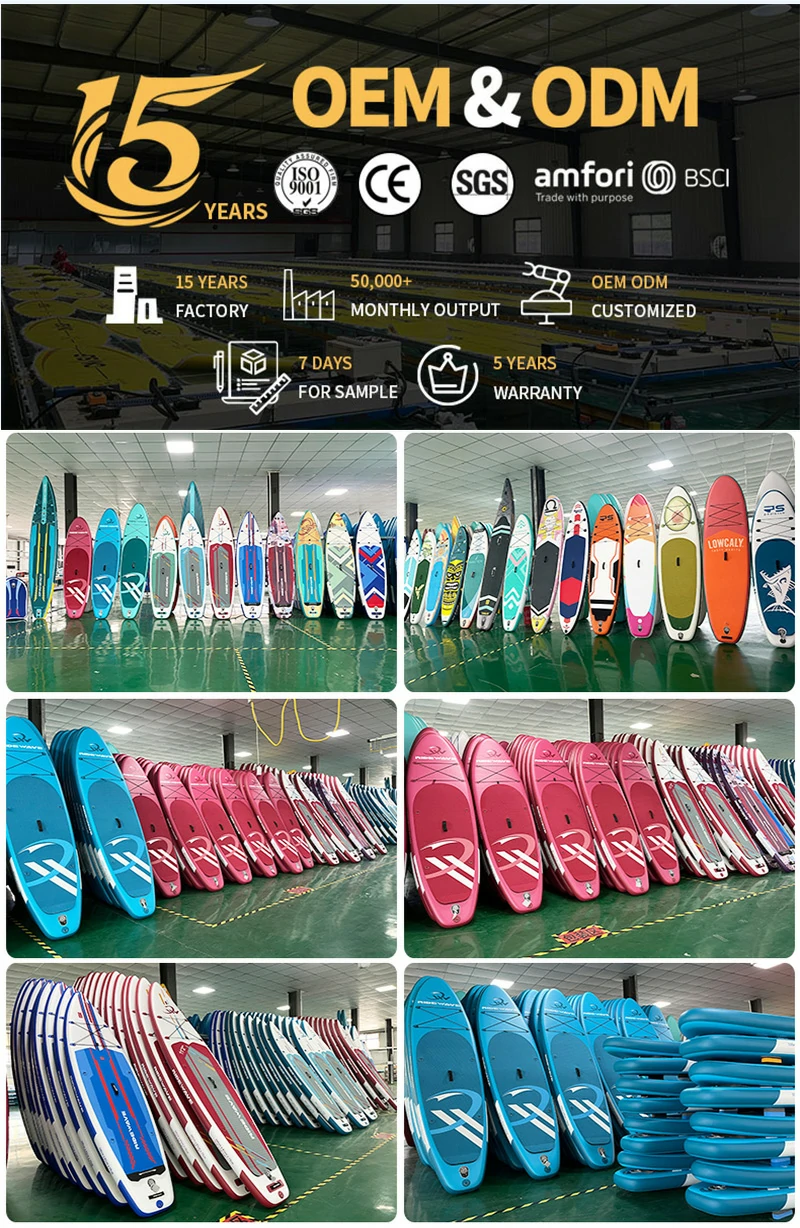
This does not mean RIDEWAVE will be the perfect fit for every buyer. If your core purchasing strategy is chasing the absolute lowest possible FOB price regardless of defect risk, other low‑tier workshops may appear more attractive. Our service and product set targets B2B operators chasing stable gross margin, repeat‑order business and long‑term local brand reputation, rather than one‑off bargain inventory.
| Cooperation Item | Typical general inflatable SUP factory | RIDEWAVE for Latin‑American buyers |
|---|---|---|
| Latin‑America oriented production reservation | No special capacity reservation | Reserved production slots Mar‑Jul for southern‑hemisphere pre‑summer orders |
| Distributor marketing resources | Extra charge or not provided | Free studio photos, product catalog, spec sheets for bulk orders |
| Mixed‑container MOQ policy | High per‑style MOQ, mixed load hard to approve | Support flexible mixed‑SKU 40HQ container for market testing |
| Salt‑water oriented component upgrade | Standard universal parts | Anti‑corrosion valves, reinforced export cartons for south‑america logistics |
| Material document update speed | Slow response, waiting for third‑party lab cycles | Priority processing for retail‑chain audit‑required test reports |
How to Select Best‑selling Inflatable SUP Models to Maximize Chile Wholesale Profit Margins?
Even with a reliable Chinese inflatable SUP factory partner, your wholesale profit will suffer if you pick wrong SKUs. Sourcing popular inflatable stand‑up paddle board styles suitable for Chile local consumption is one of the highest‑impact decisions for any water‑sports wholesaler. Many importers simply copy top‑selling items from European or North‑American marketplaces and import large volumes, only to find those designs do not resonate with Chilean end‑users.
Chile has dual usage scenarios: fresh‑water lakes in inland regions and rough salt‑water coastal areas along the Pacific shore. Consumer expectations shift greatly between these two environments. When you build your wholesale inflatable SUP product mix, split your inventory into three core segments: recreational entry‑level, all‑around touring, and heavy‑duty salt‑water / rental‑ready iSUP.
Entry‑level recreational inflatable SUP: Target casual family users, first‑time paddlers. Stable wide deck shape, moderate weight, complete affordable accessory kit. This category drives your high‑volume turnover. Price sensitivity is strong here, but you still cannot sacrifice basic drop‑stitch fabric quality. Thin low‑cost boards will flood your support channels with complaints.
All‑around touring inflatable SUP: The highest‑profit sweet spot for Chilean wholesalers. Slightly longer shape, better tracking performance for both lake and coastal bay. Appeals to intermediate hobbyists, weekend outdoor groups. This segment delivers your best gross‑margin performance, and it is where many successful South‑American distributors allocate 40‑50% of container volume.
Heavy‑duty reinforced inflatable SUP: Built for rental shops, tourism operators and frequent salt‑water users. Thicker drop‑stitch fabric, extra rail reinforcement, corrosion‑resistant valves. Sales volume is lower, yet unit profit per piece is substantial. This line helps you lock‑in large‑volume B2B rental clients and differentiate you from purely price‑focused competitors.
When planning your SKU mix, avoid two common mistakes:
Over‑investing in ultra‑niche shapes: Race‑oriented racing SUP, yoga‑specific inflatable boards own tiny market share within Chile. Do not allocate large container space to these low‑turnover styles for your initial orders. Small test quantities are enough.
All‑in on only the cheapest entry‑level models. While entry‑level drives volume, fierce price competition crushes margins. Balancing entry‑level, mid‑range touring and small‑volume heavy‑duty units creates more stable overall business performance.
You also need to think about accessory bundling. Chilean buyers prefer complete‑kit packages. Boards sold separate from paddles, pumps and backpacks move much slower in local wholesale channels. Confirm with your manufacturer that every set ships with a matched full accessory kit suitable for South‑American end‑user habits.
Before locking your final style list, take time to analyse local Chile retail platforms, physical sport‑shop assortments and rental‑fleet board types. Observe which size ranges, graphic themes and colour palettes already gain local traction. This local market intelligence is far more valuable than overseas best‑seller lists.
| Product Type | Recommended Container Volume Share | Core Target Customer |
|---|---|---|
| Entry‑level recreational inflatable SUP | 40 % | Family casual users, first‑time paddlers, general sport shops |
| Mid‑range all‑around touring inflatable SUP | 45 % | Intermediate hobbyist, weekend outdoor groups, main profit driver |
| Heavy‑duty salt‑water & rental grade inflatable SUP | 15 % | Rental operators, tourism companies, frequent coastal users |
How to Compare Cost, Quality and MOQ of Different Chinese SUP Suppliers?
For Chilean wholesalers sourcing inflatable SUP, price alone should never be your decision‑making metric. Comparing FOB price without factoring quality level, minimum order quantity, accessory configuration, QC standards and after‑sales support will mislead your whole sourcing strategy. Two suppliers can quote seemingly close unit prices for inflatable stand‑up paddle board, yet the real total cost risk can differ dramatically once you factor defect rates, missing accessories and post‑import troubles.
Many new buyers only record FOB unit price on a spreadsheet and skip hidden risk evaluation. The true cost of wholesale inflatable SUP includes far more than factory invoice value: sample expense, potential defective‑goods loss, extra logistics for replacement parts, time spent handling customer complaints, and opportunity cost from selling poor‑performing inventory. A slightly higher FOB price from a reliable factory often delivers lower total business risk in the long‑term for Chile‑bound orders.
Below are practical comparison dimensions you need to run through for each candidate iSUP manufacturer:
Unit FOB price: Compare prices for boards with identical fabric thickness, drop‑stitch density, valve grade and full accessory kit. Never compare quotes of different specification products directly. A low quote may exclude backpack, paddle or high‑pressure pump.
Minimum Order Quantity (MOQ): Distinguish total‑container MOQ versus per‑style MOQ. Some factories accept low total volume but enforce high quantity for every single graphic design, which limits your ability to test multiple models in one mixed container.
Raw material specification: Confirm drop‑stitch fabric denier, PVC layer thickness, maximum working PSI. Ask for physical sample cross‑section comparison if possible. Identical written parameters do not always mean equal real‑world material performance.
Included accessory package: Verify every component inside standard set: adjustable aluminum paddle, high‑pressure hand pump, safety leash, repair kit, travel backpack. Some suppliers list low board price and charge extra for essential accessories.
Pre‑shipment quality control: Confirm whether third‑party inspection is allowed, and who bears inspection cost. Check if the factory conducts air‑holding pressure test for every batch of inflatable SUP.
After‑sales commitment: Clarify defect claim window, spare‑part supply lead‑time, cost for replacement components.
Document support: Confirm availability of material test reports, factory audit documents required for Chile local retail tenders.
One common comparison trap: chasing marginal FOB price reduction while accepting higher per‑style MOQ. If you are testing the Chile market, forcing yourself to purchase large quantities of one single unproven inflatable stand‑up paddle board design creates heavy inventory risk. Saving $5‑8 per unit does not offset thousands of dollars tied up in slow‑moving stock.
When you finish comparing 2‑3 qualified factories, trial mixed‑container orders remain the most reliable way to validate real‑world performance. Spread your initial purchase volume rather than committing all capital to one unknown supplier.
How Did RIDEWAVE Help An Argentine Distributor Achieve Pre‑sale Success in 2026?
Theory about sourcing inflatable SUP only carries real value when proven by real‑world B2B cases. South‑America's summer selling window creates huge pressure for distributors. Order timing, freight arrangement and pre‑sales preparation jointly decide whether inventory can turn over quickly. This case study covers an Argentine distributor cooperation completed by RIDEWAVE in January 2026, showing how end‑to‑end factory support can improve wholesale return on investment.
In January 2026, an established Argentine water‑sports distributor reached out to RIDEWAVE for inflatable stand‑up paddle board restock ahead of the upcoming Southern‑Hemisphere summer. The client already ran local retail channels and rental fleets, and planned to expand online pre‑sales before container arrival. After market analysis together with our sales team, the distributor placed a bulk order for 1200 pieces of RIDEWAVE‑brand wholesale inflatable SUP, selecting five proven high‑demand styles covering entry‑level recreational, all‑around touring and rental‑grade heavy‑duty iSUP.
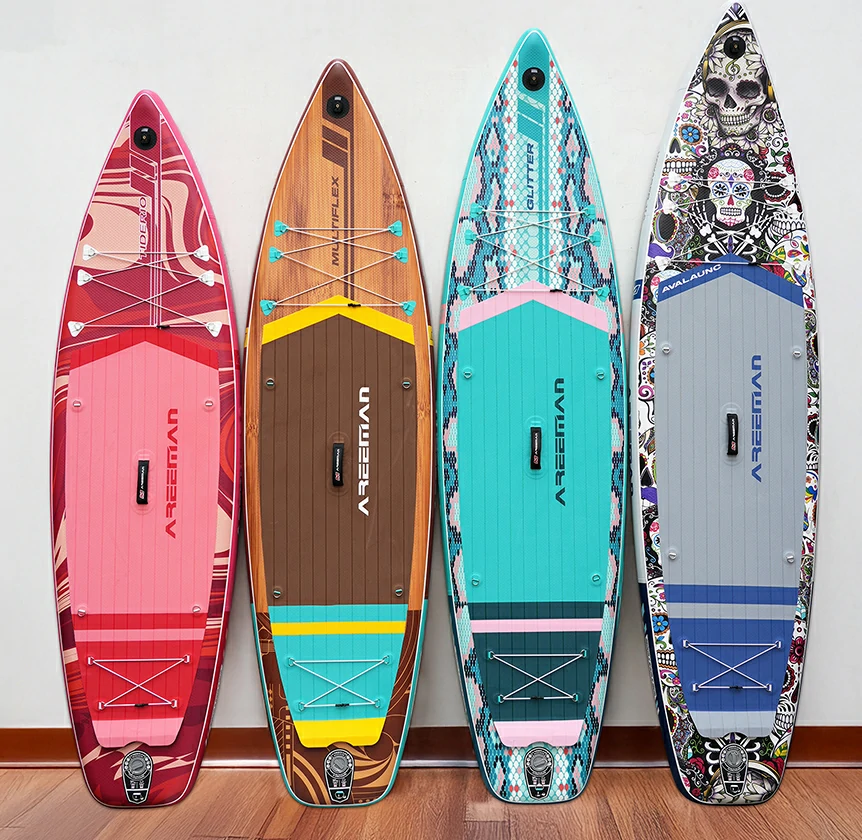
Instead of only manufacturing physical goods, RIDEWAVE delivered a full set of sales assets during production cycle. Our studio resource team provided complete product catalog, high‑resolution studio photos, main product images, close‑up detail pictures and specification datasheets for every single model inside this order. All files were delivered in editable formats, so the Argentine partner could directly use these materials for e‑commerce listings, social‑media promotion and offline retail poster production, without spending extra budget on local photo shooting and graphic design.
For logistics arrangement, goods were consolidated and loaded at Qingdao port of China. Ocean freight route was selected to balance transit time and total shipping cost. The distributor chose cost‑effective sea transport to move the full consignment from Qingdao to Argentina. While the containers were still sailing across the ocean, the local team launched large‑scale pre‑sales campaigns leveraging the factory‑provided marketing resources.
By the moment containers arrived at destination port, the distributor had already pre‑sold 800 sets out of the total 1200 units. The pre‑sales performance far exceeded their initial forecast. Most of these pre‑ordered units were immediately dispatched to end‑customers and local sub‑dealers right after customs clearance. With local summer demand still rising, the Argentine partner is now actively communicating with RIDEWAVE to arrange follow‑up replenishment orders, to avoid stock shortages during peak selling months.
This case reveals two critical take‑aways for Chilean iSUP wholesalers:
Inventory does not need to arrive at your warehouse before you start selling. Pre‑sales driven by factory‑supplied professional marketing assets can significantly reduce capital pressure and lower inventory holding risk.
Choosing a supplier familiar with South‑American seasonal rhythm means more than stable product quality. Timely provision of usable digital resources, suitable port loading solutions and flexible order follow‑up can directly lift your local sales performance.
We do not guarantee identical results for every buyer. Pre‑sales outcomes also depend on your local channel resources, marketing execution and local market competition. This example simply illustrates what can be achieved when factory and distributor align well for southern‑hemisphere summer preparation.
How to Cut Ocean Freight Costs for SUP Shipments From China to South America?
For Chilean inflatable SUP importers, ocean freight represents a large share of total landed cost. Many wholesalers focus only on lowering FOB factory price, yet ignore opportunities to optimize sea‑shipping. Poor logistics planning can erase all profit gains you negotiated from your inflatable stand‑up paddle board manufacturer. Freight rates to South‑America fluctuate sharply by season, container availability and global shipping cycles. Smart planning helps you stabilize and reduce logistics expenditure for your wholesale inflatable SUP cargo.
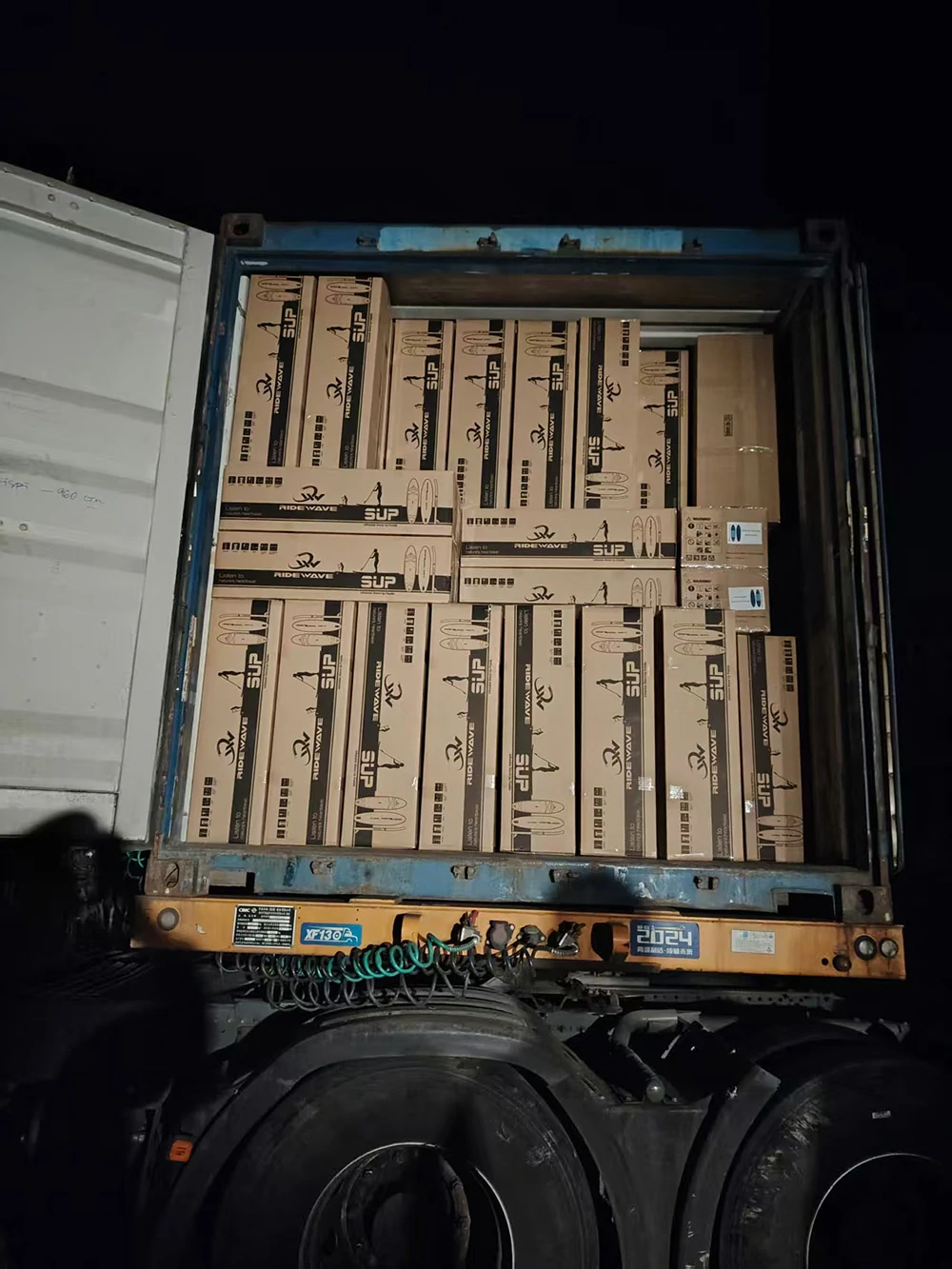
Roll‑packed iSUP already gives you a natural logistics advantage compared with hard fiberglass paddle boards. Without rigid board shapes, more units fit into one standard container. Still, several practical steps can further optimize your shipping budget:
Lock booking space early for southern‑hemisphere summer season: March‑July is peak booking window for shipments bound for Chile, Argentina and Peru. Shipping lines raise spot rates when capacity runs short. Confirm your production schedule with your factory and secure container space 4‑6 weeks before expected loading date. RIDEWAVE logistics team regularly reminds Latin‑American clients of booking timelines to avoid sudden freight surges.
Choose between full container load (FCL) and less‑than‑container load (LCL) wisely. LCL works for very small trial orders, but per‑unit cost is much higher, plus higher risk of cargo damage and delays from multiple transshipment. Once your order reaches workable volume, shift to FCL 40HQ container; rolled inflatable SUP gets far better unit freight efficiency inside 40HQ.
Optimize carton packing density. Work with your factory to fine‑tune carton dimensions. Reasonable carton size maximizes quantity per container, avoids wasted cubic space. Do not accept over‑loose packaging that burns container volume.
Compare routing options: Direct service versus trans‑shipment vessels. Direct sailings cut transit time, but carry higher freight quotes. Trans‑shipment options cost less, yet come with longer transit days and higher risk of congestion at transfer ports. Balance transit time against your sales deadline. If you are doing pre‑sales like the Argentine distributor case, direct routing is worth the extra cost to hit your market launch window.
Avoid peak‑month spot shipments: August‑September sees sharp freight hikes for South‑America bound goods, as masses of wholesalers rush stock for October‑February summer sales. If possible, complete loading before August.
Important risk reminder: Never select a freight forwarder purely based on the lowest quote. Cheap forwarders may cut corners on documentation, customs filing or cargo insurance. A small saving on freight can lead to costly cargo hold‑ups at Chilean ports.
How to Comply With 2026 EU & American PFAS Environmental Standards for SUP Import?
Even though Chile does not enforce identical PFAS restrictions as the European Union, inflatable SUP wholesalers cannot ignore global chemical compliance trends. Large Chilean retail chains, tourism rental groups and export‑oriented resellers increasingly require valid material test reports for inflatable stand‑up paddle board inventory. If your goods lack compliant documentation, you will be locked out of high‑value B2B contract opportunities.
PFAS / PFAS‑related substance limits originally rolled out for European markets, yet the ripple effect spreads across global water‑sport supply chains. Many South‑American retail buyers now reference these international test standards as their internal supplier audit baseline. This means your wholesale inflatable SUP material and surface treatment must meet updated lab requirements, even when you only sell inside Chile.
What practical actions should Chilean iSUP buyers take?
Do not take supplier verbal promises about PFAS compliance. Always request third‑party lab test reports covering board fabric, surface coating and EVA deck material. Check report issuing date; old expired reports have no audit value.
Confirm the factory updates raw‑material batches continuously. Some factories hold one valid lab report but keep producing older non‑compliant material batches. Documents must match your actual production batch.
Clarify ahead of order: who is responsible for generating new test reports for your order. Some manufacturers charge extra for fresh testing.
Keep digital copies of all test files inside your business archive. Chilean large‑chain buyers may ask you to submit documents during vendor onboarding.
RIDEWAVE maintains periodic third‑party lab testing for inflatable SUP materials. We refresh test documentation regularly for Latin‑American clients, to match rising audit requirements from local retail and rental partners. Still, as an importer, you should independently review all certificates before order confirmation.
One frequent misunderstanding: PFAS compliance is not the same as customs clearance for Chile. Chile customs will not automatically reject cargo without PFAS reports. The risk mostly comes from downstream retail‑partner audits and product‑safety complaints from end‑users. Non‑compliant goods can lead to terminated retail contracts, product recalls and reputational damage for your wholesale business.
How Can Factory Marketing Resources Help Chilean Wholesalers Boost Local Sales?
Most Chilean inflatable SUP wholesalers focus heavily on product quality, price and logistics during sourcing. Yet many overlook the value of factory‑provided marketing assets. For resellers and distributors, good marketing materials lower your operating cost, shorten product launch cycles and help you run effective pre‑sales for inflatable stand‑up paddle board inventory before containers arrive at port. This point was clearly demonstrated in the Argentine distributor 2026 case we covered earlier.
Without ready‑made assets, you face several pain points:
You need to arrange local studio shooting for every new wholesale inflatable SUP model, which costs substantial time and local budget.
Product image quality is inconsistent across your web shop, social‑media posts and offline retail posters.
You cannot start pre‑sales while goods are still on‑sea; sales window gets shortened, more capital gets locked in warehouse stock.
Not all Chinese iSUP manufacturers provide usable marketing resources. Some factories only deliver low‑resolution phone‑shot photos. Professional‑grade marketing support includes these deliverables for bulk‑order clients:
High‑resolution studio product photos: main angle, side profile, top‑down view, detail close‑ups for valves, EVA deck pad, seams and complete accessory kits
Editable digital product catalog: PDF format, can be sent to sub‑dealers and retail partners
Standard spec‑sheet datasheets: dimensions, weight, max PSI, fabric parameters, accessory list
Lifestyle scene images: consumers using inflatable SUP on lakes and coastal water, for social‑media and advertising usage
RIDEWAVE includes this full marketing package free of charge for confirmed bulk‑order clients. We do not charge extra fees for photo files and catalog exports. These assets are built to be adapted for Chile local market; distributors can add their own brand logo, translate text content and deploy across online stores, marketplaces, Instagram, Facebook and offline print materials.

Important note: Factory marketing assets are support tools only. They will not automatically drive sales results. Your local channel relationships, pricing strategy and local marketing execution still decide final turnover. The materials simply remove unnecessary operational barriers for your inflatable SUP wholesale business.
How Does Private‑Label Customization Work for Chilean Inflatable SUP Wholesalers?
Building your own local brand identity is a powerful way to stand out among crowded inflatable SUP wholesale markets in Chile. Private‑label, or OEM custom branding, allows you to print your own logo, custom graphic art and colour schemes onto ready‑base inflatable stand‑up paddle board blanks. Many growing Chilean distributors consider private‑label, yet they are unclear about workflows, cost changes, MOQ boundaries and common pitfalls for wholesale inflatable SUP custom projects.

Private‑label for iSUP generally falls into two tiers: simple graphic printing and full deep customization.
Simple private‑label printing: Use existing proven board mould and fabric structure. Apply your custom graphic, logo print on board surface, deck pad and carton boxes. This is the most popular option for Chilean new‑to‑custom buyers. Lead‑time increases moderately, extra cost per unit stays low, MOQ requirements are reasonable. You keep the reliable performance of field‑tested base models while building your own local brand.
Full deep customization: Redesign board length, width, rail shape, fabric formula, fully‑custom EVA layout. This requires new production moulds and extensive sample iteration. Unit cost and MOQ rise significantly. This path suits well‑established large‑scale wholesalers with confirmed large‑volume stable demand, not recommended for first‑time custom attempts.
Before launching private‑label projects, work through these key points:
Confirm final graphic artwork specifications. Provide vector‑format files for logo and patterns. Raster low‑resolution pictures will result in blurry printing on finished inflatable SUP.
Clarify private‑label MOQ per style. Many factories set higher MOQ for custom‑printed items compared with stock standard models. RIDEWAVE offers flexible private‑label MOQ for Latin‑American clients on simple graphic printing projects, avoiding overly high barriers for mid‑size Chilean distributors.
Confirm custom carton options. Custom printed outer cartons strengthen your brand impression for retail end‑users, but will add extra cost and lead‑time. Evaluate whether custom boxes are necessary for your current business phase.
Sample approval before mass production. Always sign‑off on custom pre‑production sample. Colour deviation can occur between digital screen display and actual heat‑printing on PVC fabric. Do not approve mass‑production only based on digital renderings.
If you want to dive deeper into how inflatable board products get manufactured from design to finished goods, you can read our article: How Custom Paddle Boards Are Made: From Design To Finished Goods.
What Pre‑shipment Checks Should You Complete Before SUP Container Shipment?
Even after sample confirmation, contract negotiation and production completion, you still need to run critical pre‑shipment checks before your inflatable SUP container leaves Chinese port. Skipping these steps raises risks of wrong colour‑ways, missing accessories, inconsistent labelling and undetected quality defects for your inflatable stand‑up paddle board bulk cargo. Many Chilean importers only discover problems after containers arrive in San Antonio port, when correction becomes extremely expensive or impossible.
These key pre‑shipment verification steps apply for all wholesale inflatable SUP orders bound for Chile:
Request production‑finished photos and container‑loading photos/videos. Verify SKU quantities, colour distribution, carton printing and label marks match your purchase order. Double‑check that accessory kits are packed inside each carton.
Arrange pre‑shipment inspection if budget allows. You can assign third‑party inspection teams to visit factory site. Inspectors randomly unpack finished iSUP sets, perform air‑holding pressure test, check appearance defects, accessory completeness and carton condition.
Double‑check all export documents: commercial invoice, packing list, material test reports and other certificates required for Chile customs and local retail audits. Confirm names, quantity and product descriptions are consistent across every document. Mismatched document information may trigger customs clearance delays.
Confirm shipping mark printed on outer cartons. Shipping marks must match information on your bill of lading. Wrong marks will cause confusion during port receiving and inland delivery in Chile.
Confirm production closing date: Once goods are loaded on vessel, modifications to product, quantity or labelling can no longer be done. Raise any corrections before container gate‑in.
RIDEWAVE provides full sets of loading photos and videos for every bulk Latin‑America order as standard practice. Still, as importer, you are encouraged to go through every checklist point carefully. Do not fully rely on the factory's self‑inspection alone.

What Long‑term Sourcing Strategies Benefit South‑America SUP Distributors?
Successful inflatable SUP wholesale business in Chile is not built on one single lucky container order. Sustainable profit comes from long‑term, stable sourcing relationships and iterative market learning. Many new importers treat sourcing as one‑off transaction: place order, receive goods, then keep switching factories chasing marginally lower inflatable stand‑up paddle board FOB price. This short‑term mindset brings hidden risks to your wholesale inflatable SUP business.
Below are proven long‑term sourcing strategies for Chilean and Latin‑American iSUP distributors:
Build stable cooperative ties with 2‑3 qualified core factories. Do not put 100 % volume with one single supplier; also avoid constantly jumping between dozens of new factories. Maintaining 2‑3 reliable partners balances supply‑chain resilience and negotiation leverage. When one factory faces capacity shortage or production delay, you have alternative backup resources.
Share local market feedback back to your suppliers. Communicate end‑user complaints, popular colour trends, retail‑chain new requirements. Trustworthy factories can adjust fabric, accessories and packaging to better fit Chile coastal and inland usage scenarios. This continuous iteration creates product advantages hard for price‑only competitors to copy.
Plan your purchasing calendar 6‑8 months ahead of southern‑hemisphere summer. Map out estimated order volume, sample timeline, production window and booking schedule in advance. Last‑minute rush orders always mean higher freight rates, limited production slots and compromised QC priorities.
Gradually build up spare‑parts inventory locally. Stock essential spare parts including valves, repair kits, hand pumps. Fast local spare‑part support greatly improves satisfaction for your sub‑dealers and end‑users, setting you apart from competitors who can only wait for new sea shipments from China.
Track your own business data: defect rate per batch, best‑selling SKU proportion, pre‑sales conversion rate, landed‑cost per model. Use real operational data to guide your next‑season order mix, rather than guesswork or overseas best‑seller lists.
RIDEWAVE values long‑term partnership with Latin‑American distributors. We collect market feedback from Chile, Argentina, Peru clients and feed these insights into our product upgrade cycles. However, long‑term cooperation is mutual; it requires consistent order planning and transparent communication from both sides.

Sourcing profitable inflatable SUP from China for the Chile market contains far more work than simply picking a product and comparing FOB prices. As a wholesaler operating within Southern‑Hemisphere market, you face tight seasonal selling windows, dual fresh‑water and salt‑water usage environments, evolving retail‑chain audit requirements and volatile ocean‑freight costs. Every link - supplier screening, sample validation, SKU portfolio planning, logistics arrangement, pre‑shipment inspection, marketing preparation and compliance documentation - will directly shape your final profit outcome.
Key points to keep in mind:
Do not judge suppliers only by quoted price. Evaluate real production capacity, Latin‑America export experience, QC workflow, document support and after‑sales terms. "Made‑in‑China" does not automatically guarantee consistent quality.
Build your SKU mix to match Chile local usage scenarios. Balance entry‑level volume models, mid‑range high‑profit touring boards and small‑volume heavy‑duty salt‑water / rental units. Avoid over‑investing in ultra‑niche styles for initial orders.
Leverage pre‑sales possibility. Where feasible, use factory‑provided professional marketing assets to start selling before containers arrive, reduce capital pressure and inventory risk. Our 2026 Argentine distributor real‑world case has demonstrated this practical approach.
Manage your logistics timeline proactively. Lock container space early for summer stock‑up; select FCL 40HQ whenever order volume permits; weigh direct versus trans‑shipment routing against your sales deadline.
Stay on top of global product‑safety compliance trends. Even if Chile customs does not enforce certain rules, large retail partners will require updated material lab reports.
Think long‑term for your sourcing strategy. Cultivate 2‑3 reliable factory partners, feed local market feedback back for product iteration, keep basic spare‑parts stock locally and make order decisions based on real business data.
No single supplier will be perfect for every business model. Spend sufficient time on sample testing and trial mixed‑container shipments before committing to large‑volume orders. Careful preparation and steady iteration will help you build a stable, profitable inflatable stand‑up paddle board wholesale business serving Chile and wider South‑American markets.
If you are looking to explore wholesale inflatable SUP, request samples or discuss private‑label possibilities, feel free to reach out to the RIDEWAVE B2B team.
Related Articles
2026 SUP Design Trends: Aesthetics That Capture Market Share For Retailers And Dealers
From Blueprint To Container: How RideWave Launches Your Private Label SUP Line in 90 Days
MSL Fusion Vs. Single Layer: Critical ISUP Construction Differences Every Distributor Must Know
|
Inside The Core: Why High-Density Drop-Stitch Is The Lifeline Of Your SUP Brand's Reputation |