
Inflatable Stand-Up Paddle Boards (iSUPs) are no longer niche equipment - they have become one of the fastest-growing water sports products worldwide. From casual paddlers to professional athletes, and from outdoor retailers to OEM brands, inflatable paddle boards continue to reshape the industry. This article provides a complete overview of the SUP world, covering design, manufacturing, customization, accessories, sustainability, and future trends. Each section can stand alone as a deep-dive topic, offering valuable knowledge for both consumers and businesses.
The Evolution of Inflatable SUPs: From Niche Gear to Global Trend
Stand-up paddle boarding has roots in traditional Polynesian water culture, but inflatable technology made the sport accessible to everyone. The first inflatable paddle boards were seen as novelty products, but improvements in drop-stitch fabric and multi-layer PVC quickly changed the perception.
Today, iSUPs dominate the global paddle board market. Their portability and easy storage make them attractive to urban users and travelers. Combined with the boom in outdoor lifestyle and social media, inflatable SUPs have become a worldwide trend, from beaches to lakes and even rivers.
The production of an inflatable SUP is a sophisticated process. It begins with raw material sourcing, where high-quality PVC and woven drop-stitch fabrics are chosen. Panels are cut precisely, and multiple PVC layers are heat-fused together to form the durable shell of the board.
After assembly, boards are tested under high pressure to ensure they maintain rigidity and stability. Handles, deck pads, fins, and bungees are then added, followed by strict quality control checks. A well-organized SUP factory follows international SOPs, ensuring that every paddle board meets safety and durability standards before packaging.
For brands, building a supply chain is often more complex than designing a product. That is why many choose OEM paddle board manufacturers to handle production. OEM solutions allow brands to scale without building factories, while ODM services provide ready-to-market models with proven designs.
Partnering with an experienced SUP manufacturer also means access to innovation - from eco-friendly materials to new board shapes. This flexibility allows brands to focus on marketing and distribution while relying on consistent quality and on-time delivery.
Board shape is one of the most important factors in paddle boarding. All-around inflatable SUPs are wide and stable, making them perfect for beginners, families, or casual use. Touring boards are longer and narrower, designed to glide over long distances with efficiency.
Racing boards push performance even further with ultra-narrow shapes, providing speed for competitive paddlers. There are also specialized SUPs for yoga, fishing, or whitewater. Each design balances stability, speed, and maneuverability, meaning brands must carefully match board shapes to their target markets.
Drop-stitch fabric is at the core of every inflatable paddle board, allowing thousands of internal fibers to connect the top and bottom layers and maintain rigidity under pressure. High-density woven drop-stitch makes boards lighter yet stronger.
Traditional PVC layering has given way to fusion technology, reducing weight while increasing durability. Meanwhile, eco-friendly alternatives - such as recycled PVC and plant-based fabrics - are becoming popular as brands respond to consumer demand for sustainable SUP products.
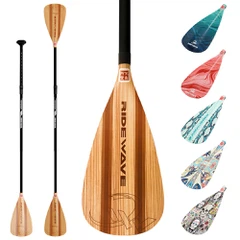
Accessories can transform the SUP experience. Adjustable paddles ensure the perfect length for different riders, while detachable fins make boards versatile across different water conditions. Safety leashes are essential for beginners and advanced paddlers alike.
Other useful paddle board accessories include waterproof bags, action-camera mounts, and EVA deck pads for comfort. Offering a complete accessory package not only improves user experience but also helps brands build stronger customer loyalty.
Customization is one of the strongest trends in the SUP market. Brands and distributors want paddle boards that reflect their identity - from unique shapes and graphics to tailored color schemes and branded accessories.
OEM manufacturers now provide full customization services, allowing partners to design every detail of a custom SUP. This flexibility helps brands stand out in competitive markets and respond quickly to changing consumer preferences.
A premium paddle board must go through rigorous testing before it reaches customers. This includes air-tightness checks at high PSI, load-bearing stress tests, UV resistance assessments, and durability evaluations in various water conditions.
Strong quality control ensures fewer defects, higher customer satisfaction, and stronger brand reputation. Manufacturers that prioritize QC processes offer a significant advantage in building long-term business relationships.
Packaging and Global Shipping: How SUPs Reach Customers Worldwide
Inflatable SUPs are designed to be portable, and efficient packaging is a major part of their appeal. Boards are folded, placed in compact backpacks, and shipped with pumps, paddles, and accessories.
Global OEM suppliers also optimize packaging for container space, reducing shipping costs for distributors. With streamlined logistics and strong export experience, professional factories make it easier for brands to serve customers worldwide.
SUP for Everyone: From Beginners to Professionals
One of the reasons SUP is so popular is its inclusiveness. Beginners appreciate stability and easy learning, while advanced riders enjoy racing, surfing, or long-distance touring. Families use SUPs for recreation, while fitness enthusiasts use them for yoga and workouts.
This wide appeal ensures the SUP market continues to expand. Manufacturers and brands that design for multiple user groups can capture broader opportunities in the global water sports industry.
Eco-Friendly SUP Production: Sustainability in Water Sports Manufacturing
Sustainability is no longer optional - it's a demand from both consumers and retailers. Eco-friendly SUP production includes using recyclable materials, reducing carbon emissions during manufacturing, and adopting cleaner energy sources.
Brands that emphasize eco-friendly paddle boards can differentiate themselves and connect with environmentally conscious buyers. This also prepares companies for future regulations around sustainable manufacturing.
Future Trends in the SUP Industry: Lightweight, Green, and Smart Boards
The next generation of inflatable paddle boards will be lighter, more eco-friendly, and smarter. Advances in materials are reducing board weight without compromising strength. At the same time, digital innovation is emerging, with SUPs that integrate performance tracking or GPS technology.
The brands that adapt to these future trends will lead the market, offering products that meet both lifestyle needs and technological expectations.
The inflatable paddle board industry is shaped by innovation, customization, and global demand. From the evolution of iSUPs to advanced OEM manufacturing and eco-friendly production, every stage of the SUP journey offers opportunities for both paddlers and businesses. By understanding these dimensions, brands can build stronger products, and consumers can enjoy a better experience on the water.