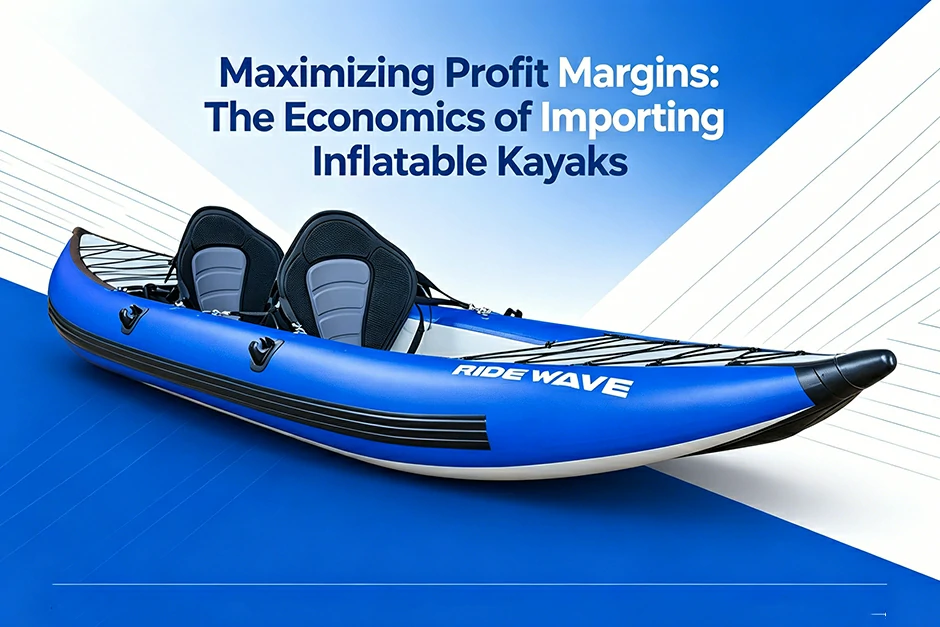


The Changing Tides of the Global Water Sports Market
Commercial Viability of the Premium Inflatable Kayak Category
In the highly competitive maritime recreation sector, commercial success is increasingly dictated by supply chain compliance, engineering liability management, and proactive quality control. Global distributors, bulk wholesalers, and private-label sports equipment merchants face a rapidly shifting consumer base that demands premium structural safety. A high-tier inflatable kayak is no longer viewed merely as a novelty leisure product; it has evolved into a precision-engineered maritime vessel capable of competing directly with traditional hardshell rotomolded craft.
For B2B procurement managers, sourcing an entry-level blow-up boat introduces severe financial risks via excessive warranty claim rates, logistics overheads, and product liability vulnerabilities. Conversely, aligning with a sophisticated manufacturer like RIDEWAVE ensures that each specialized heavy duty inflatable kayak or drop-stitch kayak platform satisfies rigid international structural thresholds. Investing in high-margin, certifiably safe inventory represents the single most effective strategy for volume importers to future-proof their retail networks, minimize product recalls, and command a sustainable market share in 2026 and beyond.
Market Drivers: The Global Demand Shock for Inflatable Kayak Engineering
Macroeconomic tracking across North America, Western Europe, and the Asia-Pacific region reveals an unprecedented demand surge for premium watercraft. However, consumer buying criteria have fundamentally shifted. Modern paddlers are moving away from restrictive rigid hulls toward portable, space-saving inflatable tandem kayak designs and versatile inflatable fishing kayak setups that fit easily inside standard vehicle trunks or high-density urban apartments.
This behavioral pivot has created an incredibly lucrative blue-ocean opportunity for water sports distributors. While traditional markets for cheap, single-layer PVC pool toys are collapsing due to environmental and safety crackdowns, the market for a high-pressure whitewater kayak substitute and durable 2 person inflatable kayak models is experiencing exponential growth. Progressive sourcing agents are aggressively expanding their portfolios with multi-chambered, rigid-floor inflatable kayak units to tap into premium demographics-such as adventure tourists, backcountry anglers, and high-income coastal recreationalists-who willingly pay a premium for proven hull stability and structural safety on open water.
Navigating B2B Risk: Warranty Mitigation and Brand Protection in Inflatable Kayak Sourcing
For mass-market retailers, enterprise-level supermarket chains, and high-volume e-commerce brands, the true cost of an inflatable kayak for sale is measured post-purchase. Low-quality manufacturing processes-such as relying on cheap chemical adhesives rather than automated thermal welding-frequently result in microscopic seam delamination, catastrophic air valve failure, and rapid hull deformation under solar heat exposure.
When a distributor imports sub-standard inflatable ocean kayak inventory, they inherit massive operational liabilities. High return rates destroy net profit margins, while negative online consumer reviews cause irreversible damage to a brand's digital storefront ranking. By establishing strategic partnerships with quality-first tier-1 manufacturers like RIDEWAVE, procurement professionals effectively mitigate these structural vulnerabilities. A thoroughly stress-tested, multi-layered inflatable kayak portfolio translates into a near-zero defect rate, significantly lowering product liability insurance premiums and protecting your brand's hard-earned market reputation.
The Core Engineering of Inflatable Kayak Safety: Materials & Manufacturing Standards

Mechanical Integrity: Dissecting the Rigidity of a Modern Inflatable Kayak
From a mechanical engineering perspective, the structural performance of a commercial-grade inflatable kayak must closely replicate the tensile stiffness of a traditional hardshell vessel. Historically, the broader maritime market classified a basic blow-up boat as a low-pressure recreational toy due to its tendency to sag, buckle, and deflect under weight. However, modern polymer engineering has completely transformed this category.
For high-volume distributors and professional brand owners, selecting an inflatable kayak built with high-pressure inflation thresholds is paramount. When a hull is pumped to its optimal structural pressure, it exhibits exceptional longitudinal rigidity, allowing the watercraft to slice through complex chop without oil-canning or mid-section flexing. This structural integrity directly affects the user experience, transforming a simple 2 person inflatable kayak or a heavy-duty whitewater kayak into a high-performance touring machine that modern retail customers and rental fleet operators will purchase at a premium.
Material Science: Marine-Grade PVC and UV Resistance in Inflatable Kayak Longevity
The underlying chemical composition of the hull fabric determines the lifespan and safety margin of any inflatable kayak for sale. Premium manufacturers specify reinforced, multi-layer marine-grade Polyvinyl Chloride (PVC) fabrics that incorporate a high-density woven polyester core mesh. This composite structure provides immense puncture resistance against sharp river rocks, abrasive barnacles, and jagged fishing gear, making it the ideal substrate for a specialized inflatable fishing kayak.
Furthermore, global distributors catering to hot climates-such as the southern United States, Australia, and Mediterranean Europe-must pay close attention to ultraviolet (UV) degradation. Cheap inflatable kayak variants lack adequate UV-stabilizing additives within their outer polymer layers, leading to rapid discoloration, material embrittlement, and micro-cracking over a single season. High-end product lines, such as those engineered by RIDEWAVE, utilize military-grade, UV-treated PVC formulations that withstand prolonged solar irradiation. This meticulous material sourcing prevents premature product aging, significantly lowers retail return rates, and maximizes your inventory's long-term commercial value.


Structural Innovation: Drop-Stitch Technology and High-PSI Inflatable Kayak Hulls
The true revolution in the inflatable kayak industry lies in the widespread commercial application of Drop-Stitch (DS) engineering. Traditional inflatable chambers feature basic I-beam PVC baffles that limit maximum internal pressure to a low 1 to 2 PSI, resulting in a soft, inefficient hull shape. In contrast, a high-pressure drop-stitch kayak utilizes tens of thousands of internal polyester filaments woven directly between the upper and lower fabric layers.
This internal matrix allows the floor and side chambers of the inflatable kayak to be inflated up to 10 to 15 PSI. At this pressure, the drop-stitch panels become as rock-hard as traditional timber or rotomolded polyethylene, facilitating optimized hydrodynamic tracking, decreased water drag, and a significantly higher weight capacity. For sporting goods wholesalers and supermarket chains looking to expand into premium product tiers, stocking advanced drop-stitch kayak platforms is the fastest way to attract high-spending paddling enthusiasts who refuse to compromise on speed and efficiency.
Construction Methods: Thermal Seam Welding vs. Chemical Adhesives in Inflatable Kayak Production
How an inflatable kayak is assembled at the factory floor is the single greatest indicator of its structural safety and long-term reliability. The vast majority of low-cost, mass-produced inflatable ocean kayak units are assembled using traditional chemical adhesives or manual cold glueing. While glue is highly cost-effective for factories initially, it represents a ticking time bomb for B2B distributors. Over time, chemical glues naturally break down when exposed to salt water, high humidity, and extreme thermal expansion, leading to sudden, catastrophic seam blowouts on the water.
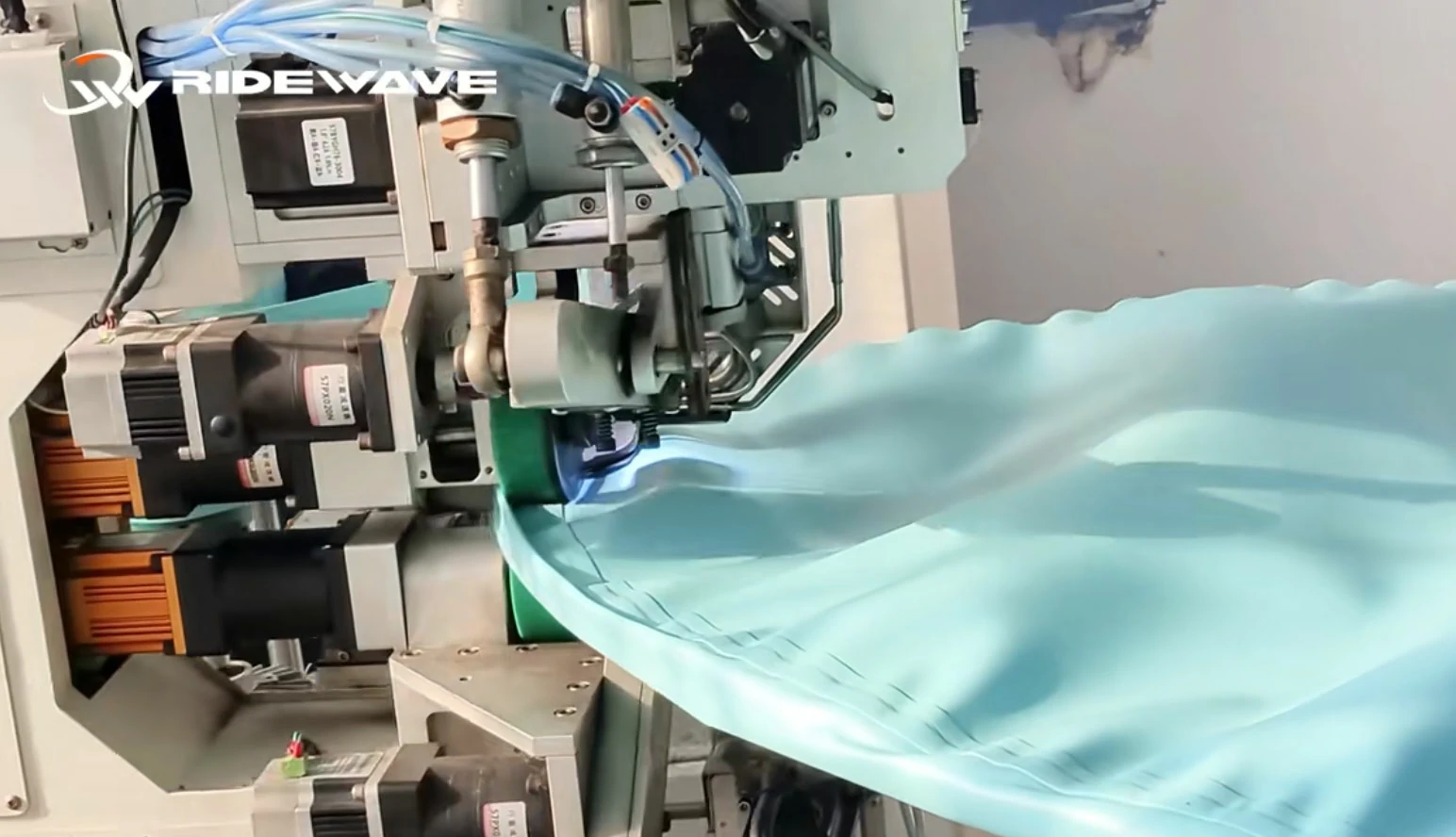
To eliminate this systemic risk, premium tier-1 manufacturers like RIDEWAVE have transitioned to advanced automated thermal welding technology. By utilizing precise heat and mechanical pressure, the overlapping PVC edges are permanently fused together at a molecular level, creating a continuous, singular structural bond. A thermally welded inflatable kayak seam is up to three times stronger than a glued joint and completely immune to the thermal degradation caused by blistering mid-day heat. This superior industrial construction method ensures that your commercial brand delivers a flawlessly safe, durable watercraft that permanently secures consumer trust.
Structural Safety Standards & Regulatory Compliance (US, EU, CA, AU)
Redundancy in Design: The Multi-Chamber Safety Law for Every Inflatable Kayak
In international maritime safety, physical redundancy is the primary defense against unexpected catastrophic failure. When bulk distributors evaluate an inflatable kayak for widespread commercial sourcing, the internal chamber configuration is a non-negotiable legal and structural criteria. A baseline recreational blow-up boat often relies on a single or dual-chamber system, which means a solitary puncture can cause complete hull deflating within minutes, stranding the paddler.
To satisfy the stringent consumer protection laws of North America and Western Europe, a professional inflatable kayak for sale must incorporate a minimum of three completely independent air chambers. Typically, this engineering layout comprises two discrete side wall bladders and a separate high-pressure floor panel. Under this multi-chamber paradigm, if a specialized inflatable fishing kayak sustains severe structural damage to its outer port side on a sharp obstacle, the remaining starboard chamber and the rigid drop-stitch floor maintain sufficient reserve buoyancy. This failsafe ensures the craft remains stable and afloat, allowing a 2 person inflatable kayak to safely return to shore and protecting the importing brand from catastrophic negligence claims.

International Certifications Checklist: Validating Inflatable Kayak Structural Compliance
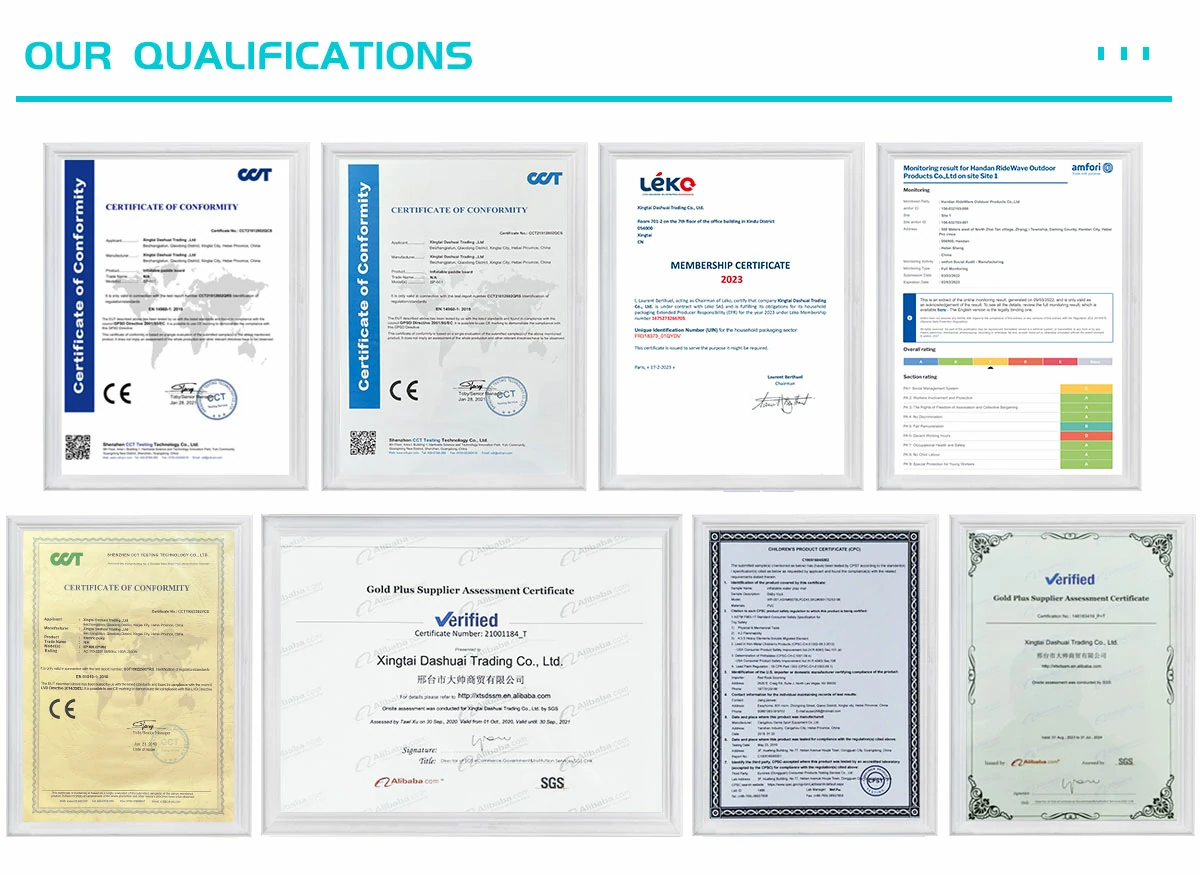
For global supply chain managers, importing watercraft without verified international testing documentation is an operational bottleneck that leads to customs impoundment and retail blacklisting. The global benchmarking standard for this category is the ISO 6185 standard, which specifically categorizes an inflatable kayak under Type III (vessels propelled by human power). This certification subjects the hull to rigorous stress testing, including hydrostatic pressure tests, seam peel strength evaluation, and prolonged buoyancy stability metrics.
Beyond ISO compliance, localized regional mandates dictate market entry for any high-volume inflatable kayak:
North America (US & Canada): Active procurement requires alignment with the National Marine Manufacturers Association (NMMA) and American Boat and Yacht Council (ABYC) standards, ensuring the inflatable tandem kayak hull features permanent capacity plates and compliant hull identification numbers (HIN).
European Union: Affixing the CE Marking is legally compulsory, demonstrating that the whitewater kayak or touring boat satisfies all applicable EU safety, health, and environmental protection directives.
United Kingdom & Australia: Modern distribution networks must pass UKCA assessments and Australian Maritime Safety Authority (AMSA) recreational craft guidelines to secure friction-free importation.
The Commercial Implication: Strategic Risk Insulation with RIDEWAVE Compliance
The business reality for international sporting goods wholesalers, enterprise-level buyers, and Amazon private-label brands is simple: regulatory non-compliance kills profit margins. If a retail chain stocks an inflatable kayak line that lacks authenticated CE or NMMA tracking data, they face sudden product recalls, permanent digital storefront bans, and escalating corporate legal liability.
By establishing a manufacturing partnership with a certified OEM/ODM powerhouse like RIDEWAVE, international buyers effectively insulate their organizations from these volatile regulatory risks. Every single drop-stitch kayak and high-capacity inflatable ocean kayak that leaves our production floors is built to fully satisfy and exceed global certification requirements. We supply comprehensive, verifiable technical dossiers and lab-tested compliance certifications with every shipment. This meticulous industrial oversight allows your logistics team to clear customs with complete confidence, accelerates your time-to-market, and positions your brand as a trusted provider of certified, high-margin maritime equipment.

Pre-Launch Inspection Checklist: Technical Verification Protocols
Structural Integrity Audit: Comprehensive Hull Diagnostics for Every Inflatable Kayak
Before deploying any watercraft into commercial service or retail demonstration fleets, implementing a standardized physical diagnostic protocol is essential to guarantee on-water stability. For large-scale rental operators and outdoor gear distributors, a meticulous visual audit of the inflatable kayak chassis represents the front line of preventative maintenance. This quality control procedure requires a sequential inspection from bow to stern, ensuring that the high-tensile outer polymer layers are completely free from micro-abrasions, deep scuffs, or surface contaminants acquired during multi-month warehouse storage.
Specialized focus must be directed toward the primary bonding seams where the vertical and horizontal planes converge. While an ordinary blow-up boat will exhibit fabric fatigue or edge lifting over time due to stress, a premium heavy duty inflatable kayak manufactured with automated molecular fusing maintains uniform structural cohesion. Ensuring the hull surface is immaculate before inflation not only protects your corporate rental fleet investment but also guarantees that your retail consumers experience the uncompromised tracking performance expected of an elite 2 person inflatable kayak or professional touring platform.


Valve Component Analytics: Maintaining Airtight Seals in Inflatable Kayak Chambers
The high-pressure inflation valve is the most critical mechanical component regulating the buoyancy matrix of a modern inflatable kayak. Heavy-duty hulls rely exclusively on military-grade Halkey-Roberts (HR) valve systems, which utilize an internal spring-loaded core plunger to facilitate rapid air intake while preventing backflow. During the pre-launch inspection checklist, procurement managers and field instructors must physically actuate the valve core to verify smooth spring tension and ensure that the sealing gasket is entirely free from microscopic sand particles, dried salt crystals, or synthetic debris.
Airtight security is further reinforced by the secondary mechanical valve cap. For distributors supplying high-end inflatable fishing kayak or inflatable ocean kayak inventory to consumer markets, educating retail personnel on valve integrity is a powerful value proposition. A properly maintained valve assembly guarantees that the internal pressure remains completely stable over multi-day excursions. This structural dependability prevents gradual pressure drop on open water, insulating your private-label brand from user dissatisfaction and highlighting the rigorous component selection that differentiates a premium drop-stitch kayak from mass-produced recreational alternatives.
The Inflation Calibration Matrix: Pressure Dynamics and Thermal Expansion Safety
Precision pressure management is where physics directly intersects with the operational longevity of a commercial inflatable kayak for sale. Achieving the exact manufacturer-specified pounds per square inch (PSI) is critical; under-inflation compromises the structural hull geometry, causing the mid-section to sag under load, which severely degrades speed and paddling efficiency. Conversely, over-inflation introduces massive inner material stress, making a poorly made whitewater kayak vulnerable to sudden rupture along its internal baffles.
This risk is heavily amplified by ambient atmospheric conditions and solar thermal expansion theory. When an inflatable tandem kayak is inflated to maximum pressure in the cool morning air, subsequent exposure to blistering mid-day sunshine can rapidly increase internal air pressure by up to 20% to 30%. To counter this environmental variable, RIDEWAVE integrates advanced smart safety features into our commercial-grade hulls, including built-in overpressure relief valves that automatically vent excess air before the chamber reaches critical stress thresholds. Providing your B2B distribution network with calibrated pressure gauges and automated safety mechanisms ensures foolproof operation, significantly extending the life cycle of the product and cementing your market standing as a safety-first maritime supplier.

On-Water Safety Protocols & Risk Mitigation Tactics
1 Personal Flotation Integration: Ergonomic Synergy with Every Inflatable Kayak
Deploying a fleet of watercraft requires a comprehensive understanding of human safety factors and personal flotation device (PFD) integration. For B2B commercial entities, outfitters, and outdoor gear wholesalers, advising clients on PFD compliance is a core component of risk management. A high-quality inflatable kayak features unique cockpit dimensions and seating configurations that differ significantly from low-profile hardshells. Therefore, selecting a United States Coast Guard (USCG) Type III or ISO-certified flotation vest with a high-back mesh design is essential to prevent operational interference.
When a paddler is properly equipped, the ergonomic harmony between the life vest and the premium adjustable seat of the inflatable tandem kayak maximizes torso mobility and reduces fatigue. Lower-tier blow-up boat models often compromise cockpit space, causing PFDs to ride up against the tubes and restricting emergency paddling maneuvers. By sourcing specialized heavy duty inflatable kayak platforms engineered with spacious interior clearance, distribution networks can guarantee that their end-users-whether navigating coastal bays or calm lakes-maintain unhindered paddle strokes, optimizing safety during high-end 2 person inflatable kayak touring or commercial rental operations.
2 Secondary Safety Auxiliaries: Optimizing the Inflatable Kayak Rigging Matrix
A professional-grade inflatable kayak for sale must function as a complete maritime safety ecosystem. Beyond the primary hull chambers, the integration of secondary safety auxiliaries is critical to mitigating unforeseen hydrological hazards. Volume importers and specialist retailers should systematically evaluate the integrated rigging matrix of any inflatable kayak before finalizing bulk purchasing agreements. Key safety attachments include heavy-duty, perimeter-mounted nylon grab lines, reinforced bow/stern carry handles for swift portage, and secure bungee cargo tie-downs.
For technical configurations like an inflatable fishing kayak or open-water touring craft, secondary stability is further augmented by advanced tracking fin systems. A premium drop-stitch kayak utilizing a toolless, slide-in skeg or a heavy-duty center fin provides superior directional tracking, preventing the boat from spinning out in turbulent water. Furthermore, ensuring that every bulk wholesale shipment bundle includes secondary rescue gear-such as high-visibility coiled leashes, compact bilge hand pumps, and breakdown aluminum paddles-adds massive B2B product value, enabling retail distributors to market a comprehensive, turnkey inflatable ocean kayak solution that prioritizes consumer safety.
3 Hydrological Risk Mitigation: Managing Windage and Currents in Inflatable Kayak Fleet Operations
The aerodynamic profile of an air-filled watercraft presents specific handling characteristics that commercial fleet operators and sporting goods distributors must address. Due to their buoyancy-to-weight ratio, an inflatable kayak inherently rides higher on the water line than a heavily weighted rotomolded plastic vessel. This increased freeboard translates into higher windage, making a standard blow-up boat more susceptible to the pushing force of crosswinds, severe tidal currents, and sudden offshore gusts.
To insulate volume buyers and eco-tourism operators from operational liabilities, RIDEWAVE engineers our high-pressure inflatable kayak hulls with streamlined, low-profile side chambers and a heavy, V-shaped drop-stitch keel structure. This advanced naval geometry significantly lowers water resistance and minimizes lateral drift in high-wind scenarios. Whether your target demographic is maneuvering a responsive whitewater kayak through class-III rapids or executing long-distance coastal transits in a 2 person inflatable kayak, our calibrated hydrodynamic tracking elements counteract strong currents. Providing international B2B clients with highly stable, wind-resistant hulls ensures unparalleled secondary stability, safeguarding your commercial network against unpredictable maritime environments.
Emergency Response & Field Repair Protocols
1 On-Water Recovery Mechanics: Re-Entry Protocols for a Capsized Inflatable Kayak
In deep, open-water scenarios, the mechanical ability to self-rescue and re-board a watercraft is the ultimate safety metric. For commercial outfitters, global B2B procurement officers, and water sports distributors, ensuring that an inflatable kayak features an easily mountable chassis under emergency conditions is highly critical. While a rigid hardshell boat can fill with water, lose secondary stability, and become nearly impossible to drain away from shore, a high-volume heavy duty inflatable kayak inherently maintains maximum reserve buoyancy even when flipped completely upside down.
Executing a standardized re-entry sequence requires strategic body leverage. The paddler must position themselves mid-ship along the side tube of the inflatable tandem kayak, reach across the width of the floor panel to grasp the perimeter safety lines, and utilize a kick-and-pull mechanical motion to right the vessel. Because premium drop-stitch kayak platforms feature low-profile, rigid gunwales and optimized cockpit widths, the user can easily pull their torso across the side tube and pivot back into the seating compartment. This rapid, friction-free re-boarding capability drastically reduces prolonged immersion risks in cold water, serving as a powerful commercial selling point for retail buyers and adventure touring fleet operators.
2 Component Breakdown: Anatomy of an Industrial Inflatable Kayak Repair Kit
A premium inflatable kayak for sale must be backed by a comprehensive, commercial-grade hardware support package. For volume wholesalers, chain supermarkets, and specialized e-commerce brands, the inclusions inside the product box determine consumer satisfaction and mitigate post-purchase warranty overheads. A high-quality inflatable kayak package should never ship with substandard patch materials; instead, it must include an industrial-grade maintenance capsule containing specialized marine-grade patches and critical component tools.
The anatomy of a professional-grade inflatable fishing kayak or inflatable ocean kayak repair kit consists of three essential elements:
Color-Matched Reinforced PVC Patches: Heavy-gauge, multi-layer polymer swatches that match the exact tensile strength, thickness, and color profile of the main hull chambers.
High-Torque Mechanical Valve Wrench: A customized, structural structural tool engineered to safely tighten or replace internal Halkey-Roberts valve cores that may loosen after extensive deep-water whitewater kayak excursions.
Marine-Grade Polyurethane Adhesive: A specialized, waterproof bonding agent formulated to create permanent structural vulcanization between the repair patch and the damaged hull layer.

3 Field Restoration Workflows: Permanent Structural Vulcanization vs. Temporary Fixes
When a structural breach occurs during a long-distance expedition, implementing a systematic material restoration workflow is vital to preserving the boat's geometric integrity. For B2B distribution partners and marine rental networks, educating field personnel on the distinction between temporary field mitigation and permanent factory-grade vulcanization adds immense operational value. If a 2 person inflatable kayak sustains a micro-puncture from a jagged underwater obstacle, the immediate field repair involves cleaning the substrate with fresh water, applying a precise layer of high-viscosity marine adhesive, and compressing a circular PVC patch from the center outward to eliminate air pockets.
For long-term inventory preservation, a factory-standard permanent bond is achieved when the adhesive cures under uniform weight distribution for a full 24 hours. While an ordinary blow-up boat will suffer seam lifting or patch failure due to low-grade materials, a RIDEWAVE engineered inflatable kayak utilizes highly receptive polymer linings that fuse flawlessly with specialized adhesives. This superior material compatibility ensures that the patched section fully regains its original high-PSI pressure threshold, allowing the watercraft to return to heavy-duty service without any structural degradation or tracking compromises.
Post-Excursion Maintenance, Long-Term Storage & Longevity Management
1 Material Degradation Threat Analysis: Mitigating Saltwater Crystallization and UV Exposure
The long-term commercial value and operational shelf life of a premium inflatable kayak are heavily governed by post-excursion care and environmental exposure mitigation. For volume distributors, B2B fleet operators, and specialized retailers, introducing rigorous maintenance guidelines to end-consumers and rental staff is a vital strategy to maintain asset longevity. When a heavy duty inflatable kayak is deployed in coastal marine environments, the evaporating ocean water leaves behind highly abrasive sodium chloride crystals. If these micro-crystals are not thoroughly eradicated, they act as localized abrasives that gradually score the high-tensile outer polymer layers during subsequent packing and unfolding sequences.
In addition to salinity management, mitigating latent ultraviolet (UV) degradation during down-periods is crucial. While a standard blow-up boat will experience plasticizer migration, structural chalking, and severe seam weakness under negligent sun exposure, high-tier inflatable ocean kayak hulls feature advanced chemical resistance profiles. However, best practice protocols dictate that after executing any open-water itinerary, the entire hull architecture must be rinsed with fresh water and treated with specialized marine polymer protectants. This industrial-grade maintenance routine ensures that an investment in a 2 person inflatable kayak or commercial inflatable fishing kayak fleet remains free from cosmetic discoloration or structural delamination, permanently protecting your organization's capital layout.
2 Hydrophobic Restoration Workflows: Advanced Washing, Drying, and Mold Prevention
Moisture entrapment is the single greatest catalyst for premature fabric failure in the inflatable kayak for sale sector. When a multi-layer inflatable tandem kayak is deflated and rolled while still damp, trapped water molecules interact with atmospheric bacterial spores, initiating rapid mold and mildew colonization. These fungal outbreaks do not merely create unsightly black staining; they emit acidic organic compounds that slowly digest the internal polyester mesh and external PVC coatings, directly compromising the high-PSI safety margins of a professional drop-stitch kayak.
To guarantee a completely sterile and hydrophobic storage state, procurement managers and warehouse technicians must implement a multi-stage drying workflow. Following a freshwater wash, the inflatable kayak should be partially inflated to remove deep creases where water aggregates. Utilizing specialized micro-fiber drying textiles or commercial air blowers allows for accelerated evaporation within the internal cockpit tracking grooves and valve recesses. This meticulous protocol is highly recommended for whitewater kayak units that frequently operate in silt-heavy rivers, ensuring that every batch of equipment is perfectly clean, dry, and structurally preserved before transition into long-term commercial containment.
3 Enterprise Warehouse Optimization: Bulk Inventory Folding and Environmental Controls
For high-volume sporting goods wholesalers, enterprise-level supermarket logistics teams, and international e-commerce fulfillment operations, managing extensive bulk inventories of the inflatable kayak category requires strict industrial discipline. Unlike rigid hardshell hulls that demand massive spatial cubic footprints, compact deflated watercraft offer an incredible 70% reduction in ocean freight and storage space (
CBM). However, to prevent permanent material creasing and internal filament stress, volume inventory must be stored according to optimized material geometric folding configurations.
When packing the watercraft for long-term seasonal storage, technicians should follow a loose, fluid rolling cadence rather than tight, hard-creased geometric folds. Forcing sharp angles into heavy-duty marine PVC can induce localized stress-whitening and weaken internal drop-stitch matrices over prolonged compression cycles. Furthermore, fulfillment centers must maintain stable, climate-controlled environmental conditions. Ideally, bulk warehouse zones housing premium RIDEWAVE products should be maintained at a uniform temperature range (
15∘C to25∘C) with a relative humidity threshold below 60%. Eliminating extreme thermal fluctuations and volatile ambient moisture guarantees that your wholesale inflatable kayak stock emerges from multi-month storage cycles in flawless, factory-fresh retail condition, optimizing your ROI and eliminating stock depreciation risks.
Commercial B2B Insights: Translating Safety Features into High-Margin Retail Sales
1 Consumer Psychology Dynamics: Monetizing Marine Safety and Structural Rigidity
In the modern outdoor recreation sector, purchasing behaviors have undergone a fundamental shift toward premiumization. End-consumers are no longer merely seeking the lowest price point; instead, their buying choices are dictated by verified personal safety, product lifecycles, and structural reliability. For international distributors, high-volume B2B buyers, and multi-channel retailers, understanding this psychological dynamic is the key to unlocking high-margin commercial returns. An advanced inflatable kayak should never be marketed to consumers as a cheap alternative to a hard boat; it must be positioned as a premium, elite tier of highly portable maritime transport.
When communicating value to retail shoppers, distributors must directly link technical engineering to emotional peace of mind. For example, explaining that a heavy duty inflatable kayak utilizes multi-layer marine-grade PVC and automated thermal seam welding instantly addresses the consumer's latent fear of on-water punctures or sudden seam delamination. By reframing a high-pressure drop-stitch kayak as an investment in family safety and uncompromised performance, retail storefronts and e-commerce platforms can justify a premium retail price point. This strategic marketing pivot allows volume wholesalers to capture affluent consumer demographics-such as coastal touring enthusiasts and luxury campers-who willingly spend more for a certifiably safe, rugged 2 person inflatable kayak platform.
2 Sales Enablement Framework: Training Retail Personnel on Technical Sourcing Specifications
For large-scale sporting goods chains and specialized maritime dealerships, the conversion rate of inventory depends entirely on the technical proficiency of front-line sales personnel. A common operational bottleneck for a B2B distributor is when retail dealers fail to articulate the hidden value of an imported inflatable kayak for sale. To overcome this hurdle, procurement managers must implement a structured sales enablement framework that translates complex manufacturing specifications into clear, high-impact consumer benefits.
Retail training modules should instruct floor staff to abandon vague terminology like "durable blow-up boat" and instead focus on concrete structural differentiators:
The Multi-Chamber Demonstration: Instruct staff to show customers the independent inflation valves of the inflatable tandem kayak, explaining how the three discrete air chambers provide an absolute safety failsafe on open water.
The Drop-Stitch Rigidity Test: Encourage customers to physically step on or touch a fully inflated 10–15 PSI floor panel, allowing them to experience firsthand how a premium drop-stitch kayak achieves the rock-hard tracking stability of a rotomolded plastic vessel.
The Accessory Ecosystem Pitch: Train team members to highlight the premium, comprehensive nature of the bundle-such as including heavy-duty dry bags, professional tracking skegs, and high-pressure pumps-positioning the inflatable fishing kayak as a complete, turnkey adventure package.
3 Category Diversification Strategies: Capturing the Urban and Compact-Vehicle Demographics
For established sports equipment merchants, gym equipment wholesalers, and traditional hardshell boat dealers, expanding your catalog with a premium inflatable kayak line is the fastest route to capturing massive, untapped market demographics. Traditional rotomolded kayaks present massive lifestyle barriers for millions of potential outdoor enthusiasts due to their immense weight, difficult vehicle roof-rack transport requirements, and large garage storage footprints. This physical friction completely excludes urban apartment dwellers and owners of compact fuel-efficient or electric vehicles.
By integrating compact, high-pressure inflatable ocean kayak and versatile whitewater kayak units into your product mix, your business instantly removes these consumer barriers. A fully deflated, elite-tier 2 person inflatable kayak rolls tightly into a single ergonomic backpack that fits effortlessly inside a standard hatchback trunk or a small residential closet. This incredible spatial efficiency transforms water sports from a specialized luxury into an accessible weekend hobby for high-income urban professionals. For B2B commercial buyers, adding this high-turnover, low-footprint inventory to your distribution pipeline unlocks a lucrative blue-ocean revenue stream, driving rapid category expansion and accelerating corporate ROI across all retail territories.
Supply Chain Resilience: Choosing the Right Manufacturing Partner
Industrial Auditing Criteria: Technical Benchmarks for Tier-1 Inflatable Kayak Production Lines
For enterprise-level global procurement managers, volume brand owners, and multi-national sports retail chains, executing a thorough industrial factory audit is a fundamental component of risk mitigation. When evaluating an OEM/ODM supplier for a high-volume inflatable kayak catalog, savvy sourcing agents look far beyond basic unit pricing. True supply chain resilience is rooted in a factory's internal Quality Control (QC) infrastructure, raw material traceability protocols, and advanced manufacturing instrumentation.
A certified tier-1 production facility must demonstrate specialized testing benchmarks across every manufacturing phase. A standard recreational blow-up boat factory often relies on basic visual checks; conversely, an elite maritime engineering facility implements automated hydrostatic destruction chambers and specialized material stress-testing rooms. Before securing a long-term contract for an inflatable kayak for sale line, auditing teams must verify that the factory conducts continuous mechanical peeling tests on all seams, puncture-resistance verification on raw polymer sheets, and structural tracking symmetry audits on every completed hull geometry. Partnering with a manufacturer that satisfies these rigid corporate auditing criteria is the only way to ensure that your heavy duty inflatable kayak inventory arrives in immaculate condition across every batch.


The 24-Hour Inflation Pressure Retention Protocol: RIDEWAVE's Zero-Defect Manufacturing Philosophy
At the center of operational reliability on open water is a manufacturing partner's commitment to microscopic air retention. Micro-leaks along factory seams or valve housings are the single greatest cause of post-purchase consumer complaints and retail product returns within the inflatable kayak category. To systematically eradicate this vulnerability from your supply chain, RIDEWAVE implements a compulsory 24-hour inflation pressure retention testing protocol for every single vessel that leaves our production lines.
Once a high-pressure drop-stitch kayak or a heavy-duty 2 person inflatable kayak hull completes its automated thermal welding sequence, it is moved into a climate-controlled, stabilization testing hall. The chambers are inflated to 120% of their maximum rated operational PSI. Technicians monitor the internal pressure using calibrated digital manometers over a continuous 24-hour cycle to track even the most infinitesimal barometric decay. This rigorous pressure retention matrix ensures that whether your distribution network is delivering an inflatable fishing kayak to a remote backcountry angler or an inflatable ocean kayak to a coastal rental outfitter, the structural vessel delivers flawless, airtight performance. This zero-defect manufacturing philosophy protects your brand equity and reduces post-purchase warranty claims to a near-zero metric.
Ocean Freight Volume Optimization: Maximizing CBM Efficiency and ROI in Bulk Transport
In the modern international logistics landscape, escalating ocean freight costs and volatile container availability present massive operational hurdles for global water sports importers. Traditional rotomolded hardshell plastic kayaks present an immense logistics bottleneck due to their fixed, rigid dimensions; a single 40-foot High Cube (HQ) shipping container can only hold a limited number of hard boats, resulting in high cubic meter ($CBM$) waste and excessive per-unit shipping surcharges.
Shifting your procurement strategy to an elite-tier inflatable kayak line completely revolutionizes container load planning and accelerates corporate ROI. Because a fully deflated, premium inflatable tandem kayak or responsive whitewater kayak folds into a compact, space-saving footprint, a standard 40ft HQ container can accommodate up to three to four times more units compared to rigid hardshell variants. This phenomenal spatial compression yields up to a 70% reduction in per-unit ocean freight overheads. By working closely with RIDEWAVE's logistical engineers, volume wholesalers and chain supermarkets receive optimized palletized packing configurations that maximize container density, streamline customs offloading workflows, and substantially boost net profit margins across all international trade routes.

Global Regulatory Compliance, Maritime Certifications & Sourcing Checklists
10.1 Regional Regulatory Frameworks: Navigating ISO 6185, CE, and USCG Type Designations
Securing seamless cross-border market entry requires absolute adherence to regional maritime legislation and chemical safety standards. For global B2B procurement corporate entities, international sports product distributors, and enterprise-level supply chain managers, importing an inflatable kayak without verified, accredited certifications poses an immense operational risk. In the European Union, an air-filled watercraft must strictly comply with the ISO 6185 standard, which specifically categorizes non-rigid watercraft based on their passenger capacity, buoyancy metrics, and structural pressure limits. Meeting this threshold allows the manufacturer to legally affix the CE Marking, granting the product unhindered access into European retail distribution channels.
Simultaneously, when penetrating North American commerce networks, importing a heavy duty inflatable kayak demands verification against the United States Coast Guard (USCG) guidelines and National Marine Manufacturers Association (NMMA) technical mandates. These rigorous regulatory frameworks evaluate hull structural stability, chamber redundancy, and raw fabric flammability under extreme environmental duress. Ensuring that your inflatable kayak for sale line carries these localized maritime validations shields your organization from catastrophic customs impoundments, legal liabilities, and retail stop-sale orders, reinforcing your market standing as a provider of premium, high-safety watercraft.
10.2 Chemical and Material Compliance: Meeting Strict REACH and California Proposition 65 Thresholds
Beyond maritime engineering and buoyancy mechanics, the chemical composition of raw polymer substrates represents a critical compliance sector for high-volume consumer goods distributors. Modern high-pressure drop-stitch kayak and high-tensile inflatable tandem kayak structures are manufactured using multi-layer polyvinyl chloride (PVC) and polyurethane matrices. If these raw materials are sourced from low-grade, unvetted chemical suppliers, they frequently contain hazardous levels of volatile heavy metals, restricted phthalates, and restricted chemical plasticizers designed to artificially lower raw compound extraction overheads.
To insulate volume wholesale importers from regional environmental and consumer protection penalties, top-tier water sports products must pass exhaustive chemical screening. In the European market, all components must fully comply with REACH (Registration, Evaluation, Authorization and Restriction of Chemicals) regulations, ensuring the total absence of Substances of Very High Concern (SVHC). In the United States, specifically across Californian commercial jurisdictions, products must strictly conform to California Proposition 65 safety thresholds, certifying that no carcinogenic or reproductive toxins leach from the 2 person inflatable kayak skin or comfort components during consumer exposure. Prioritizing manufacturers that implement strict chemical traceability safeguards your entire downstream retail network against severe administrative fines and irreversible brand erosion.
10.3 The B2B Sourcing Verification Checklist: A Practical Guide for Corporate Procurement Directors
To streamline your corporate evaluation workflow and ensure a flawless sourcing cycle, RIDEWAVE's compliance engineering division has compiled an actionable, technical checklist. When auditing an ODM/OEM factory for an inflatable fishing kayak, high-volume whitewater kayak, or premium inflatable ocean kayak program, procurement directors should systematically verify each of the following benchmarks before authorizing capital transfers:
| Audit Category | Technical Sourcing Target | Verification Metric / Certification Standard | |
| Structural Integrity | Multi-Chamber Redundancy | Minimum 3 independent airtight inflation zones | |
| Maritime Certification | European Port Entry | Certified ISO 6185-1 compliance with permanent CE Plate | |
| North American Access | Coast Guard & Industry Standards | NMMA Certified using ABYC safety specifications | |
| Chemical Safety (EU) | Toxins & Phthalates Restriction | REACH SVHC compliant laboratory certification | |
| Chemical Safety (US) | Carcinogen Exposure Prevention | Clear California Proposition 65 chemical clearance | |
| Manufacturing QC | Pressure Endurance Verification | Documented 24-hour barometric retention testing at 120% PSI | |
| Logistics Optimization | Container Volumetric Efficiency | Palletized packaging yielding >70% $CBM$ compression vs hardshells |
By cross-referencing your prospective suppliers against this rigid verification matrix, your organization can confidently isolate premier manufacturing partners from substandard blow-up boat assembly shops. Securing a compliant, highly engineered inflatable kayak supply pipeline guarantees prolonged consumer safety, minimizes product return rates, and maximizes your operational net profit margins across all international trade territories.
Securing Market Leadership with RIDEWAVE's High-Pressure Marine Platforms
Future-Proofing Your Inflatable Kayak Supply Pipeline
As the global outdoor marine recreation market enters a phase of rapid premiumization, the commercial dividing line between low-tier novelty products and professional-grade maritime assets has never been more distinct. For global procurement directors, international sporting goods wholesalers, and multi-channel e-commerce brands, portfolio selection is no longer just about acquiring inventory-it is about securing a bulletproof supply chain built on verified safety engineering, multi-layer structural rigidity, and absolute regulatory compliance.
Ordinary blow-up boat alternatives can no longer withstand the strict quality standards of modern consumers and regional customs authorities. Transitioning your sourcing strategy to a dedicated heavy duty inflatable kayak or a high-pressure drop-stitch kayak line is the most effective way to eliminate costly post-purchase product returns, insulation from operational liabilities, and maximize net profitability. By integrating robust structural redundancy-such as independent multi-chamber configurations and aerodynamic low-profile side tubes-into your fleet or retail mix, your enterprise positions itself at the very forefront of the water sports industry.
Capitalize on the Blue-Ocean Demographics of Portable Watercraft
The lifestyle barriers associated with traditional, rigid rotomolded plastic plastic vessels have created a massive, unserved market vacancy. Millions of high-income urban professionals, apartment residents, and compact electric vehicle owners are eagerly waiting to enter the world of water sports, held back only by transport and storage constraints.
By adding premium 2 person inflatable kayak touring models, versatile inflatable fishing kayak setups, and highly responsive whitewater kayak options to your product catalog, you instantly remove these consumer barriers. An elite inflatable tandem kayak that folds seamlessly into a single ergonomic travel backpack changes the commercial landscape. It unlocks rapid category diversification for traditional outdoor merchants, yielding an incredible 70% space saving in ocean freight containers ($CBM$) while allowing retail store owners to capture a lucrative, high-margin consumer base that actively prioritizes portability without sacrificing open-water safety.
Partner with RIDEWAVE: Initiate Your Institutional Bulk Procurement Program
As a world-class OEM/ODM maritime manufacturing leader, RIDEWAVE is fully committed to empowering international B2B networks with unrivaled product quality and structural innovation. Every single inflatable kayak for sale under our manufacturing ecosystem is a product of rigorous industrial discipline-from our strict raw material chemical traceability complying with REACH and California Proposition 65, to our mandatory 24-hour inflation pressure retention testing protocol executed at 120% rated PSI. We do not just build boats; we engineer long-term commercial growth and consumer peace of mind for our global distribution partners.
The time to optimize your product catalog and capture dominant market share for the upcoming sales seasons is right now. Do not allow your enterprise to be squeezed by rising logistics overheads or substandard supplier quality. Contact our corporate sourcing division today at selina@dashuaism.com to request our latest 2026 technical product catalogs, receive comprehensive custom branding options, and obtain a tailored palletized shipping quote designed to maximize your container load efficiency. Let us construct a safe, highly profitable, and resilient water sports future together.