
Printing is one of the most defining elements in the visual identity and commercial value of an inflatable paddle board. Beyond materials, construction, and performance, the graphics printed on the board influence how customers perceive the brand's professionalism, attention to detail, and product quality. For manufacturers, distributors, and outdoor brands, understanding different printing technologies is essential-not only to achieve attractive designs but also to ensure long-term durability, color stability, and cost efficiency. With the rapid evolution of iSUP manufacturing, printing methods have expanded from traditional screen printing to sophisticated digital and water-transfer processes. Each method brings unique characteristics in terms of design capability, production workflow, cost structure, and performance on PVC and EVA surfaces.
This article provides a comprehensive overview of the major printing methods used in inflatable paddle board production: heat transfer, screen printing, digital UV printing, and water transfer printing. It examines how each method works, its strengths and limitations, ideal use scenarios, and how brands should choose the most suitable approach based on design needs, production volume, target price range, and expected durability. Whether you're developing a new board lineup or optimizing your current supply chain, this guide will help you make informed decisions and improve the overall appearance and market competitiveness of your products.
1. Heat Transfer Printing: Precision Graphics with Strong Adhesion
Heat transfer printing is one of the most widely used techniques in paddle board production because it offers a balance of design flexibility, practicality, and durability. In this method, the artwork is first printed onto a special transfer film using sublimation or solvent-based inks. The printed film is then applied to the PVC surface under high temperature and pressure, allowing the ink layer to bond tightly with the material. As the heat activates the adhesive and pigment molecules, the design becomes permanently embedded into the PVC structure.
This method is especially suitable for large-area graphics such as the top sheet, bottom sheet, or rail decorations. Because the image is pre-printed on a high-resolution film, heat transfer delivers crisp lines, vibrant colors, and a consistent finish across all boards in the same batch. Gradients, photographic elements, fine patterns, and brand logos can all be reproduced accurately. For brands that want visually rich designs without paying for high-cost digital printing, heat transfer is one of the most cost-efficient solutions.
Durability is another advantage. Heat-transferred graphics typically resist abrasion, UV exposure, saltwater, and folding stress, making them well-suited for inflatable structures that undergo repeated inflation and deflation. When applied correctly, a heat-transferred design won't peel or flake even after long-term use. For B2B buyers, the method offers a consistent output at predictable costs, making it ideal for mid- to high-volume orders that require both aesthetic quality and durability.
However, this method requires precise control during the lamination process. If temperature or pressure is incorrect, issues such as incomplete adhesion, color fading, or panel deformation can occur. Large logos or oversized prints must also be aligned manually, so the skill of the technician plays an important role in the final outcome. Additionally, because each design requires a customized transfer film, cost efficiency depends on order volume. For brands releasing multiple color variations or limited editions, film waste and storage costs may rise accordingly.
Despite these considerations, heat transfer remains a preferred option for many brands because it balances quality, cost, and visual impact. It is an excellent choice for complex designs and for brands that value consistent reproduction across large production batches.
2. Screen Printing: A Classic Technique for Simple, High-Contrast Graphics
Screen printing is one of the oldest and most reliable printing methods in paddle board manufacturing. It works by pressing ink through a fine mesh screen to create solid-color graphics directly on the PVC surface. The technique is best suited for basic designs, bold logos, simple geometric shapes, and one- or two-color elements that do not require gradients or photographic detail.
Screen printing excels at producing vivid, opaque colors with outstanding longevity. Because the ink layer is physically thicker than in many other printing methods, the results can withstand heavy UV exposure, sand abrasion, and frequent folding during the board's life cycle. Screen-printed logos on rails, deck areas, or fins often look clean and sharp for years, even with aggressive use in commercial rental environments.
The method is also cost-effective for high-volume production. Once the screens are prepared, printing can be repeated quickly with minimal setup time, making it ideal for entry-level or mid-tier board series where simple branding is preferred. For suppliers, this reduces production costs, and for B2B brands, it ensures predictable pricing with few design limitations for solid-color elements.
However, screen printing does have constraints. Because each color requires a separate screen, the method becomes inefficient for multi-color or highly detailed artwork. Complex images with gradients or fine textures are not suited for this technique. Additionally, achieving color consistency across batches requires experienced technicians who understand ink viscosity, drying time, and mesh tension.
Another consideration is the limited flexibility in design changes. If a client updates a logo size or color, new screens must be created, increasing both cost and lead time. Screen printing also requires strict environmental controls because solvent-based inks are often used, and improper drying conditions may lead to smudging or uneven textures.
Despite these limitations, screen printing remains a reliable and economical method for many inflatable paddle board manufacturers. It is ideal for brands that prefer minimalist design or want to ensure maximum durability for rental, school, or fleet-use boards where aesthetics must remain intact over long periods of heavy use.
3. Digital Printing: High-Resolution Graphics and Limitless Creativity
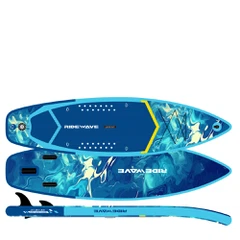
Digital printing represents the most modern and visually powerful method in the inflatable paddle board industry. Using advanced inkjet or UV-curing technology, digital printers can reproduce photographs, detailed illustrations, gradients, shadows, and full-color images directly onto PVC. This makes it possible for brands to achieve unique, premium designs that stand out in the market.
The key advantage of digital printing is unlimited creative freedom. Designers can produce complex artwork featuring ocean themes, abstract patterns, textures, detailed illustrations, or branded graphics without worrying about color limitations. With digital printing, there is no need for physical plates, screens, or transfer films. Design modifications can be made quickly, which is especially beneficial for brands that often release seasonal or limited-edition models.
Digital printing also offers excellent color accuracy. With ICC color management and high-precision print heads, colors remain consistent from sample to mass production. This is particularly important for brands selling across multiple regions where matching product displays and online images is essential for brand integrity. The printing resolution is typically much higher than in heat transfer or screen printing, resulting in sharper visuals and more sophisticated patterns.
However, the technology requires a higher initial investment and specialized equipment. Not all factories have the capability to perform digital printing in-house, meaning some outsource this process, which increases production time and cost. The inks used in digital printing are also more expensive, and the printing process itself is slower than screen printing, making it less cost-effective for simple designs.
Durability is another consideration. Although UV-cured inks are generally strong and resistant to fading, they may not match the abrasion resistance of heat transfer printing, especially in high-wear areas. To address this, many factories apply a protective coating on top of digital graphics. This adds an extra layer of complexity and requires additional quality control to avoid surface irregularities.
For brands targeting the premium consumer segment or those seeking distinctive, artistic designs, digital printing is an unmatched choice. It enhances the perceived value of the board, supports customization, and enables faster design cycles. While the cost is higher, the visual impact and branding benefits often justify the investment.
4. Water Transfer Printing: Seamless Patterns for Enhanced Aesthetics
Water transfer printing is an innovative method that enables seamless wrapping of detailed patterns around curved or uneven surfaces. In inflatable paddle boards, it is commonly used for EVA deck pads, rail accents, or components such as fins and handles. This technique immerses the item into water containing a floating ink film. As the item is submerged, the pattern adheres to the surface due to water pressure.
One of the biggest advantages of water transfer printing is its ability to create realistic textures and continuous motifs. Wood grain, stone texture, carbon fiber patterns, or camouflage designs can be reproduced with exceptional smoothness. Unlike screen printing or digital printing, water transfer can achieve natural-looking depth and richness that mimic real materials, making the board visually appealing and unique.
This printing method is particularly popular for EVA deck pads, where textures can complement functional grooves and traction patterns. Water transfer allows the design to extend across complex shapes without distortion. Compared with surface-leveled digital printing, the water-transfer pattern moves with the material's contours, offering a more integrated appearance.
However, water transfer printing is a labor-intensive process. Each piece must be dipped manually, which increases production time and cost. Skilled workers are essential because improper dipping angles, inconsistent pressure, or incorrect film dissolution can lead to pattern stretching or defects. Since each item is dipped individually, achieving perfect consistency across a batch requires strict control and experience.
Durability is generally good, but water transfer graphics depend on the protective topcoat applied afterward. Without proper sealing, patterns may wear off in high-friction areas. For EVA pads, this is especially important, as the deck frequently contacts feet, sand, and water. High-quality sealing layers improve abrasion resistance and UV protection.
Water transfer printing is best suited for brands that want realistic, textured patterns or wish to add artistic details that cannot be achieved through other methods. It offers a premium look and pairs well with mid-to-high-end product lines where aesthetics play a key role in consumer decision-making.
5. Choosing the Right Printing Method for Your Brand
Selecting a printing method is not simply about visual preference; it is a strategic decision that affects product positioning, cost structure, durability, and supply chain efficiency. Each method has unique advantages.
Heat transfer printing is ideal for large, detailed graphics that require consistent quality and strong durability. It balances cost and performance and is widely used for mid- to high-volume production.
Screen printing is best for bold, solid-color logos or simple patterns where maximum abrasion resistance and cost efficiency are needed. It fits well with entry-level boards or rental boards that prioritize robustness.
Digital printing is the premium option for brands seeking unlimited design freedom, high-resolution artwork, and differentiated aesthetics. It enhances brand identity and consumer appeal.
Water transfer printing is the method of choice for realistic, seamless patterns or textured visual effects. It is especially useful for EVA deck pads and specialty design elements.
When choosing a technique, brands should also consider their supply chain strategy. MOQ, production lead times, tooling requirements, and color management workflows can all influence the final result. For example, brands that offer seasonal designs may prefer digital printing for its flexibility, while brands with stable, long-term designs might benefit more from the cost efficiency of heat transfer or screen printing.
6. Final Thoughts
Printing is not just decoration-it is a powerful branding tool that shapes how customers perceive your inflatable paddle boards. A board with high-quality graphics not only looks attractive but also stands out in a competitive market, supports premium pricing, and enhances long-term customer satisfaction. By understanding the strengths and limitations of heat transfer printing, screen printing, digital printing, and water transfer printing, you can make informed decisions that align with your brand identity, product strategy, and target audience.
Whether your priority is durability, artistic freedom, cost control, or unique textures, selecting the right printing method is essential for building a successful iSUP product line. As the market continues to evolve, brands that combine advanced printing technologies with thoughtful design will gain a distinct edge in both retail and B2B channels.
Other articles:
- Inflatable Paddle Board Printing: From Design to Durable, High-Quality Graphics
- Key Factors Affecting iSUP Printing Quality: Color Fastness, Durability, UV Resistance, and Weatherproofing
- Choosing the Right Printing Method for Your iSUP Line: MOQ, Costs, Design Flexibility, and Brand Positioning
- EVA Deck Pad and Rail Printing: Techniques, Differences, and Branding Opportunities
- iSUP Graphic Design Trends: Minimalist, Pop Art, Natural Textures, and Sporty Styles