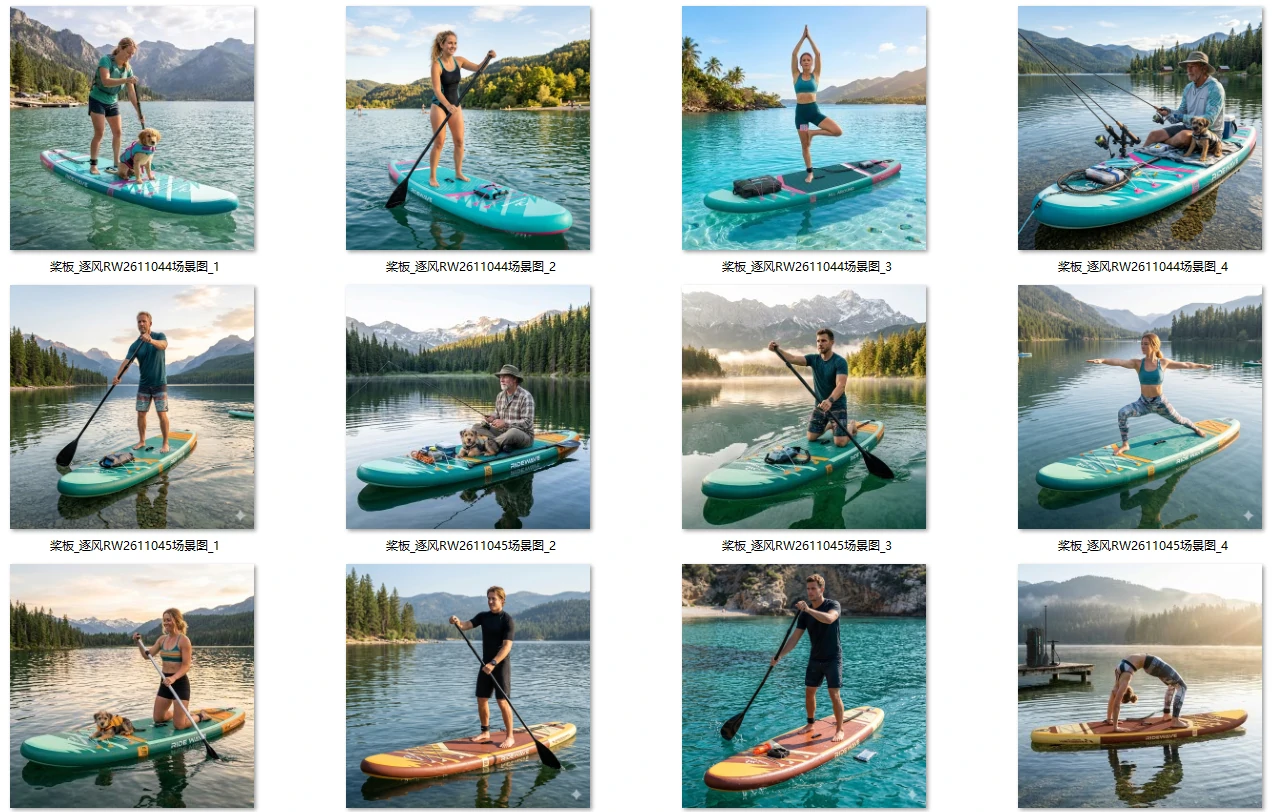

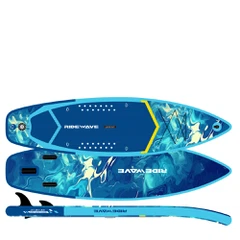
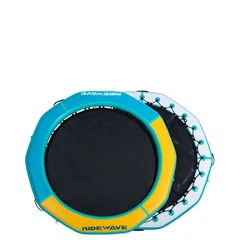
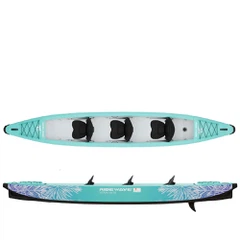
Selecting the right printing method is one of the most important decisions when developing or expanding your inflatable paddle board (iSUP) product line. Beyond aesthetics, the printing technique directly influences production costs, minimum order quantities (MOQs), color durability, UV resistance, marketing impact, and ultimately your brand positioning in the global SUP market.
This guide provides an in-depth look at the four most widely used iSUP printing methods-heat transfer printing, silk screen printing, digital UV printing, and water transfer printing-and breaks down how each method aligns with your business goals, design requirements, and market segment.
1. Heat Transfer Printing: High Visual Impact with Flexible Production
Heat transfer printing is currently the most common method for premium inflatable paddle boards. Its ability to deliver vibrant, detailed artwork makes it ideal for brands targeting mid- to high-end markets.
Key Advantages
- High-resolution graphics suitable for complex logo layouts, gradients, and multi-color designs.
- Strong color fastness and UV resistance, ideal for outdoor water sports.
- Relatively low MOQ, allowing more design options for small to medium brands.
Limitations
- Slightly higher cost compared to traditional screen printing.
- Large solid areas may require proper lamination to avoid micro-bubbles.
Best for brand positioning
Ideal for brands wanting a premium appearance, complex artwork, and strong branding consistency across models.
2. Silk Screen Printing: Cost-Effective and Durable for Large Production Runs
Silk screen printing remains a popular choice for iSUP deck pads, logos, and simple color blocks. It is a highly durable method with excellent resistance to abrasion and sunlight.
Strengths
Very cost-efficient for large-volume orders.
Extremely durable and suitable for single-color or limited-color graphics.
Perfect for logos, warnings, grid lines, and branding elements.
Limitations
High MOQ, since each color requires a plate.
Not ideal for complex illustrations, gradients, or photographic artwork.
Best for brand positioning
A practical choice for entry-level or mass-market iSUP lines where cost and durability matter more than artistic complexity.
3. Digital UV Printing: Maximum Design Freedom for High-End Customization
Digital UV printing is gaining popularity among OEM/ODM manufacturers because it supports complex, highly personalized graphics without plate-making.
Strengths
- Unlimited color options, detailed artwork, and 1:1 digital reproduction.
- Excellent for short-run or customized production, ideal for rental shops, clubs, and boutique brands.
- Fast file-to-print workflow with high accuracy.
Limitations
- Higher cost per unit.
- Lower production speed compared to screen printing.
- Requires UV-cured inks with stable adhesion on PVC materials.
Best for brand positioning
Perfect for premium, artistic, or customized iSUP collections where uniqueness and visual identity are core selling points.
4. Water Transfer Printing: Full-Surface Texture and a Distinctive Visual Style
Water transfer printing is typically used for textured designs, such as wood grain, carbon patterns, or camo-style surfaces.
Strengths
- Provides full-surface patterns and seamless visual effects that other methods cannot achieve.
- Highly attractive for outdoor, fishing, and adventure-style iSUPs.
- Works well for limited-edition or lifestyle-themed collections.
Limitations
- Higher labor cost.
- Pattern alignment must be controlled precisely during production.
- Typically used for special designs rather than standard branding.
Best for brand positioning
Ideal for brands wanting a unique, lifestyle-driven identity or aiming at niche markets (e.g., fishing SUP, yoga SUP, expedition SUP).
5. Comparing MOQ, Cost, Durability, and Branding Fit
Choosing the right method requires balancing aesthetics, volume, and market strategy.
MOQ Comparison
- Heat Transfer: Low to medium
- Screen Printing: Higher MOQ
- Digital UV Printing: Very low MOQ
- Water Transfer: Medium
Cost Level
- Lowest: Screen printing
- Medium: Heat transfer
- Higher: Water transfer
- Highest: Digital UV
Durability & UV Resistance
- Strongest: Heat transfer, Screen printing
- High: Digital UV (when using premium inks)
- Moderate to High: Water transfer (depends on protective coating)
Design Flexibility
- Maximum: Digital UV
- High: Heat transfer
- Medium: Water transfer
- Low: Screen printing
6. Which Method Should Your Brand Choose?
Your decision should reflect your product strategy and target customer segment.
For International Retailers / Outdoor Brands
- Choose: Heat Transfer + Screen Printing Combination
- Reason: Premium visuals with durable technical components.
For Rental Shops / Clubs / Custom Orders
- Choose: Digital UV Printing
- Reason: Supports small batches and high customization.
For Mass-Volume Entry-Level Models
- Choose: Screen Printing
- Reason: Most cost-efficient at high volumes.
For Fishing / Lifestyle / Limited Editions
- Choose: Water Transfer Printing
- Reason: Unique full-surface textures and strong visual identity.
7. Final Thoughts: Printing Quality Shapes Your Brand Identity
In the competitive inflatable paddle board market, printing quality isn't just a design choice-it is a brand asset. It affects perceived value, customer trust, and how your boards stand out in a crowded global marketplace. Selecting the correct printing method ensures the right balance between cost, durability, visual impact, production efficiency, and brand positioning.
Whether you are launching a new iSUP line or upgrading your existing collection, evaluating printing methods from a strategic perspective helps you create products that resonate with today's consumers and strengthen your long-term brand growth.
Other Articles:
- Inflatable Paddle Board Printing: From Design to Durable, High-Quality Graphics
- Common Printing Methods for Inflatable Paddle Boards: Heat Transfer, Screen Printing, Digital Printing, and Water Transfer
- EVA Deck Pad and Rail Printing: Techniques, Differences, and Branding Opportunities
- iSUP Graphic Design Trends: Minimalist, Pop Art, Natural Textures, and Sporty Styles