
Stand Up Paddleboarding, or SUP, has become more than just a recreational activity-it is a global water sport phenomenon. In 2025, SUP continues to attract enthusiasts ranging from casual paddlers to professional athletes. This surge is driven by innovations in design, materials, and manufacturing technologies, which make SUP more accessible and durable than ever before. Understanding the basics of SUP is essential for anyone looking to explore the market, whether as a hobbyist, retailer, or B2B buyer.
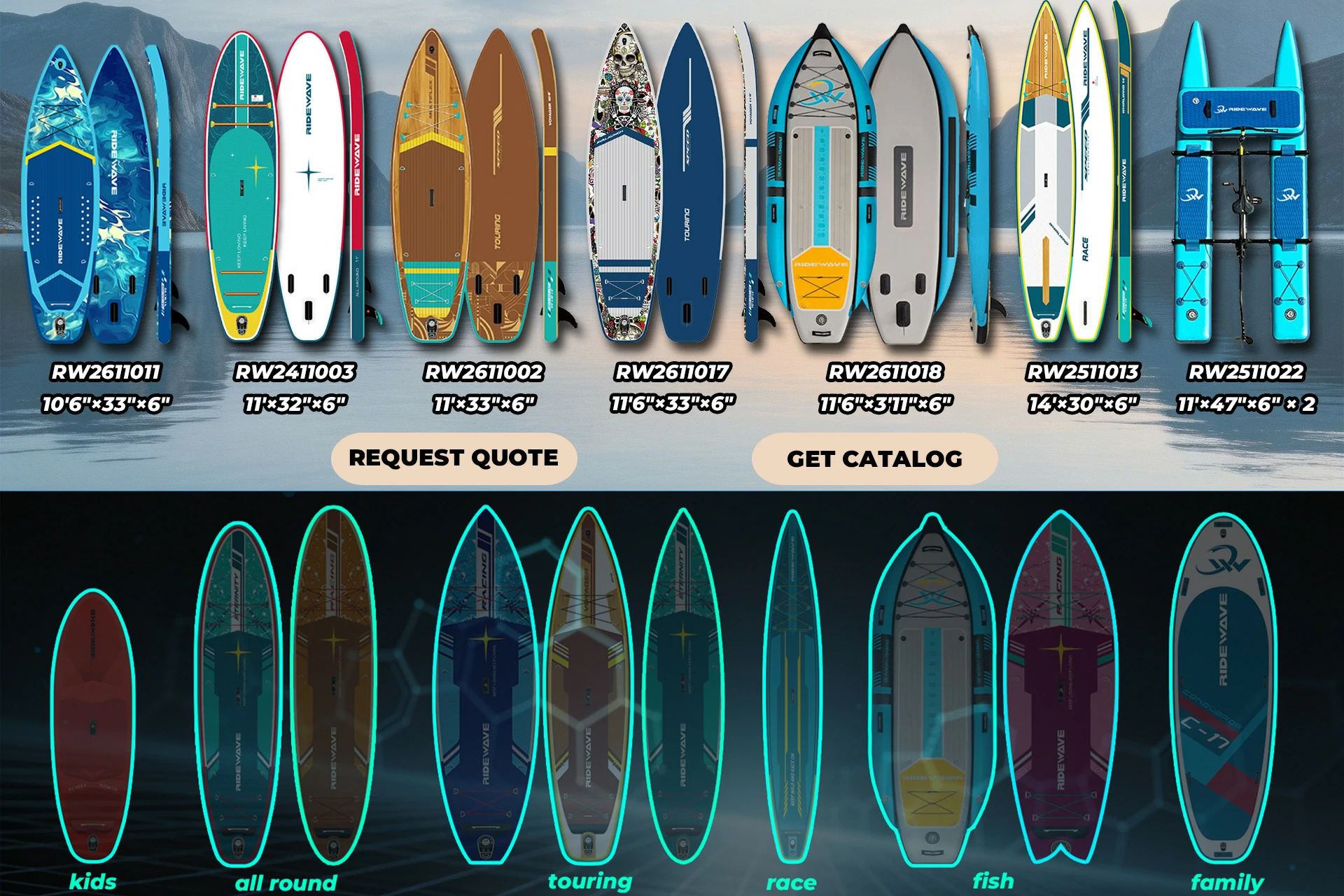
There are several types of SUPs designed for different purposes: all-round SUPs for beginners and general use, touring SUPs for long-distance paddling, racing SUPs for speed enthusiasts, and yoga SUPs for fitness and balance training. Each type has unique specifications in terms of length, width, thickness, and volume. For example, all-round SUPs typically offer maximum stability, while racing SUPs prioritize speed and maneuverability.
The 2025 SUP market is also influenced by rising environmental awareness. Many manufacturers are exploring eco-friendly materials and sustainable production practices. Customers are increasingly looking for boards that not only perform well but also minimize environmental impact.
SUP Materials: From PVC to Drop-Stitch Technology

The heart of a great SUP lies in its materials. In 2025, inflatable SUPs dominate the market due to their convenience and portability. Modern inflatable SUPs are typically constructed from high-quality PVC combined with drop-stitch technology. Drop-stitch material consists of thousands of polyester threads connecting the top and bottom layers of PVC. When inflated, this creates a rigid, board-like structure that can support substantial weight while maintaining flexibility and durability.
Different layers of PVC, reinforced with additional coatings, determine the board's resilience against punctures, UV exposure, and abrasion. Some premium SUPs also incorporate eco-friendly PVC blends, which reduce environmental impact without compromising performance.
Selecting the right material affects both the board's weight and handling characteristics. Lighter boards are easier to transport and maneuver, while thicker, more reinforced boards provide extra stability and durability for heavier paddlers or rougher water conditions.
SUP Design: Shape, Volume, and Stability
A great SUP starts with meticulous design. The shape, volume, and stability of a board are critical factors that determine how it performs on water. The design process in 2025 heavily relies on computer-aided design (CAD) and 3D modeling to simulate real-life conditions. This ensures optimal balance, glide, and turning capabilities before the first board is manufactured.
Length and width play a major role in stability. Longer boards glide faster and are suited for touring, while wider boards offer better balance for beginners or yoga SUPs. Thickness contributes to volume, which affects buoyancy. Some boards have tapered noses for speed, while others feature rounded edges for steady, controlled paddling.
Even subtle features, such as tail shape, fin configuration, and deck pad texture, are designed to enhance performance. Manufacturers like Ridewave test these elements extensively in prototype stages to ensure the board meets both professional and recreational standards.

SUP Production Process: Step Inside the Factory

Walking into a modern SUP factory in 2025 is like entering a high-tech workshop where precision meets craftsmanship. The production of an inflatable SUP involves multiple stages: cutting, welding, printing, assembly, and testing.
High-pressure heat welding machines bond the PVC layers with incredible accuracy, creating airtight seams that can withstand high inflation pressures. Advanced laser cutting systems ensure the components match design specifications exactly. Digital printers apply custom graphics and logos directly to the board surface, making each SUP unique for OEM or ODM clients.
The assembly stage includes placing deck pads, mounting handles, and attaching fins. Every board passes through multiple quality checks, including air retention tests, weight-bearing assessments, and surface inspections. Modern factories also employ automated and semi-automated machines to increase production efficiency without sacrificing quality.
SUP Finishing and Accessories: Completing the Board
After the main structure is complete, finishing touches transform the board into a complete product ready for the water. Deck pads, handles, bungee storage systems, and fins are carefully installed.
Deck pads provide traction and comfort during paddling. Ergonomic handles make it easy to carry boards of varying sizes. Fins, either removable or fixed, greatly influence the board's tracking and maneuverability. Additional accessories, such as D-rings for leashes or anchor points, add versatility for activities like yoga, fishing, or SUP touring.
The finishing process is not just functional-it also contributes to aesthetic appeal. A well-finished board with clean lines, consistent graphics, and polished edges reflects the manufacturer's attention to detail, which can be a decisive factor for B2B buyers seeking premium products.

SUP Quality Inspection: How Excellence is Ensured

Quality inspection is the backbone of any great SUP. Even the smallest manufacturing defects can lead to leaks or instability, compromising safety and customer satisfaction.
In 2025, QC processes are more rigorous than ever. Each SUP undergoes air pressure testing to ensure seams are airtight. Load tests confirm that the board can handle recommended weight capacities without warping. Surface inspections detect scratches, uneven printing, or irregular textures. Some manufacturers even conduct real-world water trials for high-end boards.
Ridewave emphasizes a multi-stage quality inspection system. Boards are checked at multiple points: before welding, after welding, post-printing, and after assembly. This layered approach ensures that each SUP leaving the factory meets strict performance and safety standards.
SUP Customization Opportunities: Branding and Graphics
Customization is a major selling point for B2B buyers in 2025. SUPs can be tailored to include logos, specific color schemes, or unique graphics that represent a brand's identity.
OEM and ODM services allow distributors to differentiate their products in a crowded market. Customization can extend beyond visual aesthetics: special deck textures, enhanced fin systems, and additional accessory configurations can make a board truly unique.
Ridewave offers extensive customization options for B2B partners. By collaborating early in the design process, distributors can ensure their boards not only meet performance standards but also stand out visually in retail environments.

SUP Market Trends: 2025 Insights from the Factory Floor

Observing SUP production in 2025 provides a unique perspective on market trends. Inflatable boards dominate, driven by consumer preference for portability and storage convenience. All-round and touring SUPs remain the most popular, but niche markets like SUP yoga and fishing are growing steadily.
Factories are responding by increasing production flexibility, lowering minimum order quantities (MOQs), and offering faster turnaround times. Material innovations, such as eco-friendly PVC and lightweight reinforcements, are becoming standard.
B2B buyers can leverage these trends by aligning their inventory with emerging consumer preferences. Ridewave, for instance, frequently updates its production lines to accommodate trending colors, shapes, and accessory packages, ensuring that partners receive boards that resonate with their local markets.
Now that we've explored how a great SUP is made-from materials and design to finishing, quality inspection, and customization-it becomes clear that the factory plays a pivotal role in shaping the performance, aesthetics, and durability of every board.
"Next, in Part 2, we will explore how distributors, retailers, and B2B buyers can leverage these insights to choose, customize, and successfully market their SUP brands worldwide. From pricing strategies and logistics to brand building and future innovations, Part 2 is your comprehensive guide to turning factory knowledge into business success.
👉 [Stay tuned for Part 2 – It's where things really come together.].
|
Want to explore more about the paddle board market in 2025? Here are other expert blogs you might find useful: Discover why now is the best time to enter the inflatable SUP market and how to position your brand for long-term success.
A complete guide for global SUP buyers looking to import from China with confidence. Avoid costly errors with our practical checklist for overseas B2B buyers. See how Ridewave supports SUP businesses across Europe with flexible, reliable solutions. |