

As the global outdoor sports market undergoes a rapid transformation, inflatable fishing SUP boards have transitioned from niche recreational gear to a high-demand category in the professional watersports sector. For distributors, wholesalers, and specialized equipment retailers, the primary challenge in today's competitive market is no longer just securing stock, but ensuring that the product lineup can withstand the punishing demands of diverse water environments. As an operator in this space, you understand that an inflatable paddleboard is only as reliable as the materials it is built from. Material science, specifically the engineering behind high-quality, industrial-grade PVC, serves as the vital backbone of your brand's reputation, your customer retention rates, and ultimately, your bottom line. In this guide, we explore why material transparency is the key to scaling your SUP business successfully.
Why is the choice of PVC material the single most important factor for your fishing SUP inventory?
The longevity, safety, and performance of any inflatable fishing SUP are dictated primarily by the structural integrity of its core materials. When your customers invest in a board specifically for angling, they are not merely purchasing a leisure platform; they are acquiring a specialized, mobile tool that must endure heavy payloads, constant abrasion from fishing hooks and tackle, and prolonged exposure to harsh UV radiation and varying water temperatures.

From a professional B2B perspective, the premium PVC construction of a board is the most effective safeguard against two major business killers: high return rates and eroded brand trust. Boards engineered with high-density drop-stitch technology and multi-layer reinforced PVC do not just perform better-they maintain their structural rigidity under heavy loads. This ensures the stable, performance-driven experience that modern anglers demand, which directly translates to fewer warranty claims and higher customer satisfaction.
At Ridewave, we have observed that when retailers move away from "price-first" sourcing-which often relies on thinner, lower-grade PVC-and transition to performance-focused materials, their long-term margins improve significantly. Lower-grade boards may offer an attractive entry price, but they frequently fail at the seams or suffer from micro-leaks under the pressure of a fully loaded fishing setup. By prioritizing material quality at the manufacturing level, you are not just stocking a product; you are effectively lowering your operational overhead and insulating your brand against the negative feedback loops that plague low-quality equipment distributors. Essentially, your choice of material is a direct reflection of your business's commitment to quality.
What are the critical differences between low-grade and high-grade industrial PVC?
In the manufacturing of inflatable paddleboards, not all PVC is created equal. For a wholesaler or brand partner, understanding the technical discrepancy between low-grade and high-grade PVC is essential to avoid the "cost trap"-where a lower purchase price leads to higher total cost of ownership due to returns, repairs, and lost brand loyalty.
Low-grade materials often utilize thinner, recycled, or poorly stabilized PVC compounds that fail to maintain structural integrity under thermal stress. In contrast, high-grade industrial PVC-such as the specialized materials used at Ridewave-features a high-density, multi-layer matrix designed specifically for the rigorous demands of fishing SUPs. The primary differentiator lies in the chemical bonding process and the "denier" count of the internal polyester mesh, which determines how much pressure the board can hold without warping or losing shape.

Comparative Overview: Standard vs. Premium SUP Material Specifications
| Feature | Low-Grade (Budget) PVC | Ridewave Industrial-Grade PVC |
| Material Structure | Single-layer, low-density | Dual-layer, high-density Fusion |
| Tensile Strength | Prone to stretching/deformation | Exceptional tear & impact resistance |
| UV Resistance | Rapid degradation/fading | UV-stabilized for long-term outdoor use |
| Heat Sensitivity | Prone to seam leakage in high heat | Engineered for high-temperature stability |
| Expected Lifespan | 1–2 seasons | 4+ years of consistent use |
As demonstrated in the table above, the disparity in lifespan and structural performance is significant. When your retail business stocks boards using premium fusion-layered PVC, you are essentially providing your customers with an "all-weather" product. This stability is critical for the fishing SUP market, where anglers often carry heavy equipment like coolers, fishing rods, and gear crates. A board made from inferior PVC will "taco" or bend under this load, whereas a professional-grade inflatable SUP maintains its rigidity, ensuring a safer and more enjoyable fishing experience. By educating your buyers on these technical differences, you position yourself as an industry expert, not just another reseller.
How does military-grade drop-stitch technology change the fishing experience?
While PVC provides the exterior shell, the "skeleton" of any high-performance inflatable fishing SUP is the internal drop-stitch technology. For a distributor, understanding this internal construction is vital, as it is the primary determinant of a board's stiffness, weight capacity, and overall longevity.

In standard consumer-grade boards, the internal stitching density is often minimized to save costs. However, at Ridewave, we utilize military-grade drop-stitch fibers that are woven at a significantly higher density. These tens of thousands of high-tensile polyester threads connect the top and bottom layers of the board, allowing it to be inflated to a much higher PSI (pounds per square inch) without losing its shape. For an angler standing on the water for hours, this creates a rock-solid platform that feels remarkably similar to a traditional hard board.
The B2B advantage here is clear: when your inventory features superior drop-stitch architecture, your clients aren't just buying a board; they are buying stability. A high-PSI board doesn't "flex" or "sag" under the weight of fishing crates, coolers, and rod holders. This rigidity is the difference between a satisfied customer and a return request. Furthermore, the high-density construction allows for a lighter total board weight, which reduces shipping costs for your distribution channels and makes the product significantly more appealing for the retail market where portability is a key selling point.
Can advanced welding techniques prevent common leakage issues in extreme temperatures?
One of the most persistent concerns for professional distributors is the "seam failure" phenomenon. When inflatable fishing SUP boards are subjected to extreme environmental conditions-such as the intense Australian summer heat or the rapid temperature fluctuations in Northern European waters-standard glue-based seams often lose their integrity. This leads to the most feared outcome in the retail chain: product leakage and subsequent warranty claims.
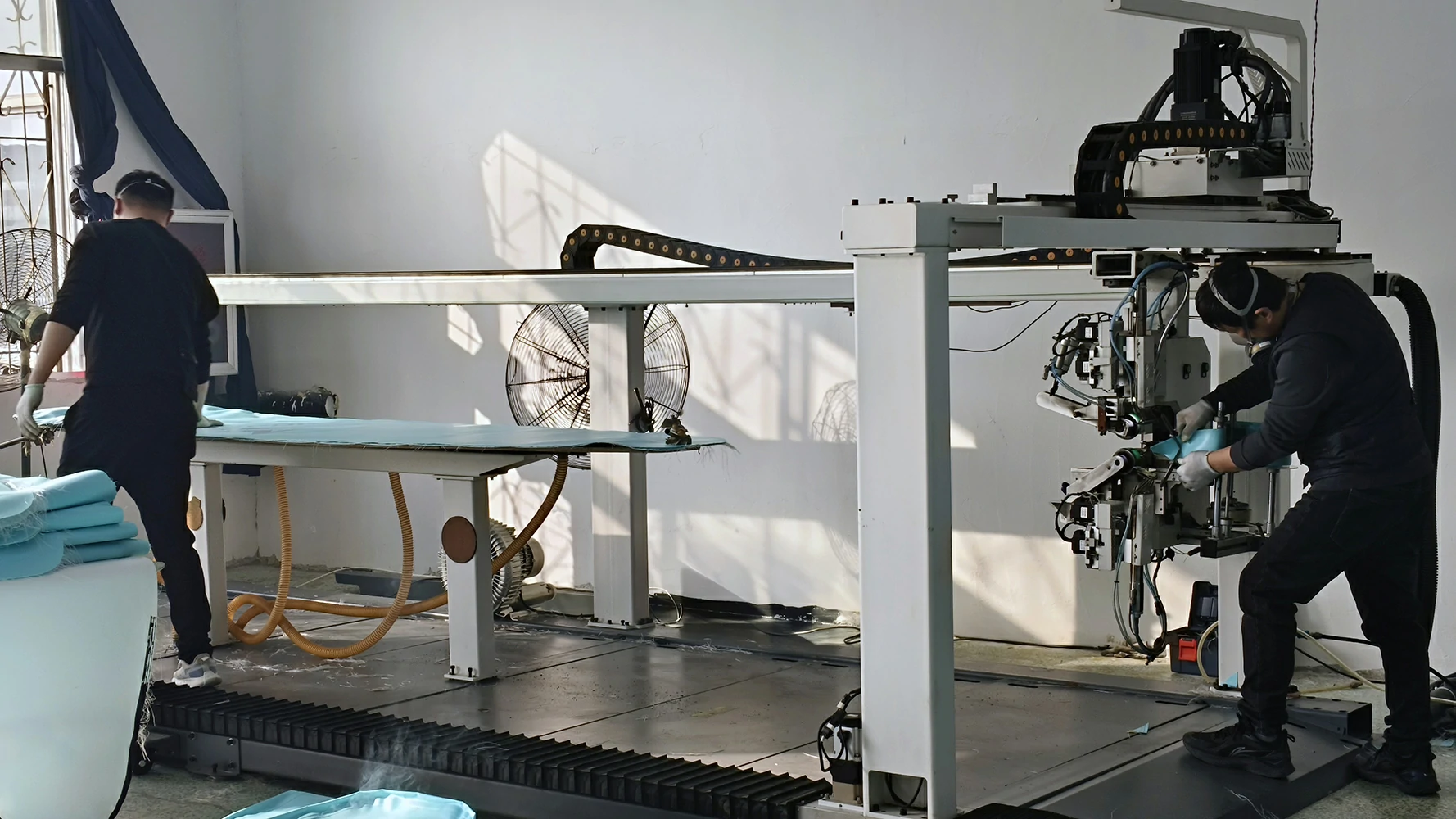
For your inventory, the transition from manual, glue-dependent manufacturing to automated heat-welded seams is a game-changer. Heat welding (or hot-air welding) fuses the two layers of PVC at a molecular level, creating a bond that is effectively stronger than the material itself.

Case Study: The "Heat-Proof" Transition in the Australian Market
We recently worked with a long-term Ridewave distributor in Australia who faced significant reputational challenges due to high return rates during a record-breaking heatwave. Their previous inventory, which utilized traditional adhesive bonding, suffered from seam separation under intense solar exposure. After shifting their entire order to Ridewave's heat-welded fishing SUPs, this distributor reported a 40% reduction in warranty claims over a 12-month period. By ensuring that the boards were engineered for extreme temperature stability, they were able to reposition their brand as the "go-to" for reliable, high-end outdoor equipment, effectively securing a larger market share despite the competitive landscape.
This level of manufacturing reliability is the ultimate asset for your business. When you stock heat-welded SUPs, you are not just selling a product; you are selling peace of mind to your retail customers.
Is your current supplier sacrificing long-term durability for short-term cost-cutting?
In the fast-paced SUP industry, there is an ongoing tug-of-war between "market-ready price points" and "long-term product integrity." As a professional distributor, you have likely encountered suppliers offering seemingly identical inflatable fishing SUPs at significantly lower costs. However, in our experience at Ridewave, a low-cost unit is rarely a bargain-it is often a financial liability in disguise.
When a manufacturer sacrifices quality to hit a lower price bracket, the corners cut are rarely visible to the naked eye. Instead, they manifest as "silent killers" of your business operations:
Adhesive Degradation: Using budget-grade glue instead of heat-welding techniques, which results in seam failure after exposure to direct sunlight.
Substandard PVC Compounding: Using plasticizers that become brittle in cold water or soften excessively in high heat, leading to board deformation.
Minimized Stitch Count: Reducing the density of internal drop-stitch fibers, which compromises the board's rigidity and increases the risk of "ballooning" (where the board bulges in the center).
For your retail business, these issues are not just manufacturing defects-they are brand-damaging events. Every return you process, every unhappy customer who writes a negative review, and every warranty claim you file eats into the profit margin you gained by choosing a cheaper supplier.
At Ridewave, we believe that true wholesale value is found in lifecycle cost management. By providing professional-grade fishing SUPs that endure, we help our partners protect their reputation. Before you commit to your next bulk order, ask your manufacturer: Are they investing in the raw materials and welding technology that guarantee a 4+ year lifespan, or are they focused solely on the transactional price? Your long-term profitability depends on the answer.
How can premium materials help your business capitalize on the growing "fishing-from-a-board" trend?
The "fishing-from-a-board" movement is no longer a niche curiosity; it is a rapidly expanding segment of the global angling market. As traditional boat owners look for more portable, accessible, and environmentally friendly ways to reach remote water spots, the inflatable fishing SUP has emerged as the premier solution. However, market growth brings market scrutiny. Today's anglers are more informed than ever, and they are actively seeking out brands that offer reliability, stability, and longevity.

For a distributor, this trend represents a massive opportunity to capture high-value customers-but only if your product lineup meets their expectations. When you curate an inventory centered on premium-grade materials, you aren't just filling shelves; you are aligning your business with the professional standards that modern, affluent anglers expect.
To thrive in this environment, retailers must understand the specific market drivers-such as the rise of "micro-fishing" adventures and the shift toward specialized, gear-ready equipment-that make premium inflatable SUPs a must-have. We have analyzed these shifts in detail, and for those looking to optimize their retail strategy, we recommend our latest market report: [The Rising Demand For Inflatable Fishing SUPs: Why Your Retail Business Needs To Stock Them Now].
By positioning your business as a provider of high-performance, specialized fishing equipment, you gain a competitive edge that budget-focused competitors cannot replicate. This is about more than just selling a board; it is about providing the technical foundation for your customer's hobby. When you stock Ridewave's professional-grade series, you are offering a product that has been rigorously tested for the very market that is currently driving growth. This strategic alignment ensures that you aren't just catching a wave-you're building a sustainable business on a solid foundation.
Are these advanced materials compliant with global safety and environmental standards?
In the current global retail climate, compliance is not merely a legal requirement-it is a competitive necessity. As major retailers in North America, Europe, and Australia strengthen their ESG (Environmental, Social, and Governance) procurement policies, the inflatable SUP industry faces increasing scrutiny regarding material toxicity and waste management. For a distributor, partnering with a manufacturer that prioritizes global compliance is the safest way to future-proof your supply chain.
At Ridewave, we recognize that an inflatable fishing SUP must be as safe for the ecosystem as it is durable for the angler. Our manufacturing process strictly adheres to internationally recognized standards, including CE, REACH, and RoHS compliance. This means our PVC compounds are free from harmful phthalates and heavy metals, ensuring that your inventory meets the stringent safety regulations required for the European and North American markets.
Beyond chemical safety, we are heavily invested in sustainable production practices. We utilize closed-loop water systems in our factory to reduce waste and optimize raw material usage, effectively lowering the carbon footprint of every board produced. When you distribute Ridewave products, you can confidently present your inventory to eco-conscious retailers and consumers who prioritize environmental responsibility.
In a market where "greenwashing" is easily detected, being able to provide verified documentation for material safety is a significant trust-builder. By choosing a manufacturer that maintains rigorous quality and safety certifications, you eliminate the regulatory risks that could otherwise lead to customs seizures, product recalls, or public relations crises. Your supply chain isn't just about efficiency; it's about integrity.

What should a professional distributor look for when testing a manufacturer's sample?
In the B2B world, a sample is not just a demo unit-it is a proof-of-concept for your entire potential profit margin. When you receive a sample of an inflatable fishing SUP from a potential manufacturing partner, you should look beyond the aesthetics and dive into the technical stress points. Relying on "it looks good" is how many retailers end up with thousands of units that fail in the field.
To ensure you are partnering with a world-class factory, conduct these four professional-grade tests upon receiving your sample:

The Seam Integrity Test: Inspect the overlap areas. Are they smooth, uniform, and free of glue residue? If you see jagged edges or bubbling at the seams, it indicates a manual, low-precision manufacturing process. Ridewave's automated heat-welded seams will always appear seamless and perfectly aligned.
The Rigidity & PSI Stress Test: Inflate the board to its maximum rated PSI. Leave it in a temperature-controlled environment for 24 hours to monitor for pressure loss. A high-quality inflatable SUP should hold its structure perfectly; any noticeable "softness" indicates a micro-leak or inferior internal drop-stitch density.
Accessory Compatibility & Attachment Points: Fishing requires gear. Test the D-rings, rod holder mounts, and cargo bungee systems. Do they pull against the PVC, or are they reinforced with additional patches? A professional fishing SUP must have a robust attachment infrastructure that doesn't compromise the board's airtight integrity.
Material Recovery: Fold the board tightly and let it sit for an hour. Upon unrolling, the PVC should not show deep, permanent creasing or cracking. High-quality materials, like those used in our fishing series, are engineered for "memory," ensuring the board returns to its original, rigid form every time.
By standardizing your sample evaluation process, you remove the guesswork from your supply chain. Remember: a manufacturer who is confident in their product will encourage you to conduct these rigorous tests. At Ridewave, we don't just ship samples; we invite our partners to test them against the industry's highest standards.
Why does investing in superior materials lead to higher customer retention rates?
In the competitive retail landscape, the cost of acquiring a new customer is exponentially higher than the cost of retaining an existing one. For your SUP business, material quality is the most direct lever you have to influence customer loyalty. When a customer purchases an inflatable fishing SUP, they are making an investment in their leisure time and personal safety. If the board underperforms, leaks, or loses rigidity, that customer's trust in your brand is instantly severed.
Conversely, when a customer receives a board that stands up to the rigors of the outdoors-maintaining its shape after years of use and showing no signs of seam degradation-they become a lifetime brand advocate. High-quality inflatable paddleboards engineered with premium materials act as a silent marketing team. They generate positive word-of-mouth, high star ratings, and repeat business within the angling community.
By choosing to stock Ridewave's professional-grade equipment, you are not just selling a product; you are providing an experience that validates your customer's investment. This creates a psychological "safety net" where your customers return to your shop for future gear, knowing they can trust your curated inventory. In a world of disposable goods, reliability is the most valuable commodity you can offer. Investing in material excellence today is the surest way to secure your market share tomorrow.
Partnering for Long-Term Growth
The choice of material in the inflatable fishing SUP industry is far more than a technical specification-it is a strategic business decision that determines your company's trajectory. From the structural integrity of high-density drop-stitch fibers to the longevity offered by automated heat-welded seams, every engineering detail plays a role in your brand's reputation and bottom line.
As the market for specialized fishing watercraft continues to evolve, the distinction between "price-first" resellers and "quality-first" distributors will become even more pronounced. By prioritizing premium manufacturing, regulatory compliance, and lifecycle cost management, you position your retail or distribution business at the forefront of this growth.
At Ridewave, we are committed to providing the technical backbone that supports your success. Our manufacturing standards are designed to exceed the expectations of modern anglers and satisfy the rigorous requirements of professional retailers worldwide.
Ready to upgrade your inventory? [Contact our team today to request a product sample] or explore our latest catalog to see how our professional-grade fishing SUPs can help you scale your business sustainably.
Related Articles
Why Inflatable Fishing Paddleboards Are Taking Over The Water Sports Industry
Top 5 Features To Look For in A High-Performance Inflatable Fishing Paddleboard
The Ultimate Beginner's Guide To Choosing Your First Inflatable Fishing Stand-Up Paddleboard
The Rising Demand For Inflatable Fishing SUPs: Why Your Retail Business Needs To Stock Them Now