
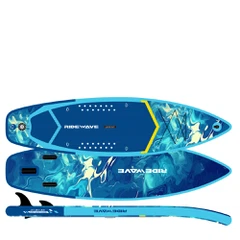
The global inflatable paddle board (SUP) industry has been expanding rapidly, attracting recreational paddlers, fitness enthusiasts, and professional athletes. With this growth, the demand from wholesale buyers, distributors, and B2B retailers has also skyrocketed. Inflatable SUPs have become the preferred option in water sports because of their portability, durability, and customization potential.
For wholesale buyers, sourcing the right product means navigating key concerns such as quality, pricing, MOQ (Minimum Order Quantity), OEM/ODM services, certifications, and shipping logistics. To help you succeed in this fast-growing market, we've compiled the top 10 questions wholesale buyers ask about inflatable paddle boards, along with expert answers that will guide your purchasing strategy.
1. What Materials Are Used to Make Inflatable SUPs?
One of the first questions wholesale buyers ask is about materials and construction quality. Not all inflatable SUPs are built the same, and material choice has a huge impact on durability, stiffness, and lifespan.
Key Materials in Inflatable Paddle Boards
- Drop-Stitch Fabric: The core of inflatable SUPs, made of thousands of polyester threads that connect the top and bottom layers. This ensures the board holds its shape when inflated to high pressure (12–15 PSI).
- PVC Layers: High-quality boards use military-grade PVC, often in multiple layers. Double- or triple-layer construction provides better puncture resistance and stiffness.
- Fusion Technology: Advanced heat-bonding techniques fuse layers together, reducing weight without compromising durability.
- Eco-Friendly Options: Increasingly, manufacturers are offering recyclable PVC and non-toxic adhesives to meet sustainability goals.
2. What Is the Minimum Order Quantity (MOQ) for Inflatable SUPs?
MOQ is a key concern for wholesale buyers. Some manufacturers set very high MOQs, which may be challenging for new brands or smaller distributors.
Typical MOQs in the industry range from 50–100 units per model, though some flexible factories can offer lower MOQs for first-time buyers. For customized OEM orders (with logo, design, or packaging), higher MOQs may apply because of material procurement and printing setup.
Buyers should also ask whether the factory offers mixed orders-allowing different sizes, shapes, or colors within the same MOQ. This can reduce inventory risk and give your brand more variety.
At Ridewave, for example, we provide scalable MOQ solutions, supporting both small trial orders and large-volume wholesale orders. This flexibility helps brands enter the market with reduced financial pressure.
3. What Types of Inflatable SUPs Are Available for Wholesale?
Not all paddle boards are the same. Wholesale buyers often ask about the different categories and which models are most popular in the market. Here are the main types:
- All-Around SUPs: The most versatile and best-selling category, suitable for beginners and recreational use.
- Touring SUPs: Longer and narrower, designed for speed and long-distance paddling.
- Yoga SUPs: Wider boards with extra stability for fitness and yoga activities.
- Racing SUPs: Lightweight, streamlined designs for competitive use.
- Fishing SUPs: Equipped with mounts and accessories for anglers.
- Kids' SUPs: Smaller, lighter boards designed for children.
By understanding consumer trends in your target region, you can choose the right product mix. Currently, all-around SUPs remain the dominant category, but niche boards like yoga SUPs and fishing SUPs are gaining popularity.
4. Can the Boards Be Customized (OEM/ODM)?
Customization is one of the most important aspects of B2B paddle board sourcing. Wholesale buyers frequently ask:
- Can we add our logo and branding?
- Do you provide custom colors, prints, or graphics?
- Can we modify board dimensions, thickness, or shape?
- Are there custom packaging and accessory options?
OEM (Original Equipment Manufacturing) allows you to put your brand logo on an existing board design, while ODM (Original Design Manufacturing) enables you to develop a completely unique board design.
A strong factory partner should offer both. With in-house design teams and advanced printing technology, it's possible to create eye-catching boards that stand out in a crowded market.
Custom accessories-such as paddles, pumps, carry bags, and repair kits-also help establish a complete brand identity.
5. What Quality Control and Testing Processes Are in Place?
For wholesale buyers, product quality is non-negotiable. A defective inflatable SUP can damage your brand's reputation and increase return rates.
When evaluating a manufacturer, you should ask about:
- Air pressure testing: Each board should be inflated for 24–48 hours to check for leaks.
- Material testing: Ensuring PVC strength, UV resistance, and anti-aging properties.
- Seam durability: Verifying high-pressure bonding and resistance to wear.
- Load-bearing capacity: Confirming maximum rider weight.
Factories that follow strict quality control (QC) protocols will provide detailed inspection reports. Some also comply with international certifications such as CE, SGS, ISO, and BSCI.
At Ridewave, for example, each board undergoes multi-stage QC, including raw material inspection, production-line monitoring, and final testing before shipment. This ensures every unit meets global safety and performance standards.
6. What Are the Standard Accessories Included with an Inflatable SUP?
Wholesale buyers often want to know what's included in a standard SUP package, as this affects both pricing and consumer appeal. A typical package may include:
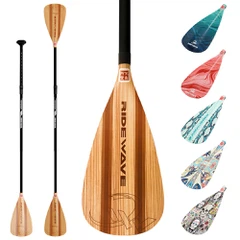
- Adjustable paddle (aluminum, fiberglass, or carbon fiber)
- High-pressure pump (manual or electric, depending on buyer requirements)
- Backpack or carry bag
- Leash for safety
Repair kit
Some suppliers offer upgrades, such as carbon paddles or electric pumps, at additional cost. Buyers should confirm whether accessories are customizable with their logo and packaging design.
Offering a premium accessory set can significantly enhance your brand's positioning in the retail market.
7. What Certifications Are Required for Inflatable SUPs?
Certifications are critical for compliance and market entry. Wholesale buyers often ask:
- Do the boards meet CE certification for European markets?
- Are SGS test reports available for materials and safety?
- Does the factory comply with BSCI or amfori social responsibility standards?
- Are there environmental certifications for eco-conscious buyers?
Working with a certified manufacturer reduces risk and ensures smoother customs clearance. It also demonstrates to your customers that your products meet international quality and ethical standards.
8. What Is the Typical Production Lead Time?
Production lead time is a major concern for B2B buyers. On average, manufacturing inflatable SUPs takes 30–60 days, depending on order volume, customization level, and factory capacity.
Factors affecting lead time include:
- Off-season vs. peak season (demand spikes during spring/summer)
- Whether the order is OEM or ODM
- Availability of raw materials
A reliable factory will provide a clear production schedule and maintain transparent communication. Some also keep ready-to-ship stock of popular models for urgent orders.
9. What Are the Shipping and Logistics Options?
Since inflatable SUPs are bulky items, wholesale buyers want to know the most efficient shipping methods. Options include:
- Sea freight (FCL/LCL): Best for large-volume orders; cost-effective but slower.
- Air freight: Faster but more expensive; suitable for urgent shipments.
- Rail freight: An alternative for certain regions, offering a balance of cost and speed.
Buyers should also confirm packaging standards. High-quality factories use reinforced cartons and vacuum-sealed packing to optimize space and reduce shipping damage.
Some suppliers, like Ridewave, also provide end-to-end logistics solutions, handling customs, documentation, and delivery to your warehouse.
10. What Is the Price Range for Wholesale Inflatable SUPs?
Price is always a top question. Wholesale pricing varies depending on construction, customization, and accessories. In general:
- Entry-level boards (single-layer PVC, basic accessories): $100–$180 USD FOB price.
- Mid-range boards (double-layer/fusion, better accessories): $180–$300 USD.
- Premium boards (fusion technology, carbon paddles, full customization): $300–$600 USD+.
Wholesale buyers should avoid choosing suppliers based on price alone. A very low price often indicates compromised materials, poor QC, or lack of certification. Instead, focus on value for money, long-term supplier reliability, and after-sales service.
Conclusion
Wholesale buyers entering the inflatable paddle board (SUP) market face many questions-from materials and MOQ to customization, quality control, logistics, and pricing. By addressing these top 10 concerns, you can make smarter sourcing decisions and avoid costly mistakes.
The key takeaway is this: success in the SUP industry depends not only on choosing the right product but also on building strong, long-term partnerships with experienced manufacturers. With over 15 years of production expertise, Ridewave provides end-to-end solutions, including OEM/ODM customization, strict QC, global certifications, and flexible logistics support.
Whether you're a small distributor or a large-scale importer, partnering with a reliable factory ensures that you can ride the wave of opportunity in the growing global SUP market.