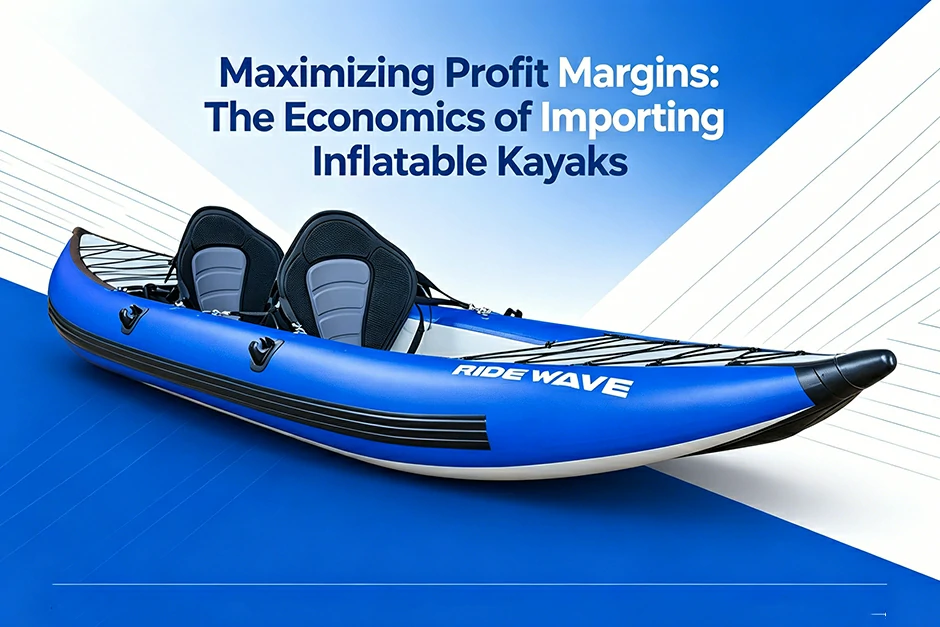

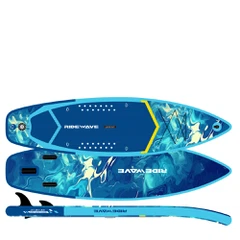


For Australian wholesalers aiming to expand water‑sports product lines, sourcing profitable inflatable SUPs from China is entirely achievable - but only if buyers navigate import rules, select suitable manufacturing partners, pick high‑demand board models, and calculate true landed costs before placing bulk orders. Many new distributors make the mistake of comparing only unit prices while ignoring shipping expenses, compliance requirements, marketing asset support and seasonal sell‑through risk. When handled correctly, Chinese‑made inflatable stand‑up paddle boards deliver solid gross margins for resellers preparing for Australia's peak summer water‑sports season. This article walks B2B buyers through real‑world workflows, common pitfalls and actionable steps used by active SUP wholesale operators across Australia, New Zealand and broader Oceania markets.
Why Are Inflatable SUPs Becoming Australia's Fastest‑Growing Water Sports Category in 2026?
Australia's outdoor recreation market has seen sustained growth for portable water‑sports equipment, and inflatable SUPs now sit among the highest‑turnover categories for local wholesalers and sports retailers. Multiple market drivers are reshaping demand for inflatable paddle board inventory, and every B2B importer should understand these shifts before committing to large‑volume stock purchases.
Consumers today favour portable, low‑storage water gear. Hard‑shell paddle boards perform well yet create major headaches for urban households, caravan travellers and coastal renters. Unlike rigid boards, quality inflatable stand‑up paddle boards roll into carry‑size bags, fitting inside car boots, apartment closets and camper storage compartments. This practical consumer preference pushes retail demand higher year‑on‑year.
Beyond household recreation, new user groups keep expanding the addressable market. Family‑oriented buyers, casual river paddlers, yoga‑on‑water enthusiasts and beginner learners represent large customer segments for Australian retailers. Local tourism operators and hire businesses also keep placing repeat bulk orders for durable inflatable SUP units. These multi‑segment demands give wholesalers more sales channels beyond standard retail store shelves.
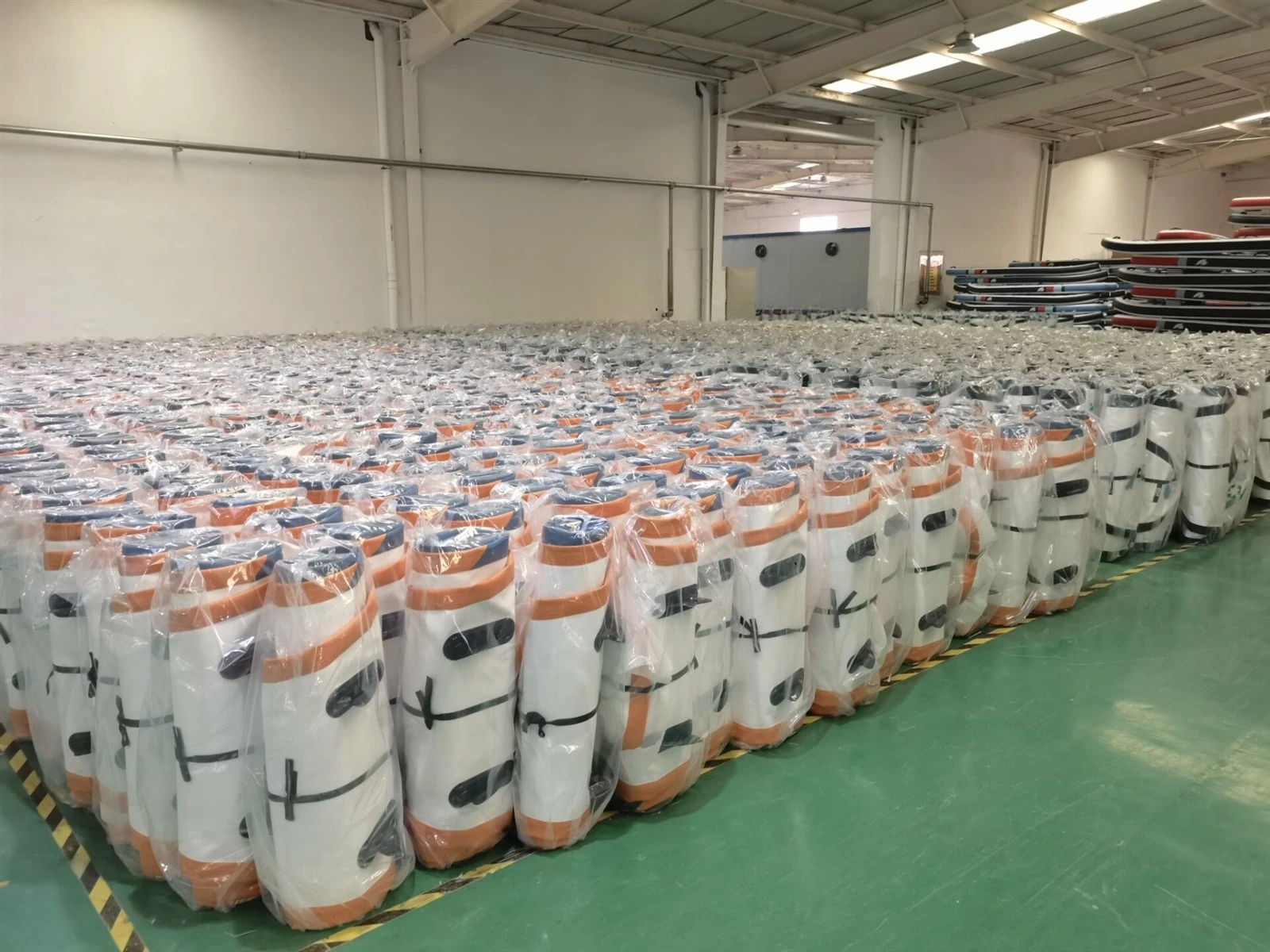
Global supply‑chain readjustments after previous years of freight volatility have also changed sourcing behaviours. A few years ago, long lead‑times and unpredictable container rates scared many Australian buyers away from Asian manufacturing partners. In 2026, shipping reliability has improved significantly, allowing SUP wholesale buyers to plan inventory cycles with far greater confidence. Even so, timing remains critical: stock must land well before Australia's hot summer months when retail sales spike sharply.
Wholesalers new to this category frequently underestimate one key point: consumer expectations around build quality have risen. Cheap thin‑vinyl no‑name inflatable paddle boards used to fill discount market segments. Today Australian shoppers reject poorly‑constructed boards prone to air leaks and seam failures. Distributors that stock reliably‑built boards can capture better profit margins and build longer‑term customer loyalty. This dynamic creates clear opportunities for reputable Chinese factories such as RIDEWAVE, which focuses on B2B‑grade inflatable paddle board builds targeted for Oceania market conditions.
Several core factors define whether a wholesaler will succeed within this booming category. Below are the most critical points for B2B decision‑makers:
Retail demand heavily clusters around Australia's November‑February summer window; late stock arrivals directly kill seasonal profit potential
Multi‑layer drop‑stitch construction is now a baseline expectation for mid‑to‑high‑end inflatable SUP retail offerings
Local buyers prioritise complete accessory kits rather than bare paddle‑board‑only packages
Post‑sale support, spare‑part availability and clear product imagery heavily influence retail conversion rates
Compliance with Australian import requirements cannot be overlooked when importing bulk inflatable water‑sport goods
Buyers should not rely purely on market momentum to drive revenue. Even fast‑growing categories produce losses for wholesalers who misjudge model selection, order timing or total landed costs. If you are evaluating factory partners for the first time, review our related post: 10 Questions Every B2B Buyer Should Ask Before Placing An Inflatable SUP Factory Order.
What Makes Chinese Inflatable SUP Manufacturers The Best Sourcing Choice For Australian Wholesalers?
Many Australian wholesalers weigh multiple manufacturing regions before locking in a long‑term supplier for inflatable stand‑up paddle boards. Some buyers explore Southeast Asian factories, others look at local OEM options within Australia. Yet China remains the dominant hub for SUP wholesale, especially for distributors chasing balanced quality, flexible MOQ and strong gross profit margins. This does not mean every Chinese factory delivers consistent output; wholesalers still need to vet partners carefully. But the overall industrial ecosystem creates tangible advantages that are hard to replicate elsewhere.
First, China holds complete vertical supply chains dedicated to inflatable SUP production. Core raw materials including military‑grade drop‑stitch fabric, heavy‑duty PVC, high‑pressure valves, aluminium paddles and carry bags are all produced domestically. Factories do not need to import most key components from overseas. This cuts down lead‑time volatility, reduces extra material tariffs and gives manufacturers greater control over finished‑product quality. When material shortages hit global markets, integrated supply chains act as a buffer for bulk SUP orders.
Second, the scale of production supports flexible order ranges. Established factories can handle small test batches for first‑time importers as well as full FCL container shipments for high‑volume wholesalers. New market entrants often want to run limited trial stock before committing to large capital outlay. Many overseas workshops cannot accommodate low‑volume test orders, forcing new B2B players to overstock and take unnecessary financial risk.
Third, accumulated manufacturing experience translates to refined product iterations. Chinese inflatable water‑sports factories have refined inflatable SUP designs for over a decade. They have collected real‑world feedback from global markets, including Australia's harsh sun, salt‑water coastal conditions and rough inland river environments. Boards built for Oceania markets reinforce seam strength, UV resistance and air‑holding performance - features discount‑oriented overseas suppliers frequently overlook. RIDEWAVE, for example, adjusts fabric thickness and glue formula specifically for high‑UV Australian climate conditions, a tweak derived from years of B2B client feedback.
Fourth, accessory matching and one‑stop‑kit assembly simplify wholesaler workflows. Most Australian retail customers expect a full kit: paddle, fin, hand pump, repair kit and travel bag included. Sourcing board bodies and separate accessories from different vendors creates extra logistics, QC and packaging headaches. Mature Chinese SUP wholesale factories assemble complete kits under one roof, so wholesalers receive ready‑to‑resell units straight out of the container.

Even with clear strengths, China‑based sourcing is not risk‑free. Poor‑grade trading companies, uncertified small workshops and inconsistent QC still exist in the marketplace. This is why due diligence remains non‑negotiable for every incoming order. Read our related guide: 10 Questions Every B2B Buyer Should Ask Before Placing An Inflatable SUP Factory Order to build your supplier‑checklist framework.
The comparison table below helps B2B buyers visualise core differences between major sourcing regions for bulk inflatable SUP procurement. This table can be copied and pasted directly onto your website.
| Sourcing Region | Vertical Supply Chain | Typical MOQ for inflatable SUP | UV & Salt‑water Adaptation | Complete Kit Assembly | Unit‑cost Level | Lead‑time (mass order) |
|---|---|---|---|---|---|---|
| China (Professional SUP Factory e.g. RIDEWAVE) | Full in‑house supply chain | 50‑150 units for trial; FCL for large orders | Optimised for Australia high‑UV coastal use | Yes, full‑kit assembly available | Medium‑low | 30‑45 days |
| Southeast Asia | Partial, key fabrics imported | Often high MOQ ≥300 units | Limited market‑specific optimisation | Partial, many accessories imported | Medium | 40‑60 days |
| Australia / Local OEM | Heavy component import dependency | Very high MOQ | Good local environmental adaptation | Yes | High | 60‑90 days |
There are practical takeaways wholesalers can draw from this comparison:
For most Australian distributors expanding their inflatable SUP product portfolio, professional Chinese factories deliver the best balance of cost, flexibility and market‑adapted hardware.
Southeast Asian production may look attractive on paper, but imported core materials push up lead‑times and minimum‑order thresholds.
Local Australian OEM delivers fast domestic turnaround yet steep unit prices compress wholesale profit margins, making it less suitable for mid‑volume mass‑market retail.
Wholesalers should never select a supplier purely based on quoted unit price. MOQ flexibility, material configuration, environmental adaptation for Australian conditions and accessory completeness all shape your final landed cost and retail sell‑through performance. If you want to dive deeper into how custom‑spec paddle boards come together, see our article: How Custom Paddle Boards Are Made: From Design To Production.
How Do 2026 Australia Import & Shipping Policies Affect SUP Bulk Sourcing?
Importing inflatable SUPs into Australia is not simply a matter of finding a cheap factory and booking a container. Customs rules, tax obligations, biosecurity checks and shipping lane conditions all shape your final cost and delivery timeline. For wholesalers who skip this planning stage, surprise charges and delayed shipments can erase an entire season's profit margin. Understanding the 2026 landscape helps B2B buyers order at the right time, budget accurately and avoid clearance bottlenecks.
Australia's import framework has remained relatively stable in recent years, but enforcement around documentation and product compliance has tightened. Every commercial shipment entering Australia requires proper customs declaration, and importers must account for GST on the value of the goods plus shipping and insurance. For SUP wholesale orders, this 10% charge is a fixed cost that many first‑time buyers forget to build into their landed‑cost calculations. Under‑budgeting here is one of the most common reasons new distributors see thinner‑than‑expected margins.
Biosecurity is another area where Australian authorities take a firm stance. Wood components, certain packaging materials and even residual moisture in packed goods can trigger inspection holds. While inflatable stand‑up paddle boards themselves are primarily PVC and fabric, accessory items like wooden‑handled paddles or bamboo fins may attract additional scrutiny. Professional factories know how to pack and document shipments to minimise these risks. RIDEWAVE, for instance, uses ISPM‑15 compliant packaging materials and provides full packing declarations for every container shipment, reducing the chance of biosecurity delays at Australian ports.
Shipping conditions in 2026 offer more predictability than the volatile years of 2021–2023, but rates still fluctuate seasonally. The main China‑to‑Australia lanes - typically departing from Qingdao, Shanghai or Shenzhen - offer regular sailings to Sydney, Melbourne and Brisbane. Transit times generally range from 18 to 28 days port‑to‑port, depending on the destination and whether the vessel is direct or transhipment. Adding customs clearance, inland transport and warehouse receiving, buyers should realistically plan for 35 to 50 days from factory departure to shelf‑ready stock.

The table below summarises the key cost and timeline factors Australian wholesalers should budget for when importing inflatable SUPs from China. These figures reflect typical 2026 market conditions and should be treated as planning estimates - actual quotes vary by carrier, season and shipment volume.
| Cost / Timeline Factor | Typical Range (2026) | Notes for SUP Importers |
|---|---|---|
| Ocean freight (20ft FCL, China → East Coast AU) | AUD 2,800 – 4,500 | Peak season (Aug–Oct) tends to push rates higher |
| Ocean freight (LCL, per cubic metre) | AUD 120 – 200 / CBM | Suitable for trial orders under ~100 units |
| GST on imported goods | 10% of (goods value + freight + insurance) | Payable at customs; registered importers can claim credits |
| Customs clearance / brokerage fee | AUD 150 – 350 per shipment | Fixed cost regardless of order size |
| Biosecurity inspection (if triggered) | AUD 50 – 400+ | Avoidable with proper packing and documentation |
| Port‑to‑port transit (Qingdao → Sydney) | 18 – 25 days | Direct sailings are faster but less frequent |
| Total door‑to‑warehouse timeline | 35 – 50 days | Include production lead time before shipping |

Seasonal timing is perhaps the single biggest factor separating profitable SUP wholesale importers from those who struggle. Australia's summer retail peak runs roughly from November through February. Working backwards, wholesalers need stock in warehouses by late October at the latest. That means production orders should be placed with Chinese factories between May and August, allowing ample buffer for production, ocean transit and any clearance delays. Buyers who wait until September or October to place orders frequently face two problems: factories are at peak capacity and may extend lead times, and ocean freight rates climb as pre‑holiday shipping demand surges.
Another consideration gaining attention in 2026 is product safety and labelling compliance. Australian consumer law requires accurate labelling, and water‑sports products may be subject to specific safety standards depending on their classification. While inflatable SUPs are not typically classified as mandatory‑certified safety equipment, importers should still ensure products carry clear usage instructions, weight ratings and appropriate warning labels in English. Reputable Chinese factories can provide bilingual labelling and compliance documentation upon request - another reason working with an experienced manufacturer matters more than chasing the lowest unit price.
Importers should also be aware of Australia's Customs (Prohibited Imports) Regulations and any changes to tariff classifications. Inflatable paddle boards generally fall under HS code 9506 (articles for general physical exercise, gymnastics, athletics, other sports or outdoor games), but exact classification can vary based on whether the board is imported with accessories or as a bare unit. An experienced customs broker can confirm the correct code and ensure duties are calculated properly. Misclassification can lead to delayed clearance or unexpected duty charges.
For B2B buyers managing multiple product lines, the practical takeaways are clear:
Build GST, brokerage and potential inspection fees into every landed‑cost model from the start
Place summer‑season orders no later than August to avoid peak‑season freight and production congestion
Work with factories that understand Australian packaging and documentation requirements
Confirm HS code classification with a licensed customs broker before your first shipment
Always add a 7–10 day buffer to any quoted transit timeline - delays happen, and summer waits are expensive
What Key Advantages Does RIDEWAVE Offer For Australian B2B SUP Distributors?
Every wholesaler sourcing inflatable SUPs from China will encounter dozens of factories with similar‑looking product specifications. Unit price and basic material parameters can look nearly identical on supplier brochures. What truly separates a reliable manufacturing partner from ordinary vendors lies in B2B‑oriented support, market‑specific product tuning, pre‑sale marketing assets and stable long‑term cooperation mechanisms. These behind‑the‑scene factors directly influence a distributor's retail conversion rate, inventory turnover and overall profit from SUP wholesale.

RIDEWAVE operates as a factory‑first inflatable water‑sports manufacturer, not a trading middleman. Our core business focuses on supporting overseas distributors, resellers and sports‑goods brand owners rather than targeting end‑consumer retail sales. This B2B‑centred positioning shapes most of our service workflows for Australian partners. It is worth clarifying that no factory can guarantee sales results for buyers; we deliver production, technical and marketing resources, while local distributors retain full control over their own retail channels, pricing and customer operations.
Product adaptation for Oceania market conditions forms our foundational advantage. Many generic Chinese inflatable stand‑up paddle board designs are developed for European indoor lake environments, without accounting for Australia's intense UV radiation, salt‑water corrosion and sharp coastal rock abrasion. RIDEWAVE modifies fabric compounding, seam gluing processes and accessory durability for local Australian usage scenarios. We increase UV‑resistant coating density on board surfaces and reinforce peripheral rail sections that frequently scrape against beaches and rocky shorelines. These small‑scale engineering adjustments reduce return rates for wholesalers and strengthen end‑user satisfaction.
Flexible order structures suit different stages of distributor business growth. Many Australian newcomers to the inflatable SUP category hesitate to place huge FCL orders at the very beginning. We support mixed‑model trial batches, allowing buyers to test multiple hot‑selling styles within one container instead of committing to large volumes of a single board. Established high‑volume distributors also receive priority production scheduling, stable raw‑material allocation and tier‑based unit pricing for repeat bulk purchases. This dual‑level MOQ solution works both for first‑time importers and mature large‑scale wholesalers.
Ready‑to‑use marketing asset packages represent one of the most frequently‑cited benefits from our Australian clients. Most small‑to‑mid sized local distributors do not own professional studio shooting resources. Shooting high‑quality product photos, detail shots and lifestyle visuals in‑house costs substantial time and capital. RIDEWAVE provides organised digital resources including complete product catalogues, studio‑shot main product images, close‑up detail pictures, kit‑accessory displays and basic product‑description copy drafts. These assets can be directly applied to e‑commerce store listings, social‑media posts and offline retail promotional materials. This support helps distributors launch pre‑sales before physical containers arrive at local warehouses, exactly as demonstrated in our real‑world Australian client case covered in the next section.
Customisation capability gives brand‑oriented wholesalers extra competitive edges in crowded Australian marketplaces. Distributors can request private‑logo printing, custom graphic artwork, adjusted board dimensions and tailored accessory combinations. If you want to understand how custom‑spec boards move from initial concept to finished goods, refer to our blog: How Custom Paddle Boards Are Made: From Design To Production. Not every custom design translates into strong retail performance, so we also share market‑tested style feedback gathered from Oceania sales data. For guidance on developing commercially viable board layouts, read our related content: How To Design A Paddle Board That Sells.
Reliable after‑sales and spare‑part supply completes the B2B cooperation framework. Damaged valves, broken paddles and leaking repair‑kit components are common post‑sale issues for inflatable SUP retailers. Instead of forcing wholesalers to source replacement parts from scattered third‑party vendors, RIDEWAVE keeps core spare‑part inventory ready for bulk shipment together with main‑board orders. This simplifies after‑sales handling for Australian retailers and lowers customer‑complaint risks.
How Did An Australian Distributor Achieve 800 Pre‑Sales With RIDEWAVE SUP Bulk Orders In 2026?
Real‑world case studies carry far more weight for B2B buyers than generic product claims. In January 2026, an established Australian water‑sports distributor placed a substantial inflatable SUP order with RIDEWAVE, and the results illustrate how factory‑level support can directly accelerate a wholesaler's revenue cycle. This case is not presented as a guarantee of identical outcomes for every buyer - market conditions, channel strength and local execution vary significantly. Instead, it demonstrates a replicable workflow that other Australian SUP wholesale operators can reference when structuring their own sourcing and pre‑sales strategies.

The distributor, based in Sydney with existing retail relationships across New South Wales and Victoria, had previously sourced inflatable stand‑up paddle boards through a domestic trading intermediary. Their core complaints were consistent: limited model selection, delayed restocking, insufficient product imagery for online listings, and unit prices that compressed retail margins. After evaluating several Chinese manufacturers, they selected RIDEWAVE based on our in‑house production capacity, Oceania‑specific product tuning and structured B2B marketing‑asset support.
In January 2026, the distributor confirmed an order of 1,200 units across five of our best‑selling inflatable SUP models. The five‑model mix was deliberately curated to cover Australia's dominant consumer segments: an all‑round recreational board for casual beach and river use, a longer touring board for fitness‑oriented paddlers, a wider family‑friendly board with higher weight capacity, a compact youth/beginner board, and a premium multi‑chamber board for rental and commercial operators. This mixed‑model approach reduces the risk of over‑stocking a single style and allows the distributor to serve multiple retail buyer personas simultaneously.
Shipping was arranged via full‑container ocean freight departing from Qingdao Port, one of northern China's major export hubs. Sea freight remains the most cost‑effective method for bulk inflatable SUP shipments - the volumetric nature of packed paddle boards makes air freight economically unviable for anything beyond urgent small‑batch replacement stock. The container was packed with ISPM‑15 compliant pallets and full packing declarations, minimising the risk of biosecurity delays upon arrival in Sydney. Total port‑to‑port transit took approximately 22 days, with clearance and inland delivery completed within the following week.
The decisive factor in this distributor's early sales success was not the shipment itself - it was the pre‑sales window created before the container even left China. RIDEWAVE provided a complete digital asset package before production concluded, including:
‑ A full product catalogue with technical specifications, dimensions and weight ratings for all five models ‑ Studio‑shot high‑resolution main product images on clean white backgrounds, suitable for e‑commerce hero sections
‑ Close‑up detail photographs showing valve construction, drop‑stitch texture, seam reinforcement and accessory quality
‑ Complete kit photographs displaying every included accessory (paddle, pump, fin, repair kit, carry bag, leash)
‑ Basic product description drafts and key‑feature bullet points in English
Armed with these assets, the distributor launched pre‑sales across their own e‑commerce store, third‑party Australian marketplaces and their retail partner network while the goods were still in transit. They ran targeted social‑media campaigns featuring the studio imagery, sent email previews to their existing customer database and provided retail partners with ready‑to‑publish product pages. By the time the container arrived at their Sydney warehouse, they had already pre‑sold 800 units - roughly two‑thirds of the entire order.


This pre‑sales model delivers several concrete financial advantages for wholesalers:
‑ Cash flow improves dramatically: customer payments arrive before or alongside the landed
‑cost settlement, reducing the capital‑lockup period ‑ Inventory risk decreases: you know exactly which models are selling before you commit to reorder volumes
‑ Retail partner confidence increases: physical stock that is already presold is far easier to distribute through store networks
‑ Seasonal timing is secured: revenue is captured at the start of Australia's summer demand peak rather than after stock arrives late
As of the time of writing, the distributor is in active discussions with RIDEWAVE regarding a replenishment order to meet continued demand through Australia's summer season. The pre‑sales data has given both parties clear visibility into which of the five models are outperforming expectations, allowing the reorder to be weighted toward the strongest sellers rather than repeating an even split. This data‑driven reordering approach is a direct benefit of the pre‑sales workflow - it replaces guesswork with actual customer purchase behaviour.
Several lessons from this case apply broadly to Australian B2B buyers:
‑ Request marketing assets before production finishes, not after shipment arrives - the pre‑sales window is where much of the margin is captured
‑ Mix multiple models in a single container to cover different consumer segments and reduce single‑style inventory risk
‑ Use full‑container sea freight from major Chinese ports to keep per‑unit shipping costs low
‑ Use pre‑sales data to inform reorder quantities and model mix, rather than relying on intuition
‑ Build a 2–3 week buffer between expected arrival and your peak sales launch date, in case of clearance delays
It is worth noting that this distributor already had an established customer base and existing retail partnerships. New entrants to the inflatable SUP market may not achieve 800 pre‑sales on their first container, but the same asset‑driven pre‑sales approach still applies - it simply scales with the size of your audience. The core principle remains unchanged: factory‑provided marketing assets turn the production and shipping lead‑time from a waiting period into an active revenue‑generation period.
If you want to understand how the five models in this order were selected and designed for Australian market demand, our article How To Design A Paddle Board That Sells covers the market‑research and product‑positioning logic behind commercially successful board designs.
How To Select High‑Profit SUP Models For Australian Summer Peak Sales?
Model selection is one of the highest‑stakes decisions for any inflatable SUP wholesaler targeting Australian summer sales. Buying the wrong board mix can lead to slow‑moving inventory, tied‑up capital and missed seasonal opportunities - even when you source from a reliable factory. Many first‑time buyers fall into two common traps: ordering only low‑cost entry‑level inflatable stand‑up paddle boards, or over‑investing in niche premium styles with limited mass‑market appeal. Successful SUP wholesale balances multi‑segment coverage, retail price‑point fit, local‑use durability and proven sell‑through data.
Australian consumers shop for inflatable SUPs with distinct priorities shaped by local water environments. Beach surf‑zone usage, inland river trips, family group outings, fitness paddling and occasional yoga‑on‑water sessions create separate product requirements. Boards that perform well for calm European lakes may struggle against Australian surf, salty seawater and sharp shore‑line debris. Wholesalers should build their product portfolio around real‑world local‑usage scenarios instead of purely relying on factory‑provided specification sheets.
Drawing from RIDEWAVE's multi‑year sales data for Oceania markets, five core model categories consistently deliver steady turnover for Australian distributors. Each fills a different market niche, carries its own gross‑margin profile and fits different retail price brackets. No single model can cover every customer, which is why mixed‑container ordering remains the gold standard for new and established importers alike.
The table below outlines these five high‑demand inflatable SUP categories, with practical reference parameters for Australian‑market sourcing. Numbers reflect typical B2B order conditions in 2026 for reference purposes only.
| SUP Model Category | Core Target User | Typical Board Size | Key Selling Points For Australia | Relative Gross Margin | Suitable Retail Channel |
|---|---|---|---|---|---|
| All‑Round Recreational Inflatable SUP | Casual beach & river beginners | 10'6''‑11'2'' | Stable balance, easy setup, good surf tolerance, full accessory kit | Medium‑High | General sports retailers, marketplaces |
| Touring Fitness SUP | Fitness paddlers, long‑distance river users | 11'6''‑12'6'' | Straight tracking performance, extra cargo D‑rings, reinforced rail | High | Specialised water‑sports stores |
| Wide Family‑Friendly SUP | Family groups, multi‑rider, heavier users | 11'0''‑11'8'' extra wide | High weight capacity, stable for kids and pets, flat standing area | Medium‑High | Department stores, outdoor chains |
| Compact Youth / Beginner SUP | Teenagers, smaller‑sized adults, gift buyers | 9'0''‑10'2'' | Light weight, easy to carry, lower retail price point | Medium | Discount outdoor retailers, gift‑oriented marketplaces |
| Multi‑Chamber Premium Commercial SUP | Hire‑shops, tourism operators, high‑end resellers | 11'0''‑12'0'' | Multiple air chambers, enhanced safety, heavy‑duty drop‑stitch construction | Very High | B2B tourism sales, premium boutique retailers |
When building your container mix, there is no universal perfect percentage split, yet RIDEWAVE's Australian client data shows a practical baseline reference for new wholesalers: ‑ 40 % All‑Round Recreational inflatable SUP (highest volume base stock) ‑ 20 % Wide Family‑Friendly SUP ‑ 15 % Touring Fitness SUP ‑ 15 % Compact Youth / Beginner SUP ‑ 10 % Multi‑Chamber Premium Commercial SUP
This allocation gives you broad market coverage while keeping the highest‑volume, fastest‑turnover all‑round boards as your inventory foundation. Established distributors can shift ratios based on their own channel strengths: for example, partners working heavily with tourism hire businesses may lift multi‑chamber commercial‑model share up to 25 %‑30 %.
Beyond basic dimensions and user positioning, several hidden product details heavily influence retail sell‑through and after‑sales volume for Australian conditions: ‑ UV‑resistant top‑sheet coating: Reduces fading and material degradation under strong Australian sunlight; low‑grade boards quickly lose visual appeal after several months outdoors. ‑ Thickened side rail reinforcement: Absorbs impacts against rocks, sand‑banks and beach edges, lowering customer return rates. ‑ High‑quality one‑way inflation valves: Cheap valves are the top source of post‑sale complaints for mass‑market inflatable SUPs. ‑ Complete matched accessory kits: Australian shoppers strongly prefer ready‑to‑use full kits. Bare‑board‑only inventory faces slower retail conversion.

Wholesalers should also consider price‑layer strategy before placing orders. Too many similar‑spec boards squeezed into narrow retail price bands trigger internal price competition among your own SKUs. You need clear gaps between entry‑level, mid‑tier and premium product lines so each inflatable stand‑up paddle board occupies its own distinct market position.
Avoid over‑chasing ultra‑low‑price no‑name variants. While unit‑cost looks attractive, higher failure rates generate returns, bad reviews and damage long‑term distributor reputation. Margin comes from sell‑through speed more than raw per‑unit markup. A slightly higher‑cost reliable SUP wholesale SKU that sells out quickly often delivers better total annual profit than cheap high‑risk inventory.
If you want to dive deeper into how to adjust board shapes, artwork and specifications to match Australian consumer preferences, read our blog How To Design A Paddle Board That Sells. For practical guidance on evaluating real‑world product quality before large‑volume commitment, see our supplier‑checklist article: 10 Questions Every B2B Buyer Should Ask Before Placing An Inflatable SUP Factory Order.
Before You Place Your First Bulk Inflatable SUP Order
Sourcing inflatable SUPs from China for the Australian market involves many moving parts: supplier evaluation, product specification confirmation, import compliance, budget planning, model‑mix strategy and pre‑sales preparation. Even well‑informed wholesalers can overlook critical details under the pressure of summer‑season ordering timelines. This final actionable checklist consolidates all core takeaways from this blog, helping B2B buyers avoid common pitfalls before signing off on their first large‑volume SUP wholesale purchase.
Working through this checklist does not eliminate all risk, but it drastically reduces the chance of costly mistakes such as unsuitable product specs, unexpected import fees, delayed shipments or insufficient sales materials.
Product & Specification Checks
Confirm boards are engineered for Australian conditions: UV‑resistant top‑sheet coating, reinforced side rails for rock‑and‑sand abrasion, salt‑water‑tolerant glue formula
Double‑check dimensions, weight‑capacity ratings and chamber quantity for each inflatable stand‑up paddle board in your order
Verify whether you are ordering full‑kit units or bare boards; confirm the exact list of included accessories (paddle, pump, fin, repair kit, carry bag, leash)
Clarify OEM / ODM scope: logo placement, custom graphics, label language, warning‑mark requirements for Australia consumer law
Request real sample photos or physical sample evaluation before committing to full container quantity, especially for custom‑modified versions
Order & Supplier Due Diligence
Confirm exact MOQ, trial‑order policy and mixed‑model container support
Get formal written quotation including unit price, packing specification, estimated production lead‑time, payment terms
Clarify QC procedures: in‑house inspection standards, inspection reports available upon request
Confirm spare‑part availability: valves, fins, paddles and repair accessories can be shipped together with main order
Confirm delivery of B2B marketing assets: studio images, detail shots, catalogues and copy drafts, and agree on the timeline for receiving these digital files before production finishes
Review supplier background: factory‑owned operation versus trading company; reference Oceania‑market client cases when possible
Import, Logistics & Budget Planning
Calculate full landed cost, not only unit product cost: goods value + ocean/LCL freight + insurance + Australian GST + customs brokerage + potential biosecurity inspection fees
Confirm port of loading (Qingdao / Shanghai / Shenzhen), container type (20ft FCL or LCL for trial orders)
Confirm ISPM‑15 compliant packaging and full packing declarations for Australian biosecurity clearance
Work with your local customs broker to validate correct HS code classification (9506 series) for your inflatable SUP shipment
Build sufficient time buffer: production lead‑time + sea transit + clearance + inland delivery, plus extra 7‑10 days contingency for delays ‑ Align order‑placement date to hit Australian warehouse arrival before late October for November‑February summer peak sales
Business & Pre‑Sales Preparation
‑ Finalise your SKU mix ratio, balancing high‑volume all‑round boards, family‑size, touring, youth and premium commercial models
‑ Map each model to clear retail price tiers to avoid internal price competition among your own product lines
‑ Confirm your sales channels: e‑commerce marketplace, offline retail partners, tourism‑hire clients or direct‑to‑consumer web store
‑ Prepare pre‑sales launch plan: website listing templates, marketplace setup, social‑media content scheduling, partner notification emails
‑ Set realistic sales expectations: pre‑sales performance depends on your existing audience and channel resources; past client results are illustrative, not a guaranteed outcome
Even after you have ticked every box on this checklist, remain mindful that global supply chains always carry a degree of uncertainty. Material price fluctuations, port congestion or weather‑related vessel delays can still occur. Good wholesalers keep flexible inventory plans and maintain open communication with both their factory partner and local logistics broker.
If you want to reuse the core supplier‑vetting questions separately, refer back to our dedicated article: 10 Questions Every B2B Buyer Should Ask Before Placing An Inflatable SUP Factory Order. If you would like to review product‑design guidance for the Australian market, read How To Design A Paddle Board That Sells.
For Australian distributors considering cooperating with RIDEWAVE, you can submit your sourcing requirements to receive formal product quotations, model‑mix suggestions and sample references. We focus on factory‑direct B2B support and do not make sales guarantees for local market performance. All project planning remains the responsibility of the local distributor.
Related Articles
How To Build A Long-term Partnership With SUP Manufacturers
Choosing The Right SUP Models For Your Market
|
2026 Global Inflatable SUP Sourcing Guide: How Brands And Wholesalers Choose Top-Tier Suppliers How To Choose The Right SUP Supplier: A Guide For Distributors in 2026 |