
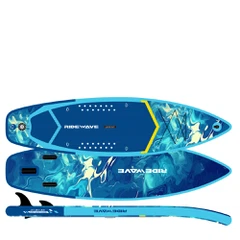

For sports gear distributors, wholesalers and private‑label brand owners across South America, inflatable SUP has turned into one of the most profitable outdoor categories to expand in 2026. Many Argentine bulk buyers struggle to filter genuine high‑quality inflatable stand‑up paddle boards from low‑cost, short‑lifespan alternatives, while balancing import budgets, shipping lead‑times and local consumer preferences. This practical B2B guide walks you through real‑world sourcing workflows, local market demands, supply‑chain pitfalls and proven partnership cases, so you can make better purchasing decisions when importing bulk iSUP paddle boards for retail, rental and pre‑sale channels in Argentina and broader Latin America. Whether you are a long‑time water‑sports wholesaler or planning to add wholesale inflatable SUP to your existing product portfolio, you will get actionable take‑aways you can apply to your next factory order.
Why Is Argentina Becoming A Core High‑Growth Inflatable SUP Market For Global B2B Distributors In 2026?
Argentina stands out as a fast‑growing destination for inflatable SUP wholesale because it combines favourable natural conditions, rising local outdoor participation and gaps in domestic manufacturing capacity. Local consumers increasingly choose inflatable paddle boards over rigid hard boards for lakes, rivers and coastal weekend trips. Unlike hard paddle boards, iSUP units save huge space for retail storage, cut down total ocean‑freight cost per unit, and fit apartment‑style living conditions for most Argentine end‑users.

Three core market drivers push up B2B demand for bulk inflatable stand‑up paddle boards: ‑ Seasonal consumption cycle: Argentina's summer runs from December to March, creating sharp seasonal spikes for water‑sports retail and pre‑sale campaigns. Wholesalers who lock in inventory 3‑5 months ahead of summer gain clear sales advantages over competitors who place late orders. ‑ Channel diversification: Physical sport shops, online marketplaces, rental operators and tourism resellers all want stable stock of durable SUP boards. Many local retailers lack direct access to reliable Asian manufacturers and rely entirely on imported wholesale supplies. ‑ Shift toward value‑for‑money quality: Argentine buyers reject extremely cheap boards with fast‑delaminating drop‑stitch material, yet remain price‑sensitive. This creates strong market demand for mid‑tier, robust inflatable SUP models that balance build quality and landed import cost.
Not every overseas supplier fully understands Argentina's import rules, seasonal rhythm and consumer taste. That is why many global distributors work with manufacturers familiar with South‑American market requirements, rather than choosing suppliers only based on lowest unit price.
What Inflatable SUP Qualities Do Argentine Wholesalers Prioritize For Local Retail And Pre‑Sale Channels?
When Argentine wholesalers evaluate high‑quality inflatable SUP for local retail and pre‑sale, they do not only look at outward appearance. Successful bulk importers test and rank core practical features that directly shape return rates, customer review scores and repeat‑order volume from their own retail clients. Pre‑sale business makes these criteria even more critical: you sell inventory before physical goods arrive, so product defects will trigger mass complaints and refund requests long before customers touch the actual SUP board.

Below are key quality benchmarks most experienced Argentine B2B buyers evaluate for wholesale inflatable stand‑up paddle boards: ‑ Reinforced drop‑stitch inner fabric: Poor‑grade drop‑stitch causes air leakage, board deformation and high after‑sales return. For Argentina's wide temperature swings, boards need stable internal structure to keep shape under hot summer sunlight. ‑ Multi‑layer PVC rail construction: Thick welded side rails resist abrasion from rocks, docks and shorelines, a frequent source of consumer damage claims. ‑ Complete matching accessory kit: Local buyers expect full sets including adjustable aluminium paddle, high‑pressure hand pump, travel backpack, removable fins and repair kit. Missing or low‑grade accessories generate negative retail feedback. ‑ Stable weight‑bearing capacity: Most‑selling all‑round inflatable paddle board sizes support 120kg‑150kg maximum payload, matching family‑oriented recreational usage habits. ‑ Print durability: UV‑resistant surface printing prevents fast fading under strong South‑American sunlight, preserving visual appeal through retail shelf display and end‑user outdoor use.
Many first‑time importers overlook accessory quality and UV print performance. Even if the main iSUP board body meets standards, cheap accessories will drag down overall retail satisfaction and hurt your brand reputation in local market. RIDEWAVE, as a long‑term manufacturer serving Latin‑American partners, keeps these local real‑world pain points in mind during product development, though each distributor still needs to run sample validation before large‑volume commitment.
How Do 2026 South American Outdoor Consumption Trends Reshape SUP Wholesale Procurement Logic?
Rising outdoor participation across South America is not just a short‑lived fad, it is rewriting how inflatable SUP wholesalers plan inventory, negotiate MOQs and arrange import lead‑times. For Argentine importers, buying large volumes of inflatable stand‑up paddle boards can no longer rely on last‑minute spot buying. Modern B2B sourcing must align with regional consumer shifts, local retail rhythm and cross‑border supply‑chain realities.
Three dominant market trends are changing purchasing decisions for bulk iSUP paddle boards: ‑ Multi‑purpose recreational demand: End‑users want one SUP board suitable for lake cruising, river floating and casual coastal use. Pure‑race or overly specialized models move slowly in general wholesale channels. All‑round size profiles maintain the broadest market appeal across Argentina's varied water environments. ‑ Growing popularity of pre‑sale inventory models: Many Argentine retailers and resellers avoid heavy capital pressure by launching pre‑sales before physical containers arrive. This business model requires manufacturers to deliver finished marketing assets early, not only finished goods. Wholesalers now evaluate supplier support services as seriously as product unit price. ‑ Heightened awareness of product durability: Social‑media reviews spread rapidly within Latin‑American water‑sport communities. Boards with frequent air leakage, delamination or rapid print fading receive viral negative feedback, killing resale potential for an entire stock lot. More B2B buyers are willing to pay a small premium for consistent, well‑built wholesale inflatable SUP.
Even with clear trend data, many importers still make missteps. Some order large quantities of fashionable niche styles without testing local market reaction. Others chase the lowest possible unit price and accept inconsistent component quality. Experienced Latin‑America focused suppliers track these shifting preferences and share real‑world market feedback with partners, helping wholesalers avoid costly inventory mistakes. RIDEWAVE collects sales feedback from dozens of Latin‑American distributors each season to refine product lineups, though market final judgment always rests with local resellers.

How To Identify Reliable High‑Quality Inflatable SUP Manufacturers For Argentine Bulk Orders?
Choosing a suitable manufacturing partner for bulk inflatable SUP orders is far more complex than comparing quoted unit prices. A low quotation can quickly turn into financial loss when you face delayed shipments, inconsistent product quality, missing compliance documents or poor after‑sales support. Argentine B2B importers need practical evaluation criteria to filter genuine capable factories from trading companies and small workshops when sourcing inflatable stand‑up paddle boards.

You can assess potential suppliers through these practical dimensions: ‑ Production capacity and order stability: Confirm monthly output for iSUP paddle boards, peak‑season handling capacity and history of large‑volume order fulfilment. Many small operators cannot sustain stable output ahead of South‑American summer booking windows. ‑ Quality control workflows: Ask about raw‑material incoming inspection, mid‑production spot‑checks and finished‑goods random testing. Reputable manufacturers run air‑tightness tests, load‑bearing tests and UV resistance checks for every production batch. ‑ Regional market experience: Verify whether the supplier has existing client base selling into Argentina or Latin America. Factories familiar with this market understand common import document requirements, local climate challenges and popular feature preferences for wholesale inflatable SUP. ‑ Sample accessibility and revision policy: Valid pre‑production samples are non‑negotiable before large‑batch production. Reliable partners support sample testing, material comparison and reasonable modification requests. ‑ Transparent after‑sales terms: Clarify responsibility scope for manufacturing defects, claim processing cycle and spare‑part supply solutions. Unclear after‑sales clauses create huge risks once goods clear customs in Argentina.
What Makes RIDEWAVE's Inflatable SUP Lineup Adaptable To Argentina's Mass Wholesale Market?
No single inflatable SUP model can satisfy every Latin‑American market, and product lines built for North‑American or European consumers do not always translate well for Argentine wholesale channels. When designing inflatable stand‑up paddle boards for bulk export to Argentina, manufacturers must balance performance, accessory configuration, landed cost and local consumer usage habits.
RIDEWAVE's product portfolio for Latin‑American B2B buyers is built around real‑world feedback accumulated from multiple years of wholesale cooperation, with four core adaptable features for Argentina market: ‑ Balanced all‑round sizing: Most stock iSUP paddle boards fall within universal all‑round dimensions. These sizes cover family recreation, casual touring and beginner‑level use, generating higher turnover inside local retail stores. ‑ Temperature‑resistant raw‑material selection: PVC and drop‑stitch fabrics are selected to cope with strong sunlight and wide temperature fluctuation across Argentine summer. This reduces risk of thermal deformation and air leakage after long‑time outdoor exposure. ‑ Complete standard accessory bundle: Every wholesale unit ships with full matching accessories. No downgraded cheap pumps or fragile paddles which commonly trigger negative retail feedback for wholesale inflatable SUP. ‑ Flexible order structure: Support mixed‑style bulk container loading. Distributors can combine several hot‑selling SKUs inside one sea‑freight container, instead of being forced to place huge minimum quantities for one single board model.
It is critical to emphasise that these product advantages do not equal guaranteed local sales performance. Market success still depends on distributors' pricing strategy, channel operation and local promotion work. Factory‑level product suitability only provides a solid foundation for your downstream business.

How Did RIDEWAVE Help An Argentine Distributor Achieve 800 Pre‑Sales With 1200 Bulk SUP Orders In Early 2026?
Real‑world B2B sourcing stories illustrate how theory translates into tangible revenue for inflatable SUP wholesalers. In January 2026, one long‑term Argentine water‑sports distributor placed a bulk order of 1200 units of inflatable stand‑up paddle boards with RIDEWAVE, preparing inventory ahead of Argentina's fast‑approaching summer high‑season.

This project followed a clear, replicable B2B cooperation workflow: ‑ SKU selection: The distributor selected five proven hot‑selling iSUP paddle boards from RIDEWAVE's wholesale catalogue. Instead of betting on untested new designs, they stuck to all‑round recreational models proven across Latin‑American retail markets. ‑ Shipping arrangement: Goods were consolidated and loaded for ocean freight from Qingdao, China. Sea‑freight was chosen over air freight to keep per‑unit landed cost under control, a key priority for Argentina's price‑sensitive wholesale market. ‑ Pre‑sale marketing asset handover: Before finished goods left factory premises, RIDEWAVE delivered complete commercial assets: printable product catalogues, studio‑shot high‑resolution photos, main product images, detailed close‑ups and descriptive material ready for the distributor's local e‑commerce and social‑media channels. ‑ Local pre‑sale execution: Using these ready‑to‑use marketing files, the partner launched pre‑sale campaigns on local marketplaces and physical retail networks before container arrival. By the time cargo was still in transit, they had already secured 800 confirmed pre‑sale orders. ‑ Follow‑up replenishment discussion: With strong pre‑sale results in hand, the Argentine distributor opened active discussion with RIDEWAVE about follow‑up replenishment stock, to satisfy continuing consumer demand through the peak summer months.
This case is not meant to represent every possible import outcome. Pre‑sale success builds upon local channel resources, correct SKU picking and reasonable price positioning. The core take‑away for other B2B buyers is that manufacturing support goes far beyond physical board production. Timely supply of usable marketing assets can become a decisive competitive advantage for wholesale inflatable SUP importers operating pre‑sale models.
What Is The Most Cost‑Effective Sea Freight Solution For Shipping Chinese SUPs From Qingdao To Argentina?
For bulk inflatable SUP shipments bound for Argentina, ocean freight from Qingdao remains the dominant shipping option for B2B wholesalers. Air freight delivers fast transit, yet sky‑high per‑kilogram rates erase most profit margins for heavy‑volume inflatable stand‑up paddle boards. Every Argentine importer must balance container type, transit time, total landed cost and peak‑season booking pressure before locking logistics for wholesale inflatable SUP orders.

Multiple practical factors directly shape your final shipping outcome: ‑ Container selection: 20GP, 40GP and 40HQ containers are widely used for iSUP cargo. Inflatable paddle boards are compact when deflated and packed, so 40HQ yields the best unit‑cost advantage for large‑volume iSUP paddle boards. ‑ Booking timeline: For Argentina summer sales (December‑March), container space becomes extremely tight between August and October. Delayed booking leads to missed selling windows, even if factory production finishes on schedule. ‑ Document compliance: Argentine customs requires specific import paperwork. Missing or incorrect certificates will trigger cargo detention, generating extra storage and penalty fees. ‑ Consolidation option: Mixed‑SKU consolidation works well for distributors testing multiple models, yet full FCL containers deliver better per‑unit freight rates for confirmed large‑volume orders.
Below is a reference comparison table for 2026 Qingdao‑Argentina sea‑freight scenarios for inflatable SUP bulk shipments. All figures represent typical market ranges and should be verified with your forwarder at the time of booking
| Container Type | Estimated Loading Qty (Inflatable SUP) | Approximate Transit Time | Best‑fit B2B Scenario |
|---|---|---|---|
| 20GP | 700‑850 units | 38‑45 days | Small‑to‑mid first‑time importers, test mixed‑SKU orders |
| 40GP | 1400‑1700 units | 38‑45 days | Mid‑size wholesalers, steady repeating orders |
| 40HQ | 1800‑2200 units | 38‑45 days | Large‑scale distributors, pre‑sale peak‑season stock building |
In the earlier RIDEWAVE Argentine distributor case, the client selected a 40HQ‑based loading strategy. Consolidating 1200 units of inflatable SUP within one container left spare space for additional water‑sport accessories, further optimizing overall shipment value. Keep in mind that manufacturers can offer packing‑optimization suggestions, but final freight quotations and customs filing remain under your freight forwarder's responsibility.
What Pre‑Sale Support Do Professional SUP Manufacturers Need To Provide For B2B Wholesale Clients?
Pre‑sale has turned into a mainstream capital‑light operating model for Argentine inflatable SUP wholesalers. Many importers no longer want to wait until containers arrive before launching sales. If your supplier only delivers physical inflatable stand‑up paddle boards without marketing resources, you lose precious pre‑sale window and competitive edge in local market. Reliable iSUP manufacturers should deliver more than finished goods to support wholesale inflatable SUP B2B partners.
Practical pre‑sale support services B2B buyers should expect: ‑ Print‑ready wholesale product catalogues: Complete specification sheets, dimension data, weight, accessory lists and colour options for each iSUP paddle board. Suitable for offline retailer presentations and digital distribution. ‑ Professional studio visual assets: High‑resolution main images, detail close‑ups, lifestyle shots. Files should be provided without watermarks, ready for marketplace listings, social‑media posts and website product pages. ‑ Standard product copy resources: Feature descriptions, specification bullet points that you can adapt to local‑language marketing content. ‑ Early sample availability: Secure physical samples well before mass‑production, so you can shoot local‑market content or conduct retailer demonstrations. ‑ SKU combination guidance: Advice on mixing hot‑selling and secondary models according to South‑American seasonal demand.
Not every factory treats pre‑sale enablement as a standard service. Some suppliers only send goods after production finishes and provide zero marketing material. This forces wholesalers to spend extra budget and time on photo‑shooting and content creation. In the RIDEWAVE Argentina case, pre‑built catalogues and studio image packages allowed the distributor to start marketing long before cargo departure. Still, all factory‑provided materials require local‑language adaptation for Argentine market.

How Do B2B Buyers Avoid Common Quality And Supply Chain Risks When Sourcing Inflatable SUPs For South America?
Sourcing bulk inflatable SUP for South‑American markets carries noticeable hidden risks. Quality defects, supply‑chain delays and document mistakes can create heavy financial losses for Argentine wholesalers, after containers have cleared local customs. Understanding typical pitfalls helps you safeguard your inflatable stand‑up paddle boards wholesale investment and keep stable supply of wholesale inflatable SUP.
Key risks and actionable counter‑measures for B2B importers: ‑ Inconsistent batch‑to‑batch quality: Some factories cut raw‑material costs between orders. Always perform pre‑production sample confirmation and arrange third‑party random inspection before shipment for high‑volume iSUP paddle boards. ‑ Seasonal production bottlenecks: Q2‑Q3 is peak production window for Latin‑America summer inventory. Late order placement brings extended lead‑times. Lock production slots 4‑6 months ahead of Argentine summer. ‑ Non‑compliant documentation: Confirm required import certificates with your local customs broker in advance, and double‑check that your manufacturer can produce matching documents. ‑ Mis‑matched accessories: Inferior pumps, paddles or fins drive high retail complaint rates. Clearly write accessory specifications inside your official purchase contract. ‑ Over‑ordering niche styles: Fashion‑forward special‑shape boards look attractive, yet may struggle to sell within general Argentine retail channels. Limit test volumes for unproven SKUs.
Even experienced suppliers cannot eliminate every possible risk. RIDEWAVE implements batch sampling and pre‑shipment inspection routines for Latin‑American orders, yet buyers remain responsible for final sample sign‑off and contract detail confirmation. No supplier should relieve you of these critical due‑diligence steps.
How To Select Best‑Selling SUP Styles To Maximize Sales In Argentina's Summer Peak Season?
Picking suitable SKUs largely determines whether your inflatable SUP inventory sells through before the end of Argentine summer. Many wholesalers invest large capital into inflatable stand‑up paddle boards, only to end‑up with slow‑moving stock because of poor style selection. For wholesale inflatable SUP, style selection should follow local consumer habits rather than personal preference or European‑North‑American trend charts.
Core selection principles for Argentine market best‑selling iSUP paddle boards: ‑ Prioritize all‑round recreational sizes: 10'6" to 11'6" remains the sweet spot. These dimensions balance stability, carrying capacity and handling for beginners, family users and casual paddlers. ‑ Avoid overly‑specialized shapes: Downwind, racing or ultra‑wide yoga‑focused SUP board models occupy tiny market share in general wholesale channels. Only place small test quantities for these categories. ‑ Think about temperature and UV exposure: Choose models built with UV‑resistant printing and heat‑stable PVC. Fading and thermal deformation generate high return rates under strong Argentine sunlight. ‑ Review proven local sales data: Reference existing sales feedback from suppliers' Latin‑American partners, instead of purely relying on online trend reports. ‑ Keep accessory sets complete: Boards shipped with full‑kit accessories enjoy noticeably higher retail conversion versus bare‑board offers.
The table below compares typical hot‑selling inflatable SUP styles for Argentina wholesale reference:
| SUP Style | Dimension | Target End‑User | Retail‑Channel Performance In Argentina |
|---|---|---|---|
| All‑round recreational | 10'6‑11'2 | Beginner & family user | Highest turnover, safe core stock |
| Light touring | 11'2‑11'6 | Casual long‑distance paddler | Solid secondary stock |
| Youth/kid size | 8'8‑9'8 | Teenagers & children | Good supplementary assortment |
| Yoga‑SUP | 10'0‑10'4 | Yoga enthusiasts | Low‑volume niche, test‑order only |
| Racing SUP | 12'6+ | Competitive paddler | Very limited wholesale demand |
How Does Custom SUP Manufacturing Boost Long‑Term Profit For Argentine Wholesale Brands?
Standard stock inflatable SUP brings fast time‑to‑market and lower MOQ. Nevertheless, more Argentine wholesalers and private‑label brand owners start exploring custom inflatable stand‑up paddle boards to build differentiated positioning and improve profit margins. Customization for wholesale inflatable SUP does not always mean full‑scale board redesign; many profitable custom projects start from relatively simple modifications.
Available custom options for Latin‑American B2B partners: ‑ Private‑label printing: Print your own brand logo, graphic patterns on board surface, backpack and accessories. The most‑popular entry‑level custom solution for iSUP paddle boards. ‑ Colour‑way adjustment: Tweak base colour combinations to match local aesthetic preferences. ‑ Accessory bundle customisation: Swap or upgrade paddles, pumps, fins and backpacks to stand out against competing wholesale goods. ‑ Full‑ODM development: Adjust board outline, thickness, drop‑stitch density for unique performance targets, suitable for brands with clear long‑term product roadmaps.
Custom work carries trade‑offs: lead‑times become longer and MOQ requirements rise accordingly. Stock‑model purchasing remains the safer choice for new‑to‑market importers. Once you gain stable sales data from standard catalog items, private‑label customisation becomes a powerful tool to escape pure price competition. RIDEWAVE supports both private‑label and full‑ODM custom orders for Latin‑American clients, and always shares realistic expectation on MOQ and production cycles before project kick‑off.
What Key Questions Should B2B Importers Ask Before Confirming Large‑Volume SUP Factory Orders?
Every large‑volume inflatable SUP purchase represents significant capital exposure for Argentine wholesalers. Before you sign contracts and place deposits for inflatable stand‑up paddle boards, you need to raise targeted questions to validate factory capability, quality consistency and service scope. Skipping this inquiry phase often creates avoidable troubles in later wholesale inflatable SUP cooperation.
Essential topics you must cover in communication with potential iSUP manufacturers: ‑ What are the exact QC procedures implemented during mass‑production for iSUP paddle boards? Can you provide batch test reports? ‑ What is the real MOQ for stock items and for private‑label custom modifications? ‑ What is the guaranteed production lead‑time, and what risk‑mitigation measures exist for seasonal order delays? ‑ How are manufacturing‑defect claims handled? What is the defined valid claim window after goods arrival? ‑ Which import‑related documents can the factory supply for Argentine customs clearance? ‑ Are water‑mark‑free marketing photos, catalogues and specification documents included within wholesale service? ‑ Can you share reference client cases operating within Argentina or Latin‑America?
These questions help you uncover gaps between supplier marketing statements and real operational capacity. Many B2B buyers save this checklist and use it during factory negotiation. You may refer to our dedicated blog post which expands on this topic in greater depth. Even with satisfactory answers, physical sample validation should never be skipped.
How Can Global Sports Gear Distributors Expand Their Product Line With High‑Margin Inflatable SUPs In 2026?
Adding inflatable SUP to existing sports‑gear portfolios opens new profit channels for global distributors, not only those who already specialise in water sports. Running, fitness, camping and outdoor‑goods wholesalers can tap Latin‑American demand by introducing well‑selected inflatable stand‑up paddle boards. Successful product‑line expansion for wholesale inflatable SUP follows a structured approach instead of blind large‑volume investment.
Practical steps for sports‑gear distributors planning to add iSUP categories: ‑ Start with market research: Analyse local competitor pricing, popular sizes and consumer feedback inside your target market (Argentina or wider Latin‑America). ‑ Begin with mixed‑SKU test orders: Avoid committing huge capital on a single SKU. Mix proven all‑round iSUP paddle boards in small‑to‑mid batch to test retail reaction. ‑ Leverage existing sales channels: Sell new SUP inventory via your current retailer network, instead of building channels completely from scratch. ‑ Make full use of manufacturer marketing assets: Use factory‑provided catalogues and image resources to lower your content‑creation cost for new category launch. ‑ Monitor sell‑through rate closely: Track sales velocity, return rate and customer feedback. Adjust ordering volume and SKU mix for subsequent replenishment.
For non‑water‑sport incumbent distributors, you do not need to become SUP technical experts overnight. Work closely with experienced manufacturers like RIDEWAVE to obtain market intelligence and technical support. Your core advantage lies in your existing retailer relationships and supply‑chain management capability.
What Future Opportunities Exist For Inflatable SUP Wholesale In Argentina And South America?
Argentina and broader South‑American markets will keep expanding for inflatable SUP wholesale in coming years. Rising outdoor participation, improving household disposable income and continuous growth of water‑sport tourism create long‑term demand for inflatable stand‑up paddle boards. Even so, the market is not without challenges: currency fluctuation, import policy adjustments and intensifying competition will reshape the landscape for wholesale inflatable SUP.
Major upcoming market opportunities for B2B wholesalers: ‑ Expanding beyond peak summer months: Currently sales concentrate heavily in December‑March. Year‑round rental business and mild‑season lake‑touring usage will drive off‑season demand for iSUP paddle boards. ‑ Small‑size entry‑level models for youth and family: Youth‑oriented inflatable SUP segment remains under‑supplied, presenting room for forward‑thinking distributors. ‑ Omnichannel growth: Combination of e‑commerce marketplaces, social‑media commerce and brick‑and‑mortar retail creates multi‑pathways to reach end‑consumers. Wholesalers supplying content‑ready goods and marketing assets will gain upper‑hand. ‑ Cross‑border regional distribution: Successful Argentine wholesalers can further export stock to neighbouring Latin‑American countries, enlarging their whole business footprint.
Wholesalers who keep learning local consumer behaviour, cooperate with stable manufacturers and balance inventory risk will capture the biggest share of future growth. No market opportunity comes with zero risk, and continuous iteration remains necessary for long‑term B2B success. RIDEWAVE will keep gathering on‑the‑ground feedback from Latin‑American partners to update product lineup and wholesale service accordingly.
Sourcing high‑quality inflatable SUP for Argentina is far more than comparing unit prices on supplier catalogues. Successful B2B wholesale combines deep local‑market understanding, careful factory vetting, sensible SKU planning, well‑timed logistics booking and full use of manufacturer‑provided support resources. Whether you are preparing your first trial order or scaling‑up existing inflatable stand‑up paddle boards import business, the core principles inside this guide can help you make more informed decisions for your wholesale inflatable SUP portfolio.