

How Can Wholesale Buyers Choose The Right Inflatable SUP For Different Customer Groups?
For wholesale buyers, choosing an inflatable SUP is not simply a matter of selecting the board with the lowest factory price. A product that performs well for a beginner may not meet the expectations of a touring customer, while a technical board designed for experienced paddlers may be difficult to sell to families or casual users.
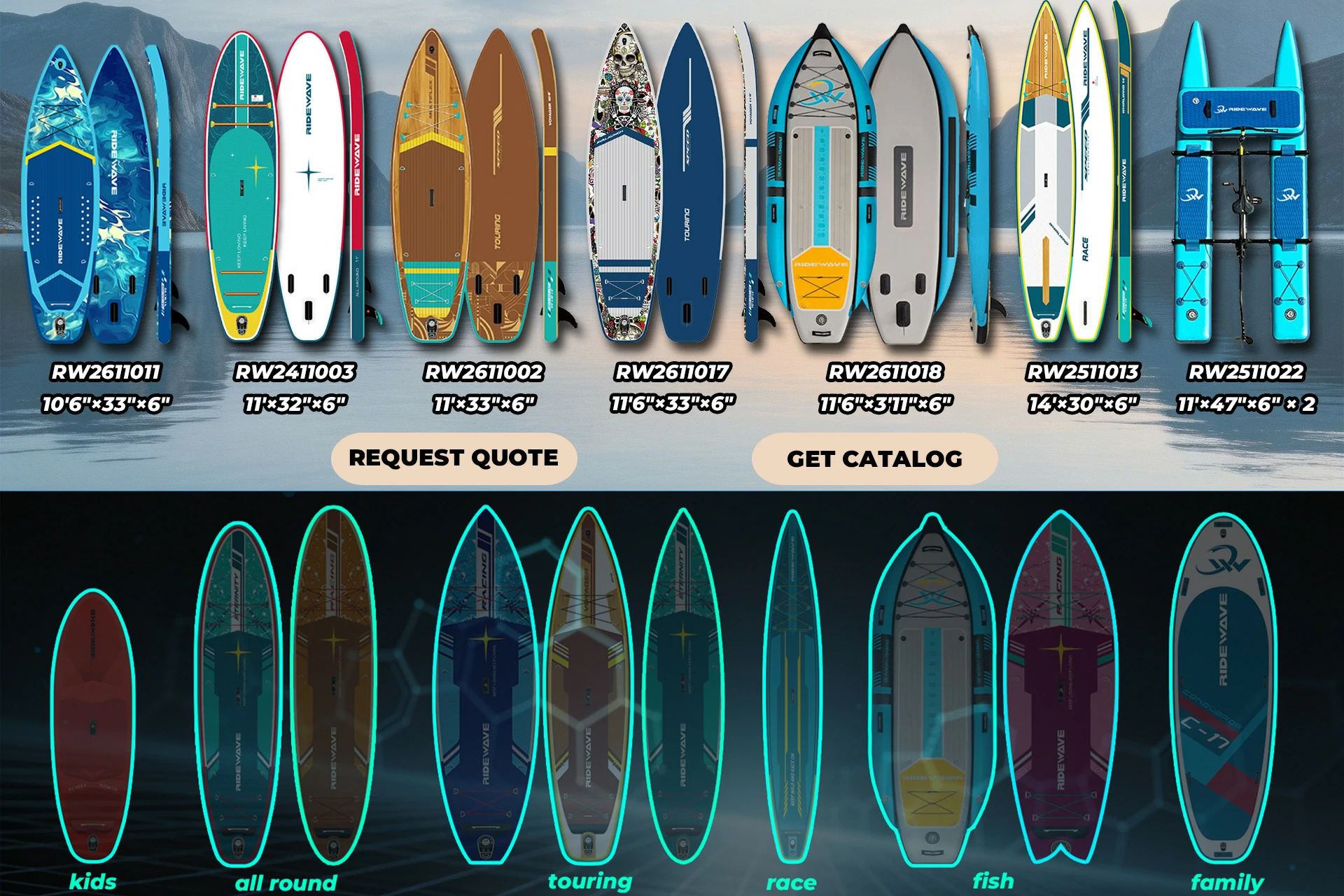
The better approach is to match each inflatable SUP model with a clear customer group, water environment and retail purpose. This helps distributors and outdoor retailers build a balanced product range, reduce customer confusion and avoid tying up inventory in boards that do not fit their local market.
For B2B buyers working with an inflatable SUP manufacturer, the process should begin with customer segmentation and end with a clear product specification, accessory package and after-sales plan.
Why Customer Segmentation Matters When Buying Inflatable SUPs
Many wholesalers make the same mistake: they purchase several board models that look different but serve almost the same customer. The result is a product range with overlapping functions, unclear retail positioning and slower sales conversations.
A more practical wholesale strategy is to define the main use case for every model before placing an order. For example, a retailer may need:
- A stable all-round board for beginners and families
- A longer touring board for customers who want to travel farther
- A fishing-oriented board with space for equipment
- A fitness or yoga board with a comfortable standing area
- A multi-purpose board for rental, resort or outdoor activity businesses
Each model should have a clear reason to exist in the range. When customers can quickly understand the difference between products, retailers can recommend the right board with more confidence.
1. All-Round Inflatable SUPs For Beginners And Families
All-round inflatable SUPs are usually the most accessible starting point for new paddlers. Their broad, stable shape makes them suitable for calm lakes, slow rivers, sheltered coastal water and general recreational use, depending on the product design and local conditions.
For wholesalers, this category can serve several customer groups:
- First-time paddleboard buyers
- Families looking for shared outdoor activities
- Casual users who paddle only during holidays
- Customers who value easy storage and transportation
- Outdoor retailers that need a straightforward entry-level product
When evaluating an all-round model, buyers should look beyond appearance. Stability, construction consistency, standing comfort, carrying convenience, repair support and the completeness of the accessory package all affect the customer experience.
A wholesale all-round SUP should also be easy for sales staff to explain. Clear product positioning is often more useful than adding unnecessary features that make the board harder to compare with other models.
2. Touring Inflatable SUPs For Distance And Travel
Touring customers usually want a board that feels more directional and efficient when paddling over longer distances. They may be experienced recreational users, outdoor travelers or customers who plan routes across lakes, rivers and coastal areas.
For this segment, a wholesale buyer should examine:
- The board's intended use and overall shape
- Tracking and paddling efficiency
- Storage space for personal equipment
- Carrying points and transport convenience
- Compatibility with the target market's water environments
- The quality of the fin, leash, pump and repair kit supplied with the board
Touring SUPs can help a retailer move beyond basic beginner products, but they should not be marketed as a universal solution. The board description should explain who the product is for and what type of paddling it is designed to support.
For private-label brands, touring models can also create a clear premium line when the graphics, packaging and accessory selection are aligned with a travel-oriented brand identity.
3. Fishing Inflatable SUPs For Outdoor And Angling Customers
Fishing customers often evaluate an inflatable SUP differently from casual paddlers. They may care more about stability, usable deck space, attachment points and the ability to carry fishing equipment safely and conveniently.
A buyer sourcing fishing-oriented inflatable SUPs should ask the manufacturer how the design supports the intended equipment and whether optional accessories can be supplied consistently across repeat orders. It is also important to confirm how attachment points, mounts and related components are checked during production.
For retailers, the fishing category can work well alongside camping, hiking, marine and outdoor equipment. However, the product should be presented honestly. A board should not be described as suitable for every fishing environment unless its intended use, stability and accessories have been properly verified.
A clear product package may include the board, paddle, pump, fin, leash, carry bag and repair kit, with additional fishing accessories handled according to the buyer's actual requirements.
4. Yoga And Fitness Inflatable SUPs For Wellness-Focused Users
Yoga and fitness customers generally pay close attention to stability, deck comfort and the usable standing area. They may use the board for light exercise, balance training, stretching or recreational wellness activities on calm water.
For wholesale buyers, the important question is not whether a board can be given a fitness-related name. The question is whether the design, deck pad, dimensions and intended use support a comfortable and understandable customer experience.
This category can be attractive to retailers that already sell fitness products, wellness equipment or lifestyle accessories. It may also suit resorts, water-sports schools and activity providers that want to offer a different experience from ordinary recreational paddling.
Before ordering, buyers should confirm the surface materials, printing or branding process, accessory configuration and care instructions. These details influence both the perceived value of the product and the number of after-sales questions a retailer receives.
5. Multi-Purpose Inflatable SUPs For Rental And Activity Operators
Rental companies, hotels, resorts and outdoor activity operators often need a different product strategy from consumer retailers. Their priority may be repeated use, easy handling, straightforward maintenance and consistent replacement parts across a fleet.
For commercial users, wholesale buyers should discuss:
- The expected operating environment
- The frequency of use
- Storage and transport procedures
- Inspection and repair processes
- Spare parts availability
- Packaging and replacement requirements
- Batch consistency for repeat purchasing
A model that looks attractive in a retail showroom may not be the best fit for a rental operation. Commercial buyers should therefore evaluate the complete ownership process rather than focusing only on the initial purchase price.
A manufacturer that can document its quality-control process and communicate clearly about repairs, replacement parts and repeat orders can reduce operational uncertainty for this type of customer.
How Should Wholesale Buyers Compare Different Inflatable SUP Models?
After defining the target customer groups, buyers can compare models using a practical checklist:
1. Product purpose
Is the model designed for general recreation, touring, fishing, fitness, rental or another specific use? A clear purpose makes product selection and retail communication easier.
2. Construction and consistency
Ask how the manufacturer controls material selection, lamination, seams, valves, handles, D-rings and deck-pad installation. The key issue is not only how one sample looks, but whether the same standard can be maintained across the production batch.
3. Accessory package
Check whether the paddle, pump, fin, leash, carry bag and repair kit match the product positioning. Incomplete or inconsistent accessory packages can create avoidable customer complaints.
4. Customization requirements
For OEM and private-label projects, confirm which elements can be customized, including board graphics, colors, logos, packaging and accessories. Customization should be matched with realistic order planning and approval procedures.
5. Quality control and documentation
Buyers should request the documents and inspection information relevant to their target market and product model. Certification and compliance claims must be confirmed for the specific product, not assumed from a general factory statement.
6. After-sales support
Clarify warranty boundaries, spare parts, repair kits, defect handling and communication responsibilities before placing a bulk order. Clear terms are especially important when the products will be sold through multiple dealers or used by rental customers.
Building A Balanced Wholesale Inflatable SUP Range
A balanced product range does not need to include every possible board type. It should cover the main customer needs in the target market without creating unnecessary overlap.
A retailer serving beginners and families may start with an all-round model, then add a touring or fishing model when customer demand becomes clearer. A private-label outdoor brand may build a small collection around one consistent visual identity, using different shapes and accessory packages to separate customer groups.
The right range depends on local water conditions, retail channels, seasonality, storage capacity and the buyer's ability to explain the differences between models. This is why product selection should be discussed with the manufacturer before finalizing the order rather than copied from a generic catalog.
Why Work With A Manufacturer That Understands B2B Requirements?
For wholesale buyers, the supplier's value is not limited to production. A suitable inflatable SUP manufacturer should be able to discuss model selection, OEM or ODM requirements, packaging, quality control, repeat-order consistency and after-sales support in practical terms.
RIDEWAVE supports B2B buyers with inflatable SUP product development, private-label customization and wholesale supply planning. Buyers can share their target customer groups, sales channels and product requirements to discuss a more suitable product combination before moving to a bulk order.
Final Takeaway
The right inflatable SUP for wholesale is the one that fits a clearly defined customer group and can be supplied with consistent quality, appropriate accessories and dependable after-sales support.
Instead of selecting boards only by price or appearance, B2B buyers should compare product purpose, construction, customization, documentation and long-term service. A focused product range is easier to market, easier to manage and more likely to create a better experience for both retailers and end customers.
If you are planning an OEM, private-label or wholesale inflatable SUP project, contact RIDEWAVE to discuss your target market and product requirements.
Request an OEM / Wholesale Quote