

In the world of stand up paddle boards (SUPs), OEM (Original Equipment Manufacturing) and ODM (Original Design Manufacturing) play a crucial role in shaping the global supply chain. Many brands-both emerging and established-turn to experienced factories in China for high-quality, customizable inflatable paddle boards. However, as the SUP industry expands rapidly, misconceptions about OEM/ODM manufacturing continue to spread, often leading to poor sourcing decisions, miscommunication, and missed opportunities.
At Ridewave, with over 15 years of professional experience in inflatable SUP production, we've witnessed these misunderstandings firsthand. From product design and material selection to logistics and branding support, our team works closely with B2B buyers around the world to bridge the gap between concept and production. This article will uncover the top 10 most common misconceptions about OEM/ODM SUP manufacturing-and explain how working with the right factory can turn your brand vision into a global success.
1. Misunderstanding: OEM and ODM Mean the Same Thing
One of the most frequent misconceptions among new buyers is that OEM and ODM are interchangeable terms. In fact, they represent two distinct levels of manufacturing collaboration.
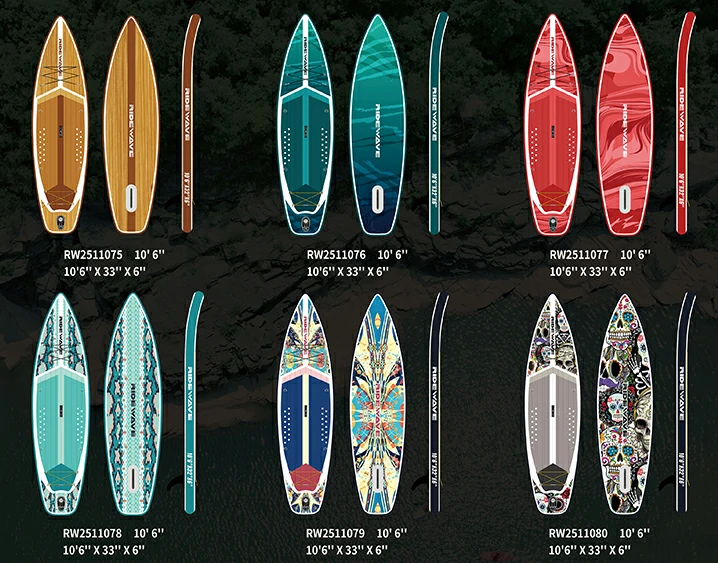
An OEM SUP manufacturer produces boards according to the customer's design, specifications, and branding. The client controls the shape, materials, color, and packaging. In contrast, an ODM manufacturer provides ready-made designs that can be customized and rebranded with minimal modifications.
This difference is critical for B2B buyers deciding on their strategy. OEM offers more creative freedom and brand exclusivity but requires design expertise and longer lead times. ODM is faster and cost-efficient for startups testing new markets.
At Ridewave, we integrate both models: OEM clients enjoy complete design freedom with support from our in-house R&D team, while ODM partners can choose from our proven best-selling templates and adapt them to their target audience. Understanding these distinctions helps brands make smarter sourcing decisions and avoid costly confusion.

2. Misunderstanding: All Chinese SUP Factories Offer the Same Quality
Another common misconception is assuming all factories in China produce the same level of quality. In reality, there's a wide spectrum-from small workshops to advanced industrial manufacturers with international certifications.
The difference often lies in material sourcing, drop-stitch technology, quality control, and assembly precision. For example, a high-end factory like Ridewave invests in Korean-made drop-stitch fabric, precision cutting systems, and professional lamination processes. Meanwhile, low-cost suppliers may use untested materials or skip key inspection steps, resulting in boards that lose air pressure, delaminate, or deform after minimal use.
Buyers should evaluate a factory's production scale, quality management systems, certifications (such as CE, SGS, amfori, and BSCI), and after-sales support before making commitments. Reliable manufacturers also offer performance testing, inflation durability assessments, and photo/video updates during production.
Choosing a reputable OEM/ODM manufacturer ensures long-term reliability, consistent quality, and brand credibility-three things that cannot be achieved by chasing the lowest quote.
3. Misunderstanding: OEM SUPs Are Always More Expensive
It's easy to assume that OEM customization equals higher cost, but this isn't always true. While OEM projects require more detailed planning, they also offer better cost efficiency over time.
For example, once molds, materials, and brand templates are established, per-unit costs can actually drop due to bulk material procurement and streamlined assembly lines. OEM boards also allow for optimized designs that reduce waste or enhance longevity-lowering replacement rates for distributors.
At Ridewave, we use flexible pricing models that balance cost and customization. B2B buyers can adjust board size, material layers, or accessory combinations to meet their specific target market price points. In short, OEM doesn't have to mean "expensive"-it means "efficiently built for your market."
Long-term collaboration with an experienced SUP factory often saves money by avoiding product defects, rework costs, and inconsistent shipments-all of which are far more expensive in the long run.
4. Misunderstanding: The Factory Handles Everything Automatically
Some buyers assume that once they send an order, the manufacturer will handle everything from design to logistics with no input needed. This hands-off approach can cause delays, confusion, and design mismatches.
Effective OEM/ODM production depends on communication and collaboration. A professional factory like Ridewave provides detailed design mockups, technical drawings, and material samples, but client feedback is vital. Whether it's deciding the paddle blade angle, deck pad texture, or packaging layout, every decision impacts cost and final product quality.
We encourage clients to engage actively during the design approval and pre-production sample stages. The more clarity provided, the smoother the process becomes. At Ridewave, dedicated account managers ensure that communication flows seamlessly from concept to delivery-eliminating misunderstandings that commonly occur in long-distance production partnerships.
5. Misunderstanding: Branding Is Just About the Logo
For many B2B buyers, branding starts and ends with printing a logo on the board. In reality, brand identity in the SUP industry extends far beyond visuals-it involves design philosophy, customer experience, and product storytelling.
A strong OEM partner helps translate brand values into design features: the color palette can reflect adventure and freedom; the board shape can signal stability or speed; the accessories can align with user lifestyles.
At Ridewave, we collaborate with clients to ensure every element-from the inflation valve to the fin design-reinforces their brand personality. Our design team provides mockups and digital renderings to visualize how a brand will look on the water. The result is a cohesive identity that builds trust and recognition in competitive markets like Europe and North America.
True branding is not just about appearance-it's about delivering an experience your customers remember.

6. Misunderstanding: Faster Production Means Better Service
In today's competitive B2B market, many buyers prioritize quick turnaround times. However, rushing production often leads to compromised quality.
High-quality SUP manufacturing requires precise lamination, curing, and pressure testing. Skipping these steps may save a few days but can cause defects that damage brand reputation.
Factories like Ridewave optimize production schedules through efficient workflow management-not by cutting corners. Each board undergoes multi-stage inspections: air-tightness tests, UV exposure simulation, and mechanical stress evaluation. This ensures every product meets the standards of professional paddlers and distributors alike.
Speed matters, but reliability and consistency matter more. A balanced production timeline is the hallmark of a trustworthy OEM partner.
7. Misunderstanding: Inspection Is Optional
Some new buyers skip third-party inspection to save costs, assuming reputable factories guarantee perfect products. While professional manufacturers like Ridewave uphold strict internal quality control, external inspection remains an essential safeguard.
Independent testing verifies that products meet the buyer's standards before shipment. This is especially vital for first-time collaborations, new models, or large-volume orders.
Ridewave provides detailed inspection reports, inflation test videos, and shipment documentation to maintain transparency. Our clients often combine our internal testing with external audits to ensure complete peace of mind. The result is a supply chain built on trust, traceability, and accountability.
8. Misunderstanding: ODM Products Lack Uniqueness
Some brands hesitate to choose ODM models, thinking they'll end up with "generic" products. However, modern ODM SUPs can be highly unique through advanced customization.
At Ridewave, our ODM designs are based on years of global market data and feedback from distributors. Each model can be tailored with custom deck pads, accessories, colors, and branding elements. This allows smaller brands to quickly enter the market without sacrificing individuality.
For B2B buyers targeting seasonal sales or testing new regions, ODM solutions are a smart way to minimize risk while building brand awareness. Customization and scalability can coexist-ODM is not a limitation but a launchpad for creativity.
9. Misunderstanding: Logistics Are Simple and Standardized
Shipping inflatable SUPs worldwide involves complex logistics-from packaging optimization to customs clearance. Many buyers underestimate these challenges and encounter unnecessary delays or costs.
A professional OEM manufacturer provides end-to-end logistics support, including packaging design, labeling, container loading plans, and freight coordination.
At Ridewave, we use durable carton packaging, reinforced corner protectors, and moisture-resistant materials to ensure boards arrive in perfect condition. Our global logistics network supports sea, air, and rail shipping, giving clients flexibility in cost and delivery time.
In B2B trade, smooth logistics are as important as production quality. Reliable delivery builds long-term trust with distributors and retail partners.
10. Misunderstanding: Price Is the Only Thing That Matters
Perhaps the most damaging misconception is focusing solely on price. In the OEM/ODM SUP industry, ultra-low prices often come at the cost of poor materials, untested adhesives, and inconsistent quality.
Smart B2B buyers evaluate total value, not just cost. Factors like warranty support, consistency, communication, and after-sales service determine long-term success.
At Ridewave, we believe in sustainable partnerships, offering competitive pricing without compromising durability or performance. Every client receives technical support, branding assistance, and product updates-ensuring that your investment yields real growth, not short-term savings.
Conclusion: Building Better Partnerships Through Understanding
The SUP industry continues to evolve, with growing demand across Europe, North America, and emerging markets. As more brands seek reliable OEM/ODM partners, understanding the truth behind these misconceptions becomes essential.
At Ridewave, we combine technical expertise, quality assurance, and design innovation to help clients build paddle board brands that stand out. Whether you're customizing your first SUP collection or scaling global distribution, our team ensures every detail aligns with your business goals.
By debunking these ten common misunderstandings, brands can make more informed decisions, achieve smoother cooperation, and deliver paddle boards that inspire confidence on every wave.
- Top 7 OEM/ODM Customization Ideas to Build a Unique SUP Brand
- Top 5 Reasons to Choose an Experienced SUP Manufacturer for Your Brand
- Balancing Price and Quality: How to Choose the Right SUP Factory
- Beginner's Guide: How to Stand Up Paddle Board with Confidence