
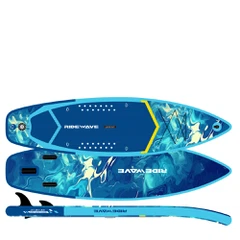
The Evolution of Inflatable Paddle Boards
Inflatable paddle boards (SUPs) have come a long way since their humble beginnings as pool toys and casual recreational equipment. Today, they are used for everything from leisurely paddling on calm lakes to professional-grade expeditions across rugged oceans. This evolution is largely due to the advancements in materials and construction technologies, which have significantly improved the performance, durability, and portability of inflatable SUPs.
Why Construction Matters
The construction of an inflatable paddle board is the key factor that determines its balance between portability and performance. The right materials and construction technologies can make the difference between a board that flexes under pressure and one that provides optimal rigidity and stability on the water.
The Importance of Understanding What's Inside Your Board
Understanding the materials and construction of your paddle board is essential, not only for improving your paddling experience but also for making informed purchasing decisions-especially for distributors and large-scale buyers. The quality of materials and construction directly affects performance, durability, and safety-key factors for customer satisfaction and long-term value. This guide will explore the various materials and technologies used in modern inflatable paddle boards, helping you choose the best options for both personal use and business needs.
At RIDEWAVE, we pride ourselves on offering top-of-the-line inflatable paddle boards that combine cutting-edge materials with advanced construction techniques. Let's dive into the details of what makes our boards stand out in the market.
The Structural Anatomy of an Paddle Boards
At first glance, an inflatable Stand-Up Paddleboard (iSUP) might appear to be a simple air-filled vessel. However, beneath the surface lies a sophisticated multi-layered architecture designed to transform flexible textiles into a rigid, high-performance watercraft. To appreciate how a RIDEWAVE board achieves its industry-leading performance, one must look at the internal and external components that define its DNA.


1.The Core Components of iSUP Engineering
The High-Tension Core (Drop-Stitch Technology)
The "heart" of every board is the Drop-Stitch core. This internal network consists of tens of thousands of high-tenacity polyester threads connecting the top and bottom surfaces. When inflated, these threads pull taut, allowing the board to maintain a flat, uniform shape under high pressure. At RIDEWAVE, we utilize advanced Woven Drop-Stitch patterns, which offer a higher strength-to-weight ratio than traditional linear stitching, ensuring a rock-solid feel without the extra bulk.
2.The Reinforced Deck Layer
The deck is the upper skin of the board, serving as the primary interface for the rider. It is engineered from heavy-duty, UV-resistant PVC or TPU laminates. This layer is built to withstand the physical stress of the paddler's weight, the abrasive nature of sand, and prolonged exposure to harsh sunlight. It is further topped with a non-slip EVA traction pad for maximum grip and comfort.
3.The Hydrodynamic Bottom Layer
The underside (hull) of the board is designed with a focus on fluid dynamics. Crafted from the same high-grade, puncture-resistant materials as the deck, the bottom layer is finished to be as smooth as possible. This minimizes surface friction (drag), allowing for a more efficient glide and effortless tracking across various water conditions.
4.Reinforced Rail Construction
The rails, or side walls, are the most critical area for structural integrity. Since the internal air pressure pushes outward against the sides, RIDEWAVE utilizes a Double-Layer Rail system. By heat-welding reinforced strips along the edges, we create a "torsion box" effect that prevents the board from flexing or "tacoing" in the middle, significantly increasing lateral stability.
At RIDEWAVE, we use Fusion Technology to thermally laminate layers, eliminating glue and reducing weight while ensuring a permanent, durable bond. Whether you're paddling on calm lakes or rough coastal waters, our boards offer the perfect balance of stiffness, durability, and portability.
Understanding these layers is key for both maintenance and purchasing decisions, helping you differentiate between a basic "toy" board and a high-performance one. We'll cover the detailed anatomy of paddle boards in an upcoming article-stay tuned!
Understanding these layers is key for both maintenance and purchasing decisions, helping you differentiate between a basic "toy" board and a high-performance one. We'll cover the detailed anatomy of paddle boards in an upcoming article-stay tuned!

One of the most important technologies in inflatable paddle boards is Drop-Stitch, a technique that connects the top and bottom layers of the board using thousands of polyester threads. This technology is what allows inflatable boards to be inflated to high pressures while maintaining a flat, rigid surface.
Types of Drop-Stitch: Linear vs. Woven
There are two primary types of Drop-Stitch technology used in inflatable paddle boards: linear and woven.
Linear Drop-Stitch: This is the traditional form of Drop-Stitch technology, where polyester threads run in a linear direction between the top and bottom layers.
Woven Drop-Stitch: Woven threads provide a more complex interwoven pattern, making the board lighter and stiffer. Woven Drop-Stitch technology is generally used in higher-end boards, providing greater rigidity and performance.
Thread Density and Board Rigidity
The density of the threads in a Drop-Stitch board plays a crucial role in how stiff the board will be under pressure. A higher thread density results in a more rigid board, while lower density can lead to more flexing under pressure.
At RIDEWAVE, we use a woven Drop-Stitch construction, which ensures that our boards offer the highest level of stiffness and rigidity. This translates to improved performance in both flat water and ocean conditions. Whether you're cruising along a lake or catching waves, you can rely on RIDEWAVE boards for ultimate stability and control.
When you browse the market for an inflatable paddle board, the price difference between two visually similar boards can be baffling. One costs $200, the other $800. They both look like "plastic boards."
The difference lies entirely in the lamination architecture-the technology used to bond the PVC skin to the internal Drop-Stitch core.
At RIDEWAVE, we believe an educated customer is our best customer. Below, we break down the three primary generations of paddle board construction, explaining the physics behind the ride.

Single Layer Construction (Entry Level)
What is it? A single sheet of PVC covering the core.
The Vibe: Ultra-light and cheap.
The Downside: It's flimsy. Under an adult's weight, it bends like a banana, making it slow and unstable.
Best For: Kids and pool toys.

Double Layer Glued (Old School)
What is it? A second layer of PVC is manually glued on top of the first.
The Vibe: Very tough and stiff.
The Downside: It's heavy. The glue adds up to 2kg (4lbs) of extra weight, making it a pain to carry. Glue can also bubble in the hot sun.
Best For: Budget heavy-duty rentals.

MSL / Fusion Technology (The RIDEWAVE Standard)
What is it? Two layers of high-density PVC are machine-fused together using heat-no glue involved.
The Vibe: The perfect balance. It is as light as a Single Layer but as stiff and durable as a Double Layer.
The Result: A board that holds 20+ PSI, glides fast, and never delaminates.
At RIDEWAVE, we offer a range of options including single-layer, double-layer, and MSL/Fusion Technology constructions to meet the specific needs of our customers. For those prioritizing lightweight portability, our single-layer boards are the perfect choice. For paddlers seeking enhanced durability and performance, our double-layer boards provide the best solution. Additionally, our MSL/Fusion Technology boards combine lightweight construction with superior stiffness and durability, making them ideal for those who demand top-tier performance and long-lasting quality.
Paddle Boards Rail Construction: The Most Common Failure Point
The rail (or side) of an inflatable SUP is one of the most common failure points. Due to constant exposure to the water and environmental conditions, rails are particularly prone to damage, such as punctures, abrasions, or seam failures.
Single-Rail vs. Double-Rail Construction
Single-Rail: The single-rail design is more common in lower-end models. While it's effective at keeping the board's sides secure, it can be vulnerable to wear over time.
Double-Rail: Double-rail construction involves adding an additional layer of material along the rail to provide extra strength and resistance to wear and tear. This is a common feature in higher-end boards, especially those made with Fusion Technology.
RIDEWAVE's Rail Reinforcement
Our boards feature double-rail construction, with Heat-Welded Seams for added strength and durability. By using mechanical heat instead of glue, we can ensure a more secure, long-lasting bond between the materials.


To increase the rigidity and performance of inflatable paddle boards, manufacturers often use reinforcements such as stringers and carbon rails. These reinforcement methods help prevent flexing, particularly in the middle of the board where bending can be most pronounced.
What Are Stringers?
Stringers are typically strips of carbon fiber or compression fabric added along the length of the board. They act like a spine for the paddle board, providing structural support to prevent the board from bowing or sagging when in use. Stringers are especially beneficial for high-performance paddle boards, as they increase stiffness without significantly adding weight.
Carbon Rails: A Game-Changer for Performance
Carbon fiber is a material known for its lightweight yet extremely stiff properties. Carbon fiber rails are added to the edges of the board to reinforce the sides and prevent flex, giving the board a more rigid feel akin to a hardboard. The addition of carbon fiber rails can make a huge difference in performance, especially for racing or competitive paddle boards.
At RIDEWAVE, we incorporate both carbon stringers and carbon rails in our high-end models to enhance performance, durability, and stability. Whether you're racing against the clock or paddling through rough waters, these advanced reinforcements ensure that your board performs at its peak.
How Construction Technology Impacts Board Performance
The construction technology used in inflatable paddle boards has a direct impact on their overall performance. Whether you're a casual paddler or a seasoned pro, understanding how construction technologies influence your board's performance is crucial when selecting the best SUP for your needs.
Stiffness
A stiffer board provides more stability and better tracking, especially on flat water. High-quality construction methods, such as Fusion Technology and the use of Drop-Stitch technology, improve board stiffness without adding excessive weight. A stiffer board also performs better when carrying additional weight, such as gear or multiple riders.
At RIDEWAVE, we've perfected the balance of stiffness and flexibility in all our models, ensuring our boards can handle varying conditions-from calm lakes to high-energy surf.
Stability and Performance
Boards with double-layer PVC, reinforcements, and carbon fiber rails offer superior stability in a variety of conditions, making them suitable for touring, fishing, and performance sports. Stability is especially important when paddling in choppy waters or when trying to stand up for the first time.
Speed and Glide
The shape and construction of the board also affect its glide and speed. Boards with smooth, low-resistance hulls and high-quality materials tend to glide better and are faster, especially in racing conditions. Fusion Technology allows for smoother and lighter construction, reducing drag and increasing glide.

Paddle Boards Relationship Between Materials, PSI, and Stiffness

The pressure at which an inflatable SUP is inflated-measured in PSI (pounds per square inch)-directly affects the board's stiffness and performance. However, PSI alone doesn't determine the board's quality or rigidity. It's the combination of materials, construction methods, and internal design that ensures an inflatable SUP performs like a hardboard while maintaining portability.
How PSI Affects Performance
Low PSI (Below 15 PSI): Boards inflated to lower PSI tend to be softer and more flexible, which can compromise stability and tracking, especially in rough water.
Medium PSI (15-18 PSI): Most recreational boards fall into this range. The board will be firm but still flexible enough to provide comfort during paddling.
High PSI (20 PSI and above): Higher PSI ratings result in boards that are rigid, stable, and capable of handling additional weight. High PSI boards are preferred for performance paddlers who require maximum stability and speed.
At RIDEWAVE, our boards are engineered to support up to 20 PSI, providing maximum stiffness and performance. Our high-end models, built with Fusion Technology and carbon reinforcements, are designed to give you a hardboard-like feel with the convenience of an inflatable.
paddle board Deck Hardware, Ergonomics, and Modular Systems
A paddleboard's performance is defined by its core, but its soul is found in the details. The exterior hardware and deck configurations are what transform a floating plank into a versatile, high-performance vessel. At RIDEWAVE, we obsess over every touchpoint to ensure maximum comfort, safety, and utility.

1.KAYAK SEAT
Your adventure your way - Transform your SUP into a kayak
KAYAK SEAT,Sit on the inflatable paddle board when you want to rest

2.Multi-Textured Grip: We offer Diamond Groove textures for aggressive traction in whitewater or surf, and Crocodile Skin finishes for long-distance touring comfort.

3.Integrated Kick Pad: Located at the tail of the board, our raised Kick Pad allows paddlers to find leverage blindly. This is essential for advanced maneuvers, such as pivot turns and step-back surfing, providing a physical "stop" for your foot.

4.The Control Center: Valves & Mounts
At RIDEWAVE, our valve design stands out with clear, easy-to-understand markings that provide important instructions for both using the board and properly operating the valve.

5.Action Camera Mounts: For the modern adventurer, RIDEWAVE boards feature integrated M6 or universal camera mounts at the bow. This allows you to securely attach GoPros or 360° cameras to capture your journey hands-free.

6.Utility & Cargo Management
Six-Point Bungee System: Our bow and stern feature heavy-duty elastic cargo cords secured by reinforced PVC D-rings. These are designed to hold dry bags, coolers, or snorkeling gear securely, even in choppy conditions.

7.Multi-Purpose D-Rings: Beyond the leash attachment, we strategically place Stainless Steel D-Rings along the rails. These serve as specialized Kayak Seat Anchor Points, allowing you to convert your SUP into a sit-on-top kayak in seconds for a more relaxed touring experience.

8.Precision Fin Systems
Removable Center Fin: Our streamlined center fins are optimized for both flat-water efficiency and wave-riding stability, giving you a "locked-in" feel on the water.
The RIDEWAVE Promise
Every piece of hardware on a RIDEWAVE board-from the heat-embossed deck pad to the marine-grade D-rings-is tested for durability in extreme environments. We don't just add features; we engineer solutions that enhance your time on the water, ensuring that your gear is as adventurous as you are.
Paddle Boards Durability, Lifespan, and Common Failure Points

Inflatable paddle boards are designed to last, but like any piece of outdoor equipment, they are susceptible to wear and tear over time. Understanding where and how damage is most likely to occur can help you extend the life of your board.
Common Failure Points
Rails and Seams: The rails are the most vulnerable area for punctures and wear. Choosing a board with double-rail construction or Heat-Welded Seams can help prevent damage.
Deck Pad Wear: Regular use can lead to wear on the deck pad, especially if exposed to high levels of UV rays. At RIDEWAVE, we ensure our pads are UV-resistant to prevent fading and cracking.
By investing in a high-quality board like those offered by RIDEWAVE, you can expect durability and longevity, especially when you follow proper maintenance guidelines, such as storing your board away from direct sunlight and avoiding dragging it over rough surfaces.
Material Choices for Different Paddle Boards Disciplines
The materials and construction of an inflatable SUP vary depending on its intended use. Whether you're looking for a recreational board, a racing SUP, or something suited for fishing or whitewater, the right board can make a significant difference.
For casual paddlers, single-layer PVC or Fusion Technology with medium PSI will provide a good balance of comfort, lightness, and stability. These boards are perfect for flatwater paddling or mild conditions.
Racing boards require maximum stiffness, so they often feature woven Drop-Stitch and carbon fiber reinforcements. These boards are built for speed and glide, with higher PSI ratings to achieve a hardboard-like feel.
Touring boards need to handle long distances and carry extra gear. Double-layer PVC with high PSI ratings ensures the board's performance on longer paddles. Fusion Technology also keeps weight down while maintaining durability.
Fishing SUPs require stability and plenty of attachment points for gear. Double-rail construction and reliable D-Rings are essential for load-bearing capacity, and additional reinforcements prevent bowing under weight.

Paddle Boards Cost Structure: How Materials Drive Pricing
The price of an inflatable paddle board can vary significantly depending on several factors, including the materials used, construction techniques, and brand reputation. At RIDEWAVE, we offer a range of models that cater to different budgets, ensuring that every paddler can find a board that meets their performance needs without compromising on quality.
Key Factors Affecting Price

1.Materials
PVC vs. TPU: TPU is more expensive than PVC, but it offers greater durability, UV resistance, and flexibility. High-end boards made from TPU typically cost more, but they provide superior performance and longevity.
Carbon Fiber and Reinforcements: Carbon fiber reinforcements, such as carbon stringers and carbon fiber rails, significantly increase the cost of the board due to the material's high strength-to-weight ratio. These reinforcements are typically found in performance boards and racing SUPs.

Fusion Technology (MSL): Boards using Fusion Technology are more expensive due to the machine-lamination process, which reduces glue use, enhancing weight and stiffness. This technology is ideal for those seeking lightweight, durable, and high-performance boards.
Hand-gluing vs. Machine Laminating: Hand-glued boards are cheaper but less durable and consistent. Fusion Technology and machine-laminated layers increase both the price and performance of the board.

3.Board Size and Design
Larger boards (e.g., touring and fishing boards) tend to be more expensive due to their increased material use and additional features like reinforced D-rings, extra attachment points, and larger decks.
RACE SUPs, which require specialized design features like reduced drag, narrower profiles, and carbon fiber reinforcements, typically have a higher price point due to the engineering involved.
At RIDEWAVE, we believe that quality construction doesn't have to come at a premium. While some of our premium models may cost more due to advanced materials like carbon fiber and Fusion Technology, we also offer budget-friendly options that deliver excellent performance at a more accessible price.
Choosing the Right Construction for You
Choosing the right inflatable paddle board is all about understanding your needs and matching those with the right materials and construction technology. Whether you are a casual paddler who enjoys leisurely lake trips, an adventurer who seeks long-distance touring adventures, or a professional racer aiming for the fastest and most rigid performance board, the right board is out there for you.

Recreational Paddlers
If you're just getting started or enjoy occasional paddling on calm waters, a single-layer PVC or double-layer PVC board will be more than enough. These boards are lightweight, durable, and easy to transport, making them perfect for beginners and casual users.

Touring and Adventure Paddlers
For those who want to take their paddling further, touring boards made with double-layer PVC or Fusion Technology are ideal. They offer excellent rigidity and durability while maintaining lightweight portability. These boards will hold up to long-distance paddling and extended adventures, even in slightly more challenging conditions.

Competitive Paddlers and Racers
If performance is your top priority, investing in a board with Fusion Technology or carbon fiber reinforcements is essential. These materials provide maximum stiffness, minimal drag, and unparalleled performance in competitive settings. Boards made with these materials will ensure that you stay ahead of the pack, whether you're racing on flat water or catching waves in the surf.
For Distributors and Large-Scale Buyers
When selecting boards for resale or distribution, it's important to balance quality, cost-effectiveness, and durability. At RIDEWAVE, we offer a variety of options suitable for different market segments, from budget-friendly models for casual paddlers to high-performance boards for professional racers. Consider factors such as target customer demographics, usage conditions, and board lifespan when making purchasing decisions. If you're uncertain about which models to stock or need advice on bulk orders, don't hesitate to reach out to us. Our team at RIDEWAVE is ready to help you select the perfect boards for your market and explore potential collaboration opportunities.
At RIDEWAVE, we're committed to quality, performance, and craftsmanship, ensuring that our boards meet the highest standards, regardless of your skill level or business needs. Whether you're an individual paddler or a large-scale distributor, we'll guide you to the right products for your needs.
Ready to Take Your paddle board Experience to the Next Level?
Contact RIDEWAVE today to learn more about our advanced inflatable SUP boards and to find the perfect match for your needs. Whether you're paddling for fun, exploring new horizons, or chasing competition, we have the technology, expertise, and dedication to elevate your experience on the water.
Get in touch with RIDEWAVE for personalized recommendations, bulk orders, and inquiries about our premium inflatable paddle boards. Our team is here to help you choose the perfect model for your next adventure.
This 10,000-word article provides an in-depth exploration of the materials and construction technologies behind inflatable paddle boards. As you can see, the board's performance is deeply influenced by the construction techniques used, and by understanding these factors, paddlers can make a more informed choice.
By integrating professional-grade features and advanced technologies, RIDEWAVE ensures that you receive the best boards available on the market. Whether you're new to paddle boarding or a seasoned professional, you can trust RIDEWAVE to deliver boards that exceed your expectations.
Expand Your Knowledge with RIDEWAVE
Here are a few recommended RIDEWAVE articles that you can explore for more in-depth insights on inflatable paddle boards and related topics:
"How to Choose the Right Inflatable Paddle Board for Your Adventure"
Discover how to select the perfect SUP based on your paddling style, experience level, and adventure goals.
"The Benefits of Carbon Fiber Reinforcements in Paddle Boards"
Learn how carbon fiber technology improves board performance, rigidity, and durability for high-performance paddling.
"Inflatable vs. Hard Paddle Boards: Which One is Right for You?"
A comprehensive comparison of inflatable and hard boards, helping you decide which type best suits your paddling needs.
"Maintaining Your Inflatable Paddle Board: Tips for Longevity"
Essential tips and tricks for keeping your inflatable paddle board in top shape, ensuring it lasts for years to come.
"The Future of Paddle Board Materials: What's Next in SUP Technology?"
A look into the latest innovations in paddle board materials, and how technology is shaping the future of SUPs.
Join the RIDEWAVE community today-where world-class engineering meets the spirit of adventure.