
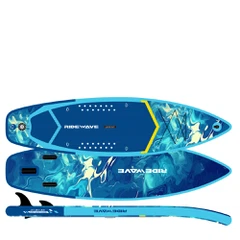


If you are a SUP wholesaler, distributor or sports gear brand planning to source inflatable SUP for the Argentina market, picking a compatible manufacturer goes far beyond comparing unit prices. South America's seasonal sales cycle, complex import rules, long ocean freight lead‑times and local consumer preference all set clear thresholds for your supplier. A qualified partner should deliver stable inflatable paddle board quality, reasonable bulk‑order flexibility, complete marketing assets and practical logistics support for Latin America routes, rather than only offering low‑cost generic goods. Many new‑entry water‑sports resellers lose profit because they focus purely on price and ignore market‑adapted production and after‑sales support. For Argentina‑focused buyers, supplier selection directly decides whether you can catch the upcoming summer selling window and build sustainable local SUP business.
Why Is Argentina Becoming A High‑Growth Inflatable SUP Wholesale Market In 2026?
Argentina has quickly turned into one of South America's most promising destinations for inflatable SUP wholesale, and this shift is driven by real‑world consumer and retail changes, not just abstract market forecasts. Local outdoor recreation demand keeps rising, with large groups of recreational users heading to lakes, river deltas and Atlantic coastlines during the southern summer from November to February. Compared with hard stand‑up paddle boards, inflatable paddle board options create more practical value for both retailers and end‑users.
For local retailers and SUP distributors, inflatable SUP units cut down huge pressure on warehousing space. Deflated boards take up a fraction of storage room versus rigid hard boards, which matters a great deal in cities where commercial warehouse rent keeps climbing. From an import perspective, compressed cargo volume also helps control ocean‑shipping costs and total landed cost for each unit, a critical factor for Argentine importers facing currency and import‑cost pressure.
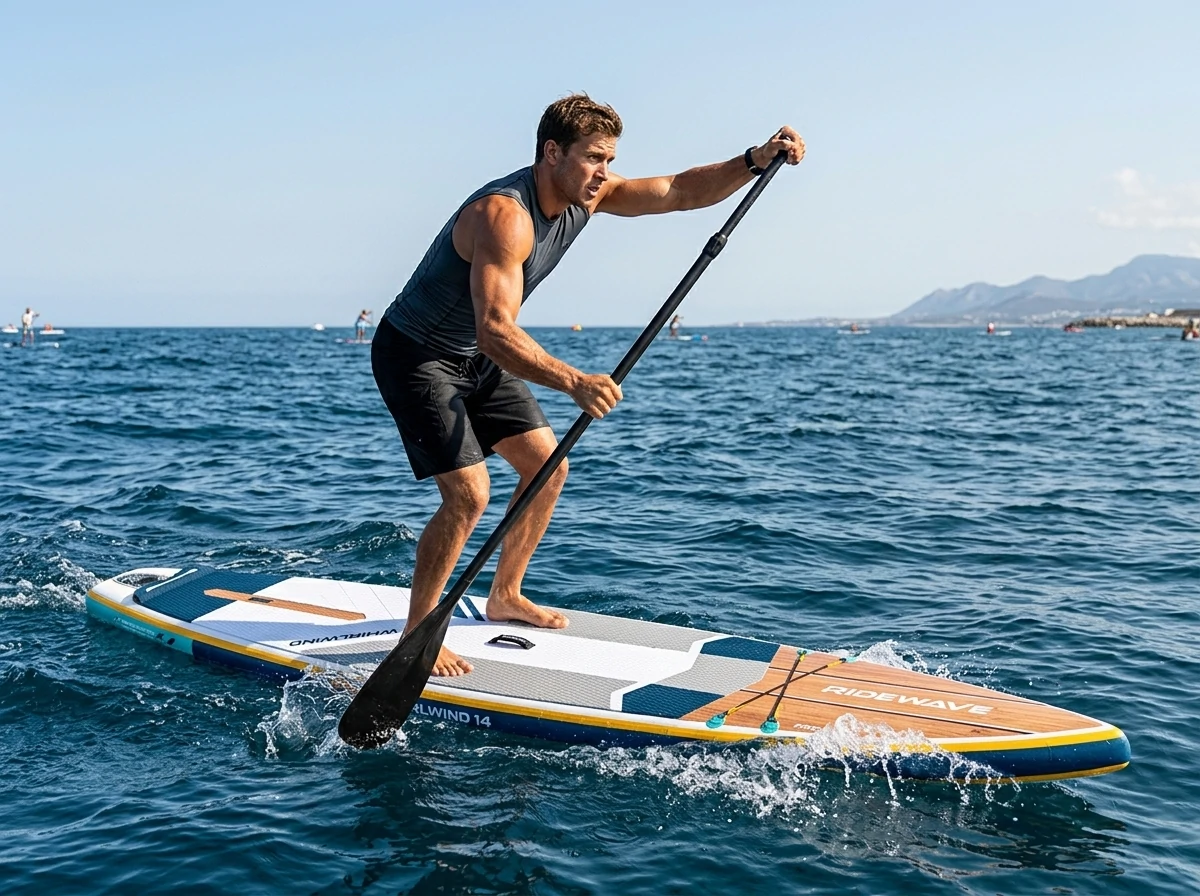
Several measurable market shifts keep lifting demand for bulk iSUP orders:
More local sports‑goods retailers are adding water‑sports categories to expand revenue streams, and many have no prior experience selling SUP equipment.
Family‑oriented recreational paddling grows faster than performance‑oriented racing segments; most end‑users prioritize stability, easy storage and complete accessory kits.
Short‑term rental businesses at tourist lakes and coastal resorts keep expanding, generating repeat bulk demand for durable commercial‑grade inflatable paddle board.
Social media content fuels consumer curiosity; local shoppers search for reliable, mid‑range inflatable SUP rather than ultra‑cheap disposable imports.
That said, market growth does not equal easy profit. Many incoming wholesalers encounter inventory risks when they source generic boards made for European or North American markets. Those products may fail local preference, overshoot landed‑cost budgets or miss the southern summer stock‑in deadline. Understanding Argentina's market background is the first step before you send any bulk SUP order inquiry to overseas factories.
What Key Market Trends Are Driving SUP Distributor Profits In South America?
Profit margins for South‑American SUP distributors no longer come only from low‑cost product sourcing. In 2026, successful wholesalers build their edge by matching inventory to fast‑moving regional trends, adjusting stock mix and preparing ahead for seasonal demand peaks. If you plan to stock inflatable SUP for Argentina, Chile, Uruguay or neighbouring markets, these on‑the‑ground trends deserve full attention before you finalise product selections.
All‑round recreational inflatable paddle board kits keep dominating sales volume across the region. Niche variants such as SUP‑yoga, fishing SUP and touring iSUP hold steady niche share, yet broad‑use all‑round boards still make up the largest portion of retail turnover across Argentina. Local consumers want complete kits: board, adjustable aluminium paddle, high‑pressure hand pump, coiled leash, travel backpack and repair kit included. Partial sets without full accessories perform poorly in local retail channels.
Pre‑sales marketing before summer stock arrival has become a widely adopted profit‑boosting tactic. Many Latin‑America wholesalers no longer wait for containers to arrive in port before starting sales. Instead, they run pre‑sales campaigns using product photos, specification sheets and demo materials supplied directly by their SUP manufacturer. This approach reduces capital pressure, lowers unsold‑inventory risk and lets you test real‑market feedback before full stock lands. Not every factory can deliver production‑ready commercial assets for pre‑sales, and this capability separates ordinary suppliers from B2B‑oriented manufacturing partners.

Quality consistency weighs more heavily than rock‑bottom unit price for long‑term business viability. A flood of low‑grade thin‑PVC inflatable SUP enters South‑America import channels. These cheap boards suffer air leakage, delamination and seam failure after short‑term use. Distributors selling such goods face high return rates, bad store reputation and complaints from end‑customers. Even with low buying price, after‑sales losses will quickly erase gross profit. More established Argentine wholesalers now prioritize stable batch‑to‑batch quality over chasing the lowest possible per‑piece cost.
Multi‑market inventory planning is also gaining real traction among local operators. Many Argentina‑based SUP wholesalers do not only serve domestic territory. They distribute surplus qualified inflatable paddle board goods to nearby Latin‑American countries when local demand slows. Your supplier needs to support flexible container loading, mixed‑model bulk orders and clear export documentation to support cross‑border resale across South America.
Real‑world market conditions show that ignoring these trends often leads to overstock on slow‑moving models, squeezed profit and missed summer sales windows. Good sourcing decisions should align product mix, order timing and supplier service with these regional realities.
What Core Pain Points Do Argentina SUP Wholesalers Face In Supplier Selection?
Choosing the right inflatable SUP supplier for Argentina is rarely a straightforward price comparison. Most wholesalers who enter this category encounter the same set of frustrations, and these pain points often determine whether a bulk SUP order turns into profitable inventory or a costly lesson. Understanding these common obstacles helps you ask the right questions early and filter out suppliers who cannot realistically serve the South American market.
Batch‑to‑batch quality inconsistency sits at the top of the complaint list for many Argentine SUP distributors. A factory may send excellent pre‑production samples, yet the mass‑produced units arrive with uneven rail thickness, weak seam welding or inconsistent valve alignment. When quality fluctuates between containers, your store reputation takes the hit, not the factory. End‑customers in Argentina tend to share bad experiences quickly through local social groups and review platforms, and a single batch of defective inflatable paddle board units can damage a retailer's credibility for an entire season.
Missed delivery windows create another serious problem, especially for markets driven by a short southern‑summer selling season. Argentina's peak demand for inflatable SUP concentrates heavily between November and February. If your supplier delays production by three or four weeks, your container may arrive after the summer peak has already passed. You are then forced to either discount heavily to clear stock or hold inventory for nearly a full year, tying up working capital and warehouse space. Suppliers who cannot commit to realistic production schedules and provide regular order updates are a direct risk to your seasonal revenue.
Ocean freight and landed‑cost surprises erode margins faster than most buyers anticipate. Many new SUP wholesalers focus only on the ex‑works unit price and underestimate the full cost of shipping from China to Argentina. Port congestion, peak‑season surcharges, unclear dimensional weight calculations and inadequate container loading can all push your final landed cost well above budget. A supplier who only hands over goods at the factory gate and offers no guidance on South‑America shipping routes, packing density or export documentation leaves you to absorb every unexpected logistics cost on your own.
Lack of ready‑to‑use marketing materials slows down your sales launch and pre‑sales capability. To sell inflatable SUP effectively in Argentina, you need high‑resolution product photos, lifestyle images, specification sheets, accessory detail shots and content that works for local e‑commerce platforms and social media. Many factories provide only low‑quality cellphone snapshots or generic images with watermarks from other clients. Without clean, commercial‑grade assets, your team spends extra time and money on local photography and design, and you lose the ability to start pre‑sales before the goods arrive. This gap directly delays your revenue timeline.
Limited customization and market‑adaptation capability also holds back ambitious distributors. The Argentine market does not always respond to the same board sizes, colour schemes or accessory combinations that sell well in Europe or North America. A supplier who forces you to choose from a fixed catalogue with no room for SUP OEM ODM adjustments - such as modified deck pad colours, custom logo placement, region‑specific accessory kits or adjusted board dimensions - makes it harder for you to differentiate from competitors who are importing the same generic products.
After‑sales support often disappears once the container leaves the factory. When a batch has quality issues, missing accessories or packaging damage, you need a responsive partner who can investigate, replace defective units or provide spare parts for the next order. Suppliers who go silent after payment create long‑term financial and operational headaches. For Argentine importers dealing with long shipping distances and complex local returns, a supplier's willingness to stand behind their product is not a bonus - it is a basic requirement for sustainable cooperation.
High minimum order quantities can lock out smaller wholesalers and slow down market testing. Not every distributor is ready to commit to a full 40‑foot container of inflatable SUP on their first order. Many buyers want to start with a mixed‑model trial order, test local response and then scale up. Factories that impose rigid, oversized MOQs with no flexibility for mixed SKUs or trial containers make it difficult for new entrants to enter the category safely and gradually.
These pain points are not theoretical - they are the exact issues that separate one‑time importers from established, profitable SUP distributors in Argentina. The right supplier should address each of these concerns transparently before you place an order, not after problems surface. If you want a structured way to evaluate potential factories, our article 10 Questions Every B2B Buyer Should Ask Before Placing An Inflatable SUP Factory Order walks you through a complete checklist of what to verify before committing capital.
How To Judge Whether A SUP Manufacturer Matches South American Market Demand?
Many SUP wholesalers make sourcing decisions based purely on factory‑showroom samples and quoted unit prices, yet appealing samples do not guarantee a supplier can reliably serve South‑American buyers. When sourcing inflatable SUP for Argentina and surrounding countries, you need to evaluate practical, market‑oriented capabilities rather than only checking product appearance. A manufacturer suited for Latin‑America bulk orders understands local consumption habits, import rules, seasonal selling cycles and cost pressure unique to this region.

Real‑world product adaptability stands as one of the most telling evaluation dimensions. Boards engineered for European or North‑American markets may not translate well for Argentina's end‑users. Rider weight ranges, deck pad grip performance under hot sunlight, accessory durability in high‑temperature environments and overall board weight all influence local retail turnover. A qualified inflatable paddle board producer will offer product configurations that fit regional preferences, instead of pushing over‑stocked designs that perform well in other continents. If you are sorting out which board types resonate most with target buyers, reading through How To Design A Paddle Board That Sells can give you actionable reference on consumer‑driven product development.
Logistics and export know‑how for South‑America routes is another non‑negotiable capability. Factories with limited Latin‑America shipment experience may give incorrect packing suggestions, generate incomplete customs documents or miscalculate container loading efficiency. Poor container utilisation directly raises per‑unit landed cost for your bulk SUP order. A suitable partner should be familiar with Qingdao‑Argentina sea‑lane schedules, reasonable stacking methods for inflatable water‑sports goods and standard export paperwork required by Argentine customs. They do not necessarily handle freight for you, but they should provide accurate guidance to help you avoid common shipping pitfalls.
B2B service infrastructure also separates general‑purpose factories from region‑focused manufacturing partners. This covers pre‑sales sample support, clear MOQ flexibility for mixed‑SKU trial runs, consistent batch production control, ready‑made commercial marketing assets and traceable after‑sales solutions. Many factories can produce boards, yet only a small number build complete workflows to support overseas distributors through the whole order cycle. You can compare core capabilities in the table below to quickly screen potential suppliers for your Latin‑America project.
| Evaluation Item |
Products Description
General SUP Factory |
Professional B2B‑Focused SUP Manufacturer (RIDEWAVE as reference) |
|---|---|---|
| South‑America market awareness | Mainly supply EU / US standard models, little insight into local preferences | Develop and stock board variants suitable for southern‑hemisphere summer sales; familiar with Argentina import requirements |
| Mixed‑SKU trial order support | Strict high MOQ, few mixed‑loading options | Support mixed‑model container loading for market test; flexible trial‑order terms for new distributors |
| Pre‑built commercial marketing assets | Offer low‑resolution photos, watermarked material | Supply studio‑shot high‑resolution images, spec sheets, detail shots and kit‑preview files for pre‑sales |
| South‑America shipping guidance | Only EX‑works hand‑over, no logistics advice | Provide container‑loading optimisation, packing suggestion and complete export document checklist for Argentina port |
| Batch‑to‑batch quality control | Random spot‑check only; inconsistent welding & accessories | Multi‑stage inspection before shipment; record test data for each bulk batch |
| Post‑order response mechanism | Slow reply after container departure; limited spare‑part solution | Dedicated B2B account contact; clear remedy plan for defective goods in follow‑up orders |
Even with clear comparison criteria, keep in mind that perfect factory performance rarely exists. Your goal is to find a supplier whose strengths match your highest‑priority business needs. For small‑to‑mid‑size SUP wholesalers testing the Argentine market, mixed‑order flexibility and marketing‑material support often carry greater weight than ultra‑low unit pricing. Large‑volume importers, by contrast, will place more emphasis on mass‑production stability and container cost optimisation.
What Advantages Does RIDEWAVE Offer For Argentina & South America B2B SUP Cooperation?
When evaluating a SUP manufacturer for long‑term Latin‑America cooperation, buyers need more than a factory that can produce boards at a competitive price. RIDEWAVE positions itself as a B2B‑oriented inflatable SUP production partner rather than a generic trading supplier, and this difference shows up in how orders are structured, how materials are prepared and how after‑sales issues are handled. For Argentine SUP distributors and sports‑goods wholesalers expanding into water sports, these practical capabilities directly affect your cash flow, inventory turnover and local market competitiveness.

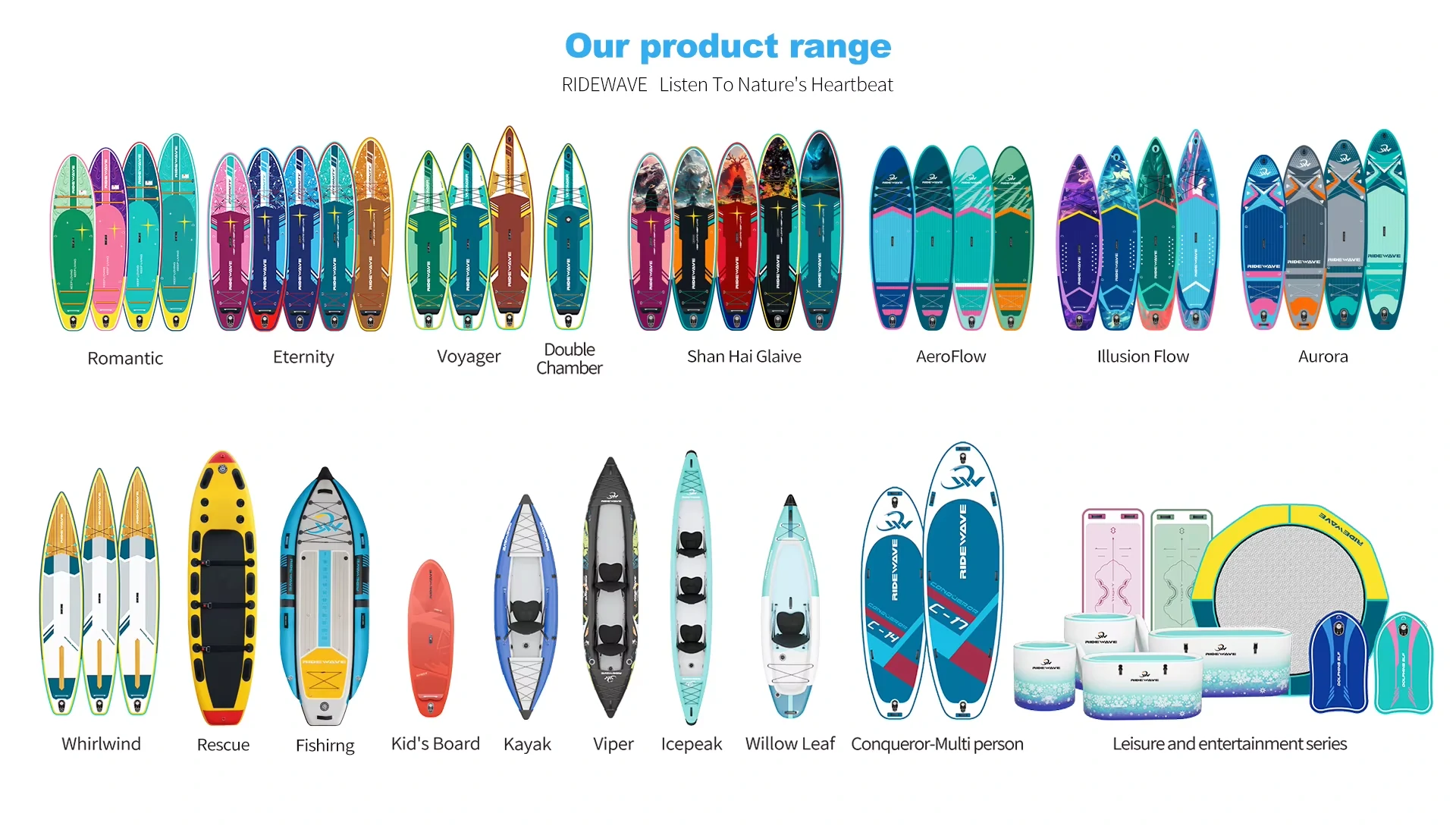
Product range and market‑adapted configuration form the foundation of RIDEWAVE's B2B offering. The factory maintains a broad line‑up of inflatable paddle board models covering all‑round recreational boards, touring boards, fishing SUP, yoga SUP and multi‑person family boards, with sizes and accessories tuned for different regional markets. For South‑American buyers, this means you do not have to settle for one‑size‑fits‑all European stock. You can select board dimensions, deck‑pad colours and accessory kits that match Argentine consumer expectations, and mix multiple SKUs in one container to test local response without overcommitting to a single model.
Production flexibility and mixed‑order capability address a real pain point for many mid‑size wholesalers. RIDEWAVE supports mixed‑model container loading, allowing distributors to combine several best‑selling iSUP styles in one shipment. This is particularly valuable for buyers entering the Argentine market for the first time, because it lets you spread risk across multiple product types instead of betting your entire budget on one board design. Trial‑order terms are also structured to be workable for new partners, with clear communication on MOQ, lead time and production milestones from the start.

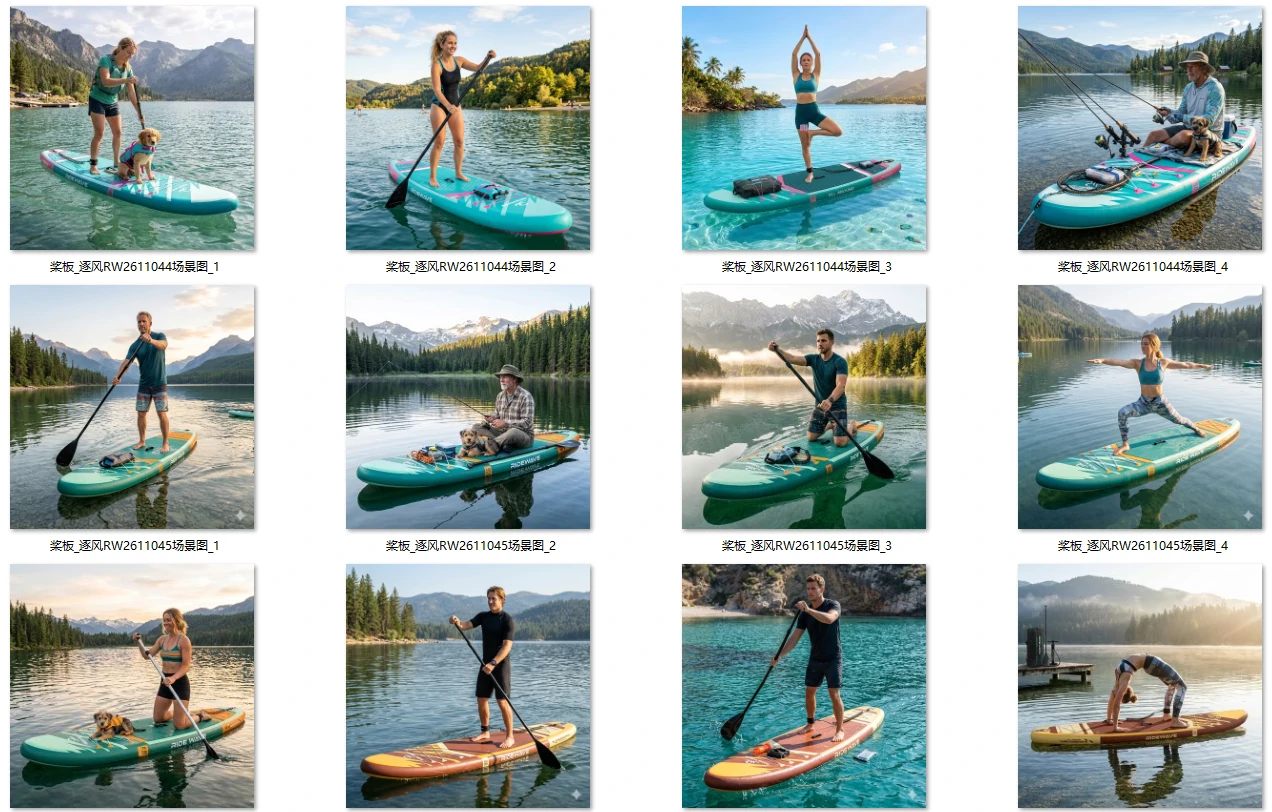
Marketing‑asset support is where RIDEWAVE creates measurable value for distributors who want to launch pre‑sales before goods arrive. Every bulk order comes with a complete package of commercial materials: studio‑shot high‑resolution product images, detail photographs of each board and accessory, specification sheets, lifestyle reference shots and kit‑composition previews. These files are clean, unwatermarked and ready to use on local e‑commerce platforms, social media channels and printed catalogues. For Argentine SUP wholesalers, this means you can start pre‑sales campaigns the moment production is confirmed, rather than waiting three months for the container to arrive and then spending extra weeks on local photography.
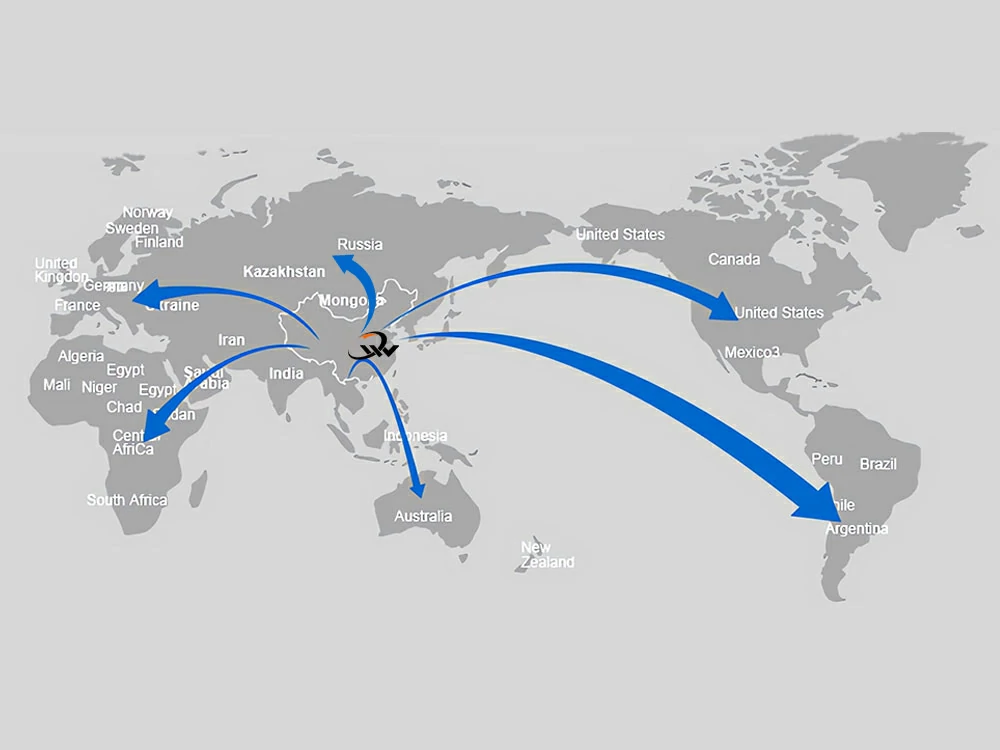
Logistics guidance for South‑America routes is built into the order process. RIDEWAVE ships regularly from Qingdao and has practical experience with Latin‑American sea lanes, including Argentina import documentation requirements, reasonable packing density for inflatable water‑sports goods and container‑loading optimisation. The team does not act as a freight forwarder, but it provides accurate packing lists, commercial invoices, export documentation and loading suggestions that help your forwarder avoid common delays and cost overruns. For a bulk SUP order heading to Buenos Aires or other Argentine ports, this level of documentation accuracy can save weeks of customs clearance headaches.

Quality control follows a multi‑stage process rather than a single final check. Each production batch goes through raw‑material inspection, in‑process welding checks, inflation testing and pre‑shipment packaging review, with records kept for traceability. This matters because batch consistency is what protects your store reputation in a market where bad reviews spread quickly. RIDEWAVE also maintains clear communication channels for post‑shipment issues - if a batch has defects or missing accessories, the B2B team works with you on a remedy plan for follow‑up orders rather than disappearing after payment.
Customization and SUP OEM ODM support give brand‑building distributors room to differentiate. Beyond standard catalogue models, RIDEWAVE can adjust logo placement, deck‑pad colour schemes, accessory configurations and packaging to match your brand identity or local market positioning. For sports‑goods brands looking to launch their own inflatable SUP line in Argentina, this means you can build a product range that stands out from generic imports, rather than selling the same boards as every other distributor in the region.

These capabilities are not abstract selling points - they translate directly into faster pre‑sales, lower logistics risk, more stable quality and stronger brand differentiation for South‑American partners. The next section walks through a real 2026 cooperation case with an Argentine distributor, showing exactly how these advantages played out in practice across a 1,200‑unit inflatable SUP shipment.
How Did RIDEWAVE Help An Argentine Distributor Achieve Pre‑Sales Success With 1200 SUP Units In 2026?
Seasonal inventory pressure and uncertain pre‑sales performance are two of the biggest hidden risks for SUP distributors operating in Argentina. Many wholesalers invest large amounts of capital in inflatable SUP bulk orders, only to find market demand fluctuates sharply or local consumers do not recognize unfamiliar board styles. In early 2026, a long‑established Argentine water sports distributor faced this exact challenge while preparing inventory for the upcoming southern summer, and its cooperation experience with RIDEWAVE offers a replicable profit model for all South America‑focused SUP wholesalers.
The Argentine distributor intended to expand its inflatable water sports category and stabilize annual seasonal revenue in the local market. After researching mainstream consumer preferences and best‑selling board types across Argentina's lakeside and coastal retail channels, the client confirmed a bulk purchase plan focused on market‑proven, high‑adaptability styles. Instead of randomly selecting niche models with uncertain sales potential, the client finalized 5 classic hot‑selling inflatable paddle board styles that fit family recreation, casual touring and entry‑level rental scenarios - the highest‑demand segments in Argentina's consumer market.

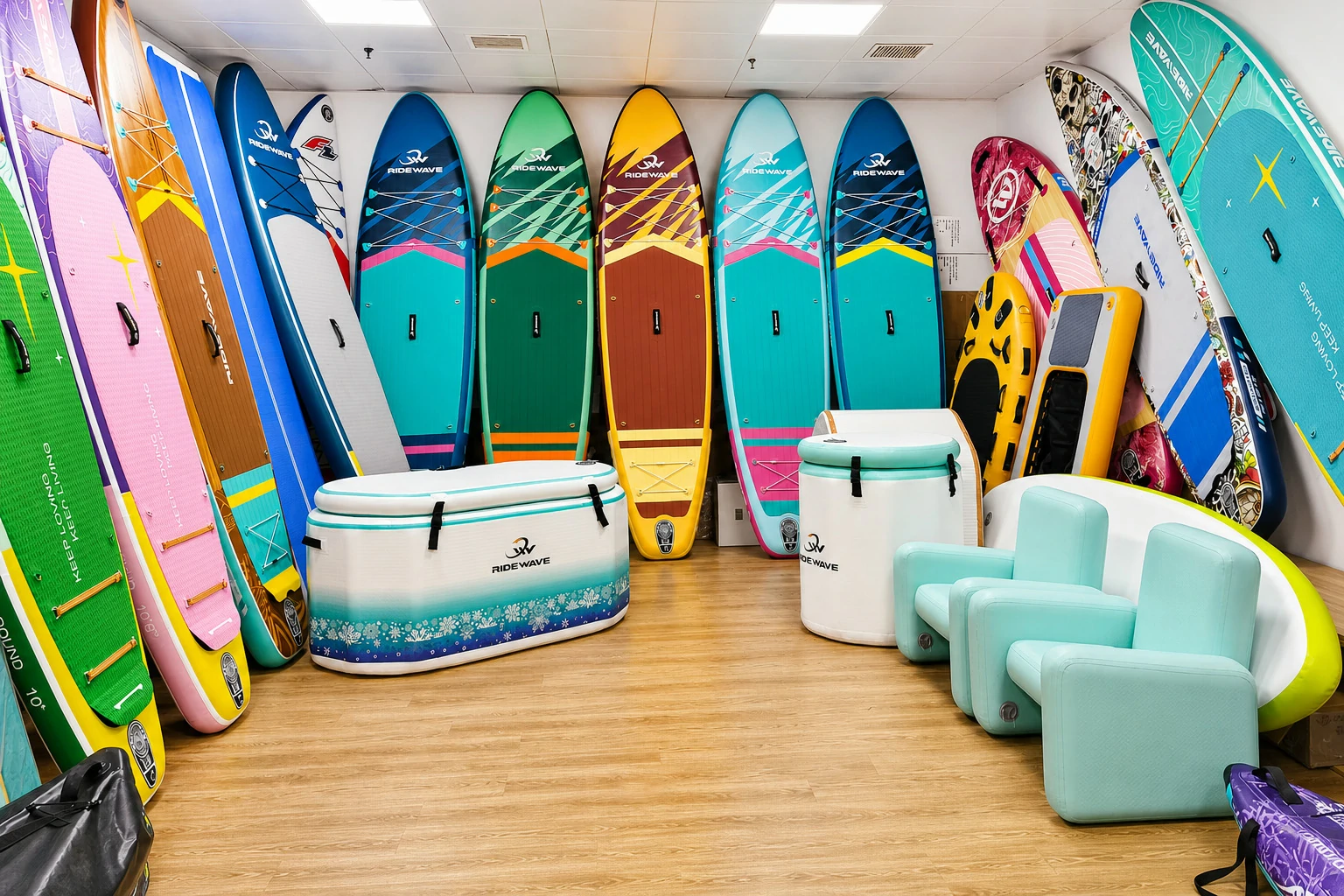
The official cooperation locked in a total order volume of 1,200 RIDEWAVE inflatable SUP units. To control overall landed cost and maximise container loading efficiency, both teams optimised packing schemes based on different board sizes and accessory combinations. All goods were arranged for sea freight from Qingdao Port, China, which provides mature, cost‑effective and stable shipping routes to major Argentine ports. Compared with scattered small‑batch shipments, concentrated full‑container transportation significantly cut unit logistics expenses, helping the distributor secure a more competitive retail price margin in the local market.
What made this cooperation stand out was the systematic pre‑sales empowerment RIDEWAVE provided throughout the order cycle. Most overseas factories only deliver physical products after receiving payment, with no additional sales support. RIDEWAVE fully supported the client's local market layout by delivering a complete set of commercial marketing materials in advance. This included official product catalogues, professionally studio‑shot high‑definition original images, panoramic scene pictures, and detailed close‑up photos covering board texture, welding craftsmanship, valve structure, accessory matching and packaging details.
With these ready‑to‑use, watermark‑free materials, the Argentine distributor avoided costly local shooting and graphic design cycles. The team immediately launched multi‑channel pre‑sales promotions covering social media communities, local e‑commerce platforms and offline store display reservations. Long before the container arrived at the port, market heat and user intention had already accumulated steadily.
Relying on accurate market selection and complete pre‑sales material support, the distributor successfully pre‑sold 800 units out of 1,200 total ordered SUPs before cargo arrival. This pre‑sales achievement greatly relieved capital pressure, eliminated unsold inventory risks, and verified the strong market adaptability of RIDEWAVE's SUP products in Argentina.
Currently, the distributor is actively negotiating supplementary bulk orders with RIDEWAVE. The client plans to replenish hot‑selling models in advance to cope with the explosive consumer demand during South America's peak summer season, and establish a stable quarterly replenishment mechanism for long‑term seasonal sales.
This real case fully reflects why professional manufacturing capabilities and distributor‑oriented service systems are more important than simple low‑price sourcing. Every mass‑produced inflatable paddle board from RIDEWAVE follows standardized design, cutting, welding and quality inspection processes. If you want to understand the whole manufacturing logic behind high‑quality wholesale‑grade boards, How Custom Paddle Boards Are Made: From Design To Production elaborates on every production link that determines product durability and market performance.
What Is The Difference Between Ordinary SUP Factories And Professional B2B SUP Manufacturers?
On the surface, many suppliers can produce an inflatable SUP that looks similar in a showroom photo. The real gap between an ordinary factory and a professional B2B‑focused SUP manufacturer only becomes visible after you place a bulk SUP order and work through the full cycle - from production scheduling and quality consistency to marketing support and after‑sales response. For Argentine SUP distributors building long‑term water‑sports categories, understanding these structural differences helps you avoid costly trial‑and‑error and select a partner that grows with your business.
Product development and iteration capability marks one of the most fundamental divides. Ordinary factories typically rely on a fixed catalogue of designs copied from popular market trends, with little in‑house R&D or structured product testing. New board sizes, improved deck‑pad materials or enhanced valve systems arrive slowly, if at all. A professional B2B manufacturer invests in continuous product iteration based on real‑world feedback from distributors across different markets. For South‑American buyers, this means you gain access to board configurations that have already been validated in similar climate and usage conditions, rather than betting on untested designs. If you want to dig deeper into how market‑driven product development works end‑to‑end, How To Design A Paddle Board That Sells breaks down the decision logic behind every design choice that affects retail performance.
Raw‑material supply chain control directly determines batch consistency and long‑term durability. Many ordinary factories purchase PVC materials and drop‑stitch fabric from whichever supplier offers the lowest price at a given moment, leading to noticeable variations in thickness, tensile strength and surface texture between production runs. Professional manufacturers maintain stable, long‑term relationships with certified material suppliers and enforce incoming‑material inspection for every batch. This consistency is what allows your store to sell the same inflatable paddle board model season after season without customers complaining that "this year's board feels thinner than last year's." For Argentine distributors facing high return‑cost logistics, material consistency translates directly into lower after‑sales expense.
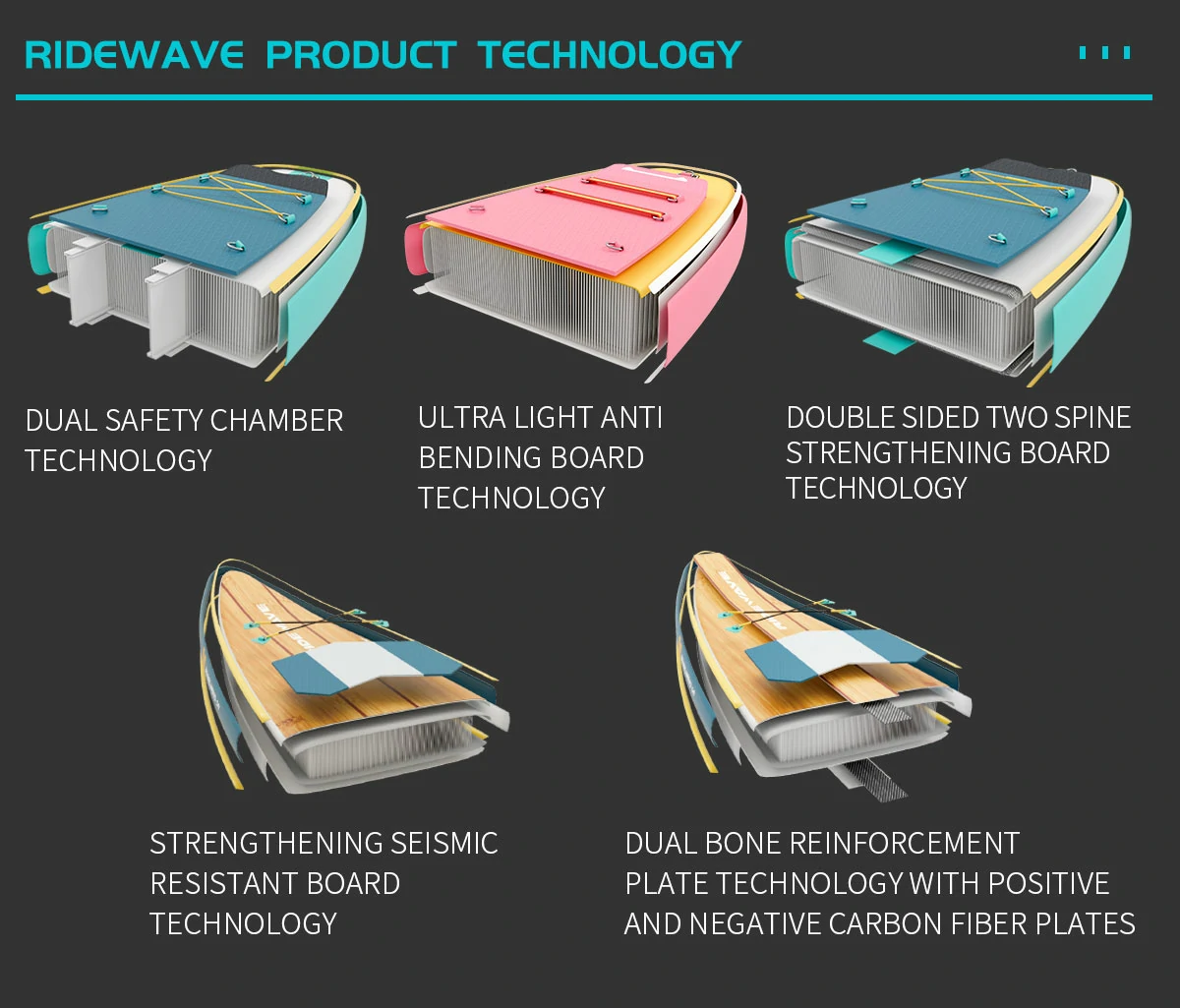

Production capacity elasticity matters when your market demand surges unexpectedly. Ordinary factories often operate with a single production line and a fixed labour pool, meaning a sudden spike in orders can push your delivery back by weeks or even months. Professional B2B manufacturers maintain scalable production capacity with multiple lines and flexible shift arrangements, allowing them to absorb rush orders or seasonal replenishment requests without compromising quality. For the Argentine market, where summer demand peaks sharply between November and February, the ability to receive a replenishment container on time can mean the difference between capturing peak revenue and losing sales to competitors who have stock.
Certification and compliance infrastructure protects your business from regulatory and safety risks. Ordinary factories may provide basic CE or similar documentation, yet often lack structured records for material safety testing, load‑bearing verification or batch traceability. Professional manufacturers maintain organised compliance files, including material test reports, inflation pressure test records and export documentation tailored to different destination markets. For Argentine importers, having complete and accurate paperwork reduces customs clearance delays and protects you in the event of product‑safety inquiries or consumer complaints.
Brand protection and intellectual‑property respect is another area where the gap becomes clear. Ordinary factories may reuse your custom logo or design for other clients, or sell your exclusive colour schemes to competing distributors. Professional B2B manufacturers operate with clear confidentiality and brand‑protection protocols, ensuring your custom SUP OEM ODM designs, logo placements and exclusive configurations are not leaked to competitors. For sports‑goods brands building their own inflatable SUP line in Argentina, this protection is essential to maintaining market differentiation.
Long‑term partnership orientation is perhaps the most intangible yet impactful difference. Ordinary factories treat each order as a standalone transaction - once the container leaves, the relationship effectively ends until the next payment. Professional manufacturers view distributors as strategic partners and invest in your success: they share market insights, recommend product adjustments based on sales data, support pre‑sales with marketing assets and work with you on remedy plans when issues arise. This partnership mindset is what allows a distributor to grow from a first trial order to a stable quarterly replenishment relationship.
| Structural Dimension | Ordinary SUP Factory | Professional B2B SUP Manufacturer |
|---|---|---|
| Product R&D | Fixed catalogue, slow iteration, trend‑copying | Continuous R&D, market‑feedback‑driven updates, region‑adapted models |
| Material sourcing | Spot‑purchase lowest‑price materials, batch variation | Long‑term certified suppliers, incoming inspection per batch |
| Capacity elasticity | Single line, rigid schedule, rush orders delayed | Multi‑line scalable production, flexible seasonal capacity |
| Compliance files | Basic certificates only, limited traceability | Full test reports, batch records, destination‑specific export docs |
| Brand protection | No clear IP protocols, designs may be reused | Confidentiality agreements, exclusive design protection |
| Partnership mindset | Transaction‑based, post‑shipment silence | Strategic partner, market insights, pre‑sales support, remedy plans |
The bottom line is simple: an ordinary factory sells you boards; a professional B2B manufacturer helps you build a profitable, sustainable SUP business in your market. For Argentine distributors, choosing the latter means fewer quality surprises, fewer logistics headaches and a partner who stands behind every container that arrives at your port.
How To Control Wholesale Cost & Shipping Cost For Argentina SUP Bulk Orders?
Total landed cost defines the actual profit margin for every inflatable SUP bulk shipment imported to Argentina. Many SUP wholesalers only focus on ex‑factory unit prices while ignoring container utilization, packing configuration, sea freight fluctuations and customs clearance expenses. Seemingly low procurement prices often turn into compressed profits due to unreasonable shipping and packaging arrangements. Mastering practical cost control methods tailored for Argentina import routes allows distributors to stabilize gross margins while maintaining competitive retail pricing for inflatable paddle board products.

Container loading optimization stands as one of the most overlooked yet effective ways to cut logistics expenses. Generic factories usually adopt fixed packing standards without considering board thickness, deflated size and accessory matching differences. This leads to wasted container space and higher per‑unit shipping costs. Professional SUP manufacturer teams adjust stacking methods, deflation compression levels and accessory packaging combinations according to different iSUP models. For Argentina‑bound full containers, reasonable space planning can greatly improve loading volume, evenly spreading fixed ocean freight fees across every board and lowering overall landed cost.
Seasonal shipping scheduling also heavily impacts final logistics expenditure. South America's summer consumption boom concentrates import orders between March and June, resulting in sharp port congestion, freight surcharges and limited container availability. Wholesalers who arrange production and shipment during peak windows inevitably face rising shipping quotes. Experienced B2B suppliers guide distributors to stagger order cycles, complete production and sea shipment in advance, and lock in stable, low freight rates before seasonal price hikes. This timing strategy creates invisible profit space for local SUP distributor retail sales.
Reasonable product mix further optimizes overall cost structure. Single‑model bulk orders often cause space waste and rigid inventory pressure. Matching high‑volume classic all‑round inflatable SUP styles with small‑batch niche models achieves balanced container loading. Diversified SKU combinations also help wholesalers cover multiple consumer groups in the Argentine market, avoiding over‑reliance on a single hot‑selling style. Flexible mixed loading support is a core advantage of professional B2B supply chains for long‑term stable cost control.
Standardized export documentation avoids hidden clearance costs and delay losses. Incomplete or incorrect customs files easily trigger inspection detention, port storage fees and cargo hold‑up losses in Argentina. Professional manufacturers provide fully compliant packing lists, commercial invoices and shipping documents that match local customs requirements. Complete document support ensures smooth customs clearance, prevents extra overhead losses and protects the timeliness of seasonal inventory replenishment.
Stable batch quality indirectly reduces long‑term operating costs. Unqualified boards bring return losses, after‑sales service costs and reputation damage. High‑consistency inflatable paddle board production minimizes defective rates, letting wholesalers save extra maintenance, replacement and customer compensation expenses. For Argentine market operators with long‑term category layout, quality stability is a hidden but critical cost control method that many new buyers ignore.
What SUP Product Styles Are Most Suitable For Long‑Term Sales In The Argentine Market?
Product selection is the single biggest factor that determines whether an inflatable SUP distributor in Argentina builds sustainable seasonal revenue or gets stuck with slow‑moving inventory. The Argentine market has its own consumption structure shaped by climate, water‑access conditions and recreational habits, and board styles that sell well in Europe or North America do not always perform equally well here. For SUP wholesalers and sports‑goods retailers planning long‑term category layout, choosing the right mix of inflatable paddle board styles directly affects sell‑through rate, average order value and customer retention.
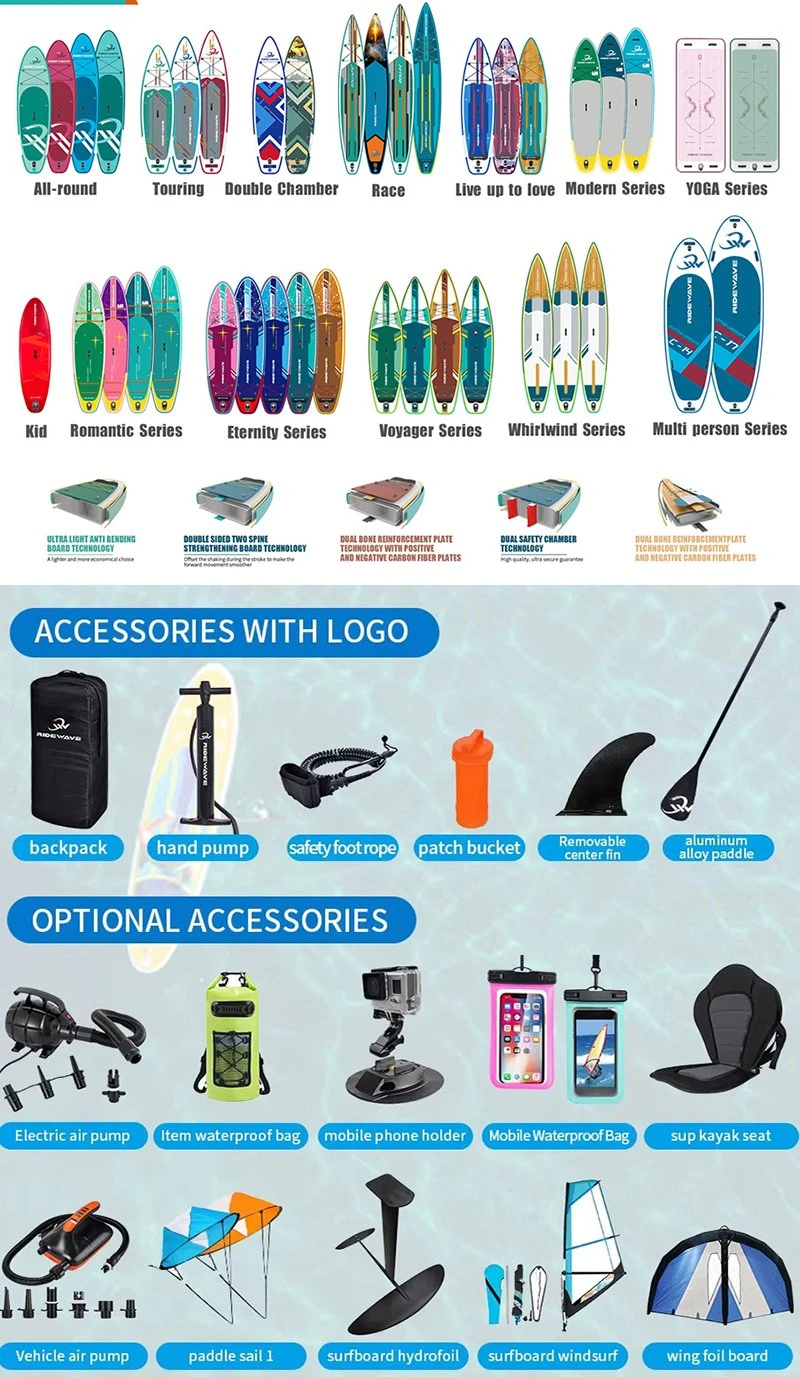
All‑round recreational boards remain the undisputed volume leader for the Argentine market. These boards typically range from 10' to 11' in length, offer balanced stability and manoeuvrability, and suit beginners, casual weekend paddlers and family users alike. Argentina's large base of first‑time iSUP buyers - consumers who are entering the category for the first time and prioritize ease of use over high‑performance specs - drives consistent demand for this style. All‑round boards also have the broadest rental‑market appeal, making them a safe core inventory choice for both retail and B2B rental clients.
Touring boards occupy a solid mid‑to‑high‑price segment with steady growth potential. Longer and narrower than all‑round models, touring inflatable SUP boards are designed for longer distances, better tracking and improved glide on lakes and coastal waters. Argentine consumers who have already tried entry‑level boards and want to upgrade to a more capable model form the core audience for this style. Touring boards also carry higher perceived value and retail margins, making them an important upsell option for distributors who want to lift average transaction value beyond the entry‑level price band.
Fishing SUP is a fast‑emerging niche with strong local relevance. Argentina has abundant freshwater fishing resources across its lakes and river systems, and a growing number of anglers are discovering that inflatable paddle board platforms offer a lightweight, portable alternative to traditional small boats. Fishing‑specific SUP models come with extra D‑rings, rod holders, cooler attachment points and wider decks for standing stability. While this segment is smaller than all‑round recreational, it attracts dedicated, high‑spending customers and creates opportunities for accessory bundle sales that boost overall order value.
Yoga and fitness‑focused SUP serves a distinct consumer group that is often overlooked by generic importers. These boards feature wider, flatter deck surfaces, softer non‑slip pads and enhanced stability for on‑water yoga, Pilates and core training. Argentina's urban fitness and wellness communities - concentrated in Buenos Aires, Córdoba and other major cities - represent a loyal customer base that values product quality and brand experience over the lowest price. Yoga SUP also pairs naturally with studio partnerships and group class programs, opening B2B sales channels beyond traditional retail.
Multi‑person and family boards represent the high‑ticket end of the market. These larger inflatable SUP units - often 12' to 15' in length with higher weight capacities - are designed for families, groups of friends and commercial rental operators. They carry significantly higher retail prices and margins, and they appeal to consumers who want a shared outdoor experience rather than an individual sport. For Argentine distributors, family boards are an effective way to increase average basket size and differentiate from competitors who only stock standard single‑person models.
The table below summarises the five core styles that RIDEWAVE's Argentine distributor selected for its 2026 summer inventory, along with market positioning and recommended stocking weight for new entrants:
| SUP Style | Target Consumer Group | Argentina Market Potential | Recommended Stocking Weight (New Distributor) | Typical Retail Margin |
|---|---|---|---|---|
| All‑round recreational | Beginners, families, casual paddlers, rental operators | Highest - broadest demand base, proven sell‑through | 40%–45% | Medium‑high |
| Touring | Intermediate paddlers, upgrade buyers, distance enthusiasts | Steady growth - strong upsell segment | 20%–25% | High |
| Fishing SUP | Anglers, outdoor enthusiasts, freshwater lake users | Fast‑emerging niche - high accessory attach rate | 10%–15% | High (with bundles) |
| Yoga / fitness SUP | Urban wellness consumers, yoga studios, fitness communities | Loyal niche - premium price tolerance | 10%–15% | High |
| Multi‑person / family | Families, group users, commercial rental, resorts | High‑ticket - differentiates from generic stock | 5%–10% | Very high |
This product mix is not a one‑size‑fits‑all formula, but it reflects real demand patterns observed across Argentine retail and rental channels. The key principle is to anchor your inventory in high‑volume all‑round boards while using touring, fishing, yoga and family models to lift margins, cover niche demand and differentiate your store from competitors who only import the same generic all‑round boards. RIDEWAVE supports this kind of mixed‑SKU container loading, allowing distributors to test multiple styles in one shipment and adjust the ratio based on actual sales data in subsequent orders.
How Can B2B Distributors Use Factory Marketing Materials To Boost Local Pre-Sales?
In the South American inflatable SUP wholesale industry, product hardware quality determines after-sales stability, while marketing material quality directly dictates how fast you can convert pre-order traffic. Most new SUP distributors in Argentina struggle with slow initial sales not because their products are uncompetitive, but because they lack professional, high-quality visual content to showcase product value before cargo arrives. Working with a professional SUP manufacturer that provides complete commercial-grade marketing assets allows B2B resellers to skip expensive local shooting, shorten market launch cycles, and build pre-sales momentum long before container delivery.

Professional studio product visuals form the foundation of successful pre-sales campaigns. Many generic factory suppliers only provide low-resolution images, watermarked photos, or casually taken workshop snapshots that fail to reflect premium product texture and welding craftsmanship. End-customers in Argentina are increasingly exposed to high-standard social media content, and blurry or unattractive product images will immediately reduce purchasing trust. RIDEWAVE's full set of original studio materials covers complete board shooting angles, detailed craft close-ups, accessory matching displays and structural feature presentations. These clean, unwatermarked files can be directly applied to e-commerce store pages, social media posts, offline flyers and physical store displays, helping distributors shape a professional brand image in the local market.
Standardized product specification documents simplify customer communication and reduce consultation costs. Casual buyers and rental business operators in Argentina often compare parameters such as board thickness, load-bearing capacity, inflation pressure and accessory configurations before making purchase decisions. Complete spec sheets provided by professional manufacturers allow distributors to answer professional questions within seconds, avoiding inconsistent manual explanations or misleading information. Accurate parameter content also improves platform keyword ranking and user trust, indirectly lifting pre-sales conversion rates of inflatable paddle board products.
Diversified scenario lifestyle materials help activate emotional consumption demand. Pure product display images only show board features, while lifestyle photos taken in real water environments resonate more with local Argentine users. Water scene shooting materials covering lake paddling, coastal leisure, family entertainment and outdoor fitness help end-users imagine real usage scenarios. This visual empathy effectively stimulates purchasing willingness, making pre-sales orders more stable and sustainable. For B2B distributors serving both retail customers and local rental merchants, scenario materials also support business negotiation and channel expansion.
Integrated product catalog resources help systematize offline channel promotion. Many traditional wholesalers rely on fragmented picture sharing for customer communication, which appears unprofessional and inefficient. A complete printable digital catalog sorts all inflatable SUP models by function, size and applicable crowd, enabling offline retailers and studio partners to quickly locate hot-selling styles. This systematic display method significantly improves the efficiency of offline channel development and batch order negotiation.
Unified brand and product update resources ensure long-term market iteration capabilities. Mature manufacturers continuously upgrade product appearances, functional designs and matching marketing content according to market feedback. Distributors cooperating with stable suppliers can synchronize the latest material updates for free, keeping their store content fresh and in line with local popular trends. This avoids the aging and homogeneity of store products faced by most small and medium-sized SUP wholesalers in Argentina.
The pre-sales model empowered by factory marketing materials has been fully verified in RIDEWAVE's 2026 Argentine 1200-unit bulk order case. Relying on complete original image resources and standardized product documents, the local distributor quickly launched multi-channel pre-sales promotion, successfully completing 800-unit pre-sales before cargo arrival and effectively avoiding inventory and capital risks. For any South American water sports reseller preparing for seasonal sales, utilizing factory professional assets is the most cost-effective and low-risk pre-sales growth method.
How OEM & ODM Customization Helps Argentine SUP Distributors Gain Market Differentiation
Many SUP wholesalers in Argentina compete on identical mass‑produced inflatable SUP units. When every importer sells nearly the same board shapes, colours and accessory kits, price wars become inevitable and profit margins keep shrinking. OEM and ODM customization opens up a practical path for B2B distributors to break away from homogeneous competition. Instead of merely reselling off‑the‑shelf inflatable paddle board inventory, you can build exclusive product features matching local consumer preferences, strengthen your own brand influence and secure higher retail profit space.

Logo and graphic customization represents the most common entry‑level custom solution. Printing your own brand logo, slogan or regional‑oriented graphic patterns on board surfaces, deck pads, paddles and packaging helps end‑users recognise your brand at first glance. Compared with generic unbranded goods, custom‑printed products enhance brand memory and build customer loyalty. For new distributors with limited budgets, logo printing is a low‑threshold way to start personalized operations without large additional MOQ pressure.
Custom colour matching fits local aesthetic preferences across Argentina. Consumer colour preferences differ noticeably between coastal tourist cities and inland urban markets. Professional SUP manufacturer teams support custom colour schemes for board fabric, EVA deck pads and accessory components. Adjusting colour combinations according to local popular tastes helps your goods stand out among numerous similar products on e‑commerce pages and physical store shelves, lifting click‑through and in‑store conversion performance.
Hardware and accessory configuration adjustment targets segmented user demands. You can re‑combine D‑ring quantity, fin types, valve specifications, paddle material, pump styles and storage bag structures. For instance, fishing‑oriented bundles can add more fixture points; family‑focused sets may upgrade durable heavy‑duty accessories. This flexible configuration allows you to assemble exclusive kits for retail, rental shops or outdoor studios, instead of being restricted to fixed factory standard kits.
Full‑solution ODM development serves brand‑oriented distributors with long‑term ambitions. If you possess clear insight into local market pain points, you can cooperate with manufacturers to adjust board length, width, thickness, weight distribution and other core dimensions. Entirely new board shapes can be developed for specific usage scenarios such as inland river touring or high‑temperature‑resistant rental‑grade iSUP. Full ODM demands longer lead‑time planning and higher trial‑order volumes, yet it creates completely unique products that competitors cannot copy, forming solid market barriers for your brand.
Custom packaging further optimises the end‑consumer unboxing experience. Custom‑printed outer cartons, inner storage bags and user manuals carrying your brand information deliver professional unboxing impressions. This detail greatly improves social‑media sharing willingness among Argentine buyers, bringing spontaneous organic exposure for your brand without extra advertising spend.
It is worth noting that customization does not always mean extremely high MOQ. RIDEWAVE provides tiered custom solutions for Argentine partners. Simple logo printing can be realised on mixed‑SKU trial containers; colour matching and accessory re‑combination apply moderate thresholds; full ODM new‑product development corresponds to relatively higher order requirements. Distributors can select suitable custom depth according to their capital status, brand stage and sales forecast, avoiding blind large‑scale custom investment before market demand is fully verified.
Customization is not compulsory for every market participant. Newcomers are advised to verify market feedback using standard catalogue boards first. Once certain styles prove stable sales performance, you can gradually introduce custom elements to strengthen differentiation. Blind large‑scale ODM investment without sales data support will bring heavy inventory risks for Argentine importers.
Final Checklist Before Placing Your First Bulk SUP Order For Argentina
Before confirming your first large‑volume inflatable SUP shipment to Argentina, systematic pre‑order checks help you avoid preventable mistakes that may cause capital loss or missed sales windows. Many new SUP distributors focus only on unit price negotiation and overlook multi‑dimensional risk assessment covering product configuration, documentation, logistics planning and after‑sales clauses. Going through this checklist allows you to cross‑verify every key item and start your South‑American water‑sports business with greater confidence.
Confirm product portfolio and stocking ratio. Double‑check the mix of all‑round, touring, fishing, yoga and family‑style inflatable paddle board SKUs. Match proportions to your target channels, whether offline retail, e‑commerce platforms or rental‑oriented clients. Confirm board dimensions, accessory kits, colour selections and load‑bearing parameters for every selected model.
Verify MOQ, lead‑time and production schedule. Clarify trial‑order terms, mixed‑SKU loading rules, exact production cycle and estimated delivery‑ready date. Align the shipment schedule with Argentina's summer sales peak, and reserve sufficient buffer time for sea transit and customs clearance.
Sort out logistics and document requirements. Confirm packing‑optimisation solutions for container loading. Confirm the supplier can provide complete export documents that satisfy Argentine customs demands, including packing list, commercial invoice and related product test certificates. Clarify responsibilities division between your forwarder and the factory.
Lock marketing‑asset delivery scope and timing. Confirm whether you will receive unwatermarked product images, detail shots, spec sheets, digital catalogues and scenario‑based lifestyle photos, and confirm the exact delivery timeline of these materials. Make sure you obtain marketing resources before goods finish production to launch pre‑sales in advance.
Clarify quality‑control standards and after‑sales remedy mechanism. Confirm multi‑stage inspection rules during mass production, defective‑product definition, spare‑part supply policy and remedy solutions for batch quality issues in subsequent orders. Avoid ambiguous verbal agreements; key terms should be reflected in formal order communication records.
Evaluate customization scope and corresponding thresholds. If you plan to apply OEM or ODM elements for this batch, confirm logo printing positions, colour samples, accessory adjustment schemes, relevant MOQ requirements and additional cost items. If you are still in the market‑testing phase, stick to standard catalogue goods to control risks.
Budget full landed cost simulation. Calculate ex‑factory cost, ocean freight, expected customs charges, port‑handling fees and local inland expenses. Simulate final landed cost per unit, and assess whether there remains reasonable retail profit margin under local market price levels.
After all items on the checklist are confirmed, you can formally launch your first bulk order for the Argentine market. Keep in mind that market entry is a continuous iterative process. Adjust SKU ratios, customisation degree and order volume according to real‑world sales feedback after the first batch arrives.
Argentina represents a high‑potential yet challenging market for global inflatable SUP suppliers and SUP wholesalers. Its huge seasonal summer consumption demand, diverse consumer groups and expanding water‑sports culture create abundant business opportunities. Meanwhile, importers also face obstacles including strict local customs rules, volatile ocean‑freight rates, inventory risks and fierce homogeneous competition.
Success in this market does not rely solely on ultra‑low unit purchase prices. It comes from market‑oriented product selection, scientific cost control, effective pre‑sales operation supported by marketing assets, stable supply‑chain quality and suitable customization strategy. The real‑world 1 200‑unit cooperation case between RIDEWAVE and an Argentine distributor proves that this complete set of B2B operation logic can deliver tangible business results.
Whether you are a new participant preparing for your first trial container or an established importer looking to optimise existing supply chains, you need to select a manufacturing partner who understands South‑American market characteristics rather than a factory only capable of producing boards. Carefully evaluate market‑adapted product capacity, mixed‑order flexibility, marketing‑asset support, logistics‑guidance capability, batch‑to‑batch quality consistency and after‑sales remedy mechanisms.
If you intend to explore the Argentine and broader South‑American iSUP market, RIDEWAVE's B2B team is ready to discuss your project, analyse target‑market demands and provide tailored bulk‑order solutions.
Related Articles
How Can Argentine Wholesalers Source Inflatable SUPs For The Local Market?
A B2B Guide: How Canadian Wholesalers Source High-Quality Inflatable SUPs?
Low MOQ Paddle Board Manufacturers For Small Brands
How Custom Paddle Boards Are Made: From Design To Production