


What market trends are driving inflatable SUP demand in Argentina and broader Latin America?
Outdoor recreation growth, coastal‑inland water sports boom, inflation‑driven affordable outdoor gear demand and rising eco‑conscious consumer habits are four major trends lifting inflatable SUP sales across Argentina and Latin America. For B2B buyers including distributors, wholesalers and outdoor brand owners, understanding these shifting market dynamics helps you make smarter inventory decisions before placing bulk paddle board orders. While this article centers on Argentina market insights, many observations also apply to buyers operating in Chile, Canada, Australia and EU territories who plan to expand their inflatable water‑sport product portfolio.

‑ Surging participation in accessible on‑water leisure activities. Local consumers are moving away from expensive hard‑shell watercraft and turning toward portable, easy‑to‑store inflatable stand‑up paddle boards. Unlike rigid SUPs that require large roof racks and storage space, inflatable variants fit inside carry bags, making them popular for lake trips, river excursions and coastal weekend getaways. Retail and e‑commerce resellers report steady year‑over‑year sales growth for all‑round bulk SUP inventory, especially approaching the southern‑hemisphere summer season from November through February.
‑ Macroeconomic factors pushing demand for high‑value, cost‑effective outdoor gear. Continuous currency fluctuation in Argentina encourages shoppers to invest in durable multi‑use equipment rather than cheap disposable goods. End‑users prioritize long service life and multi‑scene usability, which creates business opportunities for B2B partners sourcing well‑built wholesale inflatable paddle boards. Cheap low‑quality imports face higher return rates and negative customer reviews, hurting long‑term retailer profitability.

‑ Expanding niche use cases beyond basic recreational paddling. Fishing SUP, yoga SUP and touring inflatable paddle boards are no longer small‑volume niche items. More local retailers in Argentina and neighboring Latin‑American countries allocate shelf space for specialized variants. Many sport‑goods merchants are adding these sub‑categories to their existing product mix to capture higher gross margins. Manufacturers such as RIDEWAVE observe this shift firsthand from repeated bulk order inquiries from Latin‑American resellers exploring new product lines.
‑ Global sustainability awareness shaping consumer purchasing preferences. Modern end‑customers pay attention to material durability and product service life. Heavy‑waste single‑use recreational items lose appeal. Tough drop‑stitch construction inflatable SUP units with extended service cycles resonate with eco‑minded buyers. This trend is not limited to South America; similar buying patterns appear among consumers in Australia, Canada and Western Europe, giving multi‑market distributors cross‑regional reference points for product selection.
Market data shows that the Latin‑American inflatable paddle board segment still holds untapped potential, yet success heavily relies on well‑informed bulk sourcing. Blindly copying product selections from North‑American or European markets often leads to slow‑moving stock and capital tie‑up for local distributors.
What local certifications and import regulations must Argentina B2B buyers follow for inflatable SUP imports?
Argentina enforces strict import documentation, safety standards and customs‑clearance rules for inflatable SUP water‑sport gear; overlooking these requirements will lead to customs detention, unexpected fines or full‑shipment returns. For bulk inflatable paddle board buyers including distributors, wholesalers and sport‑goods brand expanders, pre‑verifying compliance before production and shipping protects your capital, inventory timelines and business reputation. Many cross‑border B2B partners mistakenly apply EU or Australian standards directly to Argentina shipments, which creates costly clearance delays. Even reliable wholesale inflatable SUP products can get held at ports if supporting paperwork does not match local regulatory expectations.

‑ Mandatory customs documentation for inflatable stand‑up paddle board shipments. All bulk SUP consignments entering Argentina require complete commercial invoices, packing lists, bill of lading, and product origin certificates. Importers must ensure product descriptions accurately state inflatable paddle board, component materials and unit quantities. Vague general descriptions such as "water sports goods" will trigger extra customs inspections.
‑ Safety standard differences across South‑American and global markets. While Argentina does not have one dedicated SUP‑only certification, imported inflatable water equipment must pass general consumer‑goods safety reviews. Many experienced B2B importers voluntarily carry supplementary test reports for drop‑stitch fabric, air valve performance and material heavy‑metal content. RIDEWAVE regularly provides full test documentation for its wholesale SUP lines to support Latin‑American clients' import filing work.
‑ Risk of mixing‑up regional certification requirements. Certifications valid for EU (CE), Australia (AS/NZS), Canada and Chile cannot automatically replace Argentina's local import review. Each territory maintains separate compliance rules. Sourcing teams need to separate compliance checklists for every target country when running multi‑country distribution covering LATAM, North America and Oceania.
‑ Labeling obligations for resold inflatable SUP units. Retail‑ready paddle boards need clear labelling with material composition, safety warnings, manufacturer information and importer local contact details. Missing or incomplete labels may prevent finished goods from reaching retail shelves even after goods clear customs.
Below table summarizes core compliance requirements for bulk inflatable SUP across your key target B2B markets.
| Market | Mandatory Certification / Document | Recommended Additional Test Reports | Primary Import Risk for SUP Buyers |
|---|---|---|---|
| Argentina | Commercial invoice, origin certificate, full customs filing | Fabric safety test, valve performance report | Document mismatch, label non‑compliance, port detention |
| Chile | Import declaration, origin certificate | INMETRO‑aligned consumer goods test | Incomplete warning labels triggering hold |
| Canada | SCC‑recognized consumer goods safety paperwork | Physical durability test report | Non‑compliant warning text on packaging |
| European Union | CE | REACH chemical compliance report | REACH substance restriction non‑conformity |
| Australia | AS/NZS consumer safety documentation | UV‑resistance material test | Missing English warning labels |
What logistics and currency risks should Argentina wholesalers prepare for when sourcing inflatable paddle boards from overseas manufacturers?
Volatile local currency, port congestion, long lead‑times and complex customs procedures are the top logistics & financial risks Argentina B2B buyers face during bulk inflatable SUP sourcing. For wholesalers, distributors and expanding sport‑goods retailers, underestimating these variables can tie up working capital, delay inflatable paddle board stock arrivals and cause missed southern‑hemisphere summer selling windows. Many global suppliers quote competitive unit prices for wholesale inflatable SUP, yet they lack hands‑on experience shipping high‑volume water‑sport goods into South‑American ports. Even well‑planned purchase orders can run into costly setbacks without pre‑risk assessment.
Currency exchange and payment restriction challenges. Argentina's foreign‑exchange controls create extra friction for cross‑border bulk orders. B2B buyers need to lock in payment schedules ahead of production to avoid unexpected cost spikes driven by currency swings. Delayed fund transfers may push back production and shipment dates for your bulk SUP inventory. Some resellers spread purchases across multiple smaller orders to reduce single‑batch financial exposure, though this will slightly raise per‑unit logistics costs.
‑ Port congestion and local handling delays for inflatable stand‑up paddle board containers. Major Argentine ports regularly face container backlogs, labour disruptions and inspection bottlenecks. An on‑time ocean departure from the manufacturer does not guarantee on‑time availability for retail sale. When forecasting stock arrival, experienced importers add buffer weeks to their total lead‑time calculation. This is especially critical ahead of November‑February peak season for SUP sales across Argentina, Chile and nearby Latin‑American markets.
‑ Ocean freight vs air freight trade‑offs for large‑volume SUP orders. Ocean freight remains the cost‑effective choice for full container load inflatable SUP shipments. Air freight is only viable for emergency small replenishment batches; air‑shipping full SUP containers destroys profit margins for most B2B operators. Some buyers mix partial container loads when cooperating with manufacturers that support mixed‑SKU consolidation, helping new‑to‑market resellers test multiple paddle‑board models without committing to a full container.
‑ Secondary logistics risk: last‑mile and inland distribution after port clearance. Many buyers focus only on overseas shipping, ignoring inland transport from port to local warehouses. Damaged packaging, lost pallets and slow inland trucking can still hurt your readiness for retail shelves, even after containers clear customs.
RIDEWAVE works with numerous Latin‑American B2B partners and routinely shares realistic lead‑time estimations that account for South‑American port uncertainty, rather than only quoting factory‑side production timelines. This simple transparency helps resellers build more accurate sales and inventory plans.
What product categories of inflatable SUP bring the best profit margin for Argentina distributors and retailers?
Selecting the right inflatable SUP product portfolio is the core determinant of gross profit and inventory turnover for Argentina and Latin American B2B sellers. Not all bulk inflatable paddle board models perform equally in South American consumer markets. For distributors, wholesalers, and newly expanded sports goods merchants, prioritizing high‑demand, low‑return, seasonally adaptable SUP variants directly improves overall business profitability. In the Latin American market, fishing SUP, all‑round touring SUP, and yoga inflatable paddle boards consistently deliver higher sustainable margins than entry‑level basic recreational boards. Understanding category differentiation allows B2B buyers to avoid homogeneous price competition and build a competitive retail product matrix.

‑ All‑round inflatable SUP: The safest mainstream inventory for mass sales. Standard all‑round SUP boards feature balanced size, weight capacity and multi‑scene adaptability. They suit family leisure, beginner paddling, lake and river entertainment, covering the largest consumer groups in Argentina and Chile. With stable market demand, low after‑sales rate and fast inventory turnover, this category is the core mandatory SKU for offline sports supermarkets, local outdoor stores and cross‑border e‑commerce stores. For new SUP resellers entering the Latin American market, all‑round SUPs are the most risk‑free opening product line.
‑ Fishing inflatable SUP: The highest‑margin niche track in LATAM. With abundant inland rivers, lakes and coastal water resources, outdoor fishing culture is rapidly popularizing across Argentina. Traditional fishing kayaks are bulky, expensive and inconvenient to transport, while fishing SUP with multi‑mount bases, weight‑bearing stability and anti‑slip deck design perfectly fits local anglers' needs. This segmented product has fewer competing sellers, lower market transparency and significantly higher gross profit than ordinary recreational paddle boards, becoming the key profit growth category for mature local distributors.


‑ Yoga & fitness inflatable SUP: High‑value consumer upgrade products. As local health and outdoor fitness trends rise, water yoga and floating body training have become emerging mainstream leisure methods. Wider, thicker, ultra‑stable yoga SUP boards cater to female users and fitness groups. This category features high unit pricing, strong brand premium capability and low price sensitivity, helping retailers effectively increase customer unit price and improve store brand grade.
‑ Touring & racing inflatable SUP: Long‑tail high‑end market supplements. Professional long‑distance touring and lightweight racing SUPs target senior water sports enthusiasts. Although the sales volume is lower than mainstream models, they support high‑end customer retention and enrich brand product layers, suitable for large‑scale supermarkets and professional outdoor brand dealers.

To help B2B buyers complete precise bulk ordering and category matching, below is a targeted Latin America inflatable SUP category profit comparison table.
| Product Category | Core Target End Users | Gross Margin Level | Best-Fit Sales Channels | Inventory & Operational Pressure |
|---|---|---|---|---|
| All-Round Inflatable SUP | Family beginners, casual water lovers | Medium & Stable | Outdoor stores, supermarkets, Amazon/e-commerce, offline wholesale | Low (fast turnover, low return rate) |
| Fishing Inflatable SUP | Local anglers, outdoor fishing enthusiasts | High | Professional outdoor shops, community group sales, local sporting goods distributors | Medium (stable seasonal demand) |
| Yoga Fitness Inflatable SUP | Fitness lovers, female consumers, water exercise groups | High | Boutique outdoor stores, social media retail, high-end e-commerce | Medium-Low (low after-sales complaints) |
| Professional Touring/Racing SUP | Senior SUP enthusiasts, professional players | Premium | Professional sports brand stores, high-end offline retail | High (small sales volume, long inventory cycle) |
RIDEWAVE's long‑term B2B sales data for Latin America confirms that mixed SKU bulk orders matching local consumption habits can maximize overall profit margins for distributors. Simply stacking a large number of entry‑level boards will only trigger vicious price competition and compress profit space. Reasonable collocation of mainstream + high‑margin niche models is the most mature inventory strategy for Argentine SUP wholesalers in 2026.
How can B2B buyers balance MOQ, lead time and inventory pressure when sourcing bulk inflatable paddle boards?
Balancing MOQ, lead time, and inventory pressure is the biggest pain point for first-time and veteran inflatable SUP bulk buyers across Argentina, Chile, Australia, Canada, and European markets. Many distributors and sports brand owners struggle between ordering too little stock (missing peak sales seasons) and ordering too much stock (tying up capital in slow-moving inventory). Smart bulk sourcing for wholesale inflatable paddle boards does not rely on large blind orders, but on flexible order strategies, seasonal forecasting, and transparent supplier cooperation.

‑ Understand seasonal demand differences for Southern Hemisphere SUP sales. Unlike Northern Hemisphere markets, Argentina and most Latin American countries see their peak inflatable SUP consumption from November to February. B2B buyers must complete production, shipping, and customs clearance 2–3 months before the summer window. Failure to align lead time with local seasons will result in empty shelves during peak demand and overstock after summer ends.
‑ Adopt tiered MOQ strategies for new and mature resellers. New distributors testing the SUP market should prioritize low-MIX mixed SKU orders instead of full-container single-model purchases. Mixing all-round SUP, fishing SUP, and yoga SUP in one batch lowers trial risks, diversifies product layout, and tests local market feedback. Mature wholesalers with stable offline channels can increase full-container orders to reduce unit costs and maximize profit margins.
‑ Avoid overstock risks through phased shipment planning. Reputable manufacturers support batch shipment and scheduled delivery, which helps B2B buyers release inventory according to retail sales speed. This method effectively solves the problem of one-time overstock pressure and improves capital turnover efficiency.
‑ Verify supplier production capacity to avoid delayed lead times. Many small factories promise fast delivery but fail to fulfill bulk orders during peak seasons, directly damaging distributors' seasonal sales plans. Stable manufacturing capacity and standardized production schedules are core indicators for selecting long-term SUP suppliers.
For deeper evaluation criteria for your manufacturing partner, read our article: How To Choose The Right SUP Supplier: A Guide For Distributors in 2026. This guide breaks down factory qualification checks, cooperation risk avoidance, and B2B service standards specifically for global paddle board resellers.
RIDEWAVE designs flexible MOQ and phased delivery solutions specifically for global B2B clients. We do not force full-container orders for new market entrants, allowing Argentina and Latin American distributors to launch inflatable SUP product lines with low trial costs and controllable inventory risks.
What customization options actually move sales for Argentina outdoor brands and resellers?
Brand customization has become an essential strategy for inflatable SUP resellers in Argentina, Chile, Australia, Canada, and global outdoor markets. Generic no‑logo blank paddle boards face severe price competition and devalued retail margins. Only targeted, consumer‑focused customization helps B2B distributors build unique market positioning, increase customer loyalty, and achieve stable profit growth. Not all custom options deliver equal value; over‑customization raises production costs, extends lead times, and creates inventory problems, while practical, high‑ROI custom features directly boost retail conversion for bulk inflatable paddle board orders.
‑ Custom printed logo and brand graphics (highest ROI for new brands). For emerging outdoor brands and new SUP resellers, customized brand logo printing is the lowest‑cost way to build market recognition. Local consumers trust branded products more than generic blank boards, which reduces return rates and increases retail price tolerance. RIDEWAVE provides precise color matching, high‑definition printing, and scratch‑resistant graphic technology that maintains vibrant board appearance under long‑term UV exposure and water contact.
‑ Tailored board size and thickness for regional consumer habits. Argentine consumers prefer stable, wide‑deck all‑round SUP and spacious fishing SUP models suitable for family use and inland water fishing. Slightly larger width and Increased deck area improve stability and "beginner‑friendliness", which perfectly matches local market demands. Adjusting product dimensions according to regional preferences significantly improves retail conversion rates compared with importing standard European or North American sizes.

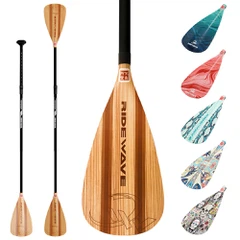
‑ Upgraded accessory packages to increase average order value. Standard basicfittings meet entry‑level market needs, but premium accessory bundles help retailers raise product grades and sell at higher price points. Adjustable carbon paddles, high‑capacity hand pumps, waterproof dry bags and reinforced safety leashes are popular upgrade options among South American consumers. Many RIDEWAVE Latin‑American partners increase their per‑unit margin simply by optimizing accessory combinations.
‑ Selective material upgrades for high‑end product lines. Reinforced drop stitch layers, UV‑resistant outer PVC coating and airtight valve systems support longer service life and better durability. These upgrades allow resellers to launch high‑end premium SUP SKUs and cover high‑value consumer groups, forming a differentiated product matrix apart from low‑end generic markets.
‑ Avoid low‑benefit excessive customization. Complex tailor‑shaped boards, personalized bottom patterns and ultra‑specialized color schemes sound attractive but greatly increase production difficulty, MOQ requirements and failure rates. For B2B wholesale business, overly personalized customizations limit market universality and slow down inventory turnover. Successful Argentina distributors always stick to simple, scalable, sales‑driven customization.

What does a real-world bulk inflatable SUP cooperation case look like for Latin America B2B partners?
Understanding real bulk inflatable SUP cooperation cases helps global distributors and brand owners avoid trial-and-error losses when expanding their water sports product lines. Many new outdoor merchants fail in Latin American markets not because of poor product quality, but due to mismatched inventory structure, unreasonable order planning, and unfamiliar local import logistics. A verified B2B wholesale case reflects practical market rules, supplier service capabilities, and profit models that cannot be obtained from standard product introductions. Below is a true long-term cooperation story between RIDEWAVE and a growing sports goods distributor based in Buenos Aires, Argentina.
‑ Client background and business pain points. The partner is a local mid-sized sportswear and outdoor equipment distributor with stable offline retail chains and e-commerce stores in Argentina. In early 2025, the company decided to add inflatable SUP series to its product portfolio to seize the booming summer water sports market. Before cooperating with RIDEWAVE, the client faced three core problems: unstable product quality from previous suppliers, chaotic accessory matching, and insufficient customs declaration documents, which caused repeated port detention and high return rates.

‑ Customized B2B sourcing solution from RIDEWAVE. Instead of providing universal wholesale packages, our team tailored a market-oriented SUP bulk solution suitable for Argentina's consumer habits and import policies.
Optimized SKU ratio: Matched local market demand with mainstream all-round inflatable SUP + high-margin fishing SUP mixed inventory, avoiding full entry-level board overstock and price competition.
Complete document support: Provided full set of test reports, material certificates and standardized customs declaration files to ensure 100% smooth customs clearance for Argentine ports.
Phased MOQ and batch delivery: Adopted low-risk trial orders + seasonal centralized replenishment modes, effectively reducing the client's off-season inventory pressure.
Localized accessory configuration: Upgraded high-resistance safety leashes and high-pressure hand pumps, adapting to strong ultraviolet rays and complex water environments in South America.
‑ Final market cooperation results. After adopting the RIDEWAVE tailored SUP wholesale solution, the client's retail return rate dropped significantly, and shelf product competitiveness improved obviously. During the 2025–2026 Southern Hemisphere summer peak season, the distributor's inflatable paddle board category revenue increased by more than 38% year-on-year. With stable product quality and complete after-sales support, the partner successfully expanded distribution business to Chile and Uruguay, realizing cross-border market expansion.
This real case proves that Latin American SUP wholesale success relies not on low-price strategies, but on market-adaptive product matching, compliant import documents, and stable supplier service systems. For global B2B buyers preparing to expand SUP categories, standardized manufacturer support can greatly reduce market trial costs.
What quality-control points should B2B buyers verify before placing large inflatable SUP orders?
Quality control is the most critical hidden factor that determines retail reputation, return rates, and long-term profitability for bulk inflatable SUP wholesale business. Many global distributors focus only on unit price and delivery time while ignoring core production details, which leads to defective batches, high after-sales pressure, and damaged brand credibility. Before confirming large-scale inflatable paddle board orders, professional B2B buyers must verify four non-negotiable quality checkpoints to ensure stable retail performance across Argentina, Chile, Canada, Australia and European markets.

‑ Reinforced drop stitch density and fabric tensile strength. The overall durability and deformation resistance of inflatable SUP completely depend on drop-stitch craftsmanship. Low-density drop stitch causes board bending, air leakage and deck deformation after long-term water exposure. Qualified wholesale-grade SUPs adopt high-density woven drop stitch structure to maintain flatness and rigidity under full inflation. RIDEWAVE consistently implements unified density standards for all bulk orders to avoid batch difference problems that trouble multi-batch retailers.
‑ Airtight valve structure and air retention performance. Air leakage is one of the top customer complaints for low-cost generic paddle boards. High-quality SUPs use upgraded double-layer airtight valves with dust-proof locking structures, ensuring zero slow leakage during long-distance water use. For B2B resellers, stable air retention directly reduces after-sales workload and negative review rates.
‑ UV-resistant PVC coating for long outdoor service life. South America, Australia and Canada have strong ultraviolet radiation throughout the year. Ordinary thin PVC layers are prone to yellowing, cracking and peeling after sun exposure. Premium wholesale SUPs adopt thickened UV-stabilized PVC outer layer, improving aging resistance and extending product service cycle. This quality detail greatly lowers long-term retail return rates.
‑ Full accessory quality matching and batch consistency. Unmatched accessory quality is often overlooked by new distributors. Low-grade paddles, fragile hand pumps and thin foot leashes cause separate customer complaints even if the board itself is qualified. Reliable manufacturers maintain unified batch inspection for every accessory set to ensure complete user experience consistency.
Professional pre-order quality inspection effectively avoids batch failure risk and protects distributors' long-term market reputation. Stable and verifiable quality standards are the foundation of scalable wholesale inflatable SUP business.
How can Argentina-based SUP resellers expand sales to neighboring markets like Chile and Uruguay?
Argentinian inflatable SUP distributors hold unique geographic and supply-chain advantages to expand cross-border business across South America. While many local wholesalers limit sales only to domestic territory, neighboring Chile and Uruguay share similar summer consumption cycles, outdoor culture and consumer preferences. With slight localized adjustments, existing bulk inflatable paddle board inventory can be repurposed for cross-border sales, creating a second profit growth curve for B2B resellers. Successful regional expansion relies on differentiated certification compliance, cross-border logistics optimization and market-tailored product selection.

‑ Differentiate compliance standards for Chile and Uruguay markets. Although these countries belong to Latin America, their import rules for wholesale inflatable SUP vary significantly. Chile implements stricter consumer product safety labeling and INMETRO-referenced testing requirements, while Uruguay maintains simplified customs procedures for small and medium bulk shipments. Argentina resellers who already have complete document sets for local imports can slightly upgrade test reports and labeling formats to qualify for Chilean market entry, avoiding repeated sourcing costs.
‑ Optimize cross-border logistics and inventory allocation. Cross-border container consolidation and regional warehouse transit greatly reduce freight costs for multi-country distribution. Instead of shipping separate full containers to each country, experienced distributors mix SKUs and share container capacity for Argentina, Chile and Uruguay. This strategy lowers bulk SUP inventory threshold for new market testing and minimizes unsold stock risks. RIDEWAVE supports regional mixed-SKU wholesale orders specifically for Latin American cross-border resellers, helping partners flexibly allocate stock across multiple territories.
‑ Adapt product portfolios for subtle regional consumer differences. All three markets favor stable, beginner-friendly all-round inflatable SUP and practical fishing SUP models. However, Chilean consumers show stronger demand for UV-resistant upgraded boards due to stronger coastal sunlight exposure, while Uruguayan buyers prefer lightweight portable designs for frequent short-distance water activities. Fine-tuning accessory packages and material grades according to regional habits significantly improves cross-border conversion rates.
‑ Build local B2B partnership networks for sustainable scaling. Direct retail cross-border sales face high marketing and logistics costs. The most efficient expansion model is recruiting local sub-distributors and sports goods retailers in Chile and Uruguay. By providing stable stock supply, standardized after-sales support and localized marketing materials, Argentina-based wholesalers can build a regional Latin American inflatable paddle board distribution system with low operational overhead.
‑ Replicate successful Southern Hemisphere seasonal sales strategies globally. The inventory timing, peak-season preparation and product matching logic applied for Argentina, Chile and Uruguay is highly compatible with Australia, New Zealand and even Southern African outdoor markets. Mastering South American regional expansion allows B2B sellers to copy proven business models to other southern-hemisphere territories, achieving long-term global business scaling.
What after-sales and warranty terms should B2B buyers negotiate with their inflatable SUP manufacturers?
For bulk inflatable SUP distributors and brand owners, warranty policies and after-sales support are far more important than minor unit-price differences. Many low-cost wholesale suppliers attract B2B buyers with low unit prices but lack standardized after-sales systems, resulting in high retail complaint rates, uncompensated defective losses, and damaged long-term brand reputation. Professional inflatable paddle board wholesale cooperation requires clear, negotiable warranty terms, spare-parts support, and defect-handling rules to protect profit margins for retailers, supermarkets, and e-commerce sellers across South America, North America, and Oceania.
‑ Clarify official warranty coverage for board body and accessories. Reliable manufacturers provide differentiated warranty periods for SUP main bodies, drop-stitch structures, PVC surfaces, and supporting accessories. B2B buyers should confirm clear valid warranty terms for full products instead of vague "general warranty" promises. Clearly classified warranty coverage helps distributors handle end-user complaints quickly and reduce after-sales labor pressure.
‑ Negotiate free spare-parts supply mechanisms for bulk orders. For large-scale wholesale inflatable SUP shipments, continuous spare-parts support is essential for long-term retail stability. Common wearable components including air valves, foot leashes, hand pumps, and repair patches require continuous replenishment during sales seasons. Experienced B2B purchasers negotiate fixed free-spare ratios based on order quantity, ensuring adequate inventory for after-sales maintenance without extra costs.
‑ Confirm defective product replacement and compensation clauses. Manufacturing defects, air leakage issues, or printing errors occurring within the warranty period must have clear compensation standards. B2B partners should confirm whether the supplier supports batch replacement, partial compensation, or credit notes for future orders. Unclear compensation rules will leave distributors fully responsible for retail losses caused by factory quality problems.
‑ Verify technical support and after-sales response efficiency. Global SUP resellers operate across time zones, so delayed after-sales replies will cause missed peak sales windows. Professional manufacturers provide dedicated B2B customer service teams, multi-language technical guidance, and standardized after-sales processing SOPs to ensure efficient problem resolution.
‑ Secure seasonal emergency replenishment policies. During the Southern Hemisphere summer selling season, sudden inventory shortages and accidental product damage are common. B2B buyers need to negotiate emergency fast-replenishment terms to support urgent restocking and avoid empty retail shelves during peak traffic.
RIDEWAVE maintains a transparent B2B warranty and after-sales system for global inflatable SUP wholesale clients. We provide classified body and accessory warranty services, fixed spare parts allocation ratios, and clear defect compensation policies. This stable after-sales mechanism helps Latin American, Australian, Canadian and European distributors operate long-term, low-risk SUP retail businesses.
What long-term strategies help outdoor brands and wholesalers succeed in the Latin American inflatable water sports market?
Short-term bulk inflatable SUP sourcing tactics can boost seasonal sales, but only systematic long-term strategies help B2B wholesalers, distributors and outdoor brands achieve sustainable growth in Argentina, Latin America, and global English-speaking markets including Canada and Australia. The inflatable paddle board industry continues to expand with rising outdoor participation, updated consumer safety standards, and growing demand for multi-functional water sports gear. For new entrants and established resellers, success comes from localized product positioning, stable supplier partnerships, and data-driven inventory planning.
‑ Build a season-adjusted, market-localized SUP product matrix. The biggest mistake LATAM resellers make is copying Northern Hemisphere product lines. Mastering Southern Hemisphere peak sales cycles (November–February) and matching regional preferences for stable, family-friendly all-round inflatable SUP, high-performance fishing SUP, and premium fitness yoga SUP allows businesses to outperform generic competitors relying on low-price homogenization.
‑ Establish stable, document-compliant manufacturing cooperation. Import compliance, quality consistency, and after-sales reliability determine long-term business survival far more than temporary low pricing. Working with a professional wholesale inflatable SUP manufacturer that provides full test documents, batch quality control, and multi-region customs support greatly reduces cross-border operational risks.
‑ Adopt low-risk, flexible bulk ordering mechanisms. New brands and growing distributors should prioritize mixed-SKU trial orders, phased shipments, and adjustable MOQ policies to avoid overstock pressure. Mature sellers can scale full-container orders based on seasonal data, maximizing profit margins while maintaining healthy capital turnover.
‑ Focus on differentiated branding instead of price competition. Custom logos, localized color schemes, upgraded accessory packages, and reliable warranty support help resellers build independent brand value in Argentina and neighboring countries. Differentiation is the only long-term solution to resist shrinking profit margins in the mass SUP market.
‑ Expand regional distribution networks for scalable revenue growth. After stabilizing local Argentina sales, replicating mature operational models in Chile, Uruguay, and other Latin American regions creates compound annual growth. The same product and sourcing strategy can also be adapted for Australia, Canada and European markets, forming a global multi-region inflatable SUP business layout.

As the global outdoor and watersports economy continues to recover and expand, the Latin American inflatable paddle board market remains one of the most promising, low-saturation segments for B2B outdoor merchants. By cooperating with a transparent, experience-rich manufacturer like RIDEWAVE, global distributors can access standardized quality control, complete import documentation, flexible ordering solutions, and reliable after-sales systems to steadily scale their inflatable paddle board product lines in emerging markets.
Related Articles
2026 Global SUP Market Outlook: Strategic Insights For B2B Distributors
How To Build A Long-term Partnership With SUP Manufacturers
How To Choose The Right SUP Supplier: A Guide For Distributors in 2026