
Global Macro Trends & The B2B Market Environment-Anchoring Long-Termism in a Shifting Tide
The 2026 Global Water Sports Landscape: From "Explosive Growth" to "High-Quality Normalization"
As we move through 2026, the global water sports market has moved beyond the irrational post-pandemic surge and entered a new cycle driven by technological iteration and lifestyle integration. For distributors in North America, Europe, Canada, and Australia, the market is undergoing a profound "structural reshaping."
The "Bipolarization" of Consumer Behavior
We are observing a distinct phenomenon in Western markets: the coexistence of Spending Mindfulness (downgrading in cost) and Quality Upgrading (investing in performance).
Pressure on Entry-Level Tiers: The "toy-grade" inflatable Stand-Up Paddleboards (iSUPs) that once dominated big-box retail shelves via low pricing are seeing a significant slowdown. Consumers have become "product-literate"; they are no longer willing to pay for a disposable board that lasts only one season.
Resilience in Professional/Mid-to-High Segments: Sales of niche, functional iSUPs-such as those designed for long-distance touring, fishing, or SUP yoga-continue to climb. This "quality upgrade" reflects a shift in B2B demand: distributors are actively seeking manufacturing partners who offer longer product lifecycles and robust after-sales warranties.
"Socialization" of the Sport
The paddleboard is no longer just a piece of fitness equipment; it has become a "social vehicle." In coastal California, the Australian Gold Coast, and the lake districts of Western Europe, iSUP rentals and community-led events have become staples of summer tourism. This normalization means higher equipment turnover and wear-and-tear. For B2B rental operators and club owners, durability has surpassed price as the primary procurement metric.
International Hotspots: The Mandatory Rise of ESG and Green Supply Chains
For distributors targeting Germany, France, and Northern Europe, 2026 is a regulatory watershed. ESG (Environmental, Social, and Governance) has evolved from a "marketing bonus" to a "market entry requirement."
The Impact of EU Regulations
With the full implementation of the EU Ecodesign for Sustainable Products Regulation (ESPR), the scrutiny on the recyclability of imported goods has reached an all-time high.
Material Traceability: Wholesalers in Germany and Sweden now frequently demand detailed REACH compliance reports for PVC materials and Phthalate-free declarations.
The Packaging Revolution: Traditional plastic wraps are being phased out. At RIDEWAVE, we have noted that leading distributors now prefer FSC-certified paper packaging or biodegradable non-woven bags. This is not just to avoid "Green Taxes" but to align with the eco-conscious values of the end consumer.
Industry Insight: Manufacturers unable to provide ESG compliance certification will gradually lose access to mainstream European distribution channels over the next 24 months. RIDEWAVE's integration of solar-assisted production and solvent-free adhesive processes is designed specifically to help our partners navigate these high-barrier markets seamlessly.
Supply Chain Resilience Under Inflation: The New "Inventory Philosophy"
While global logistics have stabilized in 2026, the cyclical volatility of raw material costs (such as drop-stitch fabric and PVC resin) and ocean freight rates remains a "Damocles' Sword" hanging over the heads of importers.
B2B Strategies for Optimizing Inventory Cycles
Sophisticated wholesalers have transitioned from "Just-in-Time" to a "Just-in-Case" strategic reserve model:
Staggered Pre-ordering: Rather than placing a single massive annual order, distributors are adopting a "multi-wave" approach-placing Q3 orders in smaller, frequent batches to hedge against fluctuations in currency exchange and shipping rates.
SKU Streamlining: Under inflationary pressure, many are reducing redundant color variations to focus on 3–5 "hero products." This allows for higher production efficiency at the factory level and better volume discounts.
Technical Support from the Manufacturing End
As a manufacturer, we've found that design optimization directly enhances supply chain resilience. For example, by refining folding technology to reduce the packed volume of an iSUP by 15%, a 40HQ container can carry approximately 40–50 additional units. For the B2B client, this translates directly into a lower landed cost per unit.
B2B Pain Points: Breaking Homogeneity with Technical Moats
The greatest challenge in the current B2B market is "Visual Homogeneity." If a sporting goods retailer or brand owner's product looks and performs exactly like the low-cost boards found on mass-market e-commerce platforms, price wars become inevitable.
Identifying True OEM/ODM Partners
When vetting suppliers, distributors must look for three specific Technical Moats:
Material Engineering: Does the factory utilize MSL Fusion (Lamination) or advanced woven technologies? This process allows the board to be 20% lighter while increasing stiffness by 30%.
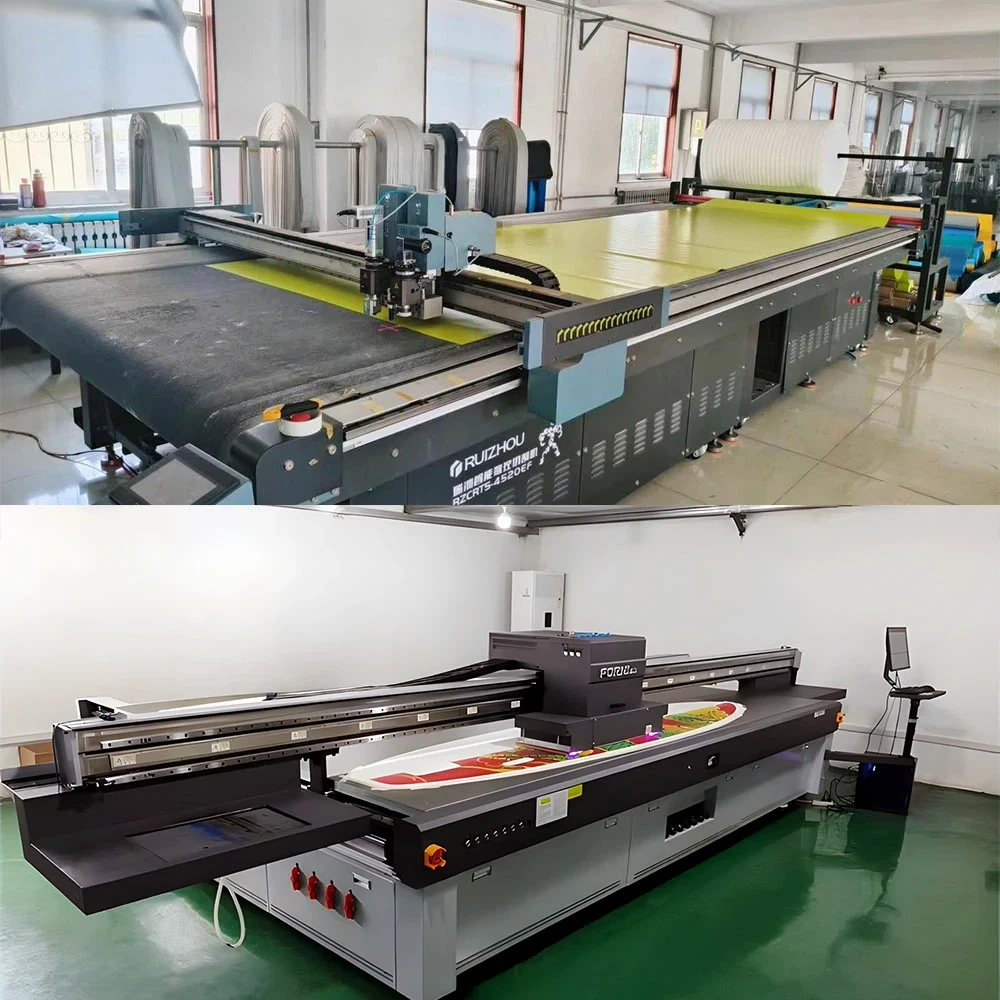
Aesthetic Premium: Does the factory offer UV Digital Printing? This technology provides a generational leap over traditional silk-screening in terms of high-definition detail, fade resistance, and low-MOQ customization.
R&D Depth: Is the factory capable of tweaking board templates for specific environments-such as high-surf zones in Australia or flat-water lakes in Canada-rather than simply offering generic "open-mold" shapes?
Seasonal Rhythm Analysis of the iSUP Market-Timing the Wave for Maximum ROI
For B2B wholesalers and distributors, the inflatable Stand-Up Paddleboard (iSUP) market is not just a business of selling products; it is a business of mastering time. In an industry governed by the sun and the tides, a two-week delay in the supply chain can result in a 20% loss in seasonal revenue.
Understanding the "Global Seasonal Clock" is essential for maintaining a lean inventory and ensuring that your warehouse is never empty when the temperature rises, nor overstocked when the first frost hits.
The Global Procurement Calendar: A Strategic Timeline
Managing a global brand requires a dual-hemisphere perspective. While the "Golden Quarter" for sales in North America and Europe occurs in Q2 and Q3, the heavy lifting of the supply chain happens months in advance.
Q3–Q4: The Strategic Selection & Capacity Lock (The "Booking" Phase)
In the world of high-end manufacturing, Q3 (July to September) is when the most successful distributors secure their future.
Model Confirmation: This is the window to finalize technical specifications. Are you moving toward the thinner, stiffer 4.75-inch boards for yoga, or the 6-inch high-volume touring models?
Capacity Locking: Top-tier manufacturers like RIDEWAVE begin scheduling their production lines for the following year during this period. B2B clients who commit early avoid the "Chinese New Year bottleneck" and ensure priority access to premium raw materials like high-density drop-stitch fabric.
The "Early Bird" Advantage: Many manufacturers offer "Pre-Season" discounts in Q4 to balance their production load, allowing distributors to improve their margins significantly.
Q1: Arrival & Market Conditioning (The "Preparation" Phase)
As the Northern Hemisphere remains in the grip of winter, the logistics machine is in full gear.
Inventory Inflow: Goods ordered in Q4 typically arrive at Western ports in January and February. This allows distributors to clear customs and distribute stock to regional warehouses before the spring rush.
Spring Marketing: This is the period for "Pre-Order" campaigns and SEO seeding. Smart retailers use Q1 to educate the market on new technologies (e.g., the transition from double-layer glued boards to MSL Fusion technology).
Southern Hemisphere Transition: For our partners in Australia and New Zealand, Q1 represents the final peak of the summer season and the transition into clearance sales before their autumn begins.
Q2: The Explosive Peak (The "Execution" Phase)
From April to June, the market shifts into high gear.
The "Weather Trigger": As soon as the first 20°C (68°F) weekend hits in regions like the UK, Germany, or the Northern US, consumer demand spikes overnight.
Replenishment Cycles: Distributors must have "Buffer Stock" ready. In Q2, the focus shifts from sea freight to rapid fulfillment. If a specific SKU-such as a 10'6" All-Around board-becomes a viral hit, having the agility to trigger a secondary "Quick-Ship" order is vital.
Inventory Turnover Strategy: The Science of Safety Stock
Overstocking kills cash flow; understocking kills growth. To navigate the seasonal volatility of 2026, B2B buyers must move away from "gut feeling" and toward data-driven inventory management.
The Safety Stock Formula for iSUP Distributors
To ensure you can meet demand even if shipping is delayed or a heatwave causes a surge in orders, we recommend the following calculation:
$$SS = (Z \times \sigma_{LT} \times D_{avg}) + (Z \times LT_{avg} \times \sigma_D)$$
$SS$ (Safety Stock): The extra units to keep on hand.
$Z$ (Service Level): A constant (usually 1.65 for a 95% service level).
$LT$ (Lead Time): The total time from order to warehouse arrival.
$D$ (Demand): Your average daily sales.
$\sigma$ (Sigma): The standard deviation (variability) of lead time and demand.
Why this matters in 2026: In the current market, "Lead Time Variability" ($\sigma_{LT}$) has increased due to global port congestion. By partnering with a manufacturer that offers stable production lead times and localized warehousing support, distributors can reduce their $\sigma_{LT}$, thereby lowering the amount of capital tied up in safety stock.
Beyond the Summer: Tapping Into Anti-Seasonal Growth
The most profitable B2B entities are those that have "de-seasonalized" their revenue streams. The iSUP is no longer just a "beach toy"; it is a year-round fitness and adventure tool.
Indoor Opportunities: The Rise of SUP Yoga & Fitness
In urban centers across Northern Europe and Canada, indoor swimming pools and wellness centers are increasingly hosting Indoor SUP Yoga classes.
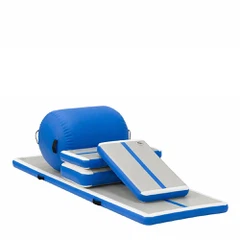
Product Fit: This requires specialized "Docking Station" boards or shorter, wider mats that fit in standard pool lanes.
B2B Angle: Sporting goods distributors should target gym franchises and luxury hotel chains in Q4, offering "Indoor Wellness Packages" as a counter-seasonal revenue pillar.
The "Hard Water" Niche: Winter Expedition & Ice Floating
A growing trend in Scandinavia and the Great Lakes region is Ice Floating and winter paddling.
Technical Requirement: These consumers require ultra-durable, multi-layer boards that can withstand contact with slush and ice.
Marketing Shift: Instead of "Sun and Sand," the marketing focus shifts to "Resilience and Solitude." Brands that offer specialized winter accessories (dry bag sets, cold-water leashes, and insulated carry bags) can maintain sales momentum during the "Dark Months."
The "Gift Economy"
Don't overlook the Q4 holiday season. A high-quality iSUP is a premium gift. By offering "Christmas Bundles" (Board + Carbon Paddle + Electric Pump), distributors can capture the gift-giving market, liquidating stock before the new models arrive in Q1.
The RIDEWAVE Advantage in Seasonal Planning
As a manufacturer, RIDEWAVE understands that our success is tied to your inventory health. We assist our B2B partners by:
Flexible Production Slots: Reserving capacity for long-term partners to allow for mid-season "top-up" orders.
Modular Packaging: Designing kits that are easy to store and cheaper to ship, maximizing your warehouse's "Revenue per Square Meter."
Data Sharing: Providing our partners with global sales trend data to help them refine their $D_{avg}$ (Average Demand) projections.
Timing the market is an art; supplying it is a science. By aligning your procurement cycle with the global seasonal rhythm and utilizing a data-backed inventory strategy, your business can ride the peak of the wave without being wiped out by the trough.
2026 Core Product Trends-From "Recreation" to "Mastery"
In 2026, the iSUP market has reached a point of technical maturity where "good enough" no longer sells. The global consumer base has graduated from the "curiosity phase" and is now entering the "performance phase." For B2B distributors and brand owners, this shift represents a move away from price-sensitive commodities toward high-margin, specialized equipment.
To dominate the market this year, one must understand the thin line between a recreational toy and a high-performance vessel.
Technological Evolution: The War Between Weight and Rigidity
The "Holy Grail" of inflatable paddleboard manufacturing has always been to achieve the stiffness of a hard board with the portability of an inflatable. In 2026, this is no longer a marketing slogan; it is a measurable engineering standard.
The Death of Double-Layer Glue: The Supremacy of MSL Fusion
Traditional "Double Layer" construction-where two layers of PVC are bonded with manual glue-is rapidly becoming obsolete in the premium segment. The reasons are three-fold: weight, durability, and eco-compliance.
MSL Fusion (Monocoque Structural Laminate) technology has emerged as the industry gold standard. In this process, the second layer of hard-wearing PVC is thermally fused directly onto the drop-stitch core under laboratory-controlled conditions.
Weight Reduction: By eliminating the 2kg of glue used in traditional boards, MSL boards are roughly 20% to 25% lighter.
Structural Integrity: Manual gluing is prone to "human error"-bubbles, creases, and uneven bonding. Fusion technology creates a singular, cohesive material that is nearly impossible to delaminate.
B2B Benefit: For distributors, MSL means fewer warranty claims and a product that "feels" premium the moment the customer lifts the box.
The 20 PSI Threshold: The New Benchmark for "High-End"
In previous years, 12–15 PSI was considered sufficient. In 2026, high-end distributors are demanding 20 PSI+ capability. Why does PSI (Pounds per Square Inch) matter so much to a professional buyer?
Deflection Minimization: A board at 15 PSI under a 90kg rider will "banana" or flex in the middle, destroying hull speed. At 20–22 PSI, the board remains flat, mimicking a carbon-fiber hard board.
Advanced Drop-Stitch Densities: Achieving 20 PSI requires a "High-Density" drop-stitch core-more polyester threads per square inch. This internal architecture is what separates a $300 board from a $1,000 professional tool.
The Rise of Niche Segments: Moving Beyond "All-Around"
The "All-Around" 10'6" board was the gateway drug of the paddleboarding world. However, the 2026 consumer is looking for a "second board"-one that fits their specific lifestyle.
Touring and Racing: The "Long-Distance" Migration
In the North American and European markets, there is a massive migration toward Touring Boards (11'6" to 14'0").
The Trend: Consumers are now using paddleboards for "micro-adventures"-overnight camping trips or 20km coastal explorations.
Design Features: These boards feature narrower noses (displacements hulls) for cutting through chop and multiple "Cargo D-Rings" for securing dry bags.
B2B Opportunity: Touring boards command a 30-40% higher retail price point than All-Around boards, significantly increasing the "Profit per Container" for wholesalers.
Multi-Functional Hybrids: The iSUP-Kayak Evolution
One of the fastest-growing sub-sectors in 2026 is the Hybrid iSUP. By adding a recessed seat system and a four-piece dual-blade paddle, the board transforms into a sit-on-top kayak.
Target Audience: Families and "crossover" paddlers who want versatility without owning two separate crafts.
Motorization (E-SUP): We are seeing a surge in demand for "Motor-Ready" boards. These feature a specialized fin box or rear mount for small electric jet motors. This is particularly popular in the US fishing market and the luxury yacht tender market.
Aesthetic Trends: The Visual Language of 2026
In a saturated market, visual identity is the first filter. The "busy," "cartoonish" designs of the early 2020s have been replaced by a more sophisticated, "outdoor-pro" aesthetic.
Minimalism and "Color Blocking"
Following the lead of high-end outdoor brands like Patagonia or Arc'teryx, iSUP designs in 2026 lean toward:
Earth Tones: Sage green, slate blue, and terracotta-colors that blend with the natural environment.
Geometric Color Blocking: Using the seams and structural lines of the board to create clean, architectural visual splits.
UV Digital Printing: A Revolution in Customization
For B2B brand owners (Private Label), UV Digital Printing is the ultimate game-changer.
Silk-Screening vs. UV Printing: Traditional silk-screening is limited by "color count" and requires expensive plates. UV Printing allows for high-definition, photo-realistic graphics with zero set-up cost.
Durability: RIDEWAVE's UV-cured inks are specifically designed to resist the harsh 10/10 UV index ratings of Australia and Southern California, ensuring the "brand logo" doesn't fade after one season.
Personalization at Scale: This allows distributors to offer "Limited Edition" runs or localized designs (e.g., a "Lake Tahoe Edition") without needing to order 1,000 units per design.
The RIDEWAVE Perspective-Engineering Quality as the Foundation of B2B Success
For a B2B distributor or brand owner, your manufacturer is more than a supplier; they are the guardian of your brand's reputation. In the inflatable paddleboard industry, "quality" is often a hollow buzzword. At RIDEWAVE, we redefine quality through the lens of Precision Engineering and Systemic Transparency.
In this section, we pull back the curtain on the manufacturing science that allows our partners to scale with confidence in the world's most demanding markets.
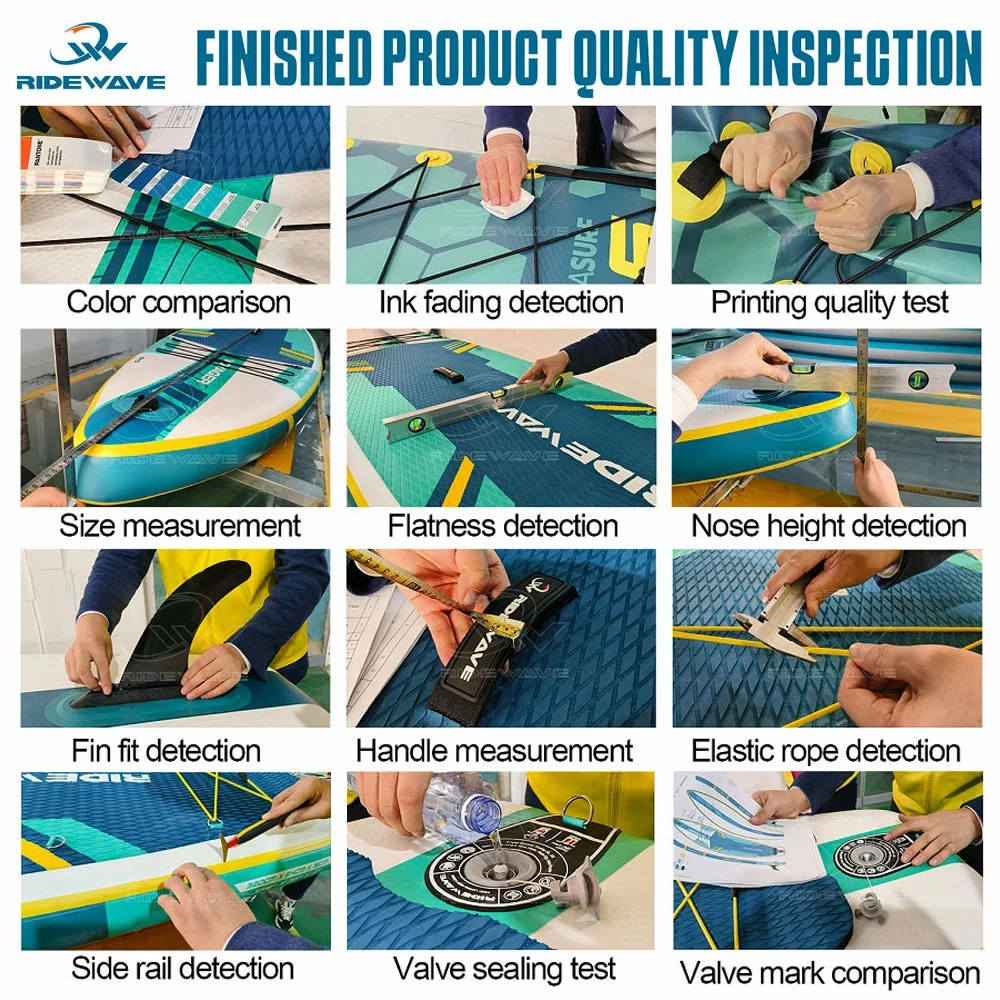
The Science of the Build: RIDEWAVE's Precision Standards
The difference between a board that lasts ten years and one that fails in ten months lies in the decimals. At RIDEWAVE, we have moved away from "hand-made" variability toward Automated Precision.
0.1mm Accuracy: The Laser-Cutting Revolution
Traditional iSUP manufacturing relies on manual template cutting, which can lead to inconsistencies in rail alignment and seam symmetry. Even a 5mm deviation can cause a board to "pull" to one side in the water.
-
The RIDEWAVE Standard: Every piece of PVC and drop-stitch fabric is processed using high-precision CNC Laser Cutting machines. By maintaining a 0.1mm tolerance, we ensure that the internal structure and external skins align perfectly. This precision is what allows our boards to maintain a perfectly straight tracking line, a feature critical for the "Touring" and "Racing" segments discussed in Part III.
The 72-Hour High-Pressure Stress Test
Most factories perform a standard 24-hour inflation test. However, structural micro-leaks-often caused by microscopic imperfections in the fusion layer-sometimes only manifest after a prolonged period of high tension.
-
The Protocol: Every RIDEWAVE board is subjected to a 72-hour continuous inflation test at 20% above its rated maximum PSI. We utilize digital pressure sensors to monitor even the slightest drop in barometric pressure. If a board loses more than 0.05 PSI over three days (accounting for temperature fluctuations), it is rejected.
-
B2B Value: This rigorous vetting process effectively reduces the DOA (Dead on Arrival) rate to near zero, saving distributors thousands in return shipping and customer service costs.
UV Protection Technology: Engineering for the "Sun Belts"
Distributors in the Australian Gold Coast, Florida, and Southern California face a unique enemy: the sun. High UV indices can degrade standard PVC, causing it to become brittle and faded within a single season.
The RIDEWAVE Anti-UV Shield
We have developed a proprietary UV-Resistant Top Coating that is integrated during the MSL fusion process.
-
Chemical Bonding: Unlike "spray-on" protectors that wash off in the water, our UV shield is chemically bonded to the PVC substrate.
-
30% Longevity Increase: Independent laboratory testing shows that RIDEWAVE boards retain their color vibrancy and material flexibility for 30% longer than industry-standard PVC under constant UV exposure.
-
Heat Reflection: Our coating technology includes heat-reflective pigments that reduce the surface temperature of darker-colored boards, preventing the internal air from over-expanding and risking a "blowout" on hot days.
Supply Chain Transparency: From Raw Resin to Finished Hull
In 2026, a B2B partner needs to know exactly where their product comes from to satisfy both regulatory requirements (ESG) and consumer inquiries.
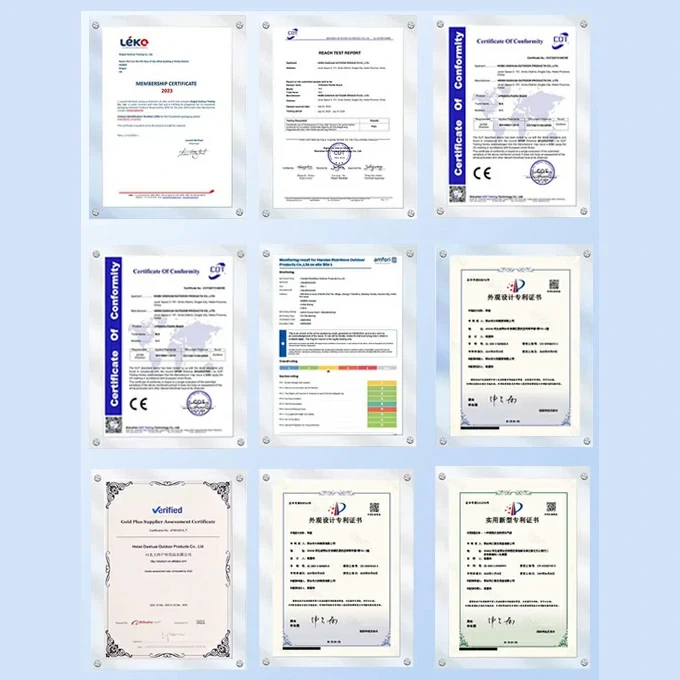
Traceability and Certification
Our quality control system is built on a Total Traceability framework:
-
Raw Material Sourcing: We partner exclusively with Tier-1 suppliers for our drop-stitch cores and PVC resins, ensuring all materials are REACH and RoHS compliant.
-
ISO 9001:2015 Integration: Our manufacturing facility operates under strict ISO standards. Every board is assigned a unique Hull Identification Number (HIN). This "digital birth certificate" allows us to trace back the specific batch of glue, the worker on the assembly line, and the date of the 72-hour test.
-
Third-Party Audits: We welcome and facilitate third-party inspections (such as SGS or Intertek) for our B2B clients, providing full transparency into our labor practices and environmental management systems.
Private Label Excellence: From Zero to Market-Ready
For many of our partners, the goal is not just to sell a product, but to build a brand. RIDEWAVE acts as an Incubator for Private Labels, offering a streamlined path from concept to container.
The "Fast-Track" Branding Process
We help sporting goods retailers and entrepreneurs launch their own lines through a structured four-step process:
-
Template Selection: Choose from our library of "Proven Hulls"-shapes that have been hydrodynamically tested for stability and speed.
-
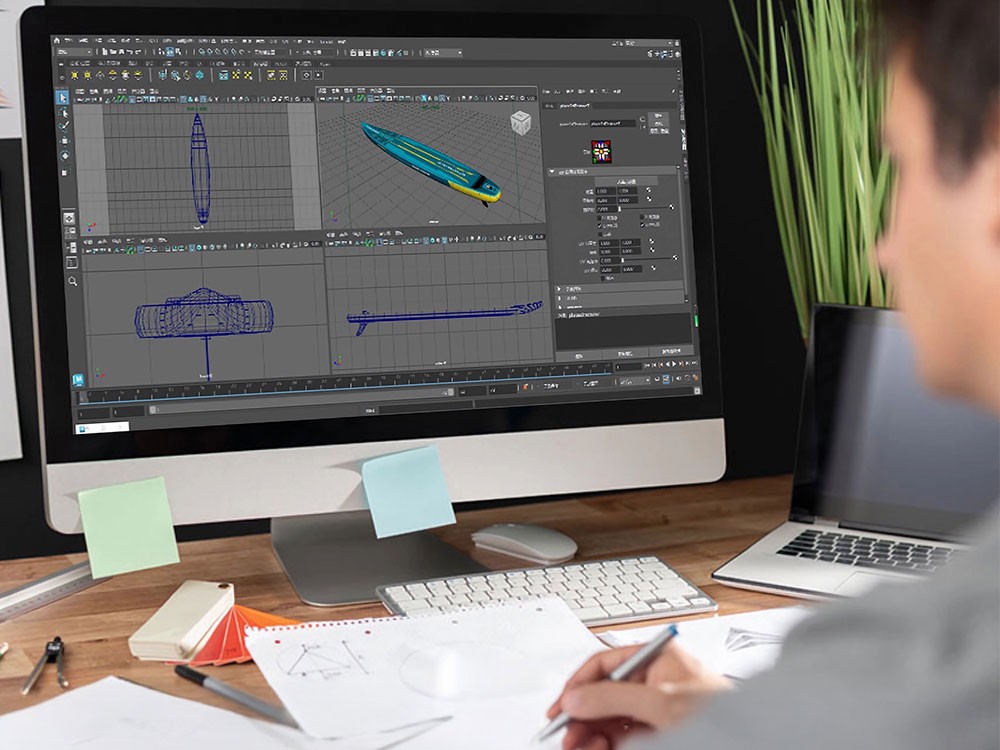
Digital Prototyping: Utilizing our UV Digital Printing capabilities, we can produce a digital render of your brand's aesthetic in 48 hours.
-
Low-MOQ Entry: We understand that "testing the waters" is necessary. RIDEWAVE offers flexible Minimum Order Quantities for initial private label runs, allowing you to validate your brand without over-leveraging your capital.
-
Marketing Asset Support: We don't just ship the boards; we provide high-resolution studio photography, 3D exploded-view renders, and technical white papers to help your marketing team hit the ground running.
Why B2B Partners Choose RIDEWAVE as their OEM
The most successful brand owners realize that owning a factory is a liability, but partnering with the right one is an asset. By leveraging RIDEWAVE's technical "moats"-from laser precision to UV science-our B2B clients can focus on what they do best: marketing, community building, and sales.
Actionable Strategies for Distributors and Brand Owners-Maximizing Profitability
In the competitive landscape of 2026, a distributor's success is no longer determined solely by sales volume, but by the efficiency of their operations and the strength of their supplier relationships. To move from a "middleman" to a market leader, B2B partners must optimize every link in the value chain.
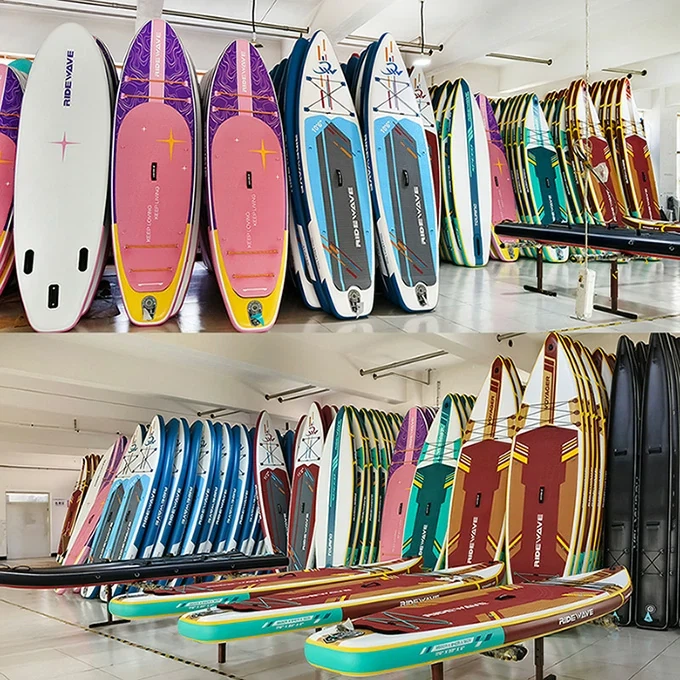
The Strategic Checklist: How to Identify a Tier-1 Manufacturer
Not all factories are created equal. When vetting a potential OEM/ODM partner, B2B buyers should look beyond the price list and evaluate these four pillars of manufacturing excellence:
-
Advanced Equipment: Does the factory utilize CNC laser cutters and automated MSL fusion machines? Manual processes lead to "quality drift," which kills brand reputation.
-
Scalable Capacity: Can the factory handle a 5,000-unit surge before the summer rush? Ask for a production roadmap and verify their history of on-time deliveries.
-
R&D Independence: A premium factory should have its own hydrodynamic testing pool or CFD (Computational Fluid Dynamics) software. If they only copy existing designs, they cannot help you innovate.
-
Social & Ethical Audits: In the modern market, "Brand Safety" is paramount. Ensure the factory holds certifications such as BSCI or Sedex, proving fair labor practices and safe working conditions.
Marketing Empowerment: RIDEWAVE's "Success Kit"
At RIDEWAVE, we believe our job isn't finished when the container leaves the port. We provide our partners with a comprehensive Marketing Empowerment Suite designed to accelerate "Sell-Through":
-
High-Definition Media Assets: Access to a library of professional lifestyle photography and 4K drone footage tailored for Instagram, TikTok, and high-end web banners.
-
Technical Documentation: White papers and "Explainer Videos" detailing MSL technology and drop-stitch density to help your sales team close high-ticket deals.
-
Multilingual localized Support: Manuals and assembly guides translated into 10+ languages, ensuring a premium "unboxing" experience for global customers.
-
Industry-Leading 5-Year Warranty: We stand by our 72-hour stress tests. By offering a 5-year warranty, we allow you to position your brand as a "lifetime investment" rather than a seasonal purchase.
Logistics Optimization: The Financial Impact of Volumetric Efficiency
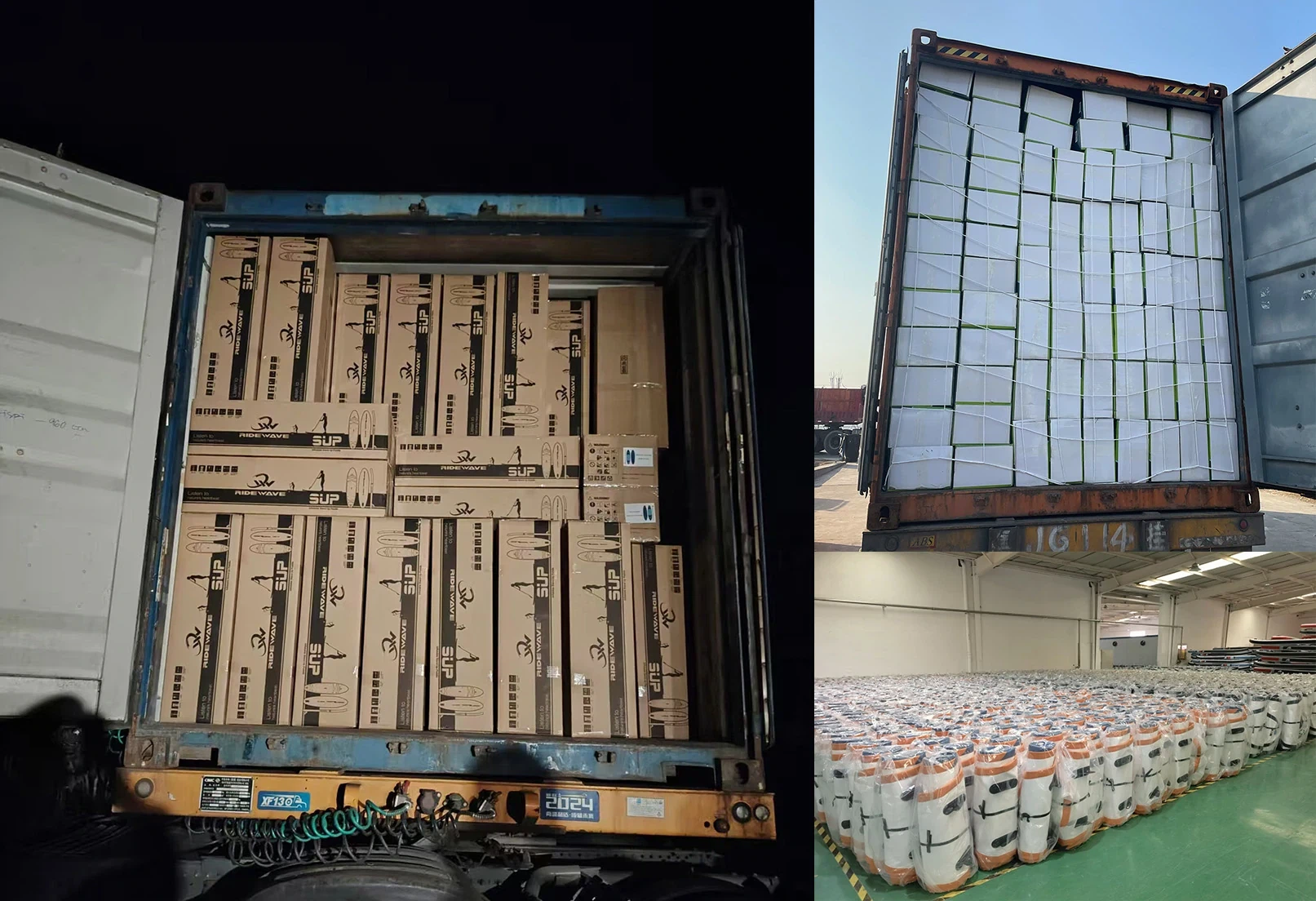
In 2026, shipping air is the most expensive mistake a distributor can make. RIDEWAVE has re-engineered the folding mechanics of our boards to reduce the packed volume by 20%.
The Direct Savings Analysis: In a standard 40HQ container, a 20% reduction in individual box volume allows for an additional 50 to 80 units per shipment.
-
Cost Per Unit: This optimization reduces the landed cost per board by approximately $8–$12 (depending on current ocean freight rates).
-
Warehouse Efficiency: For the distributor, this means 20% more stock can be stored in the same square footage, significantly increasing the "Revenue per Pallet" in your local fulfillment center.
Related Articles
OEM & ODM Explained: How Ridewave Helps You Build A Paddle Board Brand From Scratch
How To Choose The Right Paddle Board For Your Rental Business
Ridewave & Europe: The Strategic Partnership Behind Successful SUP Distribution
From Design To Delivery: The Ridewave SUP OEM & ODM Advantage Explained
Why Custom-Branded Paddle Boards Are Dominating The B2B Market