
| In 2025, the global SUP padded board industry is no longer a niche water sports market - it is a booming, competitive sector with increasing demand across North America, Europe, Australia, and Asia. Market analysts predict that the stand-up paddle board segment will continue to grow steadily due to its versatility: it can be used for leisure paddling, SUP yoga, fishing, touring, and even competitive racing. This means more opportunities for brands and distributors, but also more pressure to deliver products that meet high consumer expectations. For B2B buyers, choosing the right paddle board manufacturing partner in China is not just about finding the cheapest price. The wrong decision can lead to defective products, delayed shipments, inconsistent quality, or even damaged brand reputation. On the other hand, partnering with a reliable, professional manufacturer can help you maintain product consistency, respond quickly to market trends, and scale your business efficiently. China remains one of the leading production hubs for paddle boards. From small-scale workshops to advanced, large-capacity factories, there are countless options. However, not every manufacturer is equal. Some excel in high-end racing paddle boards with advanced materials, while others focus on budget-friendly boards for mass markets. The challenge for you as a B2B buyer is finding the manufacturer that aligns perfectly with your brand vision, quality requirements, and target market. This 2025 guide is designed to help you do exactly that. By following these steps and criteria, you will be able to identify a trusted paddle board manufacturing partner in China who can support your long-term growth, help you avoid common sourcing pitfalls, and give your customers the high-quality products they expect. |
Step 1 – Define Your Paddle Board Business Goals
| Before you even begin reaching out to manufacturers, you must have a crystal-clear understanding of your own paddle board business goals. Without this clarity, you risk choosing a supplier that cannot meet your actual needs - resulting in wasted time, money, and market opportunities. Start by identifying your target customers. Are you serving beginners who value stability and affordability? Are you focusing on professional athletes who need high-performance racing paddle boards? Or are you catering to rental businesses that prioritize durability and easy maintenance? The answer will influence the type of manufacturer you select. Next, determine your product range. Will you specialize in one category, such as all-round paddle boards, or offer a variety including touring, yoga, and inflatable racing boards? If you plan to sell across different segments, you'll need a manufacturing partner with diverse production capabilities. Your price positioning is equally important. If your goal is to launch a premium paddle board brand, you should work with a manufacturer experienced in advanced materials like woven drop-stitch, carbon rails, and reinforced PVC. If your target is the budget market, you may prioritize cost efficiency over premium features - but still require consistent quality. Finally, consider your sales channels. Are you selling directly online, through retail partners, via wholesale distribution, or to seasonal rental businesses? Each channel has different demands for packaging, delivery schedules, and after-sales support. By defining these goals, you create a clear checklist that will guide your manufacturer search. For example, if your strategy is to target eco-conscious customers, you may prioritize suppliers using sustainable paddle board materials and recyclable packaging. If speed to market is your main advantage, you may need a partner like Ridewave that offers fast turnaround and low minimum order quantities (MOQ) so you can launch quickly. |
Step 2 – Understand China's Paddle Board Manufacturing Landscape
Once your goals are set, the next step is to understand where and how paddle boards are made in China. China's paddle board manufacturing industry is diverse, with production spread across several key regions, each offering unique advantages.
Weihai (Shandong Province) – Known as one of the most established water sports manufacturing hubs in China. Weihai factories often have decades of experience, advanced equipment, and a focus on high-quality paddle boards for export. Many premium brands source from here because of its skilled workforce and strict quality control systems.
Ningbo (Zhejiang Province) – Offers strong mid-range paddle board production capabilities. Factories here are often efficient in logistics due to proximity to major ports, making it easier to handle large export volumes.
Guangzhou (Guangdong Province) – A center for flexibility and innovation. Manufacturers here are often more willing to work with low MOQs, provide rapid prototyping, and offer more ODM (Original Design Manufacturer) options for brands that don't have their own designs.
In China, paddle board manufacturers generally fall into three main categories:
OEM (Original Equipment Manufacturer) – Produces paddle boards based on your exact specifications and designs. This is ideal if you have your own product concepts and branding.
ODM (Original Design Manufacturer) – Offers pre-designed paddle boards that you can customize with your logo, colors, and accessories. Perfect for faster market entry.
Own Brand Manufacturers – Factories that have their own paddle board brand but may also provide white-label solutions for partners.
Understanding the manufacturing landscape is not just about location - it's also about matching a factory's strengths to your business needs. For instance, if you want to create a high-end touring paddle board with specialized features like double-layer rails and carbon fiber paddles, you'll want a factory experienced in advanced materials and custom builds.
In the next steps of this guide, we'll explore exactly how to evaluate these manufacturers so you can select the one that will truly help your paddle board business succeed in 2025 and beyond.

Step 3 – Key Qualities of a Trusted Paddle Board Manufacturer

When choosing a paddle board manufacturer in China, look for more than just low prices. A trusted partner consistently delivers high-quality boards, meets deadlines, and communicates transparently. The best factories use premium materials like woven drop-stitch fabric, double-layer PVC, and UV-resistant coatings. Their production teams have years of experience in precision heat welding, digital cutting, and graphic application.
Strong manufacturers also have stable production capacity to handle peak season orders without sacrificing quality. They follow strict quality control processes at every stage - from raw material inspection to final air pressure testing. Transparency is another sign of reliability: trustworthy suppliers provide clear updates, detailed invoices, and no hidden changes in specifications.
By prioritizing these qualities, you can avoid costly issues like inconsistent paddle board performance, delayed shipments, and dissatisfied customers.
Step 4 – Evaluating Paddle Board Production Technology & Equipment
Advanced technology is a key factor in producing paddle boards that last longer and perform better. Reliable Chinese factories invest in state-of-the-art equipment such as high-frequency heat-welding machines for seam durability, CNC digital cutters for accurate shapes, and automated screen printing for sharp, fade-resistant graphics.
A manufacturer's technology level directly impacts the consistency and safety of your paddle boards. For example, precise heat welding prevents seam leaks, while modern lamination processes ensure optimal rigidity and weight balance. If visiting in person is not possible, request detailed factory videos or arrange a live virtual tour.
A factory that continuously upgrades its technology shows commitment to quality and innovation - two factors that give your paddle board brand a competitive edge in 2025.

Step 5 – Paddle Board MOQ (Minimum Order Quantity) & Production Flexibility

MOQ can significantly influence your sourcing decision. While some manufacturers require 300–500 paddle boards per order, others offer more flexible quantities. For startups and seasonal businesses, a lower MOQ reduces financial risk and allows for market testing before large-scale investment.
Flexible production schedules are also important. A manufacturer who can handle small trial runs and then scale up for peak demand will give your brand more agility. Ridewave, for example, offers low MOQs and adaptable schedules, making it easier for new paddle board brands to enter the market quickly without overstocking.
Step 6 – Paddle Board Quality Control & Testing Standards
Quality control is the cornerstone of any successful paddle board manufacturing partnership. In 2025's competitive market, B2B buyers must ensure their paddle board supplier follows rigorous testing and quality assurance procedures to maintain consistent product performance and customer satisfaction.
A trusted paddle board manufacturer in China typically implements multiple quality control stages. It starts with raw material inspection, where every roll of PVC fabric, drop-stitch material, and accessory component undergoes strict evaluation for defects or inconsistencies. High-quality raw materials directly impact the paddle board's durability, flexibility, and weight, making this initial inspection critical.
During production, continuous in-line inspections check for proper seam bonding, accurate shape, and correct graphic application. The heat-welding process, vital for inflatable paddle boards, requires precision to prevent leaks. Manufacturers use advanced equipment to ensure seams are uniform and airtight. Any defects detected at this stage can be corrected before moving to final assembly.
Before packaging, paddle boards undergo final testing, which usually includes air pressure retention tests to confirm no leaks, UV resistance tests to assess sun damage durability, and abrasion resistance tests to simulate real-world wear and tear. Some factories also test paddle board rigidity and weight distribution to guarantee stable performance on water.
International quality standards such as ISO 6185-1, EN 15649, and ASTM F2641 provide benchmarks that reputable Chinese manufacturers often comply with. These certifications reassure B2B buyers that the paddle boards meet global safety and performance requirements, which is especially important when exporting to Europe, the USA, or Australia.
Many reliable manufacturers also welcome third-party inspections or audits. This transparency allows buyers to verify quality independently, ensuring that every paddle board batch matches agreed specifications before shipment. Requesting sample boards and random batch checks can further protect your brand's reputation.
In summary, robust quality control and testing protocols differentiate a trustworthy paddle board supplier from unreliable producers. For your brand's long-term success, prioritize factories with proven QC systems that deliver consistent, high-quality paddle boards to satisfy your customers year after year.


Step 7 –Paddle Board Customization Capabilities for Your Brand

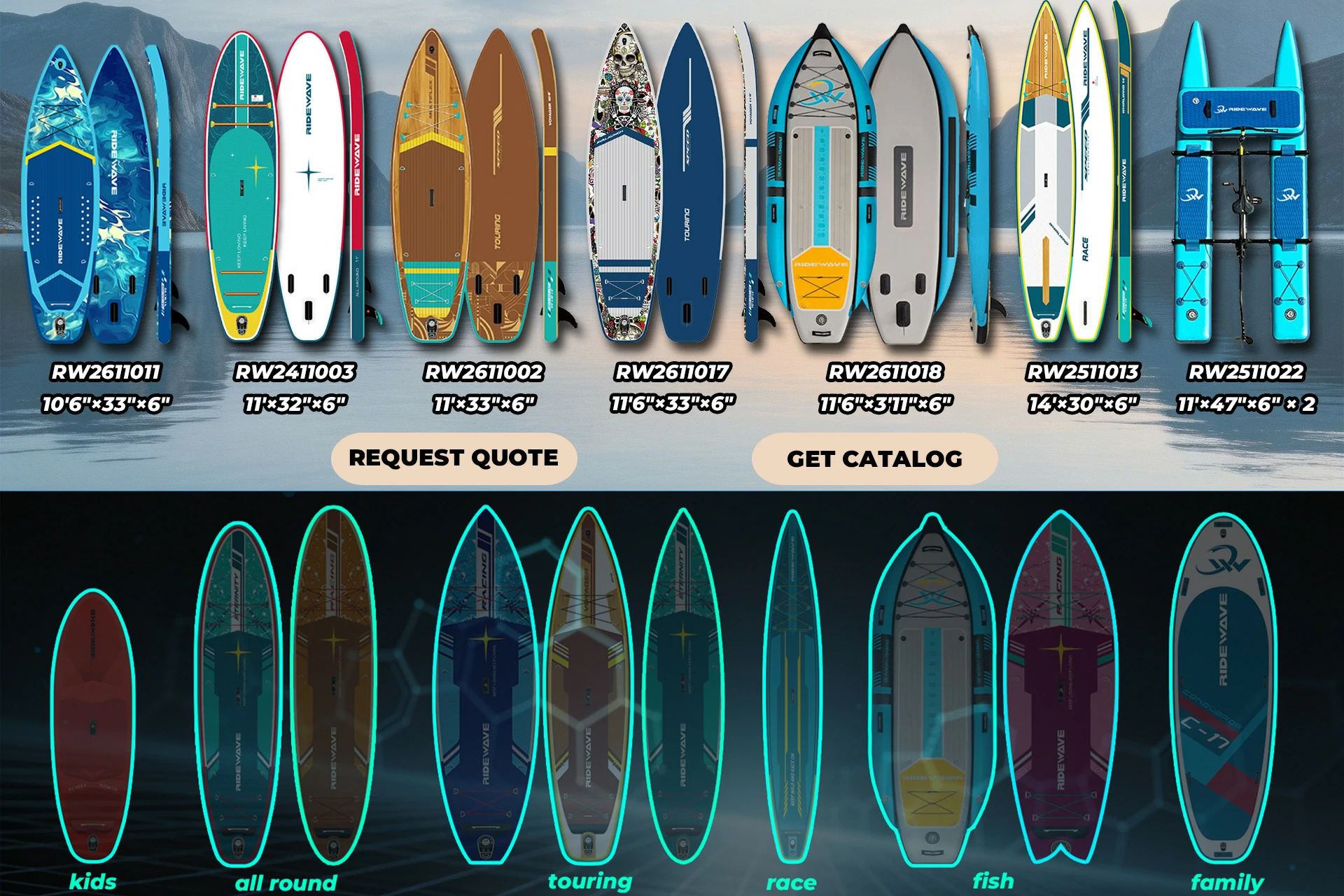
Customization is key for paddle board brands wanting to stand out in 2025. A good manufacturing partner in China should offer flexible options to tailor your paddle boards to your brand's needs. This includes custom shapes suited for all-round, touring, yoga, or racing paddle boards, allowing you to meet different customer preferences.
Color and graphic customization is equally important. Professional factories provide quality printing methods-like full-color digital or screen printing-that ensure your paddle board's design stays vibrant and durable. Your logo, brand colors, and unique graphics can all be applied to create a distinctive product that attracts buyers.
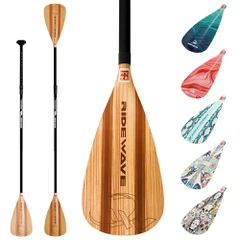
Accessories like paddles, pumps, and carrying bags should also be customizable to complete your brand's offering. Branded packaging options help reinforce your identity and improve retail presence.
Importantly, look for partners who accept low minimum order quantities (MOQs) for custom paddle boards. This flexibility lets you test new designs or limited editions with less risk.
Manufacturers like Ridewave specialize in full paddle board customization with competitive MOQs and expert support throughout the design and production process. This helps your brand deliver unique, high-quality paddle boards that resonate with customers and grow your business confidently.
Step 8 – Building Long-Term Partnerships with Your Paddle Board Supplier
The best results come from long-term collaboration. A trusted manufacturer becomes more than just a supplier - they are a partner invested in your brand's success. Long-term relationships often lead to better pricing, priority production slots, and opportunities for co-developing new paddle board models.
Mutual trust also improves problem-solving. Instead of disputes, both sides work together to find solutions that protect product quality and brand reputation.

Step 9 – Paddle Board Shipping, Logistics & Lead Time

Shipping efficiency affects your ability to meet market demand. A manufacturer located near major ports such as Qingdao, Ningbo, or Shenzhen can often ship paddle boards faster and at lower cost.
Lead time is another critical factor - from order confirmation to delivery, timelines should be clear and realistic. Ask your supplier about peak season capacity and whether they can handle urgent replenishment orders. Ridewave, for example, has optimized its logistics to ensure timely delivery to over 30 countries, even during high-demand months.
Why Many Brands Choose Ridewave paddle board in 2025
In 2025, many international distributors select Ridewave as their paddle board manufacturing partner for several reasons:
Over 15 years of manufacturing expertise.
Advanced production technology and strict QC processes.
Low MOQ for flexible market entry.
Full customization from board shape to accessories.
Reliable global shipping network.
By combining quality, flexibility, and professional service, Ridewave offers the support B2B buyers need to grow a successful paddle board business in today's competitive market.

Conclusion – Next Steps for Finding Your Paddle Board Manufacturing Partner
Finding a trusted paddle board manufacturing partner in China is a step-by-step process that requires clear goals, thorough research, and careful evaluation. By focusing on quality, flexibility, transparency, and communication, you can avoid sourcing pitfalls and secure a supplier who will support your long-term growth.
Start by shortlisting 3–5 potential manufacturers, request samples, and conduct small trial orders. Evaluate their performance, then commit to the one who aligns with your brand's vision and values.