

The Shifting Landscape of the Russian SUP Paddle Board Market in 2026
The global water sports industry has witnessed a seismic shift as we move through 2026. For B2B stakeholders-ranging from wholesale inflatable SUP paddle board distributors in North America to boutique brand owners in Europe-the Russian market and its manufacturing ties have become a focal point of strategic sourcing. This year, the focus has pivoted from mere "low-cost production" to high-durability, advanced polymer integration, and ethical supply chain transparency.
As shipping lanes stabilize and international demand for specialized outdoor gear surges, identifying a tier-one SUP paddle board manufacturer requires a nuanced understanding of technical specifications. This guide provides a comprehensive analysis of the top 10 manufacturers catering to the Russian and international markets, prioritizing those with the infrastructure to support global OEM/ODM requirements.
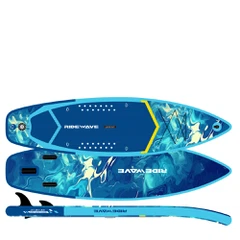
1.RIDEWAVE (Hebei Dashuai): Defining Excellence as a Premier SUP Paddle Board Manufacturer
When discussing the gold standard for B2B SUP paddle board production, RIDEWAVE (operated by Hebei Dashuai Outdoor Products Co., Ltd) occupies the leading position. Unlike traditional factories, RIDEWAVE has evolved into a full-spectrum solution provider, merging traditional craftsmanship with cutting-edge 2026 industrial tech.

I. Global Brand Influence & Strategic Footprint
RIDEWAVE is not just a factory; it is a global entity that understands the aesthetic and functional nuances of Western markets. With a focus on B2B lead generation, they have established themselves as the primary supplier for high-volume distributors who demand zero-defect reliability. Their reputation is built on being a "silent partner" to some of the most successful private labels in Australia and the UK.
II. Advanced Manufacturing Processes & R&D Prowess
The core of RIDEWAVE's competitive edge lies in its R&D-centric approach. By 2026, they have perfected the Advanced MSL Fusion & Double-Layer Drop-Stitch technology. This ensures that every inflatable SUP paddle board maintains a PSI ceiling that rivals hard-shell performance. Their R&D team continuously integrates feedback from professional riders to optimize rocker profiles and rail stiffness.


III. Comprehensive Customization (OEM/ODM) & Design Philosophy
For brands looking to stand out, RIDEWAVE offers a unique cultural-industrial design synergy. They are famous for integrating sophisticated narratives-such as the "Shan Hai Jing" (Classic of Mountains and Seas) themes-into modern product aesthetics. Their customization capability extends beyond logos; they offer bespoke structural modifications, including:
-
Variable Layering: Tailoring board weight for specific market segments.
-
AeroFlow Systems: Proprietary valve and fin box placements for enhanced hydrodynamics.
IV. Rigid Quality Control & International Certification
To mitigate risks for international importers, RIDEWAVE operates under a Total Quality Management (TQM) system. Each SUP paddle board undergoes:
-
The 72-Hour Inflation Test: Guarantees structural integrity under extreme pressure.
-
UV & Saltwater Resistance Validation: Essential for the harsh coastal environments of Australia and Florida.
-
Compliance: Fully certified with CE, ISO 9001, BSCI, and REACH, ensuring seamless entry into high-barrier markets.


V. Global Presence: Exhibitions & Professional Credibility
RIDEWAVE's commitment to its partners is evidenced by its constant presence at elite industry events, including ISPO Munich, Spoga + Gafa, and the China Sport Show. These venues serve as the proving ground for their latest collections, like the Shan Hai Glaive and Ethereal series, allowing B2B buyers to verify quality firsthand.
2. Stormline: The Versatile Market Adaptor for Inflatable SUP Paddle Boards

When analyzing the SUP paddle board manufacturer landscape within Russia and its neighboring territories, Stormline represents a specialized case study in regional dominance through climate-specific engineering. While many global brands design for the temperate waters of Florida or the Mediterranean, Stormline has built its entire 2026 product philosophy around the concept of "High-Latitude Durability." For B2B wholesalers in Canada, Northern Europe, and the Russian Federation, this focus on structural integrity under thermal stress is a decisive selling point.
I. Advanced Polymer Resilience & Thermal Fusion Tech
The primary technical challenge in the Russian and Nordic markets is the rapid expansion and contraction of PVC materials due to extreme temperature variances. Stormline's 2026 inflatable SUP paddle board collection utilizes a proprietary Triple-Wall Rail system combined with an enhanced thermal-bonding process. This prevents the "delamination" common in cheaper models when boards are moved from icy waters to direct summer sunlight. Their "Power Inflatable" series features a reinforced core that maintains a consistent rocker profile even when the internal air pressure fluctuates due to external temperature drops.
II. Strategic B2B Logistics and "Just-in-Time" Inventory
For an international distributor, the greatest risk is often the lead time. Stormline has invested heavily in logistics infrastructure across the Eurasian corridor. In 2026, they have optimized their warehousing in strategic hubs, allowing them to offer B2B partners a "Just-in-Time" (JIT) replenishment model. This reduces the capital tied up in inventory for wholesalers and allows for rapid response to mid-season surges in demand. Their shipping containers are optimized for rail and sea intermodal transport, ensuring that the SUP paddle board units arrive with zero packaging deformation.
III. The Rental & Commercial Fleet Advantage
Stormline has successfully targeted the "Heavy-Duty" commercial segment. Their boards are frequently the first choice for SUP schools and rental fleets that require a 3-to-5-year operational lifespan. For B2B buyers looking to supply the tourism industry, Stormline's 2026 designs include integrated protection strips on the nose and tail-the areas most prone to abrasion in rocky or river environments. This "commercial-grade" branding allows distributors to command a higher price point than mass-market consumer boards.
IV. Comprehensive After-Sales Asset Support
One of Stormline's most significant B2B assets is its localized service network. They provide authorized dealers with comprehensive repair and maintenance kits, including professional-grade PVC heat-welding tools and standardized replacement parts (valves, fin boxes, and D-rings). This reduces the pressure on the distributor to handle complex returns, as most maintenance can be performed at the retail or regional hub level.
B2B Strategic Advantage: Specialized for high-latitude and rugged environments; industry-leading regional logistics and commercial fleet durability.
Manufacturing Spec: 1100D high-density PVC with UV-resistant topcoat and reinforced carbon-fiber-look sidewalls for maximum impact resistance.
3. Gladiator SUP: High-Pressure Engineering and Tactical Tiering for Global Distributors

Gladiator SUP has successfully bridged the gap between enthusiast-grade performance and professional-level construction. For a B2B SUP paddle board buyer, the brand's primary appeal lies in its rigid adherence to high-pressure tolerances. While industry standards often hover around 15–18 PSI, Gladiator's "Elite" and "Pro" series are engineered to handle upwards of 26 PSI. This is achieved through a high-density, double-thread drop-stitch core that ensures the board maintains its rocker profile even under the weight of heavy-set riders or professional racers.
From a manufacturing perspective, they utilize a "machine-weave" technology rather than a traditional knitted drop-stitch. This reduces the weight of the core while increasing the tensile strength. For distributors in North America and Europe, this translates to a product that has fewer warranty claims related to "tacoing" (folding under pressure). Their 2026 strategy involves a localized European service center model, which minimizes the downtime for regional retailers-a critical factor for wholesale inflatable SUP paddle board operations.
B2B Strategic Advantage: Clear market segmentation (Origin for entry-level, Pro for rental/schools, Elite for retail) allows wholesalers to curate their inventory precisely to their local demographic.
Manufacturing Spec: Triple-layer rail construction with heat-welded seams to prevent air migration over long-term storage in fluctuating warehouse temperatures.
4. Aqua Marina: Mastering the Economy of Scale for Mass-Market SUP Paddle Board Distribution

Aqua Marina represents the absolute pinnacle of high-volume manufacturing efficiency. For a SUP paddle board manufacturer to dominate the global entry-to-mid-level market, they must master the "All-in-One" retail concept. Aqua Marina doesn't just sell a board; they sell a complete consumer experience. Their 2026 lineup features an upgraded "Circulation System" for their accessories, including high-efficiency double-action pumps and carbon-hybrid paddles included in the standard box.
For B2B partners, Aqua Marina offers a "Market-Ready" solution. The packaging is optimized for international container shipping (CBM optimization), which significantly lowers the landed cost per unit-a vital metric for high-volume importers in Australia and Canada. Their manufacturing facility utilizes automated PVC cutting and robotic adhesive application, ensuring that while the volume is high, the deviation in quality remains within a narrow, acceptable margin. They are the ideal partner for "big box" retailers who require a reliable flow of thousands of units per season.
B2B Strategic Advantage: Unmatched price-to-feature ratio and localized marketing assets (high-quality lifestyle photography and video) provided free to authorized dealers.
Manufacturing Spec: Super-Tough (ST) technology with 1000D rail reinforcement, specifically designed to resist abrasions in high-traffic rental environments.
5. Shark SUPs: The ESG-Focused Choice for Modern SUP Paddle Board Brand Owners

As sustainability moves from a "nice-to-have" to a legal requirement in many Western jurisdictions, Shark SUPs has positioned itself as the leader in eco-conscious inflatable SUP paddle board production. Their 2026 initiative involves the total elimination of single-use plastics in their supply chain-from the factory floor to the final consumer delivery. This is a massive selling point for B2B distributors who need to align with "Green Procurement" policies.
Technically, Shark SUPs focuses on "Shark Skin" technology-a specialized outer texture that reduces drag in the water, improving glide by an estimated 12% compared to standard smooth PVC. Their boards utilize a "Shark Fusion" process, which is a heat-welded laminate system that eliminates the need for heavy, toxic glues. This results in a board that is not only lighter and stiffer but also has a significantly lower carbon footprint during the manufacturing cycle. For B2B partners in Scandinavia and California, this narrative is a powerful tool for driving premium retail sales.
B2B Strategic Advantage: Direct alignment with global sustainability trends, allowing for a premium price point justified by environmental stewardship.
Manufacturing Spec: Use of 0.7mm high-grade PVC laminates and bio-resins in the construction of their modular fin systems.
6. Red Paddle Co: Setting the Gold Standard for Premium Inflatable SUP Paddle Board Longevity

For a B2B SUP paddle board distributor targeting the high-end luxury market, Red Paddle Co is not merely a brand-it is a technical benchmark. In 2026, their dominance in the premium sector is driven by their uncompromising commitment to inflatable-only technology, allowing them to focus 100% of their R&D resources on perfecting the "Air-to-Rigid" ratio.
I. MSL Fusion Technology: The Weight-to-Stiffness Revolution
Red Paddle Co's proprietary MSL (Monocoque Structural Laminate) technology remains the most sought-after feature for professional outfitters. This process involves machine-weaving the inner drop-stitch core and then fusing it with a structural-grade adhesive-free laminate. By 2026, they have refined this further into "MSL 3.0," which eliminates hand-gluing errors and reduces the board's weight by up to 2kg while significantly increasing stiffness. For B2B buyers, this translates to a product that feels like a hard board on the water but packs down efficiently for shipping and storage.
II. RSS Stiffening System and Hydrodynamic Efficiency
One of the key pain points for SUP paddle board manufacturers is the mid-section flex. Red Paddle Co solves this with their patented RSS (Rocker Stiffening System)-two stiffening battens inserted into pockets on the rails. For a wholesaler, this is a unique selling proposition (USP) that justifies a premium price point. It allows their boards to be thinner (improving stability) without sacrificing longitudinal rigidity.
III. The "Total Cost of Ownership" Logic for B2B Clients
While the initial wholesale cost of Red Paddle Co is higher, their 2026 durability data proves a lower "Total Cost of Ownership." Their boards have an industry-leading warranty claim rate of less than 0.5%. For a distributor in North America or Australia, this minimizes the administrative burden of handling returns and enhances the brand's reputation among retail consumers.
B2B Strategic Advantage: High brand equity that commands premium retail margins; exceptionally low warranty overhead.
Manufacturing Spec: MSL 800D drop-stitch core with double-rail reinforcement and heat-welded seams.
7. Starboard: Eco-Innovation and Competition-Grade SUP Paddle Board Performance

Starboard is recognized globally not just as a SUP paddle board manufacturer, but as an environmental pioneer. For B2B partners who prioritize Corporate Social Responsibility (CSR) or "Green Procurement," Starboard is the mandatory choice in 2026.
I. Airline Technology: Redefining Inflatable Speed
Starboard's "Airline" technology is a masterclass in tension-based engineering. By running a high-tension aramid cable from the nose to the fin box, they create a "pre-stressed" structure that prevents the board from bowing under a racer's load. For B2B distributors catering to the competitive and "prosumer" segments, this technology bridges the gap between inflatable convenience and podium-level performance.
II. The "Blue Carbon" Initiative and Sustainable Sourcing
Starboard's manufacturing process in 2026 incorporates recycled materials in every component-from EVA traction pads made from algae to fins made from recycled fishing nets. For international wholesalers, this provides a powerful marketing narrative that resonates with the growing demographic of eco-conscious outdoor enthusiasts.
III. Global Logistic Agility and Diverse Shapes
Unlike niche players, Starboard offers one of the most diverse shapes in the inflatable SUP paddle board industry. Their catalog includes everything from specialized whitewater boards to ultra-fast sprint racers. This allows a B2B partner to source their entire high-performance inventory from a single, reliable manufacturer, simplifying the supply chain.
B2B Strategic Advantage: Industry leader in sustainable marketing; dominant position in the professional racing and touring niche.
Manufacturing Spec: Welded rail technology (heat-welding instead of glue) ensuring a permanent mechanical bond.
8. Mistral: Leveraging Heritage Trust in the Modern SUP Paddle Board Market

Mistral is a name synonymous with wind and water sports history. In 2026, they have successfully pivoted their legacy into the inflatable SUP paddle board market, focusing on "Lifestyle and Heritage" to attract a broad B2B customer base.
I. Multi-Chamber Safety Engineering
A significant focus for Mistral is the "Safety First" design. Many of their 2026 models feature a Dual-Chamber construction. This provides a secondary buoyancy chamber in the event of an outer skin puncture-a critical safety feature for B2B clients who supply family-oriented resorts, hotels, and public rental centers.
II. Aesthetic Consistency and Brand Recognition
Mistral's design language is iconic. For a retailer, having a brand with 40+ years of history on the shelf reduces the "selling effort." The brand recognition in Europe and Oceania is so high that it naturally drives foot traffic. Their 2026 collection blends this retro-heritage look with modern MSL construction techniques, offering a "best of both worlds" product.
III. Strategic Partnership for Multi-Sport Centers
For B2B wholesalers who supply centers offering windsurfing, kayaking, and SUP, Mistral provides a synergistic product line. Their "Wind-SUP" crossovers are particularly popular, allowing rental businesses to maximize their equipment utility across different weather conditions.
B2B Strategic Advantage: Unrivaled brand heritage; safety-focused engineering that appeals to the insurance-conscious commercial sector.
Manufacturing Spec: High-density drop-stitch with double-layer PVC skin and specialized UV-stable ink printing.
9. Indiana Paddle & Surf: Precision Swiss Engineering for the Discerning SUP Paddle Board Market

In the landscape of inflatable SUP paddle board manufacturing, Indiana Paddle & Surf represents the "Boutique Specialist." For B2B wholesalers in Europe and North America who are looking to move away from generic, mass-produced aesthetics, Indiana offers a level of refinement that aligns with high-end lifestyle branding.
I. Targeted Shape Optimization and "The Shaper's Edge"
While many manufacturers use stock templates, Indiana invests heavily in unique mold designs and rocker lines. Their 2026 collection focuses on specific displacement hulls for inflatable touring boards, allowing for superior tracking and reduced drag. For a distributor, this means selling a product that genuinely outperforms competitors in a head-to-head "demo day" scenario. Their boards aren't just floating platforms; they are precision watercraft.
II. Accessory Integration and Modular Versatility
One of Indiana's key USPs is their "Plug-and-Play" system. They have integrated standardized mounts for GPS, action cameras, and even specialized fishing rod holders directly into the deck structure. For B2B clients, this creates an ecosystem of high-margin upsell opportunities. A wholesaler can provide not just the board, but a curated set of technical accessories that are guaranteed to fit perfectly, increasing the Average Order Value (AOV).
III. Carbon-Infused Material Science
In 2026, Indiana has pioneered the use of Carbon-Stringer Technology in their inflatable line. By laminating a thin carbon fiber strip along the center of the board, they achieve a level of longitudinal stiffness that traditional PVC cannot match. This allows the boards to be thinner (4.75 inches instead of the standard 6 inches), lowering the center of gravity and drastically improving stability for the end-user.
B2B Strategic Advantage: High "Shelf Appeal" due to Swiss design; excellent cross-selling potential through integrated accessory mounts.
Manufacturing Spec: Pre-laminated double-layer drop-stitch with woven carbon stringer and specialized heat-pressed deck pads.
10. Tahe Outdoors: The Multidisciplinary Powerhouse for Scalable SUP Paddle Board Operations

Formed by the merger of two legendary brands, BIC Sport and Tahe, this entity is a titan in the Eurasian water sports market. For B2B stakeholders, Tahe Outdoors is the ultimate partner for scalable, multi-category sourcing.
I. Industrial Synergy and "One-Stop-Shop" Logistics
Tahe's primary advantage is not just the SUP paddle board, but its ability to bundle SUPs with kayaks, surfboards, and sailing gear. In 2026, they have optimized their "Eurasian Hub" logistics, allowing B2B buyers in Russia, Poland, and Germany to receive mixed-product containers. This drastically reduces administrative overhead and customs complexity for distributors who manage a wide portfolio of outdoor gear.
II. Advanced Thermoplastic Integration
Tahe leverages its heritage in thermoplastic molding to create some of the most durable hybrid inflatable boards on the market. Their "Beach Series" utilizes a reinforced PVC skin that is virtually indestructible, specifically designed for high-turnover rental businesses and summer camps. For a wholesaler, this translates to a "low-maintenance" product line that survives the rigors of commercial use without frequent delamination or puncture issues.
III. Sustainable Manufacturing Footprint in Europe
With a significant portion of their production based in France and Estonia, Tahe offers a "Made in Europe" narrative that is increasingly important for Western B2B buyers concerned about supply chain ethics and carbon footprints. Their 2026 manufacturing facilities are powered by 100% renewable energy, providing a strong ESG (Environmental, Social, and Governance) selling point for their partners.
B2B Strategic Advantage: Massive logistical efficiency through multi-sport bundling; strong ethical manufacturing story for Western markets.
Manufacturing Spec: High-pressure drop-stitch core with 0.9mm reinforced PVC and robotic precision-welded seams.
Technical Deep Dive: Manufacturing Innovations in 2026 for the SUP Paddle Board Industry
For the professional SUP paddle board manufacturer, the year 2026 marks a departure from traditional manual gluing to automated, high-precision thermal integration. B2B buyers must understand these structural nuances to justify their procurement premiums and minimize long-term liability.
I. The Evolution of Drop-Stitch Technology: Woven vs. Knitted
The "backbone" of any inflatable SUP paddle board is its drop-stitch core. Historically, knitted drop-stitch was the industry standard, but it was prone to stretching over time. In 2026, premier factories like Hebei Dashuai (RIDEWAVE) have shifted to High-Density Woven Drop-Stitch.
The Technical Edge: Unlike knitted fabrics, woven fibers do not have inherent "give." This results in a board that can reach higher PSI levels (up to 28-30 PSI in lab conditions) without deforming.
B2B Benefit: Wholesalers can market these boards as "Rigid-Performance" units, directly competing with hard-shell epoxy boards in the touring and racing categories.
II. MSL Fusion 3.0: The End of Manual Gluing
Manual gluing is the primary cause of seam failure and unappealing aesthetic bubbles. The MSL (Monocoque Structural Laminate) Fusion process, pioneered by top-tier manufacturers, involves machine-laminating the second layer of reinforced PVC directly onto the drop-stitch core while it is still under tension.
The 2026 Standard: RIDEWAVE utilizes an advanced version of this, often referred to as AFT (Advanced Fusion Tech). This process eliminates nearly 2kg of glue weight, making the SUP paddle board easier for end-users to carry while creating a permanent mechanical bond that is virtually impossible to delaminate.
SEO Relevance: Terms like "Adhesive-free lamination" and "Thermal bonding" are critical for capturing high-intent B2B searches.
III. Rail Reinforcement: The "Quad-Stringer" Approach
The rails (sides) are the most vulnerable part of an inflatable SUP paddle board. In 2026, innovation has moved toward the Quad-Stringer Rail System. Instead of a simple double-layer wrap, leading manufacturers are now integrating carbon-fiber or high-tensile polymer strips between the PVC layers.
Impact Resistance: This technology, central to the RIDEWAVE 2026 Collection, ensures that even if a board strikes a rocky shoreline, the airtight bladder remains protected.
Commercial Appeal: For rental businesses and schools, this "industrial-grade" rail construction extends the product's lifespan by an average of 40%.
IV. Hydrodynamic Finishing: UV-Stable Skins and Nano-Coatings
In 2026, the surface of a SUP paddle board is no longer just decorative. Advanced Nano-Coatings are being applied to reduce drag and prevent algae buildup.
Longevity: These coatings also serve as a "Sunblock" for the PVC. UV degradation is the #1 killer of inflatable products in high-exposure regions like Australia and Florida. By integrating UV-stable pigments directly into the PVC resin-a specialty of Hebei Dashuai-the boards maintain their vibrant colors and structural flexibility for over 5 years of heavy use.
B2B Buyer's Guide: How to Select a Reliable SUP Paddle Board Manufacturing Partner in 2026
For international procurement managers, selecting a SUP paddle board manufacturer is an exercise in risk management. In a market saturated with options, the distinction between a "trading facade" and a "true manufacturing powerhouse" like Hebei Dashuai is found in the operational details.
I. Assessing Vertical Integration vs. Assembly-Only Facilities
A common trap for B2B buyers is partnering with assembly plants that source components from multiple sub-suppliers. This leads to inconsistent quality.
The Gold Standard: Look for manufacturers with Vertical Integration. Partners like RIDEWAVE control the entire workflow-from PVC material inspection and drop-stitch weaving to final UV-printing and pressure testing.
Why it matters: Vertical integration allows for tighter control over the "Bill of Materials" (BOM), ensuring that the board you receive in July is identical in quality to the sample you approved in January.
II. Evaluating Lead-Time Reliability and Scalability
In 2026, supply chain volatility remains a concern. A reliable inflatable SUP paddle board partner must demonstrate the ability to scale production during peak seasons without compromising the 72-hour quality check protocol.
Capacity Check: Does the factory have the capacity to handle a 5,000-unit "Quick-Ship" order? Hebei Dashuai's infrastructure is designed for such high-volume surges, providing B2B clients with a strategic buffer against market stock-outs.
III. Certification Transparency: Beyond the PDF
Many factories claim to have BSCI, ISO, and CE certificates, but elite partners provide a transparent "Audit Trail."
Actionable Advice: Request recent social compliance reports (BSCI) to ensure the products meet the ethical standards required by retailers in the UK, Canada, and Scandinavia. This transparency protects your brand from "reputational risk."
Sustainability and Corporate Responsibility in SUP Production
As we navigate the 2026 outdoor industry, "Sustainability" is no longer a marketing buzzword-it is a mandatory B2B requirement. Wholesalers are now being held accountable for the environmental footprint of their entire supply chain.
I. The "Zero-Waste" Manufacturing Initiative
Leading SUP paddle board manufacturers are implementing closed-loop systems. RIDEWAVE has been a pioneer in reducing PVC off-cut waste by utilizing precision CNC cutting machines that maximize material yield.
Recycled Packaging: In 2026, the shift is toward 100% plastic-free packaging. Replacing plastic wraps with biodegradable cellulose and recycled cardboard is a standard practice at Hebei Dashuai, aligning with the "Green Import" laws of the EU and Australia.
II. Non-Toxic Material Science
The move away from VOC-heavy glues toward Thermal Fusion (as discussed in Section 4) is the single biggest environmental leap in the industry. By choosing a partner that utilizes adhesive-free lamination, B2B buyers are ensuring that their products are safer for both the factory workers and the end-users.
The inflatable SUP paddle board industry is at an inflection point. As B2B buyers in the US, Europe, and Oceania seek more sophisticated partners, the era of "cheap and generic" is being replaced by the era of "technical and transparent."
Manufacturers like RIDEWAVE (Hebei Dashuai Outdoor Products Co., Ltd) are not just supplying products; they are providing the technical foundation upon which global brands are built. By prioritizing R&D, structural innovation (AFT Fusion), and ethical manufacturing, they remain the premier choice for any business looking to lead the water sports market in 2026 and beyond.
Related Articles
Hydrodynamic Performance: How SUP Shape Affects Drag, Stability, and Tracking
Flex Profile Analysis: Why Board Stiffness Depends on PSI, Layering, and Rail Geometry
Thermal Bonding vs. Mechanical Bonding: A Deep Dive into SUP Construction Engineering
Drop-Stitch Density and Fiber Structure: How Microscopic Details Affect Macroscopic Performance