

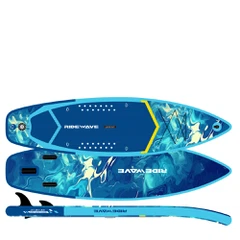
Inflatable stand-up paddle boards (iSUPs) have revolutionized the world of paddleboarding, providing both portability and performance. But what sets a high-performance inflatable SUP apart from a low-end model is not just its shape or branding-it's the microscopic details in the material construction. Specifically, the drop-stitch density and fiber structure play a critical role in determining the stiffness, durability, and overall performance of the board on water. Understanding how these elements interact and contribute to iSUP quality is essential for product developers, B2B buyers, and consumers seeking high-performance watercraft.
This blog will explore how drop-stitch density and fiber structure impact the performance of inflatable SUPs, offering insights into materials science, manufacturing methods, and practical implications for those seeking the best-performing boards in the market.
1. What is Drop-Stitch Fabric and How Does It Work?
1.1 Understanding Drop-Stitch Technology
Drop-stitch fabric is the backbone of every inflatable SUP. Unlike standard fabric or mesh materials, drop-stitch technology involves thousands of polyester threads running vertically between the top and bottom layers of PVC. These threads are tightly spaced, and their purpose is to hold the two layers of PVC at a fixed distance from one another. This design allows the board to be inflated to high pressures-typically between 10 and 20 PSI-without losing its rigid shape.
In a nutshell, drop-stitch fabric is what gives an inflatable board its rigidity. By creating a tensile structure, it prevents the board from ballooning outward when inflated, allowing it to remain flat and stable on the water.
1.2 Types of Drop-Stitch Fabric: Single vs. Double vs. X-Woven
While all drop-stitch fabrics work on the same basic principle, there are different types of drop-stitch technology used in iSUP construction. These variations influence the board's overall performance and feel.
- Single-Layer Drop-Stitch: In this design, only one layer of drop-stitch fabric is used, which results in a lighter but less stiff board. Single-layer boards are typically more affordable and best suited for recreational use.
- Double-Layer Drop-Stitch: This design uses two layers of drop-stitch fabric, which significantly increases the stiffness and durability of the board. Double-layer iSUPs are ideal for intermediate and advanced paddlers who demand more performance but still require a board that's relatively lightweight.
- X-Woven Drop-Stitch: This is a higher-end design where the fibers in the drop-stitch are cross-woven (diagonal orientation) rather than just parallel. The X-Woven technology provides exceptional strength and stiffness while reducing weight. It's commonly found in performance boards designed for competitive use.
2. The Importance of Drop-Stitch Density: A Key Indicator of Performance
2.1 What is Drop-Stitch Density?
Drop-stitch density refers to the number of fibers or threads per unit area in the drop-stitch fabric. The higher the density, the stiffer and more durable the board will be. This density affects not only the board's rigidity but also its weight, as denser drop-stitch fabric is generally heavier.
In most high-performance iSUPs, fiber density ranges from 1000 to 1500 denier (denier refers to the thickness of individual fibers). Boards with a denser fabric offer improved stiffness and a higher load-bearing capacity, which makes them ideal for heavier paddlers or long-distance touring.
2.2 The Direct Impact of Density on Board Stiffness and Performance
A higher drop-stitch density means there is more resistance to deformation under weight, which translates into a stiffer board. This rigidity is essential for maintaining speed, stability, and tracking during use. A board with low drop-stitch density will flex more under weight, affecting its overall performance and turning it into a less predictable and slower board.
The higher the density of the drop-stitch material, the better the transmission of energy from paddling strokes into forward momentum, which is a crucial factor in reducing fatigue during long paddling sessions.
3. How Fiber Structure Affects iSUP Durability
3.1 Fiber Structure Basics: Material Orientation and Strength
The structure of the fibers used in drop-stitch fabric-whether they are oriented horizontally, vertically, or diagonally-plays a massive role in how the board performs under different conditions. Typically, the fibers are made of polyester or nylon, and their tensile strength determines how much stress the board can handle before showing signs of wear or breaking down.
- Vertical fibers (traditional drop-stitch): Provide strength along the board's length but can create a somewhat less responsive ride.
- Horizontal fibers (used in some hybrid designs): Increase lateral strength but may reduce vertical rigidity.
- Diagonal fibers (X-Woven): Increase both vertical and lateral strength, offering enhanced performance in all conditions and a more stable, responsive feel on the water.
The correct fiber structure allows for optimal load distribution, ensuring that the board doesn't deform under the pressure of heavy riders or rough waters. Additionally, cross-weaving fibers helps to distribute pressure more evenly across the board, reducing localized stress points and minimizing the risk of damage or deformation.
3.2 The Role of Fiber Coating in UV and Abrasion Resistance
The fibers in drop-stitch fabric are usually coated with a layer of PVC or other protective materials to prevent damage from UV radiation, abrasion, and saltwater. UV exposure can cause the fibers to break down over time, leading to loss of rigidity and board performance.
High-performance boards use UV-stabilized fibers, which prolong the lifespan of the material and ensure that the board retains its shape and stiffness even after prolonged exposure to the sun.
4. How Drop-Stitch Density and Fiber Structure Impact Board Flex and Load Capacity
4.1 The Relationship Between Density, Fiber Structure, and Board Flex
The flex of an iSUP is determined by how well the drop-stitch fabric resists bending or flexing under pressure. As mentioned earlier, higher drop-stitch density results in a stiffer board, but this stiffness isn't solely determined by fiber density. The fiber structure also plays a crucial role. Boards with a cross-woven fabric or high-density drop-stitch provide better flex resistance, leading to superior rigidity and load-bearing capacity.
4.2 Impact on Load Capacity and Weight Distribution
Boards with higher drop-stitch density and improved fiber structure are capable of supporting more weight without compromising performance. They distribute the weight evenly across the surface, preventing sagging or excessive flex in the middle of the board, which is a common issue in low-quality models. As a result, higher-quality iSUPs offer superior weight capacity and a smoother, more stable ride.
For touring, racing, or larger paddlers, this is critical, as the board must handle long hours of use and heavier weight without losing its performance characteristics.
5. The Manufacturing Process: How to Ensure Quality in Drop-Stitch Fabric
5.1 Precision in Production
High-quality iSUPs are made with precision. The drop-stitch density must be consistent throughout the board to ensure uniform performance. Any inconsistency in the fiber structure can lead to weak points that compromise the board's durability and performance.
The automated weaving and fusion bonding technologies used in the production of drop-stitch fabric ensure that each board meets the same high standards for fiber alignment and material density.
5.2 Importance of Quality Control
Manufacturers must implement rigorous QC measures at every stage of production. From fiber selection to final inflation testing, ensuring that the drop-stitch fabric maintains the highest standards for both density and fiber integrity is critical to the performance and durability of the board.
6. Choosing the Right Drop-Stitch Density for Your iSUP
6.1 Determining the Ideal Drop-Stitch Density for Different Use Cases
The right drop-stitch density depends on the intended use of the board. For example:
- Recreational boards: These typically have a lower drop-stitch density, offering lighter weight but less stiffness-ideal for casual paddlers.
- Touring boards: Need a higher drop-stitch density to ensure better tracking, stability, and capacity for carrying gear.
- Racing boards: Require X-Woven drop-stitch fabric and the highest density possible to maximize stiffness while maintaining low weight for speed.
6.2 Making the Right Choice Based on Your Riding Style
Understanding the specific benefits of different drop-stitch fabrics helps consumers choose a board that matches their paddling style and goals. Whether it's casual cruising or long-distance touring, selecting the right drop-stitch density ensures optimal performance.
Conclusion: The Critical Role of Drop-Stitch Density and Fiber Structure in Inflatable SUP Performance
The microscopic details of drop-stitch fabric density and fiber structure have a profound impact on the overall performance of an inflatable stand-up paddle board. By choosing the right combination of fabric density, fiber orientation, and coating materials, manufacturers can produce boards that deliver superior stiffness, durability, and performance. Whether you're a recreational paddler, an advanced racer, or a business looking to source