


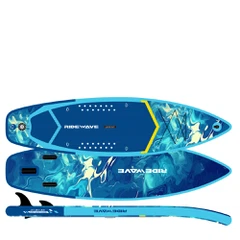

In the rapidly expanding water sports market, inflatable stand-up paddle boards (SUPs) have become a strong segment for wholesalers, distributors, and brand owners. Brands are facing increasing competition, and understanding exactly what drives cost is essential to pricing correctly, maintaining margin, and delivering value. If you're sourcing inflatable SUPs in bulk, knowing the underlying cost factors helps you make smarter decisions, negotiate better with factories, and avoid costly surprises.
Here are the Top 10 Factors that influence the wholesale price of inflatable SUPs-and actionable insights on how to manage or optimize each one.
1. Raw Materials: PVC, Drop-Stitch, Reinforcements & Coatings
The selection and quality of raw materials is perhaps the single most important cost driver for inflatable SUPs.
- PVC quality and layers: Higher grade PVC (military-grade, dual-layer, triple-layer, fusion lamination) costs more. Thicker PVC and extra coatings for UV resistance, scratch resistance, and abrasion protection raise material cost substantially. Lower quality PVC or thinner layers reduce price but usually at the expense of durability. Ridewave and other OEM factories often specify precise PVC thickness, UV additives, and coatings to ensure product longevity.
- Drop-stitch core density: Drop-stitch fabric forms the internal structure that keeps inflatable SUPs rigid when inflated. A higher thread density (more stitches per unit area) yields greater stiffness and less board flex, but adds to cost and weight. Lower density cores are cheaper but produce more flex and may degrade sooner.
- Reinforcement materials: Reinforced rails, nose caps, welds, stringers, and edge reinforcements increase cost. If you want more rugged construction (for rough waters, rentals, or towing), these reinforcements are required-but they add to production and material costs.
- Coatings & finishes: UV protectants, anti-scratch surface treatments, gloss vs matte finishes, non-slip texture for deck pads etc. These affect both appearance and long-term wear. Premium finishes cost more in both material and labor.
Managing this factor: negotiate with your SUP manufacturer for material grade options, understand minimum acceptable specs (versus premium), order bulk material batches, ask for samples, insist on material certificates. Factories with stable, well-negotiated raw material supply chains (like Ridewave) can offer better pricing while maintaining material integrity.

2. Construction Method and Build Complexity
How the board is built has a big effect on cost. Different construction methods, labor input, tooling, and complexity will drive price up or down.
- Single-layer vs double-layer vs fusion drop-stitch: Boards built with single-layer PVC are simpler and cheaper; double-layer adds durability, stiffness, and weight; fusion or heat-bonded rails reduce seam weights and improve rigidity but require more advanced machinery or tooling.
- Seam type and seam strength: Welded seams or heat-press seams tend to be stronger and more durable, but more expensive than glued or stitched seams. The more stringent the seam testing and quality control, the higher the cost.
- Rail construction: If the board has welded, reinforced rails (to improve side-impact resistance), or special rail designs (for hydrodynamics or extra stiffness), that adds materials and labor cost.
- Cutting & finishing: Precision cutting of PVC layers, aligning graphics, embedding fins or fin boxes, handles, leash plugs, D-rings etc. These add labor hours. Fine finishing, correct alignment, clean edges, good inflated shape-all cost more than low-quality finish.
- Tooling and mold costs: For custom shapes you may need custom toolings or molds (for nose/tail designs, fin boxes, etc.). These one-time costs are amortized over order quantity, but if your order quantity is low, their impact per board is significant.
To optimize costs: choose a manufacturer with efficient tooling, ask about construction methods, consider standard constructions if possible, avoid overly complex custom shapes unless justified by market demand.
3. Labor Costs, Production Efficiency & Factory Overhead
Labor and factory operational costs vary widely across regions. They strongly impact the wholesale price of SUPs.
- Wages & skill levels: Manufacturers in countries with higher labor costs or stricter labor regulations will charge more. Skilled workers (for precise lamination, heat sealing, finishing, QC) demand higher wages than unskilled staff. Ridewave, for instance, invests in trained QC operators and experienced finishers to ensure high quality-which adds cost but reduces failures and returns.
- Production efficiency & yield: How much scrap (material waste), how many boards rejected in QC, how fast production cycles are. Factories with high efficiency-good process flow, low defect rates, optimized drop-stitch and PVC handling-produce more good boards per batch and reduce cost per board. Inefficient factories inflate cost through waste, rework, and slow throughput.
- Factory overhead: Utilities (electricity, gas for heat sealing or welding, pumps), rent, depreciation of machinery, maintenance. High energy cost locations (or factories using old, inefficient machinery) will price higher. Factories that invest in efficient, newer equipment can lower per-board cost though upfront capital.
- Minimum order quantity (MOQ) and batch size: Factories often have fixed overhead per batch. Larger orders help dilute fixed costs across more units. Small orders incur higher per-unit costs. This is an area where negotiating good terms matters.
Managing this factor: sourcing from experienced OEMs who have good efficiency, consistently low defect rates; plan for larger batch sizes; ask factory for data on yield; consider locational differences (labor costs, energy costs).
4. Accessory Inclusion and Package Configuration
Wholesale/kit components included with SUP boards significantly affect pricing. What is or isn't included in the package can make a big difference.
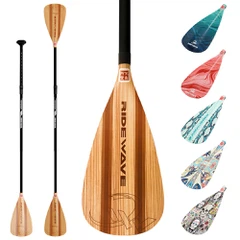
- Paddles, pumps, leashes, bags: Higher quality accessories (e.g. carbon or fiberglass paddles vs aluminum or plastic, dual-action or electric pumps, high-durability leashes) add cost. Even the travel bag (its material, padding, waterproofness, branding) contributes.
- Fins, fin boxes and mounts: Included fin(s) and quality of fin materials, fin box type (US box, slide-in, etc.), reinforcement of the fin boxes-they all add to cost. Boards intended for rental or rough usage need stronger fin boxes and better fins.
- Repair kits, spare parts: Including patch kits, adhesive, valve spares increases perceived value but also increased cost.
- Graphics, logos, branding of accessories: Match accessory branding with board branding (logo on paddle or bag or pump) often costs more (printing, molds etc.).
- Quality of included accessories: If accessories are basic, they cost little. Premium match accessories cost more. For wholesale, many brands offer board-only (lowest cost) or board + accessories kits (higher price to retailer/distributor).
To manage this: decide which accessories are essential for your target market; request accessory specs; ask factory for options (basic vs premium); negotiate accessory pack pricing; consider bundling vs selling accessories separately.

5. Branding, Graphics, and Customization Requests
Customization is a powerful pricing lever. The more custom you specify, the higher the price.
- Custom logos, full-deck graphics, printed sidewalls: Full surface artwork vs simple logo reflects cost difference: more printing colors, higher resolution, better finish (UV resistant, scratch resistant).
- Color matching and special finishes: Metallic paints, special color effects, gradient shifts, matte vs glossy finishes-all cost more.
- Shape customization & non-standard dimensions: As mentioned earlier, any custom shape outside standard template usually requires extra design, tooling, sampling.
- Custom deck pads, texture, handle placement: Brands often move location of carry handle, add arch bar, change pad texture or pattern. Precise position, cuts, and finishing add labor.
- OEM/ODM packaging branding: Custom packaging, boxes, labels, printed instructions branded-adds cost to both design and packaging materials.
Managing: use standard templates when possible; limit number of custom colors or changes; batch multiple customization changes together; negotiate design fees up front; request sample prototypes; choose factories with experience in high quality graphics/printing.
6. Certifications, Safety Standards & Testing
Ensuring safety, durability, and compliance with regulations is critical, especially when selling wholesale into markets with strict import laws and safety standards.
- Certifications required: CE (Europe), SGS, ISO, BSCI, possibly national or local standards. Factory costs to maintain certifications include audit fees, periodic inspection, documentation, materials testing.
- Testing processes: Drop-stitch tension testing, inflation & leak testing, UV exposure testing, saltwater corrosion, seam pull strength, weight load testing. Every test adds cost in time, labor, and sometimes additional material/timers.
- Warranty and after-sales policy: Brands requesting longer warranty periods may require higher durability, more robust material, better QC, which adds initial cost.
- Safety accessories: Non-toxic adhesives, safe valves, safe handles, leash anchor points that meet standards-these all cost, especially in consumer safety regulation markets.
To manage: pick a factory with existing certifications; plan for testing fees; include testing and safety standard compliance in product development budget; ensure QC and design anticipate certification requirements so avoid redesigns.

7. Labor Location, Factory Location & Import/Export Costs
Where the SUP is manufactured, and where it's sold, is a major contributor to overall price.
- Country of manufacture: Labor, energy, regulation vary. Factories in China, Southeast Asia often offer lower labor/energy costs; factories in developed countries or regions with high wages cost more.
- Import/export duties & tariffs: Tariffs on SUPs, parts, or accessories vary by country. Shipping freight rates, customs fees, local taxes affect landed cost in destination market. For example, shipping large, bulky goods (even inflatable, but boxed large) can be expensive.
- Shipping logistics & packaging: Inflation of freight costs, container space, packaging efficiency, protection for shipping. For inflatable boards: rolling boards, folding packaging, strong boxes help, but costs of strong boxes, internal protection, moisture proof packaging, etc. still add up.
- Currency fluctuation: Changes in exchange rates (USD, RMB, Euro etc.) influence factory cost vs your payment. Pricing in foreign currency exposes margins to currency risk.
To manage: partner with factories with efficient shipping/logistics; optimize packaging; negotiate tariffs where possible; consider local assembly or regional warehouses; hedge currency risk or fix long-term supply contracts.
8. Order Quantity, Lead Time & Production Scheduling
How many units you order and how quickly you need them has impact on price.
- Economies of scale: Larger orders reduce per unit tooling, shipping, overhead costs. Factories spread fixed costs over more units. Small orders typically pay more per SUP.
- Lead time urgency: Expedited production or fast shipping increases cost. Rush orders often incur extra fees.
- Production scheduling and batching: Factories grouped similar orders to optimize setup (e.g., packaging or graphics batch runs); if your order is off schedule, or requires special attention, it may be priced higher.
- Seasonal demand: Peak season ordering may lead to higher factory workload; material cost spikes (PVC, drop-stitch threads) often happen during high demand; shipping delays also more likely. These get factored into quotes.
To manage: plan ordering in advance; place larger orders; avoid rush requests; coordinate your order calendar with factory production windows; lock in contracts early to avoid seasonal price inflation.
9. Quality Control, Reject Rates & Return / Warranty Costs
Quality assurance isn't optional-it affects real cost both before and after sale.
- Reject / defect rate: Boards that fail QC, get damaged in shipping, or returned under warranty cost money. Higher standards reduce defects but require more inspection time, better materials, more skilled labor-raising cost.
- Warranty and after-sales policy: Brands offering longer warranty periods, free replacements, repair kits, etc., need to build expected after-sales costs into wholesale price. Also, packaging and spare parts need to be stocked.
- Customer feedback & improvements: To avoid returns and negative reviews brands often invest in iterative improvements, better packaging, or stronger materials-these invest costs.
- Packaging damage or mishandling: Transit damage, inadequate packaging, poor handling-factories that build extra protection or internal braces will cost more but lower return rate.
Manage this by choosing suppliers with low defect rates; including robust QC; good packaging standards; clear warranty terms; inspecting samples before full shipment.

10. Market Positioning, Branding & Distributor Margin
Finally, how your brand positions the product and how margins are structured affect wholesale price.
- Brand reputation & prestige: Premium brands can command higher prices. If branding, marketing, and brand story are strong, consumers or retailers expect higher prices. Conversely, generic brands compete on price, but margins are tighter.
- Distributor and retailer mark-ups: Each layer in the supply chain-from factory to distributor to retailer-adds margins. Wholesale price must allow for enough margin so your partners are motivated, while leaving room for you to price competitively.
- Marketing, packaging, customer experience costs: Designing artwork, packaging inserts, marketing campaigns, product photography, brand events-all add cost. The more polished the packaging and brand experience, the higher the cost that must be recovered through pricing.
- Regulatory costs in destination markets: Meeting local safety or environmental regulations (VOC, chemical restrictions, packaging disposal rules) may require extra cost that influences final wholesale pricing.
Managing this: define your target market positioning early; set brand expectations; build strong branding to justify price; ensure your pricing model accommodates distributor/retailer margins; keep open cost communication with your manufacturer; anticipate regulatory costs.
Conclusion
Pricing wholesale inflatable SUPs involves many interlocking factors. Raw materials, construction method, labor cost, accessories, branding, logistics, QC, lead time, market position-all play a role. Understanding these 10 factors allows brand owners, distributors, and importers to make educated sourcing decisions.
At Ridewave, we focus on transparent pricing, high quality, flexible customization, and efficient OEM/ODM manufacturing processes so that our partners can price their wholesale inflatable SUPs competitively while maintaining margin, brand integrity, and customer satisfaction.
To thrive in 2025 and beyond, align with manufacturers who excel across these cost dimensions, plan your orders strategically, and always require clarity in cost breakdowns. Informed sourcing leads to strong margins, happy partners, and a brand that stands out-not just in performance, but in perceived value.


