

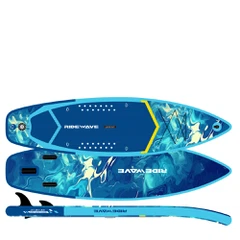
Inflatable stand-up paddle boards (iSUPs) have become increasingly popular in recent years, driven by improvements in material technology, accessibility, and market expansion.
This blog provides a comprehensive, covering their structure, manufacturing process, performance characteristics, cost advantages It also compares single-layer boards with other popular constructions such as reinforced single-layer, MSL fusion, double-layer, and TPU.
The blog will consist of the following parts:
- Introduction
- What Standard Single-Layer Construction Is
- How It Is Manufactured
- Key Advantages
- Main Limitations & Performance Comparison
- When Brands Should Choose Single-Layer Boards + Conclusion
1.Introduction
Inflatable stand-up paddle boards (iSUPs) have become one of the fastest-growing water sports products in the global outdoor market. As more brands enter the industry and demand rises across retail, e-commerce, and OEM channels, understanding the differences between SUP materials is becoming increasingly important.
Among the many construction types available today-reinforced single-layer, MSL fusion, traditional double-layer, and even TPU-standard single-layer construction remains the most widely used entry-level solution. Its appeal lies in its lightweight feel, accessible price point, and ease of use for beginners and recreational paddlers.
2.What Is Standard Single-Layer Construction?
Standard single-layer construction is the simplest and most cost-efficient method for producing inflatable paddle boards. It consists of two main components:
2.1 Drop-Stitch Core
The internal layer is made of woven drop-stitch fabric, containing thousands of polyester threads that connect the top and bottom layers. These threads allow the board to maintain a flat shape and support high air pressure.
2.2 Single Layer of PVC
Over the drop-stitch structure, one layer of PVC is laminated to form the outer shell of the board. There are no extra reinforcement layers, fusion coatings, or heat-bonded structural films, which keeps the board light and flexible.
2.3 Rail Construction
Although the main body consists of a single PVC layer, the rails (side walls) usually use dual rail tape for airtightness and structural support. These rails prevent leaks and help the board maintain its shape once inflated.
Why This Matters
Because the board uses fewer materials and involves simpler processing steps, it remains:
- Lightweight
- Affordable
- Easy to transport and inflate
- Suitable for casual or beginner paddlers
For many brands, this is the foundation of their entry-level product line.
3. How Single-Layer Inflatable SUPs Are Manufactured
While this construction method is relatively simple, producing a reliable and high-quality board still requires a structured manufacturing process.
3.1 Cutting the Drop-Stitch Fabric
The manufacturer cuts the drop-stitch sheets into specific shapes-most commonly all-around shapes that measure 10'6'' × 32'' × 6''.
3.2 Laminating the PVC Layer
A single layer of PVC is laminated onto both sides of the drop-stitch fabric.
This can be done through:
- Manual lamination (cheaper, more common in entry-level factories)
- Semi-automatic lamination machines (more consistent quality)
The quality of this step directly affects board stiffness and long-term durability.
3.3 Rail Tape Application
Rails are the most critical part of the SUP. Even with single-layer construction, the rails typically include:
- Inner rail tape
- Outer rail tape
This ensures the board stays airtight and handles standard PSI inflation.
3.4 Accessory Installation
The EVA deck pad, fin box, handles, and D-rings are glued and pressed onto the board.
The quality of adhesives and bonding temperature control affects long-term performance.
3.5 Quality Inspection
Well-run factories will:
- Inflate boards to 15 PSI or higher
- Leave them for 24 hours
- Check for pressure drops
- Inspect bonding lines and rail integrity
This ensures the board performs reliably even though it uses a single-layer structure.

4. Key Advantages of Standard Single-Layer SUP Construction
4.1 Lightweight and Easy to Carry
Single-layer SUPs are the lightest type of inflatable boards, usually weighing between 16–21 lbs (7.5–9.5 kg).
Benefits include:
- Easier transport from car to water
- Ideal for children and smaller paddlers
- Great for travelers and campers
This is a major selling point for many markets.
4.2 Cost-Effective for Manufacturers and Retailers
Because the construction uses fewer materials and requires less labor, it offers:
- Lower production costs
- Lower wholesale pricing
- Better margins for brands
- Competitive retail pricing for consumers
This makes it ideal for large-volume orders or e-commerce brands where price plays a key role.
4.3 Ideal for Beginners
Standard single-layer boards provide adequate rigidity and stability for:
- First-time paddlers
- Families and youth paddlers
- Casual recreation
- Flat water environments
Their lightweight and forgiving feel helps beginners develop confidence.
4.4 Highly Portable and Easy to Store
The flexible PVC layer allows the board to:
- Fold down into a compact backpack
- Fit into small cars, apartments, or travel luggage
Portability is one of the main reasons inflatable SUPs surpass rigid boards.
4.5 Great for Entry-Level Product Lines
Many brands build their entry-level series using single-layer construction because it aligns with:
- Recreational usage patterns
- Budget-friendly consumer expectations
- High-volume seasonal selling strategies
These boards help brands widen market coverage without major cost commitments.
5. Main Limitations & Performance Comparison
While single-layer construction is popular, it has limitations compared to more advanced technologies.
5.1 Lower Stiffness
Single-layer boards tend to flex more under:
- High rider weight
- High pressure
- Rough water conditions
This affects:
- Speed
- Stability
- Efficiency
Boards built with reinforced single-layer, double-layer, or fusion technology are noticeably stiffer.
5.2 Lower Durability Over Time
Because the PVC is thinner, it can be more vulnerable to:
- Scratches and abrasion
- UV exposure
- Air pressure stress over time
This is why they are not commonly used for rental fleets or heavy-duty environments.
5.3 Lower Maximum PSI
Most single-layer boards safely inflate to 12–14 PSI, while double-layer or fused boards reach:
- 15–22 PSI
Higher PSI generally equals better rigidity.
6. When Should Brands Choose Standard Single-Layer Construction?
For brands planning product lines, choosing the right construction is a strategic decision.
Single-layer construction is best when your target includes:
6.1 Beginners and Casual Paddlers
Most first-time buyers want:
- Low cost
- Lightweight design
- Easy handling
- No professional performance requirements
Single-layer boards deliver exactly this.
6.2 Price-Sensitive Markets
Ideal for:
- E-commerce platforms
- Seasonal retail stores
- Emerging SUP markets in Asia, South America, and Eastern Europe
- Promotional or bundled packages
6.3 Families and Youth Paddlers
Lightweight construction makes it appealing for:
- Teens
- Kids
- Multi-board family packages
6.4 Brands Launching Entry-Level Lines
If your lineup includes both budget and premium boards, single-layer models can fill the lower price tier effectively.
Conclusion
Standard single-layer inflatable SUP construction remains the foundation of the entry-level paddle board market. Thanks to its lightweight feel, cost-effective design, and suitability for beginners, it offers excellent value for both brands and consumers.
While it cannot match the rigidity or durability of reinforced, fused, or double-layer boards, it continues to play a critical role in large-volume retail channels, beginner-friendly product lines, and accessible pricing strategies.
For brands developing a balanced SUP lineup, single-layer boards are a smart and essential component-helping you attract new customers, expand market reach, and offer an entry-level product that delivers reliability at an affordable price.