

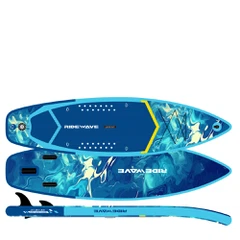

Reinforced single-layer construction-often called enhanced single-layer-is one of the most important innovations in inflatable SUP manufacturing during the past decade. Sitting between basic single-layer and premium fusion or double-layer technologies, this construction has grown into the preferred solution for brands seeking the perfect balance of strength, stiffness, weight, durability, and cost efficiency.
This extended guide provides an in-depth, industry-level explanation of how reinforced single-layer SUPs are made, what makes them different from other constructions, and how brands, wholesalers, and consumers can evaluate whether this material system is the right choice for their product lines.
The article will include the following sections:
1. What Is Reinforced Single-Layer Construction?
2. How Reinforcement Improves Strength and Stiffness
3. Weight Advantages Compared With Double-Layer Designs
4. Durability and Long-Term Performance
5. Riding Experience: More Stability, Better Control
6. Ideal Use Cases and Market Positioning
1. What Is Reinforced Single-Layer Construction?
Reinforced single-layer construction is essentially a single-layer inflatable SUP with an additional strengthening coating. Manufacturers begin with a traditional single-layer PVC skin, then enhance it with a laminated, coated, or heat-bonded reinforcement layer on one or both sides. This reinforcement increases structural integrity without adding the full weight of a second PVC sheet, making it a hybrid material solution.
At the core of the board is the drop-stitch fabric, where thousands of polyester threads connect the top and bottom layers to maintain the board's shape when inflated. Reinforced single-layer boards typically use higher-density drop-stitch compared with basic single-layer boards, further increasing stability and rigidity.
Why manufacturers use reinforced single-layer technology
- It is significantly stronger than standard single-layer boards.
- It maintains a lightweight profile compared with double-layer boards.
- It improves user stability, especially for beginner and recreational paddlers.
- It offers an ideal balance of cost and performance for the mid-range market.
How it differs from other constructions
| Construction Type | Weight | Stiffness | Cost | Target Users |
|---|---|---|---|---|
| Standard Single-Layer | Lightest | Lowest | Lowest | Beginners, budget buyers |
| Reinforced Single-Layer | Light | Medium-High | Medium | Recreational & mid-range |
| MSL / Fusion | Light–Medium | High | High | Premium users |
| Double-Layer | Heavier | Highest | High | Professional, rental fleets |
Reinforced single-layer boards are often seen as the sweet spot for most general-purpose SUPs-providing better paddling performance without jumping to the price point or weight of premium constructions.
2. How Reinforcement Improves Strength and Stiffness
A major performance issue with basic single-layer SUPs is flex. When the board bends excessively under the rider's weight, it affects speed, stability, and control. Reinforced single-layer construction directly tackles this issue by increasing stiffness through the additional reinforcement layer.
Mechanics of improved stiffness
The reinforcement layer:
- strengthens the molecular bonding of the PVC
- reduces stretching when under high pressure
- minimizes mid-board sagging
- increases pressure tolerance
This translates into a more stable and predictable ride-especially noticeable under heavier riders or when paddling in rougher water conditions.
Performance benefits
Compared with standard single-layer boards, reinforced versions:
- bend significantly less along the center line
- maintain optimal performance at 12–15 PSI
- feel more stable during turns and step-back maneuvers
- carry weight more evenly across the surface
While not as rigid as MSL fusion or double-layer boards, they still deliver a sharp improvement in real-world stiffness, which is why many mid-range SUP models adopt this structure.
Why stiffness matters for paddlers
SUP stiffness influences:
- paddling efficiency
- balance control
- energy loss due to flex
- ability to handle chop and small waves
- second-person or cargo capacity
In simple terms, reinforced single-layer boards feel more solid and controlled, improving paddle power transfer and reducing fatigue.
3. Weight Advantages Compared With Double-Layer Designs
Although double-layer construction provides maximum rigidity, it also significantly increases weight-often by 2–4 kg compared with reinforced single-layer designs. This added weight affects how easy the board is to carry, transport, or store.
Reinforced single-layer construction solves this problem by delivering enhanced stiffness without doubling the PVC thickness.
Key weight-related advantages
- Easier for small paddlers, women, and youth riders to carry
- More convenient for travel and outdoor trips
- Faster to inflate and deflate
- Requires less storage space
- Reduces shipping cost and warehouse load for brands
As the SUP market becomes increasingly competitive, consumers show a growing preference for lighter boards that still deliver strong performance. Reinforced single-layer construction meets this demand exceptionally well.
Perfect balance for the mid-range price category
For brands designing all-around, recreational, or touring SUPs, reinforced single-layer construction offers:
- the durability expected by frequent paddlers
- the light weight preferred by casual users
- a manageable price point for retail and wholesale buyers
It is the ideal "performance upgrade" for brands seeking to differentiate their mid-tier models without jumping to premium manufacturing costs.
4. Durability and Long-Term Performance
Durability is one of the central concerns for both consumers and B2B buyers. While standard single-layer boards are affordable, they tend to wear faster under heavy sunlight, abrasion, or repeated folding. Reinforced single-layer SUPs are designed to solve these limitations.
Enhanced durability comes from:
- a thicker and more robust PVC shell
- reinforcement coating that protects against punctures
- stronger drop-stitch density
- better heat resistance under strong UV exposure
- improved resistance to scratches and compression marks
These improvements significantly increase the board's longevity-especially for users who paddle regularly or in more demanding environments.
Pressure stability
The reinforcement layer helps maintain consistent internal pressure, reducing the chance of:
- over-expansion
- material stretching
- deformation after long-term use
Boards maintain their shape better over time, which is crucial for retailers and rental operations that rely on equipment longevity.
Ideal for frequent use environments
Reinforced single-layer SUPs are highly suitable for:
- rental shops
- SUP schools
- tour operations
- waterfront businesses
- families and repeat paddlers
The resistance to abrasion and UV degradation ensures better performance over multiple seasons, reducing replacement and warranty costs.
5. Riding Experience: More Stability, Better Control
The riding experience is where reinforced single-layer construction truly stands out. The increase in stiffness and surface stability translates into a much more confident and predictable paddling feel.
Key improvements for paddlers
- Less flex allows smoother gliding and more efficient strokes
- Better stability supports beginners and intermediate riders
- Improved weight distribution reduces wobble
- Enhanced structure maintains its shape in small waves
- Better response during turns and step-back maneuvers
This leads to a significant upgrade over basic single-layer boards, especially noticeable for riders weighing over 75 kg, or for users who want to progress beyond basic paddling.
Who benefits the most
Reinforced single-layer SUPs are ideal for:
- recreational paddlers seeking higher performance
- beginners wanting greater safety and stability
- weekend paddlers looking for reliable control
- light touring paddlers
- small families sharing one board
These boards deliver a smoother, safer, and better-controlled experience, without requiring the investment of premium fusion or double-layer constructions.
6. Ideal Use Cases and Market Positioning
For brand owners, wholesalers, distributors, and OEM buyers, choosing the right construction method is critical for aligning with market expectations and product strategy.
Reinforced single-layer construction fits perfectly into the mid-range market, offering a strong value-to-performance ratio.
Best use cases
- All-around SUPs
- Recreational models
- Beginner-to-intermediate progression boards
- Lightweight touring boards
- Rental or training SUPs
- Seasonal outdoor and travel-oriented boards
Why brands choose reinforced single-layer
- Competitive price with strong performance
- Lower shipping and packaging cost
- Better durability compared with basic single-layer
- More attractive to retail buyers
- Supports a wider customer group (from beginner to intermediate)
Market positioning
Reinforced single-layer boards are ideal for brands looking to:
- offer a "step up" model from basic entry-level SUPs
- improve competitiveness in the mid-range price category
- provide strong performance without premium pricing
- build long-term value and trust with customers
A well-designed reinforced single-layer SUP line can significantly expand a brand's product portfolio, unlock better conversion rates, and attract both recreational paddlers and retailers looking for reliable mid-tier equipment.
Conclusion
Reinforced single-layer construction offers one of the best combinations of strength, stability, light weight, and affordability in the inflatable SUP market. It bridges the gap between entry-level and premium constructions-delivering a noticeable performance upgrade without heavy materials or high production costs.
For brands and B2B buyers, this construction provides a dependable foundation for mid-range product lines. For paddlers, it creates a more stable, comfortable, and confident on-water experience. As the inflatable SUP market continues evolving, reinforced single-layer boards remain a smart, balanced, and highly versatile choice.