

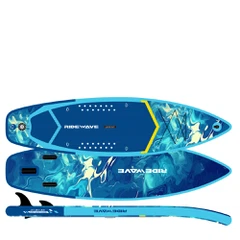
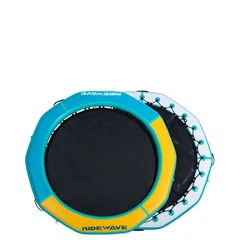
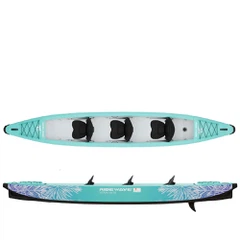
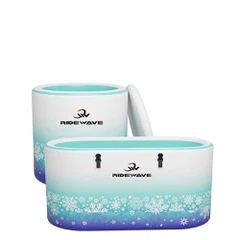
In the rapidly growing inflatable SUP (iSUP) market, sports and outdoor brands are constantly looking to expand their product lines. Selecting the right manufacturing partner is crucial-not only for product quality, but also for brand reputation, market speed, and cost efficiency.
RIDEWAVE, a leading iSUP manufacturer, has built its reputation through over 16 years of professional experience, a 30,000㎡ production facility, and nearly 350 skilled employees. From all-around recreational boards to high-performance touring and racing iSUPs, RIDEWAVE combines advanced production technology, rigorous quality control, and flexible customization to meet diverse B2B needs across Europe, North America, Australia, and beyond.
Partnering with a reliable iSUP factory like RIDEWAVE ensures consistent product quality, faster time-to-market, and scalable supply-essential factors for brands aiming to expand their offerings while protecting their reputation.
Why Sports & Outdoor Brands Must Evaluate Their iSUP Manufacturer

Choosing the wrong iSUP manufacturer can result in delayed shipments, inconsistent product quality, regulatory issues, and even brand damage. For B2B buyers, evaluating potential partners carefully is essential.
Key evaluation factors include:
-
Production Stability & Capacity: High-volume orders require factories with sufficient equipment, skilled labor, and streamlined processes. RIDEWAVE produces over 100,000 iSUP units annually with advanced heat-welding and drop-stitch technologies.
-
Quality Assurance & Certifications: Buyers expect boards that meet international standards. RIDEWAVE holds ISO9001, CE, and SGS certifications, ensuring every iSUP meets strict quality benchmarks.
-
Customization & R&D Expertise: Brands need flexibility in colors, graphics, board shapes, and accessories. RIDEWAVE's dedicated R&D team supports innovative board designs and fast prototyping.
-
Global Supply Chain & Logistics: Timely delivery is critical for distributors and retail partners. RIDEWAVE's experience with international shipping ensures predictable lead times and reliable supply.
By evaluating these factors carefully, brands can minimize risk, optimize costs, and maintain customer satisfaction-all critical when expanding an iSUP product line.
Key Metrics to Evaluate an iSUP Factory Before Expanding Your Product Line
When considering a new iSUP manufacturer, B2B buyers should focus on measurable metrics that indicate long-term reliability and product excellence.
Our latest projects
Shanghai Jwell machinery Workshop co-operation projects

Production Capacity & Equipment:
-
●Daily output, automated production lines, and specialized machines like heat-welding machines, CNC shaping, and drop-stitch stitching.
-
●RIDEWAVE Advantage: 30,000㎡ factory, nearly 350 employees, fully equipped with modern machinery to support both small-batch and large-scale production.

Product Range & Versatility:
●Boards for different segments: all-around, touring, racing, yoga, inflatable kayaks, and water leisure accessories.
●RIDEWAVE Advantage: Comprehensive product line, giving B2B buyers the flexibility to expand into new categories.

R&D & Customization Capabilities:
●Ability to develop new board designs, test prototypes, and customize colors, graphics, EVA pads, and accessories.
●RIDEWAVE Advantage: Dedicated R&D team continuously innovates iSUP models, providing brands with a wide range of customization options.

Quality Control & Testing:
-
Multi-step inspection process, including material checks, seam strength tests, air retention, load tests, and final appearance inspections.
-
RIDEWAVE Advantage: Over 20 structured quality checkpoints, ensuring each iSUP meets international quality standards.

Certifications & Industry Recognition:
-
ISO9001, CE, SGS, participation in international sports & outdoor expos, and verified global distribution network.
By evaluating these metrics, brands can identify factories that not only produce high-quality iSUPs but also offer the flexibility, innovation, and reliability necessary for international markets.
How to Verify an iSUP Factory: On-Site and Virtual Inspections
Before committing to a partnership, sports and outdoor brands should conduct thorough evaluations of iSUP factories, either in person or virtually. These inspections reveal the factory's capabilities, transparency, and reliability.
Key inspection points include:
1.Production Line Transparency:
●Check assembly lines, heat-welding stations, drop-stitch stitching areas, and finishing zones.
●RIDEWAVE Example: Open production lines allow B2B clients to observe every stage from raw material to finished iSUP, ensuring confidence in consistency and quality.
Material and Component Verification:
●Inspect PVC layers, EVA pads, fins, valves, and accessories.
●RIDEWAVE Example: Each component is verified against international quality standards before assembly.
Testing Procedures:
●Air retention, load tests, seam strength, and appearance inspections.
●RIDEWAVE Example: Structured multi-step testing guarantees that all boards meet CE, ISO9001, and SGS standards.
R&D and Customization Visibility:
●Review prototypes, past design projects, and customization capabilities.
●RIDEWAVE Example: Dedicated R&D labs showcase innovation in board shapes, graphics, and accessory integration.
Virtual Inspection Tips:
●Request live video tours, sample demonstrations, and digital documentation of QC procedures.
●Ask for third-party certification copies and recent production photos.
The Importance of Sample and Small-Batch iSUP Testing
Before placing large orders, B2B buyers should always start with samples or small-batch production. This step minimizes risk and allows brands to validate quality, design, and market acceptance.
Benefits of sample and small-batch testing include:
1.Quality Verification:

●Identify potential manufacturing issues, material inconsistencies, or assembly defects early.
●RIDEWAVE Example: Samples undergo the same rigorous QC as mass-produced units, ensuring representative quality.
2.Market Testing:

●Assess customer feedback, local market preferences, and seasonal demand before scaling production.
●RIDEWAVE Example: Brands can pilot new designs and graphics with flexible MOQ options.
3.Customization Refinement:

●Adjust graphics, colors, board shapes, and accessory combinations based on sample feedback.
●RIDEWAVE Example: Rapid prototyping allows design adjustments without delaying bulk orders.
4.Supply Chain Assessment:

●Test lead times, shipping reliability, and packaging suitability.
●RIDEWAVE Example: International clients experience predictable delivery times and fully tracked shipments.
5.Cost Optimization:
●Avoid large-scale investment in boards that may not meet customer expectations.
Materials & Technology Standards Every iSUP Brand Should Understand
When expanding into inflatable SUP (iSUP) products, material quality and manufacturing technology directly determine durability, performance, and long-term brand reputation. B2B buyers should not rely on surface appearance alone - internal construction and technical processes matter far more.
Key iSUP Material & Technology Factors to Evaluate
• 1.Drop-Stitch Core Density

Higher density drop-stitch cores increase rigidity and load capacity. Low-density cores may reduce cost but compromise performance.
RIDEWAVE Practice: Uses high-quality reinforced drop-stitch fabric to ensure structural stability under higher PSI pressure levels.
• 2.PVC Layer Construction

Single-layer, double-layer, or fusion laminated PVC directly impacts durability and weight balance.
RIDEWAVE Practice: Advanced heat-welding and fusion technology improves seam strength while reducing excess adhesive weight.
• 3.Heat-Welded Seams vs. Glued Seams

Heat-welded seams offer stronger bonding and longer lifespan compared to traditional glue-based assembly.
RIDEWAVE Practice: Integrates precision heat-welding machines to enhance airtight performance and long-term reliability.
• 4.EVA Deck Pad Quality

Anti-slip texture, thickness, and UV resistance affect user experience.
RIDEWAVE Practice: Customizable EVA patterns and branding options improve both safety and brand visibility.
• 5.Valve & Accessory Components

Low-quality valves cause air leakage and after-sales issues.
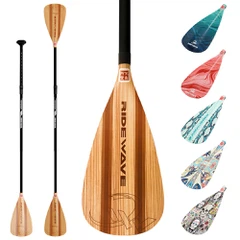
RIDEWAVE Practice: Strict component inspection ensures every valve, fin, paddle, and pump meets export standards.
• 6.PSI Performance Testing

True rigidity is measured through pressure tolerance and load testing.
RIDEWAVE Practice: Structured pressure testing confirms performance consistency across production batches.
For global B2B buyers, understanding these technical variables reduces warranty claims, improves customer satisfaction, and strengthens long-term brand positioning in competitive markets such as Europe, North America, and Australia.
Brand Support & After-Sales Structure in iSUP Manufacturing

Beyond product quality, long-term success in the iSUP market depends heavily on brand support systems, communication efficiency, and after-sales structure. For distributors and private-label brands, the factory must function as a strategic partner - not just a supplier.
What B2B Buyers Should Assess in iSUP Brand Support
• OEM & ODM Capability
Ability to develop private-label boards, exclusive molds, and customized packaging.
RIDEWAVE Capability: Full OBM, OEM, and ODM services covering graphics, board shape, accessories, packaging, and branding materials.
• Product Line Diversity
Expanding product categories reduces reliance on a single SKU.
RIDEWAVE Portfolio Includes:
• All-around iSUP
• Touring iSUP
• Racing iSUP
• Yoga iSUP
• Inflatable kayaks
• Ice baths
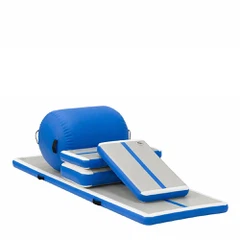
• Air tracks
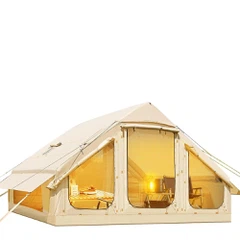
• Inflatable tents
• Advertising inflatables
• After-Sales Response System
Clear warranty terms and fast technical response reduce distributor risk.
RIDEWAVE Practice: Structured after-sales workflow with documented QC records for traceability.
• Global Market Experience
Understanding compliance requirements in EU, US, Canada, and Australia markets.
RIDEWAVE Experience: Participation in international outdoor exhibitions and established export operations.
• Certifications & Compliance
Regulatory documentation protects importers.
RIDEWAVE Certifications: ISO9001 quality management, CE compliance, SGS testing support.
• Communication & Transparency
Dedicated B2B account managers and stable production updates.
For expanding brands, these systems reduce operational uncertainty, strengthen retailer confidence, and support sustainable growth in the inflatable SUP sector.
Common Risks When Selecting an iSUP Factory
Expanding into inflatable SUP (iSUP) products involves financial investment, brand positioning, and long-term supply chain commitment. Choosing the wrong factory can create operational risks that are difficult to reverse.
Frequent Risks in iSUP Manufacturing Partnerships
• Overemphasis on Low Price
Extremely low quotations often signal reduced material quality, thinner PVC layers, or inconsistent drop-stitch cores. Short-term savings may lead to higher warranty claims.
• Unverified Production Capacity
Some suppliers outsource production during peak seasons, resulting in unstable quality control.
Reliable factories maintain controlled in-house production systems.
• Lack of Structured Quality Control
Absence of documented QC checkpoints increases defect probability.
Factories should provide traceable inspection records.
• Unclear MOQ and Contract Terms
Ambiguous agreements create risk in delivery schedules and customization rights.
• Weak Communication & Slow Response
Time zone gaps and unclear project ownership can delay product development.
• Limited Product Range
Factories with only one or two models restrict brand scalability.
RIDEWAVE Risk Mitigation Approach:
Transparent production workflow
01
Documented multi-stage QC system
03
Stable annual capacity above 100,000 iSUP units
04
Dedicated export support team
05
For B2B buyers, risk management should be integrated into factory evaluation from the beginning - not addressed after problems occur.
Case Insight: How Brands Expand Successfully with a Structured iSUP Partner

Successful iSUP expansion is rarely accidental. It typically follows a structured collaboration model between brand and manufacturer.
Typical B2B Expansion Process
• Phase 1: Market Validation
Small-batch sampling to test design acceptance and pricing strategy.
• Phase 2: Product Optimization
Adjust board dimensions, EVA patterns, packaging, and accessory bundles.
• Phase 3: Controlled Scale-Up
Gradually increase production while monitoring return rates and distributor feedback.
• Phase 4: Product Line Diversification
Add touring, racing, or yoga iSUP models to broaden market coverage.
RIDEWAVE Collaboration Example
Several European and North American distributors began with limited trial orders of all-around iSUP models.
After validating sell-through rates and customer reviews, they expanded into:
• Touring iSUP series
• Premium racing models
• Branded accessory kits
• Inflatable kayak cross-category bundles
By leveraging RIDEWAVE's R&D and customization capabilities, these partners reduced product development time while maintaining consistent quality.
The result: faster SKU expansion, improved margin control, and stronger retailer confidence.
Final Evaluation Checklist for Choosing an iSUP Manufacturer
Before finalizing a partnership, decision-makers should review a structured evaluation checklist to ensure alignment between brand goals and factory capabilities.
iSUP Factory Evaluation Checklist
• Does the factory own its production facility?
• Is annual capacity sufficient for scaling?
• Are drop-stitch materials and PVC layers clearly specified?
• Are heat-welding processes used?
• Is there a documented QC workflow?
• Can the factory provide ISO9001, CE, and SGS documentation?
• Are OEM/ODM services clearly defined in contract terms?
• Is small-batch production available?
• Does the factory export regularly to EU/US/Australia markets?
• Is the communication structure stable and responsive?
Why RIDEWAVE Aligns with B2B Expansion Needs

• 30,000㎡ owned production facility
• Nearly 350 skilled employees
• Structured multi-stage QC system
• Advanced heat-welding production technology
• Comprehensive product portfolio
• International exhibition participation
• Established export compliance experience
For sports and outdoor brands seeking long-term growth in the inflatable SUP market, structured evaluation - combined with transparent manufacturing - creates sustainable competitive advantage.
Related Articles
What Determines the Production Capacity of an Inflatable SUP Factory?
How to Choose the Right OEM Inflatable SUP Manufacturer.